

Trying to tackle five wellness goals at once is the fastest route to burnout.
Decision fatigue builds, stress becomes constant, and before you know it you quit.
But you don’t need to drop everything or be perfect to make steady gains.
Pick one or two goals that actually fit your life, work them for four to eight weeks, and pair goals that support each other.
Use tiny daily windows, habit stacking, and scheduled rest so progress adds up without draining you.
A Framework for Balancing Wellness Goals Without Burnout

Chasing multiple wellness goals at the same time is a recipe for burnout. Each goal competes for the same limited energy, and when you’re trying to improve five things at once, you end up feeling like you’re failing at all of them.
Here’s what actually happens: decision fatigue piles up, stress becomes chronic, and eventually you just… stop. Especially when those goals come from what you think you should be doing instead of what you actually need. When there’s a gap between your goals and your real values, nothing feels satisfying. You could check every box and still feel empty.
The fix? Pick one or two goals per cycle. Not five. Not ten. One or two that fit your actual life right now.
Give yourself four to eight weeks to work on them, then reassess. That’s enough time to build momentum without burning out. And when you limit your focus like this, you can pair goals that support each other instead of competing for your attention.
Goal pairings that actually work together:
- Sleep hygiene and stress reduction (both calm your nervous system)
- Daily movement and mobility work (walking and stretching reinforce each other naturally)
- Strength training and protein intake (your body needs fuel to adapt to training)
- Hydration and energy management (staying hydrated keeps your mood and focus steady)
- Mindfulness practice and evening wind down (both improve sleep quality)
- Work boundaries and recovery planning (protecting your time makes rest possible)
Identifying Which Wellness Goals Matter Most

Start by figuring out what you actually care about. Not what sounds good on paper. Not what someone else says you need. What matters to you.
Goals that connect to your values feel different. Connection, creativity, freedom, stability, adventure, compassion, growth. When your goals reflect these, you don’t need as much willpower to follow through. The decisions get easier because you’re moving toward something meaningful instead of running from guilt or fear.
The clearest sign a goal deserves your time? It pulls you toward something you want, not away from something you’re scared of.
Value Based Filters for Choosing the Right Goals
Use your core values as a filter. Ask yourself what you need right now. If connection matters most, a goal that gets you around supportive people will feel way more sustainable than one that isolates you in pursuit of abs. If stability or freedom ranks high, protect your energy with predictable routines instead of chaotic all-or-nothing plans.
Your real life constraints matter too. A goal that needs time, money, or energy you don’t have will frustrate you no matter how well it aligns with your values.
Start by naming one or two values that feel most urgent or neglected right now. Then choose goals that honor those values within the time and energy you actually have this month. Not next month when things calm down. This month.
Structuring Wellness Goals With Realistic Scheduling

Effective scheduling means using small blocks of time and matching them to your actual energy patterns. Most sustainable habits fit into ten to thirty minute windows. Not two hour gym sessions five days a week that look impressive but collapse the moment life gets busy.
A fifteen minute nap at lunch. A ten minute walk after work. Twenty minutes of stretching before bed. These micro habits compound over time without forcing you to redesign your entire life.
Weekly planning rituals and monthly reviews keep your goals aligned with your current capacity. Spend ten to fifteen minutes each week checking what actually happened versus what you hoped would happen. Monthly reviews give you the longer view to decide if your goals still make sense or if it’s time to rotate focus.
Seasonal or rotational cycles prevent burnout. Focus on one or two priorities for four to twelve weeks, then shift. You make real progress without the mental load of juggling five goals at once. Spend six to eight weeks improving sleep and stress, then rotate to an eight week block on strength training and protein.
Five step approach to realistic wellness scheduling:
- Weekly planning ritual: Block two or three specific time windows (10 to 30 minutes each) for your top one or two goals. Pick days and times that match your typical energy and obligations.
- Monthly review cadence: Spend ten to fifteen minutes at the end of each month reviewing what worked, what didn’t, and whether to continue, adjust, or rotate your primary goals.
- Seasonal rotation example: Use four to twelve week cycles to focus on complementary goal pairs (e.g., 8 weeks on mobility and daily movement, then 6 weeks on mindfulness and evening routines).
- Time blocking principles: Assign small, realistic windows rather than vague intentions. Protect those blocks like you would a meeting. Keep them short enough that missing one doesn’t wreck your week.
- Energy period matching: Schedule demanding practices (strength work, intense focus tasks) during your highest energy hours and recovery practices (stretching, breathwork, wind down routines) during lower energy periods.
Habit Stacking and Micro Habits for Multiple Wellness Goals
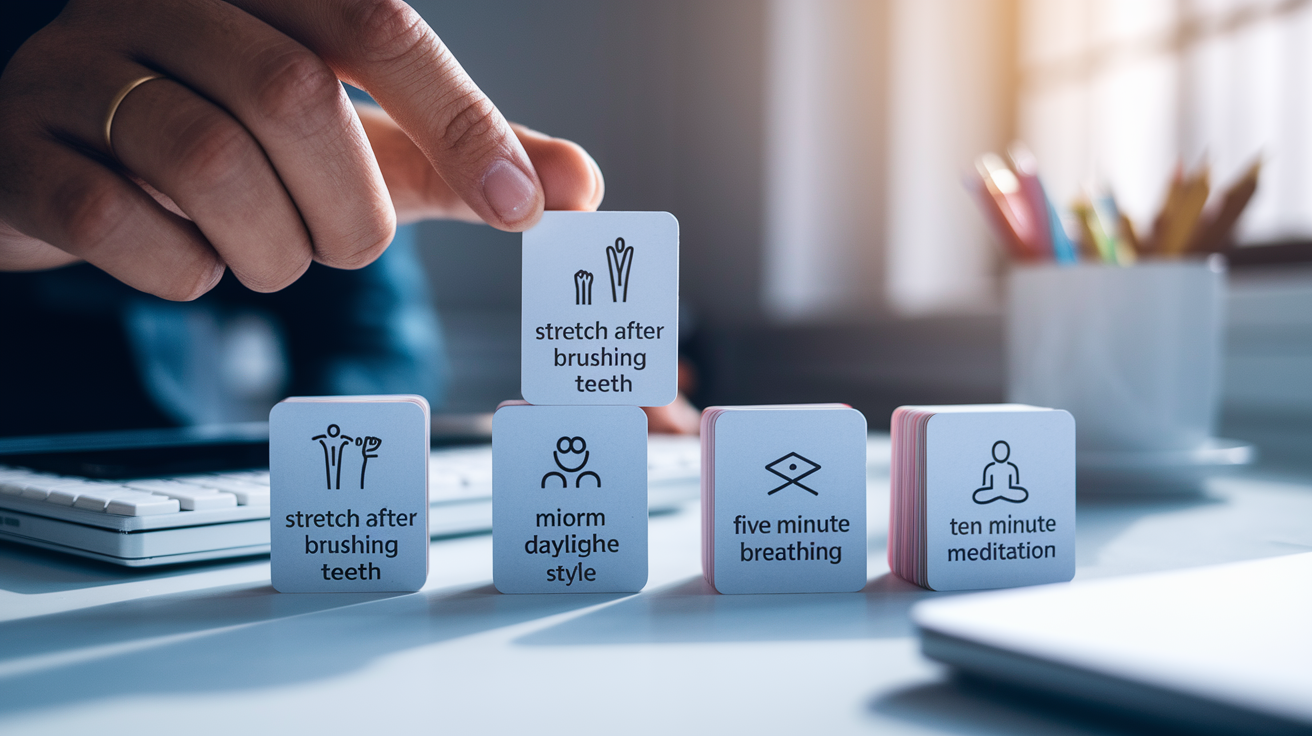
Habit stacking attaches a new micro habit to something you already do. The old behavior becomes the cue for the new one. This cuts down on the mental effort required to remember and start a new practice, which makes it way easier to sustain multiple wellness goals without decision fatigue.
Do ten minutes of mobility work after brushing your teeth in the morning. Practice a five minute breathing exercise before lunch. Spend five minutes on a guided meditation right before bed.
Keep each new habit small enough that it feels almost trivial on a rough day. When a habit takes less than ten minutes and pairs naturally with something you already do every day, you’re far more likely to maintain it even when your schedule gets chaotic or your energy tanks. Small, repeatable actions compound into meaningful results over weeks and months. Ambitious routines that need willpower and perfect conditions tend to disappear the moment life gets busy.
Five effective habit stacking pairings for wellness goals:
- Attach a two minute stretching sequence to your morning coffee routine (mobility goal)
- Pair a five minute breathing exercise with the start of your lunch break (stress reduction goal)
- Stack a ten minute evening walk with taking out the trash or walking the dog (daily movement goal)
- Add one palm sized portion of protein to the meal you’re already preparing (nutrition goal)
- Place a water bottle on your desk and take three sips every time you finish a task (hydration goal)
Recognizing Early Signs of Wellness Burnout

Wellness burnout shows up as persistent fatigue that doesn’t improve with one good night of sleep. You get irritable over small things. Tasks that used to feel manageable now feel impossible. You might notice chronic guilt about the habits you’re missing, a pattern of skipping sessions you used to prioritize, or a growing desire to bail on social plans that normally recharge you.
Disrupted sleep is another common early signal. Trouble falling asleep or waking up feeling unrefreshed means your wellness plan is demanding more than you can sustainably give.
The most effective response? Reduce your active goals, increase recovery time, and ask for support before things get worse. If you catch these signs within the first week or two, a simple adjustment like dropping one goal or cutting session frequency in half is often enough to restore balance. Ignoring the signals and pushing through usually leads to a complete dropout and a much longer recovery period.
Six common early signs of wellness burnout:
- Persistent exhaustion that rest doesn’t resolve
- Increased irritability and shorter patience with minor setbacks
- Declining performance in workouts, work tasks, or daily responsibilities
- Chronic guilt or self criticism about missed habits
- Withdrawing from social connection or activities you normally enjoy
- Sleep disturbances, including trouble falling asleep or staying asleep
Recovery Planning and Rest Integration for Long Term Success

Building recovery into your wellness routine means treating rest as a planned, non negotiable part of your schedule. Not something you do only when you’re too tired to continue.
Schedule one to two full rest days each week where you intentionally step back from structured training, intense focus work, and demanding obligations. Daily micro recovery sessions, lasting five to twenty minutes, help you manage cumulative fatigue before it builds into burnout. Light stretching, breathwork, a brief walk, or simply sitting quietly without screens.
Align your schedule with your natural energy rhythms. Most people have predictable energy peaks and dips throughout the day. Match high demand activities to high energy windows and reserve low energy periods for recovery practices. This creates a sustainable rhythm that doesn’t require constant willpower.
Evening wind down routines that prioritize sleep hygiene support the recovery that happens overnight. Dim lights and reduce screen time an hour before bed. You’ll perform better the next day because rest restores the physical and mental resources you need to stay consistent.
Long term success with multiple wellness goals depends on viewing rest as productive, not optional. The weeks when you protect your recovery time are the weeks when your other goals become easier to maintain.
| Practice | Duration | Purpose |
|---|---|---|
| Morning mobility routine | 5–10 minutes | Prepares joints and nervous system for the day; reduces stiffness |
| Midday micro rest | 10–15 minutes | Breaks up cognitive load; restores focus and energy for afternoon |
| Evening wind down | 20–30 minutes | Signals transition to rest; supports sleep onset and quality |
| Full rest day | 24 hours | Allows complete physical and mental recovery; prevents cumulative fatigue |
Boundary Setting and Reducing Overcommitment in Wellness

Protecting your time and energy for wellness goals means setting clear limits on external demands. You have to be willing to say no to requests that don’t align with your current priorities.
Boundaries aren’t selfish. They’re about making intentional choices so you have the capacity to follow through on the goals that matter most to you. When you accept every request without evaluating its cost, you end up with a schedule that leaves zero room for the habits that support your health.
Practical boundary setting includes communicating your limits calmly and directly, reducing mental load at home by delegating or eliminating low value tasks, and negotiating small workload adjustments when possible. Support from family, coworkers, or professionals helps share the responsibility, which lowers your individual burden and makes it easier to sustain your wellness plan over months and years.
Four boundary strategies to protect wellness capacity:
- Practice a simple script for declining requests: “I can’t take that on right now, but I can revisit it in a few weeks if it’s still needed.”
- Identify one recurring obligation (meeting, task, or commitment) that you can reduce, delegate, or eliminate this month.
- Set a clear start and end time for work or high demand activities, and protect the buffer time before and after for transitions and recovery.
- Ask one person in your household or workplace to take over a specific task that drains your energy without adding meaningful value.
Tracking Multiple Wellness Goals Without Overwhelm

Simple tracking methods focus on frequency and duration rather than perfect execution. Record how many times per week you complete a habit and how long each session lasts. That gives you enough data to spot patterns and make adjustments without needing complex spreadsheets or constant measurement.
Biweekly or monthly metrics like average sleep hours, total step count, or number of strength sessions provide a longer view of progress without the daily pressure that comes from obsessive tracking.
The best tracking tool is the one you’ll actually use consistently. A simple checklist on paper. A calendar with check marks. A habit tracking app that sends reminders. Choose a method that takes less than two minutes per day to update, and review your data weekly to celebrate small wins and identify any habits that need adjustment.
When tracking starts to feel like another obligation or source of guilt, simplify it further or take a week off from recording to reset your relationship with the process.
Five tracking tools and methods that reduce overwhelm:
- Paper checklist or habit tracker printed and posted in a visible location
- Calendar app or physical calendar with simple check marks for completed sessions
- Habit tracking app with daily reminders and weekly summary notifications
- Weekly review note where you record total completions and one sentence about how the week felt
- Biweekly or monthly metrics captured in a simple table (e.g., average sleep hours, total workouts, servings of protein per day)
Designing a Sustainable Multi Goal Wellness Roadmap
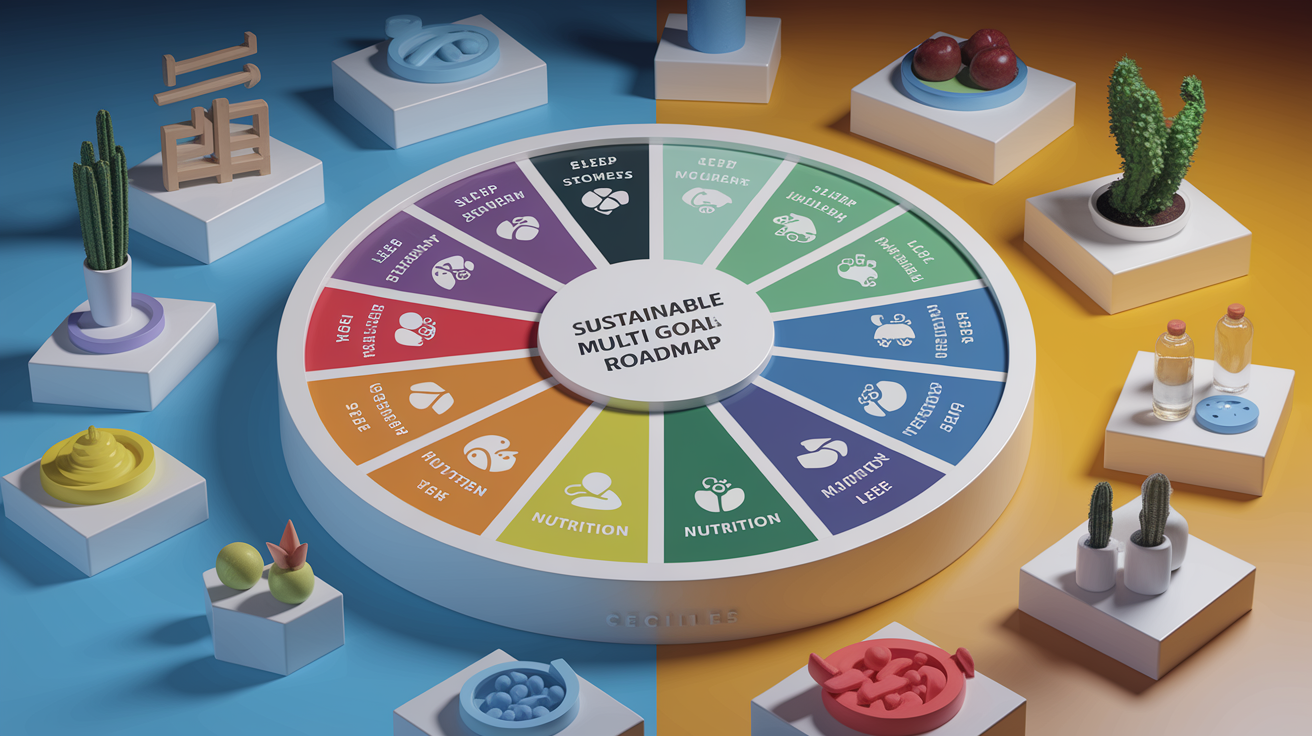
A long range wellness roadmap uses rotational four to eight week cycles to focus on different goal pairings across months and seasons. This prevents the fatigue and decision overload that come from trying to improve everything at once.
Each cycle targets one or two complementary goals. You make meaningful progress in a focused area before shifting attention to a different pairing. This structure aligns with how habit formation actually works. Most people need four to eight weeks of consistent practice before a new behavior starts to feel automatic.
Plan setbacks and adjustments into your roadmap from the beginning. Life will disrupt your plan. Flexibility is part of sustainability, not a sign of failure. When a goal stops serving you or becomes impossible to maintain without sacrificing sleep, relationships, or mental health, treat that information as useful data and adjust the scope, timeline, or approach.
Value aligned goals reduce anxiety because they clarify what truly matters. Rotational cycles keep motivation high by regularly introducing fresh focus areas while protecting the habits you’ve already built.
Designing your roadmap starts with identifying your top two or three values, choosing one or two initial goals that honor those values, and committing to a specific four to eight week cycle. At the end of the cycle, review what worked, what didn’t, and whether to continue, adjust, or rotate to a new goal pairing. Over six to twelve months, this approach lets you address multiple areas of wellness without the chronic exhaustion that comes from trying to do it all at once.
Example: Four to Eight Week Rotating Focus
Cycle 1 (Weeks 1 to 8): Focus on sleep hygiene and stress reduction. Track bedtime consistency, evening wind down routine, and three ten minute breathwork sessions per week. Monthly review at week four and final review at week eight.
Cycle 2 (Weeks 9 to 14): Rotate to strength training and protein intake. Add two thirty minute strength sessions per week and track daily protein servings. Six week commitment with biweekly check ins.
Cycle 3 (Weeks 15 to 22): Shift to daily movement and mobility. Aim for a twenty minute walk five days per week and ten minutes of mobility work three days per week. Eight week cycle with weekly tracking and monthly review.
Each cycle builds on the previous one without requiring you to maintain every habit at full intensity. Sleep and stress habits from cycle one continue in a maintenance mode (lower frequency or shorter duration) while you focus active effort on the new priority.
Final Words
Put this into action: pick one or two value-aligned goals for a 4-8 week cycle, schedule small time blocks, stack tiny habits, and plan recovery so you don’t pile on tasks. Use simple tracking and clear boundaries to keep things realistic.
If you follow those steps, you’ll build steady momentum. Prioritizing multiple wellness goals without burnout is about small choices that add up, so start small, adjust as needed, and celebrate steady wins.
FAQ
Q: What is the 42% rule for burnout?
A: The 42% rule for burnout is a simple heuristic saying when you hit about 42% of your sustained stress or load, risk of burnout rises, so you should reduce demands and increase recovery.
Q: What is the 5 3 1 rule for wellness?
A: The 5 3 1 rule for wellness is a practical framework: five small daily habits, three focused weekly practices (like strength or mobility), and one full rest day each week to balance progress and recovery.
Q: What are the 5 C’s of burnout?
A: The 5 C’s of burnout are chronic stress, cynicism (emotional distancing), capacity loss (low energy), control loss (feeling overwhelmed), and connection loss (withdrawing from others).
Q: What are the 5 C’s of wellness?
A: The 5 C’s of wellness are choice (value-aligned goals), consistency (regular small steps), connection (social support), calm (planned recovery), and capacity (building energy and strength).