
Think the elliptical is just a slow, pointless machine?
It isn’t.
For beginners it’s a low-impact, easy-to-repeat workout that builds cardio, strength, and confidence without beating up your joints.
This post gives short, simple routines you can do right away, plus form cues, warm ups, cool downs, and a safe way to progress so you keep getting better without overload.
Start with ten to fifteen minutes, learn the motion, and you’ll leave feeling capable, not wiped out.
Beginner Elliptical Workout: Start Here
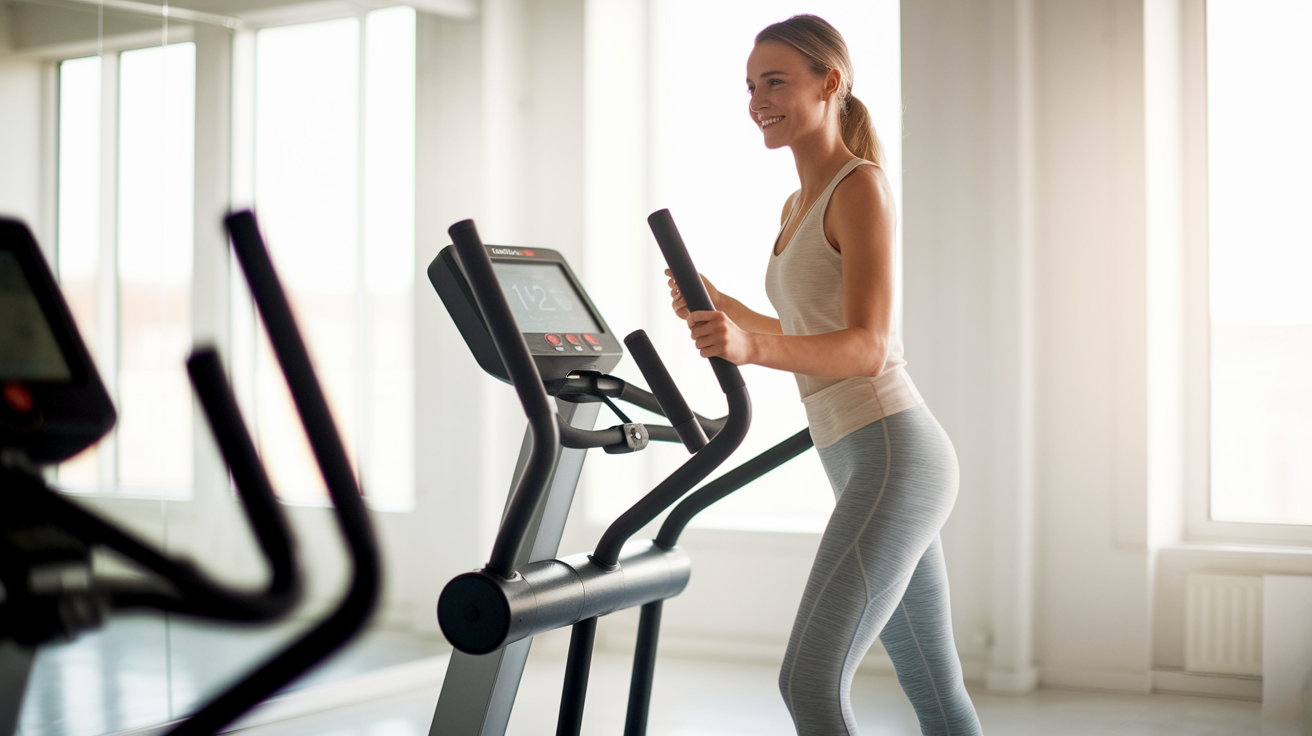
The best way to build confidence on an elliptical? Keep your first session short, controlled, and something you can actually repeat. You don’t need to chase a hard sweat or spend 45 minutes moving. Ten to fifteen minutes is enough to learn the machine, practice steady breathing, and walk away feeling capable instead of destroyed.
Start with resistance somewhere between 1 and 4. That range feels light enough to move smoothly but gives you something real to push against. Your goal is a steady, sustainable pace the entire time. Around 60 to 75 strides per minute if your machine shows cadence. If it doesn’t, aim for a rhythm that lets you talk in short sentences without gasping.
Here’s your first session:
Minute 0 to 2: Start moving at the lowest resistance. Let your body adjust to the motion, find your balance, settle into a comfortable grip.
Minute 2 to 10: Bump resistance to level 3 or 4 and hold that effort. Keep your pace steady and your breathing controlled. This is your working interval.
Every 2 minutes: Check your posture. Shoulders relaxed, chest open, weight spread evenly across both feet.
Minute 10: Drop resistance back to level 1 or 2. Keep moving but ease up slightly as your heart rate starts coming down.
Minute 10 to 13: This is your cool down. Let your breathing return to normal, shake out any tightness in your legs.
After stepping off: Stretch your calves and quads for 30 seconds each. Done.
Repeat this two or three times this week.
Proper Elliptical Form for Beginners
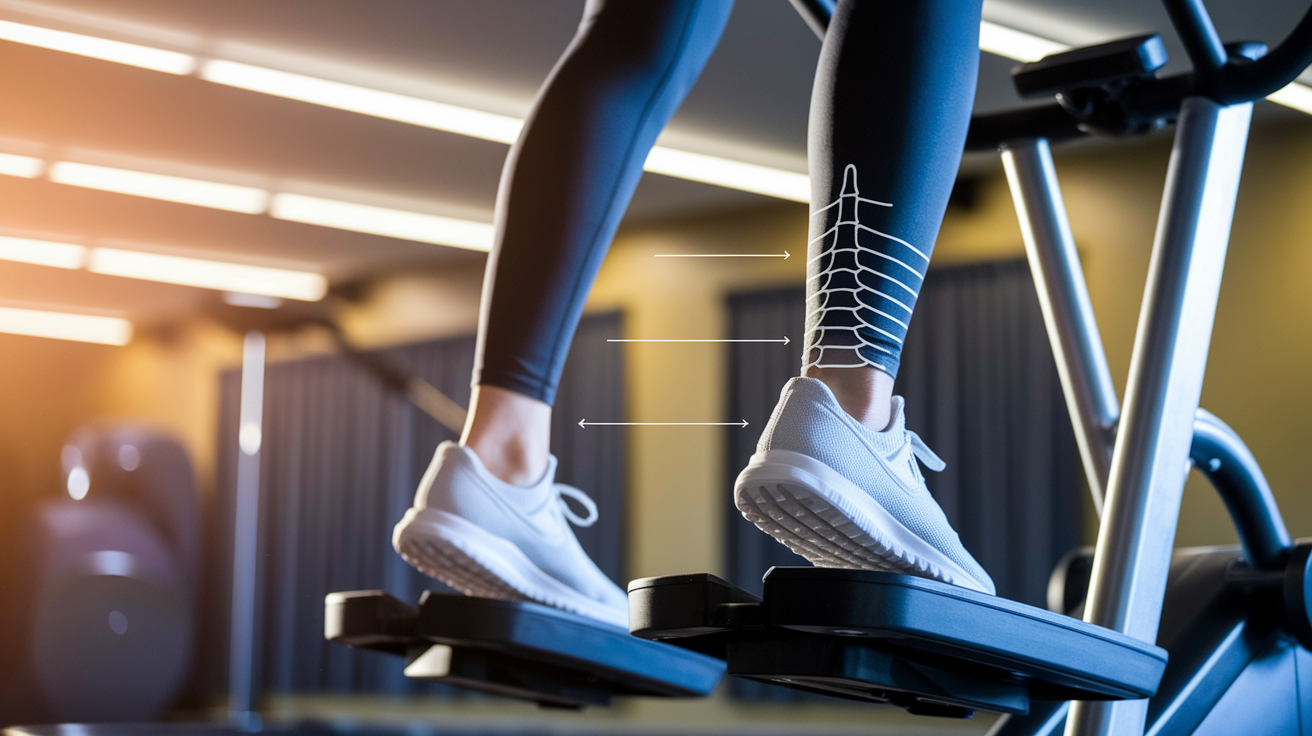
Good form isn’t about looking perfect. It’s about moving in a way that lets your legs do the work without your lower back, shoulders, or grip taking over.
Stand tall. Chest open, spine neutral, the same alignment you’d use if someone asked you to stand up straight. Keep your shoulders relaxed and away from your ears. Let your arms move lightly with the handles instead of pulling or pushing hard. Your feet should stay flat against the pedals, weight spread evenly from heel to toe. Knees track in line with your toes as you stride.
The motion should feel smooth and circular, not choppy or forced. If you’re bouncing or your hips are rocking side to side, slow down. Lower the resistance until you can move with control. Your core should stay lightly engaged to keep your torso stable, but you shouldn’t feel like you’re clenching hard.
Let your legs drive the movement. Your glutes, quads, and hamstrings are the engines here.
Correct form reduces knee strain, protects your lower back, makes every session more efficient. If your grip is tight or your upper body feels tense after a few minutes, you’re probably leaning too hard on the handles or using your arms to compensate for tired legs.
Warm-Up Essentials Before Using an Elliptical
A quick warm up gets blood moving to your legs and prepares your heart and lungs for steady work. You don’t need a separate routine. Most of your warm up happens on the elliptical itself at low resistance.
But if you want to add a minute or two of light movement beforehand, it helps your body ease into the session instead of jumping straight into effort.
Leg swings forward and back: 10 swings per leg to loosen your hips.
Bodyweight squats: 8 to 10 slow reps to wake up your quads and glutes.
Ankle circles: 5 circles in each direction per foot to prep your lower legs.
Arm circles: 10 small circles forward, 10 backward, to warm your shoulders.
Walking in place with high knees: 20 to 30 seconds to raise your heart rate slightly before stepping onto the machine.
Cool-Down and Stretching After Your Workout
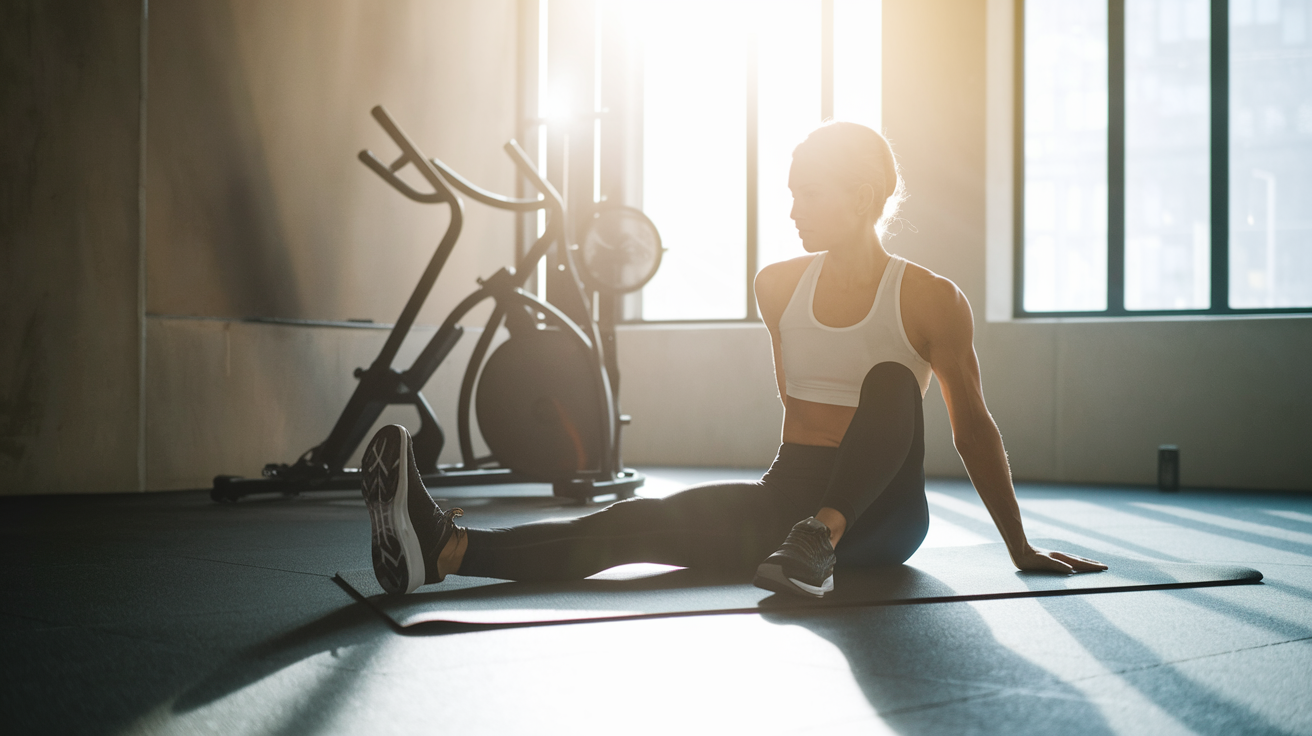
Your cool down is the last 3 to 5 minutes of your session spent at very low resistance. You’re letting your heart rate drop gradually instead of stopping cold. Keep moving slowly until your breathing feels normal and you’re not flushed or lightheaded.
Once you step off, spend another 2 to 3 minutes stretching the muscles you just worked. Your calves, quads, hamstrings, and hip flexors all get tight from repetitive motion.
Standing quad stretch: pull one heel toward your glute, hold 20 to 30 seconds each side.
Calf stretch: step one foot back, press your heel down, lean forward gently, hold 20 to 30 seconds.
Hamstring reach: hinge forward at your hips with a slight knee bend, reach toward your toes, hold 20 to 30 seconds.
Hip flexor stretch: step into a lunge position, sink your back knee toward the floor, hold 20 to 30 seconds each side.
Common Beginner Mistakes to Avoid
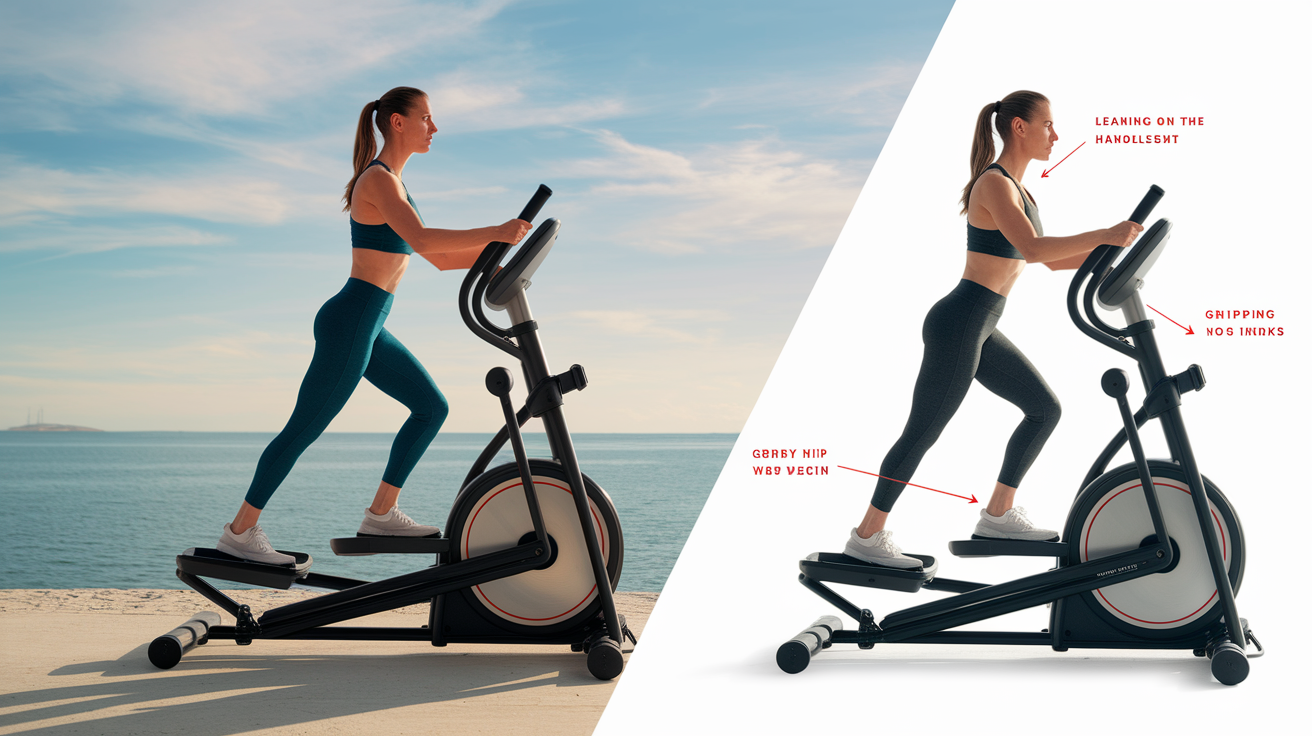
Most beginners make the same handful of mistakes in their first few sessions. Fixing them early makes every workout after that feel smoother and more effective.
The biggest error? Leaning forward and resting your weight on the handles. This turns your legs into passengers instead of drivers. You’ll feel it less in your glutes and hamstrings, and more in your lower back and grip.
Another common mistake is setting the resistance too high too soon. If you can’t keep a steady, controlled pace or your stride gets choppy and short, you’re working against the machine instead of with it. Start lighter than you think you need to. Add resistance only after your form stays solid for the full session.
Six mistakes to watch for:
Gripping the handles too tightly. Your hands should rest lightly, not clench.
Pushing only with your toes. Drive through your whole foot, heel to toe.
Bouncing or rocking your hips. Keep your pelvis level and stable.
Holding your breath. Breathe steadily, exhale as you push.
Skipping the warm up or cool down. Both matter for injury prevention and recovery.
Increasing time and resistance at the same time. Change one variable per week, not both.
Safety Tips for Elliptical Users
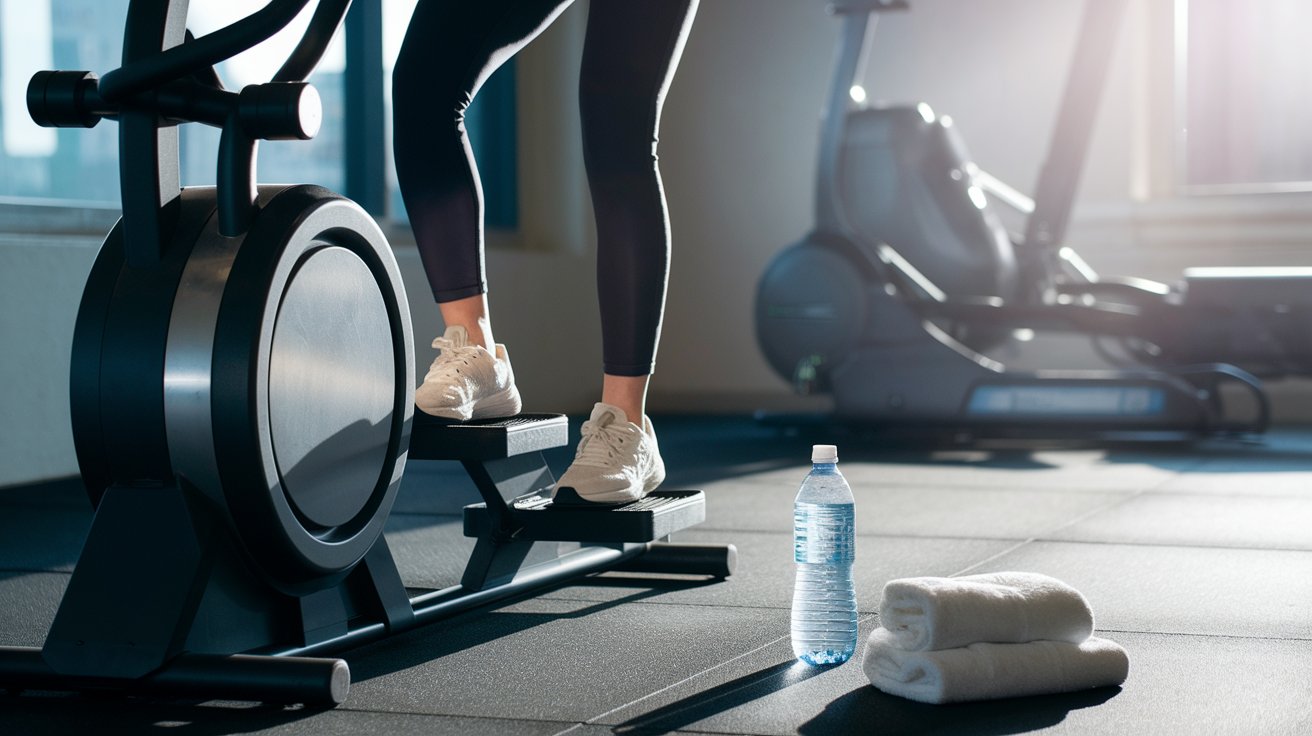
The elliptical is one of the safest cardio machines in the gym. But a few simple habits keep it that way.
Always step onto the machine while it’s stationary or moving very slowly. Use the side rails for balance until both feet are secure on the pedals. When you’re finished, let the machine come to a complete stop before stepping off. Trying to dismount while the pedals are still moving can throw off your balance.
Keep your movements controlled and your posture stable throughout the session. If you feel dizzy, lightheaded, or notice sharp pain in any joint, stop immediately and step off carefully.
Stay hydrated, especially if your session goes longer than 20 minutes. Wear supportive cross training shoes with good grip and cushioning.
How to Progress Your Elliptical Workouts
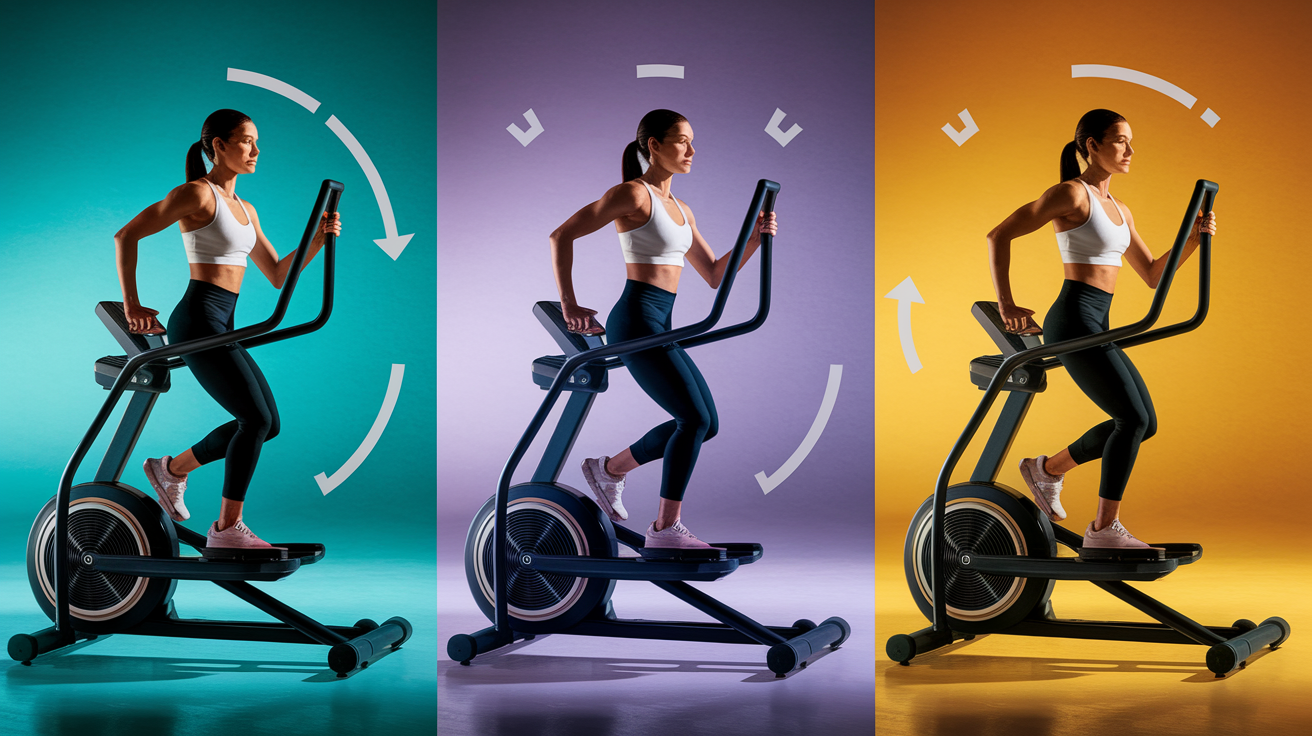
Once you can complete 15 minutes at a steady pace without feeling wiped out, you’re ready to add small, deliberate challenges. Progression doesn’t mean making every session harder. It means changing one thing at a time so your body adapts without getting overwhelmed or injured.
Most beginners see the best results by increasing duration first, then resistance, then introducing short intervals after a few weeks of consistency.
A simple rule: if you can finish your current workout and still hold a conversation within a minute or two of stepping off, it’s time to add 3 to 5 minutes to your next session. Once you’re comfortably working for 25 to 30 minutes, start raising resistance by one or two levels instead of adding more time.
After four to six weeks of steady work, you can begin mixing in intervals. Short bursts of higher effort followed by easier recovery periods.
Four safe ways to progress:
Add 3 to 5 minutes per week until you reach 30 to 40 minutes of continuous work.
Increase resistance by 1 to 2 levels every week or two once your current level feels manageable.
Introduce intervals after four weeks. Try 30 seconds of higher resistance followed by 60 to 90 seconds of easy recovery, repeated 6 to 8 times.
Increase your cadence slightly during steady sessions, aiming for 70 to 85 strides per minute instead of 60 to 70.
How Often Beginners Should Use the Elliptical
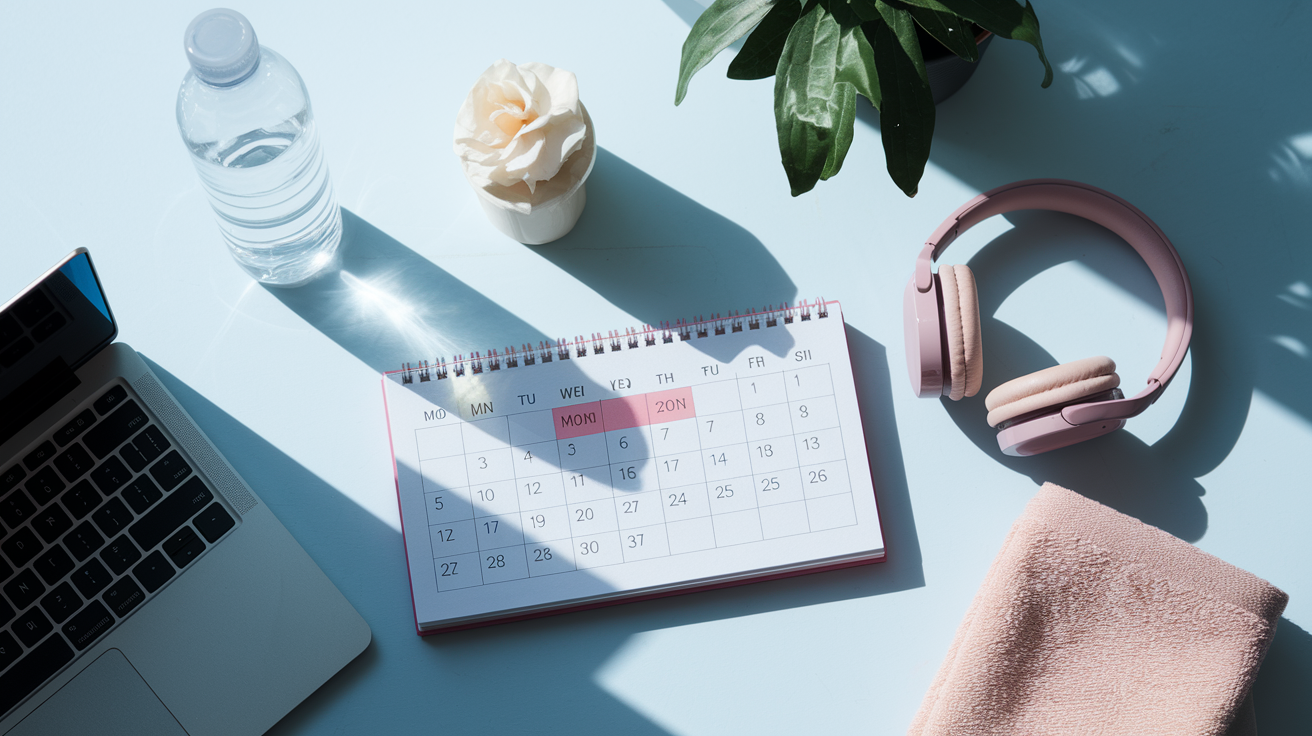
Three to four sessions per week gives most beginners enough stimulus to improve cardio fitness without piling up fatigue or overuse soreness. If you’re brand new to regular exercise, start with three days and space them out. Monday, Wednesday, Friday works well.
After two weeks of consistency, you can add a fourth day if your energy and recovery feel solid.
Rest days matter as much as workout days. Your heart, lungs, and leg muscles adapt during recovery, not during the session itself. If you’re sore, tired, or dragging through workouts, take an extra day off or swap one elliptical session for a short walk or mobility work.
| Day Type | Workout Focus |
|---|---|
| Workout Day | 15–30 minutes steady effort or intervals |
| Rest or Active Recovery | Walking, stretching, or complete rest |
| Optional Fourth Session | Low resistance easy pace, 10–20 minutes |
Final Words
Start with a 10–15 minute session at low resistance (1–4), warm up, then settle into a steady pace with a short cool down.
Keep your spine stacked, shoulders relaxed, and press evenly through the foot. Grip the handles lightly and avoid leaning or pushing with your toes.
Aim for 3–4 sessions per week and slowly add a little time, resistance, or short intervals as you feel ready.
Use this simple elliptical workout for beginners as your go-to plan. Small, consistent steps add up. You’ve got this.
FAQ
Q: How long should a beginner use an elliptical?
A: A beginner should start with 10–15 minute sessions at low resistance (1–4), then gradually build toward 20–30 minutes as fitness improves, aiming for 3–4 sessions per week.
Q: Can you lose belly fat by using an elliptical?
A: Using an elliptical can help reduce belly fat by burning calories and improving cardio, but you can’t spot-reduce. Combine regular sessions, strength work, and a protein-focused, balanced diet for best results.
Q: Is elliptical ok for prolapse or a torn meniscus?
A: Using an elliptical with prolapse or a torn meniscus may be okay with doctor or PT approval. Use low resistance, short sessions, stop for pain, and follow rehab guidance to avoid worsening symptoms.