
Skip your warm-up and you’re asking for trouble — surprising, but true for a lot of beginners.
Five minutes can cut soreness, boost mobility, and make every lift or run feel easier.
In this post you’ll get a simple 5 to 10 minute plan: 1–2 minutes of light cardio, then 3–6 minutes of dynamic moves to wake up shoulders, hips, and core.
I’ll show easy drills, full-body flows, and quick swaps you can pick for any workout.
No equipment. No drama. Just doable steps to move safer and feel better.
Essential Beginner Warm Up Basics for Safe, Effective Movement

A five minute warm up gets your body ready for exercise the same way your phone needs a second to wake up before you start scrolling. Jump straight into heavy squats or a hard run without warming up and you’re asking for trouble. Cold muscles, stiff joints, unprepared tissue.
Dynamic warm-ups (movements that take your joints through their range while gradually raising your heart rate) reduce soreness after your workout, improve blood flow, fire up your nervous system, and help you move better. Static stretching before you train doesn’t do much for you. It can actually reduce your power output if you hold stretches too long. Save those for after.
Here’s how to build your beginner warm-up: plan for 5 to 10 minutes total. Start with 1 to 2 minutes of light cardio to get your heart rate up, then move into 3 to 6 minutes of dynamic mobility and activation. Pick 5 to 10 movements from the list below. Perform each for 30 to 60 seconds.
Your first week might look like this:
March or jog in place for 60 seconds (raises heart rate and body temp). Arm circles forward and backward, 30 seconds each direction (preps shoulders and upper back). Hip circles for 30 seconds (loosens hip joints and lower back). Bodyweight squats, 10 to 15 slow reps (activates glutes, quads, and core). Leg swings front to back, 10 to 15 per leg (improves hip mobility and hamstring readiness). Walking lunges, 8 to 12 steps per leg (warms lower body through multiple planes).
This simple sequence gets blood flowing, wakes up your nervous system, and prepares the joints you’ll use most. No equipment. No perfection required.
Dynamic Warm Up Exercises That Build Safe Range of Motion

Dynamic warm up exercises move your joints through their full available range while your muscles contract and relax in rhythm. This controlled movement primes your nervous system, lubricates joint surfaces, and teaches your body the patterns it’s about to perform under load. Unlike static holds, dynamic stretches keep you moving and maintain the readiness you need for strength work or cardio.
Quality over speed. Each rep should feel deliberate, with a 2 to 3 second controlled phase and steady breathing. If a movement feels tight or unfamiliar, work within your current range and let mobility expand gradually over weeks.
Beginner Dynamic Mobility Sequence
This five move flow targets the thoracic spine, hips, hamstrings, and shoulders without repeating the basics from your starter routine:
Thoracic Rotations (Open Book): Lie on your side with knees bent and arms extended forward. Slowly rotate your top arm across your body and open your chest toward the ceiling, following your hand with your eyes. Return and repeat. Perform 8 to 12 reps per side. Keep your knees stacked and hips still to isolate mid back rotation.
Inchworm: Stand tall, hinge at the hips, and walk your hands forward into a plank position. Pause briefly, then walk your feet toward your hands and stand. Repeat for 6 to 8 reps. This warms your hamstrings, core, shoulders, and teaches body control through a full body hinge pattern.
Lateral Leg Sweeps: Stand on one leg with light support if needed. Sweep your free leg across your body, then out to the side in a smooth arc. Control the movement in both directions. Perform 10 to 12 sweeps per leg. This drills hip abduction and adduction while challenging balance.
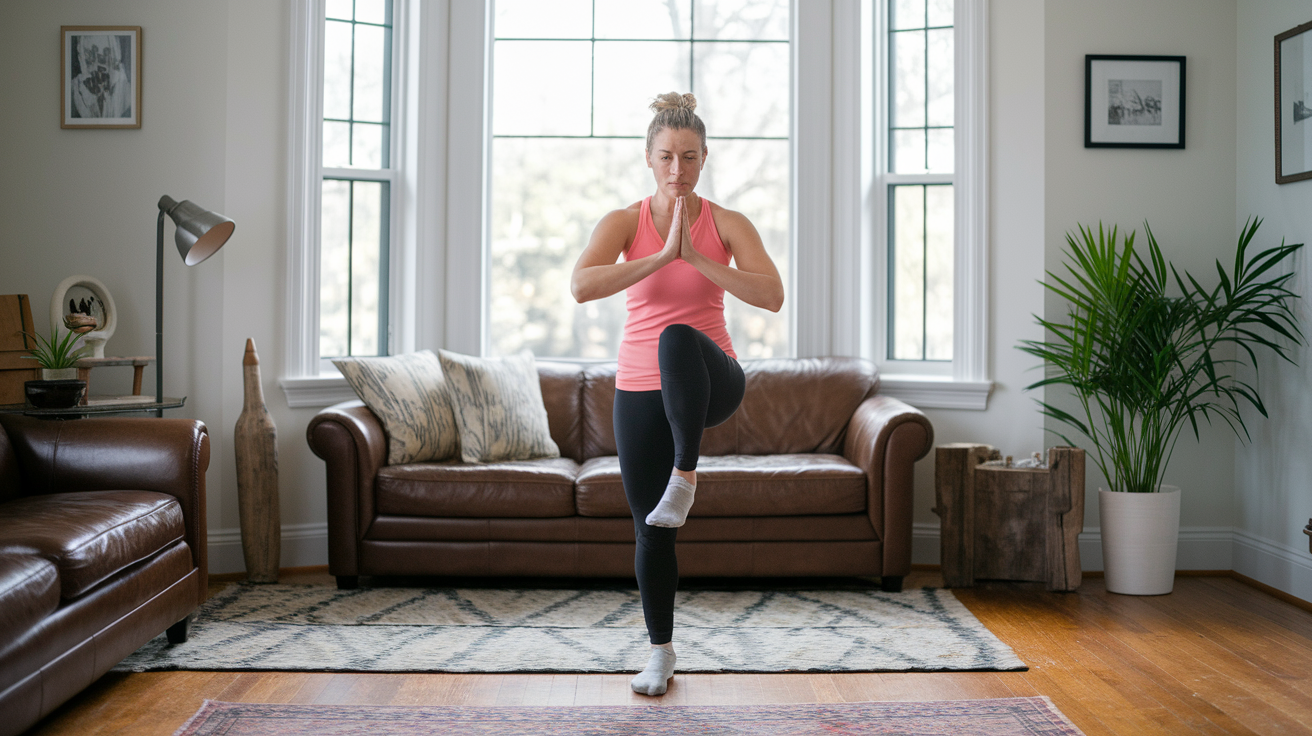
Controlled Hip CARs (Controlled Articular Rotations): Stand on one leg and lift the opposite knee to hip height. Slowly circle the knee outward, back, and around in the largest comfortable circle. Reverse direction halfway through. Perform 8 to 10 circles per leg, each direction. Move slowly to build active range and joint control.
Walking Lunges with Overhead Reach: Step forward into a lunge and reach both arms overhead as you sink into the position. Return arms to your sides as you step the back foot forward into the next lunge. Perform 8 to 12 steps per leg. This adds thoracic extension and shoulder mobility to the basic lunge pattern.
Full Body Warm Up Sequences for Beginners

A full body warm up sequence strings together upper body, lower body, and core movements into one continuous flow. Use the movements you’ve already learned and follow a structured timeline that keeps you moving without fatigue.
Start with a simple five minute flow that covers all major joints and movement patterns. Perform each exercise in order, transition smoothly, and keep your heart rate in the 50 to 65 percent range (you should be able to hold a conversation but feel your body warming up).
| Exercise | Time / Reps |
|---|---|
| March or jog in place | 60 seconds |
| Arm circles (forward, then backward) | 30 seconds each |
| Hip circles | 30 seconds |
| Bodyweight squats | 10–15 reps |
| Leg swings (front to back) | 10–15 per leg |
| Walking lunges | 8–12 steps per leg |
If you have ten minutes, extend the routine by adding jumping jacks or high knees for an extra 30 to 60 seconds. Include the inchworm for 6 to 8 reps, glute bridges for 10 to 15 reps, a plank hold for 20 to 45 seconds, and thoracic rotations for 8 to 12 reps per side. The added volume keeps your heart rate elevated longer and gives more time to prepare joints that need extra attention.
Upper & Lower Body Beginner Warm Up Exercises

When your workout focuses heavily on one area, tailor your warm-up to match. Upper body warm-ups prepare your shoulders, scapulae, wrists, and chest for pressing, pulling, or overhead work. Lower body primers target ankles, hips, knees, and glutes for squats, lunges, deadlifts, or running.
These drills are short, focused, and designed to activate specific joints and muscles before you load them.
Upper Body Activation Drills
Shoulder Rolls: Roll your shoulders backward in large, controlled circles for 10 reps, then forward for 10 reps. Keep your neck relaxed and let the movement come from your shoulder blades.
Scapular Squeezes (or Band Pull Aparts): Squeeze your shoulder blades together and hold for one second, then release. Perform 10 to 15 reps. If you have a light resistance band, hold it at chest height and pull it apart by retracting your shoulder blades.
Wrist Circles: Extend your arms and make slow circles with your wrists in both directions for 10 to 15 reps each way. This prepares wrists for push-ups, planks, or any hand loaded position.
Push-Up to T: Perform a knee or regular push-up, then at the top rotate into a side plank by lifting one arm toward the ceiling. Return to plank and repeat on the other side. Perform 6 to 10 total reps. This warms chest, shoulders, triceps, and core rotation in one efficient move.
Lower Body Prep Moves
Ankle circles. Lift one foot off the ground and draw slow circles with your toes, 10 to 15 per side in each direction. Repeat on the other ankle. Prepares ankles for running, jumping, and squat stability.
Hip flexor lunges with reach. Step into a lunge and reach both arms overhead, leaning slightly back to open the front hip. Hold for a breath, then switch sides. Perform 6 to 10 per side.
Lateral leg sweeps. Described earlier in the mobility section. Use 10 to 12 sweeps per leg to activate hip abductors and adductors.
Single leg Romanian deadlift (bodyweight). Stand on one leg, hinge at the hips, and reach your hands toward the floor while your free leg extends behind you. Return to standing. Perform 6 to 10 reps per side to activate glutes, hamstrings, and balance.
Hip rotations (stepping over a fence). Lift one knee and rotate it outward as if stepping over a low fence, then back inward. Alternate legs for 10 reps per side. Warms internal and external hip rotation.
Core Activation Drills for a Stronger Beginner Warm Up

Your core stabilizes every movement you make, from squats to overhead presses to running. Activating it during your warm-up teaches your nervous system to engage your trunk before loading your limbs. Less compensation, better form under fatigue.
Start with dead bugs. Lie on your back with your arms extended toward the ceiling and knees bent at 90 degrees. Slowly lower one arm overhead while straightening the opposite leg, hovering it an inch above the floor. Return to start and switch sides. Perform 8 to 12 reps per side. Keep your lower back pressed gently into the floor and move with control (2 to 3 seconds per rep).
Bird dogs build similar control in a hands and knees position. Extend one arm forward and the opposite leg back, forming a straight line from fingertips to heel. Hold for one breath, return, and switch. Perform 6 to 10 reps per side. Focus on keeping your hips level and avoiding rotation through your torso.
Glute bridges round out core activation by firing your posterior chain. Lie on your back with feet flat and knees bent. Press through your heels to lift your hips until your body forms a straight line from shoulders to knees. Squeeze your glutes at the top, hold for one second, then lower. Perform 10 to 15 reps. Breathe out as you lift, in as you lower. This drill primes glutes and lower back for squats, deadlifts, and running without fatiguing you before the main work.
Light Cardio Warm Up Options for Beginners

Sometimes you just need to raise your pulse and get blood moving without diving into mobility drills. Light cardio warm up options elevate your heart rate to around 50 to 65 percent of max, warm your muscles from the inside out, and prepare your cardiovascular system for harder efforts ahead.
Choose one or two of these moves and perform them for 1 to 2 minutes total at the start of your warm-up. Keep the intensity conversational. You should feel your breathing pick up but still be able to talk in short sentences.
Step jacks. Step one foot out to the side while raising your arms overhead, then step back to center and lower your arms. Alternate sides in a smooth rhythm for 30 to 60 seconds. Lower impact than jumping jacks but still effective for raising your heart rate.
Marching in place. Lift your knees to hip height in a steady march, pumping your arms naturally. Perform for 60 seconds. Add a slight lean forward to engage your core and prepare for running mechanics.
Jogging in place. A step up from marching. Jog lightly on the balls of your feet for 30 to 60 seconds. Keep your shoulders relaxed and land softly.
Jumping jacks. Jump your feet wide while raising your arms overhead, then return to start. Perform for 30 to 60 seconds. If jumping feels harsh on your knees, substitute step jacks or marching.
Beginner Warm Up Exercises for Strength Training Days

Pre workout activation drills prepare your muscles and joints for load, but when you’re lifting weights, you also need movement specific warm-up sets that teach your nervous system the exact pattern it’s about to perform under tension. Skip these ramp up sets and jump straight to your working weight? You’re increasing injury risk and reducing performance.
Start every strength session with 2 to 3 minutes of general dynamic warm-up (use any combination from the earlier sections), then transition into progressive warm-up sets for each major lift. These sets aren’t about building fatigue. They’re about rehearsing the movement and preparing connective tissue to handle heavier loads safely.
Step-by-Step Strength Warm Up Protocol
Step 1: Choose Your First Exercise. If you’re starting with barbell squats, goblet squats, or any compound lift, begin here. Isolation exercises like bicep curls need less warm-up volume.
Step 2: Perform a Very Light Set. Use a load you could lift for 20 reps (or bodyweight if you’re new). Perform 8 reps with slow, controlled form. Focus on technique, breathing, and full range of motion. Example: bodyweight squats for 8 reps before loading a barbell.
Step 3: Perform a Moderate Set. Increase the weight to something you could lift for about 10 reps. Perform 4 reps. This set bridges the gap between light and working load, priming your muscles and nervous system for heavier effort. Example: goblet squat with a light dumbbell or empty barbell squat.
Step 4: Transition to Your Working Sets. After 2 to 3 warm-up sets, you’re ready for your planned training load. Your joints are lubricated, your muscles are firing, and your form is dialed in. If the jump from your last warm-up set to your working weight feels large, add one more intermediate set at 70 to 80 percent of your working load for 2 to 3 reps.
Sport-Specific Beginner Warm Up Exercises (Running, Yoga, HIIT)

Different activities demand different preparation. A runner needs hip extension and ankle mobility, a yoga practitioner benefits from gentle spinal movement, and a HIIT session requires a blend of cardio and activation without pre-fatiguing muscles. Tailor your warm-up to match what’s coming next.
Running Warm Up
Start with 1 to 2 minutes of walking or slow jogging to raise your core temperature. Follow with leg swings (front to back and side to side) for 10 to 15 reps per leg, then add Spiderman steps. Step into a deep lunge and place both hands on the ground inside your front foot, hold for one breath, then step forward into the next lunge. Perform 5 reps per leg. Finish with 30 seconds of high knees or butt kicks to activate your hip flexors and hamstrings at running specific speeds.
Yoga Warm Up
Begin in a comfortable seated or kneeling position and move through 8 to 10 rounds of cat-cow (arching and rounding your spine with your breath). Add 6 to 8 thoracic rotations per side (open book) to prepare your mid back for twists and side bends. Finish with 5 to 8 slow sun salutations or a few minutes of gentle flow to connect breath, movement, and body awareness before deeper poses.
HIIT Warm Up
HIIT sessions spike your heart rate and demand explosive power, so warm up with low impact cardio (marching, step jacks, or light jogging) for 60 to 90 seconds. Move into bodyweight squats (10 to 15 reps), glute bridges (10 to 15 reps), and a few push-ups or plank holds to activate your core and upper body. Finish with 20 to 30 seconds of jumping jacks or high knees at about 70 percent effort to rehearse the intensity you’re about to hit without burning out before the workout starts.
Common Warm Up Mistakes Beginners Should Avoid
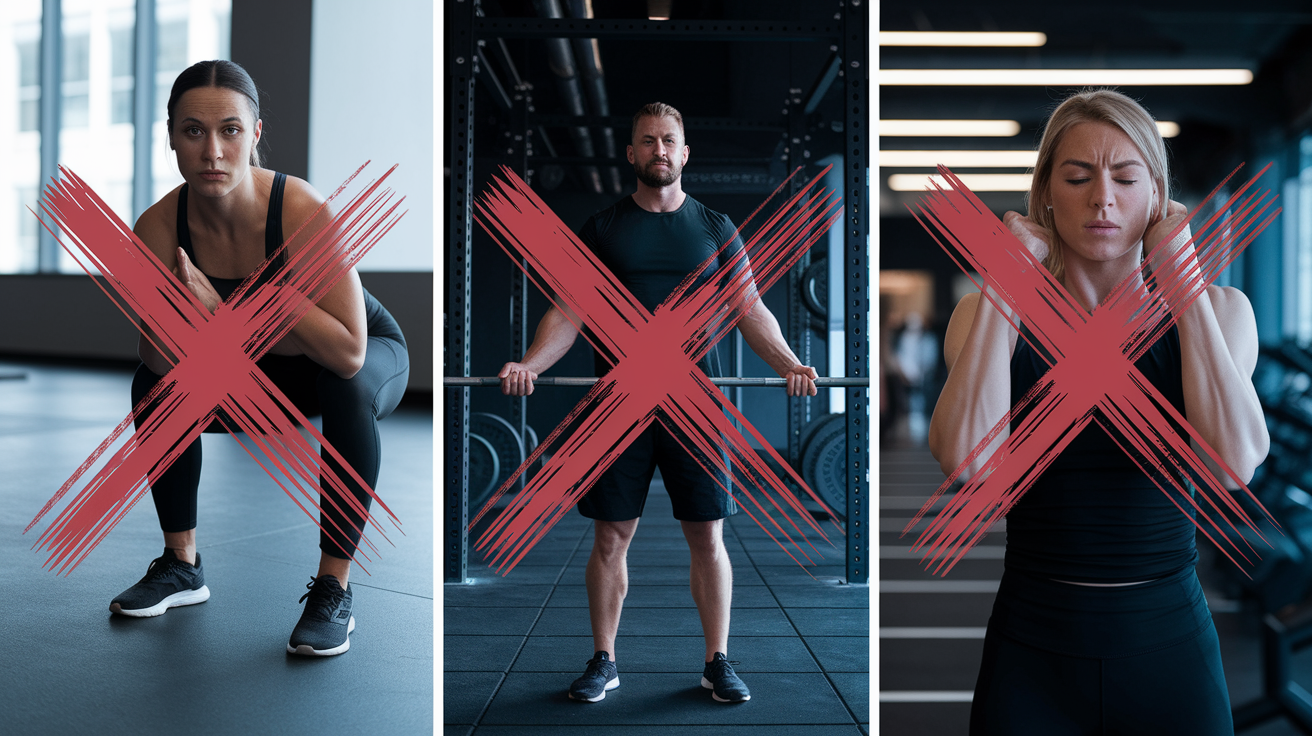
The most common warm up mistakes come from old habits, rushed timelines, or advice that worked for someone else but doesn’t fit your current fitness level. Correcting these errors makes your warm-up safer, more effective, and better matched to your goals.
Static stretching before your workout is one of the biggest missteps. Holding stretches for 30 to 60 seconds can temporarily reduce muscle activation and power output, leaving you weaker when you need to be primed. Save static holds for after your session or a separate flexibility workout. Before training, choose dynamic movements that take your joints through range while keeping your muscles active.
Skipping the warm-up entirely. Fix: Even 3 to 5 minutes of light movement reduces injury risk and improves performance. If you’re short on time, pick 3 to 4 movements and move through them once.
Rushing through movements. Fix: Slow down. Use a 2 to 3 second controlled phase and focus on quality over speed. Warm-ups aren’t cardio workouts.
Holding your breath. Fix: Breathe continuously. Exhale during effort, inhale during the easier phase. Breath holding raises blood pressure and reduces oxygen delivery.
Warming up for too long or too hard. Fix: Keep total time under 10 minutes and intensity conversational. If you feel fatigued before your workout starts, you’ve overdone it.
Using the same routine for every workout. Fix: Match your warm-up to the session ahead. If you’re training legs, prioritize hip and ankle mobility. If you’re pressing overhead, spend more time on shoulder and thoracic prep.
Warm Up Progressions and How to Build a 5–10 Minute Beginner Routine

Warm up progressions follow the same principle as strength training. Small, consistent improvements over time. Start with a basic 5 minute routine that covers light cardio, a few dynamic stretches, and simple activation. As your fitness and mobility improve, add 1 to 2 minutes of total time, increase reps by 10 to 20 percent, expand your range of motion, or include light resistance like a small dumbbell or resistance band.
Most beginners should stick within 5 to 10 minutes for the first four to eight weeks. Longer warm-ups don’t improve results and can leave you too tired to perform well in your main workout. Focus on consistency and quality first, then layer in complexity as your body adapts.
Track your warm-up the same way you track your workouts. Write down which movements you used, how long each took, and how your body felt. If hip circles feel easier this week than last, your mobility is improving. If you can complete an extra rep of bodyweight squats with better depth, your baseline strength and range are progressing.
Four Week Beginner Warm Up Plan
Week 1: Perform your chosen 5 minute routine (6 movements, 30 to 60 seconds each) before every workout. Focus on learning the movements and moving within comfortable range.
Week 2: Add 1 to 2 minutes by increasing the duration of each movement to 45 to 60 seconds, or by adding one or two new drills (like inchworms or glute bridges).
Week 3: Increase reps by 10 to 20 percent where applicable (bodyweight squats from 10 to 12 reps, leg swings from 10 to 12 per leg, for example). Work on slightly larger ranges of motion if your joints feel ready.
Week 4: Add light resistance to one or two movements if appropriate (hold a light dumbbell during goblet squats, use a band for scapular squeezes). Maintain total warm-up time at 8 to 10 minutes and assess readiness to progress into sport specific or strength specific warm-up protocols.
Final Words
Start with 5-10 minutes: 1-2 minutes of light cardio, then 3-6 minutes of dynamic mobility and activation. That warms muscles, boosts blood flow, and primes movement.
You learned a simple follow-along routine, mobility sequences, full-body flows, upper and lower primers, core drills, light cardio options, strength warm-ups, sport mini-routines, common mistakes, and how to progress week to week.
Pick the 5-minute version to start, add reps or time as you get stronger, and repeat most days. These beginner warm up exercises are quick, effective, and easy to fit into a busy day. Keep it consistent and you’ll notice better movement.
FAQ
Q: What is a good warm-up for beginners?
A: A good warm-up for beginners is 5–10 minutes long: start with 1–2 minutes of light cardio, then 3–6 minutes of dynamic mobility and activation, doing 5–10 movements for 30–60 seconds each.
Q: What is the 3-3-3 rule for working out?
A: The 3-3-3 rule for working out means 3 minutes light cardio, 3 minutes dynamic mobility, and 3 minutes activation—a simple 9-minute warm-up that raises heart rate, loosens joints, and primes muscles for safe movement.
Q: What are 10 warm-up exercises?
A: Ten warm-up exercises include marching in place, step jacks, arm circles, shoulder rolls, thoracic rotations, bodyweight squats, walking lunges, inchworms, lateral leg sweeps, and glute bridges.
Q: Does warming up increase synovial fluid?
A: Warming up does increase synovial fluid movement, improving joint lubrication and range of motion; gentle, controlled movement helps distribute fluid and reduce stiffness before exercise.