
Think you need a complicated program to get fit?
You don’t.
A printable beginner workout plan gives clear, turn-by-turn directions, warm-up, main moves, cool-down, photos, and tracking boxes so you know exactly what to do and when.
This post shows how to pick the right printable, use the zero or minimal equipment options, and make the plan fit a busy week.
If you want a simple routine that builds strength, protects your joints, and helps you keep going, start here.
Accessing Your Printable Beginner Workout Plan (Core Downloads & How to Use Them)
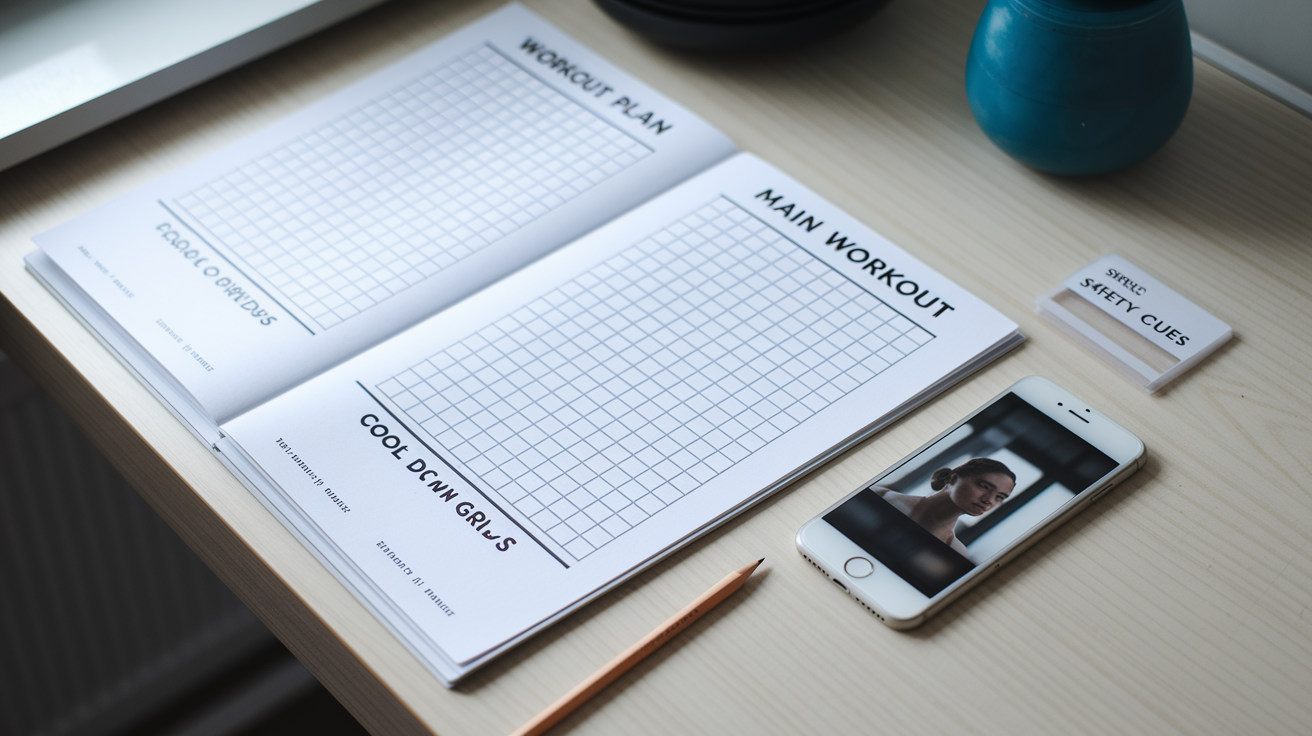
Every printable you download gives you a clean PDF with illustrated exercises, sets, reps, rest times, tracking grids, safety notes, and a weekly layout. Each exercise shows the name, a quick cue, written steps, photo sequence, and a linked 30-second demo video. You can print these as single sheets or multi-page booklets depending on what works for you at home or the gym.
All plans come with a warm-up block, the main workout, a cool-down sequence, beginner modifications, and space to log your progress. The warm-up tells you what to do for 5 to 10 minutes before you start. The main section lists each exercise with sets, reps or time, plus rest periods. Cool-down gives you 5 to 10 minutes of stretching or easy movement. Modifications show easier versions of each exercise so you can start wherever you’re at, and the tracking boxes let you write down reps, weights, and dates after each session.
These work anywhere. Home or gym. They come in zero-equipment and minimal-equipment versions. Zero-equipment means bodyweight only. Minimal-equipment means a resistance band or light dumbbells. If you don’t own dumbbells, many plans list household swaps like filled water bottles or soup cans.
What’s included:
- Warm-up structure — 5 to 10 minutes of dynamic stretches or light cardio with breathing cues
- Main workout layout — exercise name, sets, reps or time, rest intervals, and photo sequence
- Cool-down steps — 5 to 10 minutes of static stretches and posture resets
- Progression notes — when to add reps, sets, weight, or move to a harder version
- Tracking boxes — tables for recording weight, reps, and dates across 4 to 8 weeks
- Safety cues — red-flag signs, form reminders, and physician-consult notes when needed
Quick Checklist for Choosing the Right Printable Plan
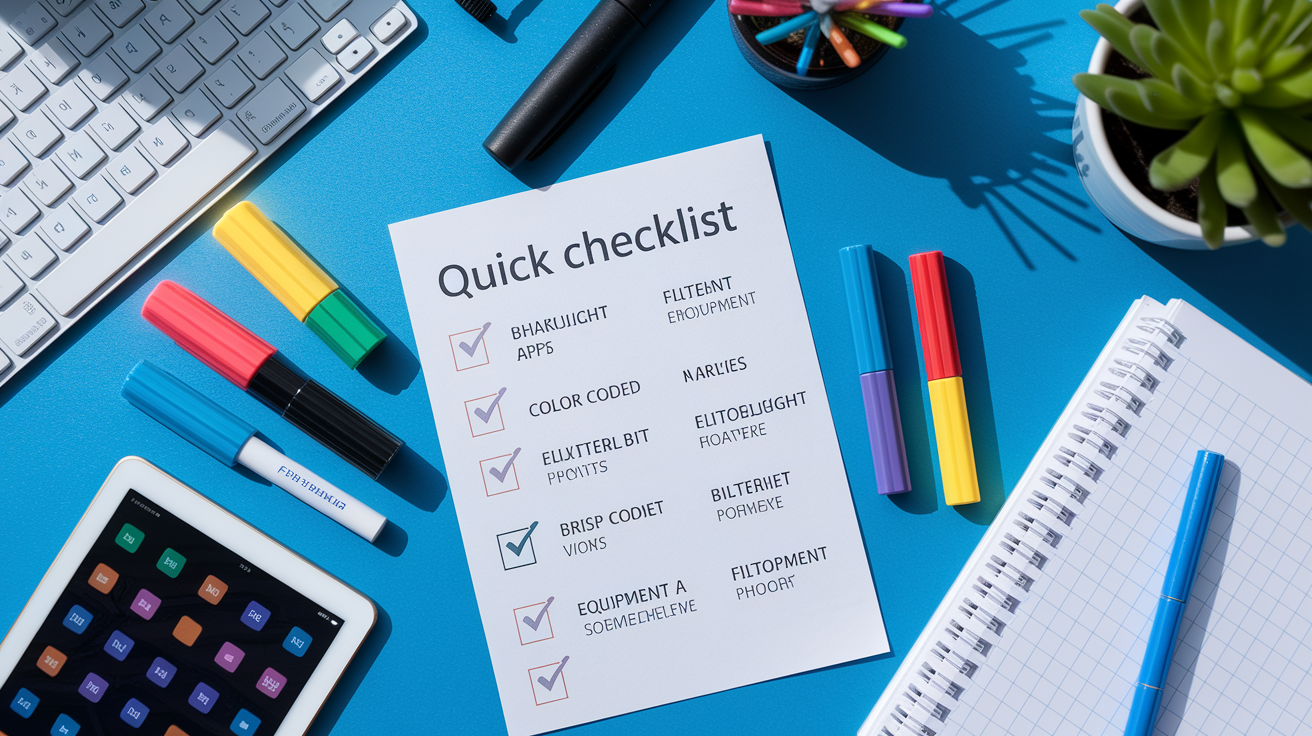
This checklist helps you pick the printable that matches your situation. Use it to filter by equipment, time, experience, any joint concerns, and whether you want a daily sheet or weekly overview.
- Equipment preference — zero-equipment bodyweight, resistance band, dumbbells, or gym access
- Time available per session — 10 to 20 minutes, 20 to 40 minutes, or 40 to 60 minutes
- Experience level — true beginner (never trained), returning after a break, or beginner with some familiarity
- Special considerations — knee-friendly modifications, low-impact only, balance support, or seated options
- Layout preference — daily one-page session sheet or weekly calendar with all seven days visible
Sample Printable Full-Body Beginner Workout Plan (Sets, Reps & Organization)
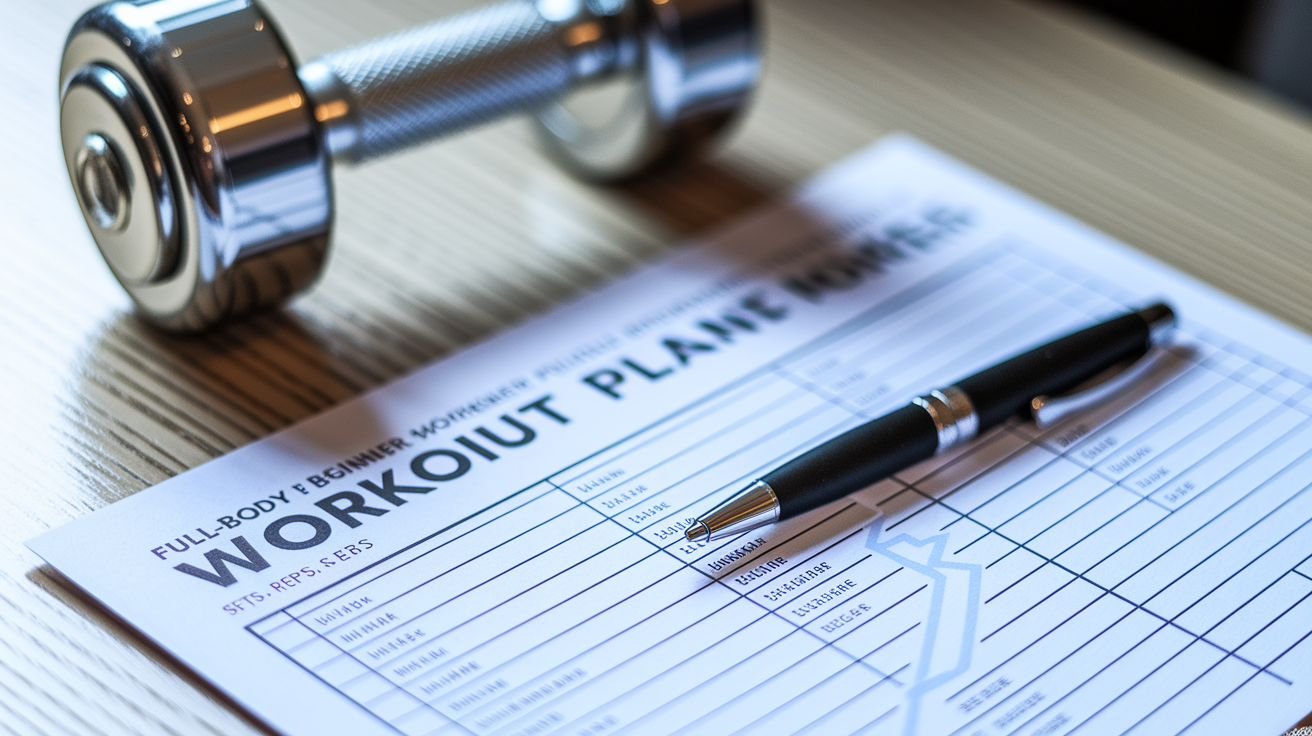
A typical beginner full-body plan schedules three strength sessions per week, one to two cardio or walking days, and one to two full rest or active recovery days. Strength days hit all major muscle groups in one session so you don’t need to split upper and lower across the week. Cardio days can be 10 to 30 minutes of walking, cycling, or light intervals. Rest days can be complete rest or light stretching and mobility.
Each strength session uses three sets of eight to twelve reps for bodyweight or dumbbell exercises, or three rounds of a circuit with ten to fifteen reps per movement. The printable lists beginner-friendly moves like squats, push-ups, glute bridges, rows, reverse lunges, planks, and dead bugs. These train legs, chest, back, shoulders, and core without complicated technique or heavy weight. You’ll find a photo sequence and 30-second demo video link next to each exercise.
The printable organizes everything in a logical flow and tells you exactly what to do next. Exercises are numbered in order. Rest times appear after each movement. The notes column includes reminders like “press through heels” for squats or “keep hips level” for planks.
| Exercise | Sets/Reps | Notes |
|---|---|---|
| Bodyweight Squat | 3 × 10 | Press through heels, knees track over toes |
| Knee or Full Push-Up | 3 × 8 | Elbows at 45°, ribcage stacked over hips |
| Glute Bridge | 3 × 12 | Squeeze glutes at top, pause 1 second |
| Resistance Band Row or Table Row | 3 × 10 | Pull shoulder blades together, flat back |
| Reverse Lunge (per side) | 3 × 8 | Step back, 90° front knee, push through front heel |
| Forearm or Knee Plank | 3 × 20–30 sec | Neutral spine, shoulders over elbows |
| Dead Bug | 3 × 10 (per side) | Press lower back into floor, slow tempo |
Printable Workout Calendars, Planners & Checklists
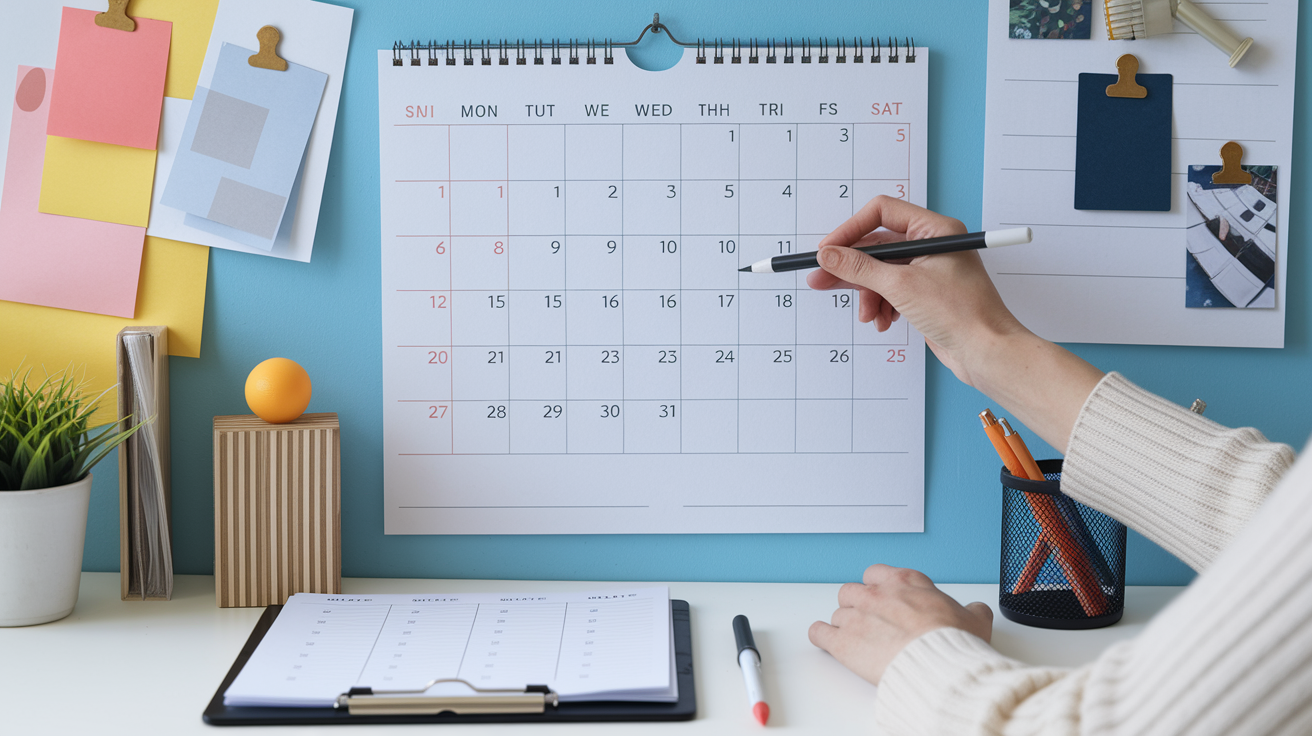
Calendar and planner printables help you see the full month or week at a glance so you know when to train, when to rest, and when to check progress. Monthly planners show high-level scheduling like “Strength Monday/Wednesday/Friday, Walk Tuesday/Thursday, Rest Saturday/Sunday.” Weekly planners zoom in to show session placement and which muscle groups or cardio type you’ll do each day. Daily session sheets drill down to exact exercises, sets, reps, and notes for that single workout.
Progress-check boxes sit inside the monthly planner so you can mark the date you measured weight, took photos, or tested a fitness benchmark like how many push-ups you can do in one set. Tracking these milestones every four weeks helps you see changes that daily weight swings hide.
- Monthly planner — one-page grid with 28 to 31 days, space to write workout type and rest days, check boxes for weekly habits like hydration or sleep
- Weekly planner — seven-day row showing session name, duration, and any equipment needed, room for quick notes after each session
- Daily session sheet — detailed exercise list with sets, reps or time, rest intervals, modifications, and a scoring or difficulty note at the bottom
- Progress-check boxes — small tables for recording body measurements, performance tests, or energy and recovery ratings every four weeks
Zero-Equipment & Minimal-Equipment Printable Beginner Workouts

Zero-equipment routines use bodyweight for every movement. You can work out anywhere without dumbbells, bands, or machines. These plans include squats, lunges, push-ups, planks, glute bridges, and step-ups on a sturdy chair or low step. The printable still shows photos and demo-video links so you can check your form. The tracking table works the same way as equipment-based plans.
Minimal-equipment plans add one or two tools, usually a resistance band or a pair of light dumbbells in the 5 to 20 pound range. The printable lists household alternatives when you don’t own official gear. A filled backpack replaces a dumbbell for goblet squats, a resistance band loops around a table leg for rows, and water bottles work for bicep curls and overhead presses. The exercises stay simple so you spend your energy on movement quality, not figuring out complex setups.
Photos in the printable show proper body position for each exercise. You’ll see where to place your feet, how to hold your arms, and what a neutral spine looks like. If your form drifts when you’re tired, glance at the photo to reset instead of stopping to rewatch the full video.
Four zero-equipment exercises included in most plans:
- Push-up (knee or full)
- Bodyweight squat
- Reverse lunge
- Glute bridge
Printable Cardio, HIIT & Low-Impact Beginner Workouts (Unified Conditioning Section)
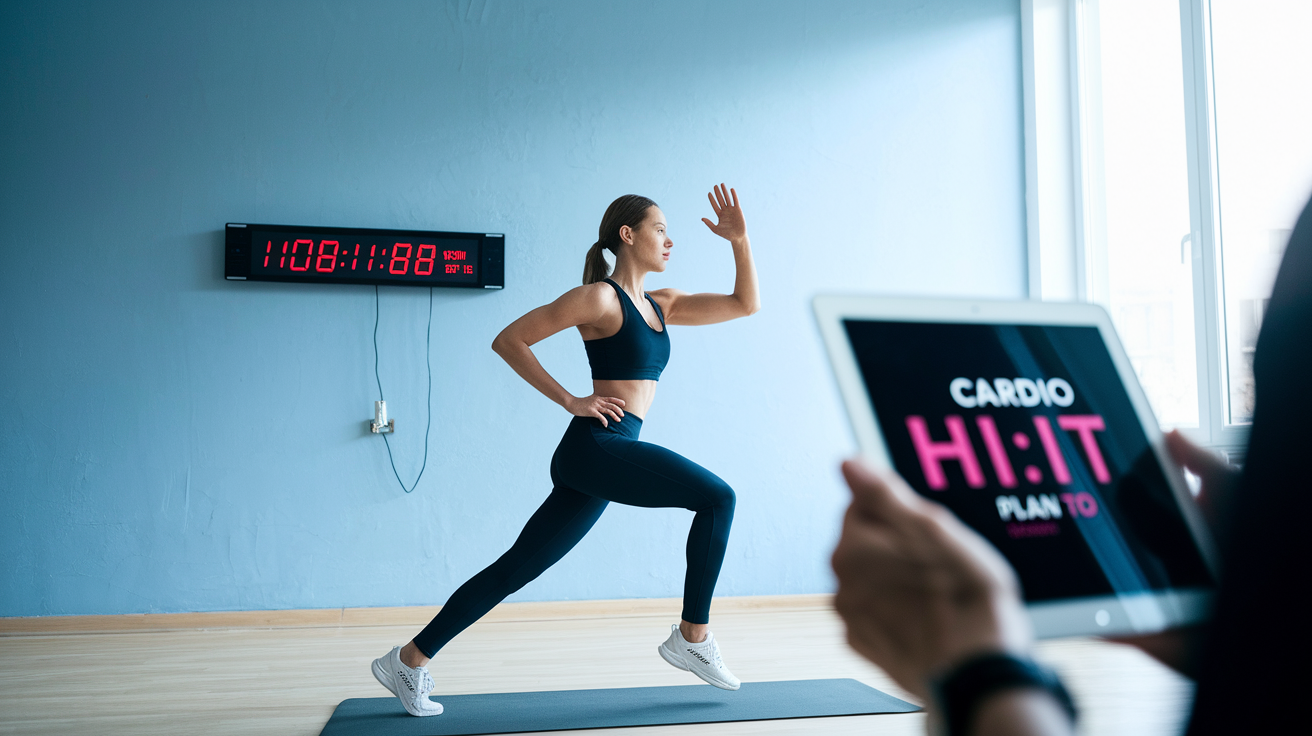
Walking printables recommend 20 to 45 minutes of steady-pace walking or break the total into three sessions of 10 to 15 minutes if a single longer walk doesn’t fit your schedule. Three short walks across the day (one before work, one at lunch, one after dinner) add up to the same cardiovascular benefit as a single 30 to 45 minute session. The printable includes space to log your time, perceived effort, and whether you walked inside or outside.
Beginner HIIT intervals keep work periods short, usually 20 to 40 seconds of effort followed by 40 to 60 seconds of rest or very light movement. A sample printable HIIT session might list marching in place, bodyweight squats, standing knee drives, and modified burpees performed in 30-second bursts with 45 seconds of walking between rounds. You repeat the circuit three times for a total session time of around 15 to 20 minutes including warm-up and cool-down.
Conditioning pairs with strength in weight-loss-focused printables by scheduling cardio on non-strength days or at separate times of day. A typical week places strength Monday, Wednesday, Friday, walking or low-impact cardio Tuesday and Thursday, and rest Saturday and Sunday. This keeps you active most days without overloading the same muscles or nervous system.
| Session Type | Duration | Notes |
|---|---|---|
| Steady Walking | 20–45 min | Moderate pace, can split into 3 × 10–15 min |
| Walk Intervals | 20 min | Alternate 2 min normal, 1 min brisk |
| Beginner HIIT | 15–20 min | 20–40 sec work, 40–60 sec rest, 3 rounds |
| Low-Impact Cardio | 20–30 min | Marching, step-touch, seated intervals |
Printable Mobility & Recovery Sheets for Beginners
Mobility sheets guide you through joint-focused stretches and range-of-motion drills you do on rest days or after workouts. A typical recovery-day printable includes hip circles, shoulder rolls, cat-cow stretches, and gentle spinal twists. Each movement appears with a photo, short cue like “move slowly, breathe through the stretch,” and a recommended hold or rep count. You’ll spend 10 to 15 minutes working through the sequence at an easy pace.
Flexibility routines show static stretches you hold for 20 to 30 seconds after your muscles are warm. Common stretches include standing quad stretch, seated hamstring reach, chest opener against a wall, and kneeling hip flexor stretch. The notes column reminds you to avoid bouncing and to stop if you feel sharp pain. Regular flexibility work helps maintain posture, reduces muscle tightness, and supports better form during strength sessions.
Progression Tools: Printable Trackers, Logs & Overload Guides

Overload trackers let you record reps, sets, weight, and notes for every exercise across multiple weeks. Each row represents one exercise, each column represents one week. You write down what you did, then plan a small increase for the next session. Two more reps, one more set, five more pounds, or ten fewer seconds of rest. Seeing the numbers climb week to week keeps you motivated and proves the plan is working.
Tempo charts explain how to control speed during each phase of a movement. A common beginner tempo is two seconds down, one second pause, two seconds up, written as 2-1-2. The printable shows this code next to each exercise so you can slow down and focus on muscle tension instead of rushing through reps. Intensity scales rate effort from 1 to 10, helping you decide when to add weight. If the last two reps feel like a 9 out of 10, you’re ready to progress. If they feel like a 5, the load is too light.
- Overload tracker — table with exercise name, week 1 through week 8 columns, space for reps, sets, weight, and rest time
- Tempo chart — simple guide showing eccentric, pause, and concentric speeds for each lift
- Intensity scale — 1 to 10 rating printed next to the tracking table so you log how hard each set felt
- Visual progress charts — line graphs or bar charts you fill in monthly to see trends in weight lifted, reps completed, or session duration
Printable Workout Modifications & Safety Sheets for Beginners
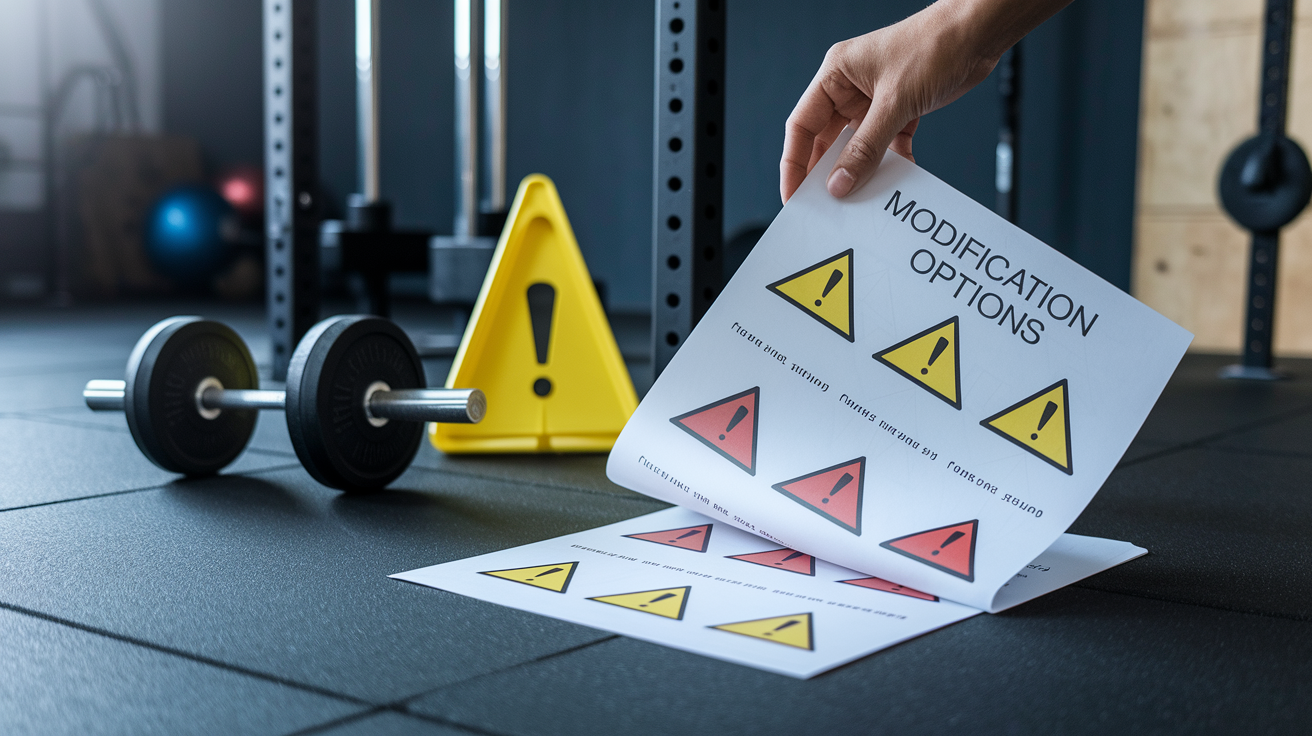
Modification sheets list alternative exercises for common issues like knee pain, lower-back sensitivity, or limited balance. If regular squats bother your knees, the printable shows a chair squat where you sit back onto a sturdy seat and stand. If push-ups hurt your wrists, you’ll see an option for wall push-ups or elevated push-ups on a countertop. Each substitute includes the same photo and cue format as the main exercise list.
Load-adjustment cues tell you when to reduce weight or reps. If your arms swing during bicep curls, drop to a lighter dumbbell. If your shoulders rise during a chest press, use less resistance or fewer reps until your form stabilizes. The printable includes red-flag signs like sharp joint pain, dizziness, or inability to maintain neutral spine. When you see these, stop the exercise and consult a physician if the issue persists.
Injury-prevention checklists remind you to warm up every session, choose weights that allow controlled movement, rest at least one full day per week, and avoid training the same muscle group on consecutive days. These simple rules reduce overuse injuries and keep you training consistently instead of starting and stopping because of preventable setbacks.
Example Printable Day-by-Day Beginner Plan (1-Week Sample)
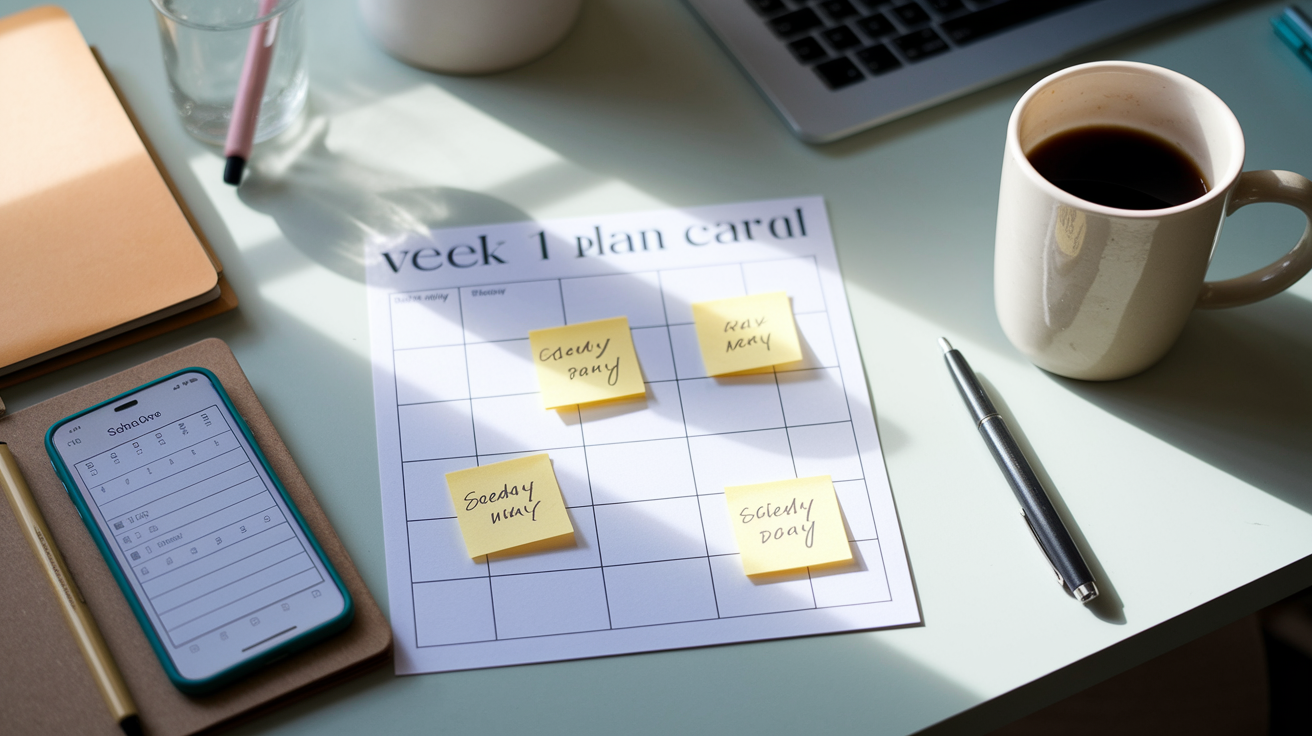
This sample week shows how strength, cardio, and rest days fit together in a realistic schedule. Monday, Wednesday, and Friday feature full-body strength sessions that take 30 to 40 minutes including warm-up and cool-down. Tuesday and Thursday schedule 20 to 30 minutes of walking or low-impact cardio. Saturday is a mobility and stretching day where you spend 15 minutes on gentle movement. Sunday is complete rest with no structured exercise.
The strength days are spaced so you never train two days in a row. This pattern gives your muscles time to recover and adapt. Walking on Tuesday and Thursday keeps you active without adding fatigue that would interfere with Wednesday’s or Friday’s strength work. The mobility day helps you move better during the next week’s sessions, and the full rest day lets your nervous system recover.
| Day | Session Type | Notes |
|---|---|---|
| Monday | Full-Body Strength | 3 sets × 8–12 reps, 7 exercises, ~35 min |
| Tuesday | Walking | 20–30 min steady pace or 3 × 10 min |
| Wednesday | Full-Body Strength | Same exercises, try +1 rep per set |
| Thursday | Walking or Low-Impact Cardio | 20–30 min, can substitute bike or swim |
| Friday | Full-Body Strength | Same exercises, aim for +1–2 reps |
| Saturday | Mobility & Stretching | 15 min, gentle joint work and static stretches |
| Sunday | Rest | Complete rest, light walk optional |
Printable Special-Use Beginner Workout Plans (Seniors, Postnatal, Busy Schedules)
Senior-focused printables emphasize balance, joint-friendly movements, and seated or supported options. Exercises include chair squats, wall push-ups, seated marches, and standing leg lifts with a counter for balance. The printable reminds you to move slowly and shows modifications like reducing range of motion or holding a chair back for stability. Sessions last 15 to 25 minutes so they fit into a morning routine without causing fatigue that lasts all day.
Postnatal plans include pelvic-floor cues, diastasis-safe core work, and low-impact cardio. You’ll see exercises like pelvic tilts, modified planks, glute bridges with a breath hold at the top, and gentle walking intervals. The printable notes red-flag signs specific to postpartum recovery, like pelvic heaviness or leaking during movement, and reminds you to get medical clearance before starting. Busy-schedule printables offer 10 to 20 minute sessions you can complete during a lunch break or before the kids wake up, using minimal equipment or bodyweight only.
- Seniors — balance work, seated options, slower tempo, 15–25 min sessions
- Postnatal — pelvic-floor focus, diastasis-safe core, medical clearance reminder, gentle progressions
- Busy schedules — 10–20 min sessions, minimal equipment, can split into two 10 min blocks
- Shift workers — flexible daily or weekly layouts, no fixed session times, adaptable rest days
Printable Outdoor & Walking-Based Beginner Workout Plans
Outdoor printables combine walking routes with bodyweight strength exercises you perform at parks, playgrounds, or open spaces. A typical session starts with 10 minutes of walking, stops for a set of bodyweight squats and push-ups on a bench, walks another 5 minutes, stops for lunges and step-ups, then finishes with 10 more minutes of walking and a cool-down stretch. The printable lists each station with exercise names, reps, and a short rest period before you resume walking.
Walking-to-running plans gradually introduce short running intervals into your walks. Week one might add three 1-minute jogs into a 20-minute walk. Week two increases to five 1-minute jogs. By week four to six you’re running 2 to 3 minutes at a time with walking breaks in between. The printable shows a week-by-week progression grid so you know exactly when to add time or intensity.
Printable Nutrition Pairing & Beginner-Friendly Meal-Workout Schedules
Some printables include a simple timing guide that suggests eating a small snack 30 to 60 minutes before your workout for energy and a protein-rich meal or snack within two hours after to support recovery. The printable doesn’t prescribe exact meals but offers examples like a banana with peanut butter before training and Greek yogurt with berries after. These light cues help you fuel sessions without creating rigid meal rules.
Sample meal-and-workout schedules show a full day with workout time, breakfast, lunch, dinner, and one or two snacks. You’ll see how to slot a 30-minute strength session in the morning and a 20-minute walk in the evening, with meals spaced around those times. The schedule is a template you adjust to fit your own routine, not a strict prescription.
Printable Beginner FAQ Sheets, Pacing Guides & Troubleshooting
FAQ printables answer the most common beginner questions in one place. How many days per week should I train? Three to four days of strength plus one to two days of cardio is a solid starting point. When do I add weight? When the last two reps feel easy and you could do two or three more without losing form. What if I miss a session? Pick up where you left off the next day. Don’t try to double up or skip ahead.
Pacing guides explain how to adjust intensity when life gets busy. If you only have 20 minutes instead of 40, cut the number of exercises in half or reduce sets from three to two. If you feel unusually tired, drop the weight by 10 to 20 percent or switch to a bodyweight variation for that session. Troubleshooting steps help you diagnose stalls. If progress stops for two weeks, check whether you’re eating enough protein, sleeping seven to eight hours, or accidentally training the same muscles every day without rest.
- Pacing adjustments — how to shorten sessions, reduce volume, or swap to easier variations when energy is low
- Common questions — training frequency, progression timing, equipment substitutions, and what counts as a rest day
- Troubleshooting steps — checklist for diagnosing stalls, form issues, or fatigue including sleep, nutrition, and recovery habits
Final Words
Download the PDF and open the pages. You’ll find warm-up, main workout, cool-down, clear cues, photos, and demo-video links, and they’re ready to use.
Pick the calendars, planners, and trackers that fit your schedule. Use the zero- or minimal-equipment options, the cardio and mobility sheets, and the modification notes to keep things safe and simple.
Pick a printable beginner workout plan that matches your time and gear, print it, and schedule three short sessions this week. Small steps build steady momentum.
FAQ
Q: What does a printable beginner workout plan include?
A: A printable beginner workout plan includes a clear PDF with illustrated exercises, sets/reps, rest times, safety cues, 30‑second demo links, warm-up/cool-down, modifications, and tracking grids for weekly logging.
Q: How do I use the printable PDF workout pack?
A: To use the printable PDF workout pack, follow the warm-up, perform the listed sets and reps, watch demo clips for form, log your session, and use modifications if needed for comfort or equipment limits.
Q: How do I choose the right printable plan for my time and equipment?
A: To choose the right printable plan, match it to your available equipment, session time, experience level, joint or mobility needs, and whether you prefer a daily or weekly layout.
Q: What does a sample printable full-body beginner plan look like?
A: A sample printable full-body beginner plan uses three strength days per week, 3×8–12 reps, simple circuits of 3 rounds, optional 10–30 minute cardio, and clear exercise photos with notes.
Q: How do printable calendars and planners help me stay consistent?
A: Printable calendars and planners help you schedule monthly, weekly, and daily sessions, record sets/reps, track progress, and make consistency simple with visible habits and check boxes to mark completed workouts.
Q: Can I do printable workouts with no equipment?
A: You can do printable workouts with no equipment; PDFs offer bodyweight options plus alternatives using resistance bands, dumbbells (5–20 lb suggested), or household items to keep form and progress.
Q: How should I structure beginner cardio, HIIT, and walking sessions?
A: Beginner cardio and walking sessions run 10–30 minutes or split into 3×10–15 minute bursts; introductory HIIT uses 20–40 second intervals with rest, paired sensibly with strength days for balance.
Q: What do printable mobility and recovery sheets include?
A: Printable mobility and recovery sheets include gentle flexibility routines, posture cues, recovery day suggestions, breath and movement options, and simple progressions to improve range of motion safely.
Q: How do progression tools in printables help me get stronger?
A: Progression tools in printables help you track reps, weight, dates, and notes, then guide increases by adding reps, sets, weight, or reducing rest, plus tempo and intensity charts for steady overload.
Q: How do printable modification and safety sheets support beginners?
A: Printable modification and safety sheets list red-flag signs, joint-friendly substitutions, load-adjustment cues, and reminders to consult a professional when needed, so you can train without pain or risk.
Q: What does a sample day-by-day printable week look like?
A: A sample day-by-day printable week shows 3 strength days, 1–2 cardio sessions, rest or mobility days, walking split options, and brief notes on session length and intensity for each day.
Q: Are there printable plans for seniors, postnatal people, or busy schedules?
A: Printable special-use plans exist for seniors, postnatal needs, and busy schedules, offering low-impact options, shortened sessions, modified ranges of motion, and safety notes for gentle, doable progress.
Q: How should I pair nutrition with printable beginner workouts?
A: Pair nutrition with printable workouts by timing a small protein-forward snack before and after sessions for steady energy and recovery, and aim for balanced meals most days to support progress.
Q: Where do printable FAQ sheets and pacing guides help with troubleshooting?
A: Printable FAQ sheets and pacing guides help by offering pacing adjustments, answers to common questions, simple troubleshooting steps, and advice on when to ease off or safely progress.