
Think you need to train six days a week to get strong?
You don’t.
This beginner 3-day full body workout gives three simple, full-body sessions you can do Monday, Wednesday, and Friday—or any three nonconsecutive days.
Each workout hits every major muscle group, lasts 45 to 60 minutes with a warm-up, and focuses on safe, repeatable lifts like squats, presses, and deadlifts.
Follow the plan, add a little more each week, and you’ll build total strength without confusing programs or extra time.
Complete 3‑Day Beginner Full Body Workout Plan
This plan gives you three workouts that hit every major muscle group each session. You’ll train Monday, Wednesday, and Friday, or any three days that aren’t back to back. Each day switches up exercises just enough to avoid overuse, but the movement patterns stay simple and repeatable.
Each workout takes 45 to 60 minutes, warm-up included. Rest 60 to 90 seconds between most exercises. After squats, deadlifts, and presses, take 90 to 120 seconds if you need it. Aim for 6 to 12 reps on most lifts, stopping when you feel you could squeeze out 1 or 2 more reps with solid form.
Day 1 Workout
-
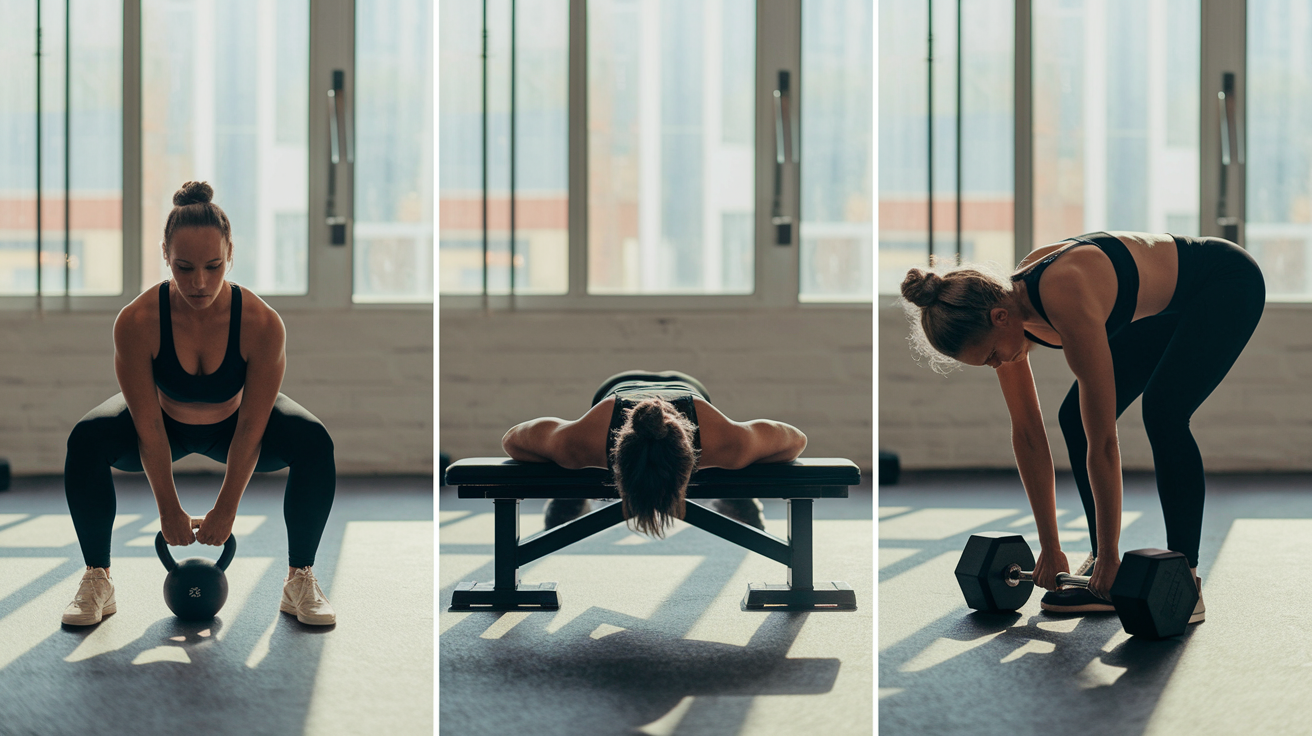
Goblet Squat – 3 sets of 8–10 reps
Hold a dumbbell or kettlebell at chest height, feet shoulder width apart, squat until thighs are parallel or slightly below, push through heels to stand. -
Dumbbell Bench Press – 3 sets of 8–10 reps
Lie on a flat bench, press dumbbells from chest height to full arm extension, lower with control. -
Bent-Over Dumbbell Row – 3 sets of 8–12 reps per arm
Hinge forward at hips, support yourself with one hand, row dumbbell to ribcage, keep elbow close to body. -
Romanian Deadlift (Dumbbell or Barbell) – 3 sets of 8–12 reps
Hold weights in front of thighs, hinge at hips while keeping a flat back, lower weights to mid-shin, return to standing by squeezing glutes. -
Plank – 2 sets of 20–40 seconds
Hold forearm plank with body in a straight line from head to heels, brace core, breathe steadily. -
Dumbbell Biceps Curl – 2 sets of 10–12 reps
Stand tall, curl weights from thighs to shoulders, squeeze at the top, lower slowly.
Day 2 Workout
-
Barbell or Trap Bar Deadlift – 3 sets of 5–8 reps
Stand with feet hip width, grip bar outside shins, keep chest up and back flat, drive through floor to stand tall, lower with control. -
Overhead Press (Barbell or Dumbbell) – 3 sets of 6–10 reps
Press weight from shoulder height to full arm extension overhead, keep core tight, lower to shoulders. -
Lat Pulldown or Assisted Pull-Up – 3 sets of 8–12 reps
Pull bar or handles down to upper chest, squeeze shoulder blades together, release with control. -
Bulgarian Split Squat – 2 sets of 8–10 reps per leg
Place rear foot on bench, lower front knee toward floor, push through front heel to stand. -
Side Plank – 2 sets of 15–30 seconds per side
Lie on side, prop up on forearm, lift hips into a straight line, hold steady. -
Triceps Extension (Dumbbell or Cable) – 2 sets of 10–12 reps
Hold weight overhead or behind head, extend elbows fully, lower slowly.
Day 3 Workout
-
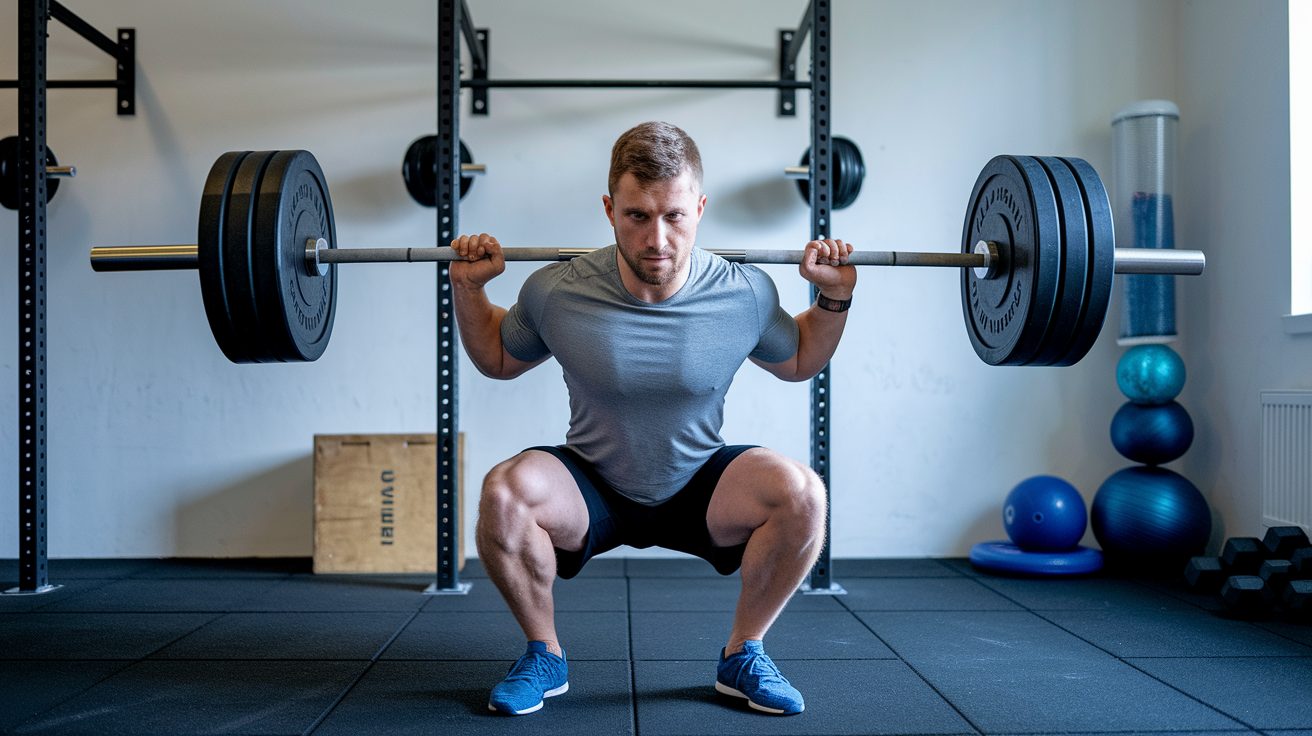
Barbell Back Squat or Front Squat – 3 sets of 6–10 reps
Bar across upper back (or front of shoulders for front squat), squat to parallel or below, drive up through heels. -
Incline Dumbbell Press – 3 sets of 8–12 reps
Set bench to 30 to 45 degree angle, press dumbbells from chest to full extension, lower with control. -
Chest-Supported or Seated Cable Row – 3 sets of 8–12 reps
Pull handles to torso, retract shoulder blades, release arms fully. -
Dumbbell Romanian Deadlift – 2 sets of 10–12 reps
Same hinge pattern as Day 1 RDL, lighter weight, focus on hamstring stretch. -
Glute Bridge or Hip Thrust – 2 sets of 12–15 reps
Lie on back, feet flat, lift hips until body is straight from knees to shoulders, squeeze glutes at top, lower. -
Farmer Carry – 2 sets of 20–30 meters
Hold heavy dumbbells or kettlebells at sides, walk steadily while keeping shoulders level and core tight.
Warm‑Up Essentials for Beginners

Start every session with 5 to 10 minutes of light cardio to raise your heart rate and body temperature. Walking on a treadmill, pedaling a stationary bike, or using a rowing machine at an easy pace all work. The goal is to feel warm, not tired.
After cardio, spend 2 to 3 minutes on dynamic mobility drills. These prep your joints and muscles for loaded movement without stretching cold tissue.
- Leg swings (10 per leg, front to back and side to side)
- Arm circles (10 forward, 10 backward)
- Cat-cow spine flexion (6 to 8 slow reps)
- Bodyweight squats (8 to 10 reps)
- Inchworms or walkouts (4 to 6 reps)
Before your first heavy lift, do 1 to 2 warm-up sets with lighter weight. For example, if your working set is 100 pounds, do one set of 8 reps with just the bar, then one set of 5 reps at 60 to 70 pounds. This rehearses the movement pattern and cuts down injury risk.
Equipment Options and At‑Home Alternatives
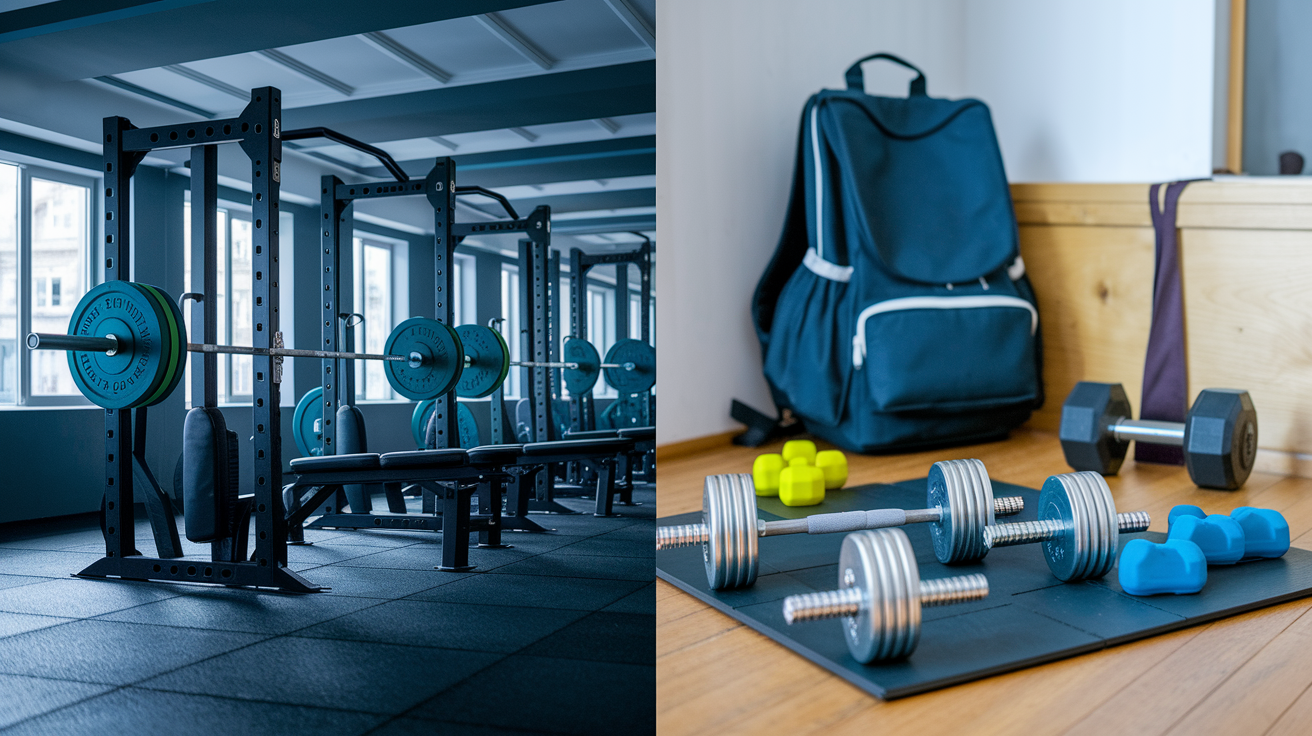
If you train at a gym, you’ll have access to barbells, benches, cable machines, and a full dumbbell rack. Most commercial gyms also offer trap bars, which make deadlifts easier to learn, and assisted pull-up machines that let you build pulling strength gradually.
At home, you can run this entire program with a set of adjustable dumbbells and a flat bench. Resistance bands work for rows, pulldowns, and triceps extensions if you don’t own weights yet. A loaded backpack can substitute for a goblet squat or Romanian deadlift when you’re starting out.
If a specific exercise requires equipment you don’t have, swap it for a similar movement. Use push-ups instead of bench press, inverted rows under a sturdy table instead of cable rows, or step-ups onto a chair instead of Bulgarian split squats. The movement pattern matters more than the exact tool.
- Adjustable dumbbells: $100 to $400 (covers most beginner programs)
- Resistance band set: $15 to $30 (portable and versatile)
- Flat or adjustable bench: $80 to $250 (supports pressing and single-leg work)
- Barbell starter kit (bar plus plates): $150 to $500 (long term investment for home gyms)
Exercise Modifications and Alternatives for All Fitness Levels
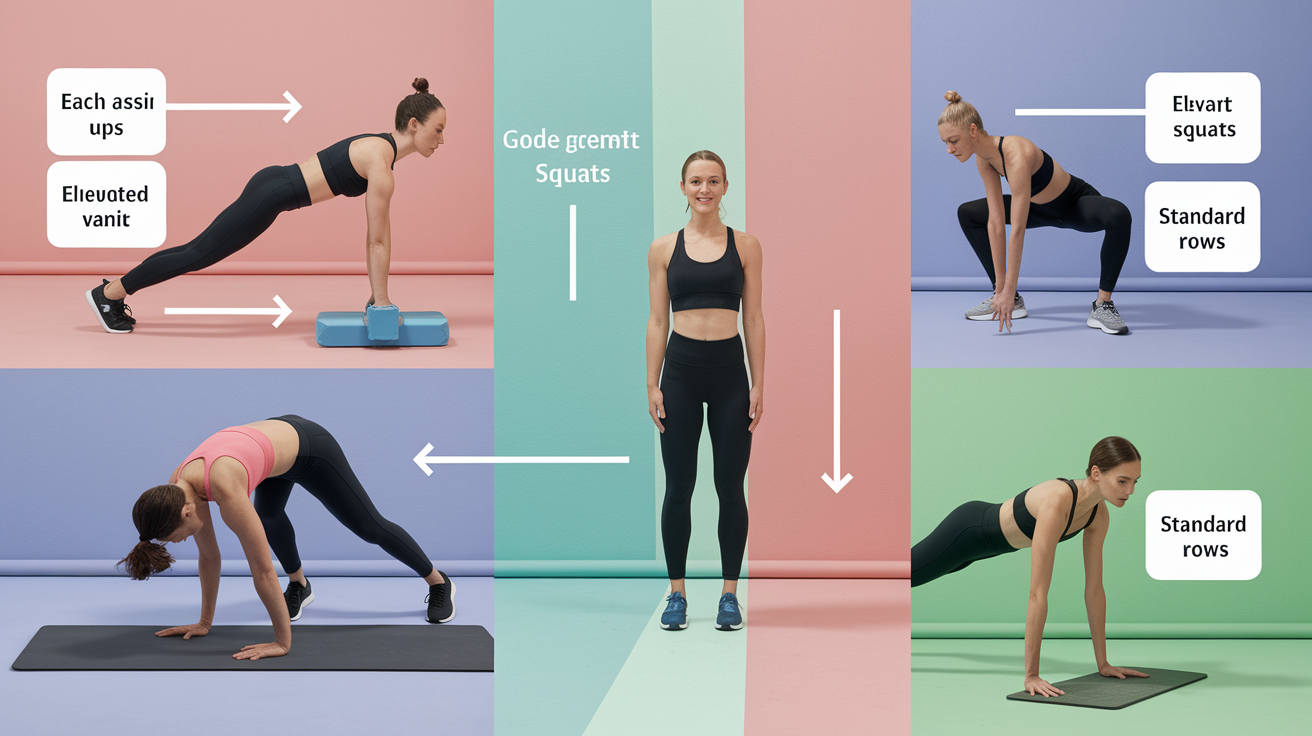
If an exercise feels too difficult or causes joint discomfort, adjust the version before you skip it entirely. Most movements have easier and harder variations that train the same muscle groups.
Start with modifications that reduce load or range of motion. As you build strength and confidence, progress to the standard version listed in the main plan.
- Goblet squat too hard → use a lighter weight, or switch to bodyweight box squats (sit onto a bench, then stand)
- Romanian deadlift hurts lower back → reduce weight, check that your back stays flat, or try single-leg RDLs with bodyweight only
- Push-ups too challenging → elevate your hands on a bench or countertop. The higher the surface, the easier the push-up
- Pull-ups impossible → use an assisted pull-up machine, loop a resistance band under your knees, or do slow negative reps (jump to the top, lower slowly)
- Bulgarian split squat unstable → hold onto a wall or rack for balance, or use reverse lunges instead
- Plank too long → drop to knees while keeping hips in line, or hold for shorter intervals with more rest between sets
Modifications aren’t failures. They’re tools to keep training consistent while your body adapts.
Rest Day Guidance and Recovery Tips

You’ll lift three days per week, which leaves four rest days. Rest days aren’t lazy days. Your muscles repair, your nervous system recovers, and strength actually builds during the time between workouts.
Schedule at least one full rest day between training sessions. For example, if you train Monday, Wednesday, and Friday, Tuesday and Thursday are mandatory rest days. Saturday and Sunday can be active recovery (walking, light cycling, yoga) or complete rest depending on how you feel.
- Sleep 7 to 9 hours per night. This is when most muscle repair happens
- Drink water consistently throughout the day, not just during workouts
- Walk 15 to 30 minutes on rest days to keep blood flowing without adding fatigue
- Eat enough protein (roughly 1.6 to 2.2 grams per kilogram of body weight per day) to support recovery
If you’re very sore or didn’t sleep well, it’s okay to move your workout back a day. Consistency over weeks and months matters more than hitting every session on the exact planned day.
Progressive Overload for Beginners
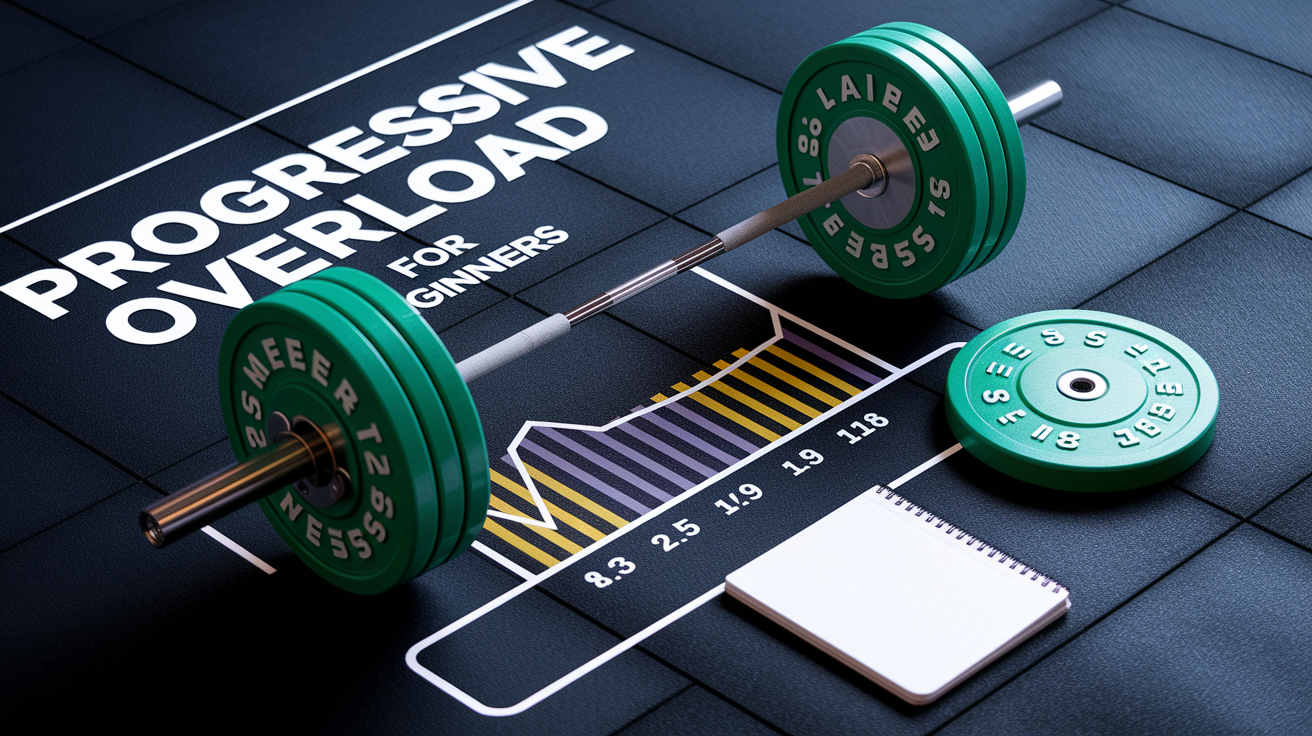
Progressive overload means doing slightly more work over time. It’s the single most important factor for building strength as a beginner. Without it, your body has no reason to adapt.
The simplest way to progress is to add 1 to 2 reps per set each week. For example, if you squat 3 sets of 8 reps this week, aim for 3 sets of 9 or 10 reps next week with the same weight. Once you can complete 3 sets of 12 reps with clean form, increase the weight by the smallest available increment (usually 2.5 to 5 pounds for upper body lifts, 5 to 10 pounds for lower body lifts) and drop back down to 3 sets of 8.
Track every workout in a notebook or app. Write down the exercise name, weight used, and sets/reps completed. If you don’t log it, you’ll guess, and guessing slows progress. After 6 to 8 weeks of steady gains, plan a lighter week where you reduce weights by 20 to 30 percent and drop one set from each big lift. This deload week lets your body recover fully before you push harder again.
Common Beginner Mistakes to Avoid
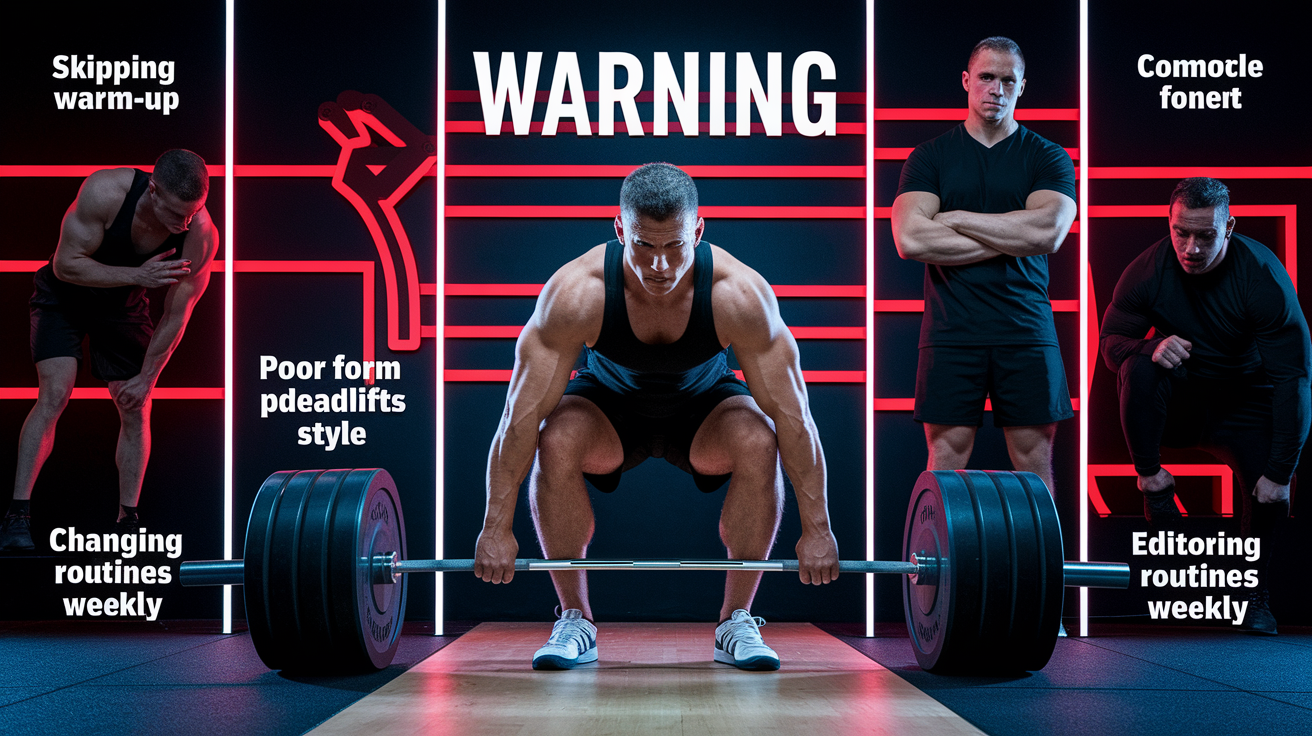
Most beginners make predictable mistakes that slow progress or increase injury risk. Knowing what to watch for keeps you on track.
Don’t skip the warm-up. Cold muscles are more likely to strain, and skipping movement prep means your first heavy set becomes the warm-up.
Don’t lift heavier than your form allows. If your back rounds during deadlifts or your knees cave inward during squats, reduce the weight immediately.
Don’t train through sharp or shooting pain. Muscle soreness is normal. Joint pain is a warning.
Don’t change your routine every week. Beginners improve fastest when they repeat the same exercises long enough to master the movement and add weight consistently.
- Skipping warm-up sets before heavy lifts
- Using weights that compromise form just to “feel stronger”
- Ignoring rest days and training when overly fatigued
- Changing exercises constantly instead of progressing on core lifts
- Comparing your week one performance to someone else’s year three results
Final Words
You’ve now got a clear, ready-to-use 3-day full body plan: three workouts with sets and reps, warm-up steps, equipment options, easy modifications, rest-day tips, progressive overload guidance, and common mistakes to skip.
Treat it as a flexible starting point. Warm up for 5–7 minutes, pick equipment that fits your life, and scale exercises to match your energy.
Stick with small, consistent steps. This beginner 3-day full body workout is built to help you get stronger, feel better, and keep going.
FAQ
Q: Why is a 3-day full-body workout good for beginners?
A: A 3-day full-body workout is good for beginners because it boosts muscle frequency, builds foundational strength with compound moves, and gives enough rest between sessions for recovery and learning movements.
Q: What should each workout include?
A: Each workout should include a push, a pull, a squat, a hinge, a core move, and a light accessory; aim for roughly 3 sets of 8–12 reps on most exercises to build strength and skill.
Q: How long should sessions and warm-ups be?
A: Sessions should last about 40–60 minutes; start with a 5–7 minute dynamic warm-up of light cardio and mobility drills to increase blood flow and prepare joints for lifting.
Q: How do I adapt the plan at home or with limited equipment?
A: Adapt the plan at home by using dumbbells, resistance bands, or bodyweight; swap barbell squats for goblet squats, rows for band rows, and bench press for push-ups.
Q: How do I modify exercises for beginners or joint pain?
A: Modify exercises by lowering load, shortening range of motion, using supported or machine variations, or choosing low-impact alternatives like incline push-ups and seated or band rows.
Q: How should I schedule rest days and recovery?
A: Schedule rest days with 24–48 hours between full-body sessions; use light walking, mobility work, good sleep, and hydration to reduce soreness and aid recovery.
Q: How do I add progressive overload safely?
A: Add progressive overload by increasing weight 2.5–5% or adding 1–2 reps when sets feel manageable; track workouts and keep form the priority over big jumps.
Q: What common mistakes should beginners avoid?
A: Common mistakes include lifting too heavy, skipping warm-ups, poor form, inconsistent scheduling, and neglecting recovery; focus on steady, manageable progress instead.
Q: How quickly will I see improvements?
A: You’ll typically notice small gains in strength, technique, or daily energy within a few weeks if you stay consistent, though timing varies with sleep, nutrition, and stress.