

What if most “goals” are just wishlists in disguise?
Personal development goals are different: they turn vague wants into clear actions you can plan and track.
They help your career, relationships, health, and daily energy by giving small, measurable steps that actually fit your life.
Read on to see the main types, quick examples you can copy, and simple ways to reach them without burning out.
This guide gives SMART-style steps, short and long term options, and small habits you can start this week.
Understanding Personal Development Goals and What They Help You Achieve

Personal development goals are intentional targets that guide you toward improvement in your career, relationships, health, and overall sense of direction. They turn vague ideas like “get better at my job” or “feel less stressed” into actions you can actually plan for and track. These aren’t about being perfect. They’re about moving forward with clarity, especially when life gets messy or priorities keep shifting.
When you set one of these goals, you’re deciding what matters and committing to small actions that add up. Unlike resolutions that fade by February, these goals fit your schedule, your current abilities, and where you want to go next. They boost productivity, build confidence, make you more employable, and give you a clearer sense of what you’re working toward. Whether you’re learning a new role, deepening your expertise, or just trying to feel more balanced, personal development goals give you structure without the burnout.
The best goals are the ones you can measure. Here are five real examples:
- Attend two networking events each month and follow up with at least ten new contacts.
- Take a ten minute break after every hour of focused work to reset.
- Finish projects one full day before the deadline so you’ve got time to review.
- Bump up retirement contributions by two percent each month until you hit your target.
- Respond to all work emails within twenty four hours.
Using the SMART Framework to Shape Effective Personal Development Goals

The SMART framework turns a fuzzy idea into something concrete. SMART stands for Specific, Measurable, Achievable, Relevant, and Time Bound. Each piece makes your goal easier to start, track, and actually finish. Instead of “I want to get better at presenting,” try this: “Deliver a fifteen minute presentation at the next department meeting using a storytelling framework by July 30.” Now you know exactly what to do, how to tell if you’ve done it, and when it needs to happen. It connects to your role and pushes you just enough without feeling out of reach.
SMART goals work because they remove guesswork. You know what success looks like before you start. You can check progress as you go and adjust if something’s off. Here’s what each part means in practice:
- Specific – Name the exact skill, behavior, or outcome you’re after. “Improve communication” is too broad. “Deliver one internal presentation per quarter” gives you a target.
- Measurable – Define how you’ll track it. Use numbers, frequencies, deadlines, or milestones so you know when you’ve hit the mark.
- Achievable – Set something that stretches you but fits your current resources, time, and skill level. If you’ve never presented before, start with a five minute update, not a keynote.
- Relevant – Connect the goal to your role, career path, or personal priorities. Make sure it matters to where you’re headed, not just what sounds impressive.
- Time Bound – Assign a clear deadline. “Complete a certified course by the end of Q3” or “finish a business writing workshop by June” gives you urgency and focus.
Practical Examples of Personal Development Goals Across Life Domains
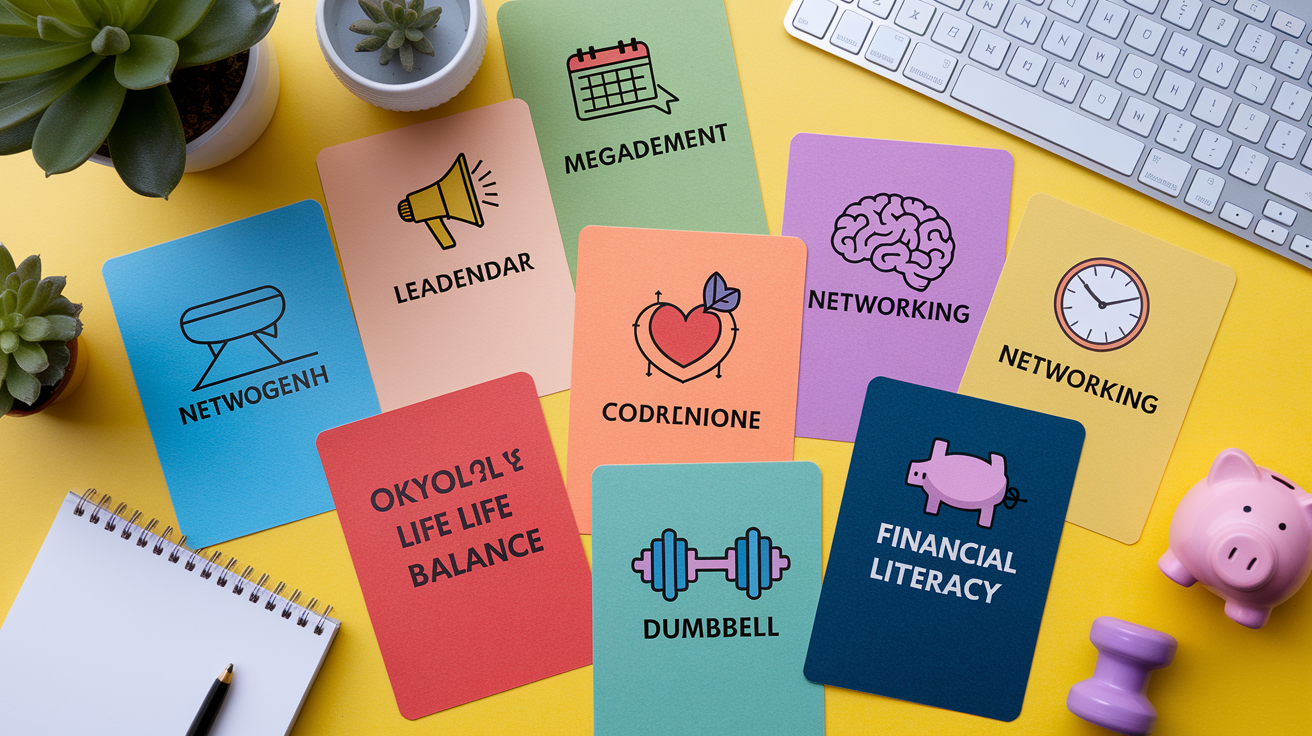
Personal development goals touch every part of life that affects how you work, feel, and grow. The most effective ones improve multiple areas at once, like building a skill that boosts both your job performance and your confidence outside work. Below are nine categories with short and long term examples you can adapt.
Time Management
Short term: Take a ten minute break after every hour of focused work. Use a timer or app to build the habit.
Long term: Complete all major projects one full day before the deadline to create space for feedback and final edits.
Leadership Development
Short term: Volunteer to lead one team meeting this quarter. Prepare an agenda and practice facilitation.
Long term: Complete a leadership training program within six months and apply 360 degree feedback every six months to track growth.
Communication and Public Speaking
Short term: Deliver one short presentation at an internal event by the end of the year. Record yourself practicing beforehand.
Long term: Respond to all work emails and messages within twenty four hours.
Networking and Relationship Building
Short term: Attend two networking events each month and collect at least ten new professional contacts.
Long term: Host a team dinner once per month to strengthen working relationships and build trust across departments.
Emotional Intelligence
Short term: Listen actively during difficult conversations without interrupting, and apologize when appropriate.
Long term: Reflect and journal after every workday to process emotions, recognize patterns, and improve self awareness over time.
Work Life Balance
Short term: Set aside at least two hours of personal or family time after work each day, with no devices.
Long term: Define clear work hour boundaries and avoid checking messages outside those hours to protect recovery time.
Technical Skills and Knowledge
Short term: Complete one skills workshop or attend one industry conference each month to stay current.
Long term: Pass a professional certification exam within six months. Schedule weekly study blocks and set an exam date in advance.
Health and Wellness
Short term: Visit the gym at least twice per week and schedule sessions like any other important appointment.
Long term: Use employer provided medical insurance for preventive screenings or check ups every month to catch issues early.
Financial Literacy
Short term: Increase retirement contributions by two percent each month until you hit your target savings rate.
Long term: Set a monthly savings or investment target and review progress with an accountability partner to stay on track.
These examples aren’t universal. The best personal development goals are the ones that fit your current reality and your next logical step. If you’re already presenting regularly, your communication goal might shift to writing more clearly or leading difficult conversations. If your schedule’s packed, start with one ten minute daily habit instead of three ambitious projects. Adapt the goal to where you are, not where you think you should be.
Short Term and Long Term Personal Development Goals for Sustainable Growth
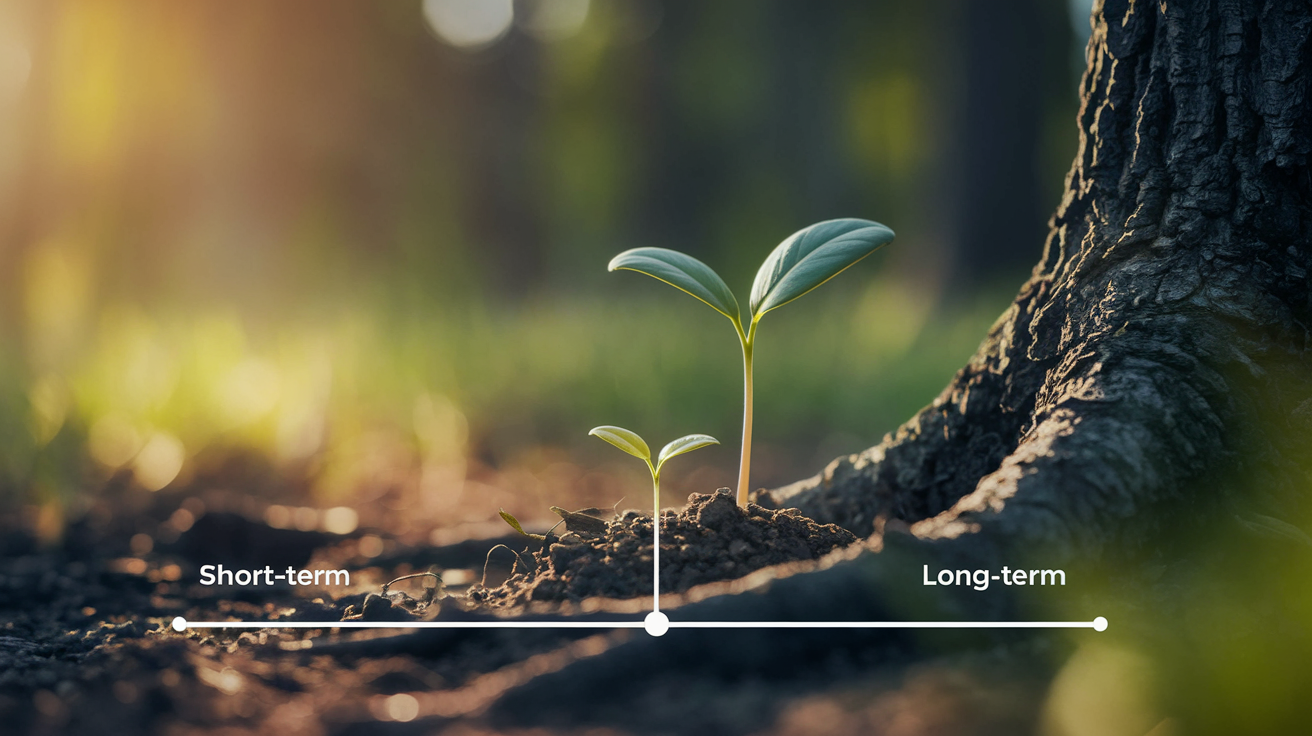
Short term goals build the daily and weekly habits that make long term progress possible. They’re small enough to start today and specific enough to repeat. Examples include taking a ten minute break every hour, completing tasks one day early, or attending one workshop per month. These don’t feel dramatic, but they add up fast. Over a few months, they shift how you work, how you recover, and how confident you feel tackling bigger challenges.
Long term goals set the direction. They’re the certifications you earn in six months, the leadership programs you complete over a year, or the quarterly cross functional initiatives you lead to build new skills. Long term goals need short term actions to support them. If your long term goal is to present confidently at industry conferences, your short term goals might include recording practice runs, delivering one internal presentation per quarter, and joining a public speaking group. The two time frames reinforce each other. Short term habits keep you moving when motivation dips. Long term goals remind you why the small steps matter and where they’re taking you.
Career Oriented Personal Development Goals to Support Professional Growth

Career development goals help you stay relevant, build influence, and move toward the role or responsibility you want next. They’re useful when your day to day work doesn’t automatically stretch your skills or when you’re preparing for a promotion, lateral move, or industry shift. These goals often involve formal learning, strategic relationship building, or leading initiatives that show you’re ready for more responsibility.
The challenge is balancing immediate job demands with longer term skill building. It’s easy to postpone a certification course when project deadlines pile up or skip a conference when the calendar fills. That’s why career goals need structure. Set a timeline, block time on your calendar, and tie the goal to something measurable. For example, complete certified software training by the end of Q3 and build one dashboard using the new tool before year end. Or attend one to two industry conferences per year and commit to sharing what you learned through a presentation, blog post, or team workshop. These goals work best when your manager knows about them and when you build in regular check ins to track progress and adjust as needed.
Career goals also benefit from feedback loops. Use tools like 360 degree feedback every six months to see how your growth shows up in your day to day work. Ask at least two peers or leaders for input after major projects, reflect on their feedback within thirty days, and set one tracked improvement goal based on what you heard. When you combine learning, application, and feedback, career development stops feeling abstract and starts producing real momentum.
Wellness Focused Personal Development Goals for Better Energy and Balance

Wellness goals protect the foundation that makes everything else work. When your energy, sleep, stress levels, or physical health suffer, productivity drops and motivation becomes harder to access. According to WHO estimates, depression and anxiety alone result in roughly twelve billion lost working days each year and cost around one trillion dollars in lost productivity globally. Wellness isn’t a bonus category. It directly affects how you think, decide, communicate, and recover from setbacks.
The most effective wellness goals are simple, frequent, and non negotiable. Visit the gym at least twice per week. Set aside two hours of personal or family time after work each day. Use your employer provided medical insurance for preventive screenings or check ups every month. Define clear work hour boundaries and avoid checking messages outside those hours. Journal after every workday to process emotions and recognize patterns. These goals don’t require perfection. They require consistency and the willingness to treat recovery time as seriously as you treat deadlines. When wellness goals slip, the first step back is always available. Just restart the habit tomorrow.
How to Create a Personal Development Plan You Can Stick To

A personal development plan turns scattered intentions into a roadmap you can follow week by week. It’s not a rigid script. It’s a living document that helps you stay focused, track what’s working, and adjust when priorities shift. The plan should feel realistic from day one. If it requires three hours of daily effort you don’t have, it won’t survive the first busy week.
Start by analyzing where you are now. Use skills assessments, personality tests, performance reviews, or feedback from colleagues to identify your strengths and the gaps that matter most for your role or next step. Then set SMART goals that connect your personal aspirations to your work responsibilities. Break each goal into smaller, actionable steps and assign target dates to each milestone. For example, if your goal is to earn a professional certification in six months, your steps might include choosing the certification by the end of this month, scheduling weekly two hour study blocks starting next week, and booking your exam date within sixty days. Provide yourself with the resources you need: tutorial videos, books, software access, mentors, paid courses, or time blocked on your calendar. Finally, build in regular support and feedback. Schedule check ins with a manager, accountability partner, or peer group. Celebrate small wins. Adjust the plan when something isn’t working. Progress rarely moves in a straight line, and a good plan makes room for that.
Here’s a simple five step process:
- Analyze your current strengths and gaps using assessments, reviews, and honest self reflection.
- Set SMART goals that are specific, measurable, achievable, relevant, and time bound, and align them with both personal priorities and organizational objectives.
- Break goals into smaller steps and assign clear deadlines to each action so you always know what to do next.
- Gather resources and support such as courses, mentors, tutorials, or software, and make sure you have access before you need it.
- Schedule regular check ins to review progress, gather feedback, adjust your plan, and recognize what’s working.
Measuring Personal Development Progress and Staying Motivated

Measurement keeps development goals from drifting into good intentions that never quite happen. The simplest way to measure progress is to track completion: did you do what you said you’d do by the date you set? But personal development isn’t always that binary. Some goals improve gradually. Others require qualitative feedback to capture value that doesn’t show up in a number. Use both. Combine hard metrics with reflection, peer input, and real world application to see the full picture.
Motivation comes from two places: seeing progress and feeling supported. When you hit a milestone, write it down. When someone notices your growth, save the feedback. When a new skill helps you solve a problem faster or handle a tough conversation better, connect that win back to the goal you set. Motivation doesn’t stay high on its own. It needs regular reminders that the effort is working. Ask for feedback from at least two peers or leaders after major projects, reflect on their input within thirty days, and set one improvement goal based on what you learned. That cycle of action, feedback, and adjustment builds momentum even when the work feels slow.
Here are five key performance indicators you can use to measure personal development progress:
- Goal completion rate – Track the percentage of goals you finish on time or within a reasonable window.
- Engagement increases – Monitor whether you feel more invested in your work, your team, or your long term career path.
- Improved performance benchmarks – Look for measurable changes in output quality, speed, or consistency tied to the skills you’re developing.
- Training satisfaction scores – After courses, workshops, or certifications, rate how useful the content was and whether you’ve applied it.
- Reduced turnover or increased retention signals – If you’re staying engaged and growing in your role, that’s a sign your development plan is working.
Final Words
You’ve learned how to define clear personal development goals across career, wellness, and skills. We walked through the SMART framework, short and long horizons, and real-life examples you can use.
You also got a simple plan: assess strengths, set SMART targets, break goals into steps, assign dates, and track progress with KPIs and feedback. Pick tools that fit your week.
Start small this week—one micro habit, one measurable step. Personal development goals are doable when they fit your life. You’re ready to take the next step.
FAQ
Q: What are your top 3 personal goals?
A: The top three personal goals are improving physical and mental health, advancing career skills and opportunities, and strengthening relationships and communication—each framed with specific, measurable actions you can track weekly or monthly.
Q: What are the five personal goals / What are the 5 points of personal development?
A: The five personal development goals are career growth, health and wellness, communication and relationships, time management and productivity, and lifelong learning—each one should be specific, measurable, relevant, and time-bound.
Q: What are some good IDP goals?
A: Good IDP goals are targeted, time-bound steps like completing a certification in six months, leading a cross-team project next quarter, improving public speaking with monthly practice, or mentoring a junior colleague.