
Stretching more isn’t the answer to better movement.
Mobility and flexibility are related, but they need different approaches and clear goals.
If you just stretch and hope, you’ll probably stall.
This post shows a simple, practical way to set SMART mobility and flexibility goals based on a real baseline, not guesswork.
You’ll learn quick self-tests, how to pick the one or two ranges that actually matter, and easy daily drills and tracking methods that fit busy weeks.
By the end you’ll have a clear plan you can use this week.
Foundations for Setting Effective Mobility and Flexibility Goals

Mobility and flexibility goals give you a clear path to better movement, less stiffness, and stronger performance in daily life. Mobility is about how well your joints move through their full range with control and strength. Flexibility measures how far your muscles and connective tissue can stretch. Both matter, but they don’t respond to the same type of training. Setting SMART goals keeps you focused on something specific and measurable instead of just hoping things get better.
SMART goals turn vague ideas into plans you can actually follow. Here’s what each piece means:
- Specific – Pick the exact movement or body part you’re working on. “Increase hamstring flexibility” beats “get more flexible.”
- Measurable – Use numbers, distances, or time so you can see real progress. Think “touch fingertips to toes” or “hold a 90-second stretch.”
- Achievable – Choose something you can realistically hit with consistent work, not something that needs skills or range you don’t have yet.
- Relevant – Go after goals that improve how you move in life or training. Deeper squats for lifting. Better shoulder range for overhead reach.
- Time-bound – Set a deadline so you stay on track and know when to check your progress.
A full SMART goal might look like this: “Increase hamstring flexibility to comfortably touch my palms to the floor from standing within 8 weeks by practicing 15 minutes of static stretching 5 days per week.” That tells you what you’re doing, how you’ll measure it, how long it takes, and how often you need to practice. You can tweak the target, timeline, or frequency based on where you’re starting, but the structure stays the same.
Assessing Your Current Mobility and Flexibility Baseline

You can’t build realistic goals without knowing where you’re starting from. Baseline testing gives you real data, like distances, angles, or positions, that show your current range and point out what needs the most attention. Testing yourself before you start also keeps you from picking goals that are way too easy or totally unrealistic for your body right now.
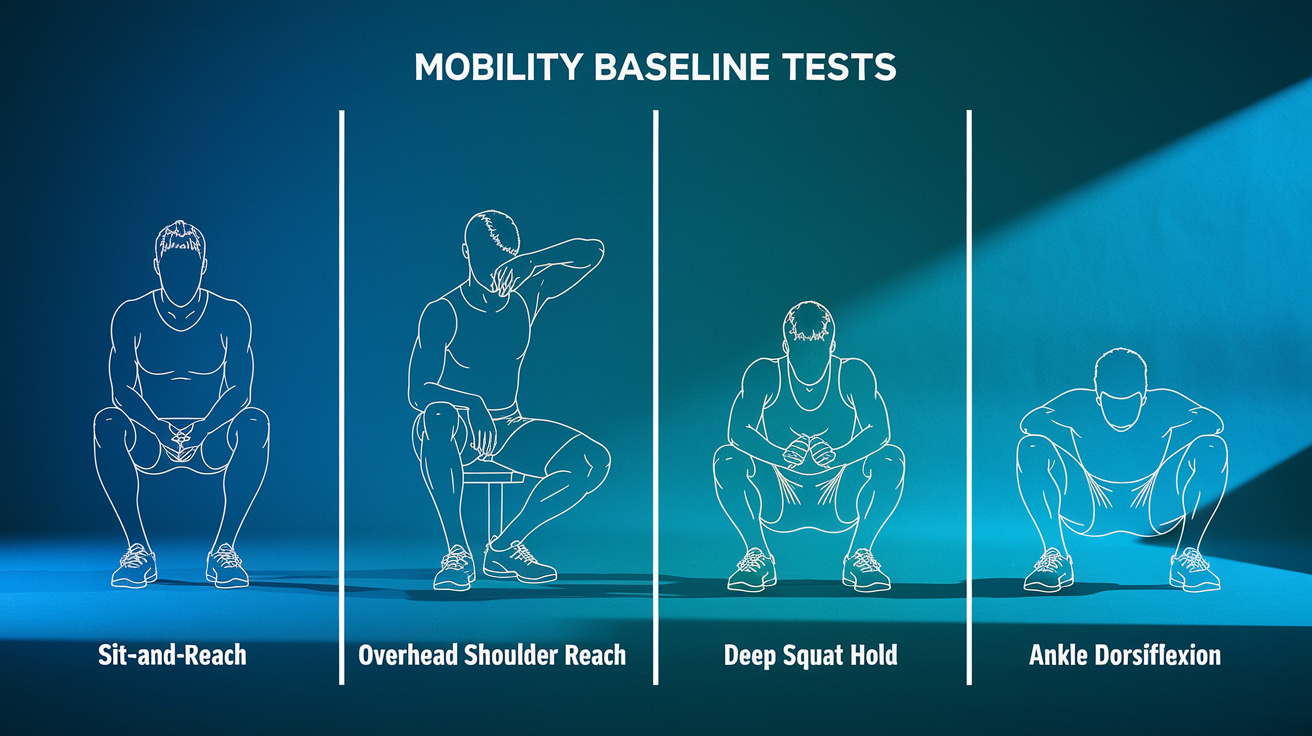
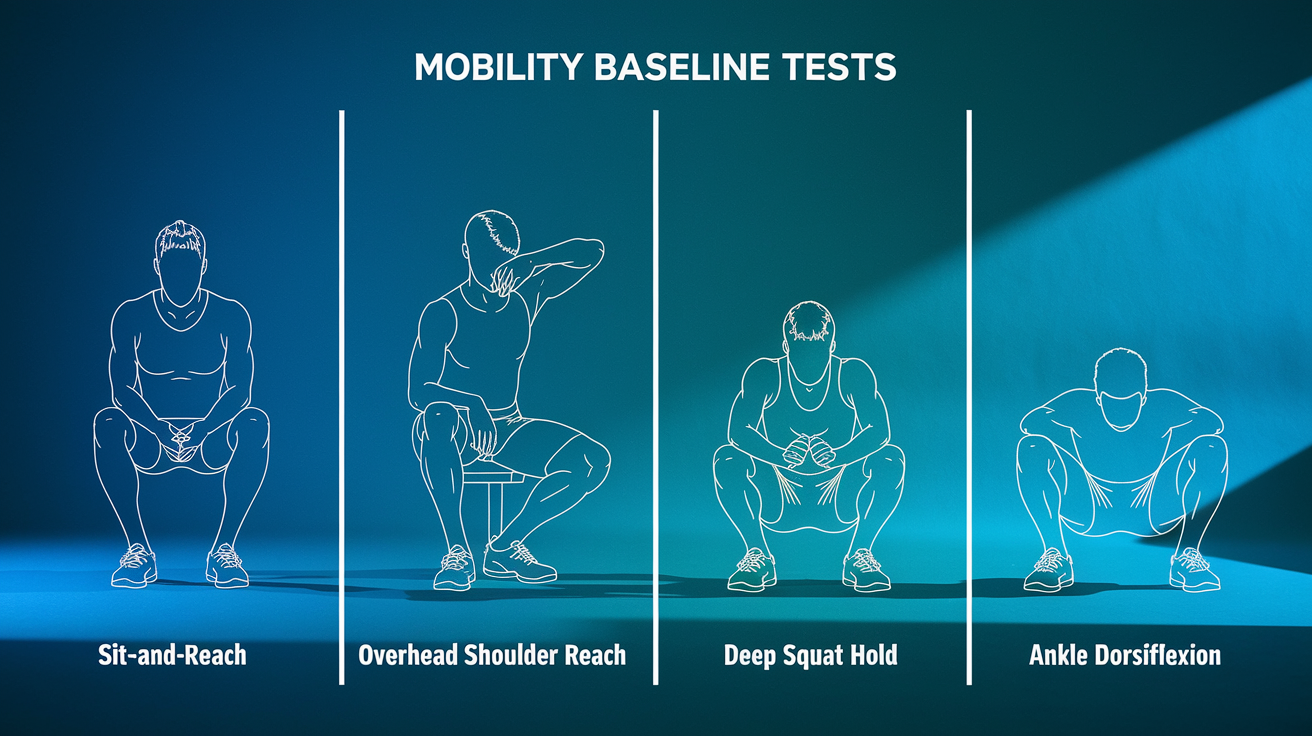
Simple self-tests take five to ten minutes and don’t need special gear. These work for most people and cover the joints and muscles that affect everyday movement. Use the same positions every time you recheck so your comparisons stay accurate.
Here are four common tests you can do at home:
Sit-and-reach test – Sit on the floor with legs straight, feet against a wall or box. Reach forward with both hands and measure how far past (or short of) your toes your fingertips go. Write down the distance.
Overhead shoulder reach – Stand and raise one arm overhead, bending the elbow so your hand reaches down your upper back. Reach your other arm behind your lower back and try to touch or clasp hands. Note whether fingers touch, overlap, or stay apart. Measure the gap if they don’t meet.
Deep squat hold – Stand with feet shoulder-width apart and lower into the deepest squat you can while keeping heels down and chest up. Check whether your hips drop below parallel, whether your knees track over toes, and whether you can hold it for 30 seconds without losing balance or lifting heels.
Ankle dorsiflexion wall test – Face a wall and place one foot a few inches back. Keep that heel flat and bend the knee forward until it touches the wall. Measure the distance from your big toe to the wall. Repeat with the other foot.
Record everything in a notebook or spreadsheet with the date. Retest every four weeks to see whether your training’s working or whether you need to change things up.
Creating Personalized Mobility and Flexibility Goals
Your goals should match the way you move and the issues you’re trying to fix. If you sit most of the day, tight hips and stiff thoracic spine are common trouble spots. If you lift weights, shoulder and ankle mobility often limit how deep you can squat or press overhead safely. Start by spotting the one or two body areas that restrict your movement the most, then build goals around improving those ranges first.
Make your goals about function, not just hitting random benchmarks. Touching your toes matters if tight hamstrings pull your lower back into a rounded position during deadlifts or make it hard to bend down and tie your shoes. Shoulder mobility matters if you can’t reach overhead without arching your lower back or if you feel pinching during presses. Match your goal to a real movement task so you stay motivated and see the payoff in daily life.
| Body Area | Common Limitation | Example Goal |
|---|---|---|
| Hamstrings | Cannot touch toes from standing | Reach fingertips to toes within 6 weeks by stretching 10 minutes daily |
| Hips | Limited internal rotation or depth in squat | Achieve parallel squat with heels down in 8 weeks with 3 mobility sessions per week |
| Shoulders | Cannot clasp hands behind back | Close the gap between hands by 5 cm in 10 weeks using band stretches 4 days per week |
| Ankles | Knee-to-wall distance under 8 cm | Increase dorsiflexion to 10 cm per ankle within 6 weeks with daily calf stretches |
Recommended Exercises to Support Mobility and Flexibility Goals
Dynamic mobility exercises get your joints ready to move through full ranges with control. These drills use active movement instead of holding a stretch, so they’re great before workouts or first thing in the morning when you’re stiff. Dynamic work builds strength at end ranges, which makes new flexibility more usable and less likely to disappear if you skip a few sessions. Think leg swings, arm circles, deep lunges with rotation, and controlled squats.
Static stretching lengthens muscles and connective tissue by holding a position for 20 to 60 seconds. This type of flexibility work is best done after training or on rest days when your muscles are warm and you’re not about to do explosive movements. Static stretches target specific tight areas, like hip flexors after sitting all day or hamstrings after running, and give you time to relax into the position. Consistent static stretching over weeks builds the passive range that mobility drills then teach you to control.
Doing both creates lasting improvements. If you only do static stretching, you gain range but may not have the strength to use it safely. If you only do dynamic drills, you build control but might hit a ceiling if tight tissues limit how far you can move. Use dynamic mobility most days of the week to maintain and reinforce ranges, then add focused static stretching sessions two to four times per week to push your limits in key areas.
Here are six exercises that support common mobility and flexibility goals:
90/90 hip stretch – Sit with one leg bent 90 degrees in front, the other bent 90 degrees to the side. Lean forward over the front leg to stretch the hip. Hold 30 to 45 seconds per side.
Couch stretch – Kneel with one shin against a wall or couch, the other foot planted forward in a lunge. Keep your torso upright to stretch the hip flexor. Hold 60 seconds per side.
Cat-cow spinal waves – Move slowly between arching and rounding your spine on hands and knees. Do 10 to 15 slow reps to open up the thoracic and lumbar spine.
Shoulder pass-throughs with band or dowel – Hold a resistance band or stick with a wide grip and raise it overhead, then rotate it behind your back and return. Do 8 to 12 reps to improve shoulder mobility.
Ankle rocks – Place the ball of one foot on a low step or plate. Shift your knee forward over your toes, keeping the heel elevated. Rock back and forth for 10 to 15 reps per side.
Deep squat hold – Sit in the bottom of a squat with feet flat, chest up, and arms between your knees for balance. Hold 30 to 90 seconds to open hips, ankles, and thoracic spine.
Tracking Progress Over Time

Tracking shows you whether your plan’s working or whether you need to tweak frequency, intensity, or exercise selection. Re-test the same baseline checks every four weeks using the same positions and measurement tools. Small improvements, like gaining two centimeters in a sit-and-reach test or holding a deep squat five seconds longer, add up over time and confirm you’re moving in the right direction.
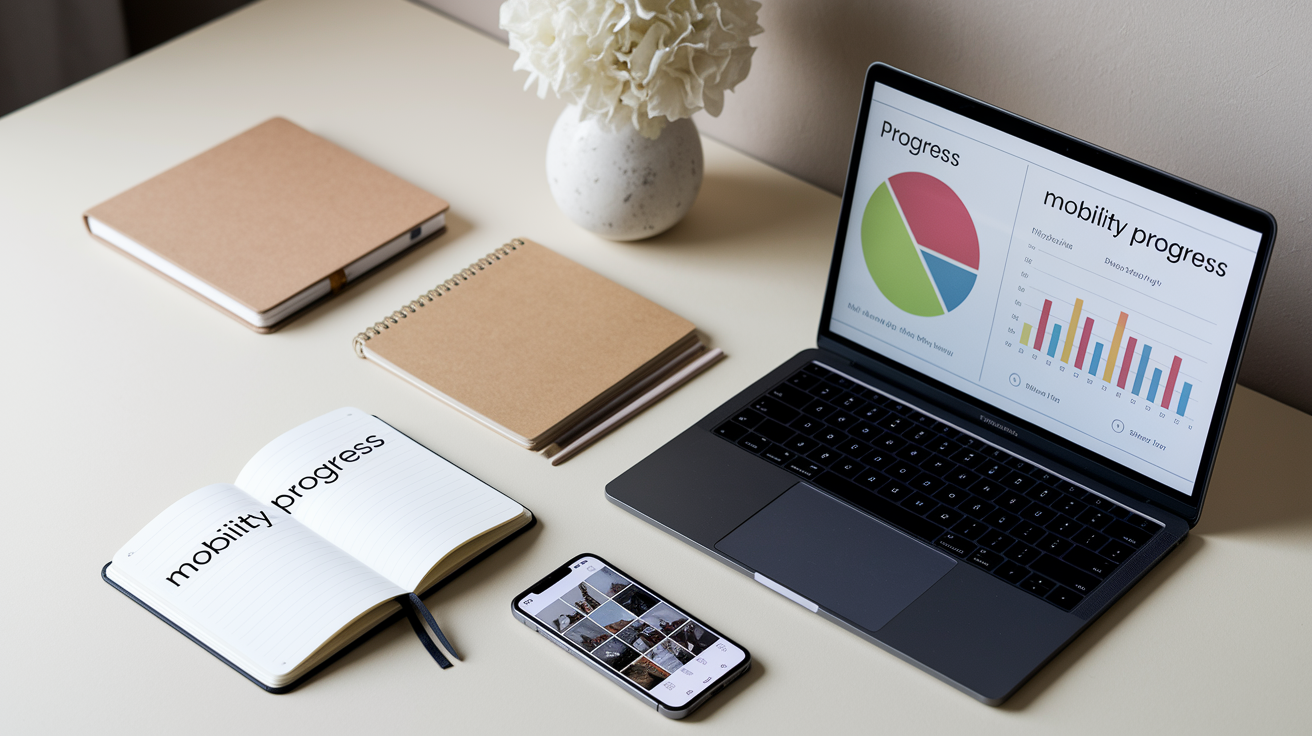
Write down your results after every test so you can compare numbers across months. A simple log with the date, test name, and score is enough. You can also take photos or short videos of key positions like overhead squats or shoulder reaches to spot changes in posture, depth, or alignment that numbers alone might miss. Visual records often show progress you don’t feel yet, especially in the first few weeks when gains are small.
Quick methods for tracking:
Repeat the same baseline test every 4 weeks and log the result in a notebook or app.
Take a photo or video of your starting position and compare it to the same angle after 4, 8, and 12 weeks.
Track session completion with a simple check mark for each stretching or mobility day to confirm consistency. Frequency drives results more than single-session intensity.
Timelines and Expectations for Mobility and Flexibility Improvements

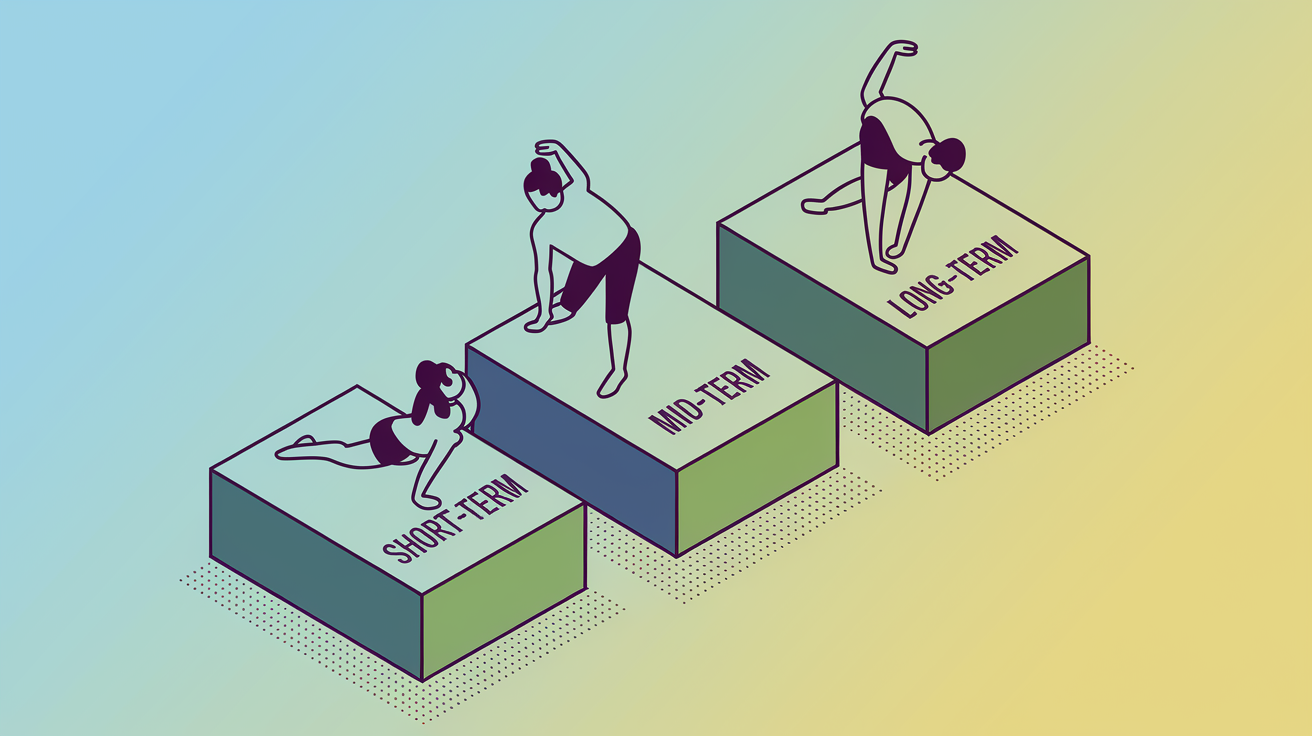
Short-term improvements usually show up in the first four to six weeks. You’ll notice stretches feel less uncomfortable, you can hold positions a few seconds longer, or you gain a centimeter or two in tests like sit-and-reach or ankle dorsiflexion. These early gains come from your nervous system relaxing its protective limits and letting you access range you technically already have. Consistency beats intensity during this phase. Stretching five days a week for ten minutes works better than one long Sunday session.
Medium-term milestones appear around eight to twelve weeks if you’re training three to five times per week. This is when tissue adaptations start happening. Muscles and tendons lengthen slightly, joint capsules loosen, and you build strength at new end ranges so the gains stick. Expect measurable progress like touching your toes from standing, closing the gap in a shoulder reach test, or adding a few degrees to hip or ankle range. If progress stalls after eight weeks, bump your session frequency by one or two days or swap pure static stretching for active mobility drills that load the new range.
Long-term maintenance becomes the focus after three to six months of consistent work. Once you hit your goal, you need fewer sessions to keep the range you’ve built, usually two or three short mobility sessions per week. If you stop entirely, passive flexibility fades within a few weeks, though the strength and control you’ve developed in those ranges tends to last longer. Reassess every few months and add back focused stretching blocks if old limitations start creeping back in.
Safety Considerations and Common Mistakes
Stretching shouldn’t cause sharp, shooting, or pinching pain. A pulling sensation or mild discomfort is normal as tissues lengthen, but pain that makes you wince or lingers after you release the stretch means you’ve pushed too far. Back off right away and reduce the depth or duration. If the same pain shows up repeatedly, check your form or talk to a physical therapist before continuing.
Always warm up before deep stretching. Cold muscles and stiff joints don’t respond well to aggressive pulls, and forcing range without prep raises injury risk. Spend five to ten minutes on light movement, like walking, dynamic stretches, or bodyweight squats, before settling into long static holds. Save your deepest, longest stretches for after workouts or on rest days when your body’s warm and circulation is high.
Five mistakes to avoid:
Bouncing during static stretches – Jerky movements trigger a protective reflex that tightens the muscle instead of lengthening it. Hold positions steady.
Holding your breath – Tension builds when you don’t breathe. Inhale deeply and exhale slowly to help your body relax into the stretch.
Ignoring one side – Always stretch both sides equally, even if one feels tighter. Imbalances get worse if you only work the problem area.
Skipping strength work – Flexibility without control creates unstable joints. Pair stretching with exercises that strengthen muscles through the new range.
Pushing through sharp pain – Discomfort is expected. Pain is a warning. Stop, check your position, and reduce intensity or skip that stretch for the day.
Modifying Mobility and Flexibility Goals for Different Needs
Beginners should focus on building a simple, repeatable routine before chasing advanced ranges. Start with three ten to fifteen minute sessions per week that cover the biggest problem areas: hamstrings, hips, shoulders, and ankles. Use basic static stretches and gentle dynamic drills, then retest every four weeks. Your first goal might be something like “hold a supported deep squat for 30 seconds” or “reach fingertips within 5 cm of toes.” Small, clear targets keep things manageable and let you build confidence as you hit each milestone.
Older adults need to focus on joint health, balance, and injury prevention over extreme range. Flexibility naturally drops with age, so progress will be slower and goals should reflect that. Go after functional ranges that support daily tasks, like bending to pick things up, reaching overhead into cabinets, or stepping up onto curbs, rather than touching your toes or doing full splits. Shorter, more frequent sessions work better than long, intense stretches. Balance-focused mobility drills like single-leg stands or controlled lunges help maintain stability alongside flexibility.
Athletes benefit from sport-specific mobility goals that directly improve performance or cut injury risk. A runner might focus on hip flexor and calf flexibility to lengthen stride and prevent shin splints. A lifter might go after ankle dorsiflexion and thoracic extension to hit deeper squats and safer overhead positions. Training frequency can be higher, like five to six days per week, because athletic goals often need both strength and mobility at extreme ranges.
Examples for different groups:
Beginner – Start with 10-minute daily mobility routines and one 15-minute static stretching session per week. Retest every 4 weeks and increase frequency before adding intensity.
Senior – Use chair-supported stretches, focus on hip and shoulder range for daily tasks, and pair flexibility work with balance drills. Aim for 3 to 4 short sessions per week with slower progression timelines.
Athlete – Add dynamic mobility before every training session, include 2 focused flexibility sessions per week targeting sport-specific ranges, and retest monthly to make sure mobility supports performance without creating instability.
Final Words
Start by defining one clear, measurable mobility or flexibility goal you can test and track. Use the SMART framework, run a few simple baseline tests, and pick exercises that target your weakest areas.
Make a plan you can repeat: short daily mobility work, weekly reassessments, and small progress steps. If you hit a snag, adjust intensity or frequency, no perfection needed.
Set a 4-week goal and track it. Learning how to set mobility and flexibility goals makes steady gains feel doable and real.
FAQ
Q: What is the 3-3-3 rule for fitness?
A: The 3-3-3 rule for fitness is a simple habit guide: do three exercises, three sets each, three times per week—enough volume to build consistency, strength, and mobility without overwhelming your schedule.
Q: How to set flexibility goals?
A: To set flexibility goals, pick a specific area and use SMART targets: measurable outcome (like toe touch), a realistic timeline, a simple daily practice plan, and regular retests to track progress.
Q: Can mobility exercises help with back pain?
A: Mobility exercises can help with back pain by improving joint range, easing tight hips and hamstrings that strain the spine, and restoring movement patterns—start gentle, stop for sharp pain, and see a professional if symptoms persist.
Q: What are examples of flexible goals?
A: Examples of flexible goals include: touch your toes in 8 weeks by stretching 10 minutes five days/week; improve shoulder overhead reach in 6 weeks with daily mobility; increase ankle dorsiflexion for deeper squats.