
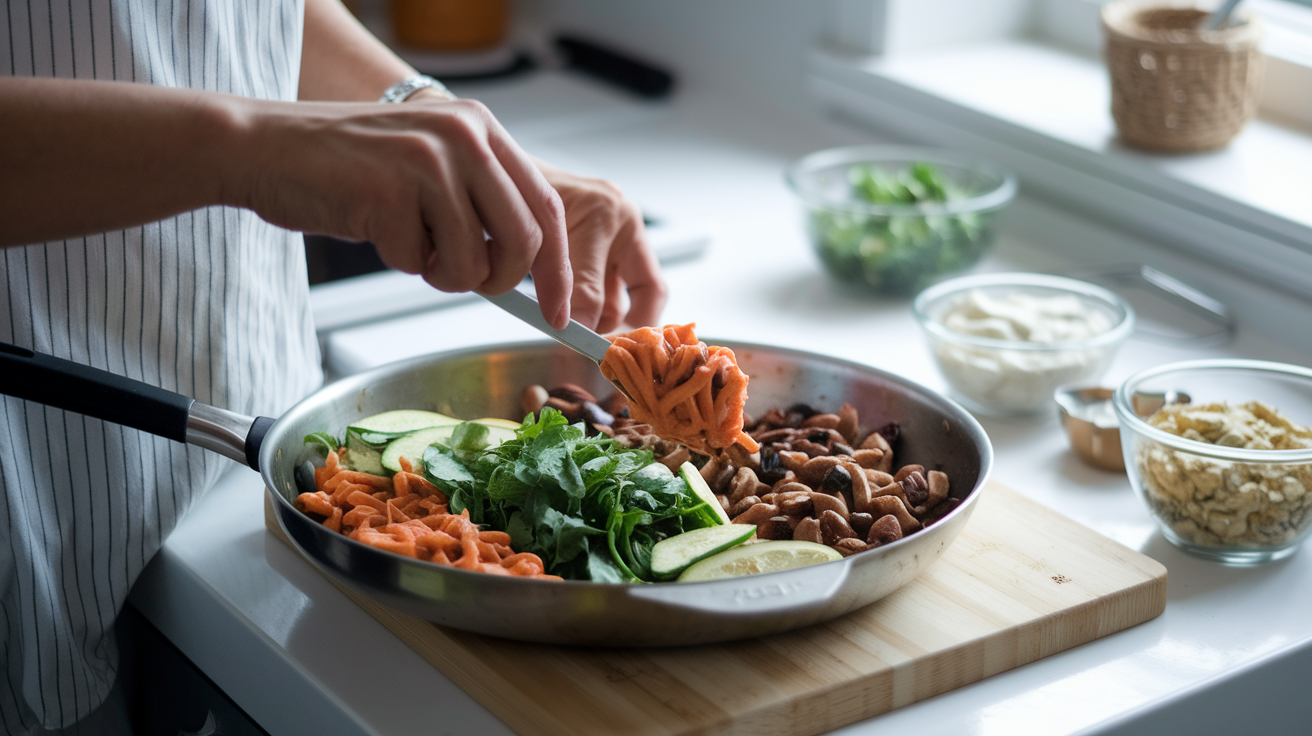
What if losing fat didn’t mean living on sad salads or spending hours in the kitchen?
One-pan dinners let you cook real food in 20 to 40 minutes and keep calories in check.
They fit busy schedules and still taste amazing.
In this post you’ll get six fast, protein-first sheet pan ideas, simple building blocks for your own mixes, and practical tips, like keeping oil to one tablespoon and loading the pan with vegetables.
If you want meals that support fat loss and won’t slow your week down, this is for you.
Fast One-Pan Dinner Options That Support Busy Fat Loss Goals
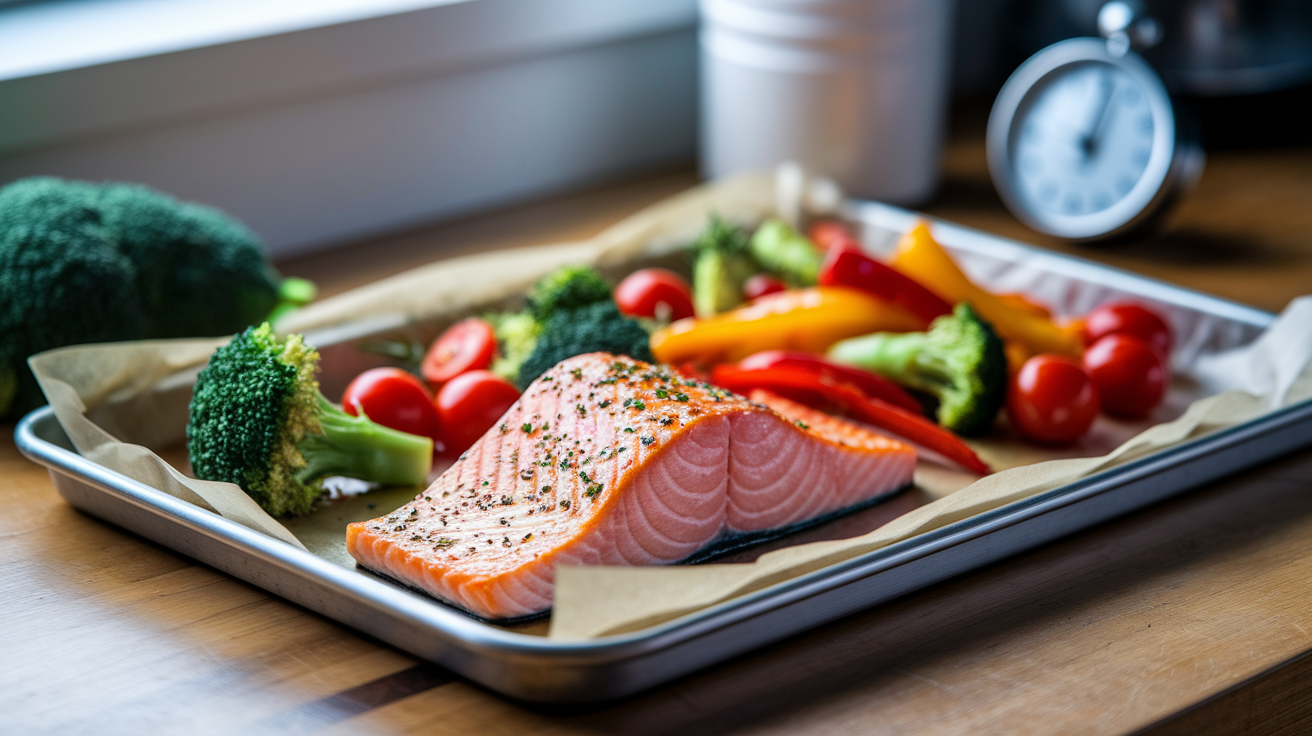
One-pan dinners solve two problems at once. You get real food cooked from scratch in 20 to 40 minutes, and you keep the calorie count low enough to support a calorie deficit without turning dinner into a production. When you’re trying to lose body fat and work long hours, meals that take one pan and less than half an hour start to feel like the only thing that works most days.
These recipes all follow the same basic pattern. They put protein first, load up on vegetables, keep added fat minimal, and use simple seasonings that don’t require a pantry overhaul. The calorie counts listed here are approximate and should always be verified with your own nutrition calculator if you’re tracking closely.
Here are six reliable fast options that fit busy fat loss schedules:
Chili Lime Orange Glazed Salmon comes in at 367 calories per serving, serves 4, ready in under 25 minutes with minimal prep and simple citrus flavor.
Sheet Pan Shrimp Fajitas clocks 194 calories per serving (that’s 1.5 cups shrimp plus vegetables, no tortillas or toppings). Serves 4, comes together in under 1 hour. High protein and easy to batch.
Sheet Pan Sausage and Vegetables delivers 352 calories per serving, serves 4, ready in around 20 minutes. Low carb option that hits the table fast.
Baked Spinach Mushroom Quesadillas gives you 305 calories per serving, serves 4, ready in under 30 minutes. Lets you bake multiple quesadillas at once for quick batch feeding.
Cajun Cod with Butter and Garlic Sauce sits at 195 calories per serving, serves 4, simple seasoning and fast bake time for lean fish.
Maple Balsamic Chicken Breasts and Veggies runs 260 calories per serving, serves 4 to 6. Straightforward sheet pan assembly with sweet savory glaze.
When you’re building your own fast one-pan dinners, start with lean proteins that cook quickly. Shrimp, cod, chicken breast, and turkey all work well. Pair them with high fiber vegetables like broccoli, peppers, asparagus, or Brussels sprouts. These vegetables add volume and help you stay full without adding many calories. If you want to add a starch, keep it to a moderate portion like 100 grams of cooked sweet potato or a small serving of quinoa. Keep oil to one or two tablespoons for the whole pan, and you’ll keep calories in check while still getting good flavor and crispy edges.
Building Healthy One-Pan Dinners for Fat Loss With Balanced Macros
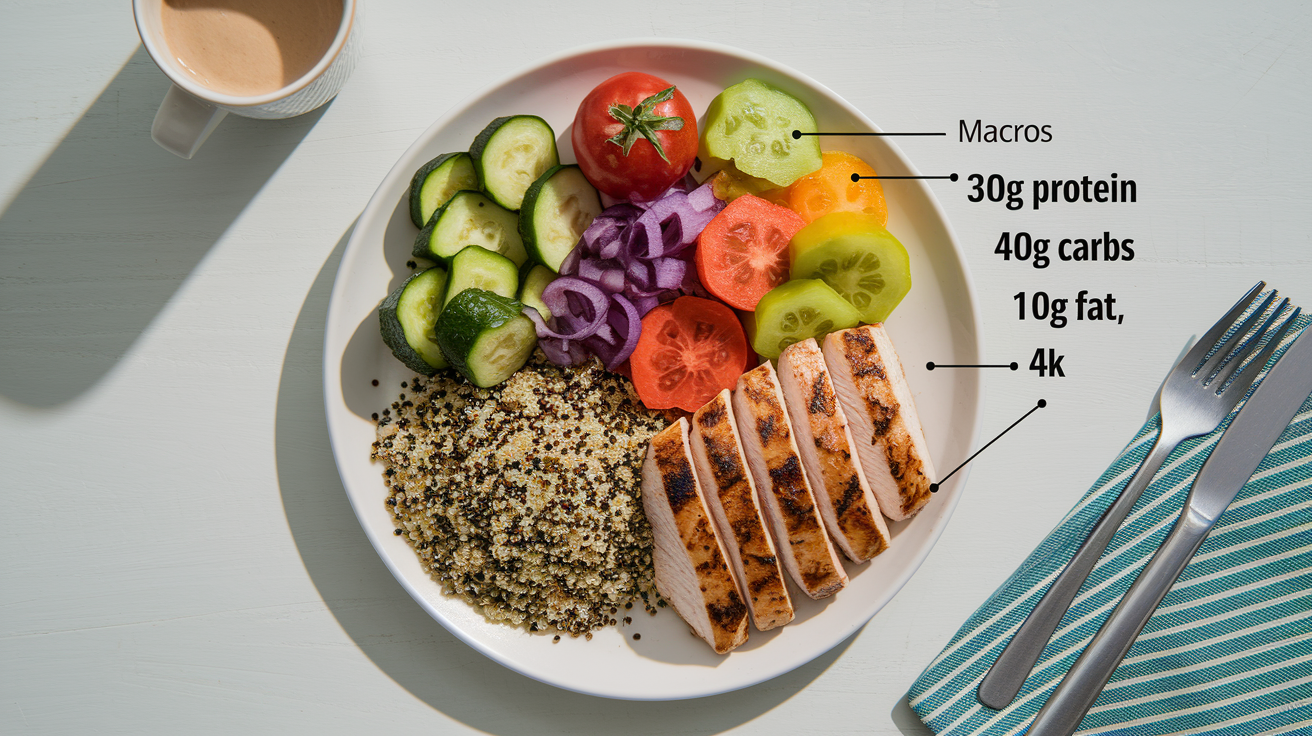
A one-pan fat loss dinner that keeps you full and supports muscle retention follows a simple structure. You’re aiming for 350 to 500 calories per serving with 25 to 40 grams of protein, moderate carbs from vegetables or a small starch portion, and just enough fat to help everything cook and taste good. This range gives you room to fit dinner into a daily calorie budget of 1,200 to 1,800 calories, depending on your size and activity level.
Start by building your pan around a protein. Use about 4 ounces of cooked lean protein per person. That’s roughly 1.5 pounds of raw chicken breast for four servings or 1.25 pounds of salmon. Four ounces of chicken gives you around 30 grams of protein and about 165 calories before seasoning or oil. Fish like cod or haddock is even leaner, and shrimp clocks in at about 24 grams of protein per 3.5 ounce serving with almost no fat. Tofu works well too if you press it and use extra firm. A 14 ounce block split four ways gives you about 24 grams of protein per serving with 10 to 12 grams of fat.
Once you have protein sorted, add vegetables. Think one to two cups of cooked vegetables per person. Broccoli, bell peppers, asparagus, green beans, cherry tomatoes, mushrooms, and Brussels sprouts all roast well and add fiber, vitamins, and volume without many calories. If you want a starchy carb, add 50 to 100 grams of cooked sweet potato, regular potato, or squash per person. That adds about 15 to 30 grams of carbs and helps refill glycogen if you’re training hard.
Here’s how the macros stack up for a typical one-pan fat loss dinner.
Protein target sits at 25 to 40 grams per serving to preserve muscle and support satiety.
Carbs from vegetables and optional starch run 14 to 44 grams per serving depending on whether you include potato, squash, or just non starchy veg.
Fat from cooking oil and natural sources lands at 10 to 22 grams per serving, usually from 1 to 2 tablespoons of olive oil for the whole pan plus any fat in the protein.
Total calories come in at 300 to 450 calories per serving, leaving room for breakfast, lunch, and snacks within a fat loss calorie target.
Keep oil light. One tablespoon of olive oil for the whole pan is often enough. Use parchment paper or a silicone mat to help vegetables crisp without sticking. Season with salt, pepper, garlic powder, paprika, cumin, or lemon juice instead of adding extra fat. This keeps flavor high and calories controlled, which is exactly what you need when the goal is consistent fat loss on a schedule that doesn’t leave time for complicated cooking.
Essential Tools and Pantry Staples for Easy One-Pan Fat Loss Cooking

You don’t need a full kitchen remodel to make one-pan dinners work every night. A few basic tools and a small pantry lineup will cover almost every recipe. The right pan makes cleanup faster, and having a few reliable seasonings on hand means you can throw dinner together without a grocery run.
Start with one 18×13 inch rimmed baking sheet, sometimes called a half sheet pan. This size fits a full dinner for four with room for air to circulate so everything browns instead of steams. Line it with parchment paper and cleanup becomes a quick wipe. If you want to sear proteins or cook stir fry style, a 10 to 12 inch cast iron skillet works on the stovetop and in the oven. Cast iron holds heat well and gives you a good crust on chicken thighs or steak without adding oil. A silicone spatula and a pair of tongs are all you need for flipping and stirring.
Here’s the short list of essentials that make one-pan fat loss dinners simple.
An 18×13 inch rimmed baking sheet fits four servings with vegetables and protein. Use with parchment paper for easy cleanup.
A 10 to 12 inch cast iron skillet gives you stovetop to oven versatility. Great for searing proteins and high heat vegetable roasting.
Parchment paper or silicone baking mat prevents sticking and reduces scrubbing. Saves time and frustration.
Silicone spatula and tongs work for flipping proteins and tossing vegetables without scratching pans.
Basic spice kit with garlic powder, paprika, cumin, oregano, chili powder, black pepper, and sea salt cover most flavor needs without adding calories.
On the pantry side, keep olive oil, low sodium soy sauce or tamari, a bottle of balsamic vinegar, and a few lemons or limes. Frozen pre-cut vegetables like broccoli florets, bell pepper strips, and green beans save five to ten minutes of prep and work just as well nutritionally as fresh. If you have a convection setting on your oven, use it. It shortens cook time by about 20 percent and helps everything brown evenly, which means you can have dinner on the table even faster.
One-Pan Recipe Templates for Customizable Fat Loss Dinners
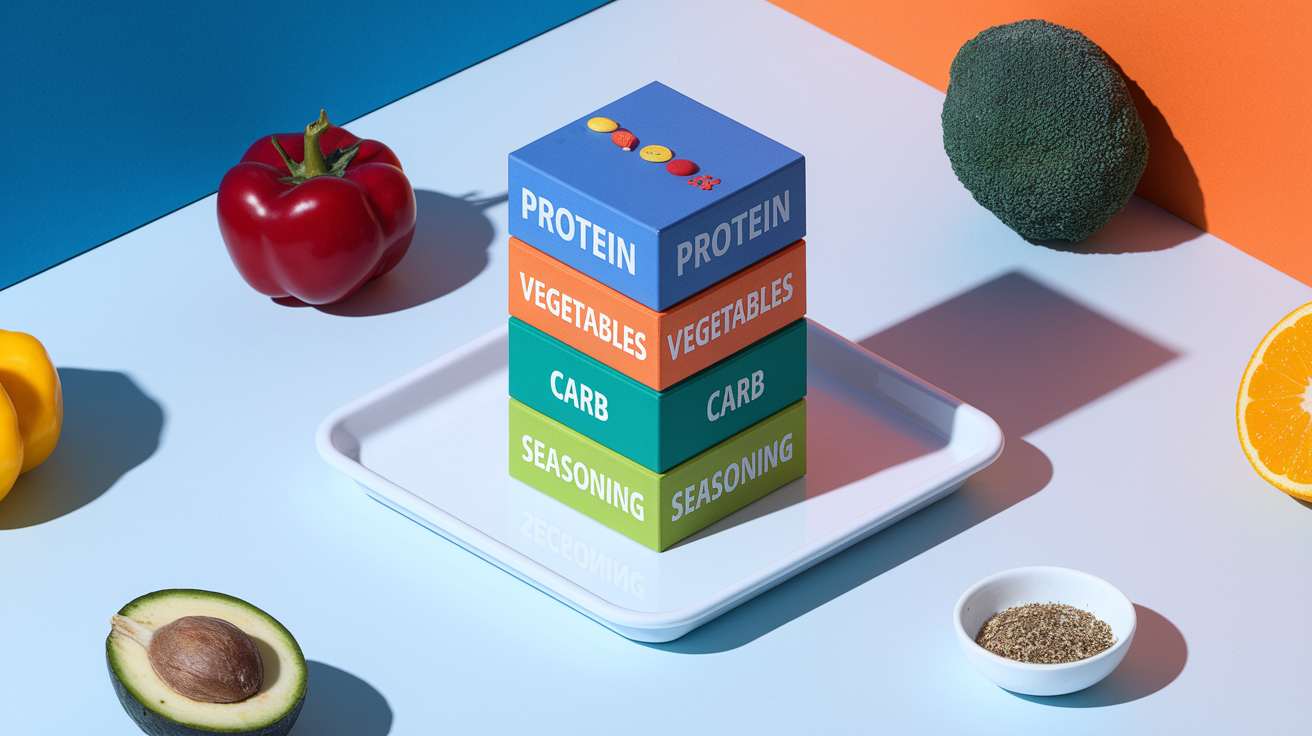
Once you understand the basic structure, you can build your own one-pan dinners without needing a new recipe every time. The formula is simple. Pick a protein, add vegetables, decide if you want a starch, season it, and roast or sear everything together. This approach gives you flexibility to use what’s on sale or what’s already in your fridge, and it keeps decision fatigue low on busy nights.
Protein Template
Choose one protein per pan and use about 4 ounces of cooked weight per person. For four servings, that’s roughly 1.5 pounds of raw chicken breast, 1.25 pounds of salmon or cod, 1 pound of peeled shrimp, or 14 ounces of extra firm tofu. Chicken and turkey cook at 400 to 425°F for 18 to 22 minutes depending on thickness. Fish and shrimp cook faster, usually 10 to 15 minutes. Tofu takes about 20 to 25 minutes at 425°F if you press it first and cut it into cubes. If you’re using leaner proteins like chicken breast or cod, you’ll keep fat lower. If you prefer chicken thighs or salmon, you’ll add more fat but still stay within a reasonable calorie range as long as you keep portions controlled.
Vegetable Template
Add one to two cups of cooked vegetables per person. Broccoli, bell peppers, asparagus, green beans, cherry tomatoes, mushrooms, zucchini, and Brussels sprouts all work. Cut everything into similar sized pieces so they cook evenly. Denser vegetables like broccoli or Brussels sprouts may need a head start or a slightly lower position on the pan if you’re roasting them alongside a fast cooking protein like shrimp. Toss vegetables with half a tablespoon of olive oil per pan, season with salt, pepper, and garlic powder, and roast at 400 to 425°F for 20 to 30 minutes depending on the vegetable.
Carb Template
If you want to add a starchy carb, use 50 to 100 grams of cooked weight per person. Sweet potatoes, regular potatoes, butternut squash, or 100 grams of cooked quinoa all work. Cut starchy vegetables into small cubes or thin wedges so they cook in the same time as your protein. Roast them at 400°F for 25 to 35 minutes, flipping halfway. If you’re keeping carbs lower to speed up fat loss, skip the starch and double the non starchy vegetables for volume and fiber.
| Protein | Vegetables | Estimated Calories | Cook Time |
|---|---|---|---|
| 1.25 lb salmon | 1 lb asparagus, 1 cup cherry tomatoes | 380 per serving | 25 minutes |
| 1.5 lb chicken breast | 1 head broccoli, 2 bell peppers | 360 per serving | 30 minutes |
| 1 lb shrimp | 3 bell peppers, 1 onion | 320 per serving | 20 minutes |
| 14 oz extra firm tofu | 1 head broccoli, 2 bell peppers | 330 per serving | 25 minutes |
High Protein Advanced One-Pan Variations for Experienced Cooks

Once you’ve built confidence with the basic templates, you can start layering in more technique and specialty ingredients to keep meals interesting without losing the time saving benefits. These variations lean harder into protein, use slightly more advanced seasoning or cooking methods, and often work well for meal prep because they hold up in the fridge or freezer. They’re not complicated, but they assume you’re comfortable managing oven timing and balancing multiple components on one pan.
You can explore more specialized sheet pan options in our full Healthy Sheet Pan Dinners collection, which includes additional variations and calorie breakdowns.
Here are eight advanced one-pan options that push protein higher or add a bit more cooking technique.
Salmon with asparagus and cherry tomatoes hits 380 calories, 32 grams of protein per serving. Uses a quick sear in a hot skillet before finishing in the oven to get crispy skin without overcooking the fish.
Sheet pan beef and broccoli delivers 510 calories, 38 grams of protein per serving. Uses thinly sliced flank steak marinated briefly in low sodium soy and ginger, roasted at high heat for 12 to 15 minutes alongside broccoli florets. Paleo, gluten free, and keto friendly.
Mediterranean tofu sheet pan with tahini sauce comes in at 361 calories, 24 grams of protein per serving. Combines pressed tofu cubes, roasted potatoes, and mixed vegetables with a dairy free tahini drizzle. Takes about 1 hour but delivers plant based protein and stays interesting.
Cajun cod with butter and garlic sauce sits at 195 calories, 30 grams of protein per serving. Uses a spice rub on lean white fish and finishes with a tiny drizzle of melted butter and minced garlic for flavor without heavy calories.
Maple balsamic chicken breasts and vegetables runs 260 calories, 34 grams of protein per serving. Chicken breasts brushed with a maple balsamic glaze and roasted with mixed vegetables. Balance of sweet and savory without added sugar overload.
Chicken thighs with Brussels sprouts and cabbage lands at 289 calories, 32 grams of protein per serving. Bone in thighs give more flavor and stay moist. Brussels and cabbage hold up well to longer roasting. Low carb, keto, Whole30, and paleo friendly.
Chickpea and cauliflower roast with spinach gives you 290 calories, 18 grams of protein per serving. Plant based option using canned chickpeas, cauliflower florets, and a handful of fresh spinach stirred in after roasting. High fiber and budget friendly.
Prosciutto wrapped chicken with asparagus and tomatoes delivers 338 calories, 36 grams of protein per serving. Thin sliced prosciutto adds salty richness and helps chicken thighs stay moist. Gluten free, low carb, and keto friendly without needing extra oil.
Meal Prep and Storage Strategies for One-Pan Fat Loss Dinners
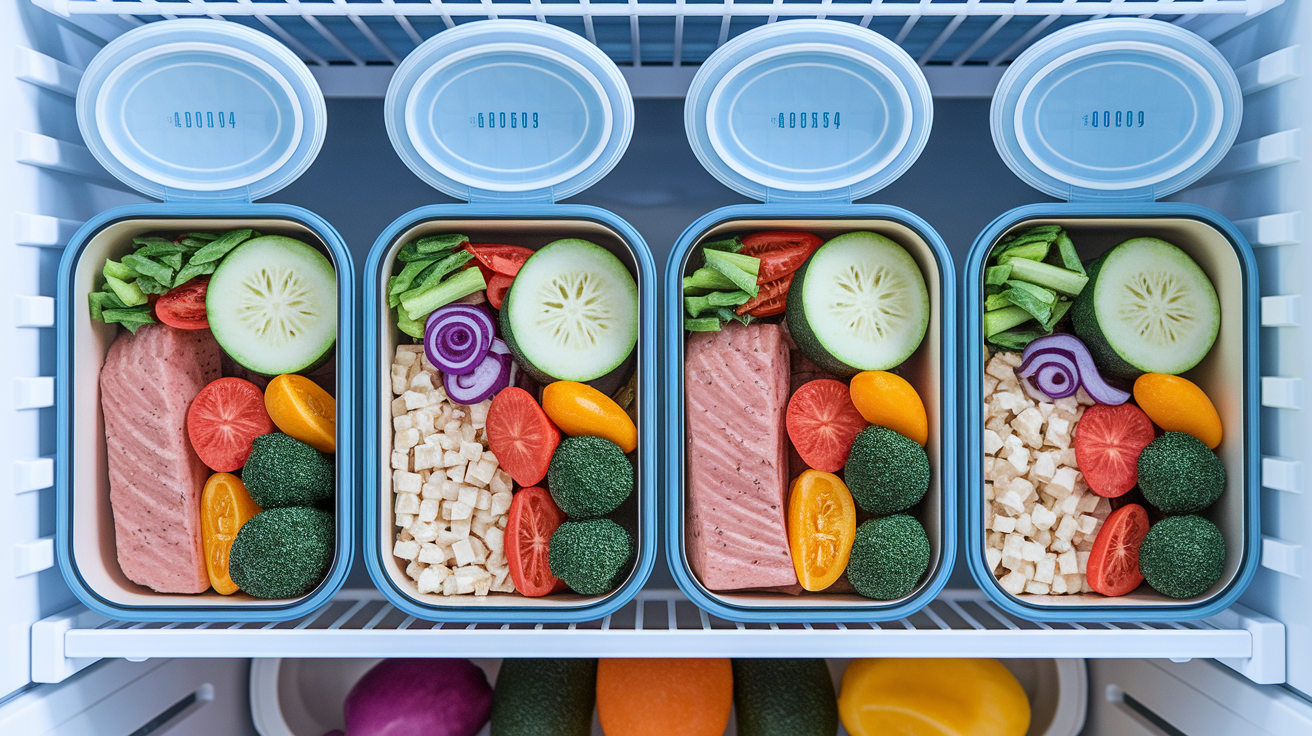
One-pan dinners work even better when you cook multiple servings at once and store the extras for the week. Batch cooking saves time, reduces decision fatigue, and makes it easier to stick to your calorie target when you’re tired or busy. Most one-pan meals hold up well in the fridge or freezer, and reheating is simple enough to do in the microwave or oven without losing much quality.
Cooked one-pan dinners will stay fresh in the refrigerator for three to four days in airtight containers. If you want to prep for longer, freeze portions in individual containers for up to two to three months. Let everything cool completely before sealing and storing. When you’re ready to eat, reheat in the oven at 350°F for 10 to 15 minutes or microwave for two to three minutes. Oven reheating works better for proteins that had crispy edges, like chicken thighs or roasted salmon. The microwave is faster and fine for most meals when you’re in a hurry.
Doubling a recipe saves you 40 to 60 minutes over the course of the week. If you have two baking sheets, you can roast two pans at once. Just rotate them halfway through cooking so everything browns evenly.
Cook two full recipes on Sunday and divide them into individual portions for Monday through Thursday dinners.
Use one pan for chicken and vegetables, and a second pan for salmon and different vegetables to give yourself variety without extra work.
Freeze half of a double batch and keep the rest in the fridge for the first half of the week.
Label containers with the date and contents so you can grab the right meal without guessing.
If you’re prepping quesadillas or anything with a tortilla, store the filling separately and assemble fresh when you’re ready to eat. Most roasted proteins and vegetables reheat well, but tortillas can get soggy if stored assembled.
Smart Ingredient Swaps to Lower Calories in One-Pan Dinners
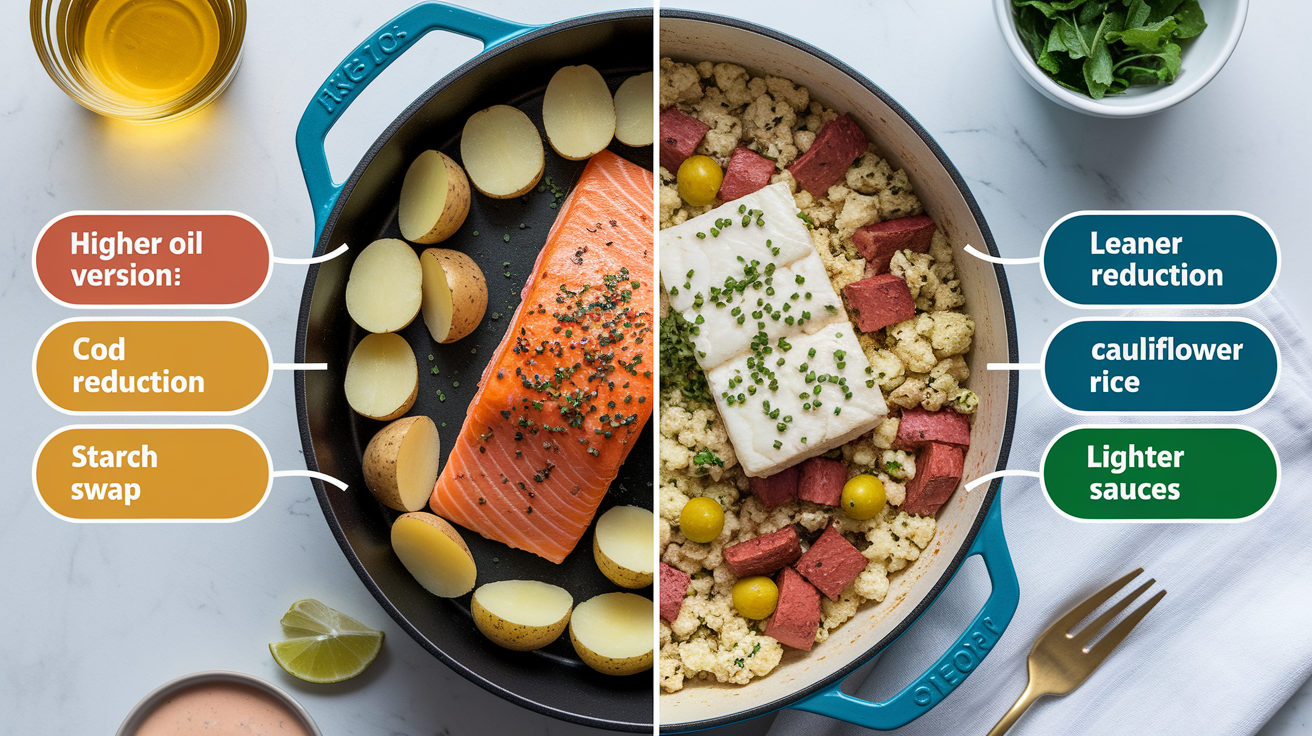
Small swaps can drop 50 to 150 calories per serving without changing the structure of the meal or making it taste bland. You don’t have to overhaul the entire recipe. Most of the time, it’s about reducing added fat, swapping a starchy carb for more vegetables, or choosing a leaner protein when calories are tight.
Start with oil. If a recipe calls for two tablespoons of olive oil for the pan, try one tablespoon instead. You can also use a quick spray of cooking oil or brush a thin layer directly onto the protein and vegetables. That small change saves about 60 calories per serving when the recipe serves four. If you’re making sheet pan chicken with potatoes and the calorie count feels too high, cut the potatoes in half and double the broccoli or peppers. You’ll keep volume and fiber high while bringing carbs and total calories down.
Here are five simple swaps that work across most one-pan dinners.
Swap regular potatoes or sweet potatoes for cauliflower rice or extra non starchy vegetables to save 80 to 100 calories per serving.
Use chicken breast instead of chicken thighs to save about 50 calories per serving. If you prefer thighs for flavor, use them but reduce the oil.
Replace half the olive oil with low sodium vegetable broth or a squeeze of lemon juice for moisture and flavor without the fat.
Choose tofu or white fish like cod instead of salmon when you want to keep fat lower. Salmon is great but adds about 10 grams of fat per serving compared to cod.
Use low sodium soy sauce, tahini thinned with water, or balsamic vinegar instead of creamy sauces or heavy marinades to keep flavor without adding hidden calories.
Frozen vegetables work just as well as fresh and often cost less. They’re pre-cut, which saves five to ten minutes of prep, and they maintain most of their nutritional value. If you’re worried about texture, roast them at a slightly higher temperature or add them to the pan for the last 10 to 15 minutes of cooking so they don’t get mushy.
Weekly Shopping List for One-Pan Fat Loss Dinners
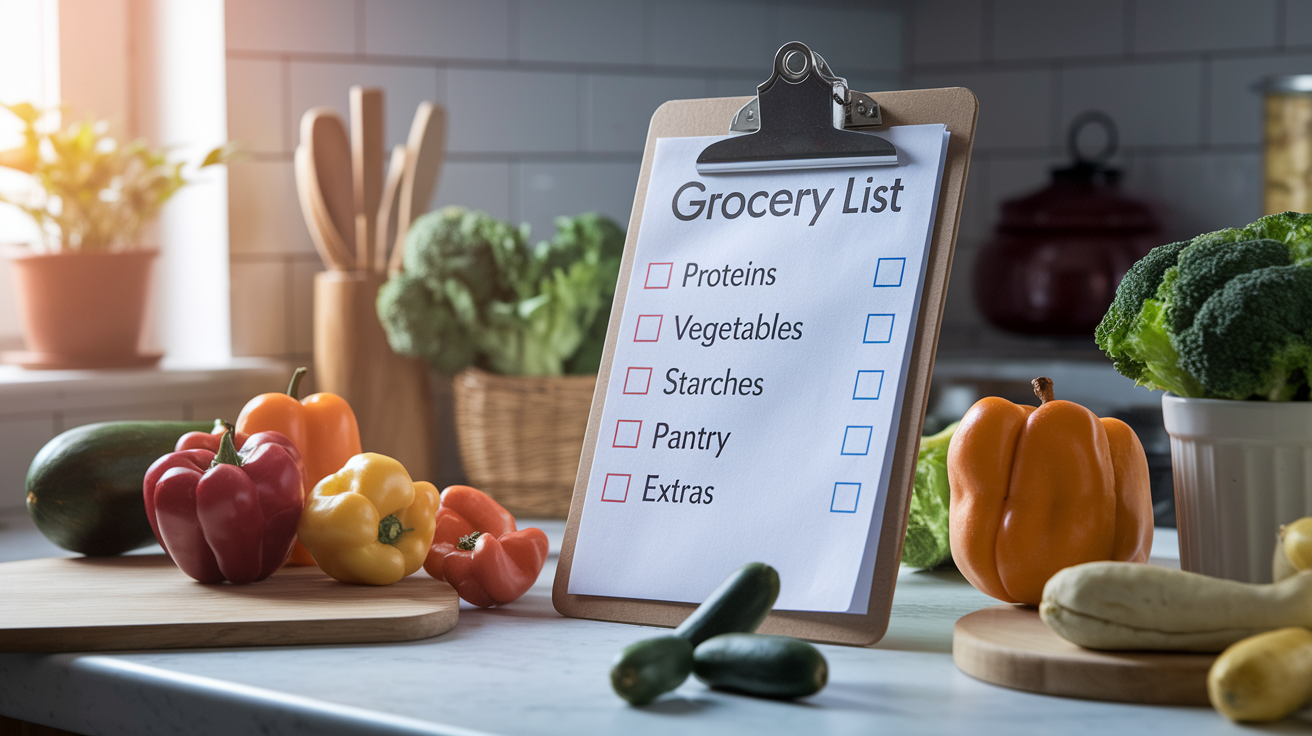
Planning one week of one-pan dinners for two people keeps your grocery bill predictable and your fridge stocked without waste. This list assumes you’re cooking dinner five nights and eating leftovers or simpler meals the other two nights. Adjust quantities up or down depending on how many people you’re feeding and whether you’re batch cooking extras for lunches.
A typical week for two people eating one-pan dinners five nights requires about six to eight pounds of mixed proteins, enough vegetables to fill three to four pans, a moderate amount of starchy carbs if you’re including them, and a few pantry staples for seasoning. Protein costs vary, but you can expect to spend about $2.50 to $6.00 per serving depending on whether you choose tofu and chickpeas or salmon and steak. Chicken breast usually falls in the middle at around $3.00 to $4.00 per serving.
| Category | Items | Notes |
|---|---|---|
| Proteins | 3 lb chicken breast, 1.5 lb salmon, 1 lb shrimp, 1 lb ground turkey, 14 oz extra firm tofu | Mix proteins for variety; freeze extras if not using within 3 days |
| Vegetables | 3 heads broccoli, 6 bell peppers, 2 bunches asparagus, 1 lb green beans, 2 pints cherry tomatoes, 1 bag Brussels sprouts | Frozen works if you want to save prep time; aim for 1 to 2 cups cooked veg per person per meal |
| Starches | 6 to 8 sweet potatoes or 3 to 4 lbs regular potatoes, 1 bag frozen cauliflower rice (optional swap) | Use 50 to 100 g cooked per person; skip if keeping carbs lower |
| Pantry | Olive oil, low sodium soy sauce, balsamic vinegar, garlic powder, paprika, cumin, oregano, salt, pepper, parchment paper | Most items last months; parchment speeds cleanup |
| Extras | 4 cans chickpeas, 2 bags mixed salad greens, 1 lemon, 1 lime | Chickpeas add plant based protein; greens give quick side salads |
If you’re cooking for four people, double the protein and vegetable quantities. If you’re cooking for one, halve everything and consider buying smaller protein portions or freezing half immediately. Most grocery stores sell chicken breast and salmon in vacuum sealed packs that you can portion and freeze individually, which helps with both cost and food waste.
Quick Time Saving Strategies for One-Pan Weeknight Efficiency
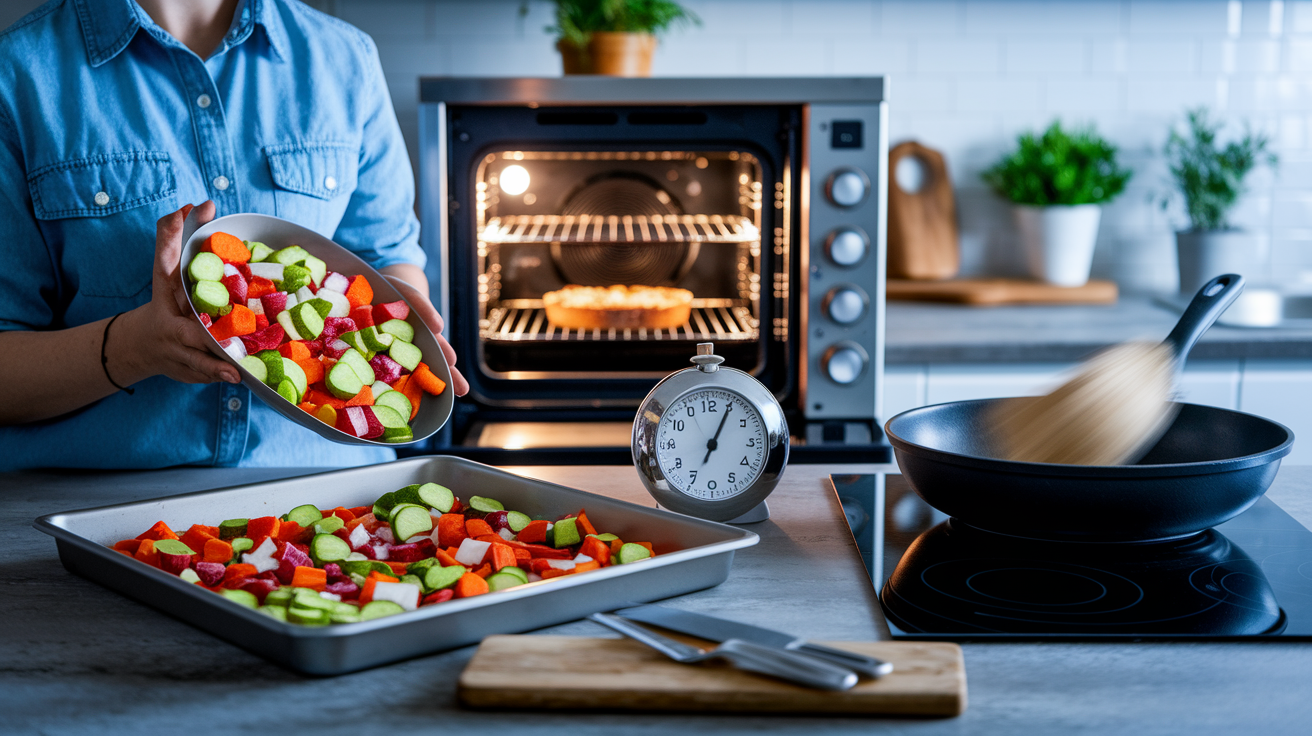
Busy nights need shortcuts that don’t sacrifice nutrition or taste. A few small changes to how you prep and cook can save ten to twenty minutes per meal, which adds up over the week. Most of these strategies work with any one-pan recipe and don’t require special equipment or extra planning.
Pre-cut frozen vegetables are the easiest time saver. They’re already washed and chopped, and you can pour them straight onto the pan. Frozen broccoli florets, bell pepper strips, and green beans roast just as well as fresh and save five to ten minutes of knife work. If you have a convection oven setting, turn it on. Convection shortens cook time by about 20 percent and helps everything brown more evenly. A chicken breast that takes 22 minutes in a standard oven will finish in about 18 minutes on convection. That’s enough time saved to clean up and sit down before the meal gets cold.
Doubling a recipe gives you two extra meals for the week without adding much active time. You’re already prepping and cleaning one pan, so throwing together a second pan while the oven is hot only adds a few minutes. Store the extras in airtight containers as soon as they cool, and you have dinner ready to reheat later. If you’re doing a stir fry style one-pan dinner in a skillet on the stovetop, cook at high heat and keep everything moving. Thin sliced chicken or shrimp with quick cooking vegetables like bell peppers and snap peas can be done in 10 to 15 minutes total. Use a little low sodium soy sauce and garlic powder for seasoning, and you have a complete dinner faster than most takeout orders.
When you’re planning the week, pick two or three one-pan recipes and cook them in rotation. Make chicken and broccoli on Monday, salmon and asparagus on Wednesday, and shrimp fajitas on Friday. Eat leftovers Tuesday and Thursday. This keeps variety high, decision making low, and cleanup minimal. You’ll spend less time thinking about what to cook and more time actually eating meals that support your fat loss goals without burning you out.
Final Words
Pick a lean protein, pile on vegetables, and use one pan—dinner’s done in 20–40 minutes. That’s the practical heart of this post: fast recipes, calorie notes, and templates to get you cooking.
You also got macro targets, essential tools, smart swaps, meal-prep tips, and a simple shopping list to speed things up on busy nights.
These one-pan healthy dinners for busy fat loss make sticking to a calorie-focused plan doable. Try one recipe this week and build from there—small wins add up.
FAQ
Q: What are fast one‑pan dinners that support fat loss?
A: Fast one-pan dinners that support fat loss are protein-forward, vegetable-heavy meals cooked in one pan in 20–40 minutes, roughly 300–500 kcal per serving, like chili lime salmon, shrimp fajitas, or sausage and veg.
Q: How do I build a balanced one‑pan meal for fat loss?
A: To build a balanced one-pan meal for fat loss, aim for 25–40 g protein, moderate carbs, lots of veg, light oil, and oven temps around 400–425°F with 18–25 minute cook times for most proteins.
Q: What calorie and protein targets should I aim for with dinners?
A: Dinner targets for fat loss are about 350–500 kcal per serving and 25–40 g protein to support fullness and muscle. Adjust based on your daily calories and activity level.
Q: Which tools and pantry staples speed up one‑pan cooking and cleanup?
A: Tools and staples that speed things up are an 18×13 rimmed baking sheet, a 10–12 inch cast-iron skillet, parchment paper, a silicone spatula, and frozen pre-cut vegetables for quick prep.
Q: How can I lower calories in one‑pan dinners without losing flavor?
A: Lower calories by cutting added oil, swapping potatoes for cauliflower rice or extra veg, choosing lean proteins, and using low-sodium sauces, citrus, herbs, and spices for big flavor with fewer calories.
Q: What simple one‑pan meal templates can I customize?
A: Simple customizable templates follow protein + vegetables + optional small starch. Pick chicken, salmon, shrimp, tofu, or chickpeas, add two cups of veg, and 100 g cooked low-glycemic carb if needed.
Q: How long will one‑pan dinners keep and how should I reheat them?
A: One-pan dinners keep 3–4 days in the fridge and 2–3 months frozen. Reheat in a 350°F oven for 10–15 minutes or microwave 2–3 minutes from chilled, using airtight containers.
Q: What quick time‑saving tricks help on busy weeknights?
A: Quick tricks: use frozen pre-cut veg, run convection to cut cook time ~20%, batch-bake multiple pans, double recipes for extra meals, and prep spices or sauces ahead.
Q: Which recipes are best for higher‑protein or advanced one‑pan options?
A: Higher-protein or advanced options include salmon with asparagus, shrimp fajitas, Mediterranean tofu sheet pan, beef and broccoli, cod with Cajun spice, and maple balsamic chicken for technique or protein boosts.
Q: How should I shop to support a week of one‑pan fat‑loss dinners?
A: Shop for 6–8 lb mixed proteins, 3–4 lbs potatoes or sweet potatoes, several bell peppers, heads of broccoli, asparagus, green beans, canned chickpeas, mixed greens, spices, and parchment for easy weekly cooking.