

What if better sleep starts the minute you wake up? Morning habits—getting bright light, drinking water, moving your body, keeping a steady wake time, eating breakfast, and timing caffeine—reset your circadian clock and make falling asleep and staying asleep easier. These six simple actions, done most days, help you fall asleep faster, sleep more deeply, and wake feeling genuinely rested. Read on to learn practical, easy-to-follow steps you can try this week to reset your rhythm and actually improve your nights.
Core Morning Actions That Directly Improve Nighttime Sleep Quality

These six morning actions consistently improve how fast you fall asleep, how well you stay asleep, and how rested you feel when practiced most days of the week.
Get bright light within 30 to 60 minutes of waking. Spend 10 to 30 minutes outdoors in natural sunlight (over 10,000 lux) to shut down leftover melatonin and lock in your circadian timing.
Wake at the same time daily, within plus or minus 15 to 30 minutes. Keep your alarm consistent every day, weekends included, to stabilize your internal clock and cut down on those middle-of-the-night wake-ups.
Drink 250 to 500 ml of water shortly after waking. Rehydrate within 15 to 30 minutes of getting up to support brain function and avoid chugging water later in the day, which can send you to the bathroom at 2 am.
Move your body within the first 2 to 3 hours. Do 20 to 60 minutes of aerobic work or 20 to 40 minutes of resistance training to shift your circadian phase earlier and deepen your slow-wave sleep.
Eat breakfast within 1 to 2 hours of waking. Go for a balanced meal with protein, healthy fats, and complex carbs to sync up your peripheral clocks and keep your energy stable all day.
Limit caffeine to the first 4 to 6 hours after waking. Keep total intake at or below 200 to 400 mg per day and cut off all caffeine at least 6 hours before bed to protect sleep onset and quality.
Morning Light Exposure for Better Sleep Quality

Bright natural light in the morning is the strongest external signal for locking in your circadian rhythm. When photons hit your retina shortly after you wake, specialized cells send signals to the suprachiasmatic nucleus (SCN) in your brain, the master circadian pacemaker. This signal shuts down any leftover melatonin from the night before and sets a timer for melatonin release roughly 14 to 16 hours later. Morning light also nudges your circadian phase earlier. That makes it easier to feel sleepy at a consistent bedtime and wake naturally the next morning.
Outdoor light delivers over 10,000 lux on a clear day and several thousand lux even when it’s cloudy. Indoor light near a window rarely tops 1,000 lux, which gives you some benefit but is far less effective. Aim for 10 to 30 minutes of direct outdoor exposure within the first 30 to 60 minutes after waking. If it’s overcast or you’re living in a northern latitude during winter, stretch the session to 30 to 60 minutes or grab a 10,000-lux light therapy box and sit in front of it for 20 to 30 minutes while you drink coffee or check your to-do list.
Five practical ways to increase morning light exposure:
Step outside with your morning water or coffee and stand or sit in direct sunlight for 10 to 15 minutes.
Take a short walk around the block within 30 minutes of waking. Even just to the end of the driveway and back.
Eat breakfast near an open window or on a porch to combine light exposure with your meal timing routine.
Open blinds and curtains as soon as you wake so natural light fills the room while you get ready.
If outdoor access is limited, position yourself within 3 feet of a bright south or east-facing window for 20 to 30 minutes during breakfast or morning tasks.
Consistent Wake Time as a Morning Habit Supporting Sleep Quality
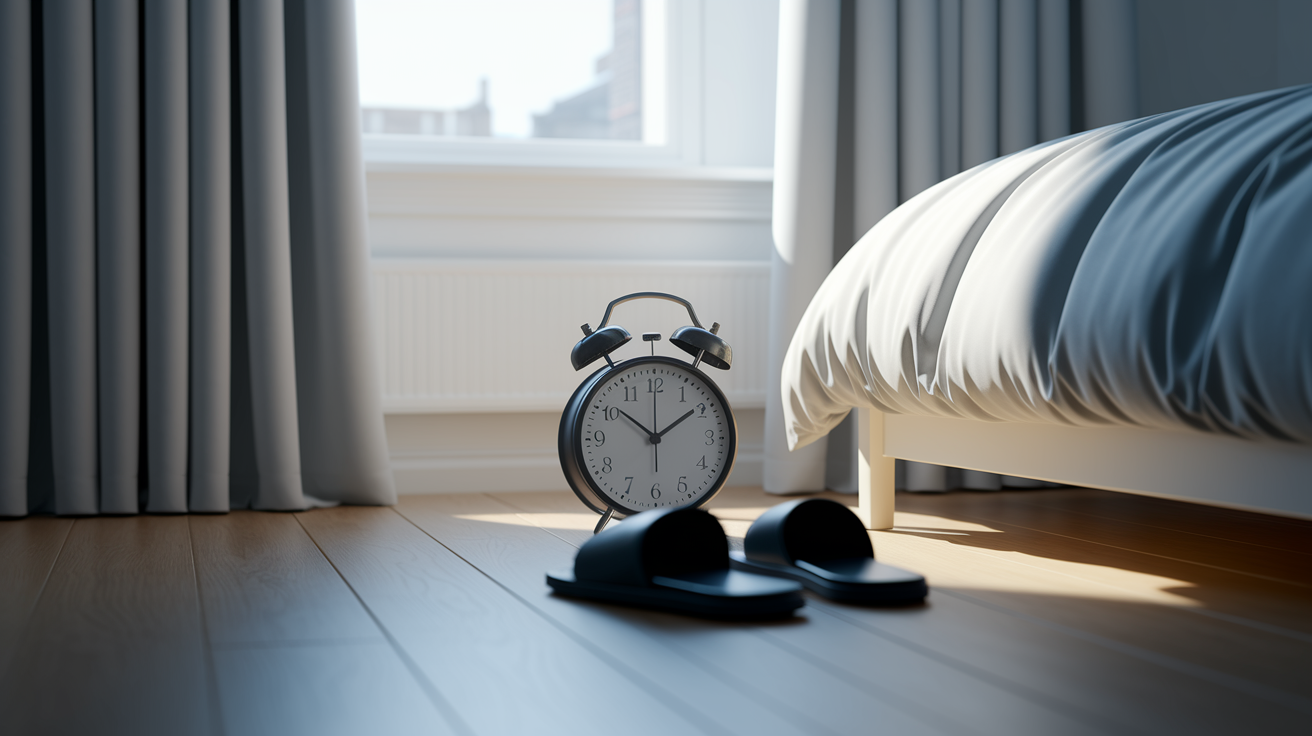
Your circadian system relies on predictable timing cues to keep sleep and wake cycles aligned. The most powerful behavioral anchor is a fixed wake time. When you wake at roughly the same hour every day (within a 15 to 30 minute window), you train the SCN to expect light, activity, and cortisol release at that time. This regularity strengthens the cortisol awakening response, a natural spike in cortisol 20 to 45 minutes after waking that promotes alertness and helps consolidate the sleep-wake boundary. Over weeks, a stable wake time improves sleep continuity, reduces middle-of-the-night awakenings, and shortens the time it takes to fall asleep.
Hitting the snooze button messes with this process. Each snooze cycle kicks off a new partial sleep onset, but those extra 9-minute fragments are low quality and non-restorative. The repeated wake-sleep transitions increase sleep inertia (that heavy, foggy feeling) and confuse your circadian system about when the true wake signal has arrived. Place your alarm across the room so you have to stand up to turn it off. That small barrier is often enough to stop you from crawling back into bed.
On weekends, resist the urge to sleep in more than 1 to 2 hours past your weekday wake time. If you normally wake at 6:00 am during the week, sleeping until 9:00 am on Saturday shifts your circadian phase later and makes Monday morning harder. If you’re exhausted, go to bed 15 to 30 minutes earlier on Friday and Saturday nights instead of extending your morning sleep window.
Morning Exercise Timing and Its Effects on Nighttime Rest

Physical activity in the morning has direct effects on both circadian timing and sleep architecture. Aerobic exercise (brisk walking, jogging, cycling) or resistance training completed within the first 2 to 3 hours after waking advances your circadian phase. It nudges your internal clock earlier. This makes it easier to feel sleepy at an appropriate bedtime and wake naturally the next morning. Morning movement also increases adenosine accumulation (the molecule that builds sleep pressure throughout the day), reduces sleep onset latency (the time it takes to fall asleep), and increases the proportion of slow-wave sleep, the deepest and most restorative stage.
Aim for 20 to 60 minutes of moderate aerobic activity or 20 to 40 minutes of resistance training. Moderate intensity means you can speak in short sentences but can’t carry on a full conversation comfortably. If you’re new to morning exercise, start with 10 to 15 minutes of walking or light stretching and build up by 5 minutes per week. Avoid very intense or long-duration training (over 90 minutes or near-maximal effort) within 1 to 2 hours of bedtime, because elevated core temperature and sympathetic arousal can delay sleep onset.
Types of morning exercise and their differing sleep benefits
Aerobic activity like jogging or cycling primarily boosts cardiovascular health and speeds up adenosine buildup, leading to deeper sleep and fewer nighttime awakenings. Resistance training (bodyweight exercises, free weights, resistance bands) stimulates muscle repair processes that enhance slow-wave sleep and growth hormone release during the night. Low-impact movement such as yoga or tai chi combines gentle physical load with breath regulation and mindfulness, reducing morning cortisol spikes and promoting parasympathetic tone that carries through the day and into evening wind-down.
Walk for 20 to 30 minutes outdoors right after waking to combine light exposure and movement in one session.
Do a 15 to 20 minute bodyweight circuit (squats, push-ups, planks) in your living room before breakfast.
Attend a morning yoga or stretching class 2 to 3 times per week to build a social accountability cue into your routine.
Bike or walk to work if you can, turning your commute into built-in morning exercise that doesn’t require extra time blocks.
Caffeine Timing in the Morning to Protect Nighttime Sleep

Caffeine blocks adenosine receptors in the brain, temporarily masking sleepiness. Its half-life is about 5 to 6 hours in most adults. That means half the caffeine from a cup of coffee consumed at 3:00 pm is still in your system at 9:00 pm. To protect sleep onset and sleep quality, consume caffeine only during the first 4 to 6 hours after waking. If you wake at 6:00 am, finish your last caffeinated drink by noon (or 10:00 am if you’re particularly sensitive). Avoid all caffeine within 6 hours of your intended bedtime. For an 11:00 pm bedtime, that means no coffee, tea, or energy drinks after 5:00 pm.
Total daily intake also matters. Most adults tolerate up to 400 mg of caffeine per day without major side effects, but for better sleep, aim to stay at or below 200 mg. One 8-ounce cup of brewed coffee contains roughly 95 mg. An espresso shot has about 63 mg. Black tea 40 to 70 mg. Green tea 20 to 45 mg. If you find yourself needing caffeine in the afternoon to stay alert, that’s a sign your sleep quality or duration needs attention, not that you need more caffeine.
Three morning caffeine alternatives that preserve night rest:
Swap your second or third coffee for herbal tea (peppermint, ginger, rooibos) or decaf coffee to maintain the ritual without added stimulant load.
Drink a glass of cold water or do 2 minutes of jumping jacks or brisk walking when you feel a mid-morning energy dip instead of reaching for another cup.
Pair your single morning coffee with 10 minutes of outdoor light exposure to amplify the natural alertness boost and reduce the urge for a second dose later.
Breakfast Timing and Composition to Support Circadian Rhythm

Eating breakfast within 1 to 2 hours of waking helps sync peripheral clocks in your liver, pancreas, and gut with the central circadian pacemaker in your brain. When these clocks are aligned, metabolic processes (glucose regulation, insulin sensitivity, fat oxidation) run more efficiently. That reduces the likelihood of blood sugar crashes and late-day cravings that can mess with sleep. A balanced breakfast also stabilizes energy across the day, preventing the spike-and-crash cycle that often leads to compensatory snacking or large evening meals, both of which disrupt sleep onset and increase nighttime awakenings.
Focus on a combination of lean protein, healthy fats, and complex carbohydrates. Protein and fat slow gastric emptying and provide sustained energy, while complex carbs supply glucose for brain function without triggering rapid insulin spikes. Avoid breakfasts high in added sugar (pastries, sweetened cereals, flavored yogurts) because they cause a sharp rise and subsequent drop in blood glucose, increasing afternoon fatigue and evening restlessness. If you’re not hungry first thing, start with a small protein-rich snack like a hard-boiled egg or a handful of nuts within 30 to 60 minutes of waking, then have a fuller meal 1 to 2 hours later.
| Breakfast Option | Key Benefit for Sleep |
|---|---|
| Scrambled eggs with avocado on whole-grain toast | High protein and healthy fats stabilize blood sugar and reduce late-day cravings that disrupt sleep. |
| Greek yogurt with mixed berries, chia seeds, and a drizzle of honey | Protein and fiber support steady energy; antioxidants in berries may reduce inflammation linked to poor sleep. |
| Oatmeal topped with banana slices, almond butter, and cinnamon | Complex carbs and healthy fats maintain glucose stability; magnesium in almonds supports melatonin production. |
| Smoothie with spinach, protein powder, frozen mango, and flaxseed | Quick to prepare; protein and omega-3s support neurotransmitter balance and reduce evening restlessness. |
Morning Hydration Strategies for Better Sleep at Night

You lose approximately 300 to 500 ml of fluid overnight through respiration and perspiration. Starting the day in a mildly dehydrated state impairs cognitive function, reduces blood volume, and increases fatigue. All of which can push you toward compensatory behaviors later (extra caffeine, sugary snacks, or a large evening fluid intake to “catch up”). Drinking 250 to 500 ml (roughly 8 to 17 fluid ounces) of water within 15 to 30 minutes of waking rehydrates tissues, kickstarts kidney filtration, and helps you feel more alert without relying solely on caffeine.
The timing of hydration matters for nighttime sleep. If you shift most of your fluid intake to the evening, you increase the likelihood of nocturia (waking to urinate), which fragments sleep and reduces time spent in deep sleep stages. Front-load hydration in the morning and early afternoon. A simple pattern: drink a glass of water on waking, sip water throughout the morning and early afternoon, then taper off after 6:00 pm. If you’re thirsty in the evening, take small sips rather than large volumes. And avoid chugging water right before bed.
Morning Mindfulness and Stress Reduction for Improved Sleep Quality

Chronic stress elevates cortisol and activates the sympathetic nervous system, both of which interfere with the transition to sleep at night. When you start the day with a brief mindfulness practice (2 to 5 minutes of deep breathing, meditation, or gentle stretching), you set a baseline of parasympathetic tone that makes it easier to down-regulate in the evening. Morning mindfulness also reduces the cognitive load and rumination that often carry over into bedtime, when racing thoughts and worry make it hard to fall asleep.
Five simple morning mindfulness methods:
Sit quietly for 3 to 5 minutes and focus on slow, diaphragmatic breathing (inhale for 4 counts, hold for 4, exhale for 6).
Write three sentences in a journal about what you’re grateful for or what you hope to accomplish today.
Do 5 minutes of gentle yoga or stretching, paying attention to how each muscle feels as it lengthens.
Listen to a 5-minute guided meditation app session while sitting on your bed or in a comfortable chair.
Stand outside for 2 minutes with your eyes closed, noticing sounds, air temperature, and the feeling of sunlight on your skin.
How morning calm reduces evening hyperarousal
When you begin the day in a calm, intentional state, you’re less likely to accumulate stress reactivity across the day. Each stressor you encounter (traffic, a difficult email, a scheduling conflict) triggers a smaller sympathetic response, and you recover faster. By evening, your baseline arousal level is lower. That makes it easier for melatonin to rise and for your body to kick off the sleep process. Morning mindfulness essentially pre-loads your nervous system with resilience, so nighttime wind-down doesn’t have to work as hard to counteract accumulated tension.
Daily Morning Behavior Mistakes That Harm Sleep Later

Even if you follow most morning habits correctly, a few common errors can undermine nighttime sleep quality. The first is immediately reaching for your phone. Checking email, social media, or news within the first 10 to 30 minutes of waking spikes cortisol and sets a reactive tone for the day. Stress accumulated early tends to linger, increasing hyperarousal in the evening. Delay screen exposure until after you’ve hydrated, moved, and spent a few minutes on a calming activity.
The second mistake is hitting snooze repeatedly. Those fragmented 9-minute sleep cycles don’t provide restorative rest and train your brain to expect inconsistent wake signals, weakening circadian entrainment. The third error is skipping hydration or breakfast altogether. Dehydration and low blood sugar by mid-morning force your body into a stress state, elevating cortisol and adrenaline. This compensatory arousal can persist into the evening, delaying melatonin release and making it harder to fall asleep.
Five morning mistakes to avoid:
Hitting snooze more than once (place alarm across the room to force full waking).
Checking your phone before getting out of bed or within the first 10 to 30 minutes of waking.
Skipping water intake entirely and relying on coffee alone for hydration.
Eating a high-sugar breakfast (sweetened cereal, pastries) that causes a mid-morning energy crash and evening rebound hunger.
Staying indoors in dim artificial light all morning, missing the circadian cue from natural daylight.
Sample Morning Routine Structures That Lead to Better Sleep

A practical morning routine doesn’t need to be elaborate or time-consuming. For a very short routine (5 to 10 minutes total), try this: wake at the same time every day, drink a glass of water within 5 minutes, step outside or stand by a bright window for 5 to 10 minutes, and jot down your top three priorities for the day before checking your phone. This minimal routine hits the core sleep-supporting actions (hydration, light, consistency, reduced morning stress) and fits into even the busiest schedule.
For a longer routine (20 to 30 minutes), expand to include movement and a full breakfast. Wake at your set time, drink water, step outside for a 10 to 15 minute walk (combining light and exercise), return home for a 5-minute stretch or breathing session, eat a balanced breakfast (protein, healthy fat, complex carbs), and spend 2 to 3 minutes reviewing your to-do list or journaling. This structure aligns all six core actions and typically produces noticeable improvements in sleep onset, sleep efficiency, and morning alertness within 2 to 4 weeks of consistent practice.
| Step | Suggested Timing |
|---|---|
| Wake at consistent time (within ±15 min) | Same time daily, including weekends |
| Drink 250 to 500 ml water | Within 5 to 15 minutes of waking |
| Get 10 to 30 min bright light outdoors | Within 30 to 60 minutes of waking |
| Move for 20 to 60 minutes (aerobic or resistance) | Within first 2 to 3 hours after waking |
| Eat balanced breakfast | Within 1 to 2 hours of waking |
| Limit caffeine to morning hours | Finish by 4 to 6 hours after waking; avoid within 6 hours of bedtime |
Final Words
Step outside within 30–60 minutes, drink 250–500 ml of water, move for 20–60 minutes, and have a protein-forward breakfast within 1–2 hours—these core morning actions set up better nights.
Keep a steady wake time, limit caffeine to the first 4–6 hours, add 2–5 minutes of mindfulness, and skip the snooze and heavy morning screens.
Use these morning habits to improve sleep quality as a simple checklist, tweak what fits your life, and expect steady gains over the next few weeks.
FAQ
Q: What are the most effective morning actions to improve nighttime sleep?
A: The most effective morning actions to improve nighttime sleep are bright light within 30–60 minutes, a consistent wake time, 250–500 ml water after waking, morning movement, breakfast in 1–2 hours, and limited caffeine.
Q: How long of morning sunlight do I need for better sleep?
A: Morning sunlight of about 10–30 minutes outdoors within 30–60 minutes of waking is ideal, longer if cloudy; this timing strengthens your circadian cue and supports better nights.
Q: When should I wake up each day to improve sleep?
A: Keeping your wake time within about 15–30 minutes each day improves sleep regularity; avoid snoozing and try to keep weekend wake times close to weekdays.
Q: Is morning exercise good for nighttime sleep, and what timing and type work best?
A: Morning exercise helps sleep: aim for 20–60 minutes aerobic or 20–40 minutes resistance within 2–3 hours of waking to reduce sleep latency and boost deep sleep; avoid very intense evenings.
Q: How much caffeine and when in the morning should I consume to protect sleep?
A: Limit caffeine to a total of ≤400 mg daily (≤200 mg preferred) and finish caffeine within the first 4–6 hours after waking to avoid interference with nighttime rest.
Q: What should I eat for breakfast to support my sleep cycle?
A: Eating within 1–2 hours of waking with protein, healthy fats, and complex carbs supports circadian rhythms and steady energy; avoid high-sugar breakfasts that cause later crashes.
Q: How much water should I drink in the morning to help my sleep at night?
A: Drinking 250–500 ml of water within 15–30 minutes of waking rehydrates without shifting fluids to evening, which can help reduce nighttime bathroom awakenings.
Q: Can short morning mindfulness practices improve my sleep?
A: Two to five minutes of morning breathwork, brief mindfulness, or journaling lowers daytime stress and evening rumination, making it easier to fall asleep and stay asleep.
Q: Which morning habits commonly harm sleep later in the day?
A: Morning habits that harm sleep include heavy screen use, hitting snooze, skipping hydration or breakfast, and avoiding movement—these raise stress reactivity and unstable energy that disrupt nights.
Q: How soon will I notice sleep improvements after changing my morning habits?
A: You’ll typically notice better sleep within 2–4 weeks of consistently using morning light, stable wake times, hydration, movement, breakfast timing, and controlled caffeine.
Q: What’s a quick morning routine I can actually do on busy days to help sleep?
A: A quick 5–10 minute routine that helps sleep: 10–15 minutes bright light or a short outdoor walk, 250–500 ml water, a small protein-rich snack, and 2–3 minutes of breathwork.
Q: What should I do if my schedule or travel messes up my morning routine?
A: If your schedule changes, keep wake time within 15–30 minutes when possible, prioritize morning light or a bright lamp, and do a short movement plus hydration to protect sleep.