
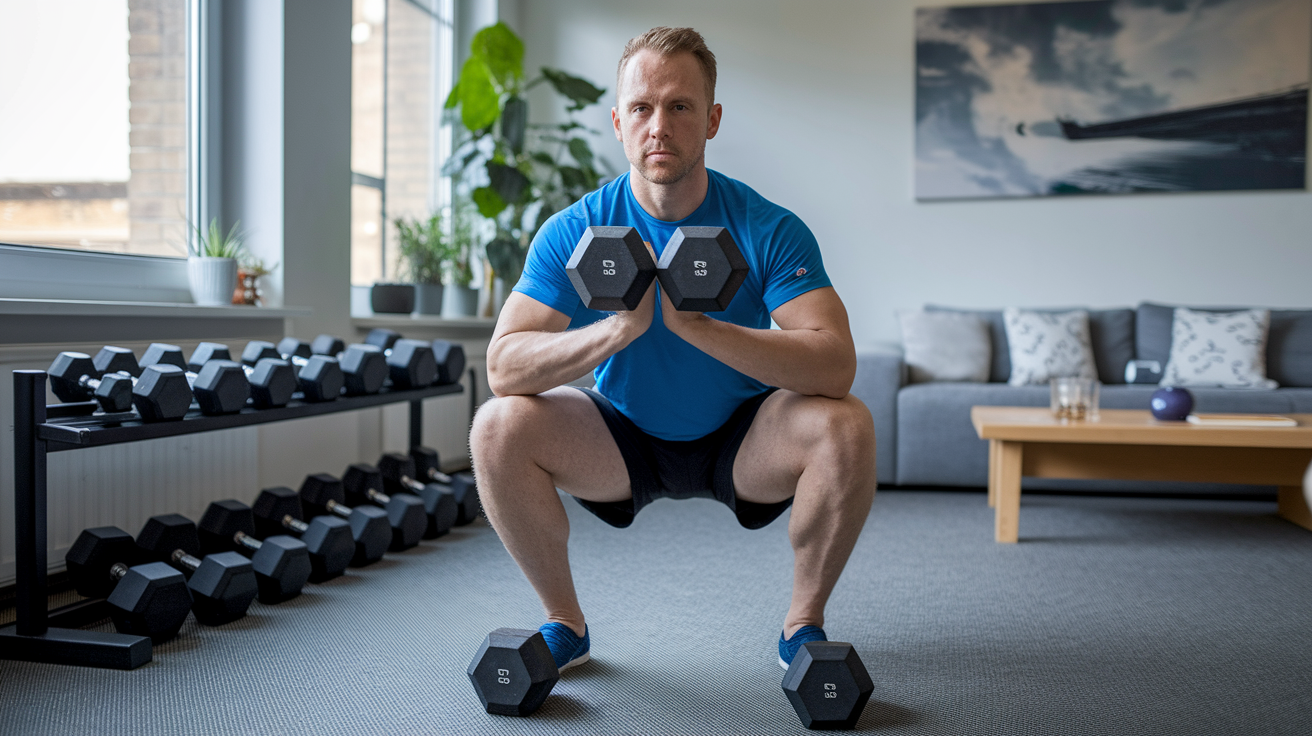
Who says you need a gym to build total strength?
This 30-minute full body dumbbell workout hits every major muscle group—legs, back, chest, shoulders, arms, and core—in one efficient session.
It uses three superset blocks and a short core finisher so you get heavy lifts and steady work without wasting time.
Do it two to three times a week, pick weights that leave one or two reps in reserve, and you’ll steadily get stronger without long workouts or complicated equipment.
No perfection required. Just a plan and consistent effort.
Complete Full Body Dumbbell Routine for All Major Muscle Groups

This routine hits every major muscle group in 30 minutes with nothing but dumbbells. You’re looking at three supersets of resistance work plus a two round core finisher that covers legs, back, chest, shoulders, arms, and abs in one shot. Twelve movements total, organized so one muscle group rests while another works.
Each resistance exercise is 8 to 12 reps, done for three rounds with 60 seconds between superset blocks. The core finisher drops to two rounds with 30 seconds rest. Grab a dumbbell weight that leaves you with one or two reps in the tank at the end of each set. Close to your limit, but not quite there. If you finish and feel like you could easily bang out five more, go heavier.
Run this two or three times per week with at least 48 hours between sessions. You can use one dumbbell for goblet style movements or a matching pair for bilateral stuff like rows and presses. Most people keep two or three weight options nearby so they can scale up for squats and deadlifts, down for raises and curls.
Essential Dumbbell Movements for a Balanced Full Body Dumbbell Workout
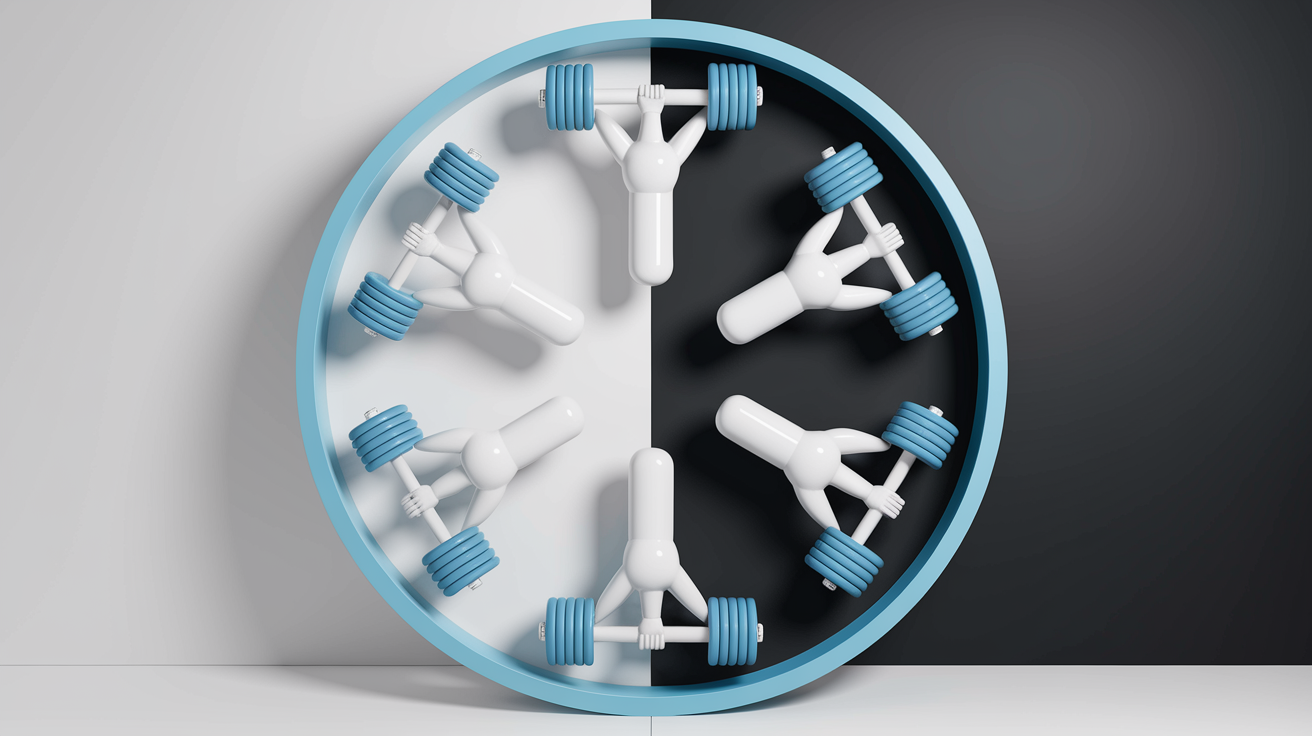
A balanced session hits all five fundamental movement patterns: squat, hinge, push, pull, and core stabilization. When you cover these patterns, you’re training muscles the way they’re built to move. Pushing through your heels, hinging at your hips, pressing overhead, pulling toward your torso, bracing through your midsection. Skip any one and you’re leaving gaps in strength, plus you’re increasing the chance of imbalances down the road.
Single arm dumbbell exercises add unilateral work, which forces each side of your body to carry its own load. That helps you catch strength imbalances early and improves range of motion since one side can’t compensate for the other. Unilateral moves also require more core stability to keep your torso from rotating or tipping.
Romanian Deadlift (RDL) targets hamstrings, glutes, and lower back through a hip hinge pattern.
Goblet Squat loads quads, glutes, and core while holding a single dumbbell at chest height.
Bent Over Row works mid back, lats, and biceps by pulling the dumbbell toward your ribcage.
Overhead Press builds shoulders, triceps, and upper chest with a strict vertical press.
Renegade Row combines plank stability with alternating rows, engaging core, shoulders, and back.
Single Arm Lunge Pattern challenges quads, glutes, and balance by loading one arm during a split stance movement.
Warm Up Steps to Prepare for a Full Body Dumbbell Workout

Five to ten minutes of warm up raises your heart rate, lubricates your joints, and primes the muscles you’re about to load. Skip this step and your first working set feels stiff. It also increases the risk of strains, especially in your lower back and shoulders.
2 minutes of brisk cardio. March in place, jog lightly, or step side to side to elevate your pulse.
60 seconds of hip mobility. Perform forward and lateral leg swings to open your hip flexors and abductors.
60 seconds of shoulder mobility. Circle your arms forward and backward, gradually increasing the diameter.
1 minute of bodyweight squats and hinges. Practice air squats and Romanian deadlift patterns with no weight to rehearse the movement.
Full Body Dumbbell Workout Programming Methods and Superset Structures
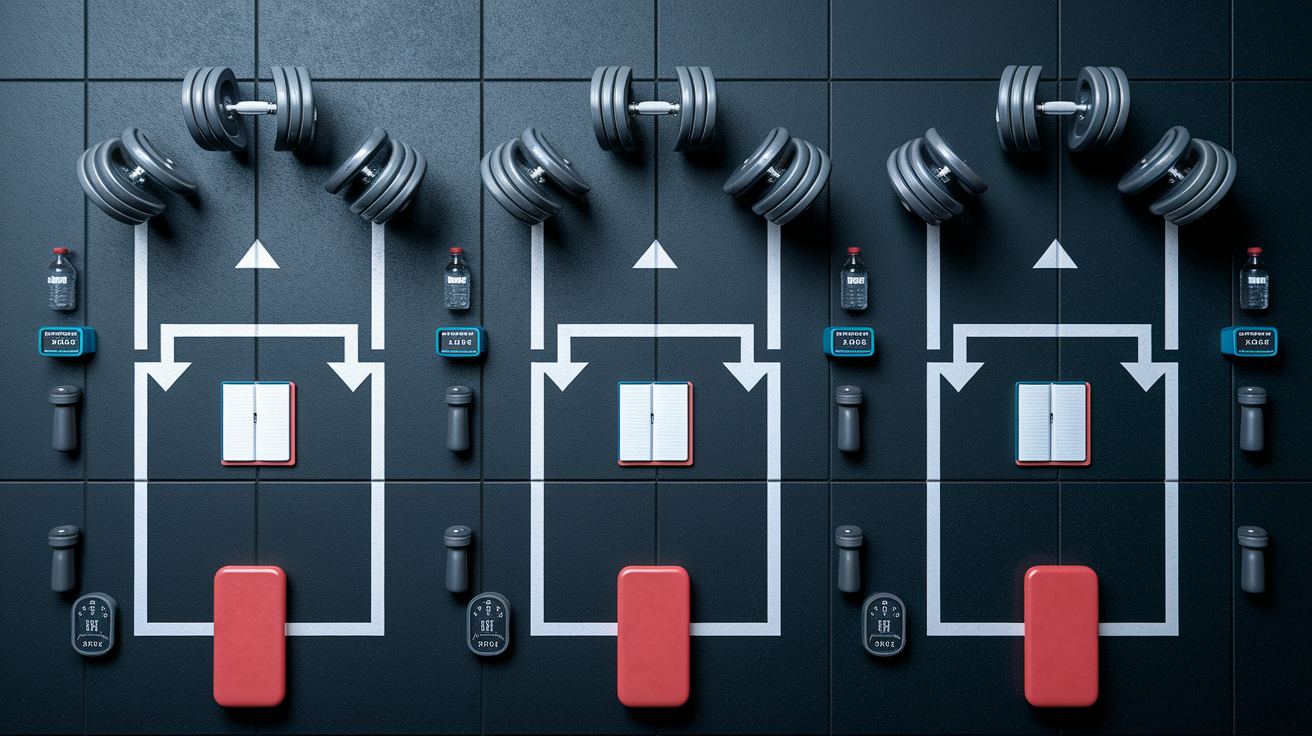
Supersets cut your total workout time by pairing two or three exercises back to back with minimal rest in between. Instead of sitting idle for 90 seconds between sets of squats, you move straight into the next exercise and rest only after completing the entire block. Keeps your heart rate elevated and lets you finish a comprehensive session in around 30 minutes.
The lower body superset pairs three hinge and squat movements: Romanian Deadlift, Split Squat, and Goblet Squat. Complete 8 to 12 reps of each exercise in sequence, then rest 60 seconds before starting round two. Repeat for three total rounds. The RDL loads your hamstrings and glutes, the split squat isolates one leg at a time for balance and quad work, and the goblet squat targets your quads and core with a front loaded position.
The upper body superset combines pulling and shoulder isolation: Bent Over Row, Lateral Raise, and Front Raise. Perform 8 to 12 reps of each movement, rest 60 seconds, and repeat for three rounds. Pairing a heavy compound pull (row) with lighter isolation raises (lateral and front) lets your back recover while your shoulders continue working. The second upper body block stacks Dumbbell Bench Press, Overhead Press, and Tricep Kickback using the same three round, 60 second rest format.
Progress by increasing your dumbbell weight once you can complete all 12 reps with more than two reps left in reserve. If you don’t have heavier weights, slow your tempo. Take three seconds to lower the dumbbell and one second to lift it. That increases time under tension and makes each set harder.
Core Finisher Format
After your three superset blocks, finish with two rounds of core work: 10 to 15 reps of Dumbbell Crunches followed by 20 total reps of Russian Twists (10 per side). Rest 30 seconds between rounds. Hold a single dumbbell over your chest for crunches to add resistance, and hold it with both hands during twists to load your obliques and rectus abdominis.
Choosing the Right Dumbbell Weight for a Full Body Dumbbell Workout
Reps in reserve (RIR) tells you how many more reps you could complete before hitting failure. For muscle growth and endurance, aim to leave one or two reps in the tank at the end of each set. If you finish your set of 12 and feel like you could easily do five or six more, the weight’s too light. Either grab a heavier dumbbell or slow your tempo to increase difficulty. If you can’t complete the target reps with clean form, drop to a lighter weight.
You can also adjust intensity by changing your lifting speed. A slow eccentric (the lowering phase) increases time under tension, which makes a lighter weight feel significantly harder. Count to three on the way down, pause for one second, then lift for one second. Before Sarah grabbed heavier dumbbells, she found that slowing her goblet squat descent from one second to three seconds turned her 15 pound dumbbell into a genuine challenge.
| Training Goal | Rep Range | RIR Target |
|---|---|---|
| Hypertrophy / Endurance | 8–15 reps | 1–2 reps in reserve |
| Strength | 1–6 reps | 1–2 reps in reserve |
| Core Endurance | 10–20 reps | 0–2 reps in reserve |
Workout Schedules and Frequency for a Full Body Dumbbell Workout Plan
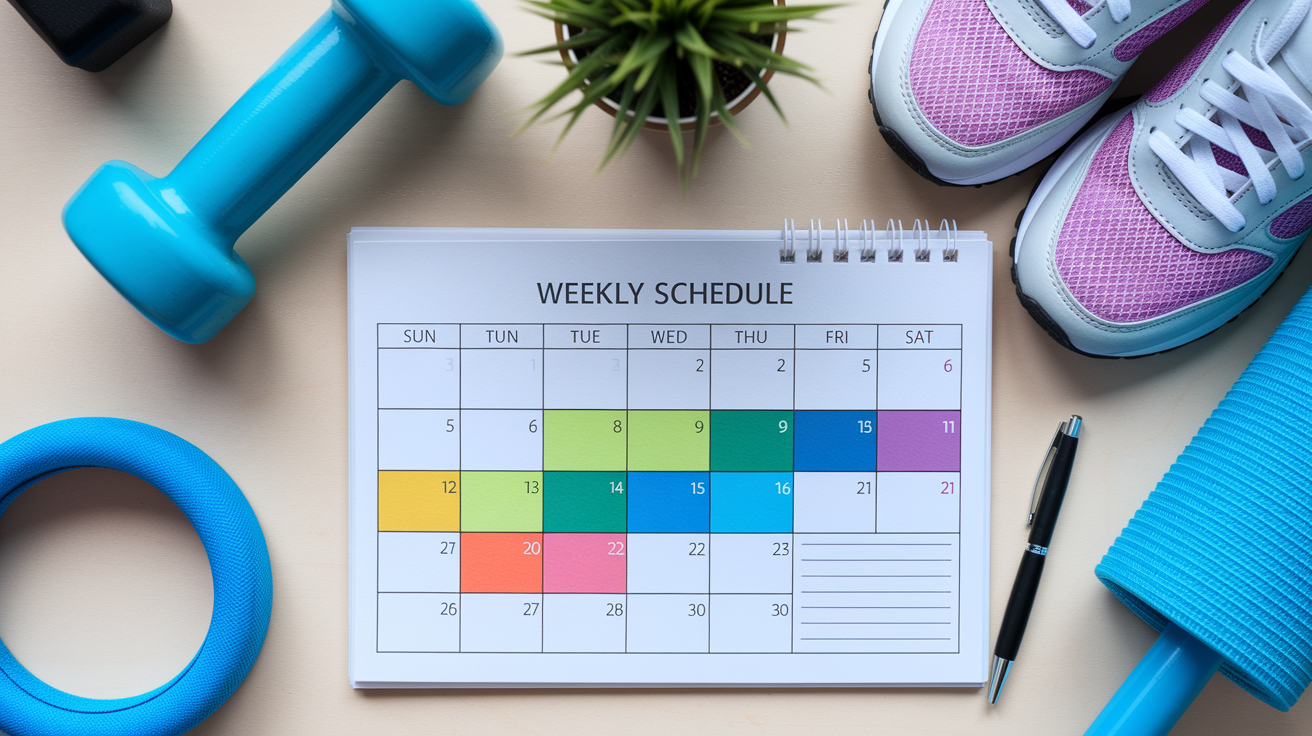
Start with two or three full body sessions per week, spacing them at least 48 hours apart. Monday and Thursday, Tuesday and Friday, or Monday, Wednesday, Friday schedules all work. The recovery window gives your muscles time to repair and adapt, especially if you’re new to resistance training or returning after a break.
Once you’re comfortable with three weekly sessions, you can shift to a 4, 2, 1 structure: four strength days, two cardio days, and one mobility or active recovery day. In that model, you might run lower body work on Monday and Thursday, upper body work on Tuesday and Friday, cardio on Wednesday and Saturday, and mobility drills on Sunday. This spreads volume across the week while still allowing each muscle group 48 to 72 hours between direct loading.
Track your weights, reps, and reps in reserve in a notebook or phone app after every session. When you notice you’re consistently finishing sets with three or more reps left, that’s your signal to increase load. Logging also helps you spot patterns. If your split squat numbers climb but your overhead press stalls, you know where to focus extra warm up work or technique practice.
Safety, Form, and Injury Prevention During a Full Body Dumbbell Workout

The two most common form breakdowns are rounding your lower back during hinges and arching your lumbar spine during overhead presses. Both happen when your core isn’t braced or when you’re using a weight that’s too heavy for the movement. On any hinge (Romanian deadlift, bent over row), your spine should stay neutral from your tailbone to the base of your skull. On overhead presses, stack your ribs over your hips and squeeze your glutes to prevent your lower back from hyperextending.
Brace your core before every rep. Take a breath, tighten your abs as if someone’s about to poke your stomach, and hold that tension through the lift.
Maintain a neutral spine. Avoid rounding forward on hinges or arching backward on presses. Imagine a straight line from your head to your tailbone.
Control the eccentric phase. Lower the weight with intention. Don’t let gravity do the work, because that’s where most muscle damage (the good kind) happens.
Keep your feet stable. Plant your whole foot, pressing through your heel and the ball of your foot equally to create a solid base.
Your warm up and cool down also play a direct role in injury prevention. Dynamic movement before lifting prepares connective tissue and synovial fluid in your joints, while three to five minutes of light static stretching afterward helps reduce next day soreness and maintains range of motion over time.
Final Words
Grab a pair of dumbbells and run the 30-minute routine: three supersets that hit hinge, squat, push, pull, plus single-arm work, then a two-round core finisher.
Use 8–12 reps for resistance moves, 10–20 for core, three rounds per superset, with 60 seconds rest after supersets and 30 seconds after the finisher. Pick a weight that leaves you 1–2 reps in reserve.
Do this full body dumbbell workout 2–3 times a week with 48 hours between sessions. One dumbbell or a pair is enough, and you’ll see steady gains.
FAQ
Q: Can I get a full body workout with just dumbbells?
A: A full-body workout with just dumbbells can cover all major muscles—use 6–10 movements, 8–12 reps, three supersets plus a short core finisher for a 30-minute session, 2–3x/week.
Q: What is the 3-3-3 rule for working out?
A: The 3-3-3 rule for working out is a simple strength template: three exercises, three sets, three heavy reps each with longer rests; swap to 3×8–12 if you want more muscle endurance.
Q: How effective are full body dumbbell workouts?
A: Full-body dumbbell workouts are highly effective for building strength, balance, and conditioning when you use progressive overload, proper rep ranges (8–12), smart supersets, and train 2–3 times weekly.
Q: Can I build muscle using only dumbbells?
A: You can build muscle using only dumbbells by using progressive overload, choosing weights that leave 1–2 reps in reserve, hitting 8–12 rep ranges, and training consistently 2–3 sessions per week.