

You don’t need to train every day or lift heavy to get stronger.
Two or three full-body sessions a week, twenty to forty minutes each, will build real strength and give your body time to recover.
Start light, learn the movements, and add a little more each week — that’s the safe way to make steady progress.
This post gives a simple, step-by-step plan for beginners: warm-ups, basic moves, sets and reps, and how to pick loads so you get stronger without pain or guesswork.
No drama. Just doable steps.
How to Begin Strength Training Safely and Confidently

The best way to start is committing to two or three sessions per week and focusing on full-body workouts. Hit all major muscle groups in one session. This keeps things simple, builds balanced strength, and gives your body plenty of recovery time between training days. Most beginners see noticeable improvements in the first four to eight weeks when they stay consistent, even if they’re using light weights or just bodyweight movements.
Your first few sessions should feel manageable, not brutal. Pick weights or resistance levels that let you complete all your reps with good control. Most of the set should feel comfortable, with only the last few reps becoming challenging. Start with two to four sets per exercise, rest for sixty to ninety seconds between sets, and keep total session length around twenty to forty minutes. The goal during these early weeks? Learn the movements, build the habit, and let your muscles, joints, and nervous system adapt to new stress.
Consistency beats intensity when you’re starting out. Training three times per week on non-consecutive days (like Monday, Wednesday, and Friday) gives your muscles the forty-eight to seventy-two hours of rest they need to recover and get stronger. If your schedule’s tight, even two sessions per week will produce real results as long as you stick with it for at least eight to twelve weeks.
Simple first steps you can take today:
- Do a five-minute general warm-up (walk, jog in place, or dynamic stretching) before touching any weights.
- Choose one exercise for each movement pattern: squat, hinge, push, pull, and core.
- Start with bodyweight or the lightest dumbbell or resistance band available.
- Perform two to three sets of eight to twelve reps per exercise, resting sixty to ninety seconds between sets.
- Write down what you did (exercise name, sets, reps, and weight) so you can repeat it or progress next session.
Understanding Basic Strength Training Terms
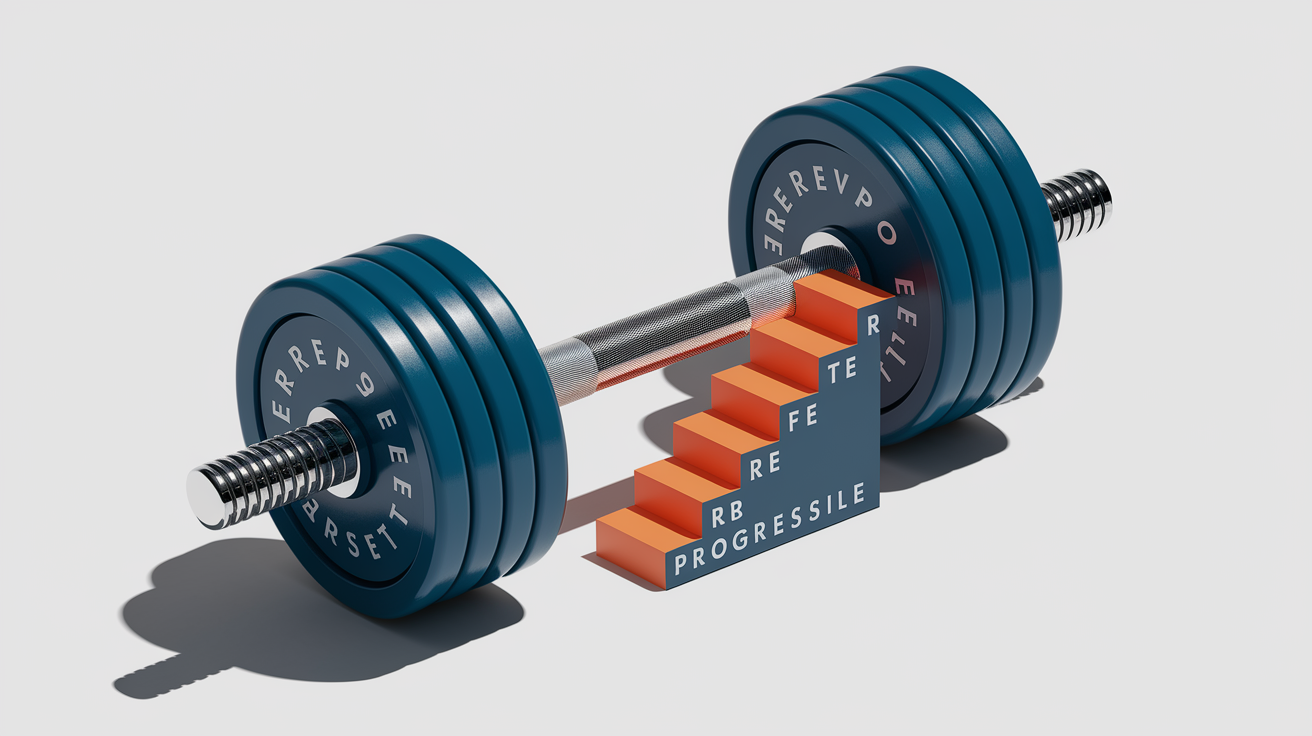
A few basic terms show up in every strength program, and knowing what they mean helps you follow any workout plan with confidence. A rep (repetition) is one complete movement from start to finish. One squat down and back up, or one push-up down and back up. A set is a group of reps performed without stopping, like three sets of ten reps. Rest is the time you take between sets, usually sixty to one hundred eighty seconds depending on how heavy the exercise is. Tempo describes the speed of each rep, often written as a series of numbers like 3-1-3-1, which tells you how many seconds to spend lowering, pausing at the bottom, lifting, and pausing at the top.
The most important concept for long-term progress is progressive overload. The practice of gradually increasing the demand on your muscles over time. This can mean adding a small amount of weight, doing one or two more reps per set, slowing down the tempo to increase time under tension, or adding an extra set. Without it, your body adapts to the same stimulus and stops improving. Beginners often see rapid strength gains in the first few weeks simply from neurological adaptation, but sustained progress requires planned increases every few sessions.
Key beginner terms to know:
- Rep (repetition): One complete movement cycle.
- Set: A group of reps performed continuously.
- Rest period: Time between sets, typically sixty to one hundred eighty seconds.
- Progressive overload: Gradually increasing weight, reps, sets, or difficulty to keep improving.
Equipment Options for Beginners
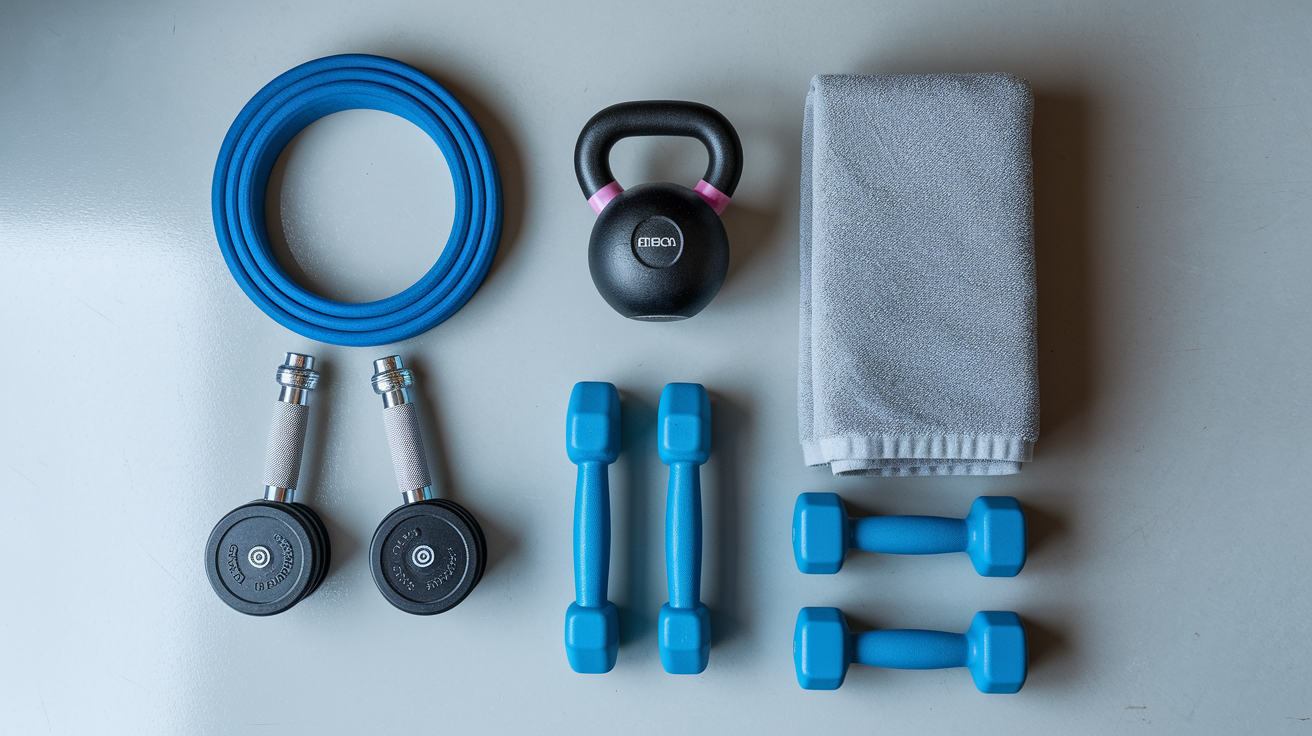
You don’t need a full gym to start strength training. Bodyweight exercises like squats, push-ups, lunges, and planks provide enough resistance for most beginners to build strength and learn proper movement patterns. Once bodyweight versions become easy for twelve or more reps, adding external resistance helps you keep progressing. At that point, a single adjustable dumbbell or a set of resistance bands (which typically cost ten to thirty dollars) can cover most beginner exercises and fit in a closet.
If you have access to a gym, machines are a solid starting option because they guide the movement path and reduce the balance and coordination demands of free weights. Cable machines, leg presses, chest press machines, and lat pulldowns let you focus on pushing or pulling hard without worrying about stabilizing a barbell. Many beginners gain confidence faster on machines before transitioning to dumbbells or barbells. A basic gym membership often runs ten to sixty dollars per month and gives you access to a full range of equipment, plus the option to ask staff for quick form checks.
For home training, an adjustable dumbbell set (one hundred to two hundred dollars) or a few fixed-weight dumbbells and one kettlebell (total cost under one hundred fifty dollars) will cover squats, presses, rows, and deadlift variations for months. Resistance bands add variety for warm-ups, assisted movements, and travel. Start with what you have or what fits your budget, then add equipment only when you’ve outgrown your current tools.
Foundational Strength Training Movements

Squat
The squat trains your quads, glutes, and core by lowering your hips toward the ground and standing back up. Proper execution means keeping your chest up, knees tracking over your toes, and hips moving back and down until your thighs reach parallel or slightly below. This movement builds leg strength and carries over to everyday actions like sitting down and standing up.
Hinge
The hinge teaches you to bend at the hips while keeping a neutral spine, which protects your lower back during lifting tasks. In a Romanian deadlift or kettlebell deadlift, you push your hips back, let your knees soften slightly, and keep the weight close to your body as you lower and then drive your hips forward to stand. This strengthens your glutes, hamstrings, and lower back.
Push
Pushing movements like push-ups, dumbbell bench presses, or overhead presses train your chest, shoulders, and triceps. The basic pattern involves moving a load away from your body by extending your arms, whether that’s pressing your torso off the floor or pressing dumbbells overhead. Controlled lowering and a full lockout at the top build balanced upper-body strength.
Pull
Pulling movements like rows, lat pulldowns, or assisted pull-ups work your back, biceps, and rear shoulders. The pattern involves drawing your elbows toward your body or pulling your body toward a bar, squeezing your shoulder blades together at the end of each rep. This balances out all the pushing work and supports good posture.
Core
Core exercises like planks, dead bugs, and bird dogs teach your abs, obliques, and lower back to brace and stabilize your spine under load. Holding a plank with your body in a straight line from head to heels for twenty to sixty seconds builds the endurance and control needed for safe squatting, hinging, and pressing.
Beginner Strength Training Routine (Step‑by‑Step)
A simple beginner routine includes one exercise from each foundational movement pattern, performed for two to four sets of eight to twelve reps, with sixty to one hundred twenty seconds of rest between sets. The entire session typically lasts twenty to forty minutes, including warm-up time. This structure ensures you’re training all major muscle groups in one workout, which is efficient and helps you build balanced strength from the start.
Because you’re hitting your whole body in each session, you only need to train two or three times per week with at least one full rest day between workouts. This gives your muscles forty-eight to seventy-two hours to recover and adapt, which is when the actual strength-building happens.
Order of exercises in a full-body beginner session:
- Squat variation (bodyweight squat, goblet squat, or dumbbell squat) – 3 sets x 8–12 reps
- Hinge variation (Romanian deadlift with dumbbells or kettlebell deadlift) – 3 sets x 8–10 reps
- Push variation (push-up, incline push-up, or dumbbell bench press) – 3 sets x 8–12 reps
- Pull variation (dumbbell bent-over row or seated cable row) – 3 sets x 8–12 reps
- Overhead press variation (dumbbell overhead press or resistance band press) – 2–3 sets x 8–10 reps
- Core exercise (plank or dead bug) – 3 sets x 20–60 seconds or 8–12 reps
Schedule this routine on non-consecutive days. Monday, Wednesday, and Friday works well, or Tuesday, Thursday, and Saturday if that fits better. If you can only manage two sessions per week, that’s still enough to build strength and learn the movements as long as you stay consistent for at least two to three months.
Safety Principles for New Lifters

The most effective injury-prevention step is starting every session with a proper warm-up. Five to ten minutes of light cardio like walking or jogging in place, followed by one or two light sets of each exercise you’re about to do. This increases blood flow, raises muscle temperature, and rehearses the movement patterns before you add any significant load. Skipping the warm-up increases the risk of strains and makes the first working set feel harder than it should.
Always prioritize controlled movement over heavy weight, especially in your first eight to twelve weeks. If you can’t lower the weight smoothly or if you have to use momentum to complete a rep, the load’s too heavy. Most of each set should feel manageable. Aim for the last two or three reps to be challenging, but not impossible. Sharp joint pain, pinching sensations, or any pain that doesn’t feel like normal muscle fatigue is a signal to stop immediately, reduce the weight, or swap the exercise for a similar movement that doesn’t hurt.
Rest is part of the training process, not a sign of weakness. Give each muscle group at least forty-eight hours before training it hard again, and listen to your body on days when soreness or fatigue is high. If you’re over sixty-five, managing a chronic condition, or haven’t been active in years, a quick check-in with your doctor before starting a strength program is a smart move that gives you peace of mind and a clear starting point.
How to Progress Your Strength Training Over Time

Progressive overload is how you turn a beginner program into long-term results. Once your body adapts to the current level of challenge, you need to increase the demand slightly to keep improving. The simplest method is adding a small amount of weight once you can comfortably complete all your sets and reps with good form. For upper-body exercises like presses and rows, adding one to two kilograms (two to five pounds) per session works well. For lower-body movements like squats and deadlifts, you can usually add two to five kilograms (five to ten pounds) per session.
If you don’t have access to small weight jumps, you can progress by increasing reps instead. Once you hit the top of your rep range (say, twelve reps), add weight and drop back down to eight reps, then work your way back up. Slowing down the tempo is another effective progression tool: a three-second descent, two-second pause, and three-second ascent makes even light weights feel significantly harder. Adding one extra set per exercise every few weeks gradually increases training volume, which drives muscle growth and strength gains over time.
Four practical progression methods:
- Add 1–2 kg to upper-body lifts or 2–5 kg to lower-body lifts when you can complete all prescribed reps with good form.
- Increase reps by one or two per set until you reach the top of the range, then increase weight and drop reps back down.
- Slow down the tempo. Spend more time lowering the weight or add a pause at the bottom of each rep.
- Add one extra set per exercise every two to four weeks, gradually building from two sets to four sets over a few months.
Common Beginner Mistakes and How to Avoid Them
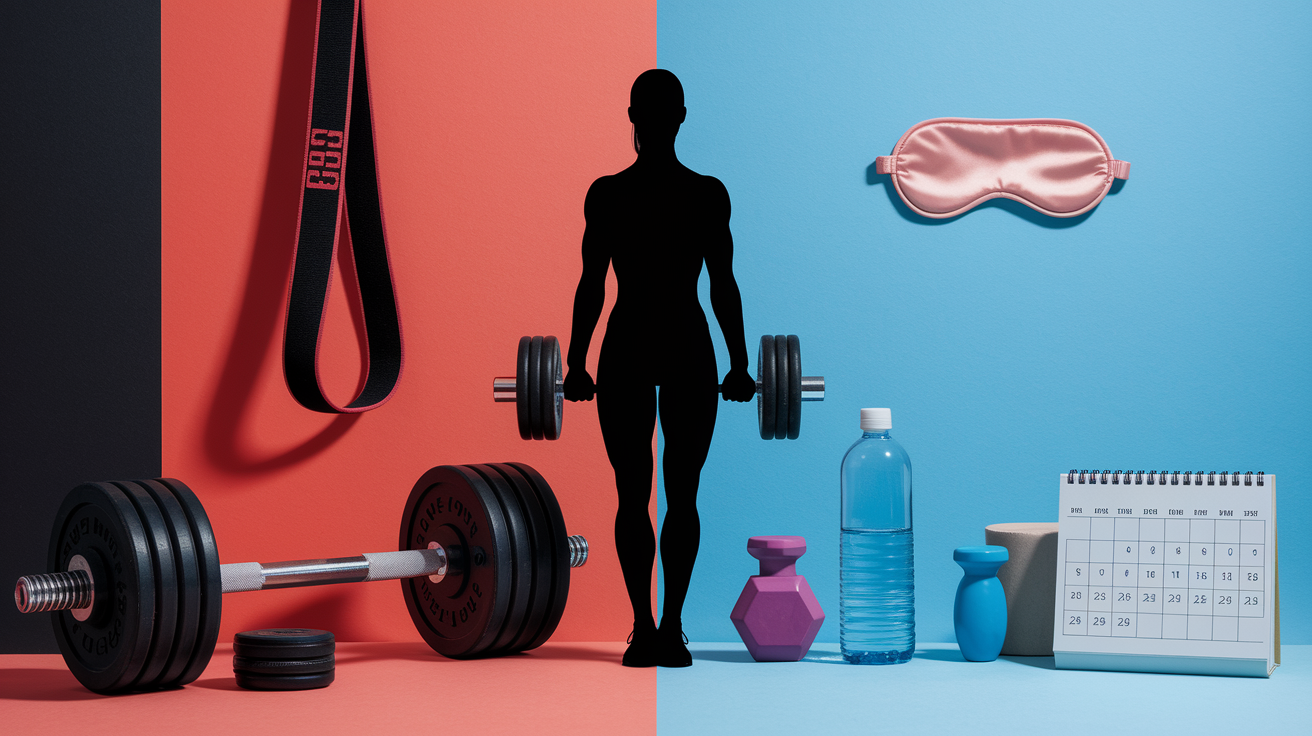
Two of the most common early mistakes are skipping the warm-up and jumping straight into heavy working sets, which increases injury risk and makes the session feel harder than it needs to. Another frequent error is lifting too heavy too soon. If you can’t control the weight on the way down or if your form breaks down halfway through the set, you’re using too much resistance. Beginners often make faster progress by starting light and adding small increments every session than by testing their limits in week one.
Inconsistency and impatience also derail a lot of new lifters. Training once one week, three times the next, then skipping a week entirely makes it nearly impossible to build momentum or see results. Similarly, expecting visible muscle growth or major strength gains in the first two weeks leads to frustration. Real changes take eight to twelve weeks of consistent work. Poor recovery habits, like getting less than seven hours of sleep per night or eating far below your protein needs, limit progress no matter how hard you train.
Five common mistakes and quick fixes:
- Skipping warm-ups – Always do five to ten minutes of light cardio and a few warm-up sets before your working sets.
- Lifting too heavy too soon – Start with weights that let you complete all reps with control. Add small increments only when form stays solid.
- Inconsistent training schedule – Pick two or three specific days per week and treat them like non-negotiable appointments.
- Expecting instant results – Plan for eight to twelve weeks of consistent training before judging progress. Track your weights and reps to see objective improvement.
- Ignoring rest and recovery – Rest at least forty-eight hours between sessions for the same muscle group, and prioritize seven-plus hours of sleep per night.
Final Words
Start with 2–3 full‑body sessions per week, use light weights or bodyweight to learn technique, and give your muscles time to recover between workouts.
Learn the basic terms like reps, sets, and progressive overload, choose simple equipment, and practice the five movement patterns: squat, hinge, push, pull, core.
This guide puts safety, simple routines, and steady progression first. It’s a practical plan for strength training for beginners that fits busy weeks. Stick with it, adjust when needed, and expect small wins that add up.
FAQ
Q: How should a beginner start strength training?
A: A beginner should start strength training with 2–3 full‑body sessions per week using light weights or bodyweight to learn form, plus warm‑ups and rest between sessions for recovery.
Q: How much weight should you lift for osteoporosis?
A: The weight you should lift for osteoporosis should start light to moderate—enough to feel challenging for about 8–12 reps—progress slowly, and follow a clinician’s guidance to avoid risky loads or movements.
Q: Can I lift weights with fibromyalgia?
A: You can lift weights with fibromyalgia by starting very light, prioritizing pain‑free movement, using short sessions, increasing gradually, pacing to avoid flares, and checking with your healthcare team if symptoms change.
Q: What is 5 4 3 2 1 strength training?
A: The 5‑4‑3‑2‑1 strength training is a descending rep scheme or circuit where you do five reps, then four, then three, two, one, increasing intensity or focusing on different exercises each step.