
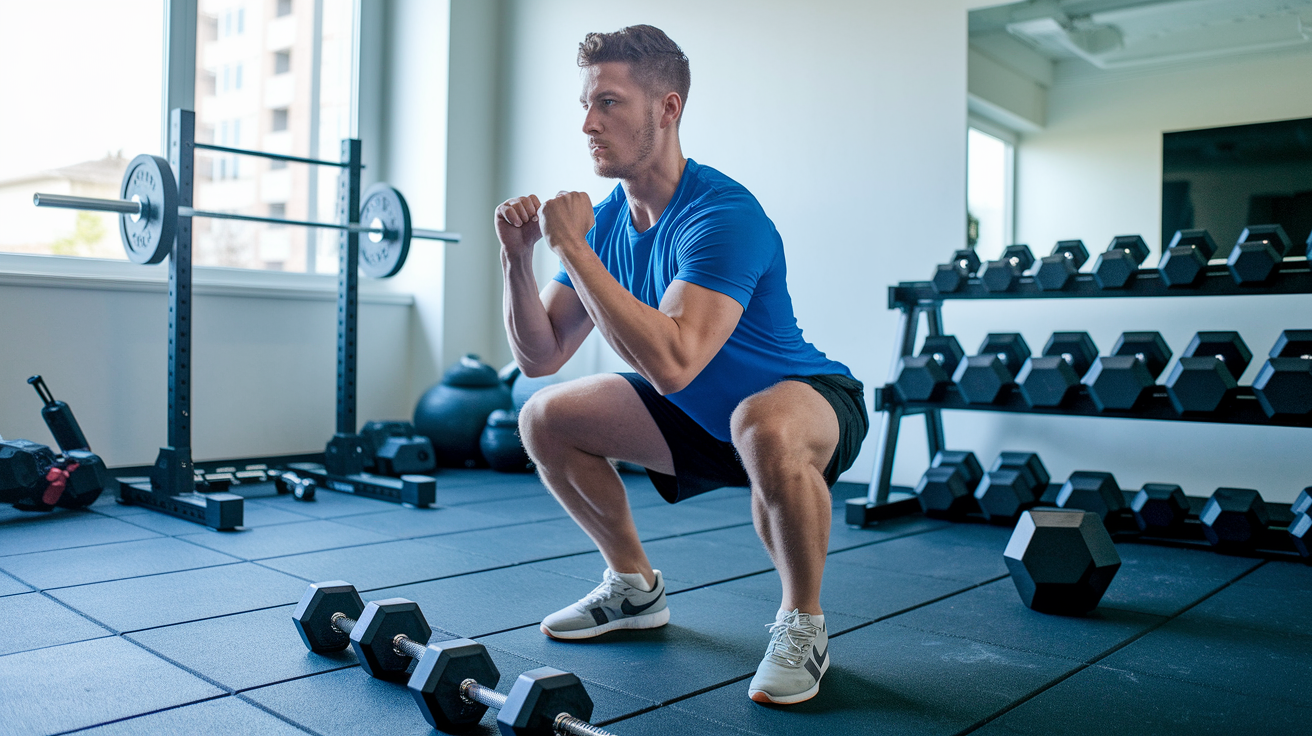
You don’t need hours at the gym to build noticeable muscle.
This beginner full body strength workout uses eight simple, compound moves that hit every major muscle group in one 30 to 45 minute session.
Start with bodyweight or light dumbbells, focus on form, and repeat the routine 2 to 3 times a week.
The plan teaches squat, hinge, push, pull, overhead, and core patterns while giving clear progress options so you can get stronger without overcomplicating things.
If you’re ready to stop guessing and actually build strength, this is the easy place to start.
Beginner-Friendly Full Body Workout Routine
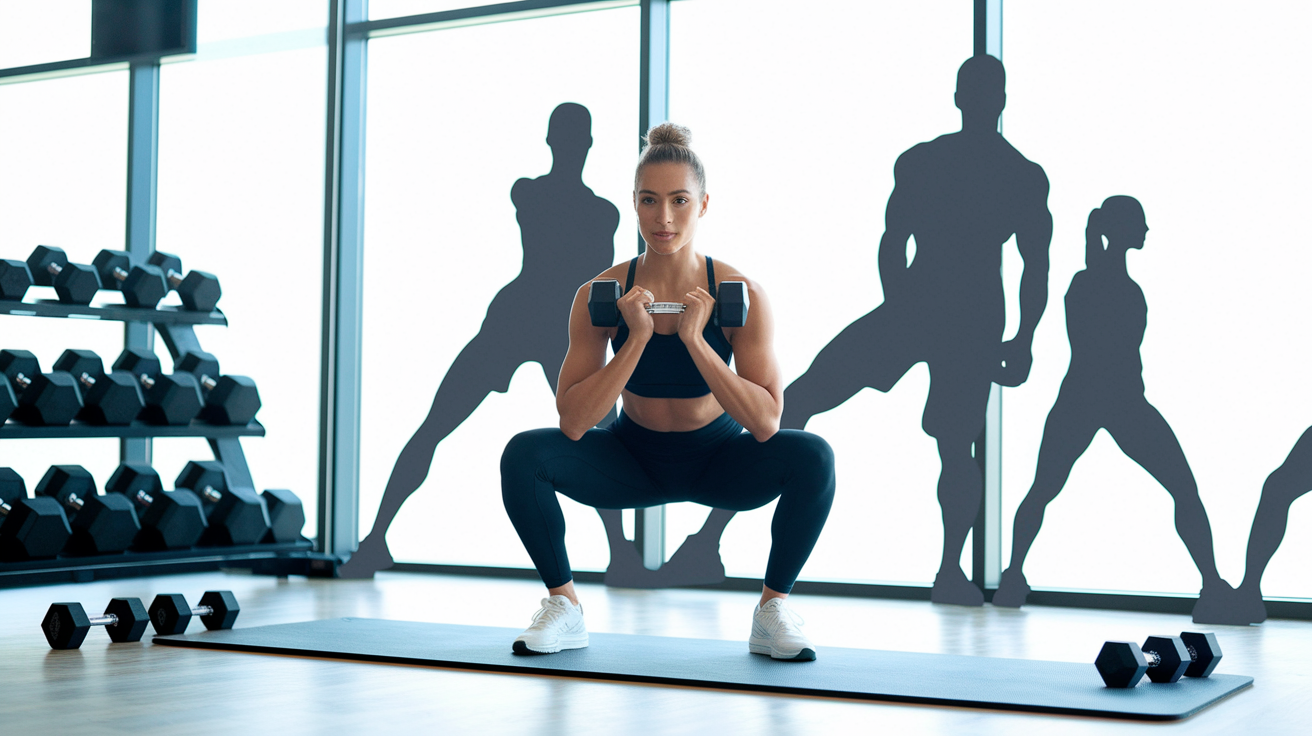
This full body routine uses eight exercises that hit every major muscle group in one session. You’ll work your legs, chest, back, shoulders, and core using simple movements that don’t require complicated technique or gym experience. The whole workout takes 30 to 45 minutes, including rest periods.
Start with bodyweight or light weights. You’ll build coordination, strength, and the movement patterns you’ll use for years. Compound exercises make up most of this plan because they’re efficient and teach your body how to move as a unit. These are movements that use multiple joints and muscles at once.
Here’s the complete workout. Perform each exercise in order, rest 60 to 90 seconds between sets, and repeat this routine 2 to 3 times per week with at least 48 hours between sessions.
The 8 Exercise Beginner Full Body Routine:
- Bodyweight or Goblet Squat — 2 to 3 sets x 8 to 12 reps (use 10 to 20 lb dumbbell for goblet version)
- Incline or Knee Push Up — 2 to 3 sets x 8 to 12 reps
- One Arm Dumbbell Row or Band Row — 2 to 3 sets x 8 to 12 reps per side
- Romanian Deadlift (Dumbbell) or Glute Bridge — 2 to 3 sets x 8 to 12 reps
- Overhead Press (Dumbbell, Seated or Standing) — 2 to 3 sets x 8 to 12 reps
- Glute Bridge or Hip Thrust — 2 to 3 sets x 10 to 15 reps
- Standing Calf Raise — 2 to 3 sets x 12 to 20 reps
- Plank — 2 to 3 sets x 20 to 60 seconds
This structure covers every movement pattern your body needs. Squat, hinge, push, pull, overhead press, and core stability. You’re not skipping anything, and you’re not adding complexity you don’t need yet. That’s the whole session.
If you can only do 2 sets at first, start there. If 12 reps feels too easy, add a light weight or move to a harder variation. The goal is to finish each set with 1 to 2 reps left in the tank. Challenging but controlled.
You’ll notice strength gains within the first 4 weeks. Visible muscle changes usually show up around 8 to 12 weeks if you’re consistent with workouts and eating enough protein.
How to Perform Each Exercise With Proper Form
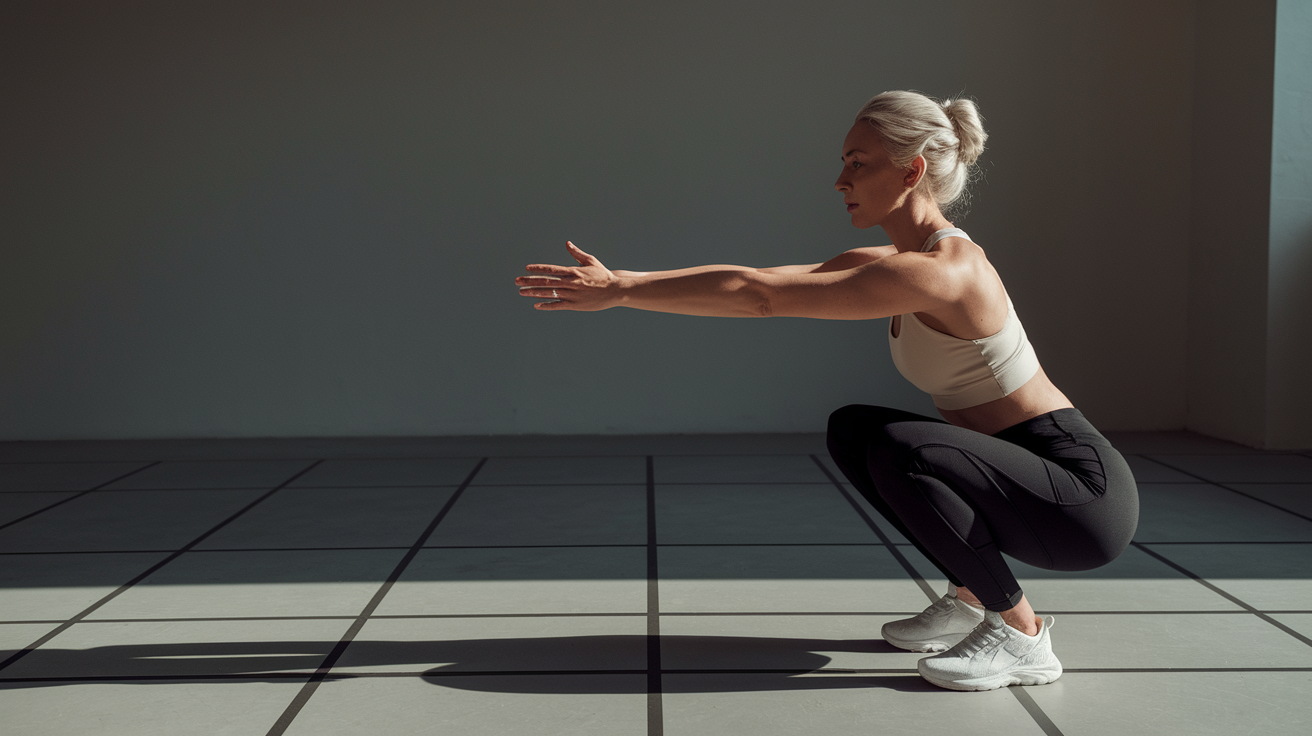
Good form matters more than how much weight you lift or how many reps you finish. Moving well protects your joints, trains the right muscles, and sets you up for safe progress later. Beginners often rush into heavier loads before their body knows what to do, which leads to compensations. Your lower back taking over a squat, or your shoulders shrugging during a row.
Your goal is to feel the target muscles working. If you’re doing a squat and only your knees hurt, something’s off. If you’re rowing and your biceps are the only thing tired, your back isn’t engaged. Slow down, reset, and focus on where you should feel tension.
Six Technique Fundamentals for Every Exercise:
- Neutral spine: Keep your ribcage stacked over your pelvis. Avoid arching your lower back or rounding forward. Imagine a straight line from your head to your tailbone.
- Controlled tempo: Take about 2 seconds to lift and 2 seconds to lower. No bouncing or jerking.
- Breathing pattern: Exhale during the hard part, when you push, press, or stand. Inhale when you lower or return to the start position.
- Stable base: Keep your feet flat and grounded. Spread your toes slightly. Don’t let your weight shift onto your toes or heels exclusively.
- Engaged core: Brace your midsection as if you’re about to cough. This protects your spine on every lift, even upper body moves.
- Knees tracking toes: On squats and lunges, your knees should move in the same direction as your toes. Avoid letting them collapse inward.
If you can record yourself from the side or front, do it. Watching your own form is one of the fastest ways to catch mistakes you don’t feel yet.
Warm Up Essentials Before Strength Training
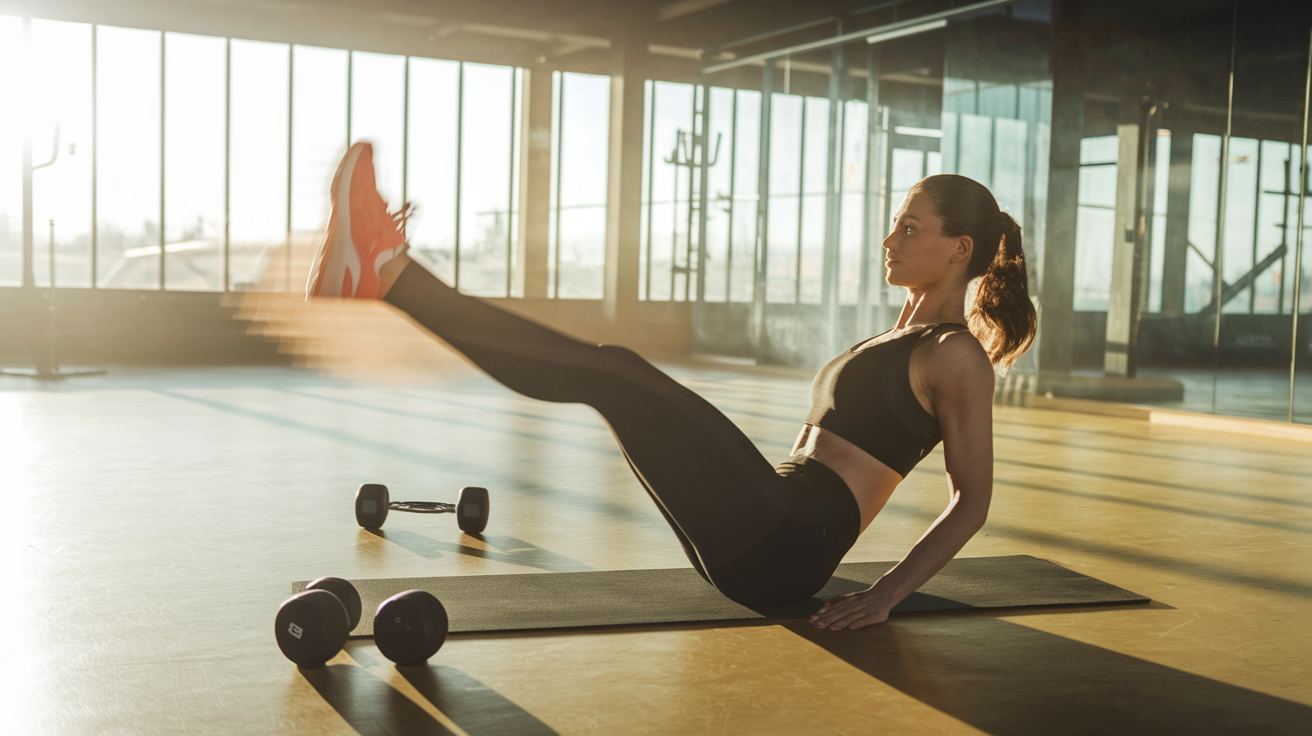
A proper warm up isn’t optional. Jumping straight into a goblet squat with cold muscles and stiff hips increases injury risk and reduces how much strength you can actually access. Five to ten minutes of dynamic movement raises your core temperature, lubricates your joints, and wakes up the nervous system so your muscles fire in the right sequence.
Dynamic warm ups use controlled movement through a full range of motion. They’re different from static stretching, which you save for after the workout. Think leg swings, not holding a hamstring stretch for 30 seconds. Your warm up should feel like a rehearsal for the work ahead. Similar patterns, lighter intensity, no fatigue.
Five Dynamic Warm Up Movements (perform for 8 to 12 reps or 20 to 30 seconds each):
- Leg swings (front to back and side to side): loosens hips and hamstrings
- Arm circles (forward and reverse): opens up shoulders and upper back
- Bodyweight squats: primes the squat pattern and activates glutes
- Hip hinges (no weight): teaches the hinge and warms up the posterior chain
- Alternating reverse lunges: activates quads, glutes, and improves single leg stability
After those five drills, you’re ready to start your first working set. Your joints should feel loose, your breathing should be slightly elevated, and your muscles should feel ready to move.
Cool Down and Recovery Basics
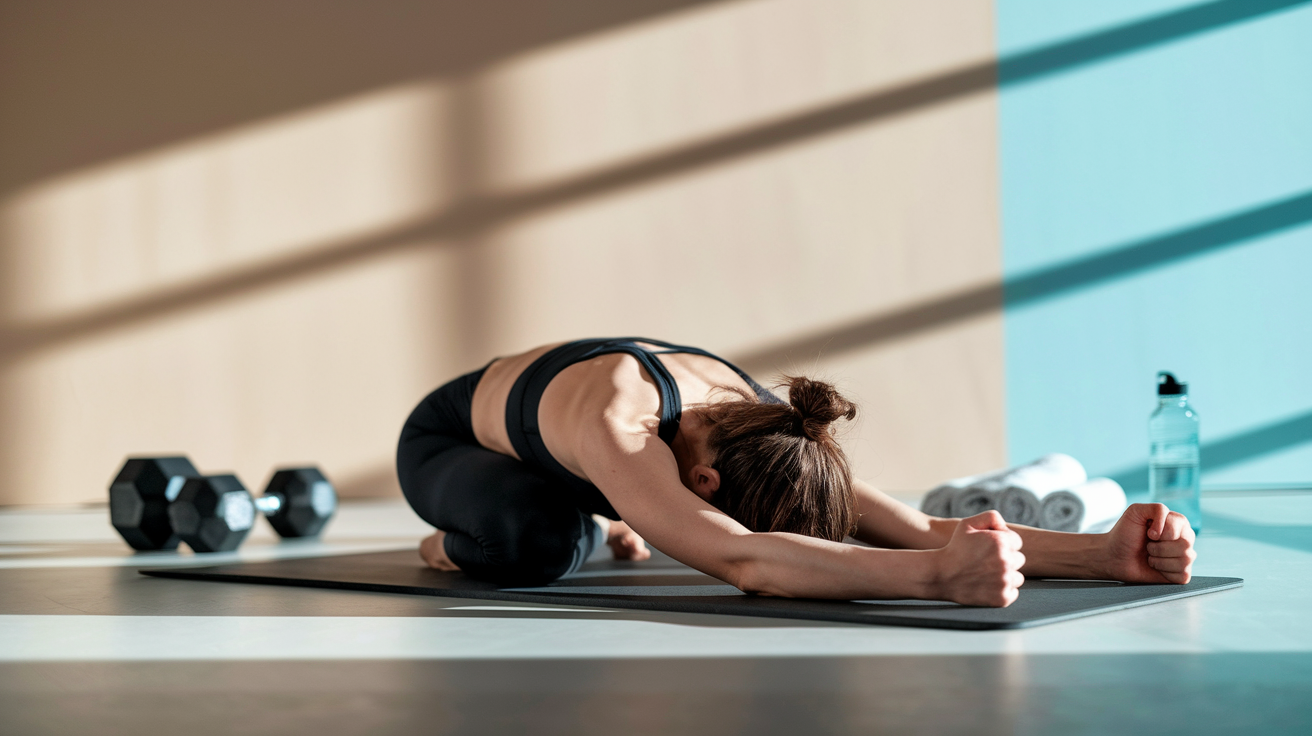
Cooling down helps your heart rate return to normal gradually and gives your muscles a chance to begin the recovery process. After 30 to 45 minutes of lifting, your nervous system is still firing and your muscles are tight. A short cool down signals to your body that the work is done and it’s safe to relax.
Static stretching works best after your workout when your muscles are warm. Hold a stretch for 20 to 30 seconds. Focus on the areas you just trained. You’re not trying to become a gymnast, you’re maintaining mobility and reducing the next day stiffness that makes beginners skip their second workout.
Four Simple Post Workout Stretches (hold each for 20 to 30 seconds per side):
- Standing quad stretch: pull one foot toward your glute, keep your knee pointing down
- Seated hamstring stretch: sit with one leg extended, hinge forward from the hips
- Doorway chest stretch: place your forearm on a door frame, gently rotate your torso away
- Child’s pose: kneel and reach your arms forward, sinking your hips toward your heels
Finish with 1 to 2 minutes of slow, deep breathing. Inhale through your nose for 4 counts, exhale through your mouth for 6. This downregulates your nervous system and helps you transition out of training mode.
Common Mistakes Beginners Should Avoid
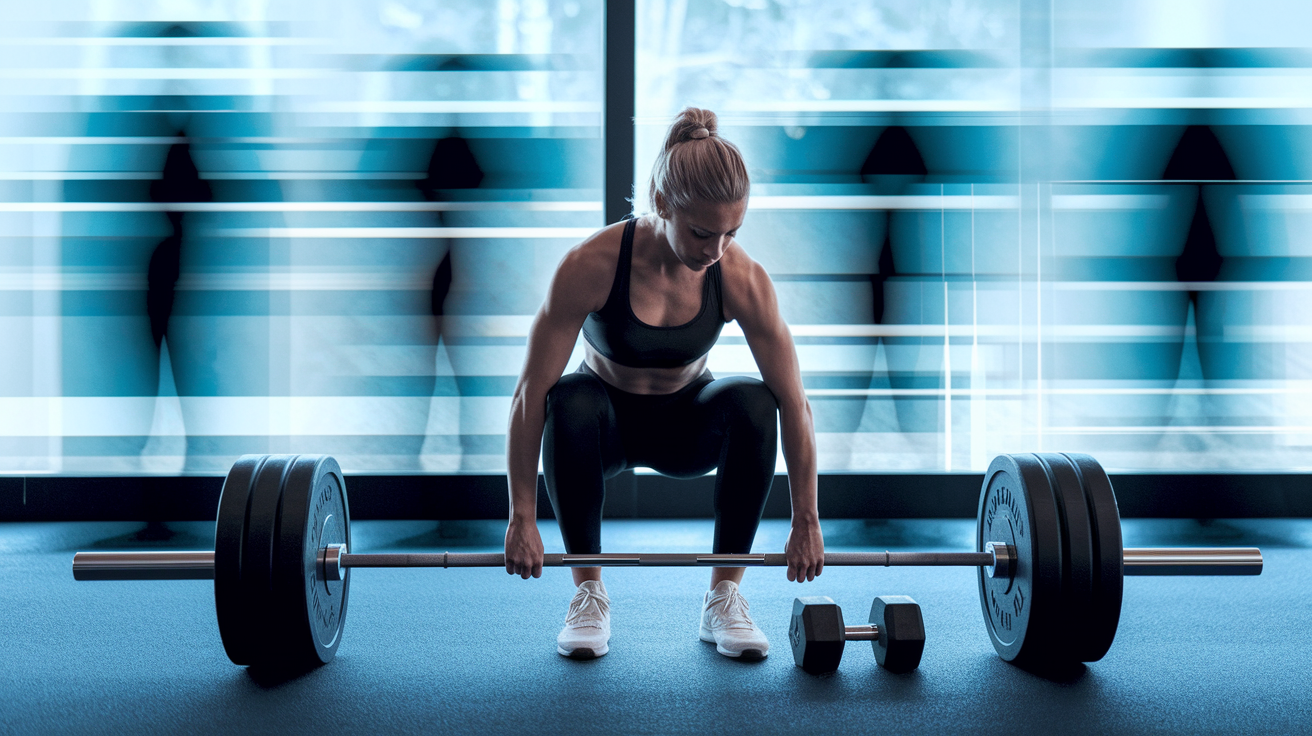
Most beginners don’t fail because they’re weak. They stall because they pick up habits that limit progress or increase injury risk. These mistakes are easy to spot once you know what to look for, and fixing them early makes everything easier later.
You’ll see faster results and fewer setbacks if you avoid the patterns that trip up nearly everyone in the first 8 to 12 weeks.
Six Mistakes Beginners Make (and how to fix them):
-
Using too much weight too soon: If your form breaks down after 3 reps, the weight is too heavy. Drop it and build back up slowly. Strength comes from consistent practice, not one rep struggles.
-
Skipping rest days: Your muscles grow during recovery, not during the workout. Training the same muscles hard every day leads to fatigue, not progress. Stick to 2 to 3 full body sessions per week.
-
Rushing through reps: Fast, jerky reps use momentum instead of muscle. Slow down. You should be able to pause at any point in the movement without losing control.
-
Ignoring the posterior chain: Many beginners load up on squats and push ups but skip hinges and rows. Your hamstrings, glutes, and back need just as much work as your chest and quads.
-
Comparing your week one to someone else’s week fifty two: Everyone starts somewhere. The person next to you might be on their third year of training. Your only comparison is last week’s version of you.
-
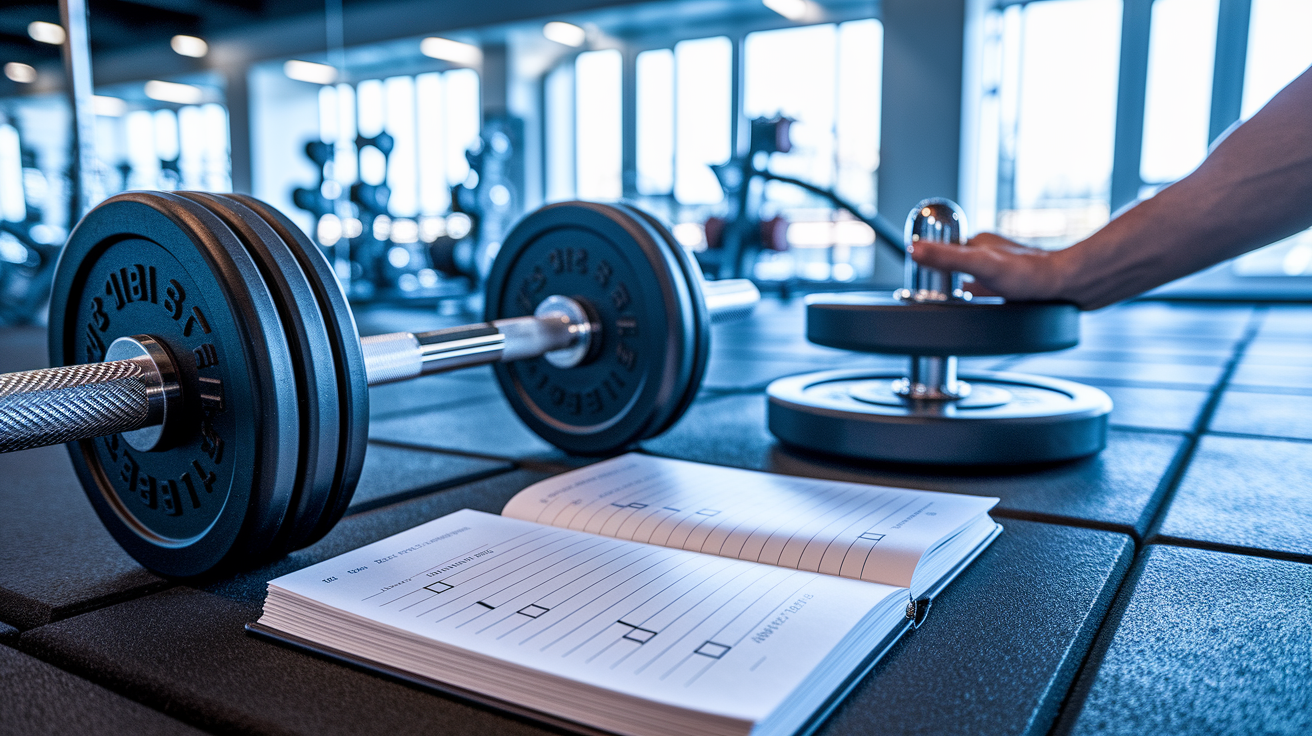
Not tracking anything: If you don’t write down your sets, reps, and weights, you’re guessing. Keep a simple log, even just notes in your phone, so you know when to add weight or reps.
How to Progress Your Full Body Strength Routine
Progressive overload is the principle that drives all strength and muscle growth. It means doing slightly more work over time. More weight, more reps, more sets, or better technique. Without it, your body adapts to the current demand and stops changing.
For beginners, progress happens fast. You’ll add reps or weight almost every week for the first 4 to 8 weeks because your nervous system is learning to recruit muscle fibers more efficiently. This is called neuromuscular adaptation, and it’s why beginners often feel dramatically stronger before they look dramatically different.
Five Simple Ways to Progress Each Week:
- Add 1 to 2 reps per set: If you did 3 sets of 8 last week, aim for 3 sets of 9 to 10 this week. Once you hit the top of your range (12 reps), increase the weight.
- Increase weight by 2 to 5 pounds: For upper body exercises like rows and presses, add 2 to 5 lb per dumbbell. For lower body moves like squats and deadlifts, add 5 to 10 lb total.
- Add one set: Move from 2 sets to 3 sets for an exercise. This increases total volume without changing intensity.
- Shorten rest periods: If you’re resting 90 seconds between sets, try 75 seconds. This makes the same workout harder without adding weight.
- Improve tempo and control: Slow down the lowering phase to 3 seconds instead of 2. This increases time under tension and builds more strength with the same load.
Track your workouts in a notebook or app. Write down the date, exercise, sets, reps, and weight. Every 2 to 4 weeks, look back and make sure the numbers are moving up. If they’re not, pick one of the five methods above and apply it.
Equipment Recommendations for Beginners
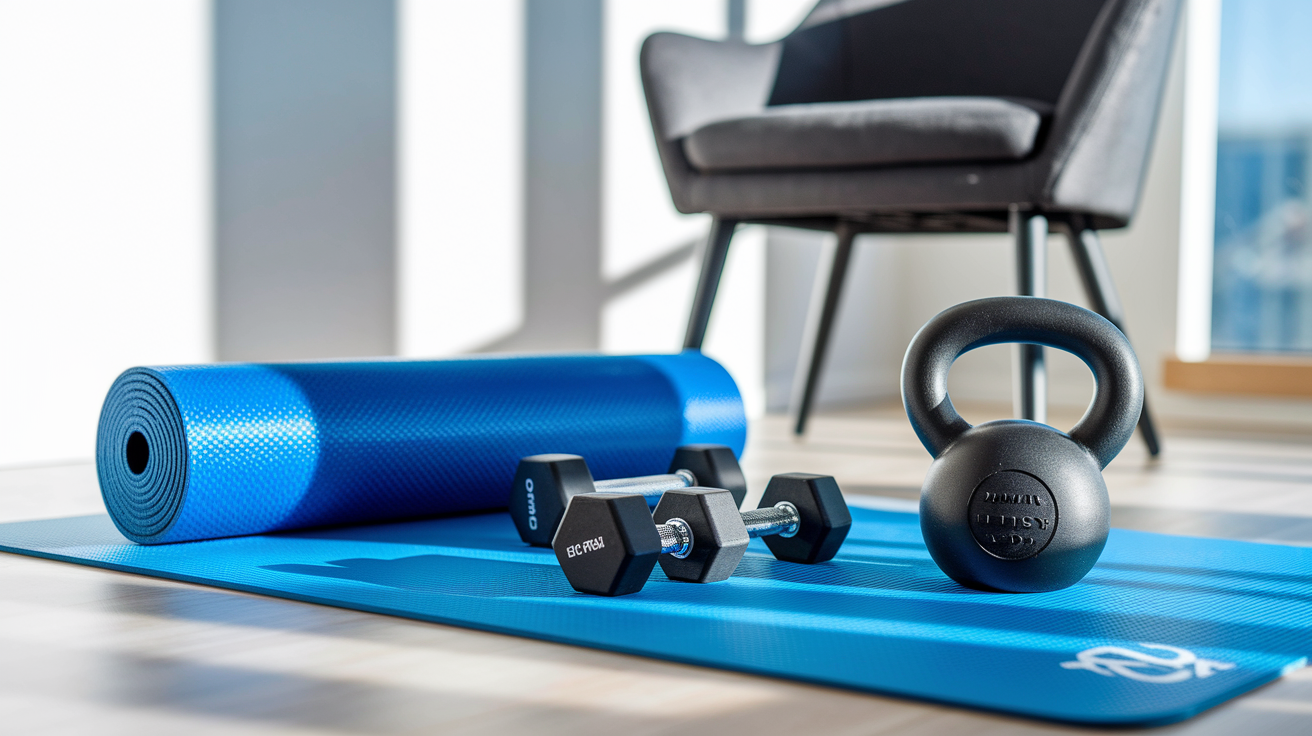
You don’t need a full gym to start this routine. Most of these exercises work with bodyweight alone, and the ones that need resistance can be done with a single pair of dumbbells or a set of resistance bands. Start simple and add equipment as you get stronger and more consistent.
Buying too much equipment early is a common mistake. You don’t know yet what you’ll actually use or what feels comfortable in your hands. A $30 pair of adjustable dumbbells or a $15 resistance band will carry you through the first 8 to 12 weeks without issue.
Five Beginner Equipment Essentials (with rough costs):
- Resistance band set (light, medium, heavy) — $10 to $25. Use these for rows, presses, and assistance on push ups or squats. Compact and travel friendly.
- Pair of adjustable dumbbells (5 to 25 lb range per hand) — $50 to $150. Covers upper and lower body exercises. Adjustable versions save space and grow with you.
- Single kettlebell (8 to 16 kg / 18 to 35 lb) — $25 to $60. Great for goblet squats, deadlifts, and swings. A versatile single piece of equipment.
- Yoga or exercise mat — $15 to $40. Cushions your knees and back during floor exercises like planks and glute bridges.
- Sturdy chair or bench — often free (use what you have). Needed for incline push ups, step ups, or seated presses.
If you’re working out at home and budget is tight, start with bodyweight and one resistance band. Add a pair of light dumbbells (10 to 15 lb) when bodyweight squats and glute bridges feel too easy. You’ll know it’s time to upgrade when you can do 15+ reps of an exercise with perfect form and still have energy left.
Final Words
Jump right into the routine: eight compound moves that cover pushing, pulling, legs, and core, with clear sets, reps, and rest so you can get the full session done without guessing.
Pair that with the form cues, a quick dynamic warm-up, and a short cool-down. Watch for common mistakes, use simple progression options, and pick a few basic tools that make the plan easier to follow.
This beginner full body strength workout is simple to repeat. Start small, track one change, and expect steady wins.
FAQ
Q: What’s a beginner-friendly full body workout I can start today?
A: A beginner-friendly full body workout you can start today includes squat, push-up, bent-over row, deadlift hinge, lunge, glute bridge, overhead press, and plank—2–3 sets of 8–12 reps, 60–90 seconds rest.
Q: How should I perform each exercise with proper form?
A: You should perform each exercise with a braced core, neutral spine, controlled tempo, full range of motion, and steady breathing; start light and prioritize technique over heavier loads for safer progress.
Q: What warm-up should I do before strength training?
A: A warm-up before strength training should be 5–10 minutes of dynamic moves like leg swings, hip circles, arm circles, walking lunges, and inchworms to raise heart rate and prime joints.
Q: What cool-down and recovery should I do after a full-body session?
A: A cool-down and recovery after a full-body session should include 5–10 minutes of easy movement, light stretching (hamstring, quad, chest, child’s pose), deep breaths, and hydration to aid recovery and reduce soreness.
Q: What common mistakes should beginners avoid?
A: Beginners should avoid using too much weight, skipping warm-ups, rushing reps, poor posture, not resting between sets, and comparing progress to others—focus on steady consistency and safer technique.
Q: How do I progress my full-body strength routine safely?
A: You progress your full-body strength routine safely by increasing weight slightly, adding reps or a set, shortening rest a bit, or improving technique—change one variable at a time and track workouts.
Q: What equipment do I need as a beginner for at-home strength work?
A: As a beginner for at-home strength work you need light dumbbells, resistance bands, a yoga mat, a sturdy chair, and a kettlebell—these cover most pushing, pulling, leg, and core movements.
Q: How often should beginners do this full-body workout each week?
A: Beginners should do this full-body workout 2–3 times per week with at least one rest or light activity day between sessions to allow muscles to recover and adapt.
Q: How long should each workout take and how long to rest between sets?
A: Each workout should take about 30–45 minutes; rest 60–90 seconds between compound sets, 30–60 seconds for lighter or single-joint moves, and add extra rest when needed for safety.
Q: How can I track improvement in a simple way?
A: You can track improvement simply by logging sets, reps, and weight, noting how exercises feel, and celebrating small wins like more reps, cleaner form, or easier daily movement.