
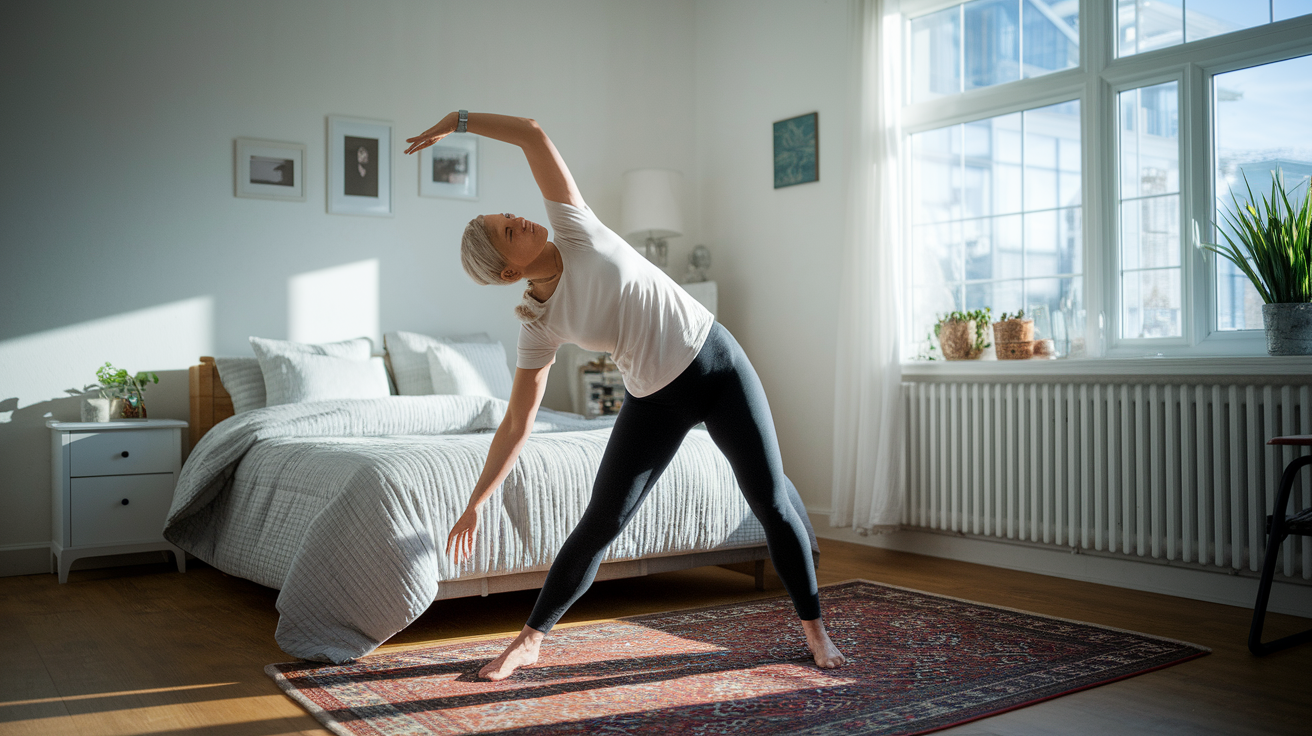
Tired of that stiff shuffle out of bed every morning?
This simple, 10-minute beginner morning stretching routine eases tight necks, shoulders, hips, and legs so you move better without pain or drama.
No warm-up, no equipment, and you don’t have to be flexible to begin—just breathe, go slow, and stop if anything hurts.
Stick with it most mornings and you’ll notice less stiffness in a week and better range of motion in a few.
Quick-Start Beginner Stretching Routine to Improve Morning Flexibility
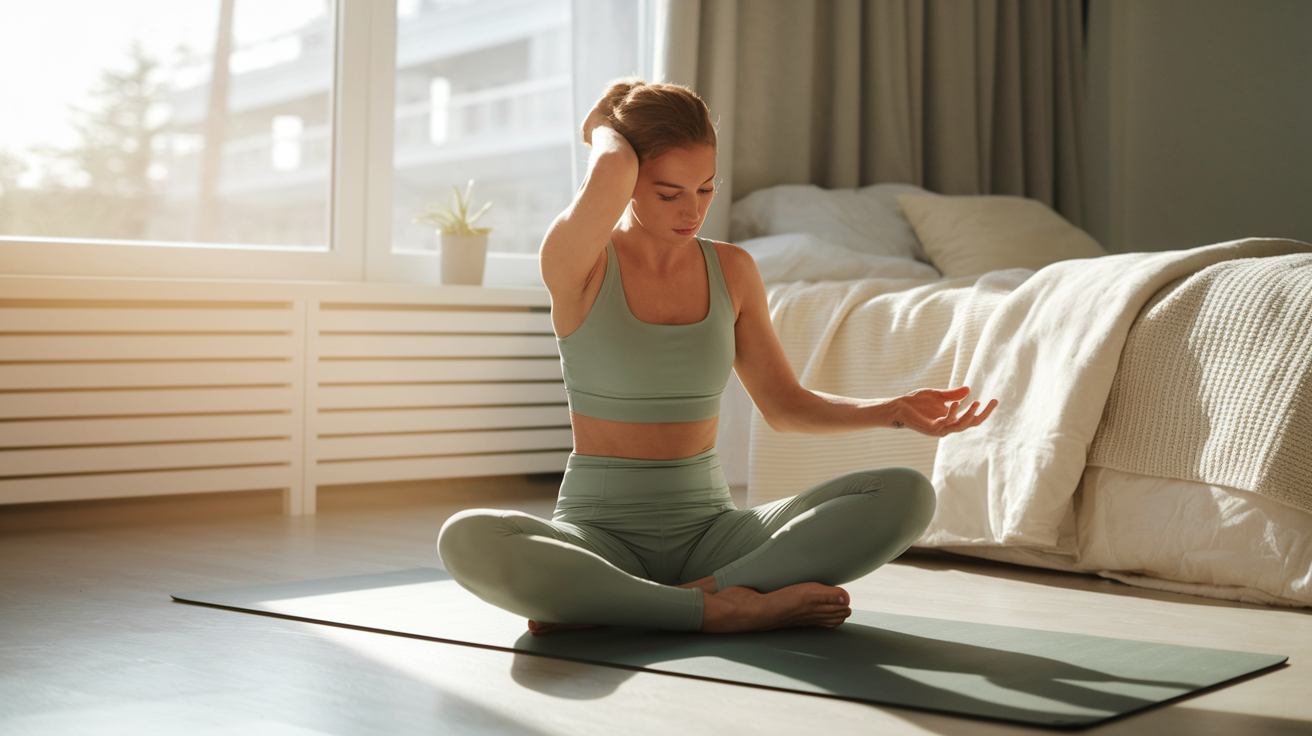
This beginner morning stretching routine takes exactly 10 minutes and hits the spots that feel stiffest when you wake up: your neck, shoulders, back, hips, and legs. It’s built for people who haven’t stretched in months or are just getting started. No warm-up required, no fancy equipment beyond a mat or rug, and you don’t need to be flexible to begin.
The trick with morning stretching is respecting that your muscles are cold. Breathe deep through each movement, go slow, and never push into sharp pain. If something feels tight but not painful, hold right there and keep breathing. You’re doing it correctly. Skip the bouncing or jerking motions since cold muscles don’t appreciate sudden force.
Here’s your full 10-minute morning stretch:
- Neck Rolls (1 minute) – Roll your head in a slow circle, switching direction halfway to release tension.
- Shoulder Rolls (1 minute) – Roll backward 10 times, then forward 10 times to loosen your upper back.
- Standing Side Stretch (1 minute) – Raise both arms overhead and lean gently to the right, then left, opening through your ribcage.
- Cat-Cow Stretch (2 minutes) – Get on hands and knees, arch your back, then round your spine, moving with each breath.
- Seated Hamstring Stretch (2 minutes) – Sit with one leg out, fold forward gently, hold 20 to 30 seconds per leg.
- Hip Circles (1 minute) – Stand and make slow circles with your hips, 10 clockwise, 10 counterclockwise.
- Calf Stretch (1 minute) – Press hands into a wall, step one foot back, hold 30 seconds per side.
- Standing Quad Stretch (1 minute) – Hold your ankle behind you, keep knees close, balance for 30 seconds per side.
Most people feel less stiff and move easier within the first week. After two to four weeks, bending and reaching gets noticeably smoother, and many beginners sleep better once this becomes habit.
Benefits of a Morning Flexibility Routine for Beginners
Consistency matters more than anything when you’re building flexibility. Stretching every morning, even just 10 minutes, teaches your muscles and connective tissue to lengthen gradually. Your nervous system learns to relax into positions that used to feel locked up. Missing days resets some of that progress, so short daily sessions beat longer ones you only do sometimes.
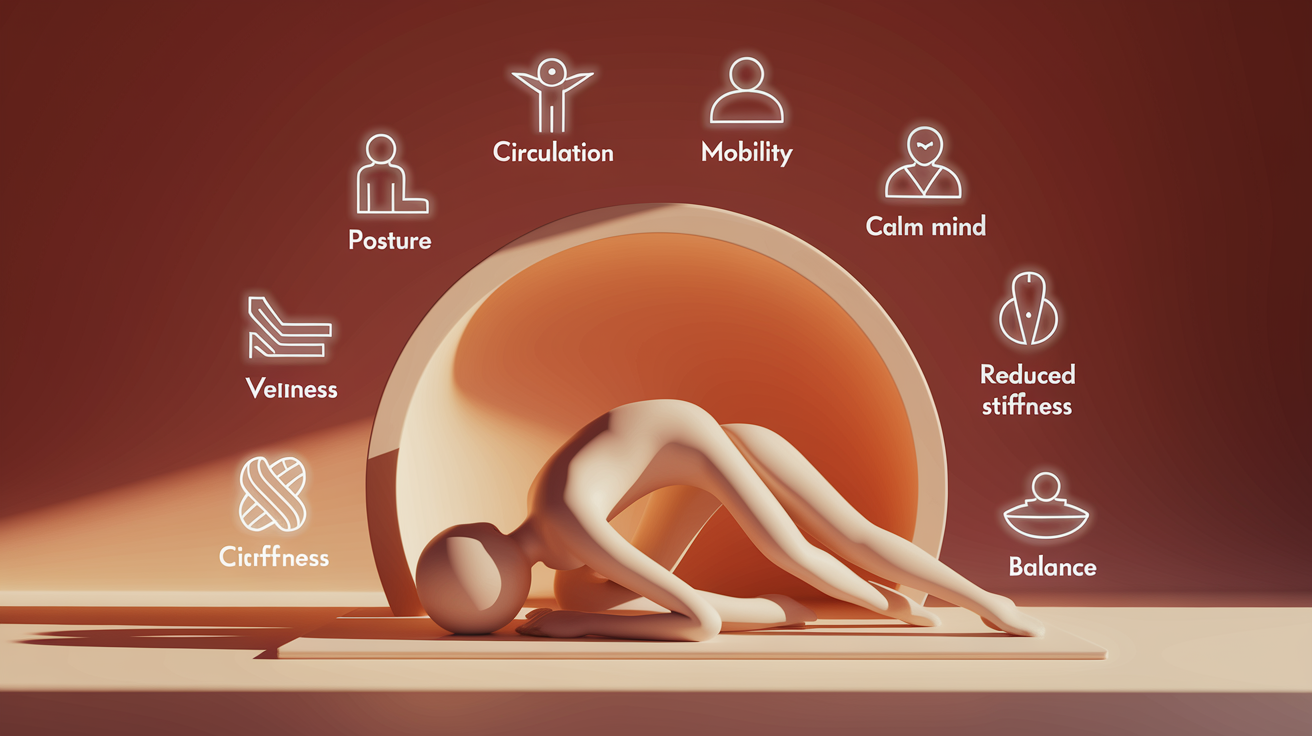
A beginner morning stretching routine delivers six real benefits:
- Improved posture – Loosening tight chest, hip, and hamstring muscles lets your spine and pelvis align better throughout the day.
- Increased circulation – Gentle movement pumps fresh blood into muscles that have been still all night.
- Better mobility – Regular stretching expands your comfortable range of motion in hips, shoulders, and spine.
- Reduced stiffness – Stretching signals your muscles to release overnight tension and decreases that achy feeling.
- Calmer mind – Focused breathing and slow movement lower your stress response and ground you for the day.
- Improved balance – Standing stretches and single-leg holds build stability.
Beginners who stay consistent usually notice the first changes within two to three weeks. People often say they can touch their toes again, their lower back feels less cranky, and getting out of bed doesn’t require that slow shuffle anymore.
How to Start a Beginner-Friendly Morning Mobility Routine

The best time to stretch is right after you wake up or after a warm shower when your muscles are slightly warmed and your schedule’s still calm. If you feel really stiff first thing, spend 30 seconds in bed doing gentle ankle circles and arm reaches before standing. It primes your nervous system. A warm shower before stretching helps too if you have arthritis or chronic tightness, since heat loosens connective tissue.
Safety boils down to three rules: breathe deeply and steadily, move slowly through each position, and stop if you feel sharp or shooting pain. Mild pulling or tightness is normal. Pain that makes you wince or hold your breath means back off. Keep movements controlled. No bouncing, jerking, or forcing yourself deeper. Let your exhales soften you into each stretch naturally.
If you want a brief warm-up before the main routine, spend two to three minutes doing light joint circles and easy movement. Try slow arm swings, gentle torso twists, marching in place, or rolling your wrists and ankles. You’re just waking up your joints, not trying to break a sweat.
Technique Guide for Morning Flexibility Work (Optional Deep Dive)
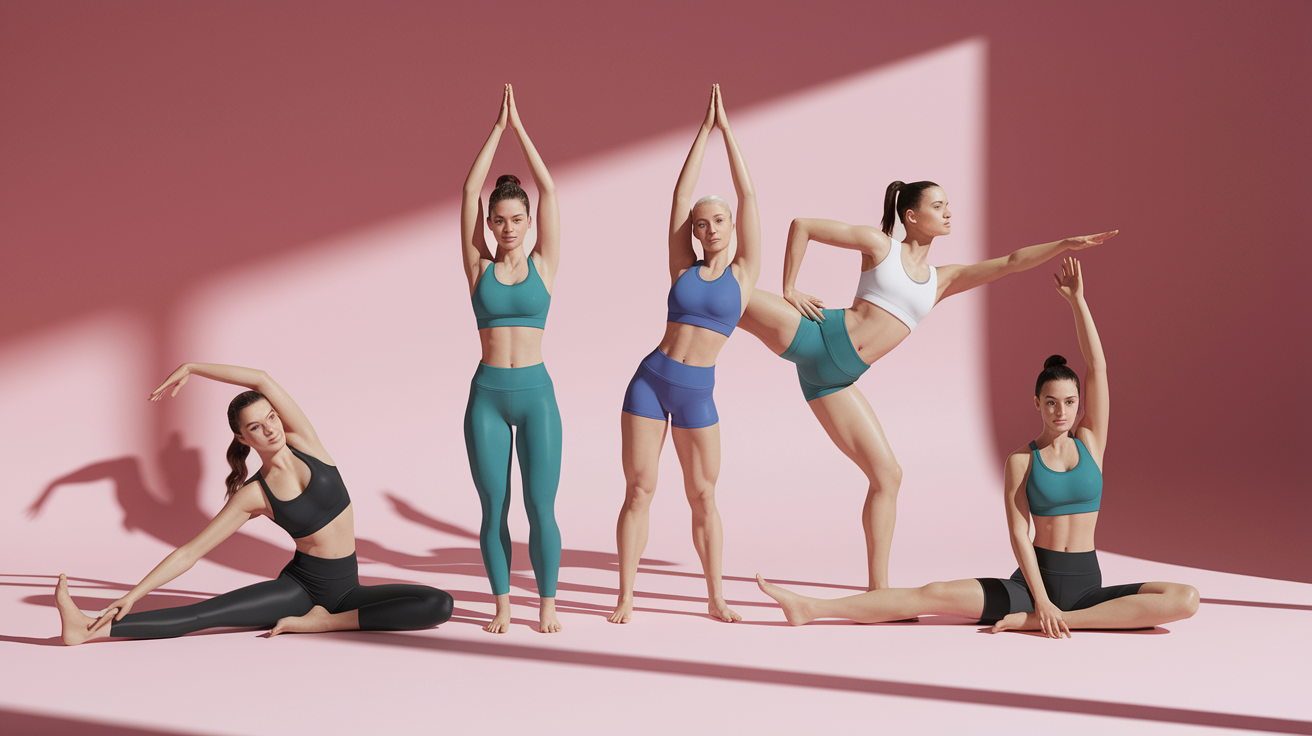
This section covers five extra movements that work well with the eight-stretch quick-start routine. Use these to target specific tight areas or rotate variety into your practice after a few weeks. Each movement includes baseline holds of 15 to 30 seconds for beginners, with 1 to 3 repetitions depending on time and comfort. Focus on steady breathing: inhale to prepare, exhale to move into the stretch, maintain relaxed breathing throughout.
Chest Opener Stretch
Stand or sit tall, clasp your hands behind your lower back, and gently lift your arms while squeezing your shoulder blades together. Hold for 15 to 30 seconds, keeping your ribcage stacked over your hips. Don’t arch your lower back. This stretch counters rounded shoulders from sleep or desk work and opens the front of your chest and shoulders. If clasping behind your back feels uncomfortable, hold a towel between your hands for more room.
Figure-Four Glute Stretch
Lie on your back, bend both knees with feet flat, then cross your right ankle over your left thigh just above the knee. Thread your hands behind your left thigh and gently pull your left knee toward your chest until you feel a stretch in your right glute and outer hip. Hold 15 to 30 seconds per side, keeping your head and shoulders relaxed on the floor. Breathe evenly and let your hips soften with each exhale. This helps if you feel tight when sitting or standing from a chair.
Side-Lying Quad Stretch
Lie on your right side with your head resting on your right arm. Bend your left knee and gently hold your left ankle with your left hand, bringing your heel toward your glutes. Keep your knees close together. Don’t pull hard. A light hold is enough. Hold 15 to 30 seconds per side, then switch. This version supports balance better than standing quad stretches and gives you a gentle opening through the front of your thigh without requiring single-leg stability.
Child’s Pose With Extended Arms
Kneel on a mat, sit your hips back toward your heels, and walk your hands forward on the floor until your arms are fully extended and your forehead rests gently down. Hold for 20 to 30 seconds, breathing slowly into your back and sides. This relaxed position stretches your lower back, lats, and shoulders while calming your nervous system. If your hips don’t reach your heels comfortably, place a folded towel or cushion between your thighs and calves for support.
Wrist Flexor & Extensor Stretch
Extend your right arm straight in front of you with your palm facing up. Use your left hand to gently pull your right fingers back toward your body until you feel a mild stretch along the inside of your forearm. Hold 15 to 20 seconds, then flip your palm down and pull your fingers toward the floor to stretch the top of your forearm. Repeat on the left side. Keep your elbow nearly straight but not locked. This stretch helps if you type, text, or grip tools frequently and wake up with tight wrists or forearms.
Safety Tips and Common Stretching Mistakes to Avoid
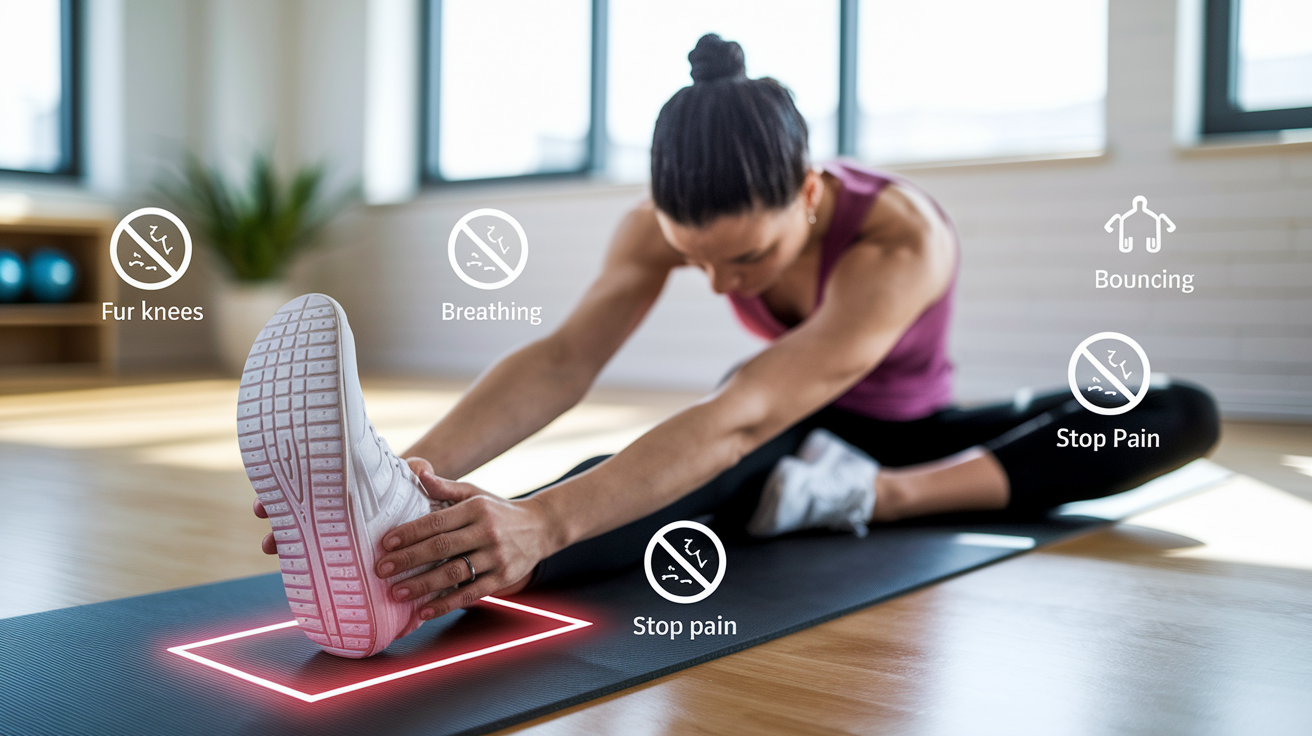
Stop immediately if you feel sharp, stabbing, or shooting pain during any stretch. Mild tightness or a pulling sensation is normal. Pain that makes you wince or hold your breath isn’t. Bouncing in and out of positions can strain cold muscles and doesn’t improve flexibility any faster than steady holds, so keep all movements slow and controlled. Protect your knees by placing a folded towel or mat under them during kneeling positions. Don’t lock your knees or hyperextend your lower back in standing stretches.
Five common beginner mistakes to watch for:
- Holding your breath. Breathing should stay steady and relaxed. If you’re straining to breathe, you’re pushing too hard.
- Stretching only one side. Always match the time and reps on both sides to avoid imbalances.
- Skipping modifications. Using a chair, strap, or reduced range isn’t cheating. It’s smart progression that prevents injury.
- Comparing your flexibility to others. Everyone’s baseline is different. Your goal is to feel better than you did last week.
- Ignoring medical conditions. If you’re pregnant, recovering from surgery, or managing arthritis, osteoporosis, or disc issues, check with your doctor or physical therapist before starting.
Modifications for Tight Hips, Hamstrings, and Limited Mobility
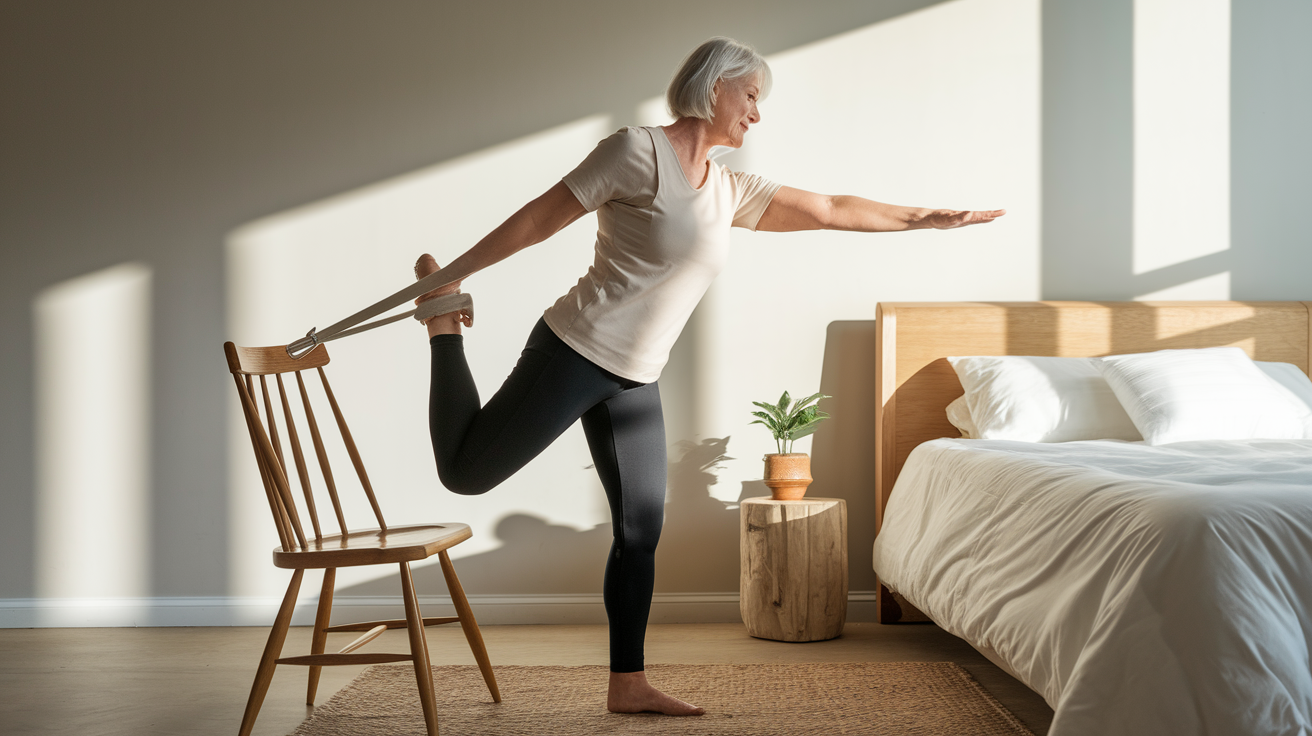
If a stretch feels too intense or you can’t get into the standard position, use these modifications to make the movement accessible right now. Tight hips, hamstrings, or limited mobility are common in beginners. Reducing the range or adding support lets you build flexibility safely without skipping the movement entirely. Chair-assisted versions, shorter hold times of 10 to 15 seconds, and tools like a strap or towel let you meet your body where it is today.
Simple bed stretches work well if getting down to the floor feels challenging. You can do hamstring stretches seated on the edge of your bed with one leg extended, hip circles while standing next to the bed for balance, and gentle spinal twists lying on your back with knees bent. These alternatives keep you consistent even on days when your joints feel especially stiff.
| Stretch | Modification |
|---|---|
| Seated Hamstring Stretch | Sit in a chair, extend one leg on a low stool, and hinge forward gently. Bend your knee slightly if needed, or loop a towel around your foot to reduce the range. |
| Hip Circles | Stand next to a wall or sturdy chair and hold on for balance. Make smaller circles if full range feels unsteady, and keep knees soft. |
| Calf Stretch | Place your hands on a countertop or chair back instead of a wall for a shallower angle. Bend your back knee slightly to shift focus to your lower calf and Achilles. |
Progressing Your Beginner Morning Stretching Routine

Expect noticeable stiffness reduction within the first two to four weeks if you stretch five to seven days per week. Most beginners report that bending over to tie shoes feels easier, getting out of the car is smoother, and that tight, creaky feeling in the morning starts to fade. Measurable flexibility gains like touching your toes or reaching farther behind your back typically show up between four and eight weeks of consistent practice.
Once the baseline routine feels comfortable, increase your holds to 30 to 45 seconds per stretch and add a second set for movements that feel especially tight. For example, if your hamstrings are still your limiting factor after a month, hold the seated hamstring stretch for 30 seconds on each side, rest briefly, then repeat for another 30 seconds. Adding dynamic elements like slow leg swings or gentle lunges before your static stretches can also boost mobility and prepare your joints for deeper ranges.
Progression doesn’t mean pushing harder every day. It means finding a sustainable rhythm that keeps your body adapting without burning out. Maintain your daily stretch routine, track which areas feel looser each week, and adjust holds or add variety every four weeks to avoid plateaus. If your schedule changes and you miss a few days, just restart where you left off. Consistency over months beats intensity over days.
Quick Printable Morning Stretching Chart for Beginners

Use this simple checklist as a printable morning stretching routine. Pin it to your fridge, bathroom mirror, or bedroom wall so you can follow the sequence without checking your phone. Each line includes the stretch name, recommended hold time, and a quick modification note to keep the routine accessible on stiff days.
- Neck Rolls – 1 minute total (switch direction halfway) | Modification: Smaller circles if you feel dizzy.
- Shoulder Rolls – 1 minute (10 forward, 10 backward) | Modification: Slow the tempo if shoulders feel tight.
- Standing Side Stretch – 1 minute total (alternate sides) | Modification: Hold onto a chair with one hand for balance.
- Cat-Cow Stretch – 2 minutes | Modification: Reduce range and move gently if lower back is sore.
- Seated Hamstring Stretch – 2 minutes (20 to 30 seconds per leg) | Modification: Bend your knee or use a towel strap.
- Hip Circles – 1 minute (10 each direction) | Modification: Hold a wall for balance, make smaller circles.
- Calf Stretch – 1 minute (30 seconds per side) | Modification: Use a countertop for less angle, bend back knee slightly.
- Standing Quad Stretch – 1 minute (30 seconds per side) | Modification: Hold a chair, keep knees close together.
- Child’s Pose (optional finish) – 30 seconds | Modification: Place a cushion under your hips if knees are tight.
Print this chart and check off each stretch as you finish it. Tracking your daily routine builds the habit and gives you a visual reminder that 10 minutes of movement every morning adds up to real flexibility progress over weeks.
Final Words
Jump into the 10-minute routine: eight gentle moves on a mat or rug, Neck Rolls, Shoulder Rolls, Standing Side Stretch, Cat-Cow, Seated Hamstring Stretch, Hip Circles, Calf Stretch, and Standing Quad Stretch. This single section gives a complete, no-equipment routine you can do right away.
Move slowly, breathe deeply, avoid bouncing, and never push into pain. Use chair or towel mods if needed. Expect less stiffness in 2–4 weeks and flexibility gains in 4–8 weeks.
Stick with this beginner morning stretching routine for flexibility, and you’ll notice more ease, better posture, and steady progress. Small, consistent steps win.
FAQ
Q: How long is the beginner morning stretching routine and what does it include?
A: The beginner morning stretching routine is 10 minutes long and includes eight core moves: Neck Rolls, Shoulder Rolls, Standing Side Stretch, Cat-Cow, Seated Hamstring Stretch, Hip Circles, Calf Stretch, and Standing Quad Stretch.
Q: What are the recommended durations and reps for the routine and optional technique work?
A: The routine uses set times: 1 minute for Neck Rolls, Shoulder Rolls, Side Stretch, Hip Circles, Calf Stretch, and Quad Stretch; 2 minutes for Cat-Cow and Hamstrings. Technique holds start at 15–30 seconds with 1–3 reps.
Q: How should I breathe and move during the morning stretches?
A: You should move slowly with deep, steady breaths, avoid bouncing, stay within a pain-free range, and coordinate breath with movement—exhale on releases and stop immediately if you feel sharp pain.
Q: When is the best time to do this routine?
A: The best time is right after waking or after a warm shower to loosen muscles; if very stiff, add a 5–10 minute light warm-up before the main routine for safer movement.
Q: How often should I do the routine to see results?
A: Do the routine 5–7 days per week. Most beginners notice reduced stiffness in 2–4 weeks and measurable flexibility improvements in about 4–8 weeks with consistent practice.
Q: Are there modifications for tight hips, hamstrings, or limited mobility?
A: Use chair-assisted versions, reduce hold times to 10–15 seconds, use a strap or towel for reach, limit range of motion, or try bed-friendly variations to keep stretches safe and accessible.
Q: What safety tips and common mistakes should I avoid?
A: Stop if you feel sharp pain, avoid ballistic (bouncy) stretching, protect your knees, modify for pregnancy, arthritis, or back issues, and don’t force long holds beyond comfort.
Q: How can I progress this beginner routine over time?
A: Progress by increasing holds to 30–45 seconds, adding reps or sets, introducing gentle dynamic elements, and keeping the habit most days to steadily build mobility and resilience.
Q: Do I need any equipment for the routine?
A: You only need a mat or rug; a strap or towel and a sturdy chair are optional for modifications. No special equipment or props are required to complete the routine.
Q: What immediate benefits will I notice after doing the routine?
A: You’ll likely notice less stiffness, improved mobility and circulation, a small posture lift, a calmer mind, and better balance—benefits that grow with consistent practice over weeks.
Q: Is this 10-minute section a complete routine or do I need additional guidance?
A: This 10-minute section is a complete, ready-to-follow routine for true beginners; you can do it alone without other sections to get a full, safe morning stretch session.