

Think your neck and back pain are just part of getting older?
They’re often from daily habits like sitting and staring down at screens, and the right posture exercises can relieve pain and strengthen your spine fast.
This post gives seven simple moves you can do in under ten minutes to open tight chests, wake weak upper backs, fix forward head position, and restore mid-back mobility.
Start here, try the short daily routine, and notice less strain and steadier support through your day.
The Best Posture Exercises You Can Start Right Now
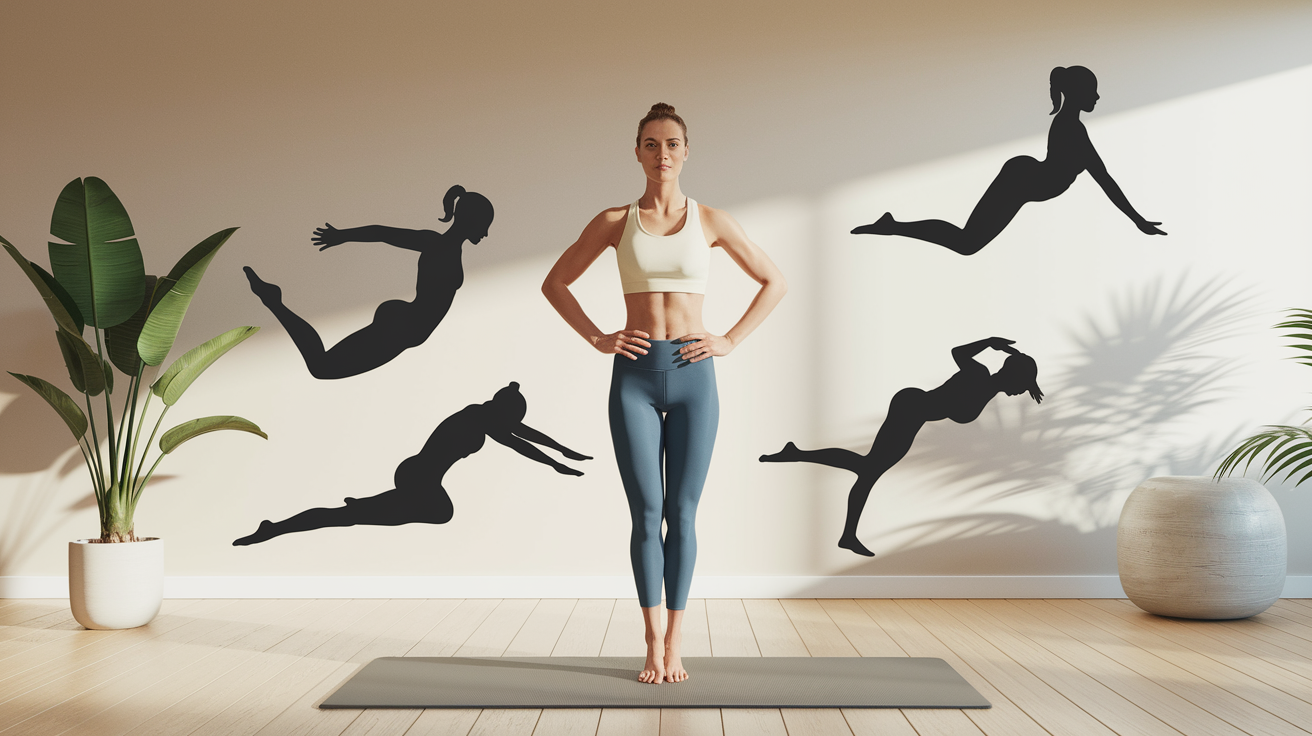
These exercises target the most common postural imbalances and take less than ten minutes. Most address tight chest muscles, weak upper back, forward head position, and limited thoracic mobility. Issues that build up from sitting, phone use, and repetitive forward movements. You can do them at home, at work, or as part of a gym warm-up. Most require no equipment.
7 High-Impact Posture Exercises:
Chin Tucks – Gently pull your chin straight back (not down) until you feel a light stretch at the base of your skull. Hold for 5 seconds and repeat 10 times to strengthen deep neck flexors.
Wall Angels – Stand with your head, shoulder blades, and hips touching a wall. Raise your arms into a “W” shape with palms out, then slide them overhead while keeping contact with the wall. Perform 10 slow reps to open the chest and activate scapular muscles.
Cat-Cow – On all fours, alternate between arching your back (cow) and rounding your spine (cat) with each breath. Flow smoothly for 40 seconds to restore spinal mobility.
Doorway Chest Stretch – Stand in a doorway with your arms in a “cactus” position (elbows at 90 degrees). Step one foot forward and lean gently until you feel a stretch across your upper chest. Hold 20 seconds per side.
Shoulder Blade Squeezes – Sit or stand tall and squeeze your shoulder blades together as if pinching a pencil between them. Hold for 5 seconds and repeat 15 times to wake up mid-back muscles.
Glute Bridge – Lie on your back with knees bent and feet flat, about one foot from your hips. Lift your hips until your body forms a straight line from shoulders to knees. Hold for 30 seconds and repeat 3 times to support lower back alignment.
Thoracic Rotation in Child’s Pose – Start in child’s pose, place one hand behind your head, and rotate your elbow toward the ceiling. Perform 8 reps per side to improve mid-back rotation.
Aim to perform this short sequence once daily, ideally when your muscles are warm. After a shower, a short walk, or during a mid-morning break. Consistency matters more than duration.
Routines Targeting Rounded Shoulders

Rounded shoulders develop when the chest muscles shorten and the upper back muscles weaken, creating a forward pull. This pattern is common in people who spend hours at desks, driving, or looking down at screens. Correcting it requires stretching the front of the body and strengthening the muscles between and below your shoulder blades. A focused routine done three to four times per week can begin to reverse this imbalance within a few weeks.
Start with chest-opening stretches to release tension in the pectorals, then move into upper back activation exercises. Hold stretches for 20 to 30 seconds and perform strength movements for controlled reps, not speed.
Rounded Shoulder Routine (4 exercises):
Resistance Band Rows – Anchor a band at chest height, hold one end in each hand, and pull your elbows back along your ribs while squeezing your shoulder blades together. Perform 12 reps for 2 sets.
Prone W Raises – Lie face-down with your arms in a “W” shape. Lift your hands and elbows a few inches off the floor by squeezing your shoulder blades down and back. Hold for 3 seconds and repeat 10 times.
Pec Doorway Lunge – Place both palms on a door frame at shoulder height, step back with your right leg, and lean forward until you feel a stretch across your chest and lower right calf. Hold 20 seconds and switch legs.
Scapular Push-Ups – Hold a high plank position. Without bending your elbows, let your shoulder blades spread apart, then squeeze them back together. Perform 15 controlled reps to train scapular control.
This routine takes about eight minutes and can be repeated four times per week. If you sit for long periods, add a 30-second doorway stretch every two hours as a posture reset.
Exercises to Correct Forward Head Posture

Forward head posture happens when your ears drift in front of your shoulders, adding strain to the muscles at the back of your neck and upper back. For every inch your head moves forward, your neck supports an extra 10 pounds of pressure. Over time, this creates tension headaches, stiffness, and fatigue. Correcting it requires strengthening the deep neck flexors and retraining your body to hold your head in a neutral position over your spine.
Begin by practicing awareness. Throughout the day, check whether your ears align with the tips of your shoulders when you stand or sit. If your head juts forward, gently pull it back without tilting your chin up or down. This small adjustment, repeated consistently, builds the muscle memory needed for lasting change.
The following three exercises retrain your neck and upper back to support proper head alignment. Practice them daily, especially after long periods at a screen or behind the wheel.
Forward Head Posture Exercises:
Wall Chin Retractions – Stand with your back against a wall. Gently pull your head back until it touches the wall without tilting your gaze up or down. Hold for 8 seconds and repeat 10 times.
Seated Neck Stretch – Sit with your shoulders back and feet flat. Hold the bottom of your chair with your right hand to anchor your shoulder, then tilt your left ear toward your left shoulder until you feel a comfortable stretch along the right side of your neck. Hold 20 seconds and switch sides.
Prone Cobra – Lie face-down with your arms at your sides, palms up. Lift your chest a few inches off the floor while squeezing your shoulder blades together and pulling your chin slightly back. Hold for 5 seconds and repeat 8 times.
Pair these exercises with ergonomic adjustments. Raise your monitor to eye level, hold your phone up instead of looking down, and set a reminder to check head position every 30 minutes. Muscle strengthening combined with habit change produces the most reliable improvement.
Posture Exercises for Desk Workers

Sitting for hours compresses your hip flexors, weakens your glutes, rounds your shoulders, and reduces circulation to your spine. Even “good posture” held too long creates fatigue. The solution is scheduled movement. Short posture breaks every 45 minutes that counteract the effects of sitting. These breaks don’t need to be long. Two to three minutes of targeted stretching and activation resets your alignment and reduces cumulative strain.
The following five exercises fit into a standard workday and require no equipment. Set a timer to remind yourself to stand, stretch, and move. Consistency throughout the week matters more than intensity.
Desk Worker Posture Routine:
Standing Hip Flexor Stretch – Step one foot back into a shallow lunge. Push your hips forward gently while keeping your torso upright. Hold 20 seconds per side to release tight hip flexors from sitting.
Desk Push-Aways – Place your hands on the edge of your desk, step back so your body forms a straight line, and push your chest toward the floor. Hold 15 seconds to stretch your chest and shoulders.
Seated Spinal Twist – Sit tall, place your right hand on the outside of your left knee, and twist gently to the left while looking over your left shoulder. Hold 15 seconds and switch sides.
Standing Cat-Cow – Stand with your hands on your thighs. Arch your back and look up (cow), then round your spine and tuck your chin (cat). Flow for 10 breaths to restore spinal mobility.
Wall Shoulder Rolls – Stand facing a wall with your palms flat at shoulder height. Slowly roll your shoulders back and down 10 times to release upper back tension.
Perform this five-move sequence once every hour if possible, or at minimum three times during your workday. Pair it with basic ergonomic setup. Feet flat on the floor, monitor at eye level, keyboard close enough that your shoulders stay relaxed.
How to Assess Your Posture at Home
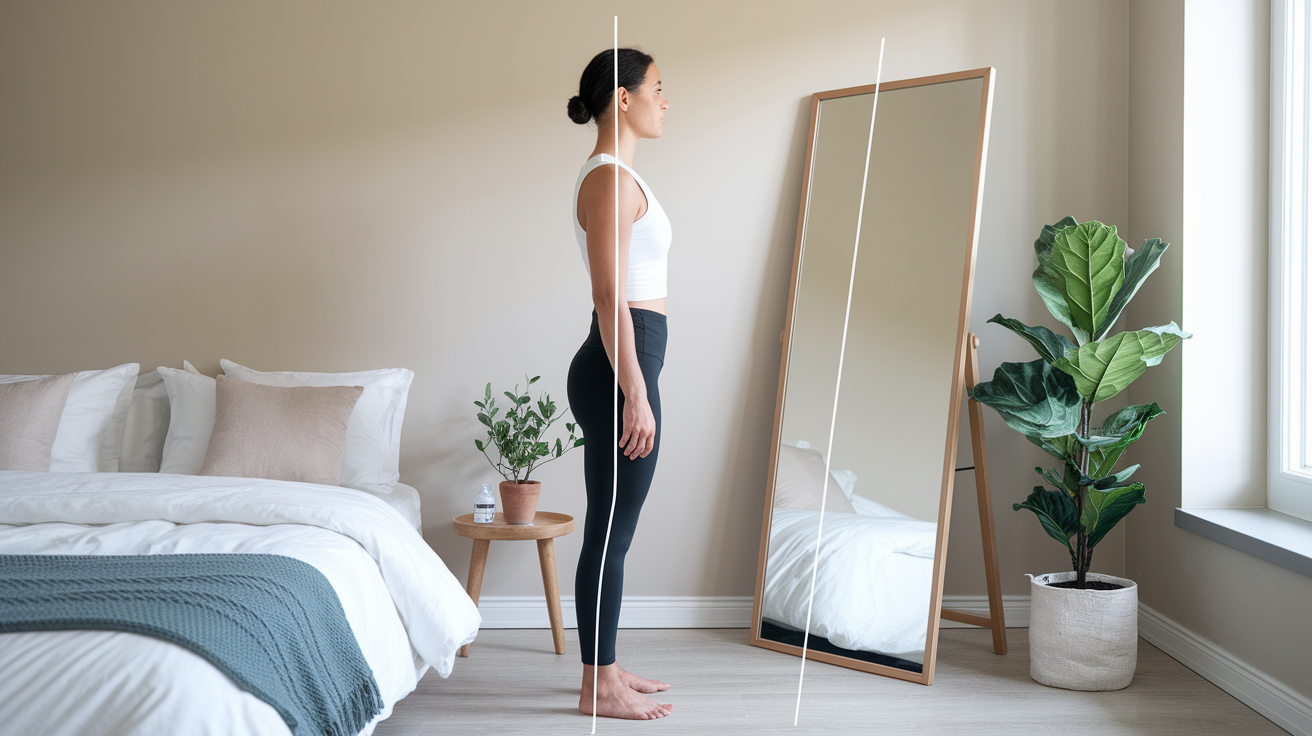
Self-assessment helps you identify which postural imbalances to prioritize. Most people have a general sense that their posture “feels off,” but a simple wall test or mirror check gives you concrete starting points. You’re not looking for perfection. You’re looking for patterns like uneven shoulders, a tilted pelvis, or a forward head position. Knowing what needs work lets you choose the most effective exercises.
5-Step Home Posture Assessment:
Stand sideways in front of a full-length mirror – Relax into your normal standing posture. Check whether your ear, shoulder tip, hip, knee, and ankle form a vertical line. If your head or shoulders sit forward, note that as an area to address.
Perform the wall test – Stand with your back against a wall. Your head, shoulder blades, hips, and the backs of your legs should all touch the wall. If your head doesn’t reach the wall without tilting your chin up, you likely have forward head posture.
Check your shoulder height – Face the mirror and compare the height of your shoulders. If one is noticeably higher, it may indicate uneven muscle tension or postural compensation from carrying a bag on one side.
Observe your lower back curve – While standing against the wall, slide your hand behind your lower back. A natural curve allows your hand to fit with a small gap. If there’s excessive space or your lower back flattens completely against the wall, your pelvic alignment may need adjustment.
Test your hip flexibility – Lie on your back and pull one knee toward your chest. If the opposite leg lifts off the floor, your hip flexors are tight from prolonged sitting.
If you notice forward head posture, rounded shoulders, or tight hips, prioritize exercises that address those areas. Reassess every two to three weeks. You should see gradual improvements in alignment, especially if you’re pairing exercises with better daily habits.
Daily Habits That Improve Posture

Exercise alone won’t fix posture if you spend the rest of your day reinforcing poor alignment. Small, repeated habits build the foundation for lasting change. Checking your position during calls, adjusting your screen height, or standing while you read. These habits don’t require extra time. They simply replace unconscious patterns with intentional ones.
Start by anchoring posture checks to activities you already do. Every time you sit down at your desk, take two seconds to roll your shoulders back and check that your screen is at eye level. When you stand in line or wait for coffee, practice pulling your head back gently so your ears align with your shoulders. These micro-adjustments train your body to recognize what neutral alignment feels like, making it easier to maintain throughout the day.
Movement breaks are just as important as position. Sitting for more than 45 minutes at a time compresses your spine and tightens your hips, even if you’re sitting “correctly.” Set a timer to remind yourself to stand, walk, or stretch every hour. Even two minutes of movement resets circulation and relieves postural fatigue.
4 Daily Habits for Better Posture:
Set your workspace at the right height – Your monitor should sit at eye level so you’re not tilting your head down. Your keyboard and mouse should be close enough that your shoulders stay relaxed and lowered.
Wear supportive footwear – Shoes with poor arch support or high heels shift your center of gravity and alter spinal alignment. Choose footwear that keeps your weight evenly distributed.
Use a timer for posture resets – Set a reminder every 45 to 60 minutes to stand, walk for one minute, or perform one quick stretch (like a doorway chest opener or standing hip flexor stretch).
Hold your phone at eye level – Looking down at your phone for extended periods strains your neck. Raise the screen so your head stays neutral, especially during long calls or scrolling sessions.
These habits don’t eliminate the need for strengthening and stretching, but they prevent you from undoing your progress. Consistency across your day amplifies the work you’re doing during exercise.
Common Mistakes That Worsen Posture

Trying too hard to “fix” posture can create new problems. Overcorrecting by lifting your chest too high, pinching your shoulder blades together all day, or forcing your lower back into an extreme arch strains muscles and joints in different ways. Good posture should feel sustainable and relatively relaxed, not rigid or exhausting.
Another frequent mistake is expecting passive devices to do the work. Posture braces and harnesses hold you in place temporarily, but they don’t strengthen the muscles needed to maintain alignment on your own. When you remove the device, the benefit disappears. Real improvement comes from building strength, mobility, and body awareness, not from external support.
5 Mistakes That Interfere with Posture Progress:
Holding your shoulders back too hard – Constantly squeezing your shoulder blades together creates upper back tension and fatigue. Instead of pinching your shoulder blades all day, think “shoulders away from ears” and let them rest in a neutral position.
Overarching your lower back – Lifting your chest aggressively can tip your pelvis forward and increase lumbar curve, which strains the lower back. Aim for a neutral spine with a small natural curve, not an exaggerated arch.
Skipping mobility work – Strengthening tight muscles without stretching them first limits your range of motion and makes it harder to hold correct alignment. Always combine strengthening exercises with chest, hip, and neck stretches.
Expecting instant results – Posture correction takes weeks of consistent practice because you’re retraining muscle patterns and joint positioning. If you don’t see improvement after several weeks of daily work, consult a physical therapist for a tailored assessment.
Ignoring pain signals – Discomfort during a stretch is normal, but sharp or persistent pain means you’re pushing too far or compensating incorrectly. Back off intensity and check your form, or seek professional guidance if pain continues.
Sustainable posture improvement happens gradually. Focus on exercises you can repeat most days, pair them with better daily habits, and avoid forcing your body into positions that feel strained or unnatural.
Final Words
Start with the quick wins: five to seven high-impact moves like chin tucks, wall angels, and thoracic extensions, then add routines for rounded shoulders, forward head work, and desk-friendly breaks.
Use the self-check steps, build daily habits like proper screen height and short movement breaks, and avoid common mistakes that create new problems. Aim for a short daily routine and a few posture breaks each day.
Keep it simple and consistent. Do a little every day, and those posture exercises will start feeling automatic—less tension, more energy.
FAQ
Q: Is it possible to correct years of bad posture, and can I fix it in 7 days?
A: Correcting years of bad posture is possible, but full change usually takes weeks to months; in seven days you can see noticeable relief with daily drills (chin tucks, wall angels), regular standing breaks, and simple ergonomic tweaks.
Q: What’s the best exercise to fix posture and how do I stop slouching?
A: The best exercise to fix posture and stop slouching is a combo of chin tucks and wall angels to strengthen the neck and upper back; do 2 to 3 sets of 10 daily and check your alignment often.