

Think strength training is only for athletes or people who lift heavy every day?
Here’s the calmer truth: anyone can start safely by learning the moves, starting lighter than you expect, and giving your body time to adapt.
This post gives a clear week-one roadmap: 2–3 full-body sessions, simple warm-ups, 4–5 basic movements, and rules for sets, reps, and progression, so you build strength without risky shortcuts.
No flashy promises. Just step-by-step coaching to help you gain strength, avoid pain, and keep training week after week.
Immediate Beginner Roadmap for Starting Strength Training Safely

Starting strength training doesn’t have to feel scary when you’ve got a clear path to follow. Most beginners stress about doing something wrong or getting hurt. The truth? Start lighter than you think, learn the movements first, and give your body time to adapt before you chase heavier weights. Those first few weeks are about building confidence and showing up. Not testing limits.
A safe beginner routine includes 2–3 full-body sessions per week with at least 48 hours between training days. You’re looking at 2–3 sets of 8–12 reps per exercise, resting 60–120 seconds between sets. If you’re lifting heavier (closer to 4–6 reps), give yourself 2–3 minutes. Focus on six core movement patterns: squat, hinge, push, pull, lunge, and brace. Use a controlled tempo. Lower the weight for about 2 seconds, pause briefly, then lift for 1–2 seconds. Exhale as you push or stand. Inhale as you return to the start.
Your week-one roadmap:
- Warm up for 5–10 minutes: Walk briskly or cycle for 3–5 minutes, then do 4–6 mobility drills like leg swings, hip circles, and bodyweight squats. 8–10 reps each.
- Select 4–5 basic movements: Pick one exercise from each pattern (squat, hinge, push, pull, and core).
- Use light weights or bodyweight only: Choose a load that feels easy for the first set and only moderately challenging by the last rep of the final set.
- Complete 2–3 sets of 8–12 reps: Rest 60–90 seconds between sets and keep total workout time to 30–45 minutes including warm-up.
- Schedule 2–3 sessions per week: Monday/Wednesday/Friday or Tuesday/Thursday/Saturday work well for most schedules.
Stop immediately if you feel sharp pain. Muscle burn is normal. Joint pain or stabbing sensations are red flags. Keep breathing steady and controlled throughout every rep. Consistency over the next 4–6 weeks matters more than any single perfect session.
Understanding Beginner Strength Training Principles
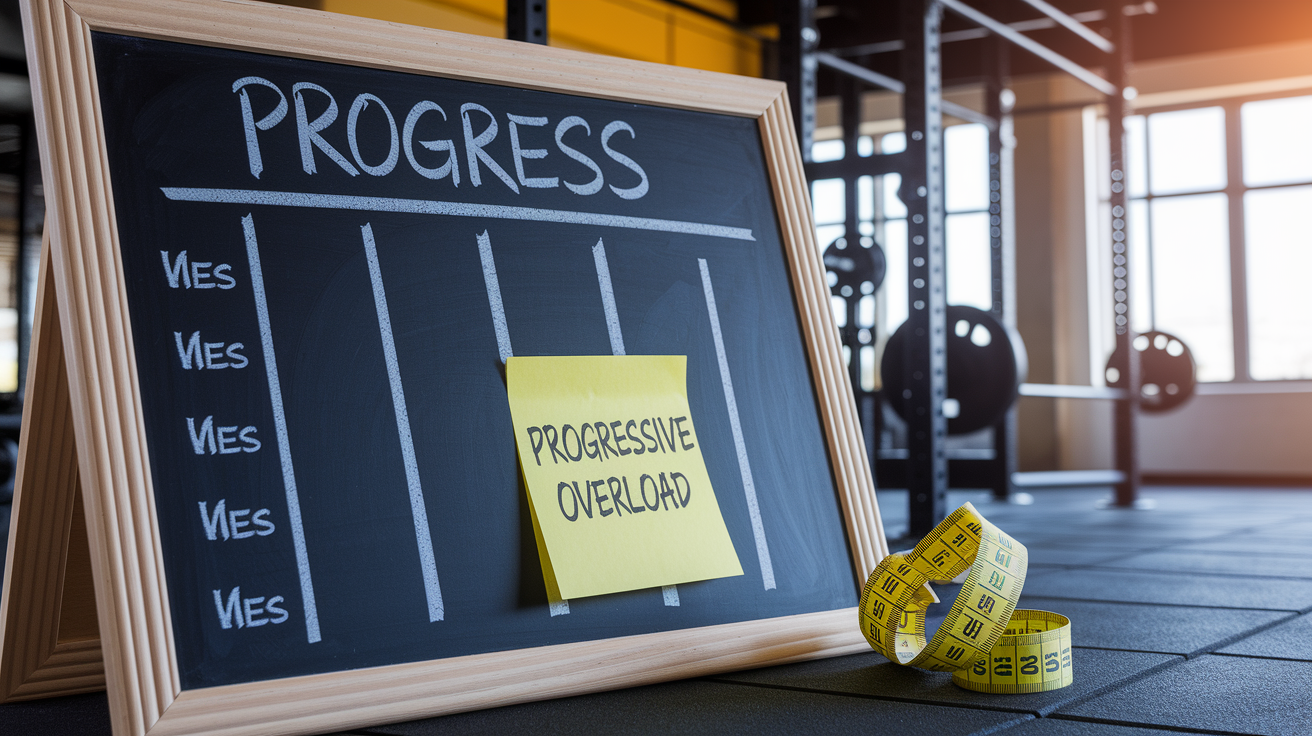
Progressive overload means gradually asking your muscles to do slightly more work over time. Your body adapts to stress by getting stronger, but only if the stress increases in small, manageable steps. For beginners, this usually means adding 1–3 reps per set once an exercise feels easy, or bumping the weight by 2.5–5 pounds for upper body and 5–10 pounds for lower body after you can complete the top end of your rep range for two sessions in a row. Most beginners notice real strength improvements within 2–6 weeks. Visible muscle changes show up after 8–12 weeks of consistent training and proper nutrition.
Linear progression works especially well in the first few months because untrained muscles respond quickly to almost any challenge. Add a small amount of weight or one extra rep each week or every other week, depending on how your body feels. If you stall (meaning you can’t complete your target reps for two sessions in a row), drop the weight by about 10%, rebuild for a week or two, then try again.
Four simple ways to progress without overthinking:
- Increase weight by 2.5–10 pounds when you hit the top of your rep range for all sets.
- Add 1–3 reps per set before moving up in weight.
- Add one extra set after 2–4 weeks of the same routine.
- Slow your tempo to 3–4 seconds on the lowering phase for an added challenge.
Essential Beginner Strength Training Exercises to Start With
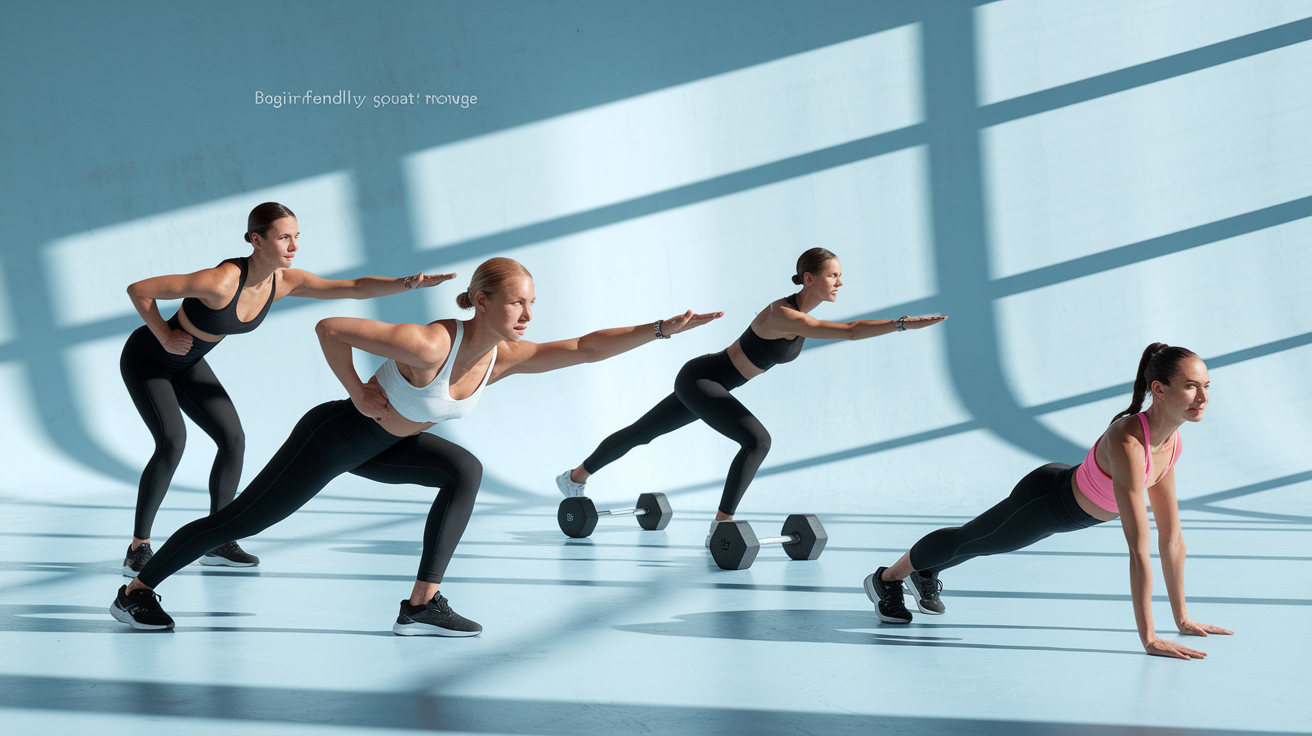
Compound exercises recruit multiple muscle groups at once. They’re more efficient and functional than isolation moves. A goblet squat works your quads, glutes, core, and upper back all in one movement, while a bicep curl only targets one small muscle. Beginners benefit most from mastering a handful of compound lifts before worrying about accessory work or advanced variations. These movements also teach you how to brace your core, stabilize your joints, and coordinate your body under load. Skills that transfer to everything from picking up groceries to playing with kids.
Form refinement is the foundation of long-term progress. Moving through a full range of motion with control builds strength more effectively than bouncing through half reps with a heavier weight. Recording a quick video of your sets or working in front of a mirror helps you spot common errors like knees caving inward, lower back rounding, or shoulders shrugging during presses. Small corrections now prevent compensations that can turn into pain or stalls later.
Six beginner-friendly exercises with one key cue each:
- Bodyweight squat – Keep your chest up and push your hips back like you’re sitting into a chair.
- Glute bridge – Squeeze your glutes at the top and avoid overarching your lower back.
- Push-up (incline or knees if needed) – Keep your body in a straight line from head to heels and lower until your chest nearly touches the floor.
- Dumbbell row – Lead with your elbow and squeeze your shoulder blade toward your spine at the top.
- Goblet squat – Hold one dumbbell at chest height and keep your elbows inside your knees at the bottom.
- Plank – Brace your core as if someone’s about to poke your stomach and keep your hips level with your shoulders.
Selecting Sets, Reps, Weights, and Rest as a Beginner
Evaluating starting load beyond day one means paying attention to how the last few reps feel. If the final rep of your third set is smooth and you could’ve done two or three more, the weight is too light. If you’re grinding through rep eight with shaky form, it’s too heavy. Aim for a load where reps nine through twelve feel challenging but controlled. This sweet spot lets you practice good mechanics while still creating enough stimulus for adaptation.
Warm-up sets help refine your working weight and prepare your nervous system. Start with one set of 8–10 reps using just the bar, a light dumbbell, or bodyweight. Then do a second set with about 50–60% of your planned working weight for 5–6 reps. This ramp-up reduces injury risk and gives you a chance to check your form before the real work begins. As you get stronger, you’ll need more warm-up sets to bridge the gap between an empty bar and your working load. But beginners usually only need one or two.
| Exercise | Suggested Starting Load | Notes |
|---|---|---|
| Goblet squat | 10–25 lb dumbbell | Hold at chest; focus on depth and balance before adding weight |
| Dumbbell row | 10–20 lb per hand | Use a bench for support; pull elbow past ribcage |
| Overhead press | 5–15 lb per hand | Keep ribs down and core braced to avoid arching your back |
Beginner Warm-Up and Movement Prep for Strength Training

Mobility and movement prep improve range of motion and reduce the risk of compensatory patterns that lead to joint stress. Cold muscles and stiff joints don’t move well, so jumping straight into a loaded squat often results in limited depth, knee valgus, or excessive forward lean. A short warm-up raises your core temperature, increases synovial fluid in your joints, and activates the muscles you’re about to use. Think of it as turning on your body’s systems before asking them to perform.
Dynamic drills that mimic your workout movements work better than static stretching before lifting. Holding a hamstring stretch for 30 seconds before deadlifts can temporarily reduce force output, while leg swings and hip circles prime the same muscles without dulling their readiness. Save static stretching for your cool-down when you want to relax and lengthen tissues after training.
Five dynamic movements to include in your warm-up:
- Leg swings (forward/back and side-to-side) – 10 reps each leg in each direction.
- Hip circles – 8–10 reps clockwise and counterclockwise per leg.
- Inchworms – 6–8 reps to open hamstrings and shoulders.
- Bodyweight squats – 10–12 reps to rehearse squat mechanics.
- Arm circles and shoulder rolls – 10 reps forward and backward to prep upper body.
Avoiding Common Beginner Strength Training Mistakes
Most beginners either go too heavy too fast or skip foundational steps because they look boring. Lifting a weight you can’t control teaches your body bad movement patterns and increases injury risk. Your nervous system learns whatever you practice most. Practicing sloppy reps under too much load just makes sloppy movement automatic. If you can’t complete a set without your lower back rounding or your knees collapsing inward, the weight is too heavy.
Training the same muscle groups on consecutive days doesn’t allow enough recovery time. Your muscles don’t grow during the workout. They grow during the 24–72 hours afterward when your body repairs and adapts. Hitting legs hard on Monday and again on Tuesday shortchanges that process and stalls progress. Schedule at least one full rest day between sessions that target the same major muscle groups.
Five mistakes that slow progress or cause injury:
- Lifting too heavy before mastering form – prioritize clean reps over impressive numbers.
- Skipping the warm-up – cold muscles are more prone to strain and move poorly under load.
- Neglecting the posterior chain – most beginners overemphasize quads and chest while ignoring hamstrings, glutes, and upper back.
- Forgetting to brace your core – a loose core transfers stress to your spine instead of your muscles.
- Not tracking your workouts – if you don’t write down sets, reps, and weights, you can’t measure progress or plan intelligent increases.
Beginner Strength Programs You Can Start This Week
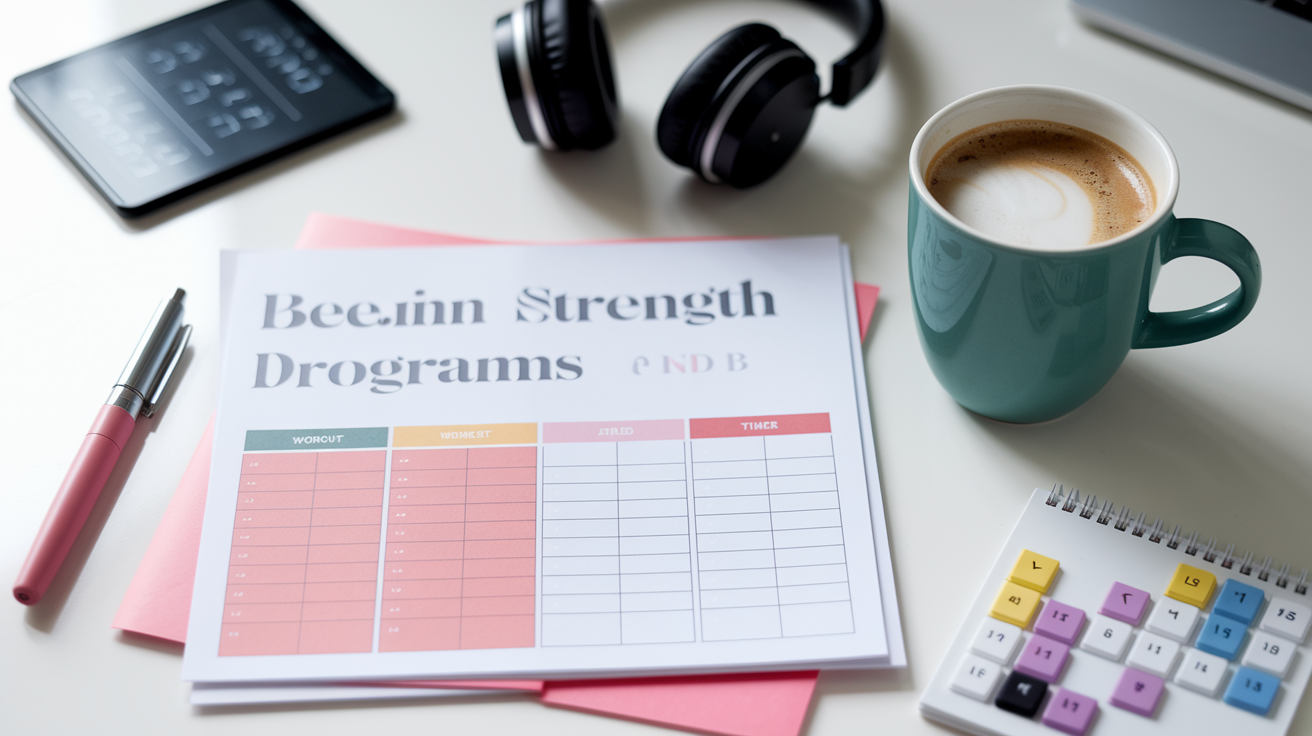
A simple full-body routine repeated 2–3 times per week builds balanced strength and gives you plenty of recovery between sessions. Alternating two workouts (Workout A and Workout B) adds variety while keeping the program easy to follow. Week one, you might do A on Monday, B on Wednesday, and A again on Friday. Week two, start with B on Monday, then A on Wednesday, and B on Friday. This rotation ensures you hit every major movement pattern twice per week without overcomplicating your schedule.
During weeks 1–2, focus entirely on learning the movements. Use light weights or bodyweight only. Aim for the lower end of the rep range (closer to 8 reps per set) so you can concentrate on tempo, breathing, and position. By weeks 3–4, you should feel more confident and can add 2.5–10% more weight or 1–2 extra reps per set if you’re hitting the top of your range cleanly. If your form starts breaking down, stay at the current load for another week.
Workout A (repeat 1–2 times per week):
- Goblet squat – 3 sets of 8–12 reps, rest 60–90 seconds.
- Push-up or dumbbell bench press – 3 sets of 8–12 reps, rest 60–90 seconds.
- Bent-over dumbbell row – 3 sets of 8–12 reps per arm, rest 60–90 seconds.
- Plank – 3 sets of 30–45 seconds, rest 60 seconds.
Workout B (repeat 1–2 times per week):
- Romanian deadlift or glute bridge – 3 sets of 8–12 reps, rest 90–120 seconds.
- Dumbbell overhead press – 3 sets of 8–12 reps, rest 60–90 seconds.
- Split squat or reverse lunge – 3 sets of 8–12 reps per leg, rest 60–90 seconds.
- Dead bug – 3 sets of 10–12 reps per side, rest 60 seconds.
Keep total workout time to 30–45 minutes including warm-up. If you finish faster, that’s fine. Quality and consistency matter more than duration. Add 5–10 minutes of light stretching or a short walk as a cool-down to bring your heart rate down gradually.
Home vs Gym Equipment for Beginner Strength Training
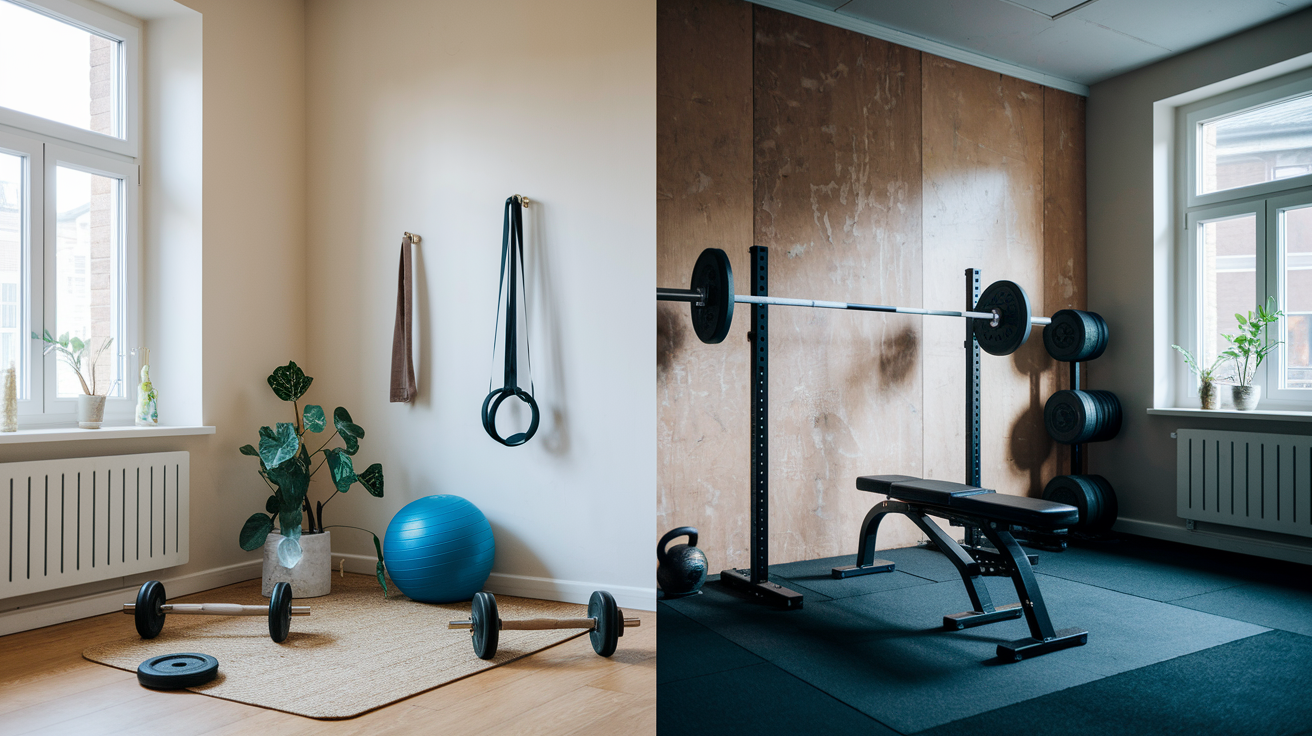
You don’t need a full gym setup to start strength training. Bodyweight exercises require zero investment and can take you through several months of progress by adjusting leverage, tempo, and rep ranges. As you get stronger, resistance bands offer scalable tension for rows, presses, and squats at a fraction of the cost of dumbbells or barbells. A single set of adjustable dumbbells covers most beginner needs for $50–$300 depending on the weight range and brand. A basic kettlebell runs $20–$100 and works well for goblet squats, swings, and rows.
Barbell setups aren’t required for beginners and can cost $300–$1,000 or more when you factor in a bar, plates, and a rack. Dumbbells and kettlebells allow for more natural movement paths and they’re easier to store in small spaces. A flat or adjustable bench adds versatility for presses and rows but isn’t essential in the first few months. Resistance bands pack into a drawer and travel easily, making them a practical choice if your schedule or living situation changes often.
| Equipment | Cost Range | Best Use for Beginners |
|---|---|---|
| Bodyweight only | $0 | Learn movement patterns; build endurance and stability before adding load |
| Resistance bands | $10–$40 | Add variable resistance to squats, rows, and presses; portable and affordable |
| Adjustable dumbbells | $50–$300 | Cover a wide weight range in one compact set; ideal for home full-body routines |
| Single kettlebell | $20–$100 | Great for goblet squats, swings, and single-arm rows; durable and space-efficient |
Beginner Nutrition and Recovery for Strength Progress
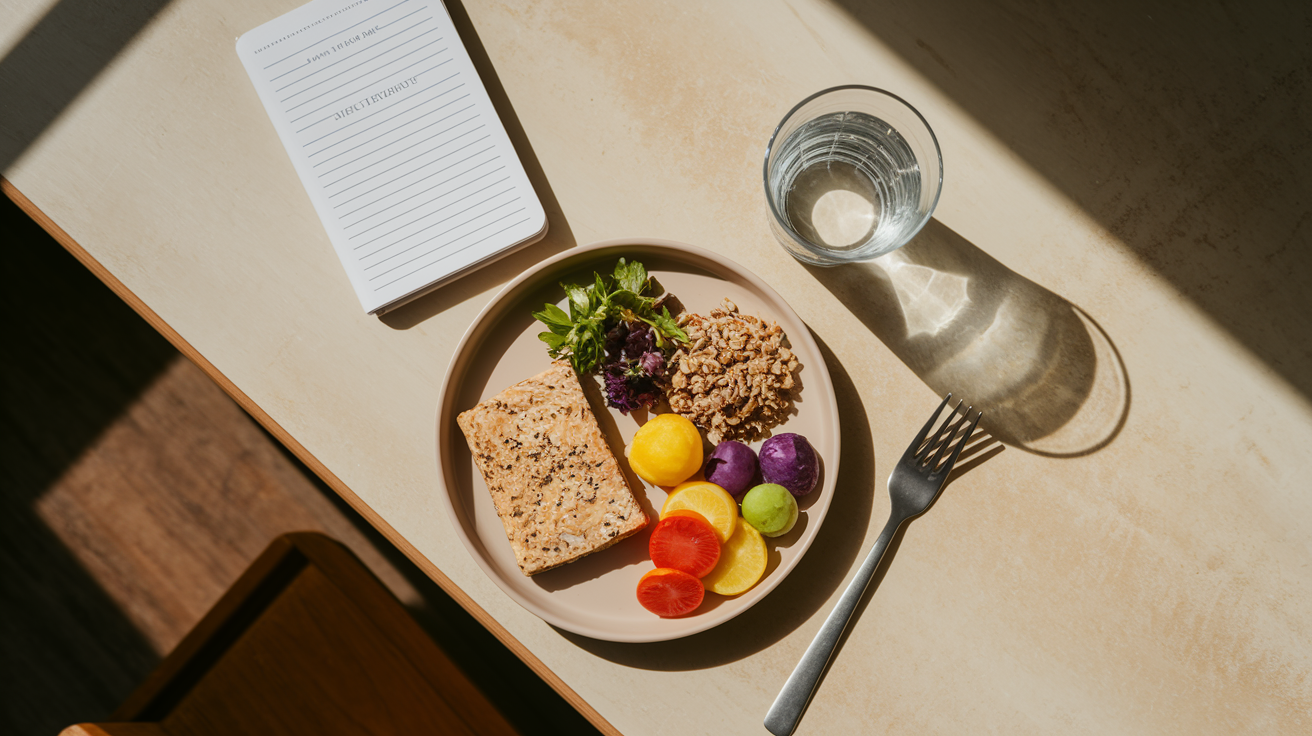
Protein supports muscle repair and growth, especially when you’re new to training and your body is responding quickly to the stimulus. Shoot for about 0.7–1.0 grams of protein per pound of bodyweight each day, or roughly 1.6–2.2 grams per kilogram. That might look like a palm-sized portion of chicken, fish, tofu, or Greek yogurt at each meal, plus a protein-rich snack if your day is long or your meals are light. You don’t need to hit the target perfectly every day. Most days should get you close.
Calories matter too. If your goal is to build muscle, eat in a slight surplus of about 250–500 calories above maintenance so your body has the energy and building blocks it needs. Want to lose fat while preserving muscle? Aim for a modest deficit of 250–500 calories below maintenance and keep protein high to protect lean mass. Either way, focus on whole foods most of the time. Lean proteins, colorful vegetables, whole grains, and healthy fats. Don’t stress about perfect macros in the first few months.
Sleep and hydration aren’t optional. Your muscles rebuild during the 7–9 hours you spend asleep each night. Chronic under-sleeping blunts strength gains and recovery. Drink water throughout the day and increase your intake around workouts. If your urine is pale yellow most of the time, you’re probably hydrated enough. Walk more on rest days if you can. An extra 1,000–3,000 steps helps with recovery without adding training stress.
Tracking Strength Training Progress as a Beginner

Writing down your sets, reps, and weights after every session gives you a clear record of what’s working. Without tracking, it’s easy to forget whether you used 15 or 20 pounds last week. That guesswork slows progress. A simple notebook, spreadsheet, or training app works fine. Just log the date, exercises, load, and how many reps you completed. Over a few weeks, patterns emerge. You’ll see where you’re adding reps consistently and where you might need to adjust rest times or form cues.
Strength improvements usually show up within 2–6 weeks, often before you see any visible changes in the mirror. You might add two reps to your goblet squat or move from knee push-ups to full push-ups. Visible muscle changes typically take 8–12 weeks of consistent training and proper nutrition, so don’t judge your progress by the mirror alone in the first month. Take front, side, and back photos every 4 weeks in the same lighting and clothing. Measure your waist, hips, chest, arms, and thighs with a tape measure to catch changes the scale won’t show.
Four ways to track progress beyond the weight on the bar:
- Training log – sets, reps, weights, and how each session felt (easy, moderate, hard).
- Progress photos – every 4 weeks in consistent lighting and poses.
- Body measurements – waist, hips, chest, arms, thighs measured monthly.
- Performance markers – time to complete a workout, reps before fatigue, or improved range of motion.
When to Seek Coaching or Modify Strength Training as a Beginner
If you’re still unsure about your form after 2–4 weeks of training, consider hiring a certified personal trainer for one to three sessions focused solely on technique. A good coach will watch you move, correct small errors, and give you cues that click better than any online video. You can also record yourself from the side and compare your positions to reliable form guides. But direct feedback catches compensations you might miss on your own.
Pain is a signal to adjust, not push through. Sharp, stabbing, or radiating pain in a joint means stop immediately and figure out what’s wrong. Muscle soreness is normal. Joint pain is not. Modify exercises as needed. Box squats reduce range of motion for sore knees, incline push-ups reduce load for tender shoulders, and resistance bands offer a gentler entry point than dumbbells for anyone rehabbing an old injury. Consult a healthcare provider before starting if you have cardiovascular disease, uncontrolled high blood pressure, recent surgery, osteoporosis, or pregnancy-related concerns.
Three situations that call for professional guidance:
- Persistent pain during or after specific movements – a physical therapist or sports medicine doctor can assess and recommend modifications.
- Unclear progress after 6–8 weeks – a trainer can review your program, nutrition, and recovery to find gaps.
- Special populations (seniors, post-rehab, chronic conditions) – individualized programming and medical clearance ensure safety and effectiveness.
Final Words
Start with a quick 5 to 10 minute warm-up, pick 4 to 5 basic moves like squat, hinge, push, pull, and lunge, and plan 2 to 3 full-body sessions per week. Use lighter warm-up sets and focus on good form so you’ll build a safe foundation.
Aim for 2 to 3 sets of 8 to 12 reps, rest 60 to 120 seconds, and increase reps or weight slowly as you get stronger.
Following this simple plan shows how to start strength training for beginners safely and steadily. Small, consistent wins add up. Keep it practical and stick with it.
FAQ
Q: How should a beginner start strength training?
A: A beginner should start strength training with a simple, safe routine: 2–3 full-body sessions per week, 5–10 minute warm-up, 2–3 sets of 8–12 reps for main lifts, and 48 hours rest between sessions.
Q: What is the 3 3 3 rule for workouts?
A: The 3 3 3 rule for workouts usually means three sets of three reps, a low-rep scheme for building raw strength; it’s more advanced—beginners should prefer 2–3 sets of 8–12 reps to build technique and muscle.
Q: Can I lift weights while taking Zepbound?
A: You can often lift weights while taking Zepbound, but check with your prescriber first, start gradually, watch for dizziness or low energy, and adjust hydration and nutrition as needed.
Q: Does weightlifting help with PTSD?
A: Weightlifting can help with PTSD by reducing anxiety, improving sleep and mood, and boosting a sense of control; it’s a helpful complement to therapy, not a replacement for professional care.