

What if those eight desk hours are quietly stealing your joint motion?
You can stop it with 10–15 minutes a day—no equipment, no special gear, just slow, controlled moves that bring fluid back into joints and remind your nervous system that full ranges are safe.
This office-friendly routine targets the places sitting robs most: neck, thoracic spine, hips, shoulders, wrists, and ankles.
Do it daily or use a 2–5 minute reset between meetings, and you’ll notice less stiffness, fewer mid-afternoon tensions, and easier movement when you stand up.
A Complete Office-Friendly Joint Mobility Sequence to Reverse Desk Stiffness
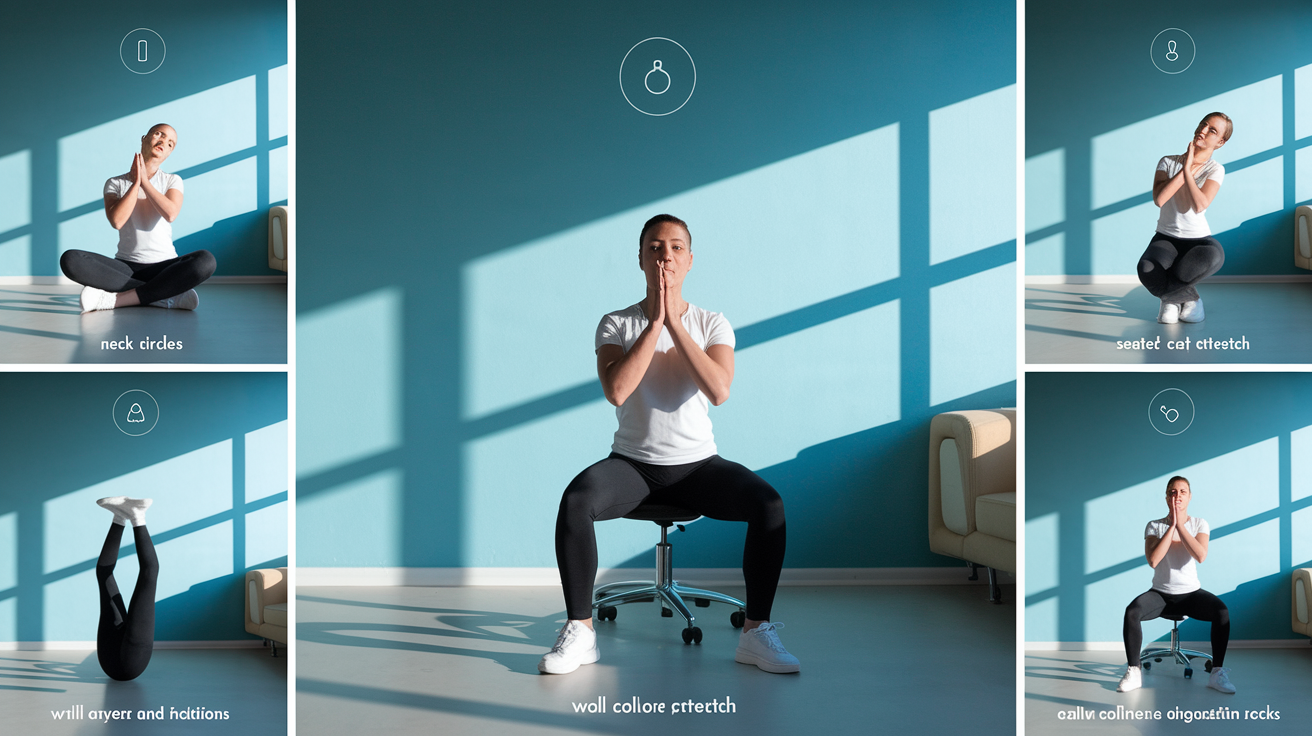
Sitting at your desk for eight hours changes your body. Circulation slows down. Synovial fluid barely moves. Muscles hold the same positions for thousands of minutes straight. Over months and years, your joints stop moving through their full range. Hips forget how to extend. Your thoracic spine forgets it can rotate. Ankles get stiff.
A daily 10–15 minute joint mobility routine reverses this. Each joint gets a few minutes of controlled movement that brings fluid back into capsules, reminds your nervous system that full ranges are safe, and resets the positions your body defaults to when you stand up.
This sequence doesn’t need equipment. You can do it in your office, at home before work, or at the end of your day. The movements are slow and controlled. Two sets of each, breathing naturally, stopping well before discomfort turns into strain. You’re not forcing anything. You’re reminding your joints they have options.
The routine hits all the areas that pay the price for sitting: neck, spine, hips, shoulders, wrists, and ankles.
Here’s the full sequence:
-
Seated neck circles and chin tucks (1 minute) – Gently roll your neck through full circles both directions, then perform slow chin tucks by pulling your head straight back, keeping your eyes level.
-
Spine wake up: seated cat cow and thoracic rotations (2–3 minutes) – Sit tall, place hands on thighs, and slowly round your spine then arch it, breathing with each rep. Follow with seated thoracic rotations, placing one hand behind your head and rotating your torso slowly toward that side.
-
Hip opening: seated figure four stretch and hip CARs (3–4 minutes) – Cross one ankle over the opposite knee and lean forward gently. Then perform hip controlled articular rotations (CARs). Stand and lift one knee, rotate the thigh out and around, making the biggest controlled circle possible.
-
Shoulder and upper back flow: wall angels and scapular retractions (3 minutes) – Stand against a wall with elbows bent at 90 degrees, slide your arms up and down while keeping contact with the wall. Follow with scapular retractions. Squeeze your shoulder blades together, hold two seconds, release.
-
Wrist and finger mobility: wrist circles, prayer stretch, finger extensions (1 minute) – Make slow circles with both wrists, press palms together in front of your chest and gently lower them to stretch the wrists, then spread and extend your fingers wide several times.
-
Ankle activation: ankle circles and dorsiflexion rocks (2 minutes) – Lift one foot and draw slow circles with your toes. Then rock forward on both feet, lifting your heels and pulling your toes toward your shins to load your ankles through their full range.
Why Desk Workers Lose Joint Mobility (and How to Restore It)
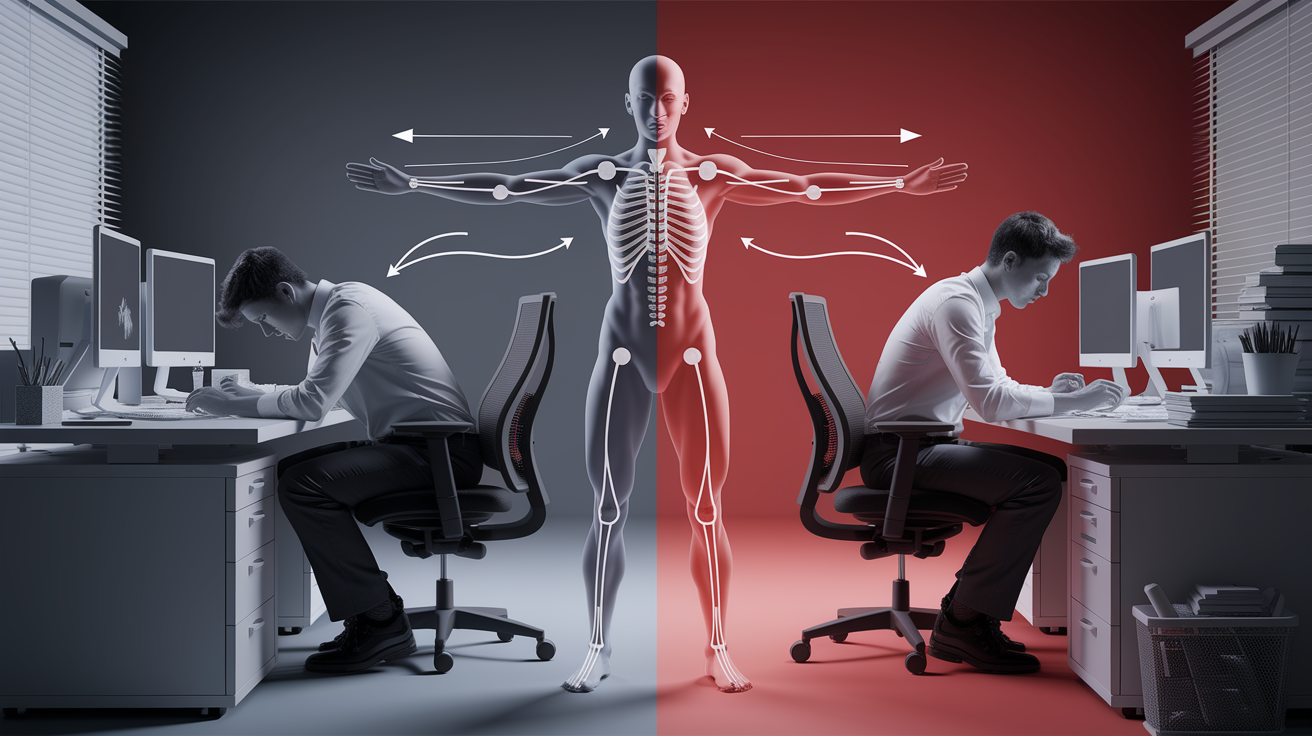
When you sit for eight hours a day, five days a week, over ten years, you’re teaching your body that stillness is normal. Your nervous system organizes around that reality.
Hips lose rotation and extension because they’re never asked to do either. Your spine stops bending and twisting segment by segment. Shoulders round forward because your arms stay in front of your body all day. Ankles stiffen because you’re barely loading them or asking them to dorsiflex.
Blood flow to joint capsules and connective tissue drops when you don’t move. The tissues get less oxygen and less fluid exchange. Stiffness compounds. What starts as “I feel tight after sitting” becomes “I can’t rotate my neck without my whole torso moving.”
Movement reverses this. When you take your joints through their full available ranges, you increase circulation, pump synovial fluid through joint capsules, and signal to your nervous system that these positions are safe and available.
Mobility work doesn’t just stretch tissues. It restores mechanical options. Your hips remember they can rotate. Your thoracic spine remembers it can extend. That means less compensation, less overload on your lower back and neck, and fewer random aches that show up on Tuesday afternoon for no obvious reason.
Mobility vs Flexibility: What Desk Workers Actually Need

Mobility is active, controlled movement through a range. Flexibility is passive length. How far someone else can push your hamstring, or how long you can sit in a deep stretch.
Stretching gives you short term relief because it calms down the nervous system and temporarily lengthens tissue, but it doesn’t teach your body to control that new length. If you stretch your hip flexors every day but never move your hips through extension with control, you’ll stay tight.
Mobility builds strength and coordination at the edges of your range. That’s what lasts.
Desk workers need mobility more than flexibility because sitting creates a control problem, not just a length problem. Your body isn’t sure what to do with ranges it hasn’t used in months. Move before you load. If your hips can’t extend and rotate well, don’t add heavy squats or deadlifts until they can. Regain the movement first, then strengthen it.
Here’s the breakdown:
Mobility: Active, controlled movement through your full joint range. Builds strength and coordination. Use it daily and before workouts.
Flexibility: Passive range, usually held in a stretch. Calms the nervous system. Best used after training or at the end of the day.
Stretching: Lengthens tissues temporarily. Useful for relaxation and post workout recovery, but won’t restore lasting joint control.
When to use each: Mobility in the morning and before strength work. Stretching after workouts or when you need to wind down.
Signs You Need a Daily Desk Mobility Reset
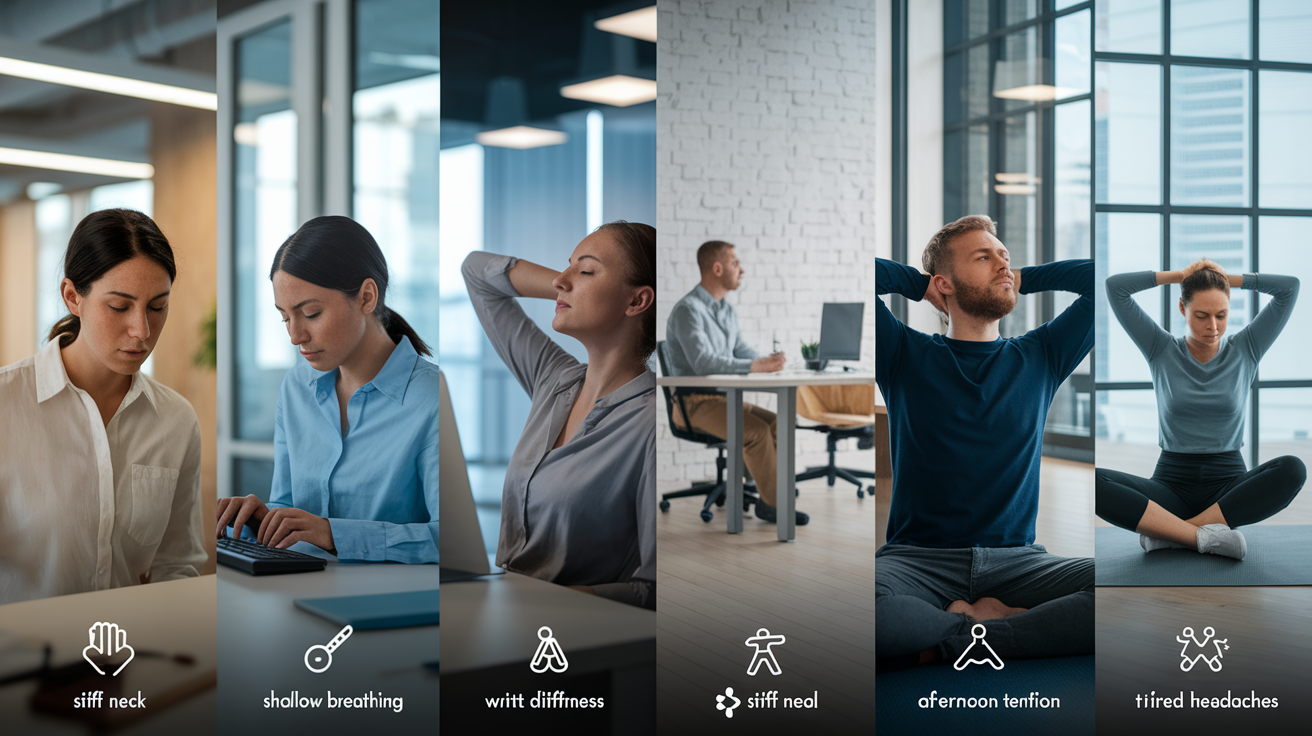
Your body will tell you when joint mobility is slipping.
You’ll feel stiff when you stand up after a meeting. You’ll notice your neck doesn’t turn as far when you check your blind spot. Your breathing might feel shallow because your ribs aren’t moving well. Tension headaches start showing up in the afternoon. Your wrists ache after typing for an hour. Your hips feel “stuck,” and getting into a deep squat or sitting cross legged on the floor becomes awkward or impossible.
If any of this sounds familiar, mobility work needs to become part of your day. These aren’t signs that something is broken. They’re early signals that your body is adapting to stillness. Catching it here means you can reverse it with consistency, not wait until it turns into chronic pain that needs outside help.
Common signs:
Stiffness or discomfort when standing up after sitting for 30+ minutes
Limited neck or torso rotation. You turn your whole body instead of just your spine
Shallow breathing or a feeling that you can’t take a full, deep breath
Tight upper traps, forward shoulders, or tension headaches by mid afternoon
Wrist discomfort, tingling, or achiness after typing or using a mouse
Hips feeling locked or unable to sit comfortably on the floor
Joint by Joint Mobility Breakdown for Desk Workers
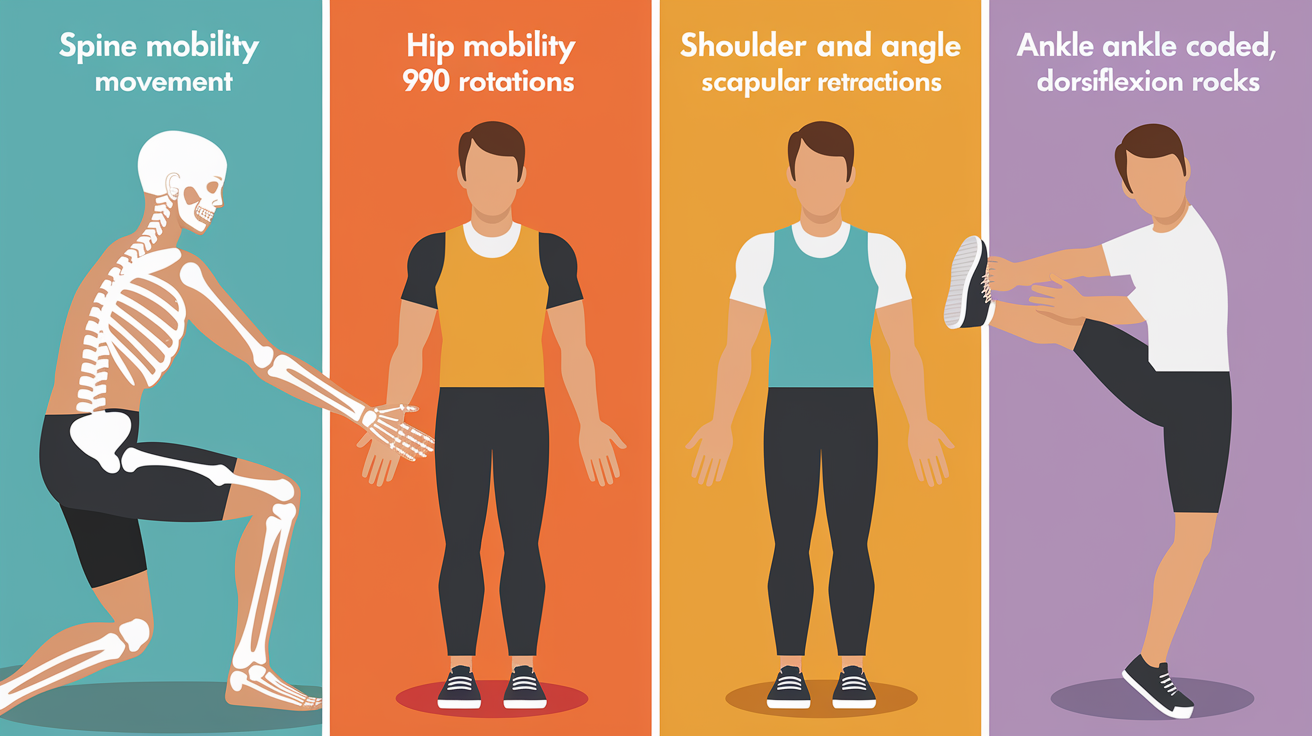
Spine Mobility
Sitting locks your spine into one position for hours. Your lumbar spine stays slightly flexed, your thoracic spine rounds forward, and your cervical spine juts out to keep your eyes on the screen.
You lose the ability to move segment by segment. Bending, extending, and rotating through your mid back and lower back.
When your spine can’t move well, other joints compensate. Your lower back takes over for your stiff hips. Your neck cranks into rotation because your mid back won’t.
Seated cat cow restores segmental movement by asking each part of your spine to flex and extend slowly, one vertebra at a time. It’s simple, but it reconnects the chain.
Hip Mobility
Your hips are built to extend, flex, rotate, and abduct. Sitting keeps them flexed and still.
Over time, your hip flexors shorten, your glutes forget how to fire, and your internal and external rotation disappear. When you stand up or try to squat, your hips don’t have the range they need, so your lower back does the work instead.
That’s why so many desk workers have tight lower backs. It’s compensation, not weakness. A hip problem disguised as a back problem.
90/90 hip rotations and standing hip flexor stretches give your hips their range back and teach them to move independently from your spine.
Shoulder & Upper Back
Forward shoulders and a rounded upper back are the default desk posture. Your pecs stay short, your mid back (thoracic spine) loses extension, and your scapulae stop moving the way they should.
You lose overhead range, and your neck has to overwork to keep your head upright. Over time, this creates neck tension, headaches, and trouble reaching or lifting anything above shoulder height.
Wall angels restore scapular control and open up your chest. Scapular retractions teach your shoulder blades to pull back and down, reversing the forward collapse that sitting creates. Both are slow, controlled, and surprisingly hard if you’ve been sitting for years.
Ankle & Lower Leg
Ankles seem like a small detail until you realize that limited dorsiflexion (pulling your toes toward your shin) affects your knees, hips, and even your squat depth.
Sitting keeps your ankles in a neutral or slightly plantarflexed position all day. You’re not loading them, challenging their range, or asking them to stabilize your body.
When you try to squat or lunge, stiff ankles force your knees forward or shift your weight onto your toes. Ankle circles and dorsiflexion rocks restore the range and give you a stable base. Small movement, big impact on everything above.
A 2–5 Minute Express Mobility Reset for Busy Desk Workers
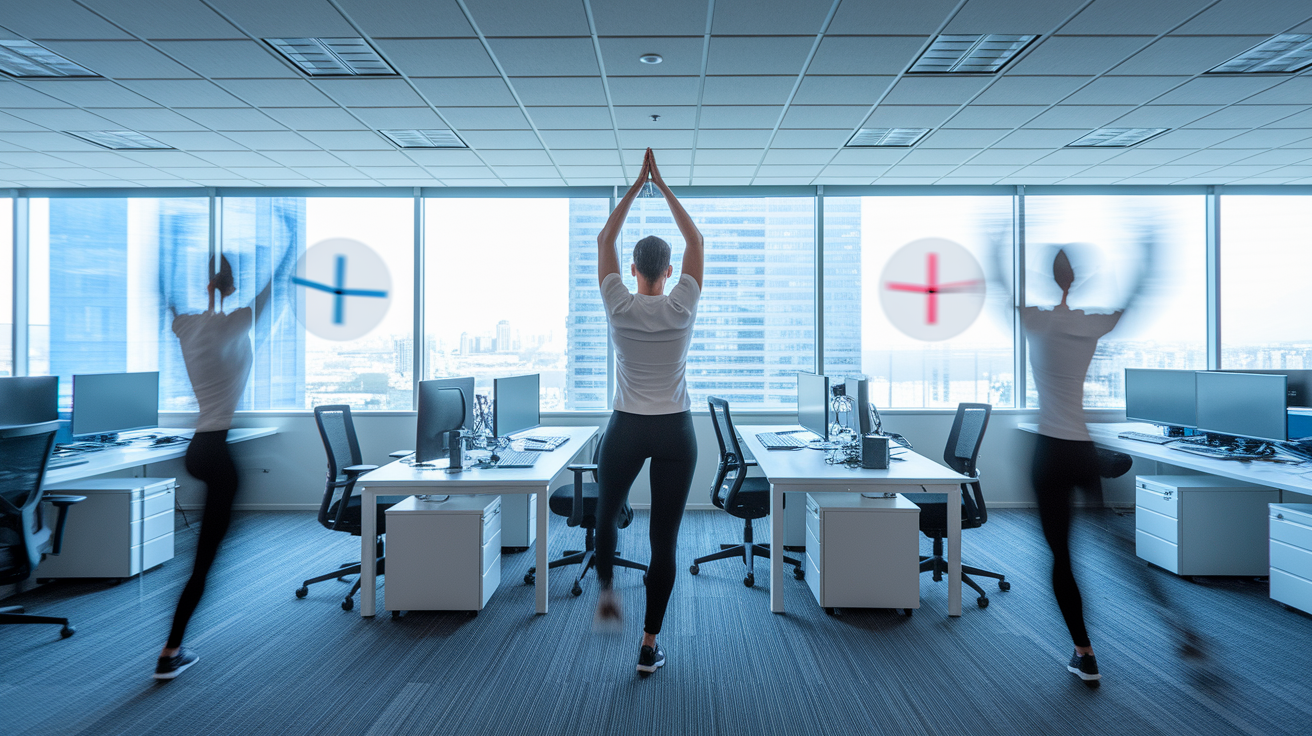
Some days you don’t have fifteen minutes. Maybe you’re in back to back meetings, or you only have a few minutes between calls.
A two to five minute mobility reset still works. It won’t replace a full session, but it will reduce neck tension, open up your hips, and improve circulation enough to reset your posture and focus. Think of it as a movement snack between longer sessions.
This express reset hits the highest priority areas in the shortest time. You’re not trying to cover everything. Just enough to interrupt the stiffness cycle and remind your body that it can move. Do this once or twice during your workday, especially if you’ve been sitting for over an hour.
-
20–30 seconds of seated cat cow – Sit tall, place your hands on your thighs, and slowly round your spine then arch it. Breathe naturally with each rep.
-
20–30 seconds of scapular retractions – Squeeze your shoulder blades together, hold for two seconds, release. Repeat slowly, focusing on pulling your shoulders back and down.
-
20–30 seconds of seated figure four or standing hip stretch – Cross one ankle over the opposite knee and lean forward gently, or stand and pull one knee toward your chest, then open it to the side.
-
20–30 seconds of ankle circles or calf pumps – Lift one foot and draw slow circles with your toes, or rock up onto your toes and back down onto your heels several times.
Desk Variations and Modifications for Limited Space

Not every office has space for floor work or a clear wall. If you’re working in a cubicle, shared space, or a home setup with limited room, most mobility drills can be adapted to your chair or desk.
Seated variations let you restore joint range without drawing attention or needing to change clothes. These aren’t compromises. They’re practical versions that still deliver the movement your joints need.
Focus on the drills that require the least space and no equipment. Seated cat cow works as well as the floor version. Thoracic rotations can be done in your chair by placing one hand behind your head and rotating your torso slowly. Wrist mobility happens right at desk height.
Hip openers like the seated figure four stretch and ankle circles require nothing but your chair. If you have access to a wall or doorway, add wall angels and standing pec stretches between tasks.
Chair only drills that work in tight spaces:
Seated cat cow. Hands on thighs, round and arch your spine slowly.
Seated thoracic rotation. One hand behind your head, rotate toward that side, hold, return, repeat on the other side.
Seated figure four stretch. Cross one ankle over the opposite knee, sit tall, lean forward gently.
Wrist circles and prayer stretch. Make circles with both wrists, then press palms together and lower them in front of your chest to stretch.
Mobility Frequency, Sets, and How Long Your Sessions Should Be
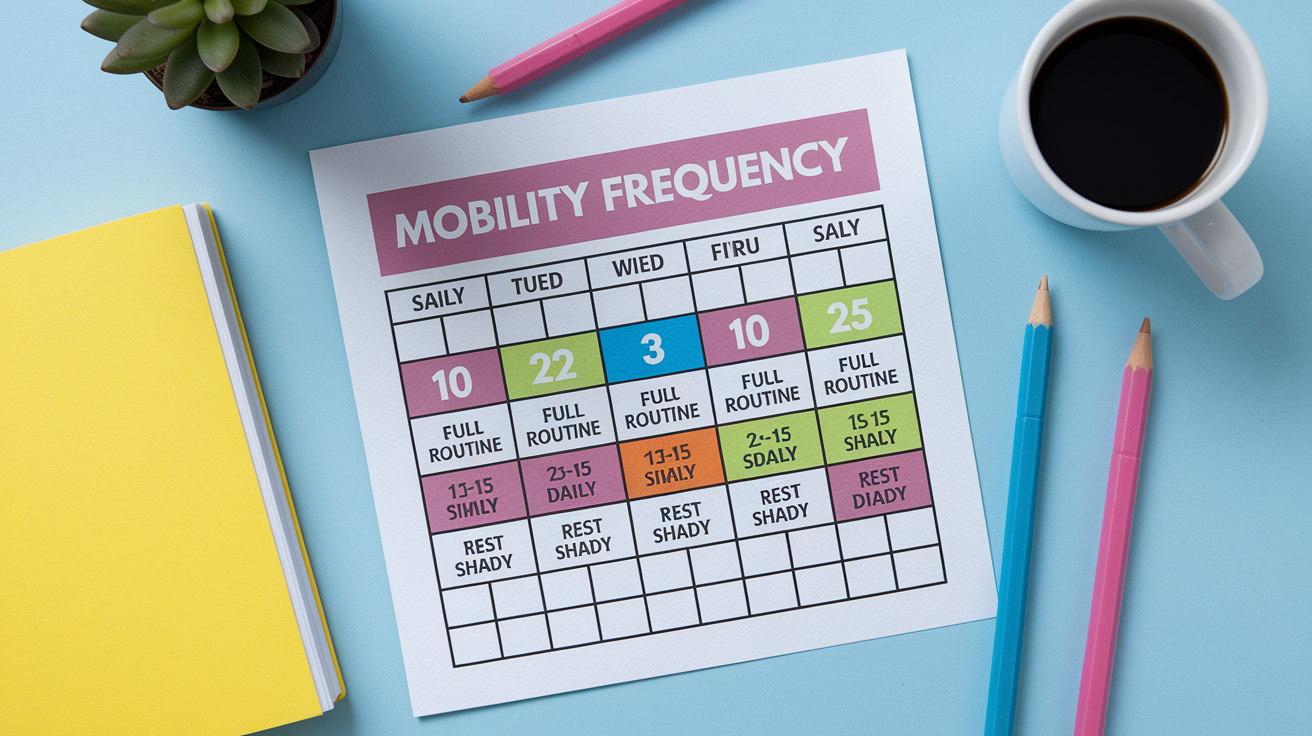
Daily mobility beats occasional longer sessions. Your joints respond better to frequent, short inputs than rare intense ones.
Aim for 10–15 minutes most days, or break it into two or three micro sessions if that’s easier to fit into your schedule. Quality matters more than quantity. Two slow, controlled sets of each movement will do more than five rushed sets.
Use the full routine in the morning or before a workout to prepare your joints for load. On rest days, do a lighter version to keep circulation up and prevent stiffness from creeping back in. If you’re short on time, the express reset works.
The key is consistency. Small daily sessions add up faster than you’d expect.
| Session Type | Duration | Recommended Frequency |
|---|---|---|
| Daily micro sessions | 2–5 minutes | 2–3 times per workday |
| Full routine | 10–15 minutes | Once daily, ideally morning or pre workout |
| Rest day mobility | 5–10 minutes | Light session on non training days |
Building a Consistent Daily Mobility Habit

Habit formation starts with reducing friction. Set a timer or calendar reminder for every 30–60 minutes during your workday. When it goes off, stand up, move for two minutes, then sit back down.
That’s it.
You don’t need to do the full routine every time. Just interrupt the stillness. Over time, those small interruptions become automatic, and your body starts expecting them.
Treat mobility like brushing your teeth. You don’t debate whether to do it. You don’t wait until your teeth hurt. You do it because it prevents bigger problems later and takes less time than fixing what happens if you skip it.
The same applies to joint mobility. A few minutes every day keeps your body ready for strength work, reduces random aches, and makes sitting for long hours less damaging.
Tools that help build the habit:
Set recurring phone or calendar reminders to stand and move every 30–60 minutes.
Use a habit tracking app to log daily mobility sessions and build a streak.
Pair mobility with an existing routine, like doing it right after your first cup of coffee or before you start work.
Final Words
You now have a simple, office-friendly plan: quick spine work, hip openers, shoulder flow, wrist and ankle drills that add up to 10–15 minutes, plus a 2–5 minute express reset for busy days.
No gear needed. Move slowly, do two sets of each drill, and stop before things hurt. Use a timer or calendar cue to make it stick.
Make this daily joint mobility routine for desk workers part of your day, and you’ll feel less stiff and more capable—one short session at a time.
FAQ
Q: How long should I spend on a daily desk mobility routine?
A: A 10–15 minute daily desk mobility routine restores joint options and circulation; split time roughly spine 2–3, hips 3–4, shoulders 3–4, ankles 2–3 minutes, two sets per movement.
Q: What are the best office-friendly mobility exercises I can do without equipment?
A: The best office-friendly mobility exercises without equipment are seated neck circles and chin tucks, seated cat-cow with thoracic rotations, seated figure-four and hip CARs, wall angels, wrist circles, and ankle circles.
Q: How often should desk workers do mobility work?
A: Desk workers should do short mobility sessions daily, with quick 2–5 minute resets during long sitting and a full 10–15 minute routine once a day or before/after workouts.
Q: Can 2–5 minute mobility breaks actually help?
A: Two–five minute mobility breaks do help: brief cat-cow, scapular retractions, a seated figure-four, and ankle circles boost circulation, ease neck tension, and reduce hip compression on busy days.
Q: What’s the difference between mobility and flexibility, and which do I need?
A: Mobility is active control through a joint’s range, while flexibility is passive length; desk workers usually need mobility to rebuild control for posture and everyday movement.
Q: What signs show I need a daily desk mobility reset?
A: Signs you need a daily desk mobility reset include stiffness when standing, limited rotation, shallow breathing, tight upper traps, tension headaches, wrist discomfort from typing, and hips that feel stuck.
Q: How many reps and sets should I do for mobility exercises?
A: Do two slow, controlled sets per exercise, aiming for 6–12 deliberate reps or 30–60 seconds per set, and focus on quality — stop before you feel sharp pain.
Q: How do I modify mobility moves when space is tight or I’m at my chair?
A: You can modify moves for tight spaces by using chair-only drills: seated cat-cow, seated figure-four, chair-supported thoracic rotations, wrist stretches at desk height, and seated ankle circles.
Q: Are there mobility drills to prevent wrist and neck pain from typing?
A: Yes: wrist circles, prayer stretch, finger extensions, regular brief breaks, and chin tucks with gentle neck rotations help reduce wrist strain and ease neck tension from typing.
Q: When should I stop a mobility movement or see a professional?
A: Stop a mobility movement if it causes sharp, worsening, or spreading pain; if symptoms persist, cause numbness, or limit daily tasks, seek a healthcare professional for evaluation.