

What if your morning is quietly draining your energy before your day even starts?
A few small choices in the first hour set the tone: water, gentle movement, breathwork, natural light, a protein-rich breakfast, quick skincare, and delaying your phone.
This clear, short timeline is built for women who need steady energy, balanced hormones, and less morning stress, no extremes, just repeatable steps that work even on the busiest mornings.
Start where you are and pick what fits your day.
Detailed Morning Routine Timeline for Women’s Wellness

This timeline doesn’t just organize your morning. It builds consistency while addressing the specific health needs that shape how you feel and function all day. You start with hydration to rebalance what you lost overnight, move into gentle movement and mindfulness to regulate stress hormones, and finish with nutrition and skincare that support energy and long-term wellness.
- 6:00 AM – Drink 250–500 ml of plain water – Rehydrates your tissues and kick-starts metabolism after 7–9 hours without fluids.
- 6:05 AM – 5 minutes of gentle stretching or mobility – Gets circulation moving, reduces morning stiffness, and signals your body to wake up without spiking cortisol.
- 6:10 AM – 3–5 minutes of breathwork or meditation – Calms your nervous system, supports emotional regulation, and sets a grounded tone before external demands start.
- 6:15 AM – Get 10–15 minutes of natural light exposure – Regulates your circadian rhythm, supports cortisol and melatonin balance, and improves mood and alertness.
- 6:30 AM – Prepare and eat a hormone-balancing breakfast – Aim for 20–30 g protein, 8–15 g fiber, and 10–20 g healthy fats to stabilize blood sugar and fuel sustained energy.
- 6:45 AM – Complete a simple skincare routine – Cleanse for 30–60 seconds, apply antioxidant serum, moisturize, and finish with SPF 30+ to protect your skin from daily damage.
- 6:50 AM – Set 2–3 priorities for the day – Writing down your most important tasks reduces mental clutter and improves focus before you check your phone or email.
- 6:55 AM – Avoid phone or social media for at least 30 minutes after waking – Protects your mental space from reactive thinking and external input during your most intentional hours.
Following this sequence supports multiple systems at once. Hydration and light movement prepare your body for activity. Mindfulness and delayed phone use protect your nervous system from early stress spikes. Protein-rich meals and skincare routines address hormonal balance and long-term skin health. When you repeat these small, connected actions most mornings, they build energy, improve mood stability, and create a foundation that holds up even on inconsistent weeks.
Exercise Options to Support a Healthy Start

Light movement in the morning regulates cortisol, the stress hormone that naturally peaks shortly after waking. Gentle exercise keeps that rise productive rather than overwhelming. It improves circulation, increases oxygen delivery to tissues, and supports mental clarity. You don’t need a full workout to see benefits. A 10–15 minute session shifts your body from rest mode into a more alert, energized state without fatigue.
Low-impact options work especially well for women managing busy schedules, hormonal fluctuations, or recovery needs. These movements support joint health, reduce injury risk, and can be modified based on energy levels each day. On days when you feel strong, you can add intensity or duration. On days when you feel tired or sore, you can scale back to gentler stretching or a short walk without losing the benefit of consistency.
- 10-minute yoga flow – Sun salutations, cat-cow, downward dog, and child’s pose improve flexibility and activate muscles gently.
- Brisk 15-minute walk – Outdoors if possible, to combine movement with natural light exposure for circadian support.
- Pilates core session – 8–10 minutes of controlled movements targeting deep abdominal and pelvic floor muscles.
- Mobility routine – Hip openers, shoulder rolls, spinal twists, and ankle circles to reduce stiffness and improve range of motion.
- Resistance band warm-up – Light upper-body and lower-body activation with bands for 10 minutes, preparing muscles for the day ahead.
Hormone-Supportive Breakfast Ideas

Morning meals that include protein, healthy fats, and fiber stabilize blood sugar. That directly affects energy, mood, and hormonal signaling throughout the day. Skipping breakfast or relying on high-sugar, low-protein options can trigger blood sugar swings that leave you tired, irritable, or overly hungry by mid-morning.
- Greek yogurt bowl – 170 g plain Greek yogurt, 40 g rolled oats, 1 tbsp chia seeds, ½ cup mixed berries. Approximately 25–30 g protein, 40–45 g carbs, 10–12 g fat, 350–400 calories.
- Savory omelet – 2 whole eggs plus 2 egg whites, 1 cup spinach, ½ cup mushrooms, 1 tsp olive oil, 1 slice whole-grain toast. Approximately 20–22 g protein, 350 calories.
- Protein smoothie – 1 scoop protein powder, 1 small banana, 1 tbsp almond butter, 1 cup unsweetened milk, 1 tbsp ground flaxseed. Approximately 25 g protein, 350 calories.
- Overnight oats – 50 g rolled oats, 150 g unsweetened yogurt, 1 tbsp pumpkin seeds, ½ apple (chopped), cinnamon. Approximately 18–20 g protein, 12 g fiber.
- Avocado toast with eggs – 1 slice whole-grain bread, ½ avocado, 2 poached eggs, pinch of sea salt and pepper. Approximately 20 g protein, 10 g fiber, 400 calories.
Balanced nutrients from these options support sustained energy and reduce the mid-morning crash that often leads to reaching for quick sugar or caffeine. Protein intake in the morning also supports muscle maintenance, especially important for women as they age. It helps regulate hunger hormones so you feel satisfied longer. If you’re not immediately hungry after waking, prepare something small to eat within the first hour to keep your metabolism steady and your energy consistent.
Mindfulness and Stress Regulation Practices

Short mindfulness routines in the morning regulate your nervous system before external demands and decision-making begin. When practiced consistently, these tools reduce baseline stress reactivity, improve emotional regulation, and support better focus throughout the day.
Women often carry mental load that starts the moment they wake up. Planning, organizing, anticipating needs for others. Creating space for a few minutes of intentional stillness or reflection interrupts that pattern and protects your capacity to respond calmly instead of react automatically.
- Box breathing – Inhale for 4 counts, hold for 4, exhale for 4, hold for 4. Repeat for 2–3 minutes to activate the parasympathetic nervous system.
- Gratitude journaling – Write 3 specific things you’re grateful for. This simple practice shifts attention toward positive inputs and improves mood resilience.
- Intention setting – Decide how you want to feel today (calm, focused, energized) and write one sentence about what would support that feeling.
- Grounding exercise – Notice 5 things you can see, 4 you can touch, 3 you can hear, 2 you can smell, 1 you can taste. This sensory check-in brings you fully into the present moment.
Consistency improves focus and emotional regulation more than occasional long sessions. Even 3 minutes daily builds a habit that becomes a reliable tool during stressful moments later in the day. You don’t need a perfect practice or a quiet house. You just need a moment where you pause, breathe, and choose where your attention goes before the day chooses for you.
Simplified Morning Skincare Breakdown
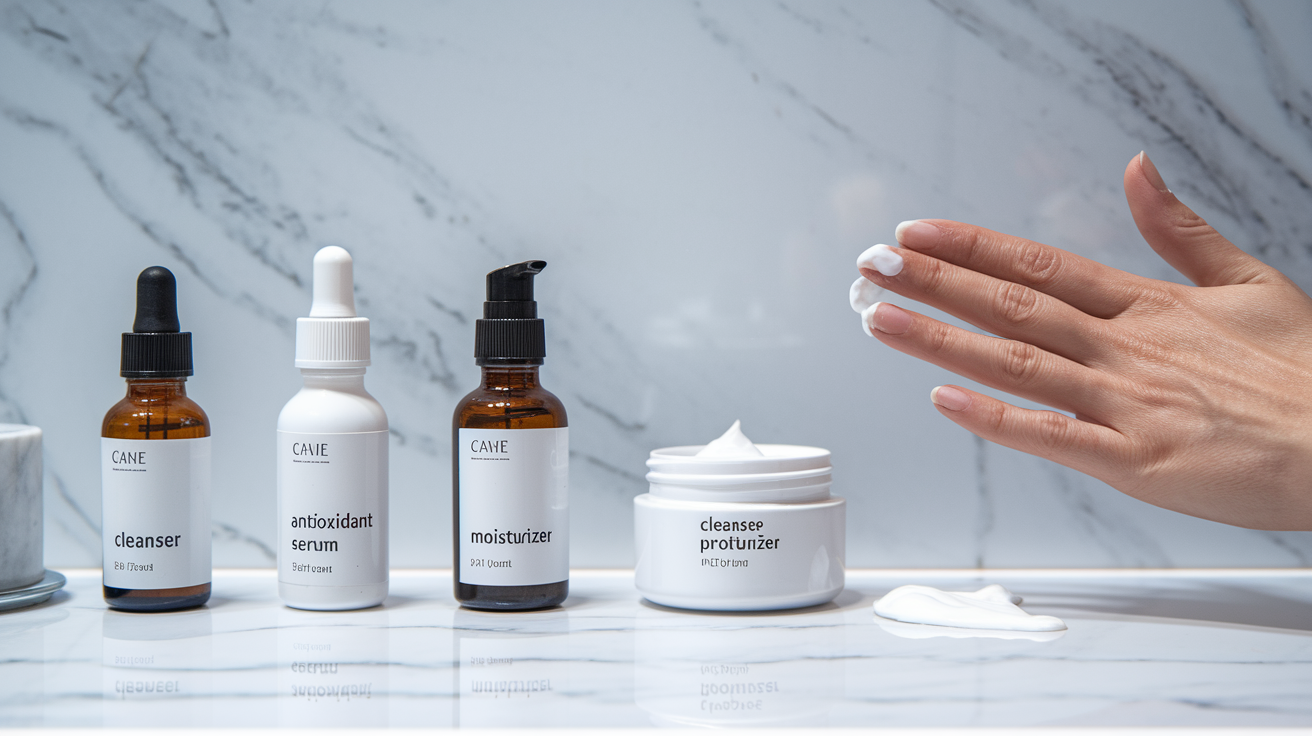
Morning skincare protects your skin from environmental damage, supports barrier function, and prepares your face for the day ahead. A simple routine takes less than 5 minutes and addresses hydration, protection, and long-term skin health without unnecessary steps.
- Cleanse (30–60 seconds) – Use a gentle cleanser to remove overnight oil buildup and prepare skin to absorb the next products.
- Treat (1–2 minutes) – Apply an antioxidant serum such as vitamin C (10–20%) to protect against free radical damage from UV exposure and pollution.
- Moisturize (30 seconds) – Use a lightweight moisturizer with niacinamide (2–5%) or peptides to hydrate and support the skin barrier.
- Protect (1 minute) – Apply SPF 30+ broad-spectrum sunscreen to face and neck. Use approximately ¼–½ teaspoon to ensure adequate coverage.
Skin protection supports long-term skin health by preventing UV damage, which contributes to premature aging, pigmentation, and increased skin cancer risk. Daily SPF use is one of the most effective anti-aging tools you can use, regardless of weather or season. Allow each product 30–60 seconds to absorb before applying the next layer, and keep the routine consistent so your skin adapts and responds predictably.
Morning Routine Variations for Different Lifestyles

10-Minute Routine
Start with 250 ml of water within the first 2 minutes. Follow with a 3-minute stretch focusing on hip openers, spinal twists, and shoulder rolls to release tension and increase circulation. Spend 2 minutes on breathwork or a brief gratitude practice. Just enough to shift your nervous system into a calm, focused state. Finish with a fast skincare routine: splash your face with water, apply moisturizer, and use SPF in under 2 minutes. If breakfast needs to be portable, grab a pre-made protein smoothie or a hard-boiled egg with a piece of fruit. This version keeps you grounded without requiring extra time in the morning. It’s repeatable even on the busiest days.
Working Women’s Routine
Wake at a consistent time and drink 500 ml of water while your coffee brews. Spend 10 minutes on a short workout (brisk walk, yoga flow, or resistance band exercises) before you shower. While getting ready, complete your skincare routine including SPF, and prep a balanced breakfast you can eat at your desk or during your commute. Overnight oats, Greek yogurt with nuts and berries, or a protein-packed wrap all work. Use the last 5 minutes to write down your top 3 priorities for the day, and avoid checking email or social media until you’re dressed and ready to leave. This structure fits into a 45–60 minute window and ensures movement, nutrition, and mental clarity before your workday starts.
Flexible-Schedule Routine
If you have more time in the morning, extend each component to support deeper recovery and intention. Drink water upon waking, then spend 10–15 minutes outside in natural light with a longer walk or gentle jog. Follow with 10 minutes of meditation or journaling to set a clear intention for the day. Prepare a full breakfast at home (eggs, vegetables, whole-grain toast, and a side of fruit) and eat without distractions. Complete a longer skincare routine that includes a facial massage or gua sha for 3–5 minutes to support lymphatic drainage and relaxation. Use the extra time to tidy one area of your home or batch-prep components of lunch or dinner. This version allows you to move slowly, stay present, and build habits that feel restorative rather than rushed.
Final Words
Start with hydration, gentle movement, a protein-rich breakfast, skincare, and a short mindfulness practice. Do the steps in order and you’ll feel the payoff.
This article gives a clear 6:00–7:00 timeline with specific actions and benefits, plus exercise options that match your energy level, 5 hormone-supportive breakfasts, stress-regulation practices, and a simple 4-step skincare plan.
There are three variations for busy, working, or flexible mornings so you can pick what fits today.
Use these pieces to build a healthy morning routine for women that fits your life. Small habits done often add up. You’ve got this.
FAQ
Q: What is the best morning routine for a woman?
A: The best morning routine for a woman balances hydration, gentle movement, a protein-rich breakfast, short mindfulness, and morning skincare with SPF to support energy, hormone balance, and clear skin.
Q: What is the 5 5 5 30 rule?
A: The 5-5-5-30 rule is a simple morning split: 5 minutes movement, 5 minutes mindful breathing, 5 minutes planning or journaling, then 30 minutes of focused exercise or productive work.
Q: What is the 20/20/20 rule for morning routine?
A: The 20/20/20 rule divides the first hour into 20 minutes of movement, 20 minutes of reflection (meditation or journaling), and 20 minutes of learning to boost energy, focus, and personal growth.
Q: What is the healthiest thing to do first thing in the morning?
A: The healthiest thing to do first thing in the morning is to drink a glass of water to rehydrate, support digestion, and wake your body, then add light movement when you can.