
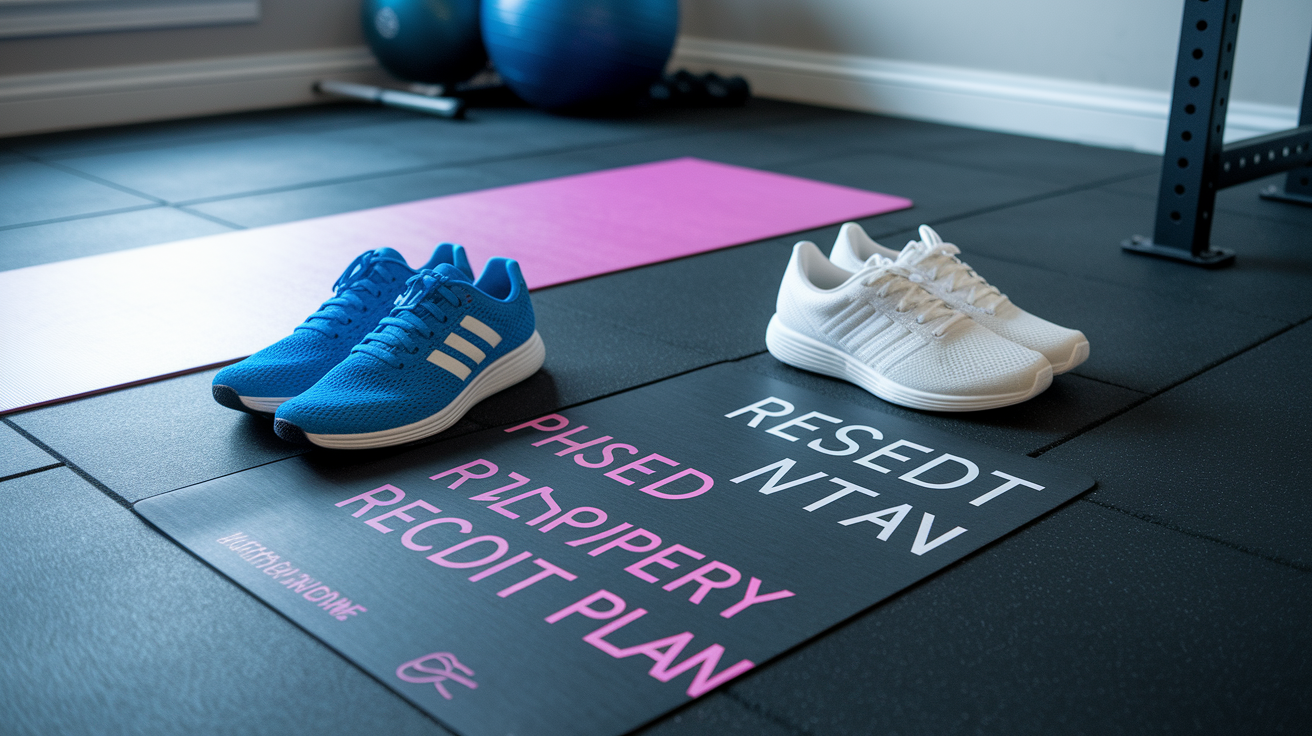
Pushing hard right away often causes setbacks.
If you’ve been away from exercise, your body needs a plan that meets it where it is now, not where it was.
This post lays out a five-phase, progressive gentle recovery plan that rebuilds pain-free movement, neuromuscular control, work capacity, functional strength, and full training readiness.
Follow it and you’ll lower re-injury risk, rebuild confidence, and move up phases only when your body feels ready.
No rush. No perfection. Just steady, practical steps you can do this week.
Phased Framework for a Gentle Return to Exercise

Coming back to exercise after time off? Your body needs a plan that meets it where it is right now. Not where it was six months ago or where you wish it could be tomorrow.
A phased build works because it respects tissue adaptation timelines. You can’t rush connective tissue repair or neurological recalibration. Muscles bounce back faster than tendons. Tendons heal faster than ligaments. And your nervous system needs time to remember how coordination actually works under load.
The framework here breaks recovery into five phases. Each one targets something specific: pain-free movement, neuromuscular control, work capacity, functional strength, and finally full training readiness. Jump phases too fast and you’re flirting with setbacks. Stay in a phase until it feels boring, then move up.
If a healthcare provider cleared you and there’s no sharp pain or swelling, you’re good to start. Some people fly through these phases. Others camp out in phase one for a month. Neither is wrong. What matters is that each phase feels manageable, soreness clears within 48 hours, and you’re confident your body can handle more.
Five-Phase Recovery Progression:
-
Phase 1 (Weeks 1–2): Mobility and Circulation. Pain-free range of motion, easy walking, basic joint mobility. Sessions run 10 to 20 minutes. Intensity stays conversational. Goal: restore movement without fatigue.
-
Phase 2 (Weeks 2–4): Foundational Strength. Bodyweight exercises, slow tempos, 2 to 3 sessions weekly for 20 to 30 minutes. Loads stay minimal. Goal: rebuild control and tissue tolerance.
-
Phase 3 (Weeks 4–8): Increased Volume and Light Cardio. Three to four sessions per week. Add resistance bands or low-impact intervals. Sessions stretch to 30 or 40 minutes. Goal: build capacity without stressing joints.
-
Phase 4 (Weeks 8–12): Moderate Load and Integrated Movements. Moderate weights, compound lifts, steady cardio. Training hits 4 to 5 days weekly. Goal: restore functional strength and aerobic fitness.
-
Phase 5 (Week 12+): Return to Normal Training. Sport-specific drills, higher intensity intervals, progressive overload. Keep at least one rest day per week. Goal: full participation with lower injury risk.
Mobility and Joint Reconditioning Essentials

Mobility work isn’t glamorous. It won’t make you sore or give you a pump. But it’s the foundation for everything else because it restores range, improves tissue hydration, and resets patterns that went stiff during your time off.
Early mobility sessions should feel almost too easy. You’re not trying to fatigue muscles here. You’re reminding joints how to move and teaching your nervous system what coordinated motion feels like again. This reduces stiffness without stressing tissues that aren’t ready for load yet.
Start with 5 to 10 minutes daily. Hit major joints and areas that feel tight. Move slow, stay smooth, never force anything into discomfort. If a position feels off, back out or skip it. Consistency beats intensity every time at this stage. Five minutes every day crushes one brutal stretch session per week.
Most people notice improved comfort within the first week. If stiffness persists or gets worse, slow down and check in with a physical therapist to rule out anything deeper.
Gentle Mobility Exercises for Early Recovery:
• Ankle circles: Sit or stand, lift one foot, rotate the ankle slowly in both directions for 10 to 15 circles each way.
• Cat-cow spine flexion: Hands and knees, gently arch and round your back through a comfortable range, 8 to 10 slow cycles.
• Hip circles: Stand on one leg (use a wall if needed), lift the opposite knee, draw small circles with the knee, 8 to 10 each direction.
• Thoracic rotations: Sit tall, hands behind your head, gently rotate your upper body side to side, 10 slow rotations per side.
• Shoulder rolls: Roll shoulders backward in smooth circles for 10 reps, then forward for 10 reps.
• Gentle neck tilts and turns: Slowly tilt your head side to side and turn left and right, hold each position for a breath, 5 reps each direction.
Foundational Strength Rebuilding

Start lighter than you think you need to. Your muscles might remember old patterns, but connective tissues need time to rebuild load tolerance. Tendons, ligaments, joint capsules—they all lag behind muscle recovery. Jump back to old weights too soon and you’re asking for strains and chronic irritation.
Bodyweight work gives tissues time to adapt while you nail down proper form and control again. Slow tempos make these exercises more effective. A 3-second lower, 1-second pause, and 2-second lift creates enough tension without needing heavy loads. It improves muscle activation, builds stability, and teaches your nervous system to coordinate effort smoothly.
Form comes before adding weight or reps. If technique breaks down, reduce range or rest longer between sets.
Progress through four strength levels. Spend at least two weeks at each stage before moving up. Only advance when movements feel controlled, fatigue is manageable, and soreness resolves within 48 hours. If a level feels too hard, stay there or drop back one step. There’s no prize for rushing.
Progressive Strength Levels:
-
Bodyweight Basics (Weeks 2–4): Foundational movements with partial range if needed. Examples: wall push-ups, box squats to a chair, glute bridges with a 2-second hold, assisted lunges holding a countertop, dead bugs for core control. Perform 2 sets of 8 to 10 reps, rest 90 seconds between sets. Aim for 2 to 3 sessions per week.
-
Light Resistance (Weeks 4–6): Add resistance bands or very light dumbbells (2 to 5 lbs). Progress to full-range bodyweight squats, incline push-ups, banded rows, single-leg balance holds. Perform 2 to 3 sets of 10 to 12 reps with 60 to 90 seconds rest. Maintain 2 to 3 sessions weekly.
-
Moderate Loads (Weeks 6–10): Introduce goblet squats with a light kettlebell or dumbbell, dumbbell chest presses on a bench, seated or bent-over rows with moderate weight, plank progressions (start with 20 to 30 seconds, increase by 5 to 10 seconds weekly). Perform 3 sets of 8 to 12 reps, rest 60 to 90 seconds. Increase to 3 to 4 sessions per week.
-
Integrated Patterns (Weeks 10–12+): Combine movements into functional patterns. Examples: squat to overhead press, walking lunges with rotation, renegade rows from a plank, step-ups with weights. Perform 3 sets of 8 to 10 reps with controlled tempo. Add a fourth or fifth session if recovery allows, but keep at least one full rest day per week.
Cardio Progression for Reduced Capacity

Cardiovascular fitness drops fast during inactivity. Push too hard too soon and you’ll spike heart rate, trigger excessive fatigue, or irritate healing tissues. A gradual cardio build restores aerobic capacity while keeping joint stress low and recovery manageable.
Start with activities easy enough to hold a conversation throughout the entire session. If you’re breathing too hard to talk in short sentences, slow down.
Interval-based walking is one of the safest reentry points. Alternate between a comfortable pace and a slightly brisker pace, using perceived effort rather than speed as your guide. Early sessions might be as simple as 2 minutes easy, 1 minute moderate, repeated for 15 to 20 minutes total. As tolerance improves, extend the moderate intervals or add a few minutes to total session length. Increase weekly cardio time by no more than 10% per week to reduce overuse injury risk or excessive fatigue.
Heart rate should stay in a zone where effort feels light to moderate, typically around 50 to 65% of your estimated max during early weeks. If you don’t have a heart rate monitor, use the talk test: you should be able to speak comfortably without gasping. As you move into later phases, moderate intervals can climb to around 65 to 75% of max heart rate, but only after several weeks of consistent, easier work.
Low-Impact Cardio Options for Recovery:
• Walking: Flat, even surfaces. Start with 10 to 15 minutes and progress by 5 minutes weekly.
• Stationary cycling: Low resistance, moderate cadence. Begin with 10 to 20 minutes at a comfortable pace.
• Swimming or water walking: Buoyancy reduces joint load. Aim for 15 to 25 minutes of continuous, easy-paced movement.
• Elliptical trainer: Smooth, low-impact motion. Use minimal resistance and incline for 15 to 20 minutes.
• Rowing machine: Controlled, slow strokes with light resistance. Start with 10 to 15 minutes, emphasize form over power.
Warm-Up and Cool-Down Protocols

Skip warm-ups and cool-downs to save a few minutes? You’re also increasing the risk of muscle strains, joint discomfort, and delayed recovery.
A proper warm-up raises core temperature, increases blood flow to working muscles, and primes the nervous system for coordinated movement. Dynamic movements (controlled motions through full range) prepare tissues better than static stretching before exercise. Save longer holds for after the session, when muscles are warm and more receptive to lengthening.
Cool-downs help your body transition from activity back to rest. Light movement after the main workout clears metabolic waste, reduces the likelihood of blood pooling in the legs, and can lower next-day soreness. Following the cool-down with static stretching improves flexibility over time and signals to the nervous system that the work is done. Both phases should feel easy and never painful.
Warm-Up Routine (5–10 Minutes):
• Brisk walking or light cycling: 3 to 5 minutes to raise heart rate and body temperature.
• Leg swings: Front-to-back and side-to-side, 10 reps each leg, hold a wall for balance.
• Arm circles: Forward and backward, 10 reps each direction with relaxed shoulders.
• Hip openers: Standing knee lifts and gentle hip circles, 8 to 10 reps per side.
• Thoracic rotations: Hands behind head, rotate upper body slowly, 8 reps each side.
Cool-Down Routine (5–10 Minutes):
• Slow walking: 3 to 5 minutes at an easy pace to bring heart rate down gradually.
• Hamstring stretch: Sit with one leg extended, reach gently toward toes, hold 20 to 30 seconds each side.
• Hip flexor stretch: Kneel on one knee, push hips forward gently, hold 20 to 30 seconds each side.
• Quad stretch: Standing, pull one heel toward glutes, hold 20 to 30 seconds each leg.
• Gentle spinal twist: Seated, cross one leg over the other, rotate torso gently, hold 20 to 30 seconds each side.
Sample Weekly Schedules for Different Recovery Levels
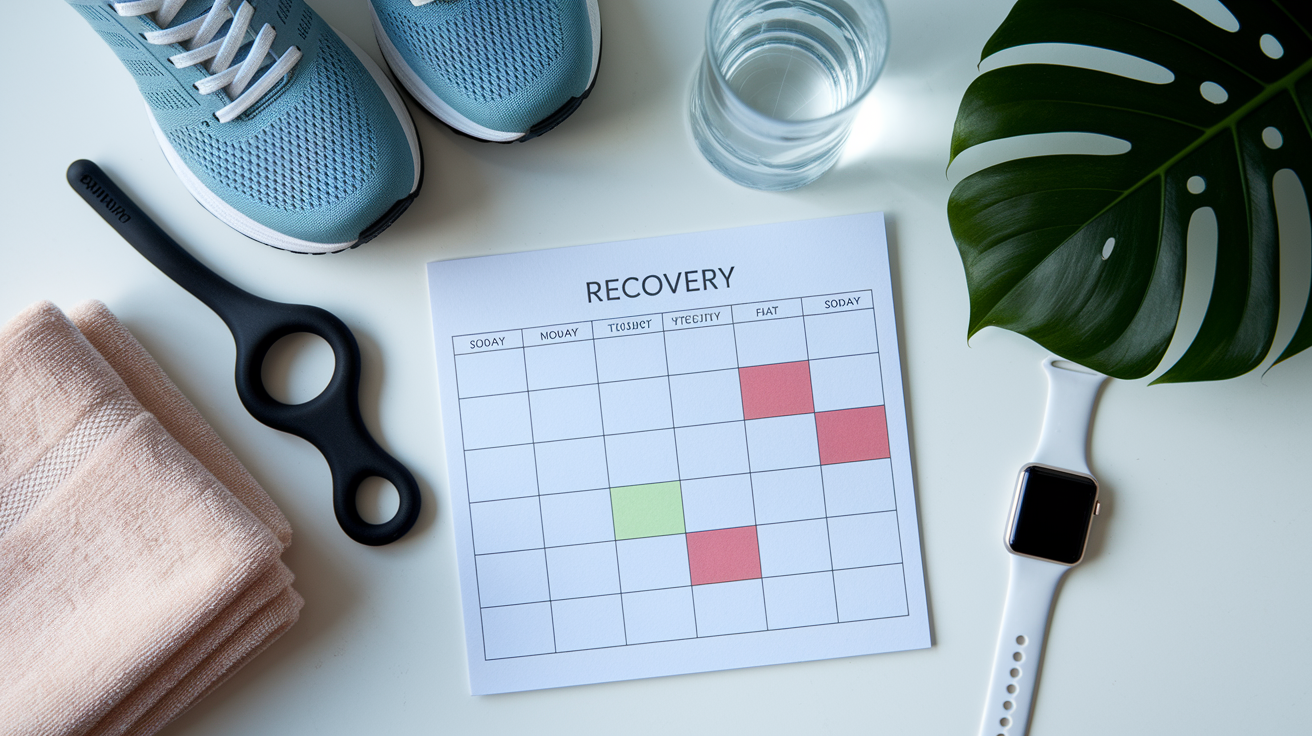
A balanced weekly schedule alternates training stimulus with recovery days. That prevents overuse and gives tissues time to adapt. Early-stage plans emphasize frequent rest and short sessions. Mid-stage plans add volume carefully. Later-stage plans approach normal training frequency while maintaining at least one full rest day.
The schedule below represents a moderate recovery pace. If it feels too aggressive, add more rest days or shorten session durations.
Each day’s activity should match your current phase and tolerance. “Active recovery” means light movement that doesn’t create fatigue—easy walking, gentle swimming, or a short mobility flow. Rest days are non-negotiable, especially in the first four to six weeks. Pushing through fatigue or ignoring soreness increases setback risk and delays progress.
Use this schedule as a template, not a rigid prescription. If life disrupts the plan, adjust and continue from where you left off. Missing one session doesn’t erase progress. But ignoring warning signs and overloading tired muscles can.
| Day | Activity Type | Intensity | Duration |
|---|---|---|---|
| Monday | Mobility + Light Strength | Low (RPE 3–4/10) | 25–30 minutes |
| Tuesday | Active Recovery (Walking) | Very Low (RPE 2–3/10) | 20 minutes |
| Wednesday | Low-Impact Cardio (Cycling or Swimming) | Moderate (RPE 4–5/10) | 20–25 minutes |
| Thursday | Rest Day | None | — |
| Friday | Foundational Strength | Low to Moderate (RPE 4–5/10) | 30–35 minutes |
| Saturday | Mobility + Gentle Stretching | Low (RPE 2–3/10) | 20 minutes |
| Sunday | Rest Day or Active Recovery (Light Walk) | Very Low (RPE 2/10) | 15–20 minutes (optional) |
Warning Signs and Safety Red Flags

Learning to distinguish between normal discomfort and unsafe pain is one of the most important skills when returning to exercise. Some muscle soreness and temporary fatigue are expected as tissues adapt. Sharp, shooting, or worsening pain is not normal and should never be pushed through.
Ignore warning signs and you can turn a minor irritation into a significant setback that requires weeks or months of additional recovery.
Stop the session immediately if you experience any of the signals listed below. Rest for at least 24 to 48 hours. If the symptom persists or worsens, consult a healthcare provider or physical therapist. Early detection prevents long-term damage and keeps recovery on track. Most issues caught early resolve quickly with rest and minor modifications. Problems ignored for days or weeks often require formal rehabilitation.
Trust your instincts. If something feels wrong, it probably is. No single workout is worth risking a prolonged recovery or chronic injury. You can always scale back, take an extra rest day, or modify an exercise. You can’t easily undo the damage from pushing through a legitimate warning sign.
Red Flags That Require Immediate Attention:
• Sharp, shooting pain: Sudden, intense pain during or immediately after a movement, especially in joints or along tendons.
• Swelling or visible inflammation: Puffiness, heat, or redness around a joint or muscle that appears during or after exercise.
• Persistent pain beyond 48 hours: Soreness that doesn’t improve with rest, ice, or gentle movement after two full days.
• Joint instability or giving way: A sensation that a joint might buckle or can’t support your weight reliably.
• Dizziness, lightheadedness, or chest discomfort: Any cardiovascular symptoms during or after exercise, especially if unusual or worsening.
• Night pain that disrupts sleep: Pain severe enough to wake you or prevent comfortable rest, often a sign of irritation or inflammation.
• Loss of range of motion or function: Sudden inability to move a joint through its normal range, or difficulty performing basic tasks like walking or gripping.
Listening to Body Signals and Adjusting Pace

Your body provides constant feedback during exercise. Learning to interpret those signals lets you adjust workload in real time.
Rating of perceived exertion (RPE) is simple and reliable. You don’t need heart rate monitors or complex formulas. On a scale of 1 to 10, early recovery work should feel like a 3 to 5—noticeable effort, but sustainable and comfortable. If you’re consistently hitting 7 or above, you’re working too hard for this phase.
Fatigue patterns also reveal whether your plan matches your current capacity. Feeling moderately tired after a session is normal. Feeling completely wiped out, struggling through daily tasks, or needing naps to function? Your workload is too high. Similarly, if soreness lingers beyond 48 hours or gets worse instead of better, your body is asking for more recovery time. Progress happens during rest, not during the workout itself.
Adjusting pace isn’t quitting or failing. It’s responding intelligently to what your body is telling you. Small tweaks (taking an extra rest day, shortening a session, dropping weight) keep you moving forward without triggering setbacks. The fastest long-term progress comes from consistent, sustainable effort, not from maxing out every session.
Four Methods to Adjust Workload Based on Body Signals:
-
Reduce session duration: If fatigue builds too quickly, cut the workout by 25 to 30%. A 20-minute session that feels controlled beats a 40-minute session that leaves you exhausted.
-
Lower intensity or load: Drop weights by 10 to 20%, slow the tempo further, or reduce cardio intervals from moderate to easy. Maintaining frequency with lighter work is better than skipping sessions entirely.
-
Add an extra rest day: If soreness persists or energy feels low for two consecutive days, insert a full rest day or swap a training session for active recovery (light walking or gentle mobility).
-
Modify exercises to reduce range or complexity: Use partial squats instead of full depth, incline push-ups instead of floor push-ups, or seated exercises instead of standing variations. Reduced range still provides stimulus without exceeding tissue tolerance.
Modifications for Common Limitations and Conditions
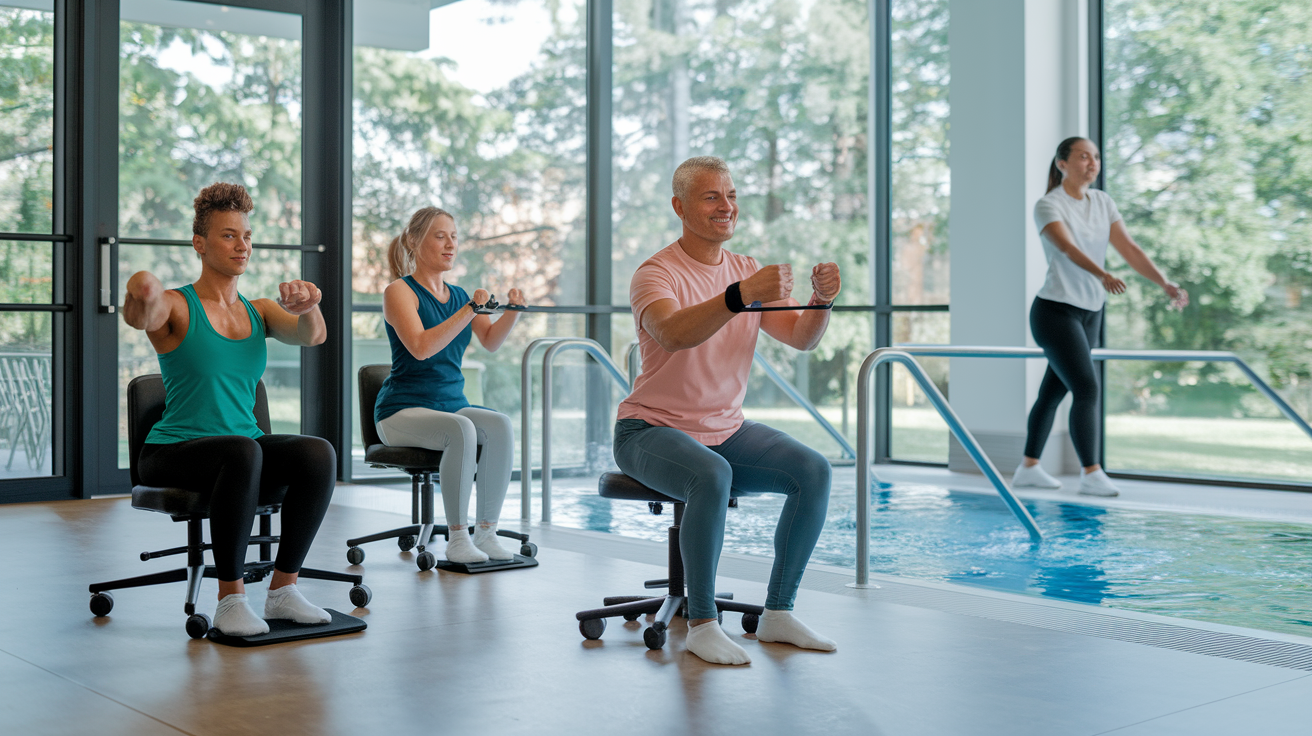
Not everyone starts recovery from the same baseline. Surgery, chronic conditions, joint replacements, extended illness, or significant deconditioning all require adjustments to the standard progression. The core framework (phased loading, gradual intensity increases, prioritized mobility) still applies, but modifications ensure the plan matches individual limitations without creating new problems.
People recovering from lower-body surgery often need to begin with seated or supported exercises to reduce weight-bearing stress. Upper-body injuries might require unilateral (one-sided) training to maintain strength in the unaffected limb while the injured side heals. Chronic conditions like arthritis or osteoporosis benefit from controlled, low-impact movements that build strength without aggravating inflamed joints or fragile bones. Always follow guidance from your healthcare provider or physical therapist when dealing with diagnosed conditions.
If you’re unsure whether a modification is appropriate, start with the most conservative option and progress only when pain-free and stable. It’s easier to add complexity later than to recover from doing too much too soon. Modifications aren’t setbacks. They’re tools that keep you training safely while respecting real limitations.
Example Modifications for Common Limitations:
• Post-surgical lower body: Use chair-supported squats, seated leg lifts, and pool-based walking to reduce load while rebuilding strength and range of motion.
• Shoulder or upper-body injury: Perform exercises one arm at a time, use lighter resistance, and avoid overhead movements until cleared by a professional.
• Balance or stability issues: Hold onto a wall or sturdy surface during standing exercises. Perform strength work seated or lying down to remove fall risk.
• Chronic joint pain (arthritis, tendinitis): Choose low-impact cardio (swimming, cycling), use slow tempos to reduce joint stress, and avoid end-range positions that trigger discomfort.
• Significant deconditioning or fatigue: Start with 10-minute sessions, prioritize seated exercises, and schedule rest days after every training day until work capacity improves.
• Osteoporosis or bone-density concerns: Focus on controlled, weight-bearing exercises like walking and light resistance training. Avoid high-impact movements and forward spinal flexion under load.
Final Words
Start with controlled mobility, then add low-load strength, and slowly reintroduce cardio—each phase has clear goals, durations, and intensity so you don’t rush back.
Use a solid warm-up and cool-down, follow the sample weekly schedules, and watch for warning signs. Listen to your body and pick the modifications that fit your limits.
If you follow this progressive gentle recovery plan for returning to exercise, you’ll rebuild capacity safely and feel more confident each week. You’ve got this.
FAQ
Q: What is the 3-3-3 rule for exercise?
A: The 3-3-3 rule for exercise is a simple phased return: three weeks of mobility, three weeks of foundational strength, then three weeks of light cardio, progressing slowly with about 10% more load each week.
Q: How do I start working out again after years of inactivity / How to get back to exercise after a long break?
A: To start working out again after years of inactivity, begin with short, low-intensity sessions that focus on mobility, bodyweight strength, and gentle cardio, 2–4 times a week, and increase load roughly 10% weekly.
Q: What are the only 5 exercises you’ll ever need?
A: The only five exercises you’ll ever need are a squat, a hinge (deadlift/hip hinge), a push (push-up or press), a pull (row), and a loaded carry—covering full-body strength and daily movement.