
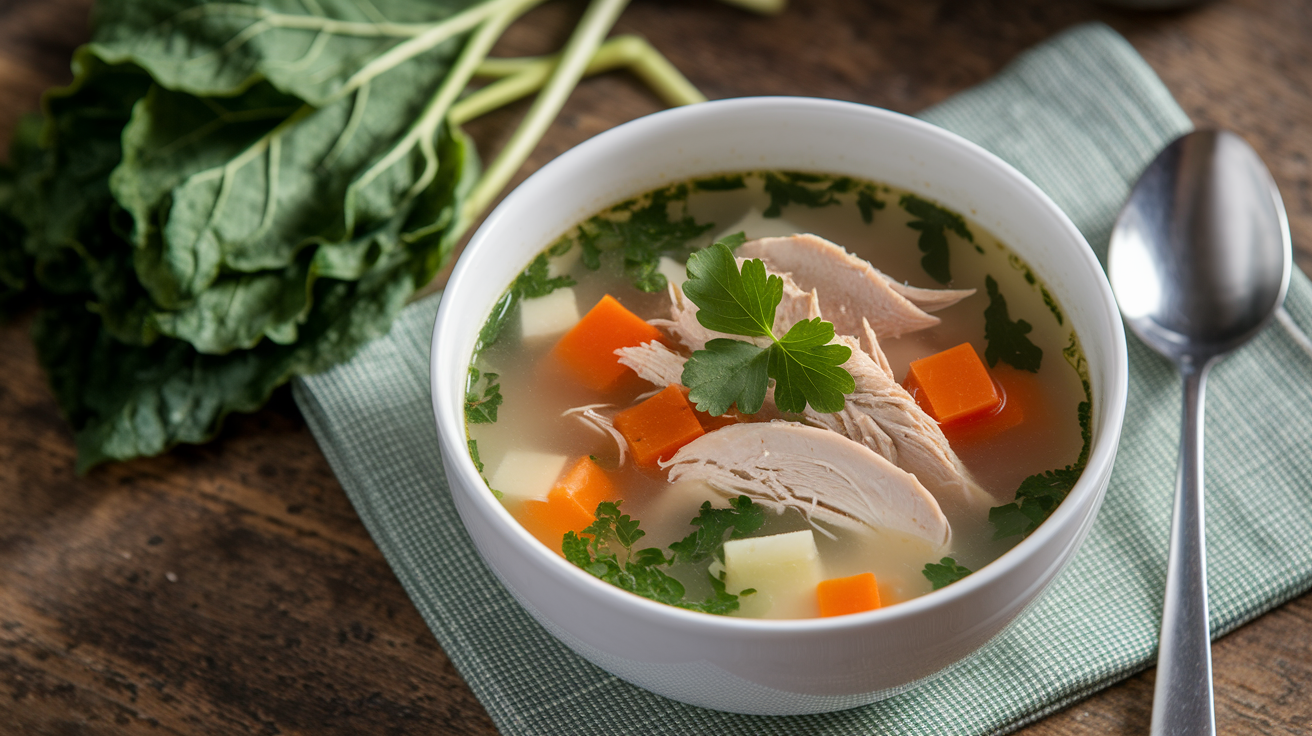
Soup is the secret weapon most diets quietly skip.
It fills you up with water, fiber, and real protein so you eat fewer calories without feeling deprived.
These recipes are quick, work with pantry basics, and taste like full meals not flavored water.
Read on and you’ll find eight filling, low calorie soups, portion tips, and simple batch cooking steps that make swapping one meal easy and realistic for busy weeks.
No strict rules, just smart swaps that keep you satisfied all day.
Quick Low‑Calorie Soup Recipes for Weight Loss
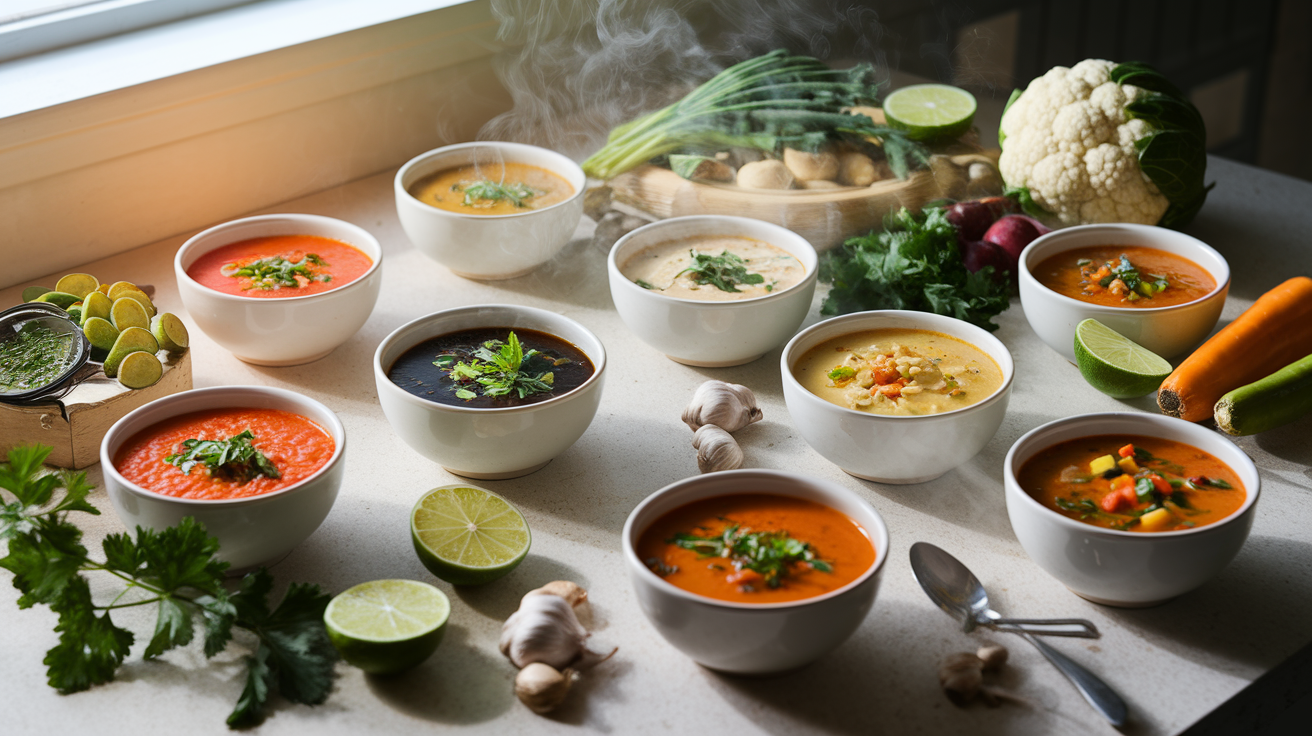
These recipes give you flavor and fullness without the calorie load that slows progress. You can make each one in under 40 minutes, and they’re built with ingredients that keep you satisfied.
1. Lentil & Tomato Soup
Red lentils, canned tomatoes, garlic, onion, cumin, vegetable broth.
About 280 calories per 1.5 cup serving.
2. Chicken, Kale & White Bean Soup
Shredded chicken breast, white beans, kale, low sodium chicken broth, carrots.
About 230 calories per 1.5 cup serving.
3. Miso Tofu & Seaweed Soup
Firm tofu, miso paste, wakame seaweed, scallions, ginger.
About 135 calories per 1 cup serving.
4. Spicy Black Bean Soup
Black beans, jalapeño, onion, cumin, lime juice, vegetable broth.
About 285 calories per 1.5 cup serving.
5. Cauliflower “Potato” Soup
Cauliflower florets, onion, unsweetened plant milk, vegetable broth, garlic.
About 160 calories per 1 cup serving.
6. Tandoori Roasted Cauliflower Soup
Roasted cauliflower, turmeric, ginger, low sodium broth, coriander.
About 170 calories per 1 cup serving.
7. Garden Vegetable Soup
Zucchini, carrots, celery, tomatoes, onion, vegetable broth.
About 110 calories per 1.5 cup serving.
8. Turkey Minestrone
Ground turkey, white beans, diced tomatoes, zucchini, spinach, low sodium broth.
About 240 calories per 1.5 cup serving.
Most work with pantry basics you already have. They’ll last three to four days in the fridge or up to three months frozen. Add a small side of lean protein or extra greens if you need more food.
How Soups Support Weight Loss
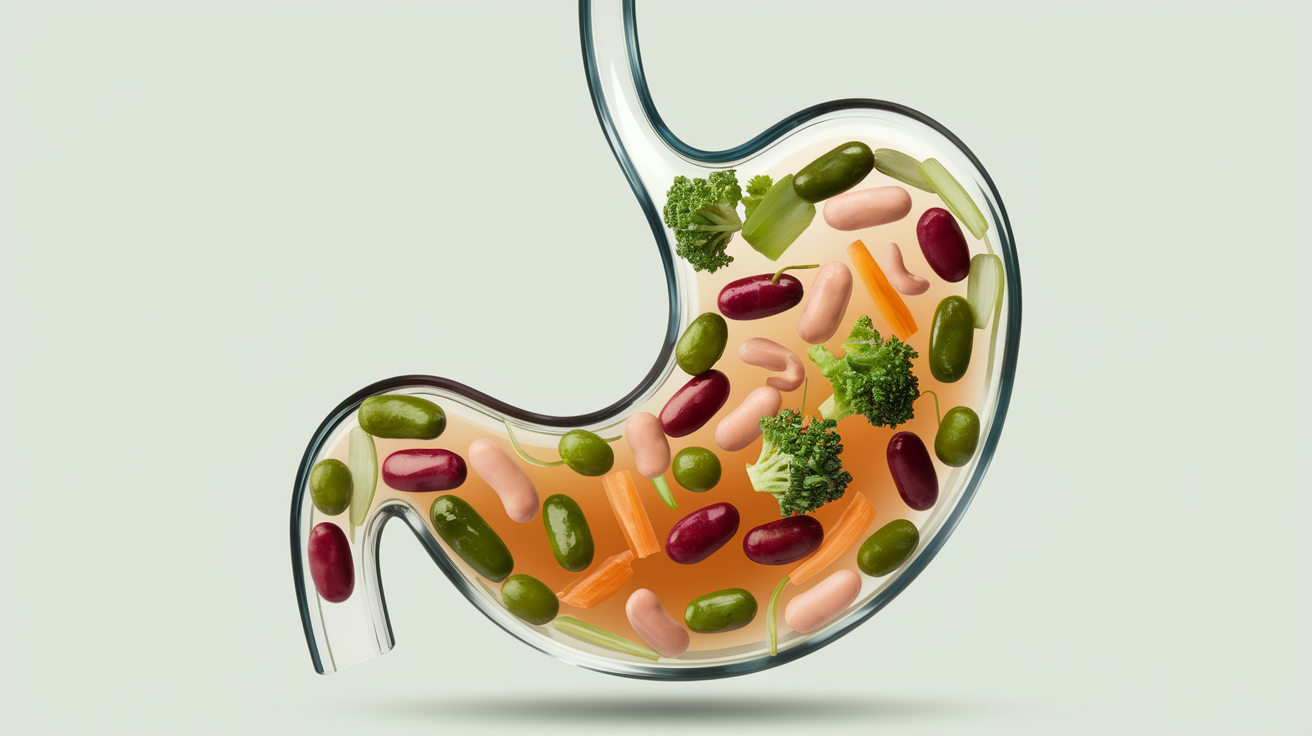
Soups fill you up before you’ve eaten many calories. That’s because water and fiber combine to create volume, and your stomach registers “full” based on how much space food takes up, not just calories. A bowl of broth based soup with vegetables and protein can give you one to two cups of food for 150 to 300 calories. Compare that to a sandwich or pasta dish that hits 500 to 700 calories for the same meal.
Studies on this are pretty consistent. When people ate a low calorie soup before their main meal, they consumed 100 to 150 fewer calories overall compared to skipping the soup or starting with something higher in calories. Cream based versions don’t work the same way because the added fat pushes calories up without the satiety benefit.
Soup also forces you to slow down. You can’t rush through hot liquid the way you can with solid food. That built in pause gives your brain time to catch up with your stomach, so you’re more likely to stop when you’re satisfied instead of mindlessly continuing. Most people take 10 to 15 minutes to finish a bowl, which is exactly the window your body needs to signal fullness.
Essential Ingredients for Effective Weight Loss Soups
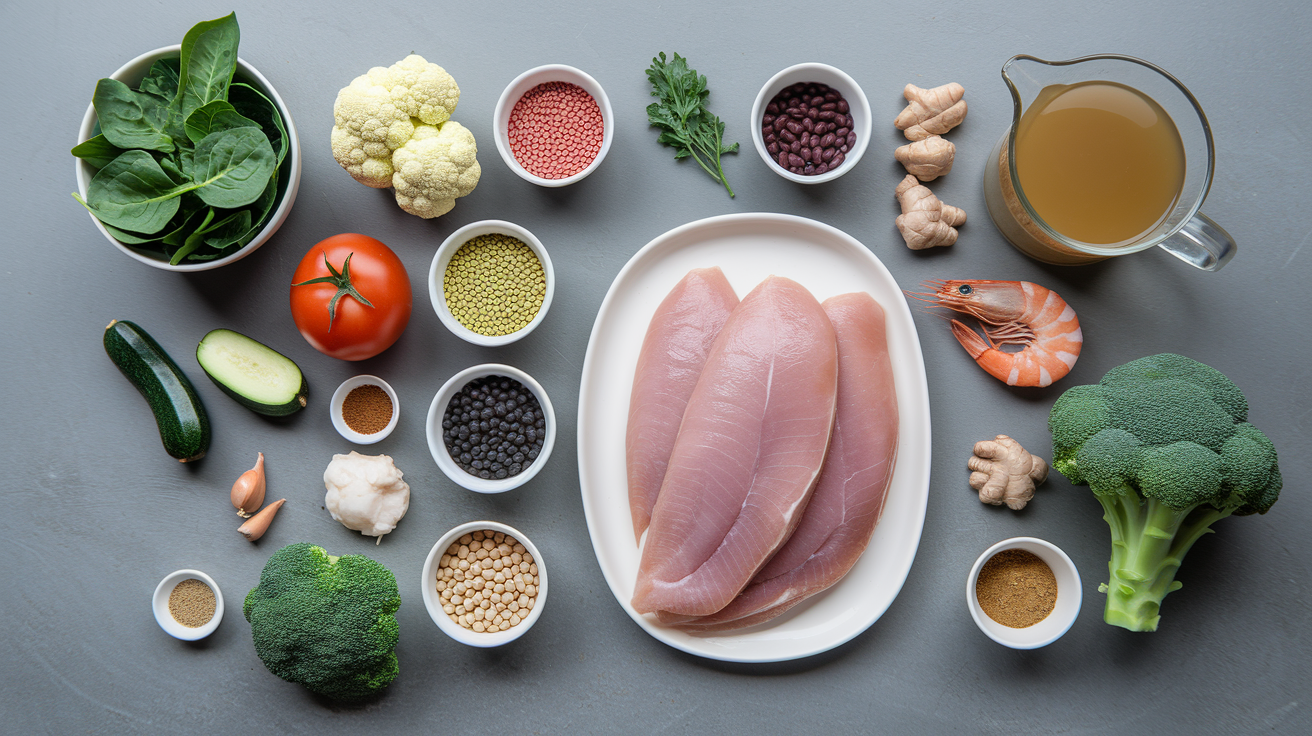
The best soups for weight loss pack in bulk, protein, and fiber without loading up on calories. Leafy greens like spinach and kale add almost nothing calorie wise but deliver vitamins and hold up well in hot broth. Cruciferous vegetables like cauliflower, broccoli, and cabbage give you texture and fiber while staying under 50 calories per cup.
Lean proteins keep you full longer. Cooked chicken breast, turkey, firm tofu, or shrimp give you 20 to 30 grams of protein per serving without the fat you’d get from darker meats or processed options. Legumes like lentils, black beans, and white beans bring both protein and fiber, usually around 15 to 18 grams of protein and 10 to 12 grams of fiber per cup.
Stock your kitchen with these:
- Spinach: Nearly zero calories, adds iron and folate, wilts fast in broth.
- Cauliflower: Blends into a creamy base without actual cream. Roughly 25 calories per cup.
- Chicken breast: Lean protein, around 165 calories per 100 grams cooked.
- Lentils: High fiber and plant protein, about 230 calories per cooked cup.
- Garlic and ginger: Boost flavor without calories and support digestion.
- Low sodium broth: The base for most soups. Look for versions under 140 mg sodium per cup.
- Tomatoes: Add acidity and depth. One cup of canned diced tomatoes has about 40 calories.
- Zucchini: Mild, low calorie filler that takes on the flavors around it.
Skip heavy cream, butter, cheese, and high fat meats. Those push a 200 calorie soup past 400 calories per serving without making you much fuller. Use herbs, citrus, and spices instead.
Portion Sizes and Calorie Targets for Soup Based Weight Loss Meals
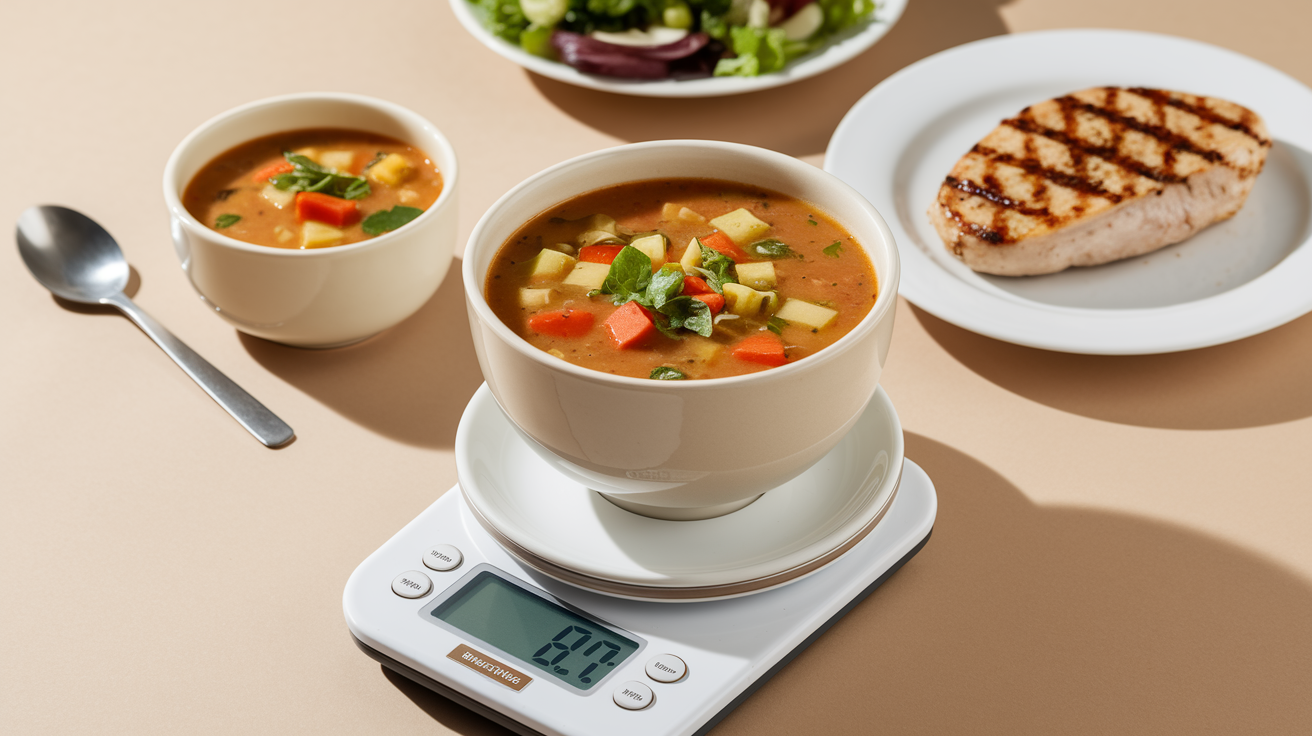
A standard weight loss soup portion is 1.5 to 2 cups per meal, landing between 200 and 350 calories depending on what’s in it. If you’re using soup as a starter before a main course, stick to 1 cup, around 100 to 150 calories, so you’ve got room for the rest of your meal. When soup is the main event, go for the larger portion and add a side salad or a palm sized serving of protein if you’re still hungry.
Most people aiming for gradual weight loss do well with 1,500 to 2,000 calories per day. Swapping one 600 to 700 calorie meal for a 300 calorie soup creates a 300 to 400 calorie deficit without major hunger. Over a week, that can translate to roughly half a pound of weight loss, assuming your activity and other meals stay consistent.
Structure your soup meals with balance. If your soup is low in protein (under 10 grams per serving), add a boiled egg, a few ounces of grilled chicken, or a scoop of cottage cheese on the side. That keeps you full for three to four hours and prevents the mid afternoon energy dip that leads to snacking.
Weekly Meal Plan: Incorporating Soups into a Weight Loss Diet
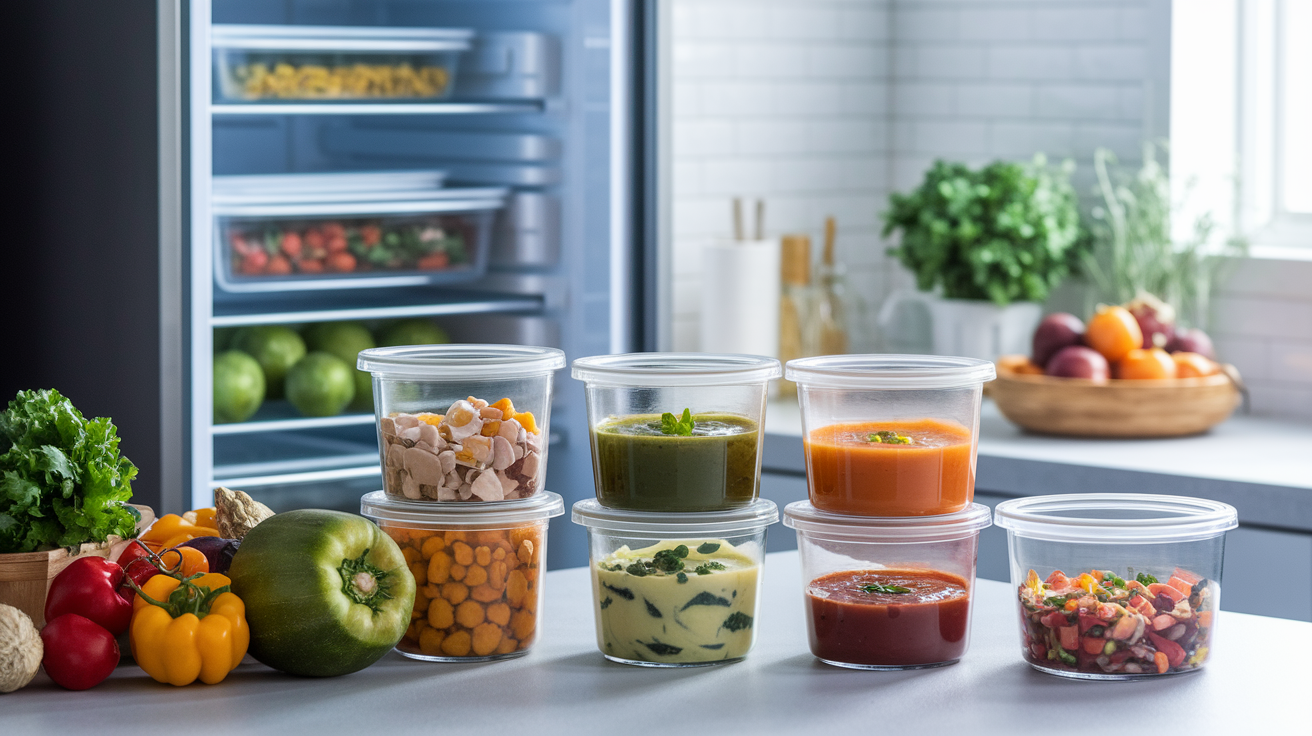
Using soup as a regular meal replacement helps you maintain a calorie deficit without the mental load of tracking every ingredient. Plan for three to five soup based dinners each week and batch cook on the weekend so you have ready portions in the fridge or freezer.
Here’s a sample week that rotates soup types to keep things interesting. Each day replaces dinner with a soup based meal, creating a daily deficit of roughly 300 to 400 calories compared to a typical higher calorie dinner.
| Day | Soup Type | Approx. Calories |
|---|---|---|
| Monday | Lentil & Tomato Soup | 280 |
| Tuesday | Chicken, Kale & White Bean Soup | 230 |
| Wednesday | Miso Tofu & Seaweed Soup + side salad | 240 (135 soup + 105 salad) |
| Thursday | Spicy Black Bean Soup | 285 |
| Friday | Cauliflower “Potato” Soup + protein snack | 280 (160 soup + 120 snack) |
| Saturday | Garden Vegetable Soup | 200 |
| Sunday | Turkey Minestrone | 260 |
Prep strategy: Make two to three large batches on Sunday. That’s enough for eight to twelve servings total. Store individual portions in 2 cup containers. Refrigerate what you’ll eat in the next three to four days and freeze the rest. Label each container with the soup name and date so you can rotate through your options without guessing.
Shopping for this plan requires roughly 1.5 kilograms of lean protein (chicken, turkey, tofu), 2 kilograms of mixed vegetables (kale, carrots, celery, zucchini, cauliflower), 800 grams of dried or canned legumes, and 3 liters of low sodium broth. Add garlic, onions, ginger, and whatever spices you prefer.
Cooking Techniques to Keep Soups Low Calorie and Flavorful
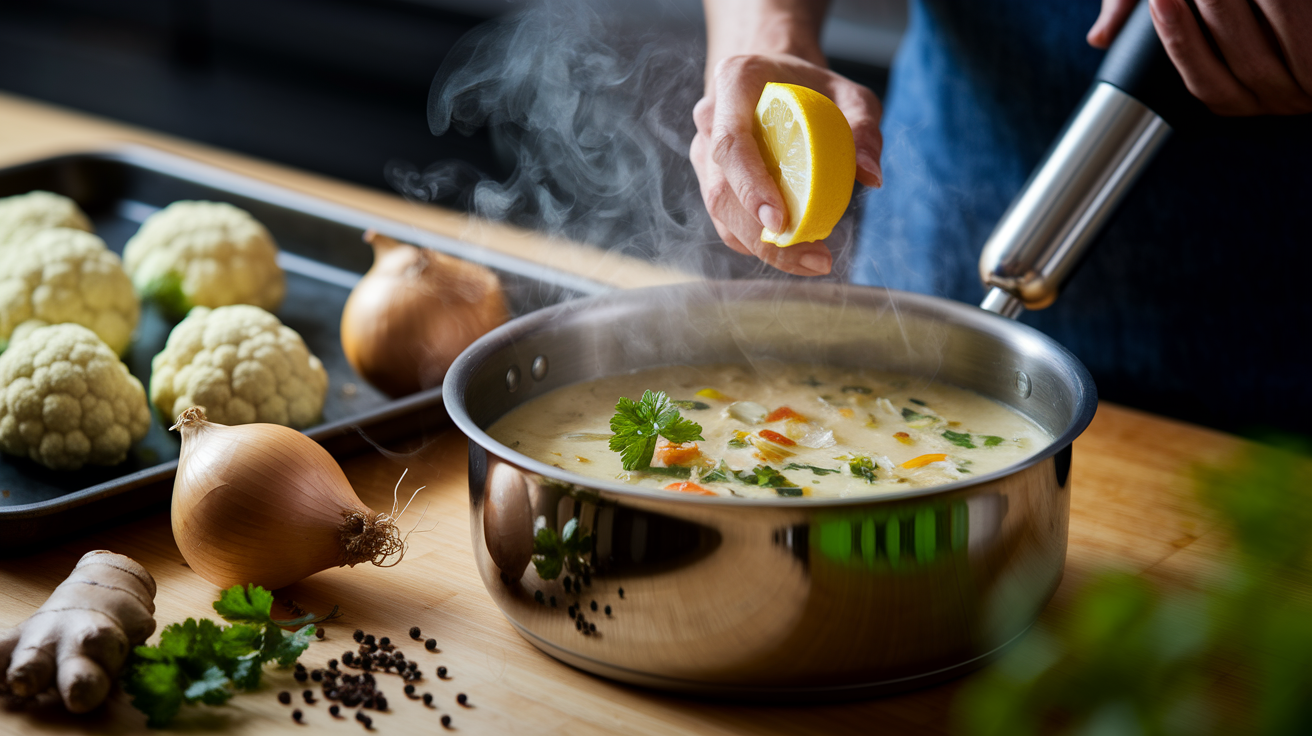
How you build flavor decides whether your soup stays light or crosses into higher calorie territory. Sauté aromatics (onion, garlic, ginger) in one tablespoon of olive oil for the entire pot instead of per serving. Three to five minutes over medium heat releases their flavor without adding heavy fats. If you want even fewer calories, use a few tablespoons of broth or water to soften the aromatics instead of oil.
Replace cream with blended vegetables. Cooked cauliflower, white beans, or even a small potato can be pureed into broth to create a smooth, creamy texture without the 100 to 150 calories that come from two tablespoons of heavy cream. Add a squeeze of lemon juice or a splash of vinegar at the end. Acid brightens flavors and makes a simple soup taste more complex. Fresh herbs like cilantro, basil, and parsley deliver aroma and freshness for almost zero calories.
Quick tips to cut calories and boost taste:
- Roast vegetables at 400 to 425°F (200 to 220°C) for 20 to 30 minutes before adding them to the pot for deeper flavor.
- Use an immersion blender to partially puree the soup, leaving some chunks for texture and chewing satisfaction.
- Add spices like cumin, paprika, turmeric, or chili flakes during the sauté step so they bloom in the heat.
- Choose low sodium broths and control salt yourself. Aim for under 600 milligrams of sodium per serving.
- Simmer soups for 15 to 30 minutes to let flavors develop. Longer cooking doesn’t always mean better results.
- Skip cheese and sour cream garnishes. Use a dollop of plain Greek yogurt (30 to 40 calories per tablespoon) if you need creaminess.
Final Words
Grab a pot—you now have 8 fast, low-calorie recipes (100–300 kcal), the science of why soup helps satiety, essential ingredients, portion and calorie targets, a weekly plan, and simple cooking tricks.
Pick one recipe, aim for 1.5–2 cups per meal, and pair it with a palm-sized protein or a small salad. Use herbs, acid, and blended veg for big flavor without the calories.
Start this week with a single batch and tweak as you go. Soups for weight loss are simple, flexible, and a steady way to feel better and eat smarter.
FAQ
Q: Which soups are best for weight loss?
A: The best soups for weight loss are broth-based, vegetable-forward soups with lean protein and fiber—think chicken-vegetable, minestrone, miso, lentil, or tomato basil—kept low in added fat and calories.
Q: Will I lose weight if I eat soup everyday?
A: You can lose weight if you eat soup every day by choosing low-calorie, broth-based recipes with protein and veggies and staying in a daily calorie deficit; avoid creamy, high-fat soups and large portions.
Q: Are soups good for fatty liver?
A: Soups can help with fatty liver when they’re low-calorie, low-added-sugar, and rich in vegetables, legumes, and lean protein; limit sodium and saturated fat, and check with your healthcare team for personalized advice.
Q: What is the best soup for kidney patients?
A: The best soup for kidney patients is a low-sodium, low-potassium, and appropriately portioned broth-based soup chosen to match lab results—work with a renal dietitian to pick vegetables, protein, and seasoning.