
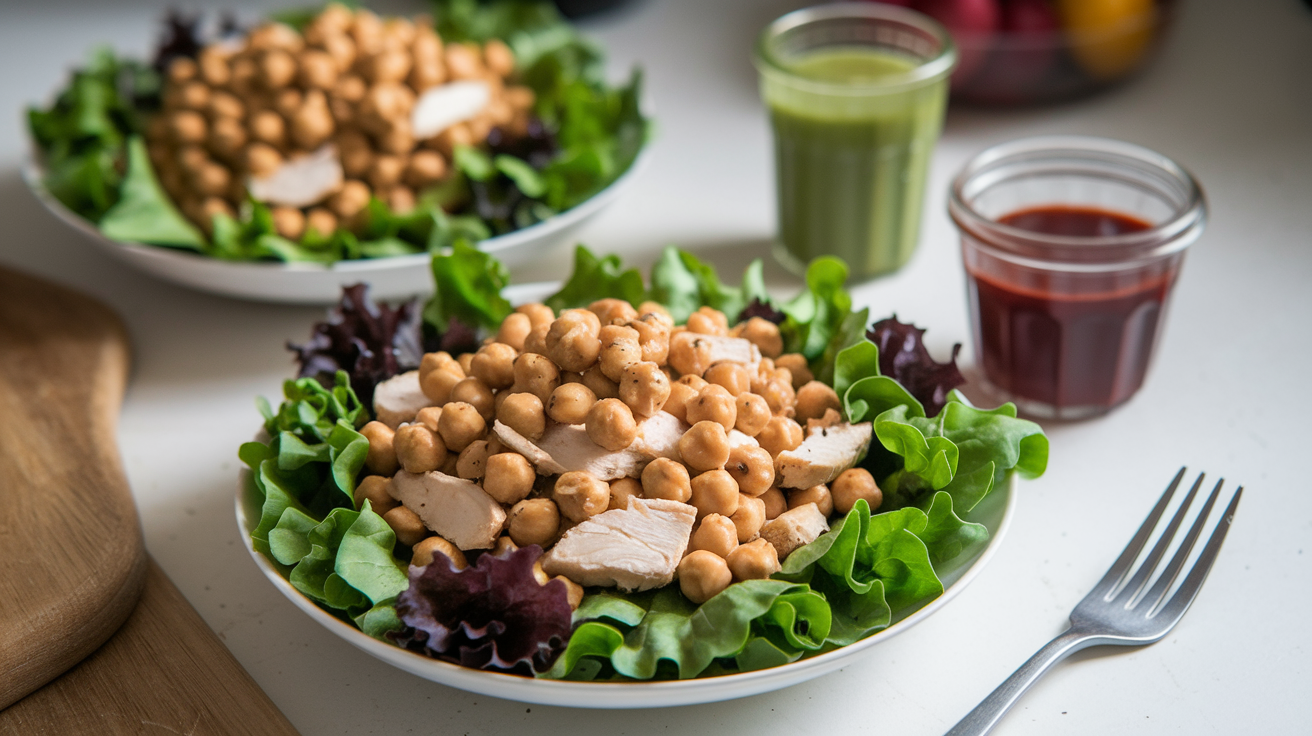
Think salads are just rabbit food that leaves you hungry an hour later?
They’re wrong. Build them with volume, lean protein, and the right carbs, and a salad can be a satisfying meal under 400 calories.
Most recipes here land between 250 and 400 calories, with 25 to 40 grams of protein to keep your energy steady and cravings away.
Read on for quick 10-20 minute recipes, simple swaps, and meal-prep tips that make filling salads easy every week.
Top Low‑Calorie Salads for Weight Loss (Recipes + Calories)
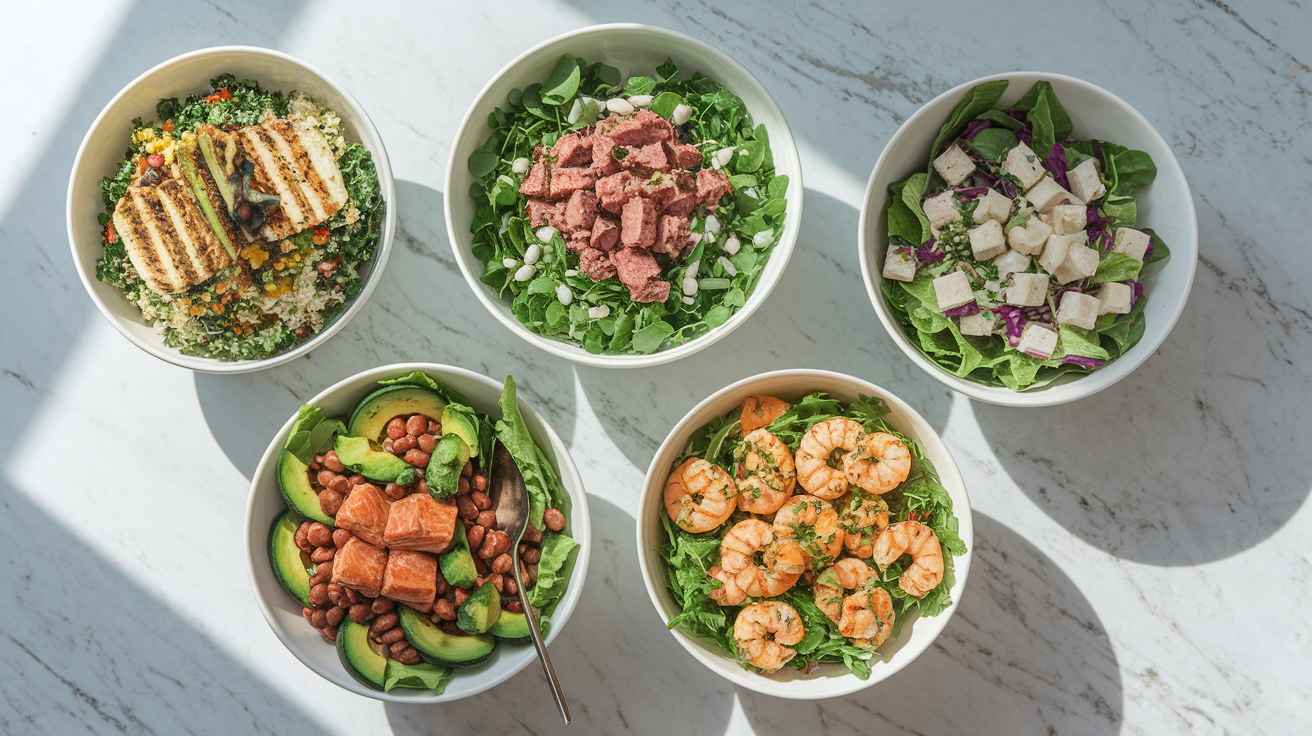
A good salad can be a full meal under 400 calories and actually keep you full. You need high-volume vegetables, lean protein, and the right carbs in portions that support fat loss without leaving you hungry an hour later.
Most weight loss salads land between 250 and 400 calories per serving. That leaves room for your other meals while giving you enough protein and fiber to avoid energy crashes or cravings. The recipes below use leafy greens as the base, add 25 to 40 grams of protein, and include small amounts of healthy fats to slow digestion and help you absorb nutrients.
Each recipe serves one person and takes 10 to 20 minutes. Nutritional values are estimates based on standard portions. Exact totals will shift slightly depending on brands and how you prep things.
-
Grilled Chicken, Kale & Quinoa Salad – 4 cups chopped kale, 4 oz grilled chicken breast, 1/2 cup cooked quinoa, 1/4 avocado, 1 tbsp lemon Dijon dressing (1 tsp olive oil, 1 tbsp lemon juice, 1 tsp Dijon mustard). Massage kale with a pinch of salt to soften. Approximate calories: 360; Protein: 34 g.
-
Mediterranean Tuna & White Bean Salad – 4 oz canned tuna in water, 1/2 cup rinsed cannellini beans, 2 cups mixed greens, 6 cherry tomatoes, 1 tbsp chopped red onion, 1 tbsp red wine vinegar, 1 tsp olive oil. Approximate calories: 330; Protein: 36 g.
-
Salmon & Lentil Power Bowl – 4 oz baked salmon, 1/2 cup cooked green lentils, 2 cups baby spinach, 1/4 cup sliced cucumber, 1 tsp olive oil, fresh lemon juice. Approximate calories: 420; Protein: 38 g.
-
Shrimp, Avocado & Arugula Salad – 5 to 6 large cooked shrimp (about 4 oz), 2 cups arugula, 1/4 avocado, 1 tbsp fresh lime juice, 1 tsp olive oil. Approximate calories: 300; Protein: 28 g.
-
Tofu, Edamame & Cabbage Asian Salad – 4 oz pan-seared extra-firm tofu, 1/2 cup shelled edamame, 2 cups shredded cabbage, 1 tbsp rice vinegar, 1/2 tsp sesame oil, 1 tsp low-sodium soy sauce, sliced scallions. Approximate calories: 340; Protein: 26 g.
How to Build a Filling Low‑Calorie Salad
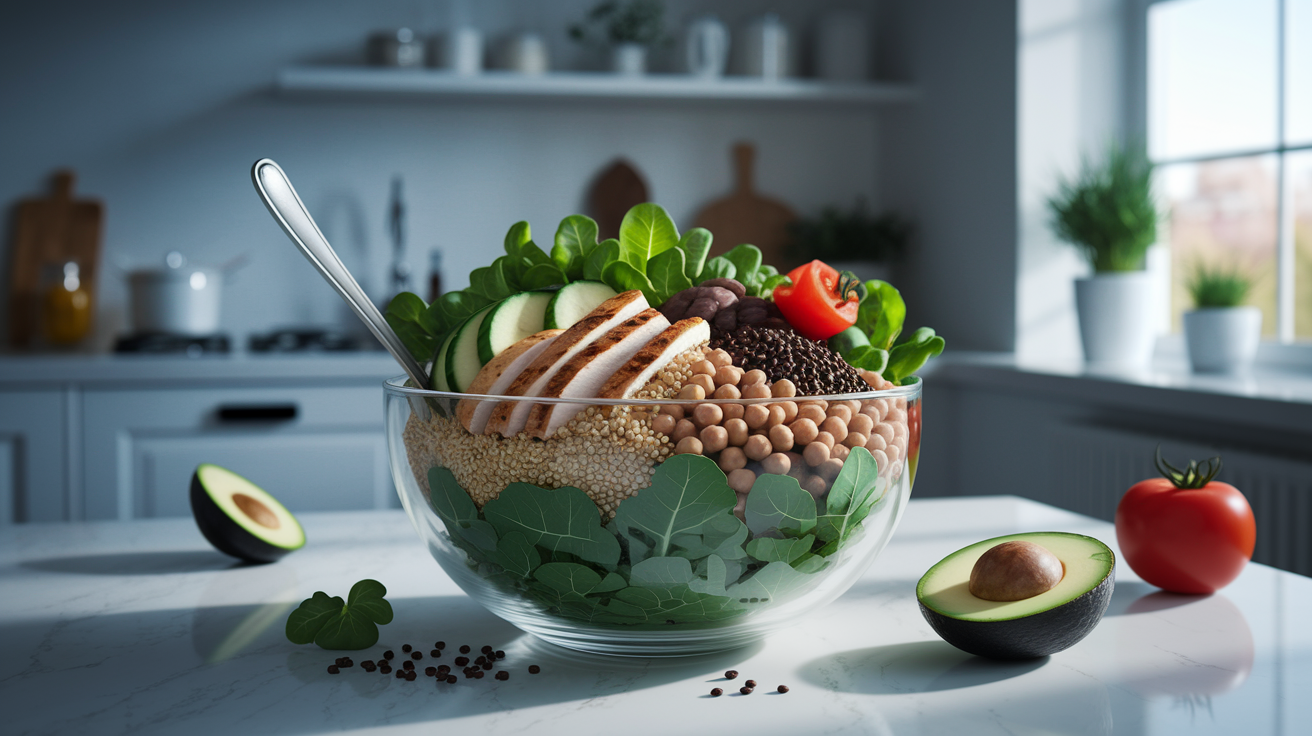
The difference between a salad that leaves you hungry in an hour and one that carries you through to your next meal comes down to three things: fiber, protein, and volume. Get all three right and your stomach signals fullness while your blood sugar stays stable.
Start with 2 to 4 cups of raw leafy greens or cruciferous vegetables. These give you bulk without many calories. Four cups of spinach has roughly 30 calories. Add 3 to 5 ounces of cooked lean protein (chicken, fish, tofu, beans) to hit 25 to 40 grams per serving. Then layer in fiber-rich ingredients like 1/4 to 1/2 cup of cooked quinoa, lentils, or chickpeas. Finish with water-dense vegetables (cucumbers, tomatoes, bell peppers) and a small portion of healthy fat. A quarter avocado or one tablespoon of nuts slows digestion and adds flavor.
Elements that boost fullness in low-calorie salads:
High-volume leafy greens. Spinach, kale, arugula, romaine, and mixed greens fill your stomach with minimal calories.
Lean proteins. Grilled chicken, tuna, salmon, shrimp, tofu, or boiled eggs provide satiety and preserve muscle during weight loss.
Fiber-rich legumes and grains. Lentils, chickpeas, black beans, and quinoa add texture and slow digestion.
Water-dense vegetables. Cucumbers, tomatoes, bell peppers, and radishes increase volume without adding significant calories.
Healthy fats in small amounts. 1/4 avocado, 1 tablespoon nuts, or 1 teaspoon olive oil improves nutrient absorption and satisfaction.
Crunchy textures. Raw veggies, roasted chickpeas, or a small handful of seeds add sensory satisfaction that signals your brain you’ve eaten a real meal.
Low‑Calorie Salad Dressings That Support Weight Loss
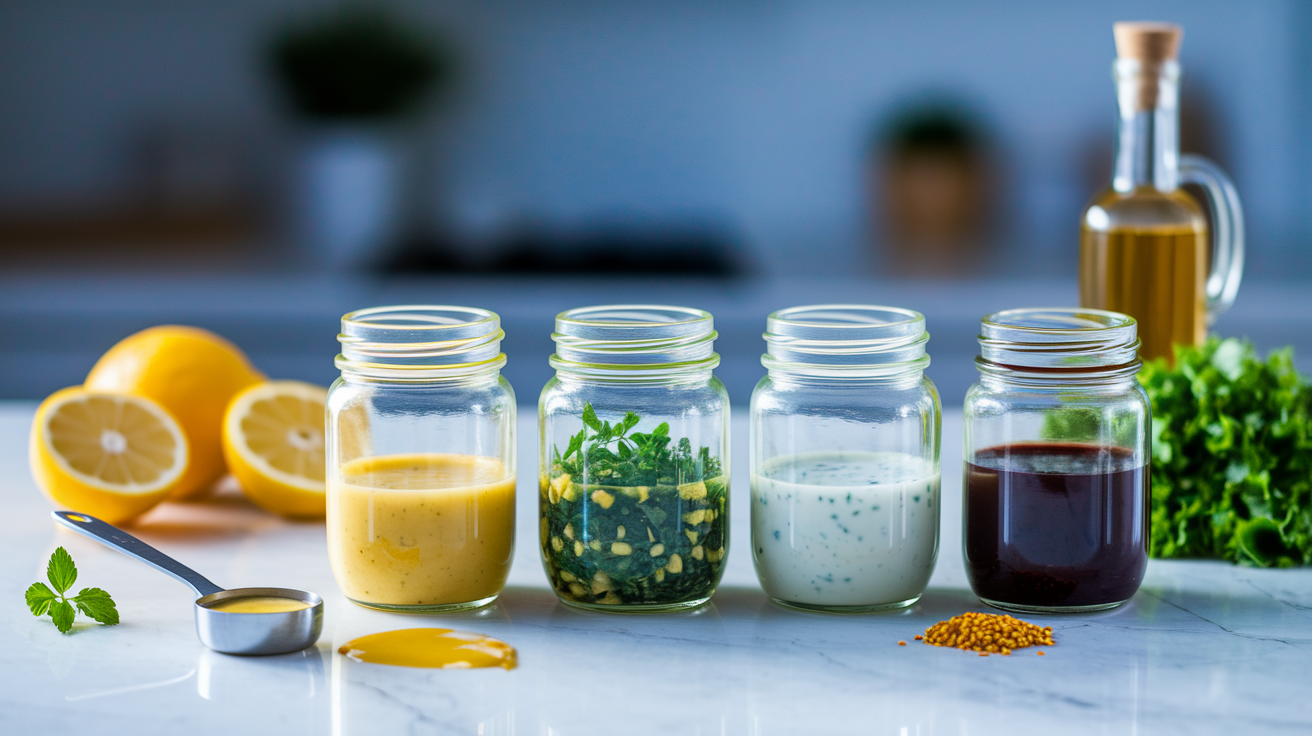
Traditional creamy dressings can add 100 to 200 calories per serving, turning a light salad into a calorie-dense meal. Lighter dressings made from citrus, vinegar, yogurt, and mustard deliver flavor for 20 to 60 calories per tablespoon. You control exactly how much fat and sugar you’re adding.
Four simple low-calorie dressing options:
Lemon-Dijon Vinaigrette. 1 tsp olive oil (40 kcal), 1 tbsp fresh lemon juice, 1 tsp Dijon mustard, pinch of black pepper. Total: about 45 kcal per serving.
Greek Yogurt Herb Dressing. 2 tbsp nonfat Greek yogurt, 1 tsp lemon juice, fresh dill or parsley, garlic powder. Total: about 20 to 25 kcal per serving.
Citrus-Sesame Splash. 1 tbsp fresh orange juice, 1 tsp rice vinegar, 1/2 tsp sesame oil. Total: about 20 kcal per serving.
Simple Balsamic Vinaigrette. 2 tbsp balsamic vinegar, 1 tsp olive oil, pinch of dried oregano. Total: about 45 kcal per serving.
Measure your dressing instead of pouring it straight from the bottle. One tablespoon of olive oil contains 119 calories. Easy to double or triple without noticing if you’re eyeballing portions. Use a measuring spoon for the first week or two to retrain your eye, then stick to 1 to 2 tablespoons of dressing per large salad. You can also try the “dip method.” Keep dressing on the side and lightly dip each forkful instead of tossing the entire salad. This uses less dressing overall while still delivering flavor in every bite.
Meal‑Prep Salad Ideas for Easy Weight‑Loss Planning
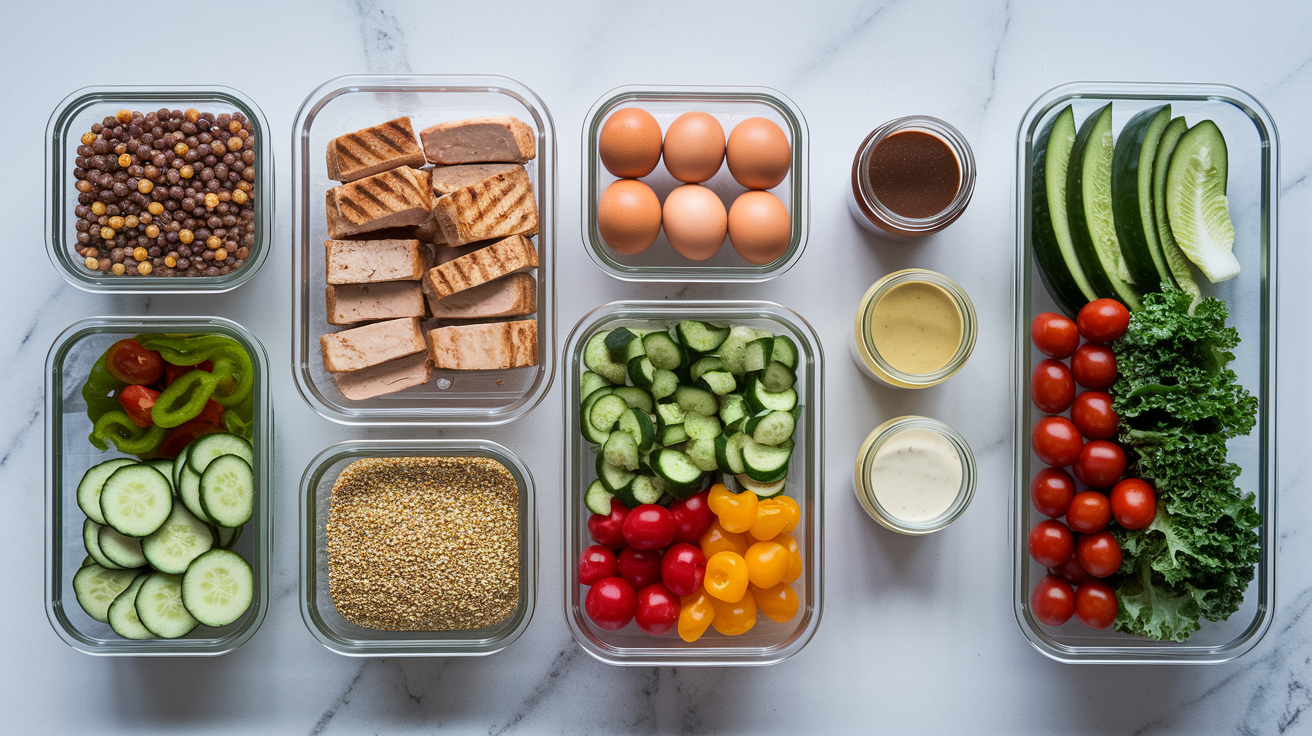
Spending 30 to 60 minutes on one day to cook proteins, grains, and chop vegetables turns salad-making into a five-minute assembly job the rest of the week. The trick is storing components separately so greens stay crisp and proteins stay fresh, then combining everything right before you eat.
Start by cooking 12 to 16 ounces of lean protein (enough for 3 to 4 servings). Grill chicken breasts, bake salmon fillets, pan-sear tofu, or boil eggs. Let everything cool, then portion into individual containers. Cook 2 to 3 cups of quinoa, lentils, or brown rice and divide into 1/2-cup servings. Wash and chop sturdy vegetables like bell peppers, cucumbers, and cherry tomatoes. These hold up well for 3 to 4 days in airtight containers. Leafy greens can be washed, dried thoroughly, and stored in containers lined with paper towels to absorb excess moisture. Keep delicate ingredients like avocado and fresh herbs separate and add them on the day you eat the salad.
Five meal-prep strategies for fresh, low-calorie salads:
Store dressings separately. Keep dressing in small jars or containers and add only at serving time to prevent soggy greens.
Use sturdy greens. Kale, cabbage, and romaine hold up better over 3 to 4 days than delicate spinach or arugula.
Layer mason jars strategically. Place dressing at the bottom, then sturdy vegetables, proteins, and greens on top. Shake and pour when ready to eat.
Prep proteins in bulk. Cook 3 to 4 servings of chicken, tofu, or hard-boiled eggs at once. Refrigerate cooked proteins for up to 4 days or freeze for 2 to 3 months.
Chop vegetables in one session. Dice cucumbers, bell peppers, onions, and tomatoes all at once and store in separate containers. Mix and match throughout the week.
Smart Ingredient Swaps to Reduce Salad Calories
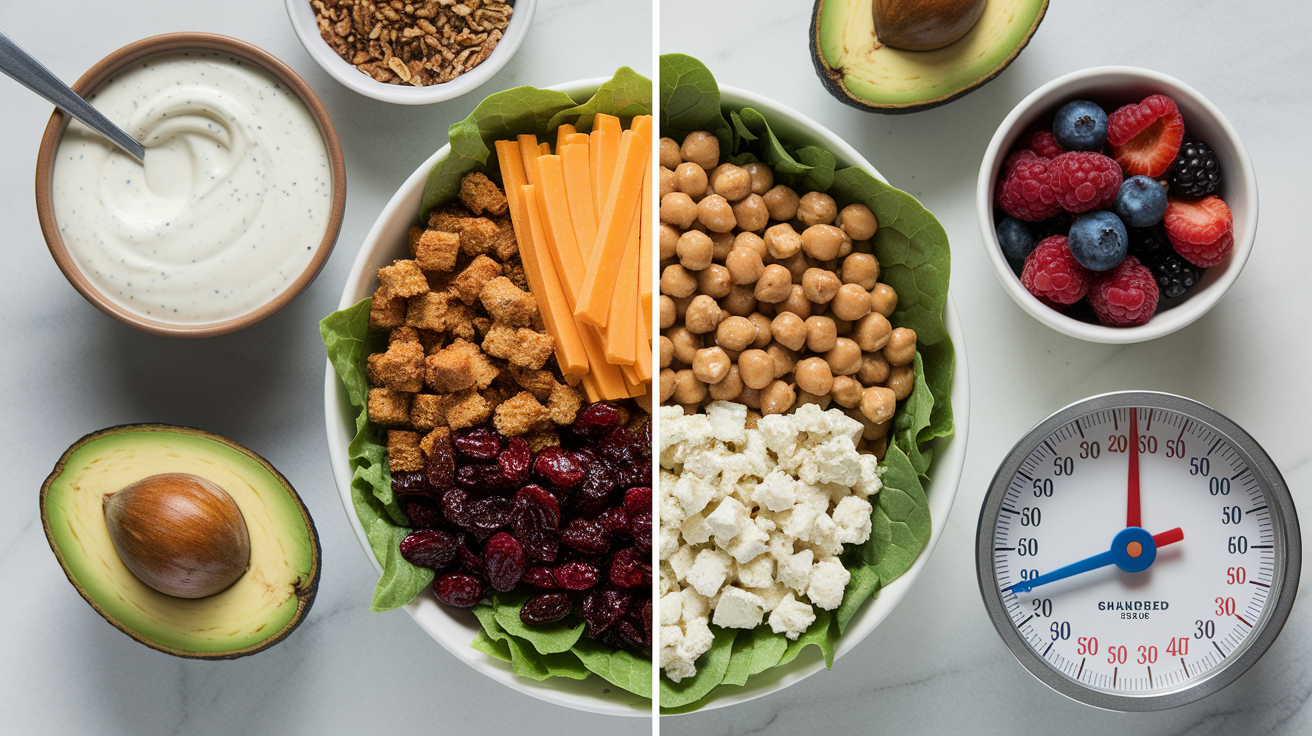
Small changes to toppings and add-ins can cut 100 to 300 calories per salad without changing how satisfying it tastes. The goal is to replace calorie-dense ingredients with lighter options that still provide crunch, creaminess, or flavor.
Six simple swaps to lower salad calories:
| Instead of | Use | Calories Saved |
|---|---|---|
| 2 tbsp ranch dressing (~140 kcal) | 2 tbsp Greek yogurt herb dressing (~25 kcal) | ~115 kcal |
| 1/4 cup croutons (~60 kcal) | 2 tbsp air-fried chickpeas (~40 kcal) | ~20 kcal |
| 1/4 cup shredded cheddar (~110 kcal) | 1 tbsp crumbled feta (~25 kcal) | ~85 kcal |
| 1/4 cup candied pecans (~200 kcal) | 1 tbsp raw almonds (~50 kcal) | ~150 kcal |
| 1/2 cup dried cranberries (~200 kcal) | 1/2 cup fresh berries (~30 kcal) | ~170 kcal |
| Full avocado (~240 kcal) | 1/4 avocado (~60 kcal) | ~180 kcal |
Even with healthier swaps, portions still matter. Nuts, seeds, and avocado are nutrient-dense and satisfying, but they’re also calorie-dense. Stick to one tablespoon of nuts or seeds and a quarter of an avocado per salad. Weigh or measure these ingredients for the first week or two until you can eyeball accurate portions. A food scale costs less than ten dollars and removes the guesswork. Most people underestimate calorie-dense toppings by 50 to 100% when pouring straight from the bag.
Final Words
Jump in and try one of the low‑calorie salads from the recipes list this week. Use the build tips to make it filling, pick a lighter dressing, and prep components so meals are easy. Swap high calorie toppings for simpler options to keep calories down without losing flavor.
Make one small change and repeat it. These simple salad recipes for weight loss add up over time. Keep it flexible, notice what feels good, and enjoy the steady wins.
FAQ
Q: What type of salad is best for weight loss?
A: The best salad for weight loss is high-volume and low-calorie: lots of leafy greens and water-rich veggies, a lean protein, fiber-rich add-ins, and a light vinaigrette to keep you full with fewer calories.
Q: Will I lose belly fat if I eat salad every day?
A: Eating salad every day can help reduce belly fat if it lowers your total calories and you pair it with regular movement, enough protein, and consistent sleep for overall fat loss.
Q: What is the 30/30/30 rule for weight loss?
A: The 30/30/30 rule for weight loss refers to a simple macro split—about 30% protein, 30% carbs, and 30% fat—as a guideline to control hunger and support steady, sustainable progress.
Q: What kind of salad dressing is good for gout?
A: A salad dressing good for gout is a simple olive oil and lemon or Greek yogurt with herbs, avoiding anchovies, added sugars, and excess salt; use small portions to limit triggers.