
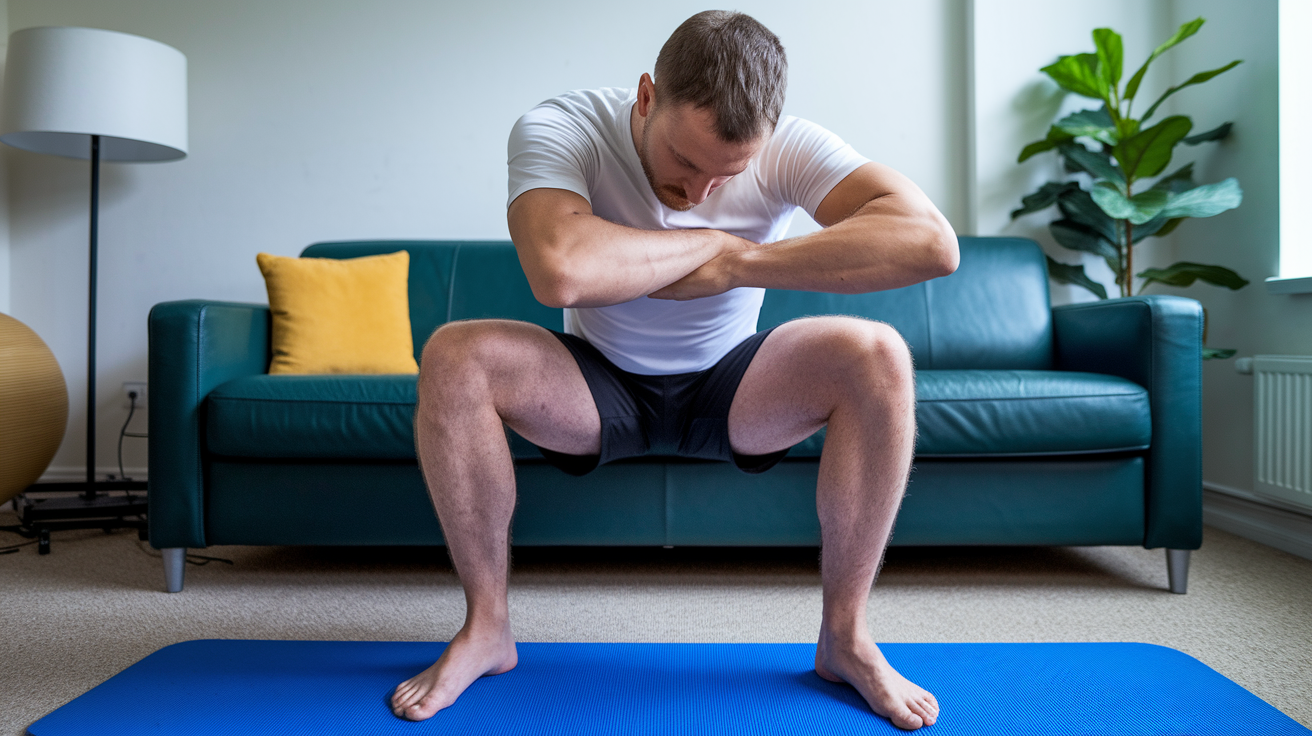
Think shoulder pain just needs rest? Think again.
Four tiny rotator cuff muscles quietly hold your arm bone in place, and when they’re weak your shoulder slips into pain, stiffness, and awkward movement.
This post walks you through seven simple at-home rotator cuff exercises, plus scapular stability moves, easy technique cues, and safe progression options.
Do these slowly and consistently, and you’ll build strength that protects your shoulders in daily tasks like reaching overhead, carrying bags, and pushing open doors.
Essential Rotator Cuff Strengthening Work
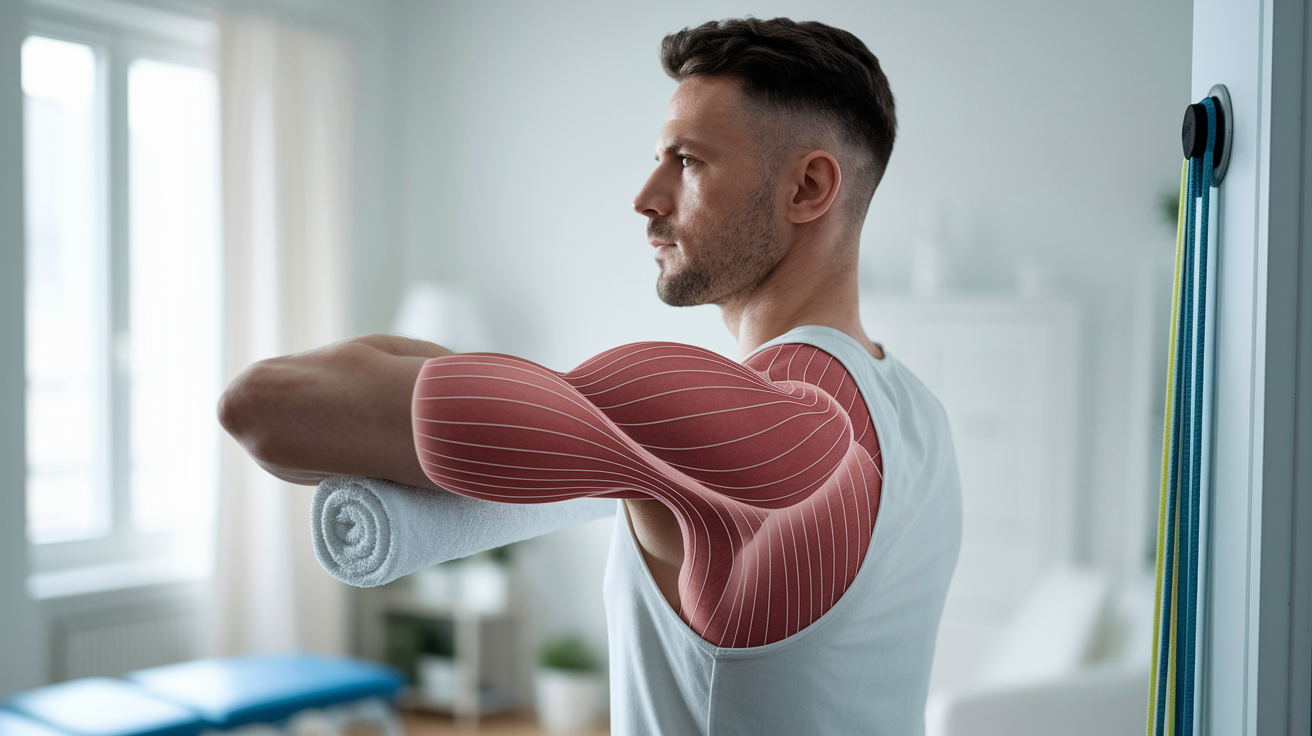
Rotator cuff strengthening exercises target four small muscles that keep your shoulder joint stable: supraspinatus, infraspinatus, teres minor, and subscapularis. These muscles control how your arm rotates outward and inward, and they help position your shoulder blade correctly when you move your arm. When you strengthen them with controlled resistance, you’re training your shoulder to handle everyday stuff like reaching overhead, carrying groceries, or pushing doors open without pain or wobbling around. Most people who stick with a consistent routine notice real improvements in pain and function within a few weeks, as long as movements stay slow and don’t hurt.
Scapular stability work matters just as much as direct rotator cuff exercises. Your shoulder blade is the foundation for your arm. If it doesn’t move smoothly or stay stable, your rotator cuff ends up compensating. Exercises like banded rows and scapular squeezes train the muscles around your shoulder blade to support proper alignment, which takes unnecessary strain off the smaller rotator cuff muscles. Resistance-based movements using bands or light weights give enough load to build strength without overloading healing or vulnerable tissues. Starting with low resistance and using a tempo of about two seconds up and two seconds down gives your muscles the time under tension they need to actually adapt.
The most effective at-home rotator cuff strengthening exercises include movements you can do with minimal equipment, and they directly address the functional demands of daily life. Here are seven foundational exercises:
-
Wall slides – Stand facing a wall with your forearms resting against it at shoulder height, fingers pointing up. Slide your arms up toward the ceiling while gently pressing into the wall, hold briefly at the top, then return. This improves overhead movement and shoulder control.
-
Side-lying external rotation – Lie on your non-injured side with your bottom arm resting along your body. Bend your top elbow to 90°, keep it pinned to your side, and hold a light weight. Rotate your forearm toward the ceiling without lifting your elbow. Perform 3 sets of 10, once daily.
-
Band external rotation – Anchor a resistance band in a door at waist height. Stand with your elbow bent 90° and tucked against your side, forearm across your belly. Step away to create tension, then rotate your hand outward while keeping your elbow fixed. Return slowly. Complete 3 sets of 10.
-
Band internal rotation – Place your forearm against a doorframe at shoulder height. Turn your hips and torso away from the frame until you feel a stretch in the front of your shoulder. Hold for 15 to 30 seconds, then repeat on the other side.
-
Banded rows – Anchor a band at chest height and hold it with both arms straight. Pull your hands to the sides of your ribcage, squeezing your shoulder blades together. Keep your shoulders down and back. Perform 3 sets of 10.
-
Scaption – Hold light weights at your sides. Raise your arms at a slight forward angle (about 30° in front of your body) to shoulder height, thumbs pointing up. Lower with control. Complete 3 sets of 10.
-
Prone Y/T – Lie face down with your arms extended in a Y position above your head. Lift your arms a few inches off the floor, squeeze your shoulder blades, then lower. Repeat in a T position with arms straight out to the sides. Perform 10 repetitions of each.
Stop any exercise immediately if you feel sharp pain. A dull stretch or muscle fatigue is normal. But stabbing or shooting pain means you’re working outside a safe range. Progress by adding repetitions first, move from 10 to 15 reps per set before increasing resistance or weight.
Functional Training Benefits of Rotator Cuff Strength Work

Rotator cuff muscles keep your upper arm bone centered in the shallow shoulder socket during movement. This stabilization, called joint centration, prevents the ball of your shoulder from sliding too far forward, backward, or upward and rubbing against surrounding structures. When these muscles are weak or fatigued, your shoulder loses its ability to maintain proper alignment. That increases friction on tendons and the bursa. Over time, that friction leads to impingement, inflammation, and pain. Strengthening the rotator cuff restores control and allows your shoulder to move through a full, pain-free range. It also improves posture by supporting the natural position of your shoulder blade and preventing the forward slump that strains your neck and upper back.
Long-term improvements from consistent rotator cuff work include better overhead mobility, reduced stiffness, and the ability to return to activities that once caused discomfort. Programs that emphasize slow, controlled movement and gradual progression report significant results. Participants following structured routines have experienced up to 68% pain reduction within the first 12 weeks. These gains aren’t just about strength. They’re about retraining movement patterns so your shoulder works as a coordinated system instead of relying on compensations that cause more problems down the line.
Key benefits of rotator cuff strengthening include:
Pain reduction. Targeted exercises decrease inflammation and improve tissue tolerance to load.
Improved stability. Stronger muscles keep the shoulder joint properly aligned during arm movements.
Increased mobility. Full, pain-free range of motion returns as tissues adapt and compensations decrease.
Better posture. Scapular and rotator cuff strength counteracts the forward shoulder position caused by sitting and screen time.
Injury prevention. Consistent training reduces the risk of impingement, tendinitis, and rotator cuff tears.
Key Rotator Cuff Technique Cues for Effective Shoulder Training

Proper form starts with your setup. Stand or lie in a position that allows your ribcage to stay stacked over your hips, with your spine neutral, not arched or rounded. When performing exercises like band external rotation, keep your elbow bent to 90° and pinned firmly to your side. This isolates the rotator cuff muscles and prevents larger muscles like your lats or pecs from taking over. If your elbow drifts away from your body, you lose the targeted effect and increase strain on the shoulder joint itself.
Tempo matters more than most people realize. Rotator cuff muscles respond best to slow, controlled movement. Aim for about two seconds during the lifting phase and two to three seconds on the lowering phase. Rushing through reps reduces time under tension and increases the chance of compensating with momentum instead of muscle contraction. During exercises like scapular squeezes or banded rows, focus on actively retracting your shoulder blades and holding the squeeze for a full second before releasing. This neuromuscular control teaches your shoulder blade and rotator cuff to work together as one stable unit.
Pay attention to your shoulders during every movement. They should stay down and back, not shrugged up toward your ears. Shrugging shifts work away from the rotator cuff and onto the upper traps, which are already overactive in most people. If you feel tension creeping into your neck, reset your posture and reduce the resistance or range of motion.
Form Mistakes That Increase Shoulder Strain
Shrugging your shoulders during external rotation, rows, or overhead movements is one of the most common errors. It creates neck tension and bypasses the muscles you’re trying to strengthen. Forcing rotation beyond a pain-free range, especially during stretches or banded work, can irritate the shoulder capsule and set back your progress. Leaning or twisting your torso to complete a rep is another red flag. It means the resistance is too heavy or you’re fatigued. Using a band or weight that’s too challenging before your form is solid increases injury risk and reinforces faulty movement patterns that are hard to correct later.
Mobility and Stretching Work for the Rotator Cuff and Surrounding Tissues

Stretching the muscles and connective tissue around your shoulder improves range of motion and reduces the stiffness that limits pain-free movement. Tight chest muscles, a restricted posterior shoulder capsule, and limited thoracic spine mobility all contribute to poor shoulder mechanics. When these areas stay tight, your rotator cuff has to work harder to compensate, which accelerates fatigue and increases the risk of impingement. Stretching doesn’t replace strengthening, but it creates the space and flexibility your shoulder needs to move correctly during exercise and daily tasks.
Most rotator cuff stretches should be held for 15 to 30 seconds and repeated two to three times per side. You should feel a gentle pull, never sharp pain or a pinching sensation. If a stretch causes discomfort in the front of your shoulder or a catching feeling, back off the intensity or try a different position. Pairing stretches with foam rolling or self-myofascial release using a tennis ball can help release tension in areas like the pecs and posterior shoulder that are difficult to reach with static stretching alone.
Essential rotator cuff and shoulder stretches:
Doorway stretch. Stand in a doorway and grip the sides at or just below shoulder height. Lean forward with a straight back until you feel a light stretch across the front of your chest and shoulders. Hold for 15 to 30 seconds, repeat 3 times.
Cross-body stretch. Bring one arm across your chest and use the opposite hand to gently pull it closer. Hold for 15 to 30 seconds, then switch sides. This targets the posterior shoulder and rotator cuff.
Posterior capsule stretch. Lie on your side with your bottom arm bent at 90°. Use your top hand to gently push your bottom forearm toward the floor. Hold for 15 to 30 seconds.
Sleeper stretch. Lie on your side with your bottom shoulder at 90° and elbow bent. Use your top hand to press your bottom hand toward the floor, stretching the back of the shoulder. Hold for 15 to 30 seconds.
| Stretch | Target Area |
|---|---|
| Doorway stretch | Chest, anterior shoulder |
| Cross-body stretch | Posterior rotator cuff, rear deltoid |
| Posterior capsule stretch | Back of shoulder joint capsule |
| Sleeper stretch | Posterior rotator cuff, capsule |
Progressive Rotator Cuff Loading for Rehab and Prevention

Progressive loading means gradually increasing the challenge your muscles face so they continue to adapt and get stronger. For rotator cuff work, start with exercises that use only your body weight or very light resistance, like wall slides or unweighted external rotation. Once you can complete 10 repetitions with good form and no pain, increase the volume by adding reps until you reach 15 per set. From there, progress by increasing resistance. Use a slightly thicker resistance band or add a one to three pound weight. Avoid jumping to heavy loads too quickly. Rotator cuff muscles are small and respond better to higher repetitions with moderate resistance than low reps with maximum weight.
Eccentric strengthening, where you focus on the slow lowering phase of a movement, is especially effective for building rotator cuff resilience. During exercises like side-lying external rotation or reverse fly, take three to four seconds to lower the weight back to the starting position. This controlled descent creates more time under tension and helps rebuild tendon strength after injury. Frequency should stay consistent but manageable. Most people see the best results training the rotator cuff a few times per week with at least one rest day in between sessions. Overloading too often doesn’t allow tissues time to recover and adapt.
The difference between rehab and prevention lies in intensity and intent. Rehab-phase training stays within a completely pain-free range, uses the lowest effective resistance, and prioritizes restoring normal movement patterns. Prevention-focused work can push closer to fatigue, use moderate resistance, and include higher volumes to build capacity for sports or demanding tasks. If you’re rehabbing an injury, your first goal is to move without pain. If you’re preventing one, your goal is to build strength reserve so your shoulder can handle unexpected loads or awkward positions.
Recommended progression sequence:
- Mobility and pain-free range. Start with stretches and gentle movements like pendulums and wall slides to restore motion.
- Activation and control. Add isometric holds and slow, unweighted external and internal rotation to wake up the rotator cuff.
- Light resistance. Introduce a thin resistance band or one to two pound weights for 3 sets of 10 reps.
- Eccentric loading. Emphasize the slow lowering phase and increase resistance slightly while keeping reps moderate.
- Functional integration. Combine rotator cuff work with overhead reaching, pushing, or sport-specific drills to prepare for real-world demands.
When Rotator Cuff Exercises Are Not Enough: Safety, Red Flags, and Clinical Guidance

Not all shoulder pain improves with exercise alone. If you experience persistent pain that doesn’t decrease after a few weeks of consistent work, or if pain worsens during or after exercise, it’s time to consult a healthcare provider or physical therapist. Sharp, stabbing pain, especially pain that radiates down your arm or into your neck, can indicate nerve involvement or a more severe structural issue that needs professional assessment. Difficulty sleeping on the affected shoulder for more than a few days after an injury, or an inability to raise your arm without significant pain, are both red flags that suggest something beyond muscle weakness or tightness.
Swelling that doesn’t improve with rest, ice, compression, and elevation within the first few days may point to a partial or full-thickness rotator cuff tear. Most rotator cuff tears do not require surgery and respond well to structured physical therapy, but early diagnosis helps guide the right treatment path. If you feel a pop or sudden loss of strength after lifting something heavy or falling onto your shoulder, stop exercising and get evaluated before continuing any resistance-based training.
Key indicators to seek professional help:
Pain that persists or worsens after two to three weeks of home exercise.
Inability to raise your arm to shoulder height or above.
Trouble sleeping on the affected side lasting more than a few nights.
Visible swelling, bruising, or a noticeable change in shoulder shape.
Sample At‑Home Rotator Cuff Routine for Consistency
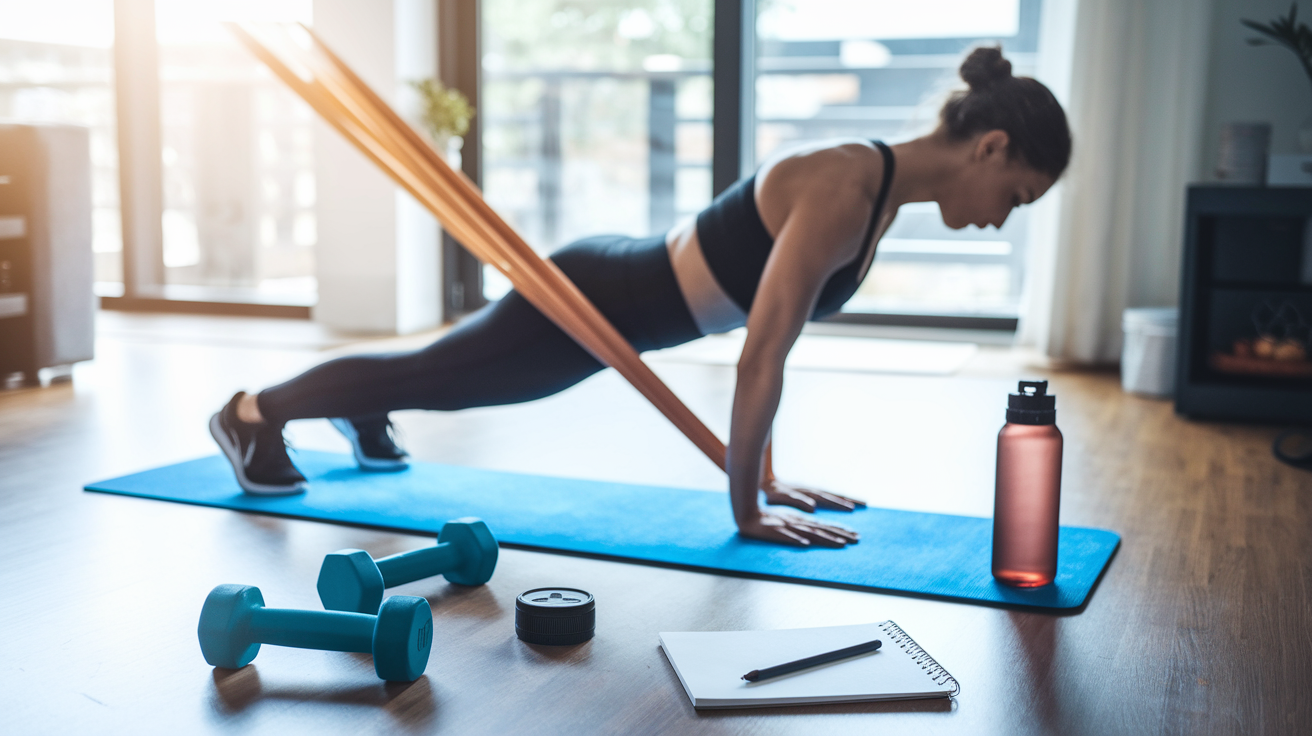
Consistency matters more than perfection. A simple, repeatable routine you can do a few times per week will deliver better results than an elaborate program you only complete once. The goal is to pair strengthening exercises with mobility work in a way that fits into your schedule without requiring a full gym setup. Most people find success training their rotator cuff on non-consecutive days, Monday, Wednesday, and Friday, for example, to allow recovery time between sessions.
A well-rounded routine should include external rotation work, scapular stability, overhead mobility, and at least one stretch to address tightness in the chest or posterior shoulder. Keep the total session under 20 minutes, and prioritize slow, controlled movement over speed or heavy resistance. If you’re working around an injury, stay within a pain-free range and stop immediately if sharp discomfort appears.
Sample 5-exercise routine:
Band external rotation. 3 sets of 10 reps per side, slow tempo, elbow pinned to side.
Banded row. 3 sets of 10 reps, focus on squeezing shoulder blades together at the end of each rep.
Scaption. 3 sets of 10 reps with light weights, arms raised at a slight forward angle to shoulder height.
Cross-body stretch. Hold for 15 to 30 seconds per side, repeat twice.
Doorway stretch. Hold for 15 to 30 seconds, repeat 3 times.
Perform this routine three times per week. Add one or two additional exercises from the earlier strengthening list if you have extra time or specific goals, but don’t sacrifice form or tempo to fit in more volume. Most improvements happen when you repeat simple movements correctly over weeks, not when you constantly change exercises or push through pain.
Final Words
You’re ready to put this into action: targeted strengthening moves, clear technique cues, mobility drills, and a simple at-home routine with sets and tempo to follow.
Keep it safe: start light, move slowly, stay in a pain-free range, use RICE for early flare-ups, and see a clinician if red flags pop up. Progress by adding reps or resistance a little at a time, a few times per week.
Do these rotator cuff exercises consistently and you’ll likely feel steadier, less achy, and more confident over time.
FAQ
Q: What is the best exercise for rotator cuff pain?
A: The best exercise for rotator cuff pain is side-lying external rotation, done 3 sets of 10 in a pain-free range with a slow, controlled tempo to strengthen external rotators and reduce discomfort.
Q: What is the 7 minute rotator cuff solution?
A: The “7 minute rotator cuff solution” refers to a short daily routine of targeted activation, mobility, and light resistance, using brief sets of external/internal rotations and scapular drills to build stability and reduce stiffness.
Q: Should I stretch my rotator cuff if it hurts?
A: You should avoid stretching the rotator cuff into sharp pain; use gentle, pain-free mobility once swelling decreases, apply RICE early on, and stop if pain worsens or is sharp.
Q: What is the fastest way to heal a rotator cuff?
A: The fastest way to heal a rotator cuff is consistent, pain-free rehab: rest and ice early, gentle mobility, then progressive strengthening a few times per week, and get professional care for severe or lasting symptoms.