

Think you need a long, sweaty session to fix the stiff, sore mornings from desk work?
You don’t. Five to ten minutes of targeted mobility before you sit can unlock tight hips, loosen a stiff upper back, and take the edge off neck and shoulder tension.
This quick routine acts like a movement vitamin. It wakes your breath, lubricates your joints, and sets your posture so the first hour at your desk doesn’t feel like wading through mud.
Read on for an office-friendly 5 to 10 minute flow you can do at home or at your desk, no gear needed.
The Core Problem: Morning Stiffness and the Need for a Fast Desk‑Friendly Mobility Routine
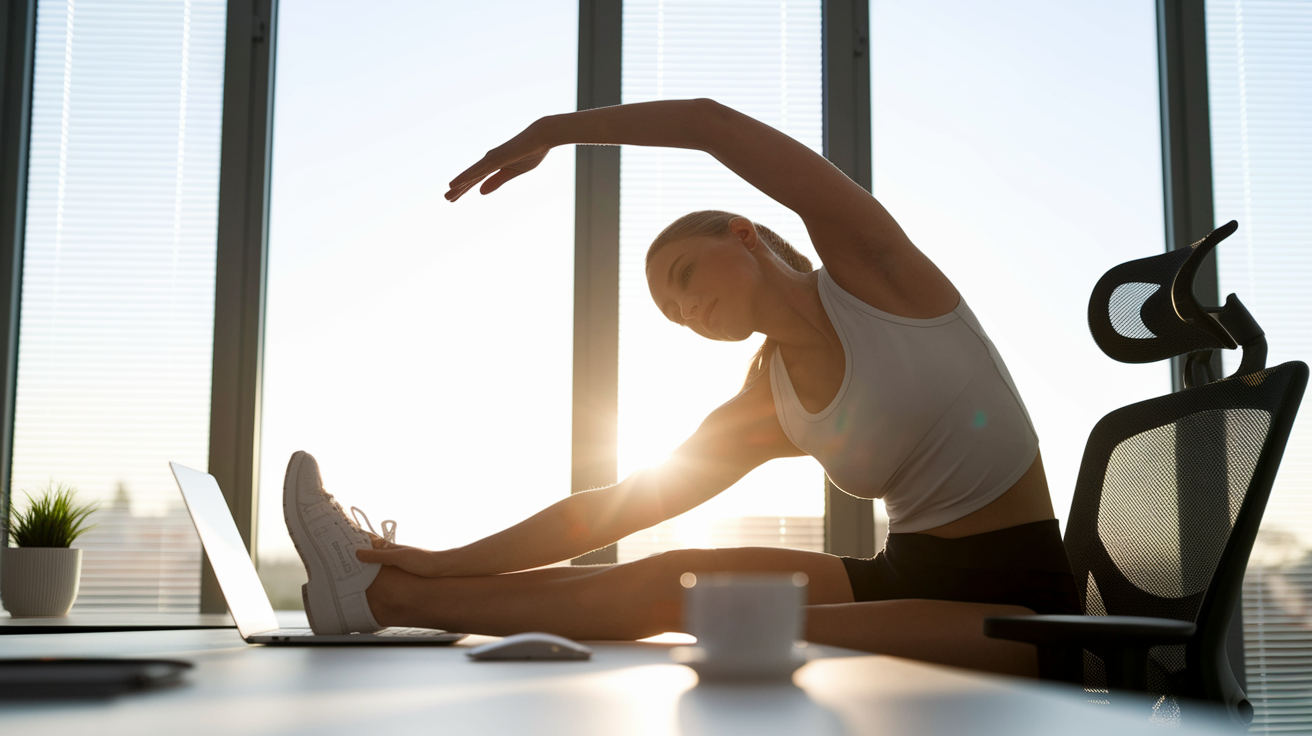
Desk workers deal with the same physical issues every morning, especially after years of sitting 8 to 10 hours a day. Your body adapts to whatever position you hold most often. When you sit all day, your hip flexors shorten, your upper back stiffens, and your shoulders roll forward. You’re already stiff from sleeping in one position all night, and the first hour at work feels like moving through mud.
The fix isn’t complicated. A 5 to 10 minute mobility routine before you start work hits the exact spots that lock up from sitting and gets your body ready for the day.
This works because it targets the joints and tissues desk workers use most but move least. Morning mobility is like a movement vitamin. A small dose that wakes up circulation, lubricates joints, and resets your posture before the workday makes everything worse. You’re preparing your body ahead of time with controlled movement instead of trying to undo 8 hours of sitting later.
A quick morning routine helps with:
- Stiff lower back when you stand up from bed or a chair
- Tight hips that make deep squatting or bending uncomfortable
- Rounded shoulders and forward head that strain your neck
- Limited wrist and forearm mobility from typing and mouse work
- Restricted ankle movement that messes with walking and balance
- Shallow breathing from tight ribs and chest muscles
Here’s what a complete 5 to 10 minute routine looks like:
- Breathing cycles to reset your nervous system and open your ribcage
- Wrist circles and fist drills to prep hands and forearms
- Cat/cow and gentle spinal twists for your lower back
- Hip openers like 90–90 transitions or deep squat holds
- Ankle movements like windshield wipers, circles, point and flex
- Chest openers or shoulder rolls to counter rounded posture
You can do this at home in workout clothes or at the office in business casual. The goal isn’t flexibility or performance. It’s functional readiness. Moving through your day without stiffness controlling how you feel or how much discomfort you’re dealing with by lunch.
Why Desk Workers Develop Tightness Before the Workday
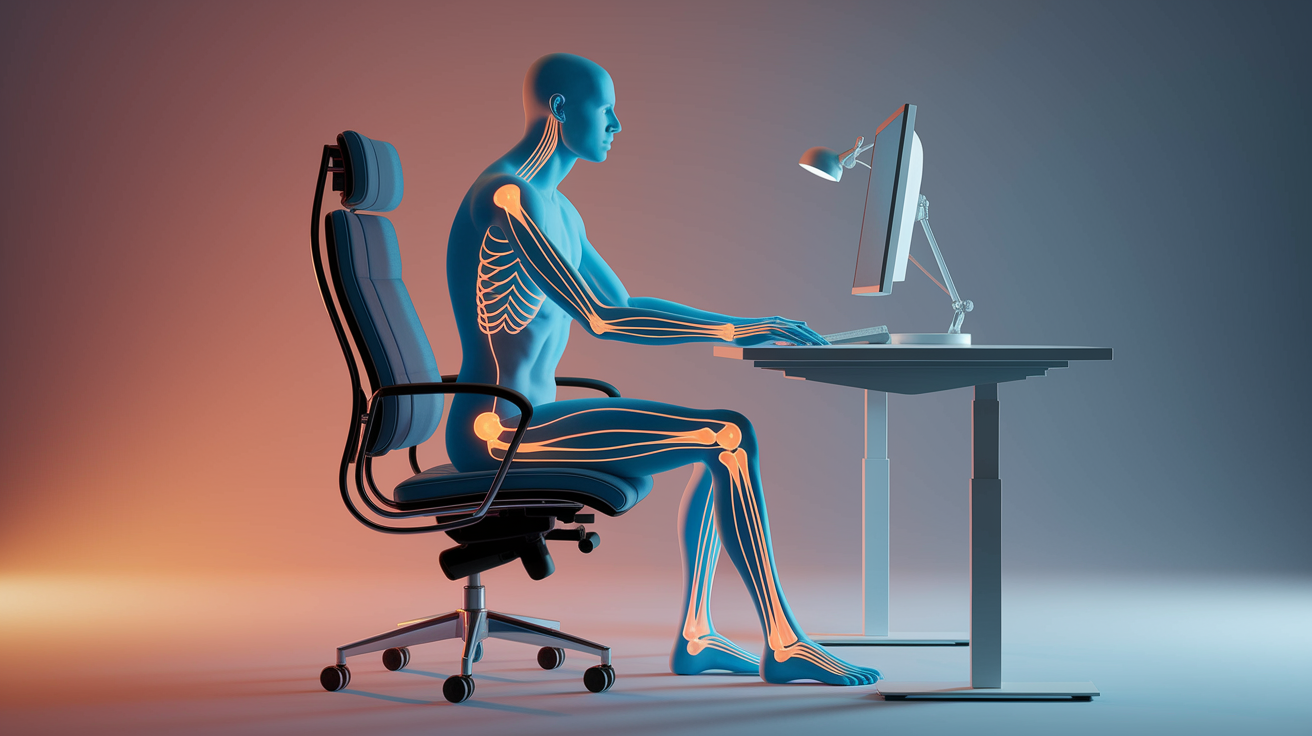
Your body doesn’t get stiff just because you sit at a desk all day. The problem starts earlier, usually before you even begin work. After 7 to 8 hours of sleep in the same positions, your joints haven’t moved through full ranges, circulation to your tissues has slowed, and the connective tissue around your hips, shoulders, and spine has settled into shortened positions.
When you wake up and immediately sit again for breakfast, commuting, or starting work, you never give your body a chance to reset. The tightness you feel at 9 a.m. is leftover from the night before, plus the fact that you’re about to spend another 8 hours in a chair.
Sitting creates a chain reaction of restrictions. Your hip flexors stay shortened because your knees and hips stay bent. Your upper back loses extension because you round forward to look at screens. Your shoulders roll inward because your arms stay in front of your body for typing. Your wrists and forearms hold static positions that cut circulation and joint mobility. Over time, these positions become your body’s new default. Every morning you wake up a little tighter than the day before.
Daily mobility work interrupts this. Moving your joints through their available ranges before you load them with hours of sitting supports joint hydration, improves circulation, and reminds your nervous system these positions are safe. It’s not about extreme flexibility or forcing your body into shapes it’s not ready for. It’s about keeping the mobility you need to feel normal, move without compensation, and avoid the constant low grade discomfort most desk workers just accept.
Primary causes of mobility restriction in desk workers:
- Shortened hip flexors from sitting and sleeping with hips bent
- Reduced upper back extension from forward head posture and rounded shoulders
- Limited ankle movement from keeping feet flat or elevated without moving
- Overloaded lower back tissues that compensate for lack of hip and upper back mobility
- Poor breathing from tight ribcage and restricted diaphragm movement
A Quick Full‑Body Mobility Sequence for Desk Workers (5–10 Minutes)
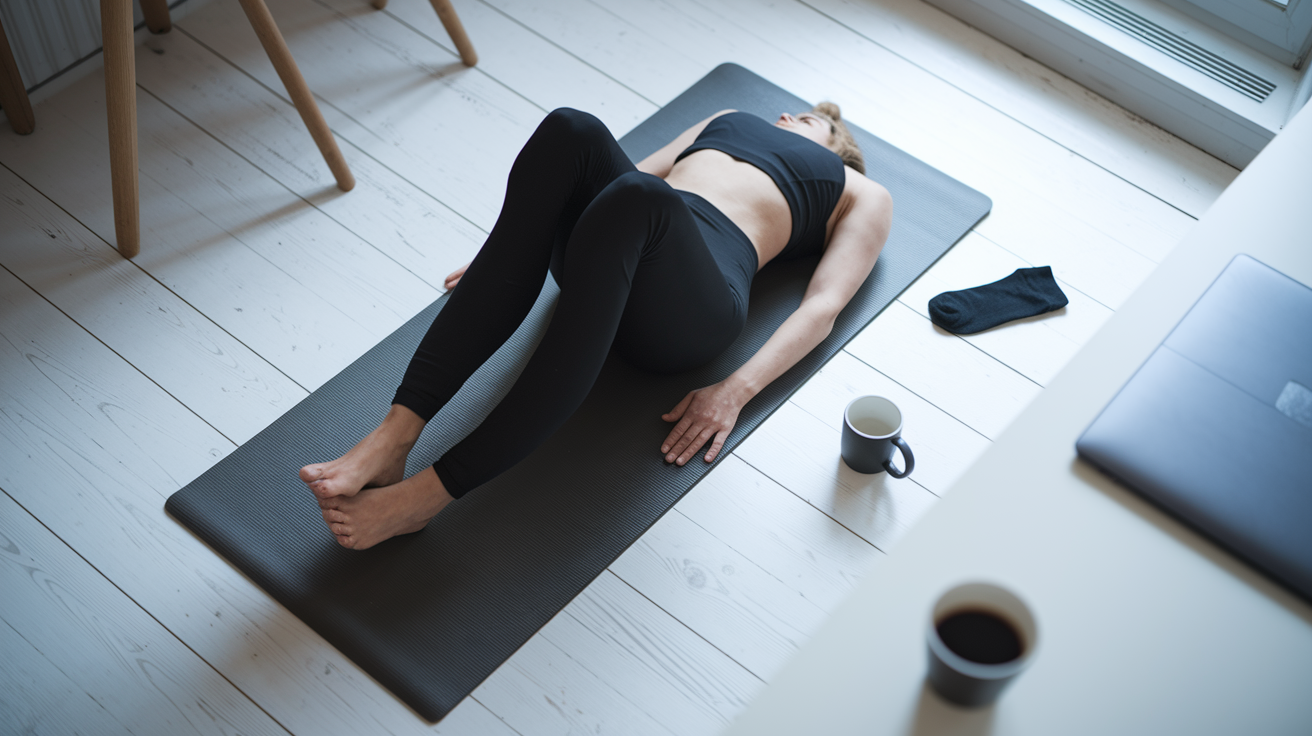
This sequence takes 5 to 10 minutes and requires no equipment. You can do it on a yoga mat, carpet, or even a hard floor in socks. The routine follows a logical flow, starting with breathwork to settle your nervous system, then moving through your body from top to bottom. Each movement uses 4 to 6 reps or holds of 5 seconds, making it easy to remember and repeat every morning without needing a timer or app.
Breathwork Reset
Start seated or standing. Inhale slowly through your nose, then exhale fully through your mouth. Repeat for 3 cycles, focusing on smooth, controlled breathing. After the first 3 cycles, do 3 more with a brief hold after each inhale and each exhale, just a few seconds. This wakes up your diaphragm, opens your ribcage, and signals to your nervous system you’re ready to move. Shallow breathing is common in desk workers because sitting compresses your torso and limits rib expansion. Starting with intentional breath sets the tone for everything else.
Wrist and Forearm Mobility
Raise both hands in front of you at shoulder height. Circle your wrists 4 to 6 times in one direction, then reverse and circle 4 to 6 times the other way. After wrist circles, hold your hands in front of you with palms forward. Open your fingers wide, spreading them as far as you can, then close them into tight fists. Repeat 4 to 6 times. These movements prep your wrists and forearms for typing and mouse work by increasing circulation and restoring mobility to joints that spend most of the day locked in place.
Neck and Upper Back Reset
Stand or sit tall with your ribs stacked over your hips. Slowly tilt your head to one side, bringing your ear toward your shoulder without lifting the shoulder. Hold for 5 seconds, return to center, then repeat on the other side. After both sides, do 5 slow shoulder rolls, moving your shoulders up toward your ears, back, and down in a smooth circle. Finish with 5 chest openers by clasping your hands behind your back, straightening your arms, and gently lifting your chest while squeezing your shoulder blades together. These counter the forward head posture and rounded shoulders that develop from hours of screen work.
Hip Opener Flow
Start in a 90–90 position on the floor. One leg bent in front of you at 90 degrees, the other leg bent behind you at 90 degrees. Hold for 5 seconds, feeling the stretch in your hip. Rotate your torso gently toward the front leg, then back to center. Transition to the opposite side by switching your legs and repeating the hold and rotation. Do this 5 times per side. After the 90–90 work, stand up and drop into a deep squat, keeping your heels on the ground if possible. Hold the squat as long as it feels comfortable, letting your hips open and your lower back release.
Low‑Back Activation and Release
Get on all fours with your hands under your shoulders and knees under your hips. Do 5 reps of Cat/Cow by arching your back and lifting your head (Cow), then rounding your spine and tucking your chin (Cat). Move slowly and breathe with each transition. After Cat/Cow, do 5 reps of Bird/Dog on each side by extending your opposite arm and leg, holding for a moment at the top, then returning to the starting position. Finish with 5 glute bridges by lying on your back with knees bent and feet flat. Lift your hips toward the ceiling, squeeze your glutes at the top, then lower back down with control.
Ankle Mobility Sequence
Sit on the floor with your legs extended in front of you and heels resting on the ground. Move your feet side to side at the ankles, keeping your legs and heels still. This windshield wiper motion targets the ankle joint. Do it 4 to 6 times. Next, circle each ankle 4 to 6 times in one direction, then reverse and circle 4 to 6 times the other way. Finish with 4 to 6 reps of ankle point and flex by pointing your toes forward, then flexing them back toward your shins. Keep your legs still and isolate all movement to the ankle. These drills restore circulation and mobility to a joint that rarely moves through its full range when you’re sitting or wearing shoes all day.
| Exercise Name | Target Area | Reps/Duration |
|---|---|---|
| Breathwork Reset | Diaphragm, ribcage | 3 + 3 cycles with holds |
| Wrist Circles & Fist Open/Close | Wrists, forearms | 4–6 reps each direction |
| 90–90 Hip Transitions | Hip flexors, glutes | 5 reps per side |
| Cat/Cow & Bird/Dog | Lower back, core | 5 reps each |
| Ankle Windshield Wipers & Circles | Ankles | 4–6 reps each direction |
Optional Deep‑Dive: Targeted Hip Mobility Enhancements

If you want to spend more time on hip mobility because sitting has left your hips particularly tight, these four movements give you deeper, more sustained work. They fit naturally after the main routine or you can do them on their own when you have a few extra minutes. The goal is to hold positions longer on the side that feels tighter, letting your body adapt without forcing range of motion.
Targeted hip movements for desk workers:
- 90–90 transitions with a longer hold on the tighter side, 10 to 15 seconds instead of 5
- Deep squat holds for 20 to 30 seconds, focusing on keeping heels down and chest lifted
- Pigeon pose held for 5 to 20 seconds per side, with your front shin as close to parallel as your hip allows
- Runner’s lunge with gentle rocking forward and back, spending time exploring the tightest positions
When you do these movements, your form matters more than how deep you go. In the 90–90 position, sit tall and keep your ribs over your hips instead of leaning forward to force depth. In pigeon pose, use a folded towel or pillow under your hip if your pelvis tilts to one side. In a deep squat, it’s fine to hold onto a wall or door frame for balance while your ankles and hips adapt. In a runner’s lunge, keep your back knee on the ground and shift your weight forward slowly, feeling the stretch in your hip flexor without arching your lower back.
If a position feels too intense, back off slightly and breathe. Progress comes from consistent, controlled exposure, not grinding through pain.
Optional Deep‑Dive: Additional Upper‑Body Relief (Neck, Shoulders, Wrists)

Desk workers often carry tension in the neck, shoulders, and wrists because these areas hold static positions for hours without relief. If your upper body feels tighter than your hips or lower back, spending a few extra minutes on these movements can make a noticeable difference in how you feel during the workday. The key is slow, deliberate motion with full ranges at each joint. Don’t rush through reps to finish faster.
Five upper body moves for additional relief:
- Wrist circles and fist open/close drills done twice, for a total of 8 to 12 reps per direction
- Shoulder rolls done slowly in both directions, focusing on reaching the top and bottom of each circle with control
- Chest openers with hands clasped behind your back, holding the stretch for 5 to 10 seconds and repeating 3 times
- Neck tilts and gentle rotations, holding each position for 5 seconds and moving through all four directions (left, right, forward tilt, rotation)
- Upper back extension over a rolled towel or foam roller placed horizontally across your mid back, arms overhead, for 5 deep breaths
These movements prep the tissues that typing, mouse work, and screen time overload. Slow breathing during each movement helps release tension that’s as much neurological as it is mechanical. If your neck feels particularly tight, do the neck tilts and rotations twice, spending more time on the direction that feels most restricted.
Optional Deep‑Dive: Lower‑Back Reset and Core‑Support Techniques
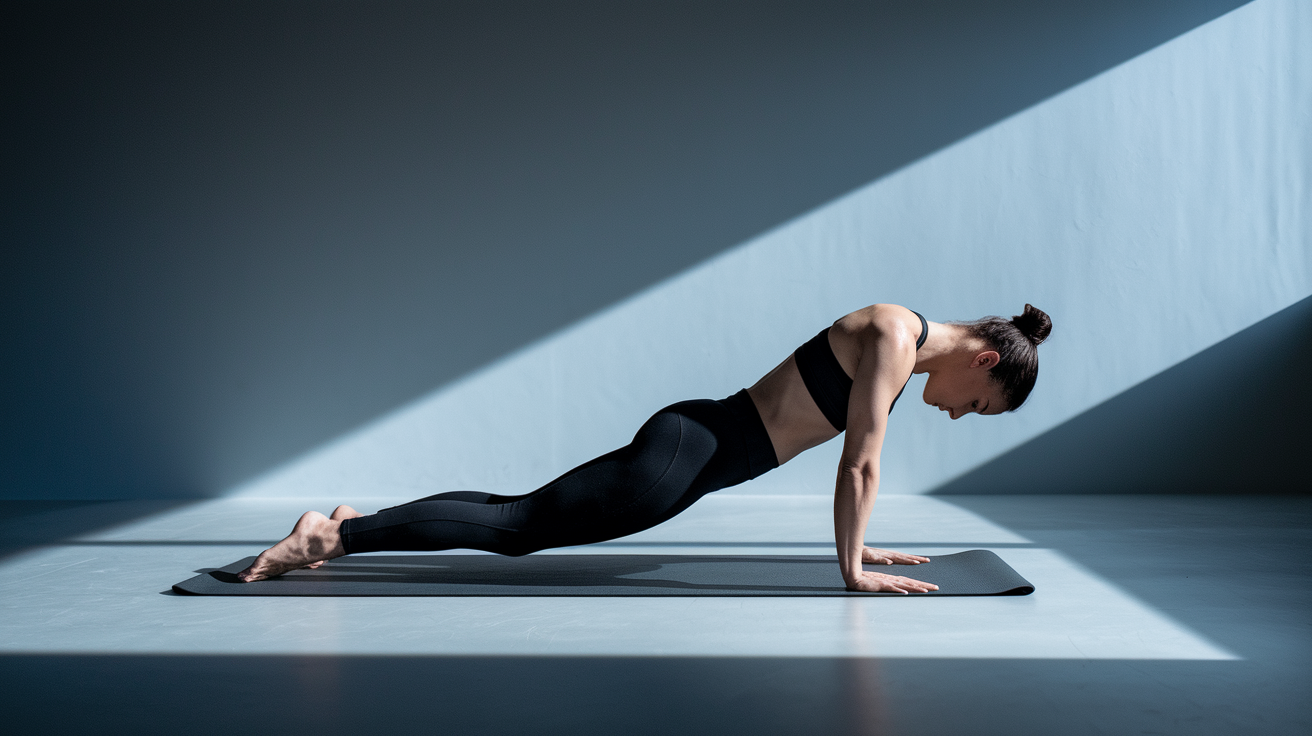
Lower back stiffness in desk workers often comes from two problems: lack of movement and lack of support. Sitting for hours without engaging your core or moving your spine leaves your lower back tissues overloaded and your deep stabilizers underactive. These techniques address both by mobilizing the spine and activating the muscles that support it.
Core‑Supported Spine Mobility
Cat/Cow and Bird/Dog are the foundation of lower back health for desk workers. In Cat/Cow, move slowly and focus on articulating each vertebra as you transition from extension to flexion. Don’t rush or use momentum. In Bird/Dog, extend your opposite arm and leg, but keep your core engaged so your lower back doesn’t arch. Hold the extended position for 2 to 3 seconds, return to the starting position, and repeat. These movements teach your spine to move while your core provides stability, which is exactly what sitting all day fails to do.
Gentle Twisting and Extension Drills
Lying spinal twists done slowly, holding each side for 5 to 20 seconds, release tension in the lower and upper back regions. Lie on your back with one knee pulled toward your chest, then guide that knee across your body toward the floor while keeping your opposite shoulder down. Breathe deeply and let gravity do the work. After twists, do a few reps of gentle back extension by lying on your stomach and pressing your chest off the floor with your hands, keeping your hips down. Hold for 3 to 5 seconds and repeat 3 to 5 times.
Quick actions for immediate low back relief:
- Do Cat/Cow between meetings or during long work sessions to reset spinal position
- Use a small towel roll behind your lower back when sitting to support natural curve
- Stand and walk for 2 minutes every hour to unload lower back tissues and restore circulation
How to Prevent Recurring Morning Stiffness for Desk Workers

Morning stiffness doesn’t stay gone just because you did one mobility routine. If you want lasting relief, the routine has to become a daily habit, like brushing your teeth. Doing it once feels good. Doing it every morning for two weeks creates noticeable change. Doing it for two months rewires how your body responds to sitting.
The routine itself matters, but so does what you do during the rest of the day. Mobility work prepares you for sitting, but it can’t undo 10 hours of locked posture by itself.
Between mobility sessions, your body needs micro breaks to interrupt long periods of stillness. Set a timer for every 60 to 90 minutes and stand up. Walk for 2 minutes, do a few wrist circles, roll your shoulders, or drop into a deep squat for 10 seconds. These small actions keep your joints moving and prevent the progressive tightening that happens when you sit without interruption from 9 a.m. until lunch. The breaks don’t need to be long or structured. They just need to happen.
Your desk setup also plays a role in how much stiffness you deal with each morning. If your monitor is too low, you’ll spend the day with your head tilted forward, which loads your neck and upper back. If your chair doesn’t support your lower back, your spine will round and your hip flexors will shorten even more. Adjust your desk, chair, and screen height so you can sit with your ribs over your hips, feet flat on the floor, and eyes level with the top third of your screen. Good setup doesn’t eliminate the need for movement, but it reduces how much compensation your body has to do while you work.
Five strategies to prevent morning stiffness from returning:
- Do your 5 to 10 minute mobility routine every morning before work, no exceptions
- Set a recurring timer for hourly movement breaks during your workday
- Adjust your desk setup so your posture requires less muscular effort to maintain
- Add 3 to 5 minutes of light movement or stretching before bed to reset after a long day of sitting
- Walk for 10 to 15 minutes after work to transition out of sitting posture and restore circulation
When to Seek Additional Guidance or Next‑Step Support for Your Mobility Routine

Most desk workers see noticeable improvement within one to two weeks of consistent morning mobility work. Stiffness decreases, posture feels easier to maintain, and daily tasks like bending, reaching, or walking up stairs feel smoother.
If you’ve been doing the routine every day for three weeks and you’re not seeing any change, or if certain areas remain tight or painful no matter how much you stretch them, it’s time to ask for help.
Persistent stiffness or pain that doesn’t respond to general mobility work often signals a need for personalized assessment. A physical therapist, mobility coach, or movement specialist can identify specific restrictions, compensation patterns, or weak links that a general routine can’t address. Tools like the Virtual Mobility Coach app give you personalized exercise progressions based on your specific pain points and movement limitations, which can be more effective than following a generic sequence.
If your wrists hurt during typing, your lower back aches after sitting for an hour, or your hips feel locked no matter how many 90–90 transitions you do, targeted intervention helps more than repeating the same movements and hoping for different results.
Four indicators that you need tailored guidance or professional support:
- Pain or stiffness that gets worse instead of better after two to three weeks of consistent mobility work
- Sharp or shooting pain during specific movements, especially in the lower back, neck, or hips
- Noticeable asymmetry where one side of your body feels significantly tighter or weaker than the other
- Inability to do basic movements like deep squatting, reaching overhead, or sitting cross legged without discomfort or compensation
Final Words
Start your morning with 5 to 10 minutes of movement. You learned why sitting locks up hips, shoulders, wrists, and the low back. The post gave a compact routine with breathwork, joint rotations, and six simple moves, plus optional hip, upper‑body, and low back extras. It also covered daily habits, quick workday fixes, and when to seek extra help.
Make the quick morning mobility routine for desk workers a small daily habit. Do a short session most days, tweak it for your needs, and you’ll feel more mobile and ready for the day.
FAQ
Q: What problem does a quick morning mobility routine solve for desk workers?
A: The quick morning mobility routine for desk workers eases morning stiffness in hips, shoulders, wrists, lower back, and ankles, improves posture, and boosts energy so you start work feeling clearer and less tense.
Q: What does a 5–10 minute routine look like?
A: The 5–10 minute routine is a short circuit of breath resets, joint rotations, forward folds, cat/cow, deep squats, chest openers, and ankle drills—done with 4–6 reps or short holds to feel immediate relief.
Q: Which symptoms will this routine help relieve?
A: This routine helps relieve stiff hips, tight shoulders, sore wrists, lower‑back ache, limited thoracic mobility, and sluggish circulation so you move easier and sit with better posture during the workday.
Q: How many reps and what breath pattern should I use?
A: The recommended reps and breath pattern are 4–6 reps per movement with a simple breath cycle: three normal breaths, then a three‑second hold on an exhale, repeat to reset tension and rhythm.
Q: Can I do this routine at my desk before starting work?
A: You can do this routine at your desk before starting work; most moves need minimal space and no equipment, and even a five‑minute session eases stiffness and primes your posture for the day.
Q: Why does sitting cause morning stiffness?
A: Sitting causes morning stiffness because it reduces circulation, shortens hip flexors, limits thoracic spine movement, overloads lumbar tissues, and alters breathing mechanics—leading to tight, sleepy muscles after a night or long sitting.
Q: How often should desk workers do this mobility routine to prevent stiffness?
A: Desk workers should do this mobility routine daily as a minimal effective dose, and add short joint rotations during work breaks to keep joints hydrated and prevent stiffness from returning.
Q: When should I see a professional or get personalized mobility guidance?
A: You should seek professional guidance when stiffness or pain persists despite consistent mobility, symptoms worsen, you have a known injury, or movements cause sharp pain requiring tailored assessment and progression.
Q: What quick modifications work for tight hips or shoulders?
A: Quick modifications for tight hips or shoulders include reducing depth, using a chair for support, holding longer on tighter sides, and choosing gentler alternatives like seated chest openers or half‑squat variations.
Q: Do I need equipment for the routine?
A: You do not need equipment for the routine; it uses bodyweight joint rotations, breathwork, and simple movements that fit in small spaces, though a chair can help with balance or support when needed.