
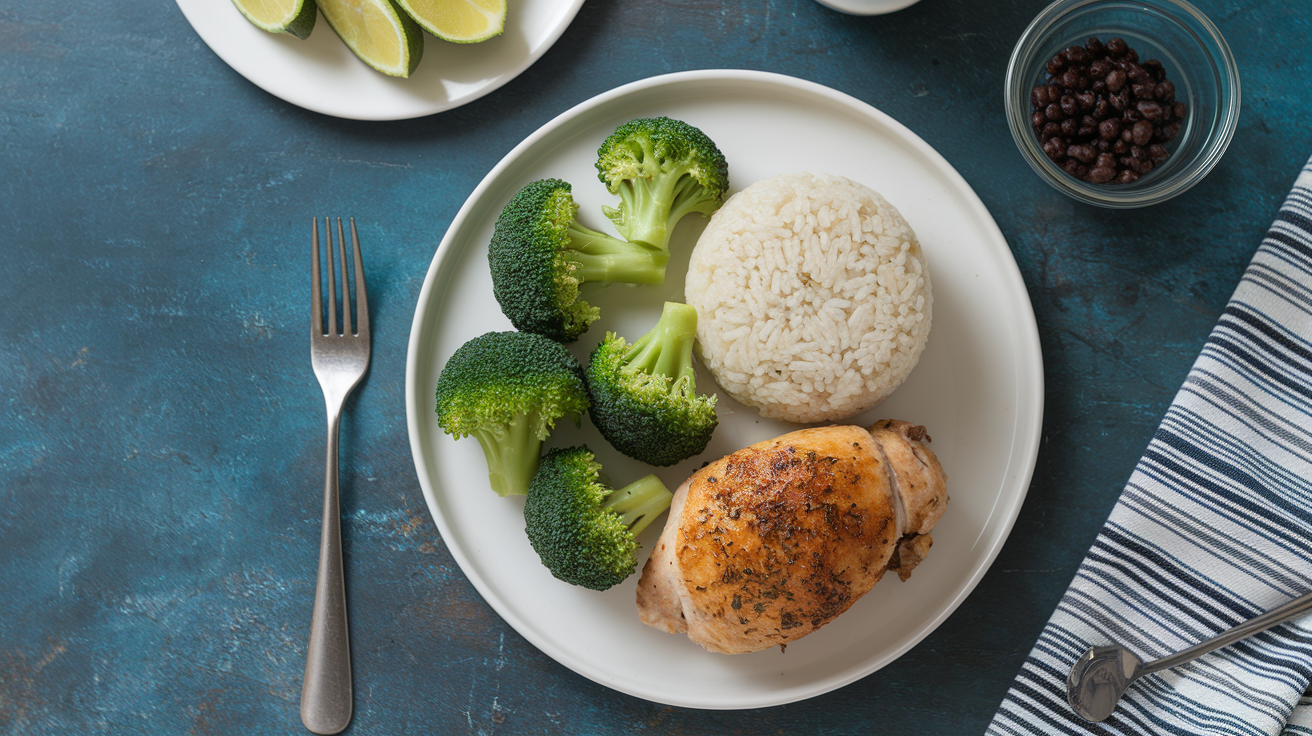
What if I told you losing fat could start with how you arrange your plate?
No scales, no apps, just split your plate so half is non-starchy vegetables, one quarter is a palm-sized lean protein, and one quarter is fiber-rich carbs, plus a teaspoon of healthy fat.
This setup cuts the guesswork, keeps meals in a sensible calorie range, and helps you feel full on less.
If you’re looking for a simple way to plan meals that fits busy weeks, try the plate method.
Understanding the Portion Control Plate Method for Fat Loss
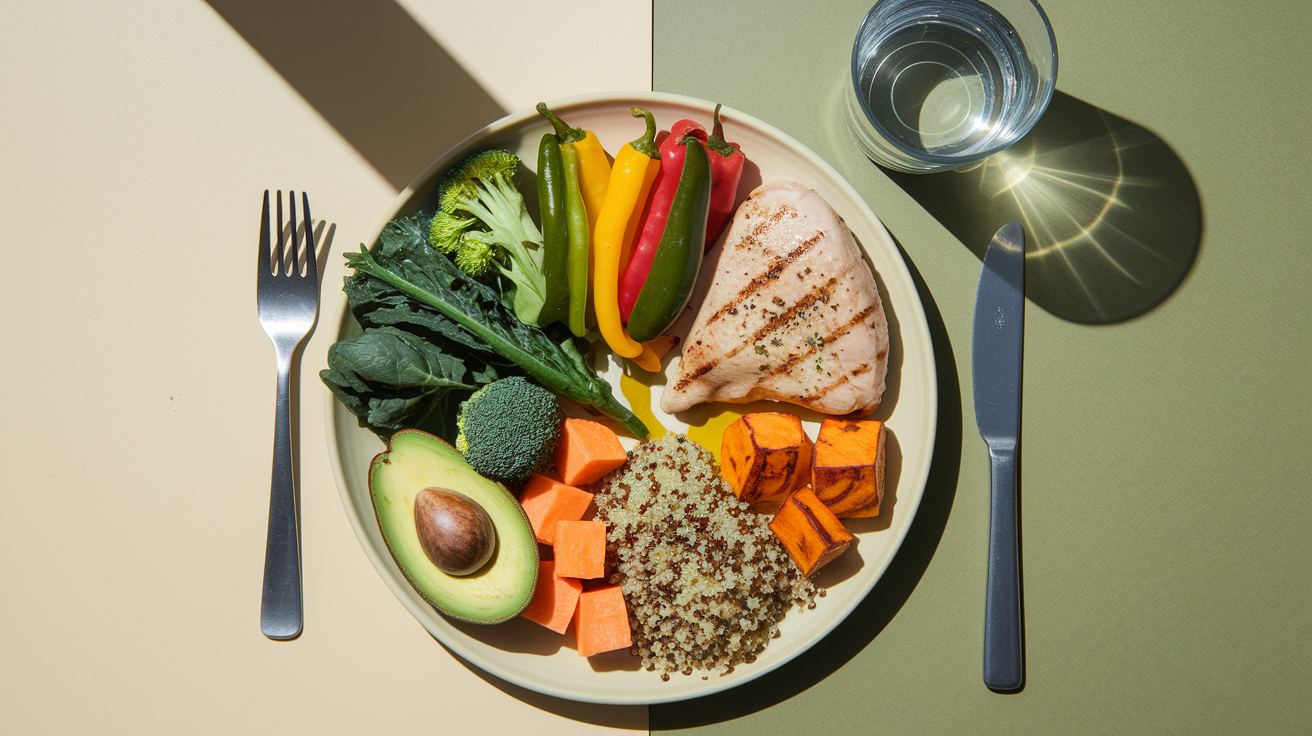
The portion control plate method splits your dinner plate into three sections: half gets filled with non-starchy vegetables, one quarter holds lean protein (3–4 ounces, roughly palm-sized), and one quarter holds fiber-rich carbs like brown rice or sweet potatoes. Add a small bit of healthy fat (a teaspoon of olive oil or a thumb-sized piece of avocado), plus 1–3 servings of fruit and 3 servings of dairy or calcium-rich alternatives throughout the day. The ratios control calories automatically because high-volume, low-calorie foods take up most of the plate, while calorie-dense protein and carbs sit in smaller, defined spaces.
This simple setup solves two big problems people face when trying to lose fat: guessing portion sizes and losing track of total calories. Most of us underestimate how much pasta or rice we serve ourselves and overestimate vegetables. The plate method cuts out that guesswork by giving you a clear, repeatable template that doesn’t need measuring cups, food scales, or calorie-tracking apps. It makes meal planning faster too. Once you know the formula, grocery shopping and dinner prep become way easier.
Here’s the short version: fill half your plate with vegetables (broccoli, leafy greens, peppers, zucchini), one quarter with a palm-sized portion of lean protein (chicken, fish, tofu, beans), and one quarter with a complex carb (quinoa, whole wheat pasta, peas). Add a teaspoon of healthy fat and pair the meal with water or another zero-calorie drink. That setup consistently delivers 400–600 calories per plate, depending on your exact portions and cooking methods, without any measuring required.
Why this works for fat loss:
- Protein and fiber keep you full and reduce hunger between meals
- High vegetable volume fills you up on fewer calories
- Stable blood sugar prevents energy crashes and cravings
- Consistent portion sizes create a predictable calorie deficit
- Simple habits are easier to repeat than complicated meal plans
Why Portion Misjudgment Happens With Fat Loss Meals
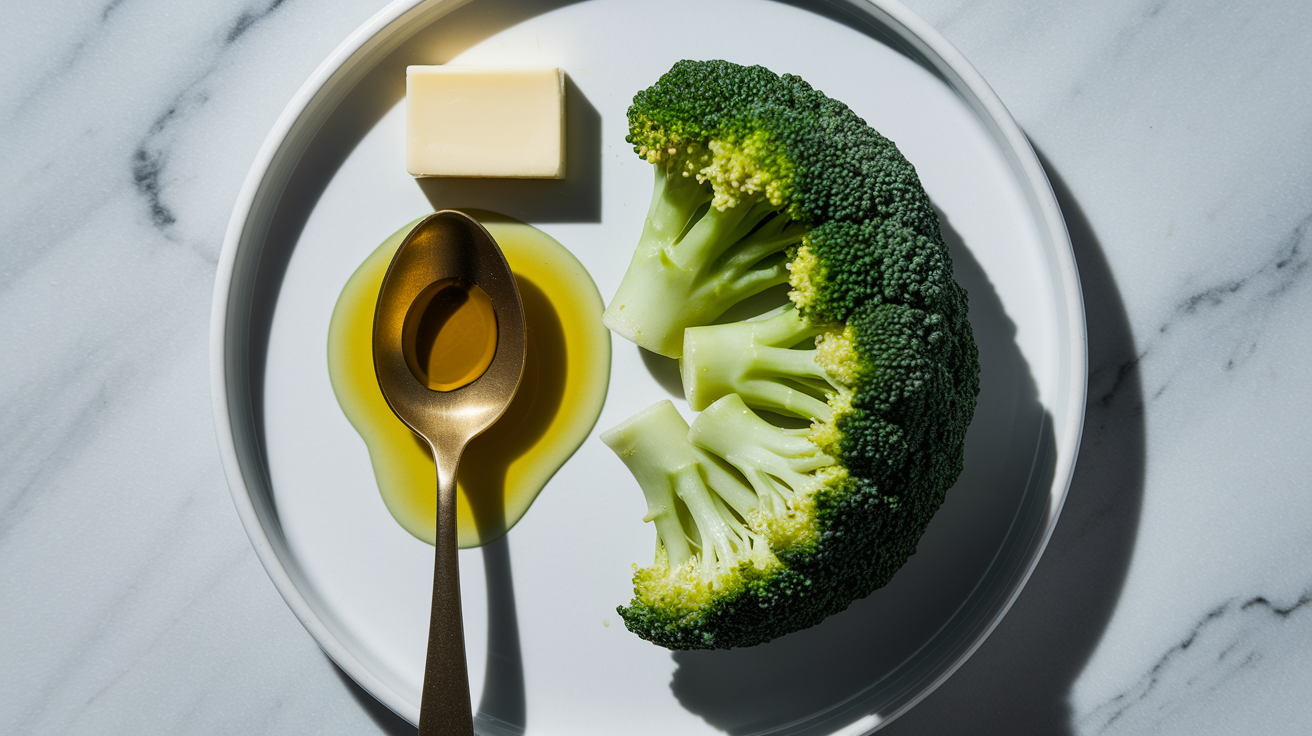
Most people misjudge portions because calorie density is invisible. A tablespoon of olive oil holds 120 calories but takes up almost no space on your plate. Two cups of steamed broccoli deliver only 60 calories but look like a mountain of food. When you eyeball servings of pasta, rice, or oils, it’s easy to serve yourself double or triple a standard portion without realizing it. Large dinner plates (10–12 inches) make the problem worse. They create empty space that feels wrong to leave unfilled, so you unconsciously add more food to make the plate look “complete.”
Fat loss efforts usually stall because of three invisible traps: underestimating fats (oils, butter, dressings, cheese), oversizing carbohydrate portions (pasta, bread, rice), and under-filling the vegetable half. If you skip the vegetables and fill that space with more protein or carbs instead, your plate can easily jump from 450 calories to 700 or 800 without looking different.
Common portion misjudgment triggers:
- Cooking oils and dressings added “to taste” without measurement
- Carb portions served from large pots or packages with no visual reference
- Skipping vegetables and doubling protein or starch to feel satisfied
- Using oversized plates (12+ inches) that make normal portions look small
Using Plate Division (50/25/25) to Build Fat Loss Portions
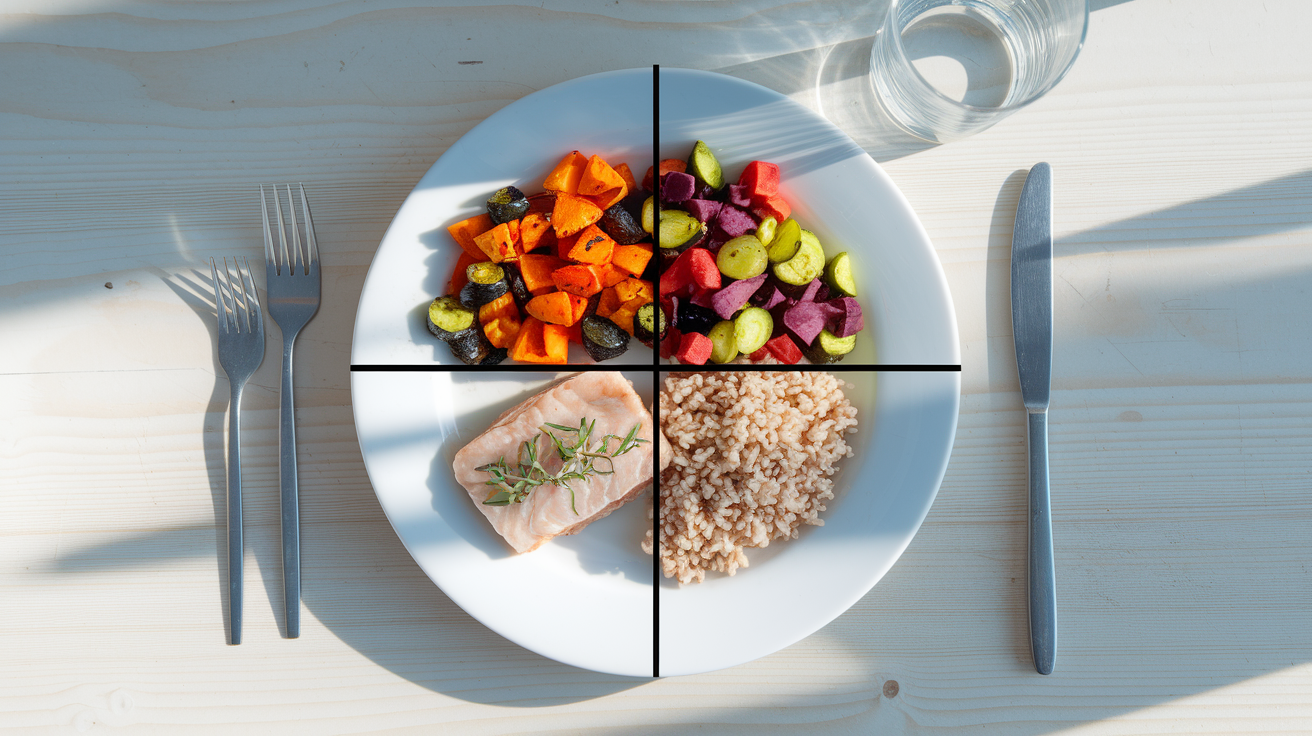
The 50/25/25 plate division gives you exact proportions without tools or guesswork. Picture your plate split into four equal sections: two of those sections (half the plate) hold vegetables, one section (a quarter) holds protein, and one section (a quarter) holds carbohydrates. That visual framework automatically limits calorie-dense foods and maximizes fiber and protein, two nutrients that slow digestion, stabilize blood sugar, and keep you full between meals.
Non-Starchy Vegetable Half
Non-starchy vegetables are the foundation of every fat loss plate because they deliver the most volume and fiber for the fewest calories. Fill half your plate with vegetables in multiple colors (green, red, orange, yellow, and purple) to cover a range of vitamins and minerals. Roast, steam, grill, or eat them raw with a small amount of seasoning or a teaspoon of olive oil.
Vegetable examples:
- Leafy greens (spinach, kale, romaine, arugula)
- Cruciferous vegetables (broccoli, cauliflower, cabbage, Brussels sprouts)
- Peppers, zucchini, cucumbers, tomatoes, asparagus, green beans
Lean Protein Quarter
Lean protein occupies one quarter of your plate and should measure 3–4 ounces cooked weight, about the size of your palm or a deck of cards. Protein slows digestion and triggers satiety hormones, which reduces hunger for hours after a meal. Choose lean cuts and cooking methods that don’t add extra fat (grilling, baking, poaching, or pan searing with cooking spray).
Protein examples:
- Skinless chicken breast or turkey
- Fish (salmon, cod, tuna, trout) or shrimp
- Eggs or egg whites
- Tofu, tempeh, beans, lentils
Fiber-Rich Carb Quarter
Complex carbohydrates occupy the final quarter of your plate and provide energy and additional fiber. Stick to whole grains and starchy vegetables that digest slowly and keep blood sugar steady. A typical portion is 1/3 to 1/2 cup cooked grains or one small to medium potato.
Carbohydrate examples:
- Brown rice, quinoa, farro, barley
- Whole wheat pasta or bread
- Sweet potatoes, peas, corn, acorn squash
| Section | Foods | Benefits |
|---|---|---|
| 50% Vegetables | Broccoli, peppers, leafy greens, zucchini | High fiber, low calories, increases satiety |
| 25% Protein | Chicken, fish, tofu, beans | Slows digestion, stabilizes blood sugar, builds muscle |
| 25% Carbs | Brown rice, quinoa, sweet potato | Sustained energy, additional fiber |
Portion Control Plate Protein & Carb Measurement (Without a Scale)
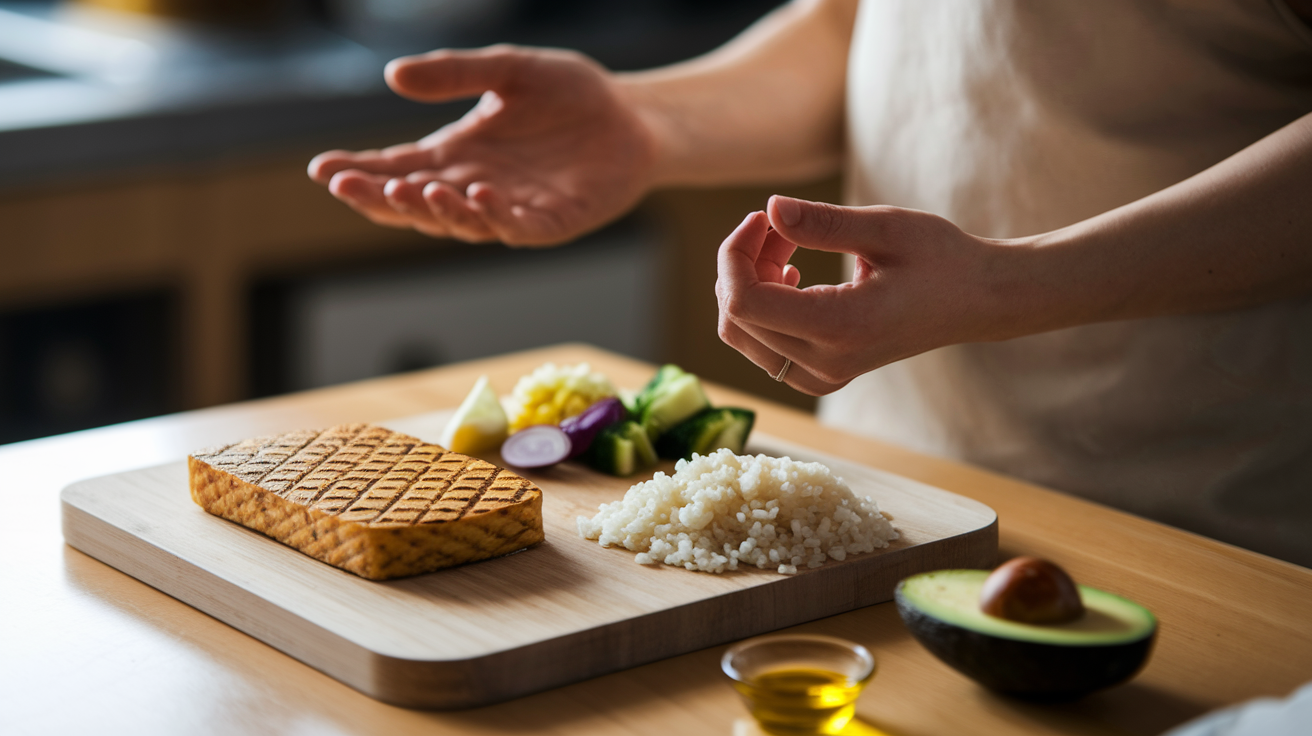
You don’t need a food scale or measuring cups to build accurate portions if you use simple visual cues. Your hand provides portable, personalized reference points that work anywhere (at home, at work, or in a restaurant). A palm-sized portion of protein is roughly 3–4 ounces cooked, which fits the protein quarter for most adults. A fist-sized portion of cooked vegetables or fruit is about one cup, and a cupped handful of cooked grains or starchy vegetables is close to 1/2 cup.
These cues aren’t perfect down to the gram, but they’re consistent enough to keep your portions in the right range meal after meal. The goal is sustainable accuracy, not laboratory precision. If your portions stay in the ballpark most days, the calorie deficit adds up over weeks without requiring constant vigilance.
Visual portion cues:
- Palm (protein): 3–4 ounces cooked chicken, fish, tofu, or beans
- Fist (vegetables or fruit): 1 cup raw leafy greens or chopped vegetables, 1 medium apple or 1 cup berries
- Cupped hand (carbs): 1/2 cup cooked rice, pasta, oats, or potatoes
- Thumb (fats): 1 tablespoon nut butter, 1/4 avocado, or 1 ounce cheese
- Thumb tip (oils): 1 teaspoon olive oil or other cooking fat
- Two cupped hands (salad base): 2 cups raw greens for a large salad
Sample Fat Loss Meals Using the Portion Control Plate Method
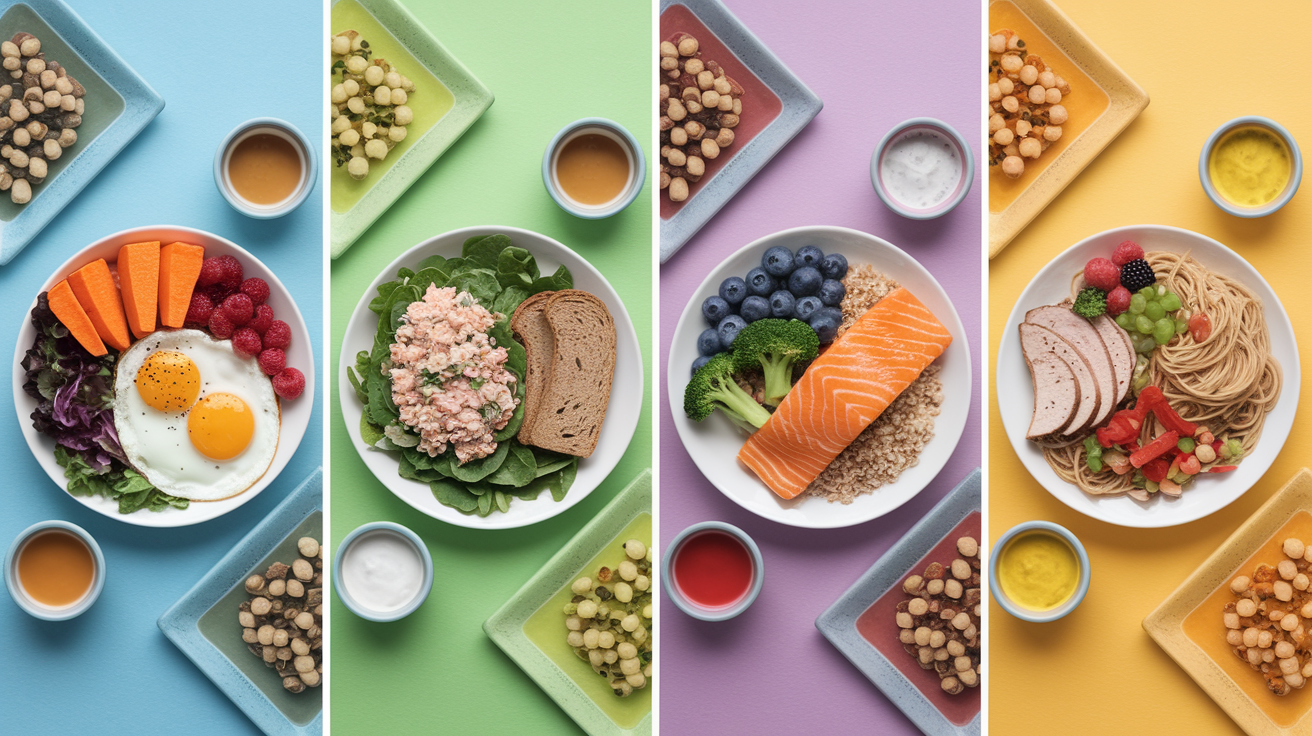
These four meals show how the plate method works across different times of day and meal styles. Each example includes specific portions and stays in the 400–600 calorie range, a typical target for fat loss plates. You can swap ingredients based on what you have or what you prefer, as long as you keep the same plate ratios and portion sizes.
Breakfast Plate Example
Start the day with a veggie-forward plate that includes one cooked egg, a large mixed salad (1/2 cup chopped tomatoes, 1/4 cup diced cucumber, 1 tablespoon diced onion, 1 teaspoon olive oil, balsamic vinegar), 1.5 ounces crumbled low-fat feta cheese, and 1/2 cup roasted sweet potato cubes. This breakfast lands around 400 calories and keeps you full until lunch without needing a mid-morning snack.
- Vegetables: mixed salad greens, tomatoes, cucumber, onion (fills half the plate)
- Protein: 1 cooked egg plus 1.5 oz low-fat feta (quarter plate)
- Carbohydrate: 1/2 cup roasted sweet potato (quarter plate)
- Fat: 1 teaspoon olive oil in the dressing
- Dairy/calcium: feta cheese counts as one dairy serving
Lunch Plate Example
Pack a portable lunch with 3 ounces canned tuna mixed with 3 tablespoons plain Greek yogurt, 1/4 cup diced apple, 2 tablespoons chopped celery, 2 tablespoons diced onion, 2 tablespoons chopped cilantro, and 1/4 cup chopped tomato. Season with a dash of low-sodium soy sauce, rice wine vinegar, black pepper, and chili paste, then drizzle with 2 teaspoons sesame oil. Serve over a large bed of mixed greens with 1 slice whole wheat bread and 1 small tangerine on the side.
- Vegetables: mixed greens, celery, onion, tomato, cilantro (half the plate)
- Protein: 3 oz tuna mixed with Greek yogurt (quarter plate)
- Carbohydrate: 1 slice whole wheat bread (quarter plate)
- Fat: 2 teaspoons sesame oil
- Fruit: 1 tangerine
Dinner Plate Example
Pan sear a 3-ounce salmon fillet with cooking spray and serve alongside roasted broccoli tossed with 1 teaspoon olive oil and topped with 1 ounce shredded low-fat cheddar cheese. Add 1/3 cup cooked brown rice and 1/2 cup fresh blueberries as a side or dessert. This plate comes in under 500 calories and delivers omega-3 fats, fiber, and a full serving of calcium.
- Vegetables: roasted broccoli (half the plate)
- Protein: 3 oz pan seared salmon (quarter plate)
- Carbohydrate: 1/3 cup cooked brown rice (quarter plate)
- Fat: 1 teaspoon olive oil for roasting
- Fruit/dairy: 1/2 cup blueberries, 1 oz low-fat cheese
Family-Friendly Plate Example
Cook 1/2 cup whole wheat spaghetti and toss with 1/2 cup tomato-based pasta sauce (choose brands with 3 grams added sugar or less per serving). Add 3 ounces cooked lean ground turkey and 1/2 cup sautéed mushrooms or bell peppers. Top with 1 ounce grated reduced-fat parmesan cheese and serve with 1 cup fresh cut fruit and 0.5 ounce almonds on the side.
- Vegetables: 1/2 cup sautéed mushrooms or peppers mixed into the pasta (half the plate visually, though mixed in)
- Protein: 3 oz lean ground turkey (quarter plate)
- Carbohydrate: 1/2 cup cooked whole wheat spaghetti (quarter plate)
- Fat: minimal in sauce, 0.5 oz almonds on the side
- Fruit/dairy: 1 cup fresh fruit, 1 oz parmesan
Customizing the Portion Control Plate Method for Different Diets
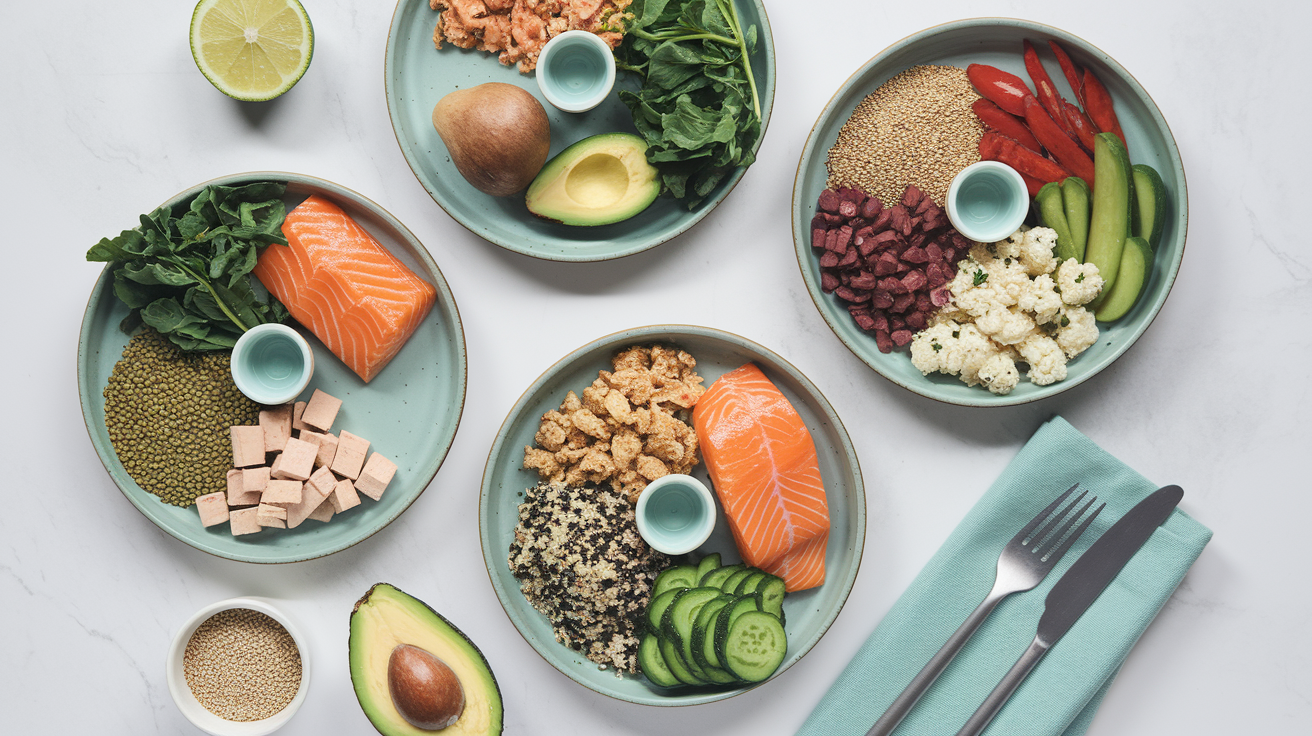
The plate method adapts to almost any eating pattern because the core structure (half vegetables, quarter protein, quarter carbs) stays the same. You just swap the specific foods to match your preferences or restrictions. Plant-based eaters can fill the protein quarter with beans, lentils, tofu, tempeh, or edamame and still hit the same satiety and blood sugar benefits. Heart-healthy and diabetes-friendly versions emphasize lean proteins, unsaturated fats (olive oil, avocado, nuts), and low-glycemic carbs like quinoa or sweet potatoes.
Low-carb variations shrink the carbohydrate quarter and expand the vegetable half or add extra healthy fats. Think cauliflower rice or zucchini noodles in place of grains, with a larger portion of salmon or avocado. Gluten-free plans substitute quinoa, brown rice, or gluten-free oats for wheat-based grains. Dairy-free or vegan plans replace milk, cheese, and yogurt with fortified soymilk, almond milk, tofu, canned fish with edible bones (sardines), or calcium-fortified plant milks.
If you have specific calorie or macronutrient targets (for example, higher protein for strength training or lower carbs for insulin sensitivity), a registered dietitian can adjust portion sizes and fat servings to fit your numbers while keeping the visual plate structure intact.
Four common adaptations:
- Plant-based: beans, lentils, tofu, tempeh for protein, fortified plant milks and leafy greens for calcium
- Low-carb: reduce carb quarter to 1/4 cup or replace with extra vegetables, increase healthy fats
- Gluten-free: quinoa, brown rice, gluten-free oats, or potatoes instead of wheat pasta or bread
- Heart-healthy: emphasize fish, skinless poultry, olive oil, and whole grains, limit saturated fats and sodium
Eating Out With the Portion Control Plate Method
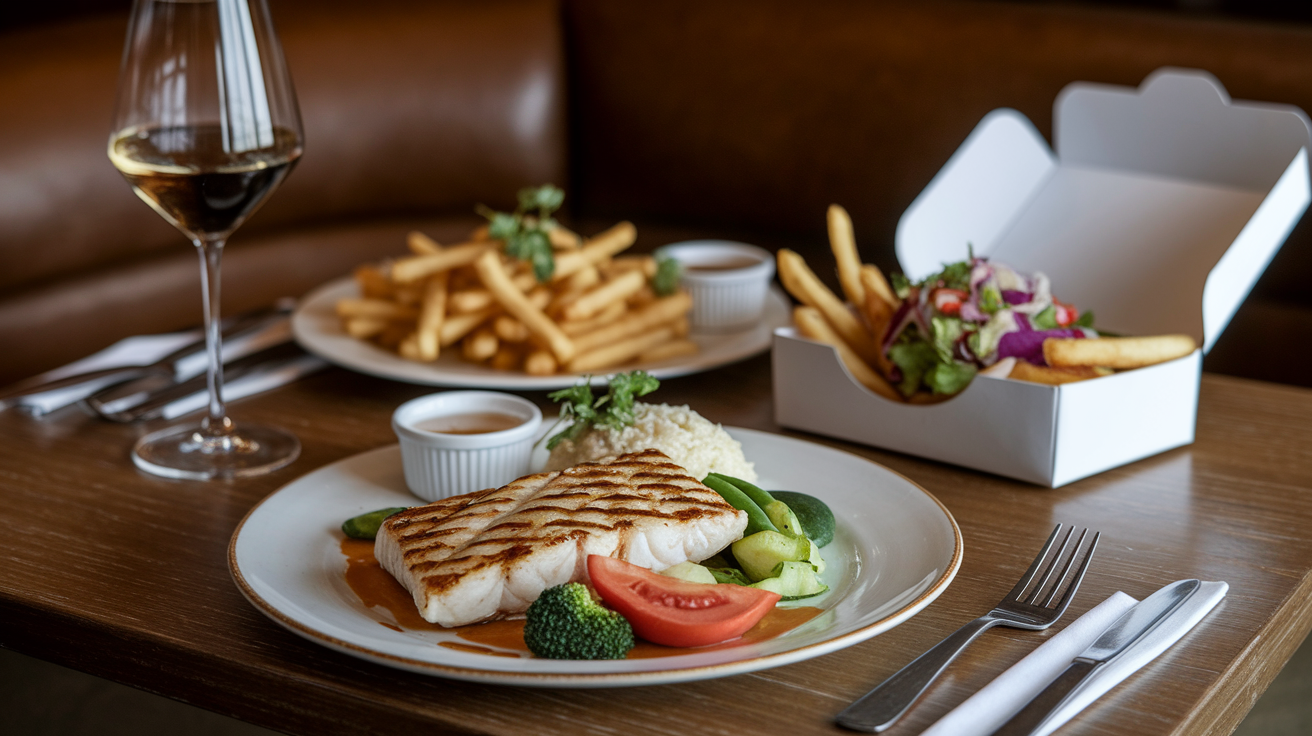
Restaurant portions are often double or triple what you’d serve at home, but you can still recreate the 50/25/25 structure with a few simple requests. Ask for sauces and dressings on the side so you control how much goes on your plate. Two tablespoons of ranch dressing can add 140 calories without changing the look of your meal. Substitute fries, chips, or other fried sides for steamed vegetables, a side salad, or fruit. If the restaurant serves oversized portions, split an entrée with someone else or ask for a to-go box when the meal arrives and pack half before you start eating.
Look for dishes that naturally line up with the plate method: grilled fish or chicken with vegetables and a small portion of rice or potato, salads with lean protein and dressing on the side, stir-fries with plenty of vegetables and a moderate amount of noodles or rice. Avoid breaded, fried, or cream-based preparations, which hide large amounts of fat and calories.
Five restaurant strategies:
- Ask for sauces, dressings, butter, and oils on the side
- Substitute fries or chips for vegetables, salad, or fruit
- Request grilled, baked, or steamed preparations instead of fried
- Split entrées or box half the meal before eating
- Order an appetizer-sized portion of protein with double vegetables
Preventing Portion Creep When Using the Plate Method
Portion creep happens slowly. An extra drizzle of oil here, a slightly larger scoop of rice there, and those small additions compound over weeks. One of the most common mistakes is over-adding fats: a “splash” of olive oil can easily become two or three tablespoons (240–360 calories) instead of the intended one teaspoon (40 calories). Another is letting the carb quarter expand to fill a third or even half the plate, especially with pasta or rice served family-style from a large pot.
Emotional eating and distracted eating also undermine the method. If you’re eating in front of a screen or while stressed, you’re less likely to notice portion sizes or stop when you’re satisfied. Small tools help: use a 9-inch plate instead of a 10 or 12-inch plate, prep meals in advance so you’re not making decisions when you’re hungry, and check in halfway through the meal to assess whether you’re still physically hungry or just eating because food is there.
Five mistakes to avoid:
- Over-pouring oils, dressings, or sauces without measuring (even roughly)
- Letting the carb quarter creep past 1/2 cup cooked grains or one small potato
- Skipping the vegetable half and filling that space with more protein or carbs
- Eating while distracted (TV, phone, work) and losing track of portions
- Not planning meals in advance, which leads to larger portions when you’re very hungry
When to Seek Additional Guidance for Plate Method Fat Loss
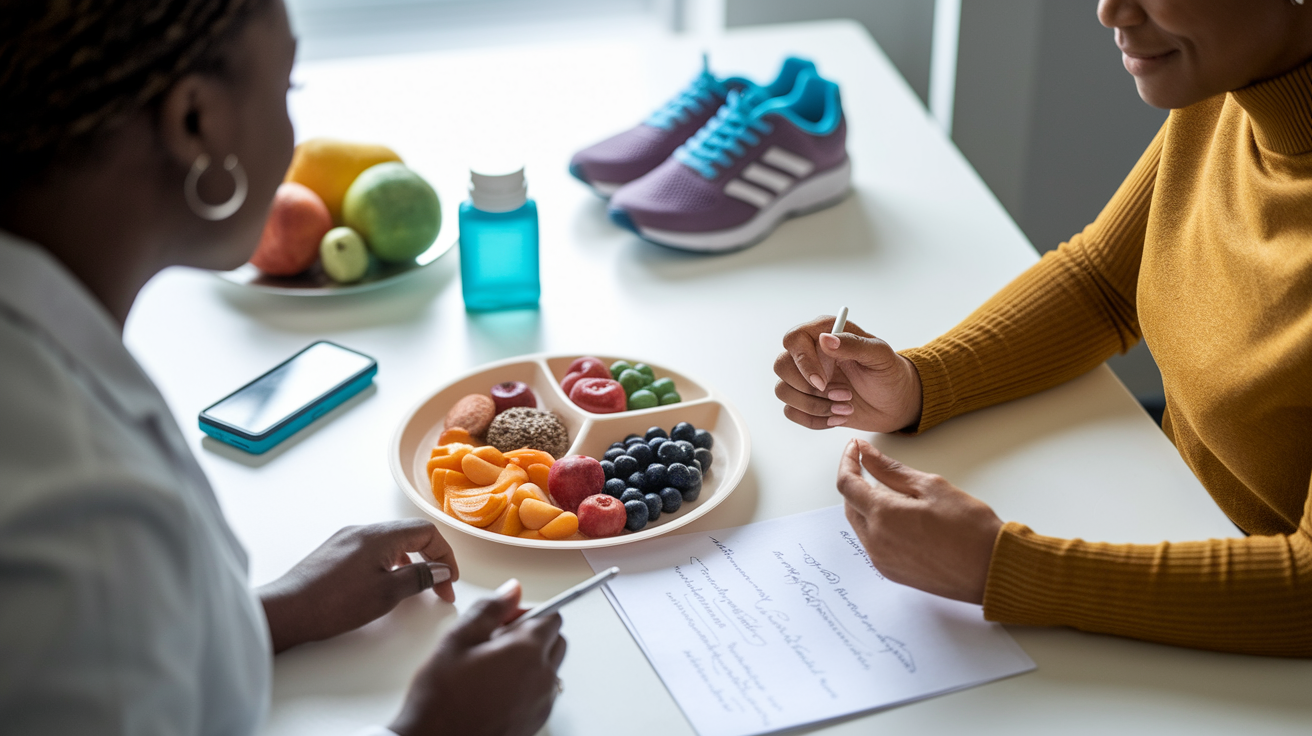
The plate method works well for most healthy adults, but some situations benefit from personalized guidance. A registered dietitian can adjust the method if you have diabetes and need tighter blood sugar control, if you’re managing heart disease and need specific fat or sodium targets, or if you’re an athlete who needs higher calorie and protein intakes than the standard plate provides. Pregnancy and postpartum periods also require customized portions to support both fat loss (postpartum) and adequate nutrition for baby.
Seniors might need modifications for smaller appetites, medication interactions, or bone health (higher calcium and vitamin D). If you have a history of disordered eating, rigid portion rules can sometimes backfire. Working with a dietitian or therapist ensures the method supports your relationship with food rather than creating new stress.
Four circumstances where consultation is helpful:
- Diabetes, prediabetes, or insulin resistance requiring tailored carbohydrate portions
- Pregnancy, breastfeeding, or postpartum fat loss with specific nutrient needs
- Athletic training or high activity levels needing increased calories and protein
- History of disordered eating or a complicated relationship with portion control
Final Words
Pick up your plate and divide it, half non-starchy veggies, a palm-sized protein, and a quarter whole-grain or starchy carb. That visual split is the whole point, simple, consistent portions that help you manage calories without tracking every bite.
We covered the 50/25/25 split, easy measuring hacks, sample meals, tweaks for different diets, and how to eat out without losing control.
Keep it practical. Try the portion control plate method for fat loss meals for a week and tweak as you go. You’ll get steadier energy and a realistic path forward.
FAQ
Q: Are portion control plates good for weight loss?
A: Portion control plates can help weight loss by visually limiting servings—typically half veggies, quarter lean protein, quarter fiber-rich carbs—supporting fullness and steadier calories without strict calorie counting.
Q: What is the 3-3-3 rule for fat loss?
A: The 3-3-3 rule for fat loss is a simple meal pattern: three meals a day, each with three elements—protein, fiber-rich carbs, and non-starchy vegetables—to boost satiety and steady blood sugar.
Q: How to portion plate for fat loss?
A: To portion a plate for fat loss, fill half with non-starchy vegetables, a quarter with palm-sized lean protein (3–4 oz), and a quarter with fiber-rich carbs; add a small teaspoon of healthy fat.
Q: What is the 70 20 10 diet?
A: The 70 20 10 diet usually describes a flexible food split: about 70% whole minimally processed foods, 20% less-processed choices, and 10% planned treats; exact meanings and macronutrient splits vary.