

Think neck pain is something you just have to live with?
It doesn’t have to be.
This post shows simple neck exercises you can do at home to ease stiffness, lower daily discomfort, and build the muscle support that keeps pain from coming back.
You’ll get quick mobility moves, no-equipment strength drills, and easy posture fixes you can use between meetings.
Pick what fits your day, start small, and these routines will help you move easier and feel more stable.
Immediate Relief Through Targeted Neck Mobility Exercises

Neck stiffness usually responds fast to controlled stretches that get blood flowing and ease nerve compression. When you hold a gentle stretch for a few seconds, fresh circulation reaches tight muscle while irritating waste products start clearing out. Your cervical spine has seven small vertebrae that need balanced muscle tension to keep spacing and alignment, so even short mobility sessions can bring back comfort.
These quick stretches target muscles that get shortened from desk work, phone scrolling, or how you sleep. Each one takes under a minute. You can do them sitting or standing, no equipment needed.
-
Neck Glide – Push your chin straight forward like a turtle, hold 5 seconds, return to neutral. Do it 10 times. This retrains deep stabilizers without forcing your head into weird ranges.
-
Neck Rotation – Turn your head to look over your left shoulder until you feel a comfortable stretch, hold 10 seconds, then rotate right and hold another 10. Do 10 total reps (5 each side).
-
Tilted Forward Flexion – Drop your chin toward your chest using just your neck (don’t round your shoulders), hold 5 seconds, lift back to neutral. Repeat several times during the day whenever tension builds.
-
Upper Trapezius Stretch – Tilt your head toward your right shoulder and let the weight of your head create the stretch along the left side of your neck. Hold 10 seconds, come back to center, repeat on the other side. Do 5 reps per side.
Use these first thing in the morning to reset after sleeping in one position, or during desk breaks every 60 to 90 minutes. If you’re staring at screens for hours, set a reminder to run through all four. Most people feel less tightness and easier head movement after the first session.
Neck Strengthening Techniques for Better Posture and Pain Prevention

Strengthening the muscles that support your cervical spine cuts down future pain episodes and helps your neck handle daily strain. Strong deep neck flexors keep your head balanced over your shoulders instead of creeping forward, while trained extensors fight the forward pull of gravity and screen time. These muscle groups act like guy-wires that stabilize each vertebra and protect what’s inside your spine.
Targeted strengthening also builds resilience to sudden forces (whiplash during sports, minor car accidents) and reduces chronic discomfort from muscular imbalance or repetitive strain.
Chin Tucks
Lie on your back with knees bent and feet flat. Gently nod your head like you’re saying “yes,” bringing your chin slightly down and lengthening the back of your neck. Hold 5 to 10 seconds while keeping your jaw relaxed. Do 3 sets of 10 reps. This activates deep neck flexors that are usually weak in people with forward head posture.
Chin Tuck With Head Lift
Start in the same position as standard chin tucks. Once you’ve got the tucked chin alignment, lift your head about 2 inches off the floor and hold for 10 seconds. Your gaze should stay on the ceiling, and you should feel the front of your neck working without jaw strain. Lower slowly and repeat for 2 to 3 sets of 10.
What these foundational exercises do:
- Posture correction – Reinforces neutral head position that reduces forward drift and upper back rounding.
- Stability – Trains deep stabilizers that maintain safe joint spacing during daily movement and unexpected impacts.
- Pain reduction – Addresses muscular imbalances behind chronic tension headaches and upper trapezius overload.
No-Equipment Neck Exercise Routine for At-Home Practice
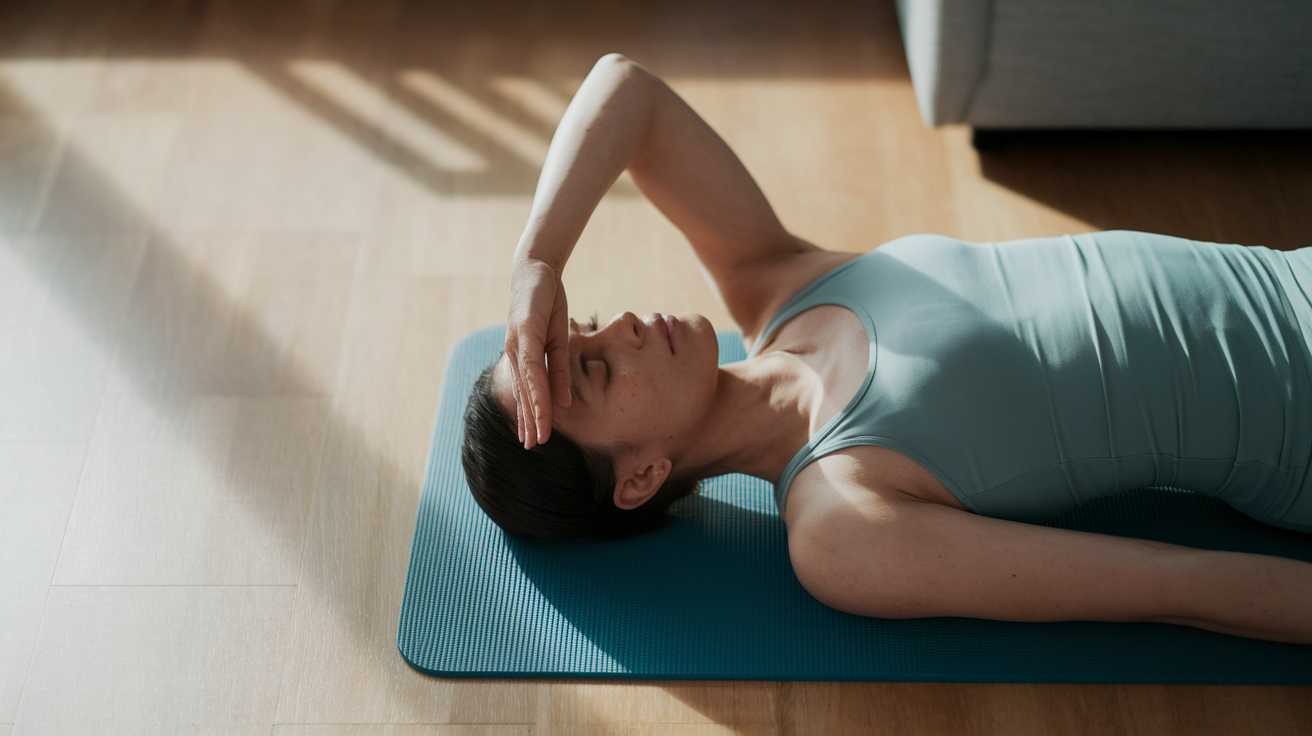
Your head weighs about 10 pounds, which gives natural resistance for isometric and dynamic neck drills when you position your body right. Bodyweight exercises are perfect for building foundational strength and endurance without bands, weights, or specialized gear. Because these movements rely on controlled holds and slow tempo, they teach motor control and body awareness that carries over to everyday posture.
Do the following three exercises in sequence, resting 30 to 60 seconds between each:
-
Isometric Neck Press (Supine) – Lie on your back, place one hand on your forehead, and try to nod your chin toward your chest while your hand provides gentle resistance. Hold 5 seconds without allowing actual movement, then relax. Move your hand to the back of your head and press backward into your palm for another 5 second hold. Do 10 reps of each direction (forward and backward).
-
Supine Chin Tuck – Same starting position. Perform the classic chin tuck by drawing your chin down and lengthening the back of your neck. Hold 5 to 10 seconds, relax, repeat for 3 sets of 10.
-
Side-Lying Neck Raise – Lie on your right side with your head resting on the floor. Tuck your chin slightly, then lift your head until it aligns with your spine (not higher). Hold 10 seconds, lower slowly, complete 2 to 3 sets of 10. Roll to your left side and repeat.
This routine fits well into a 3 times per week schedule, either standalone or added to your general warm-up. Consistency beats volume. Most people see measurable improvements in neck endurance and less stiffness within two to three weeks of regular practice.
Resistance Band Neck Exercises for Progressive Strength Building
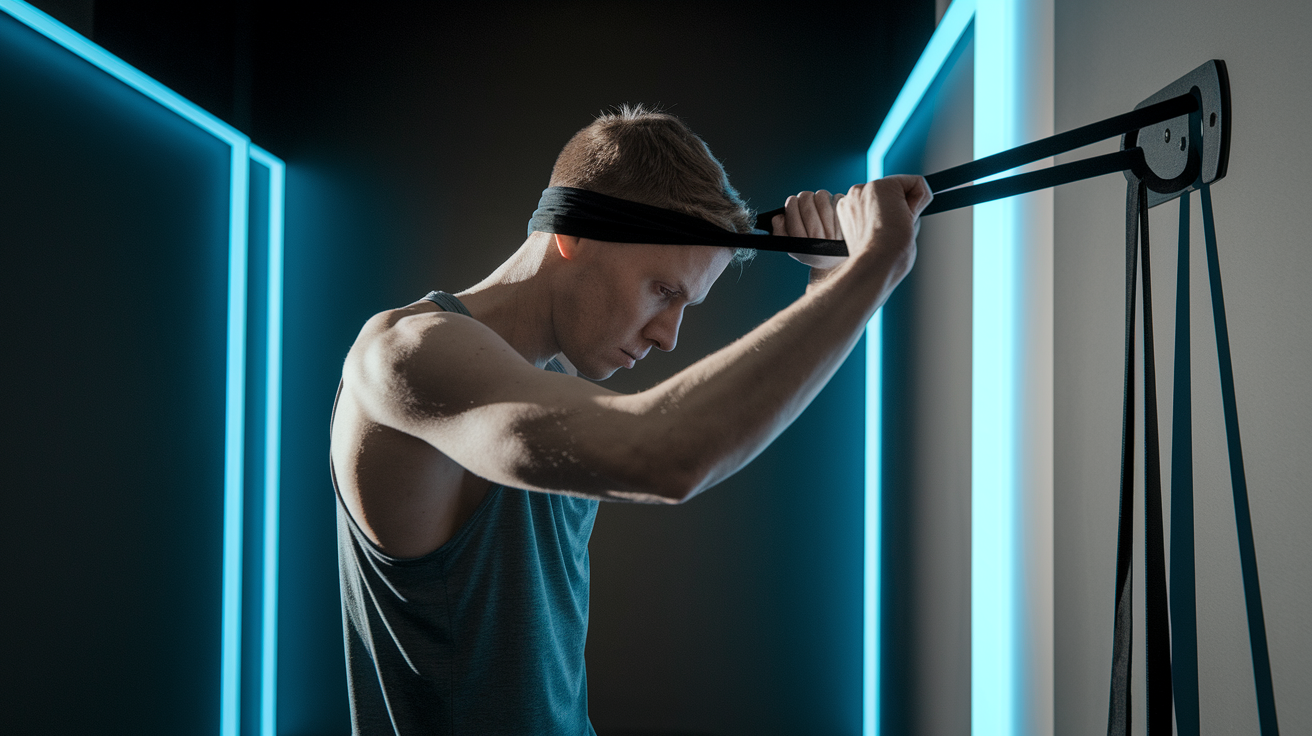
Resistance bands add controlled, adjustable load once bodyweight exercises get too easy. Bands also give smooth tension through the full range of motion, which helps you develop strength at end ranges where the neck’s most vulnerable. This type of progressive overload matters for athletes, people coming back from injury, and anyone wanting robust cervical stability.
Flexion
Anchor the band at head height. Loop it around the back of your head and face away from the anchor. Step forward until you feel light tension, then get into a chin tuck position. Slowly flex your neck forward (chin toward chest) against the band’s resistance, pause briefly, return to the start with control. Do 2 to 3 sets of 10.
Extension
Anchor the band below head height. Loop it around your forehead and face the anchor. Step backward to create tension, keep a neutral chin, and pull your head straight back (like you’re pulling away from the anchor) without tilting your chin up. Control the return. Do 2 to 3 sets of 10.
Rotation
Anchor the band at head height. Loop it around the side of your head and stand perpendicular to the anchor. Turn your head away from the anchor through your full comfortable range, pause, return slowly. Do 2 to 3 sets of 10, then switch sides.
Lateral Flexion
Anchor the band at shoulder height. Loop it around the side of your head and stand perpendicular to the anchor. Tilt your head toward the opposite shoulder (ear toward shoulder), pause, return to neutral. Do 2 to 3 sets of 10 per side.
| Exercise | Anchor Height | Sets/Reps |
|---|---|---|
| Flexion | Head height | 2–3 × 10 |
| Extension | Below head height | 2–3 × 10 |
| Rotation | Head height | 2–3 × 10 (each side) |
| Lateral Flexion | Shoulder height | 2–3 × 10 (each side) |
Start with a light resistance band and focus on smooth, controlled motion. Once you can finish all prescribed sets and reps without fatigue or form breakdown, increase resistance by choosing a thicker band or stepping farther from the anchor. Don’t add volume too quickly. Neck muscles respond better to gradual load increases spread over several weeks.
Mobility and Strength Balance: Neck Posture Correction Strategies

Forward head posture puts extra mechanical stress on your cervical spine and contributes to chronic pain, tension headaches, and upper back discomfort. For every inch your head drifts forward from neutral alignment, the effective load on your neck muscles increases big time. Fixing this requires three things: realigning your head over your shoulders, gently activating stabilizing muscles, and adjusting your workstation or daily habits to support better positioning throughout the day.
Use these three posture drills as a sequence whenever you catch your head creeping forward:
-
Chin tuck alignment hold – Sit or stand tall, draw your chin back (without tilting your head up or down), hold 5 to 10 seconds. This resets neutral cervical spine position and engages deep neck flexors.
-
Shoulder positioning reset – Do a set of shoulder shrugs by lifting both shoulders straight up toward your ears (without bending elbows), hold 5 seconds, then relax them down and slightly back. Do 10 reps to relieve upper trapezius overload and encourage scapular retraction.
-
Workstation ergonomic check – Adjust your monitor so the top third of the screen sits at or just below eye level, position your keyboard and mouse close enough to avoid reaching, make sure your chair supports a neutral lumbar curve. These environmental changes reduce the postural drift that undoes your corrective work.
Run these posture resets every 60 to 90 minutes during work hours or whenever you transition between tasks. Most people find that pairing a physical cue (like standing up from your desk) with a brief posture correction sequence makes the habit stick. Over time, your resting head position naturally shifts closer to neutral, cutting down the need for constant manual correction.
Safety Guidelines and When Neck Exercises Should Be Modified

Proper neck training uses controlled, pain-free ranges and emphasizes slow, deliberate movement to avoid straining delicate structures. Common mistakes? Forcing your head into end range positions too fast, holding your breath during isometric holds, and ignoring sharp or radiating pain. If you’re dealing with an acute flare-up (very stiff and painful neck), limit each stretch or exercise to a single rep at first, rest for a few hours or until the next day, then gradually add volume as symptoms settle.
Stop any exercise right away if you get numbness, tingling, or weakness radiating into your arms or hands, or if a movement increases your pain instead of reducing it. The goal is better flexibility and function, not pushing through discomfort. If your neck feels sore the day after a session, that’s normal muscle fatigue. Sharp pain during the exercise itself or new symptoms that show up afterward mean you need to reduce intensity, shorten hold times, or modify the movement pattern.
When Neck Pain Requires Professional Evaluation

Most neck stiffness and discomfort improve with consistent stretching, strengthening, and posture adjustments over a few weeks. Certain warning signs point to a more serious problem that needs medical assessment rather than self-care alone. Red flags include severe headache with neck pain, fever, nausea, or dizziness, plus pain following a traumatic event like a car accident or sports collision. Numbness, tingling, or weakness spreading into your arms or legs suggests possible nerve compression or spinal cord involvement that needs urgent evaluation.
Get professional evaluation if you notice any of these:
- Neck pain that gets worse progressively over several weeks despite consistent self-care and exercise.
- Pain that radiates down one or both arms, especially with numbness or grip weakness.
- Neck stiffness so bad you can’t touch your chin to your chest, particularly if fever or severe headache is also present.
- Pain that wakes you from sleep or happens at night when you’re resting, which can signal inflammatory or structural issues unrelated to posture or muscle tension.
When these signs show up, a healthcare provider will do a physical exam and may order imaging studies like X-ray (to check bone alignment and spacing), CT scan (for detailed bone and joint evaluation), or MRI (to see soft tissues, discs, nerves, and the spinal cord). Early professional intervention prevents minor issues from becoming chronic problems and makes sure serious conditions get appropriate treatment.
Sample 10-Minute Neck Exercise Program for Daily Use
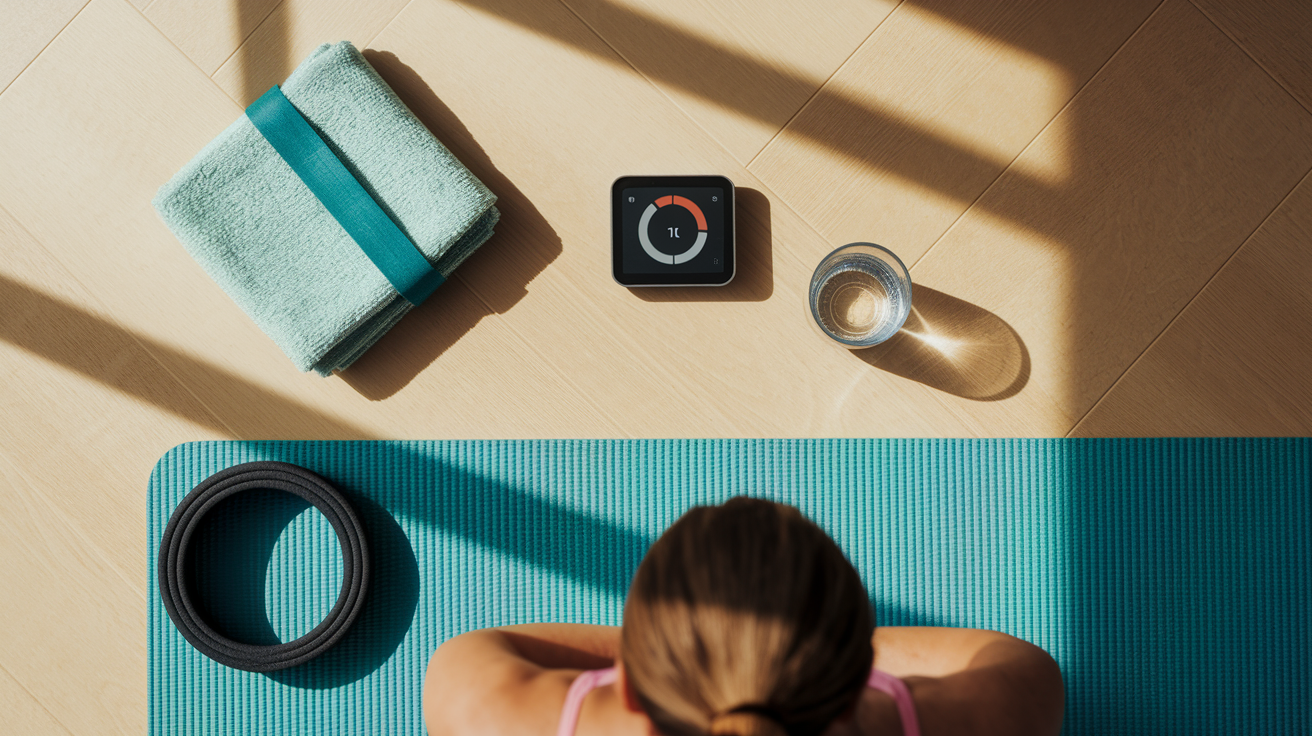
A focused 10 minute routine combines mobility, strength, and postural control into a single session that fits easily into your morning, lunch break, or evening wind-down. This program uses exercises from earlier sections, sequenced to warm up your neck with gentle mobility work before moving into strength-building holds and finishing with a posture reset.
Do this routine 3 times per week on non-consecutive days to allow for recovery:
-
Chin Tucks – Lie on your back, do the classic chin tuck motion, hold each rep for 5 to 10 seconds. Do 3 sets of 10. This primes deep neck flexors and establishes proper alignment for what follows.
-
Neck Rotation – Sitting or standing, turn your head to look over your left shoulder and hold 10 seconds, then turn right and hold another 10. Do 10 total reps (5 per side). This mobility drill reduces rotational stiffness and prepares your neck for multi-plane movement.
-
Side-Lying Neck Raise – Lie on your right side, tuck your chin slightly, lift your head until it aligns with your spine, hold 10 seconds. Lower slowly and do 2 to 3 sets of 10. Roll to your left side and repeat. This bodyweight exercise strengthens lateral neck muscles that stabilize side to side movement.
-
Band Flexion – Anchor a resistance band at head height, loop it around the back of your head, step forward to create tension, flex your neck forward against resistance while keeping a chin tuck. Do 2 to 3 sets of 10. This final exercise adds progressive load to the front of your neck, building strength that supports better posture throughout the day.
Final Words
Start with gentle mobility moves to ease stiffness, then add simple strength work and no-equipment practice to build stability. These are actions to try right away.
Use resistance bands to progress, and layer posture resets into desk breaks. Follow the safety tips and stop or see a clinician if you get numbness, severe pain, or other red flags.
Use the sample 10-minute program most days you can. These neck exercises give quick relief and better long-term support when you do them regularly. Stick with it. Small steps add up.
FAQ
Q: What is the best exercise for your neck?
A: The best exercise for your neck is the chin tuck, which activates deep neck muscles. Do 3×10 holds of 5–10 seconds to improve posture, reduce strain, and build gentle stability.
Q: How to tone a saggy neck? Do neck exercises really work to tighten skin?
A: Neck exercises can tone the muscles under a saggy neck but usually won’t fully tighten loose skin. Try chin tucks, isometric presses, and light resistance 2–3×/week, and combine with skin care or medical options if needed.
Q: Can working out your neck cause sleep apnea?
A: Working out your neck does not cause sleep apnea. Some throat and neck exercises may even reduce snoring. If you have loud snoring, daytime sleepiness, or breathing pauses, see a clinician.