
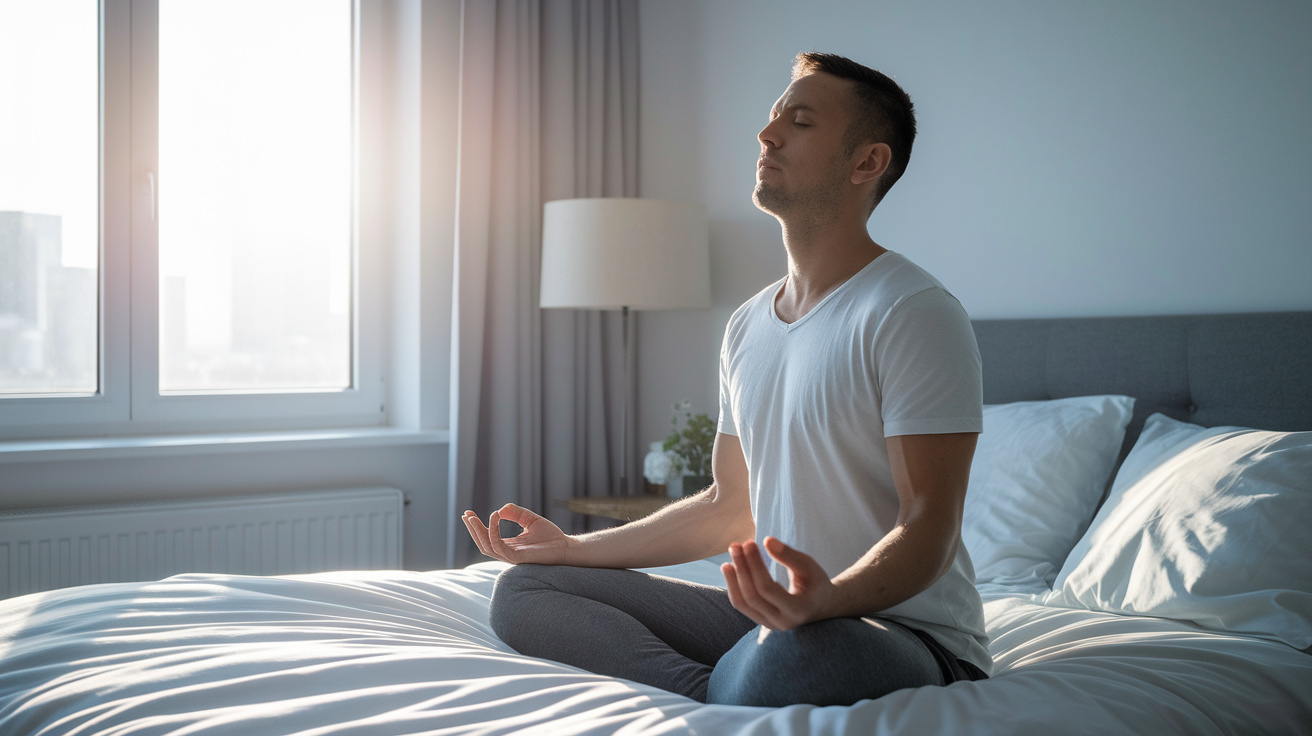
What if the thing that calms your morning anxiety isn’t another task but three slow breaths?
Before you reach for your phone or a coffee, a short breathing routine can reset your nervous system and cut morning stress in under two minutes.
This post lays out simple, science-backed mindful breathing exercises, with quick options you can do in bed or while your coffee brews, so you feel calmer, clearer, and more in control before the day starts.
Quick Morning Breathing Technique for Immediate Calm

The fastest way to break out of morning stress is a 30-second breathing pattern that rebalances your nervous system before you even leave bed. Box Breathing (also called square breathing) regulates oxygen and carbon dioxide in your bloodstream while telling your body it’s safe to relax. The 4-second inhale, hold, and exhale slows your heart rate and flips on the parasympathetic nervous system, the part that handles rest and recovery. Within a round or two, you’ll feel your shoulders drop and your thoughts start to settle.
Here’s how it works:
- Stay in bed or sit up with your spine straight, shoulders loose.
- Breathe in slowly through your nose for 4 seconds, filling your belly.
- Hold that breath gently for 4 seconds. Don’t clench.
- Breathe out through your nose for 4 seconds, belly deflating completely.
- Hold empty for 4 seconds (lungs relaxed, no air).
- Repeat 3 to 5 times, or until you feel noticeably calmer.
Most people feel a shift in 30 to 90 seconds. Your heart rate starts to stabilize. The tightness in your chest or jaw usually softens by round three. If you’ve got more time, stretch it to 2 or 3 minutes. Box Breathing works because it gives your body a predictable rhythm, which cuts off the spiral of anxious thoughts and pulls your focus back to something you can actually control.
Science-Backed Breathing Methods for Reducing Morning Anxiety

Slow, intentional breathing turns on the parasympathetic branch of your nervous system, which shuts down the fight-or-flight response that fires up the second you wake. When you breathe slowly and deeply, you improve your CO₂ tolerance, which stabilizes blood pH and makes your body more resilient to stress over time. Rhythmic breathing also regulates heart rate variability, a key marker of nervous system flexibility and emotional control.
4-7-8 Breathing slows your heart rate and triggers relaxation within minutes. Sit or lie down, eyes closed. Breathe in quietly through your nose for 4 seconds, filling your diaphragm. Hold for 7 seconds so the oxygen can circulate. Exhale slowly through your mouth for 8 seconds, making a soft whooshing sound as you empty out. That extended exhale is what flips the relaxation switch. Repeat 3 to 4 times. One to two minutes is usually enough to feel calmer mentally and looser physically.
Coherent Breathing uses a simple 5-second in, 5-second out pattern to sync your heart rate with your breath. Breathe in through your nose for 5 seconds, then out through your nose for 5 seconds. No holding. No pauses. Just steady, even rhythm. Do this for 2 to 3 minutes. You’re creating a smooth, wave-like pattern that balances oxygen and carbon dioxide without effort. It’s especially helpful if you wake up with racing thoughts or a tight chest.
Extended Exhale Breathing makes your exhale longer than your inhale, which directly stimulates the vagus nerve and shifts your body into rest mode. Breathe in through your nose for 3 seconds, then out through your nose or mouth for 6 seconds. The exhale should feel slow and controlled, not forced. Repeat for 1 to 3 minutes. That longer exhale tells your nervous system there’s no emergency, which drops cortisol and lowers your baseline stress. This works well if you tend to wake up anxious or overstimulated.
Diaphragmatic and Nasal Breathing for Morning Grounding
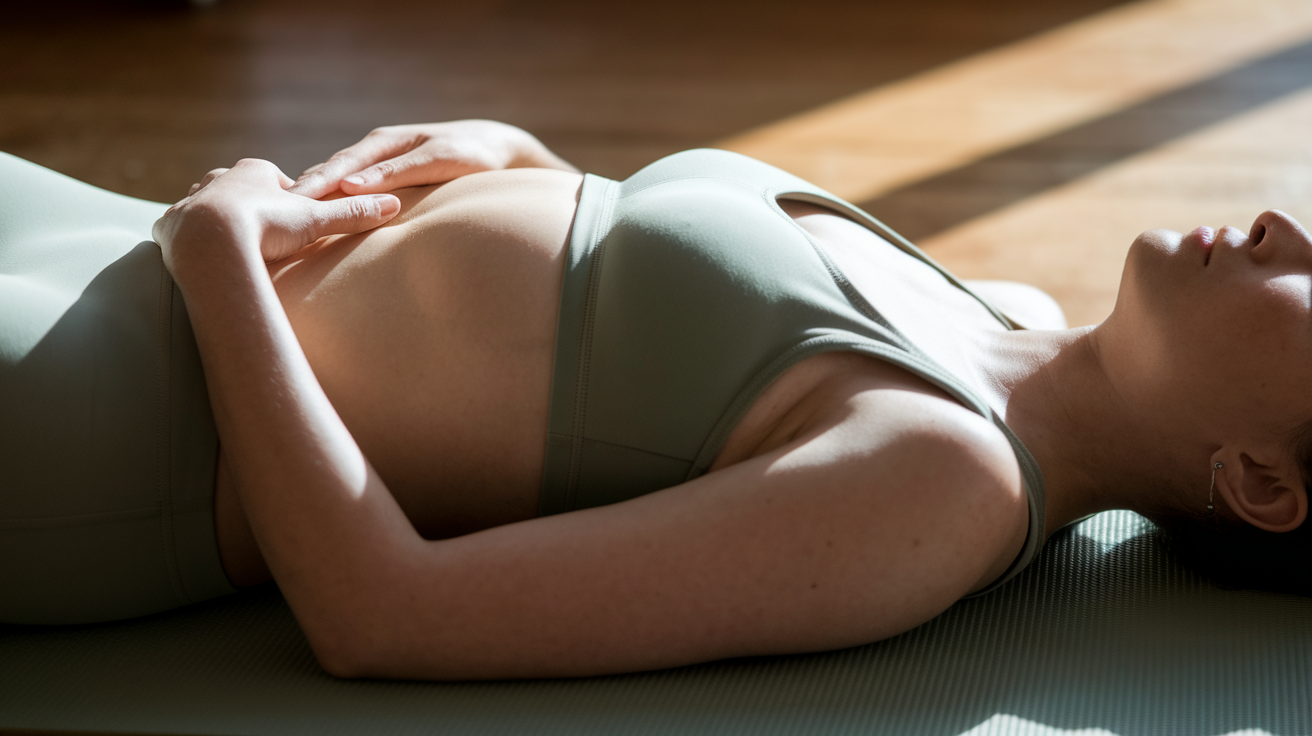
Diaphragmatic breathing (also called belly breathing) uses the large muscle below your lungs to pull air deep into your body, which reduces tension in your chest, neck, and shoulders. Lie flat or sit upright with one hand on your belly, one on your chest. As you breathe in through your nose, push your belly hand outward while keeping your chest hand still. Breathe out slowly through your nose, feeling your belly deflate. The sensation of your hand rising and falling becomes an anchor that pulls your attention into your body and out of your head. Repeat for 5 to 10 breaths, or as long as you need to feel grounded.
Nasal breathing filters and warms the air before it hits your lungs, which improves oxygen efficiency and reduces overstimulation. When you breathe through your nose instead of your mouth, you naturally slow down and engage your diaphragm more fully. The slight resistance in your nasal passages also regulates airflow, which keeps your breathing smooth and controlled. Practice nasal breathing for 1 to 3 minutes in the morning, focusing on the cool air entering your nose and the warm air leaving it. This simple sensory focus calms the nervous system and helps you feel more present.
Common mistakes and how to fix them:
Breathing too shallow: If your chest moves more than your belly, you’re using accessory muscles instead of your diaphragm. Put your hand on your belly and consciously push it outward with each inhale.
Forcing the breath: Grounding breath should feel easy, not strained. If you’re gasping or holding tension, slow the pace and soften your effort.
Mouth breathing by default: If your nose feels blocked, try gentle nasal breathing for just a few breaths to clear the passages. Even partial nasal breathing is more calming than full mouth breathing.
Losing focus after a few breaths: When your mind wanders, bring your attention back to the physical sensation of your hand on your belly or the temperature of air in your nostrils. Repeat as many times as needed.
Incorporating Breathing Exercises Into a Consistent Morning Routine
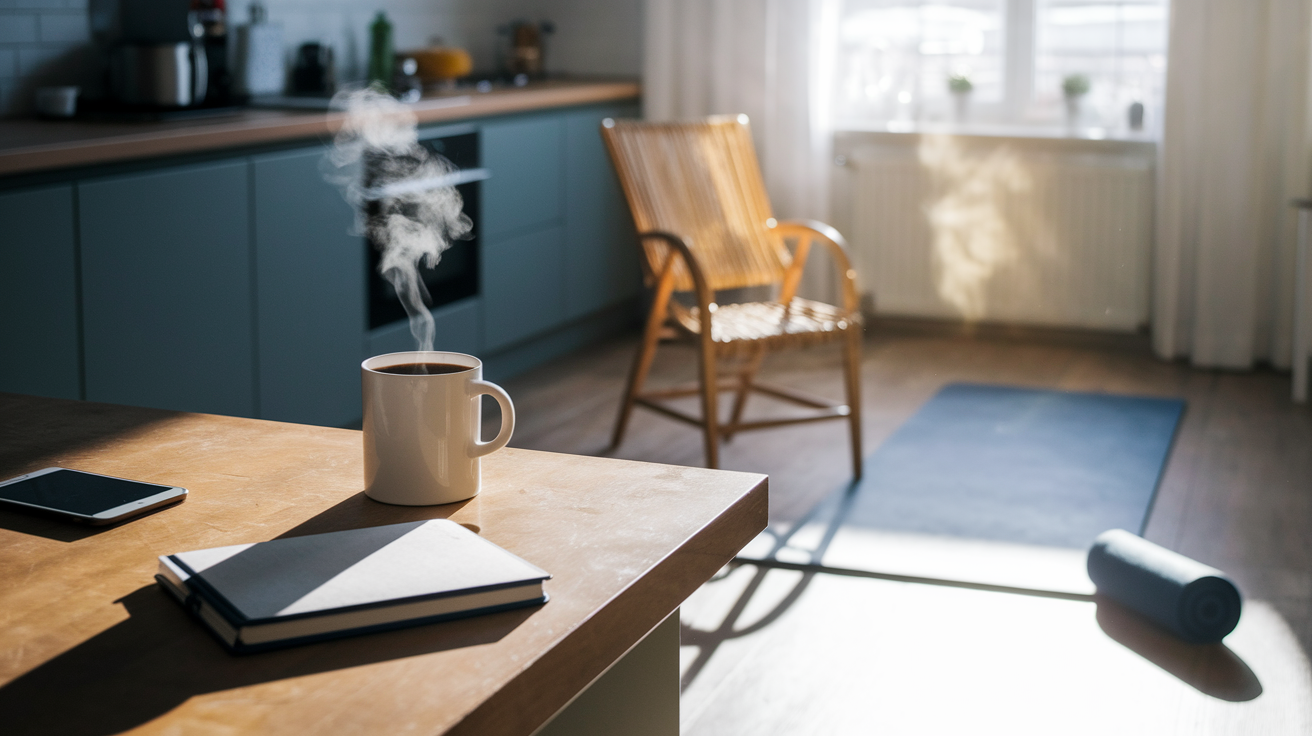
Breathing routines work when you practice them at the same time every day, ideally before decision-making or stressful activities start. Consistency builds the habit faster than intensity. Even 2 to 5 minutes of daily practice produces measurable improvements in stress resilience and mood. Pairing your breathing practice with an existing morning habit (like brushing your teeth or making coffee) increases the odds you’ll actually stick with it.
Here are five ways to build breathing into typical morning activities:
- Do 5 belly breaths in bed before you check your phone or get up. Keep your eyes closed and focus on the rise and fall of your stomach.
- Practice Box Breathing while your coffee brews or your shower warms up. Use the wait time as your reminder.
- Add 10 slow nasal breaths to the end of your morning stretch or movement routine. This bridges physical activity and mental calm.
- Set a recurring phone reminder for the same time each morning. Label it “Breathe for 2 minutes” and follow through every day.
- Use a specific location as your breathing cue. Sit in the same chair, stand in the same spot by the window, or lie in the same position in bed each morning.
Track your progress by noting how you feel before and after each session. Use a simple journal entry or a one-word emotion check-in. Over time, you’ll notice patterns. Like which techniques work best on rushed mornings or how many rounds it takes to feel grounded. If 2 minutes feels too short, add 30 seconds each week until you reach a duration that feels sustainable. The goal is repetition, not perfection. Even on days when your practice feels distracted or incomplete, you’re still reinforcing the habit and training your nervous system to respond more calmly to stress.
Final Words
Try a quick 30–90 second breathing set (box breathing or 4-7-8) to calm your heart and clear the morning fog. The post showed science-backed options, like slow diaphragmatic patterns and nasal breathing, that cut anxiety and lower cortisol fast.
Make it a tiny habit: pair it with brushing teeth or pouring coffee, aim for 2–5 minutes most days, and track what helps you feel steady.
Using mindful breathing exercises for morning stress relief consistently will give you more calm and better focus. You’ve got this.
FAQ
Q: How does the 4 7 8 breathing technique help morning depression?
A: The 4-7-8 breathing technique helps morning depression by slowing your heart rate and activating the relaxation response, improving CO2 balance and often easing morning heaviness or anxious feelings within a few minutes.
Q: Can breathwork help with pots?
A: Breathwork can help with POTS by improving CO2 tolerance, stabilizing heart-rate responses, and reducing lightheadedness when done gently; check with your clinician first and start with short, seated breathing practices.
Q: How to decrease stress in the morning? / What is the best breathing technique to reduce stress?
A: To decrease morning stress, use slow diaphragmatic nasal breathing—try box breathing (4 seconds inhale/hold/exhale) or 4-7-8 for 30–90 seconds; both calm the nervous system and lower cortisol quickly.