What if you didn’t need a gym or fancy gear to actually build strong legs?
These lower body strength exercises for beginners use simple, bodyweight moves you can do at home.
I’ll show the ten essentials, how to do them safely, common mistakes, and a short routine you can repeat.
No hype, just clear cues and easy progressions so you feel steadier, move better, and keep improving without overwhelm, even on busy days.
The Best Beginner Lower-Body Exercises (Start Here)
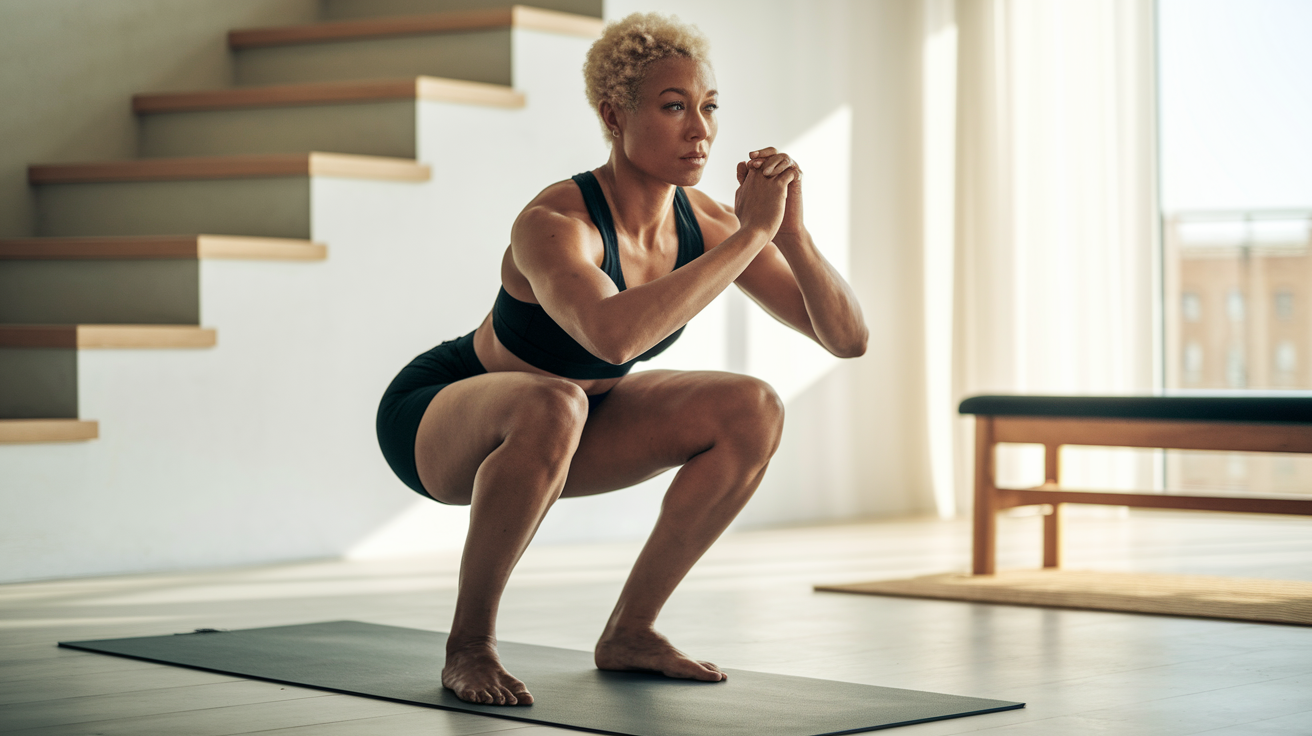
You don’t need fancy equipment to build strong legs. Most people starting out can do everything they need right in their living room with nothing but bodyweight.
These movements teach your muscles how to coordinate, build balance, and create a foundation you can add weight to later. You’ll probably notice steadier movement and better balance within two weeks if you stay consistent.
Start with these ten:
Bodyweight squat, reverse lunge, glute bridge, standing calf raise, lateral lunge, step-up (use stairs or a low bench), single-leg Romanian deadlift, wall sit, side-lying clamshell, and plank hold for core stability.
Pros and Cons of Beginner Lower-Body Workouts
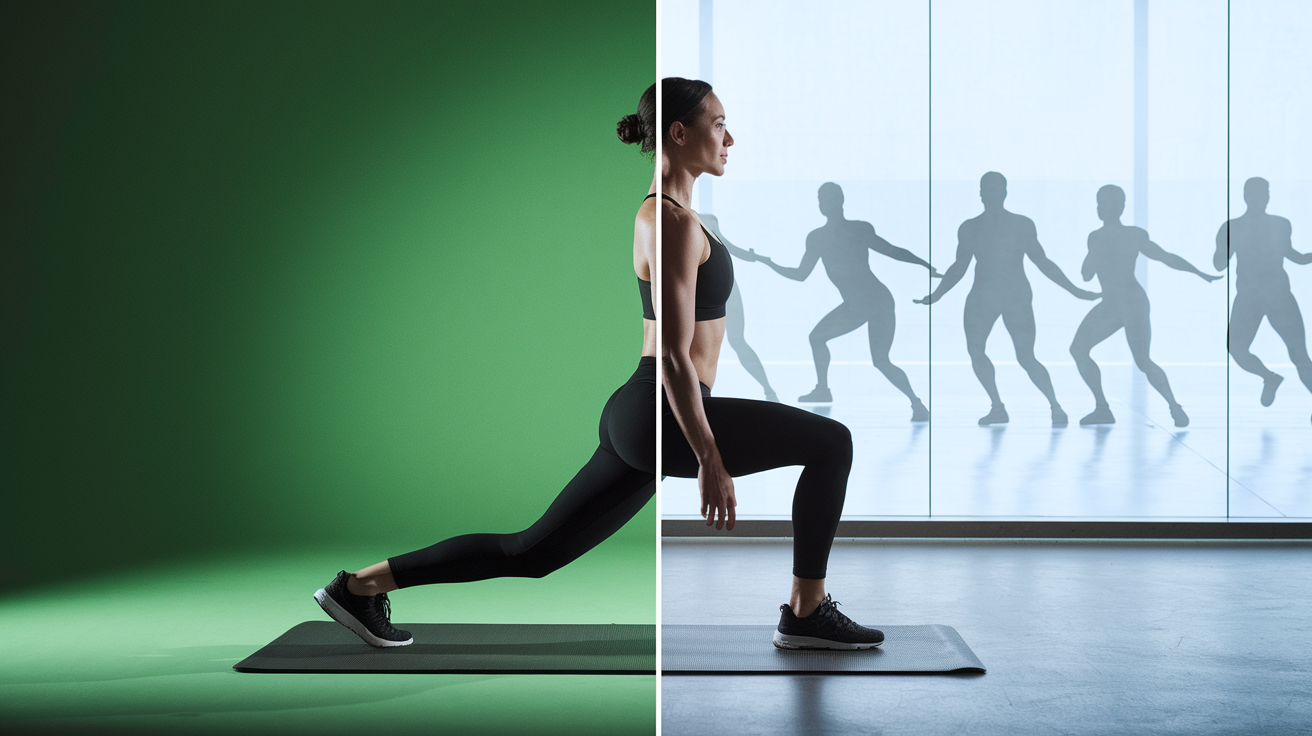
Bodyweight training lets you learn movements without worrying about dropping weights or losing balance under a barbell. Most beginners build noticeable strength in the first month and feel more stable walking up stairs or standing from a chair.
But there are limits. Some people find certain moves too easy within a few weeks. Others struggle with balance on single-leg stuff. And once you’ve mastered the basics, it’s not always clear how to keep progressing. Without external resistance, strength gains plateau faster than they would with weights.
Pros:
- No equipment or gym membership required
- Low injury risk when you focus on form
- Builds strength for daily tasks
- Improves balance and joint stability
- Easy to modify for different fitness levels
- Teaches proper movement patterns before adding load
Cons:
- Limited ways to add resistance without weights
- Some exercises become too easy after four to six weeks
- Balance challenges can frustrate absolute beginners
- Harder to isolate specific muscles without machines
- Requires self-discipline without external structure
- Strength gains plateau faster than weighted training
Understanding Key Lower-Body Muscles
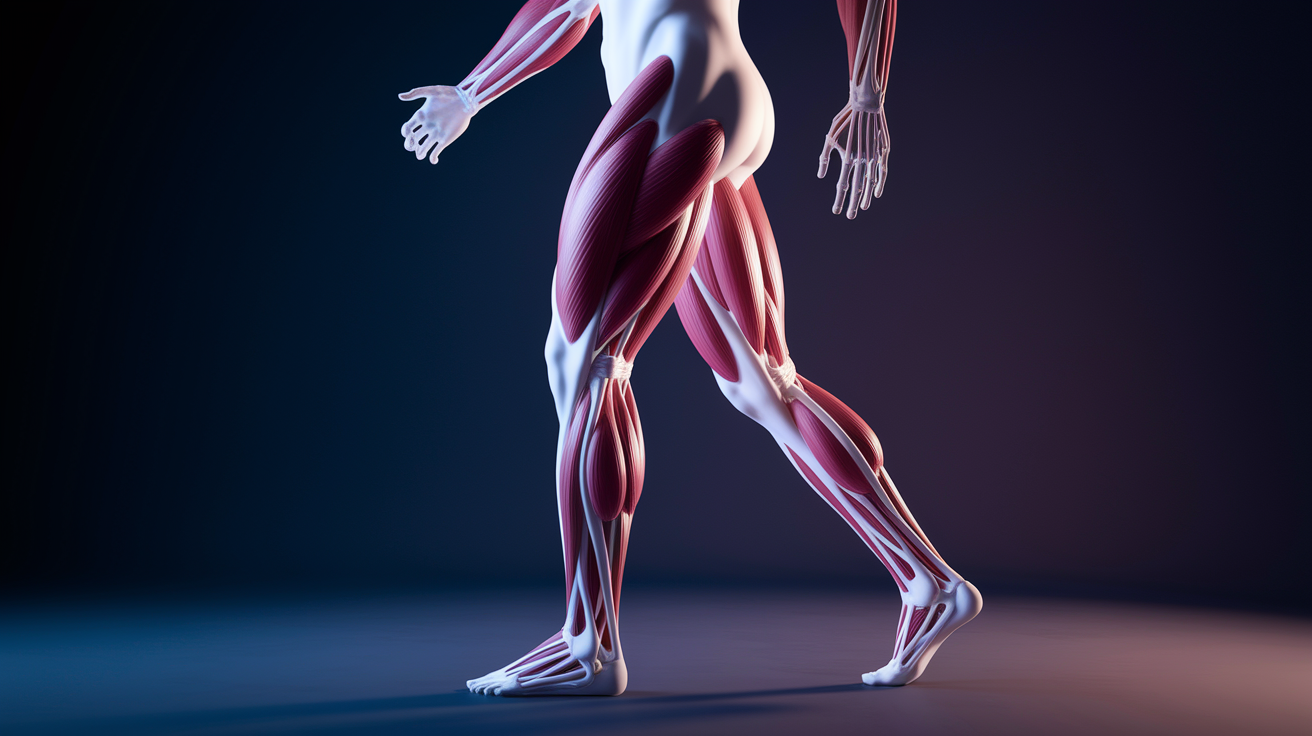
Your lower body contains the largest muscle groups in your body. They power every step, every stair climb, every time you stand up from sitting. Knowing what each group does helps you choose exercises that cover all your bases.
Quads (front of your thigh) straighten your knee and control how you lower into a squat or step down. Hamstrings (back of your thigh) bend your knee and extend your hip when you stand or walk. Glutes are the primary hip extensors and keep your pelvis stable when you balance on one leg.
Hip flexors lift your knee toward your chest, making them essential for walking and running. Calves point your toes and absorb impact every time your foot hits the ground.
Training all five groups means you’re strong in every direction and can move without compensation or imbalance.
Common daily movements each muscle group supports:
Quads handle standing from a chair, climbing stairs, squatting to pick something up. Hamstrings support walking, running, standing from a bent position. Glutes help you stand upright, climb hills, carry groceries. Hip flexors let you step over obstacles, get into a car, kick a ball. Calves stabilize your ankle on uneven ground, let you walk on your toes, jump.
Basic Movement Patterns for Strength Building
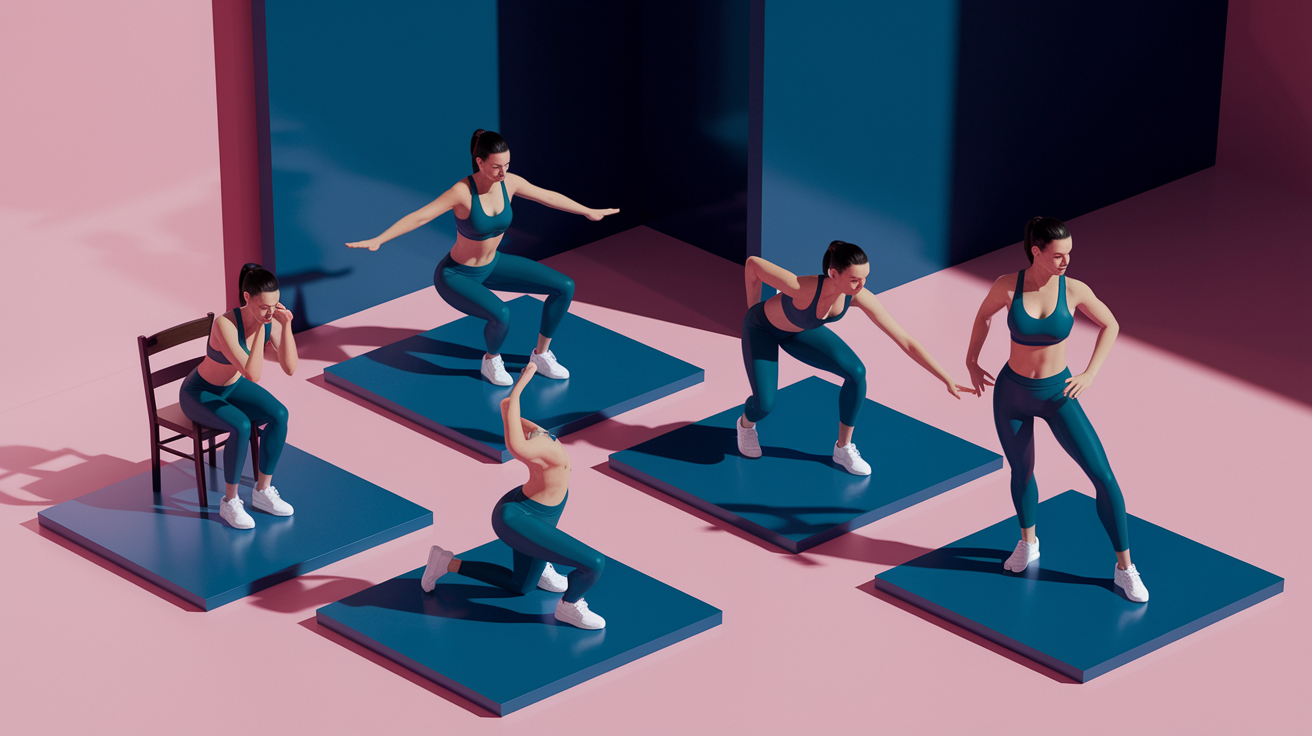
Every beginner lower-body exercise fits into one of four foundational movement patterns. Once you understand these, you can mix and match exercises without overthinking your plan.
The four core patterns:
Squat pattern – Lowering your hips while keeping your torso upright, like sitting into a chair. Targets quads, glutes, and core. Examples: bodyweight squat, goblet squat, box squat.
Hinge pattern – Pushing your hips back while keeping your spine neutral, like picking something off the floor. Targets hamstrings, glutes, and lower back. Examples: Romanian deadlift, single-leg deadlift, good morning.
Lunge pattern – Stepping forward, backward, or to the side and lowering your body on one leg. Targets quads, glutes, hip stabilizers. Examples: reverse lunge, forward lunge, lateral lunge.
Step pattern – Lifting your body onto an elevated surface using one leg at a time. Targets quads, glutes, and balance. Examples: step-up, box step-up, stair climb.
Common Mistakes Beginners Should Avoid
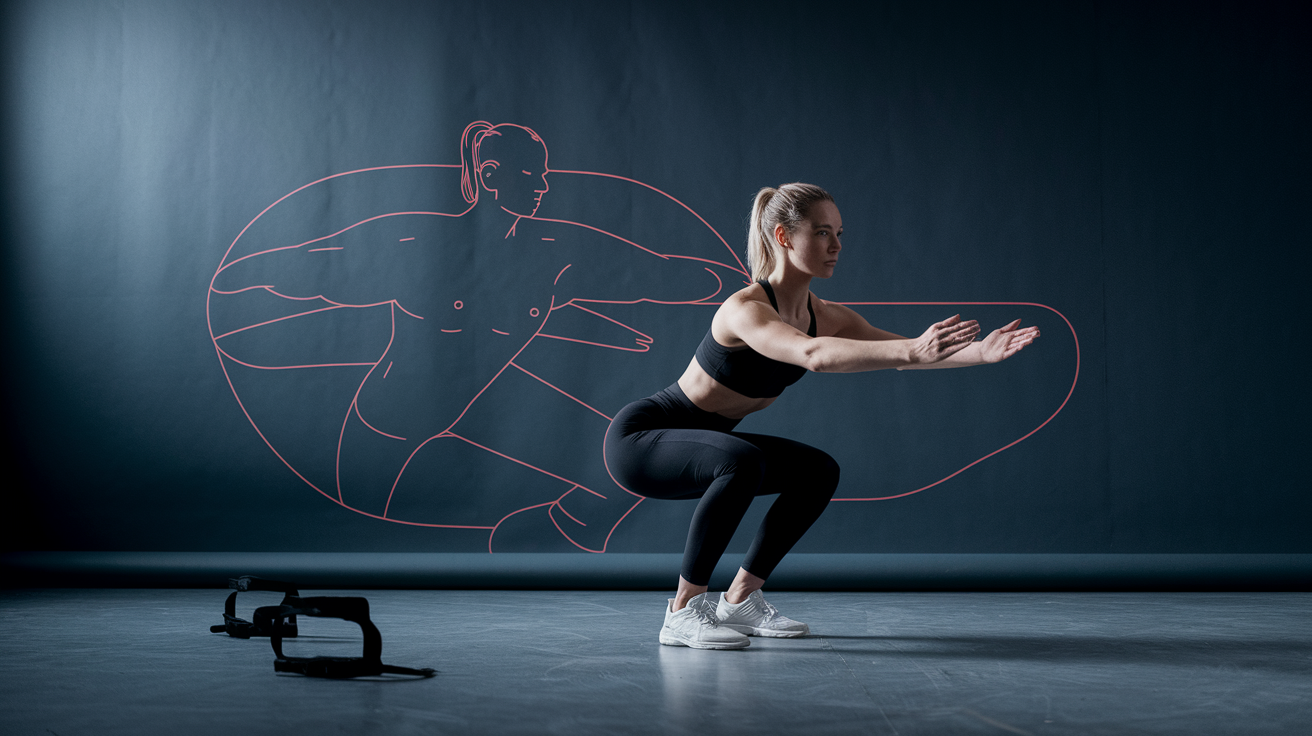
New lifters often skip the small details that keep movements safe and effective. These mistakes don’t always cause pain immediately, but they limit progress and increase injury risk over time.
Most issues come from rushing through reps, ignoring how joints align, or skipping the warm-up because it feels unnecessary. Five minutes on mobility drills makes every working set safer and more productive.
Eight mistakes to watch for:
Letting knees collapse inward during squats or lunges. Rounding the lower back on hip hinges or bridges. Lifting heels off the floor during squats. Locking out knees at the top of movements. Skipping the warm-up or jumping straight into heavy volume. Holding your breath through the entire rep. Leaning too far forward on lunges, shifting weight onto your toes. Progressing to harder variations before mastering the basics.
How to Perform Essential Lower-Body Exercises
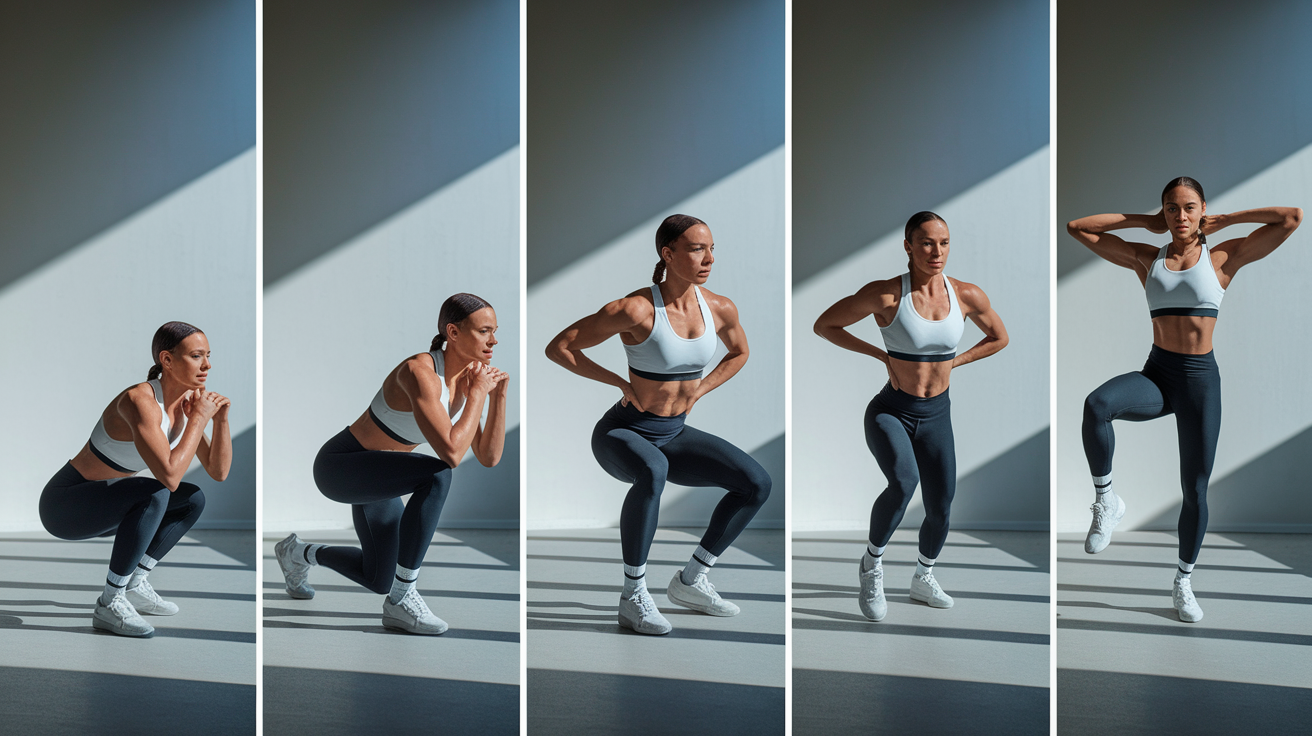
How to Do a Basic Bodyweight Squat
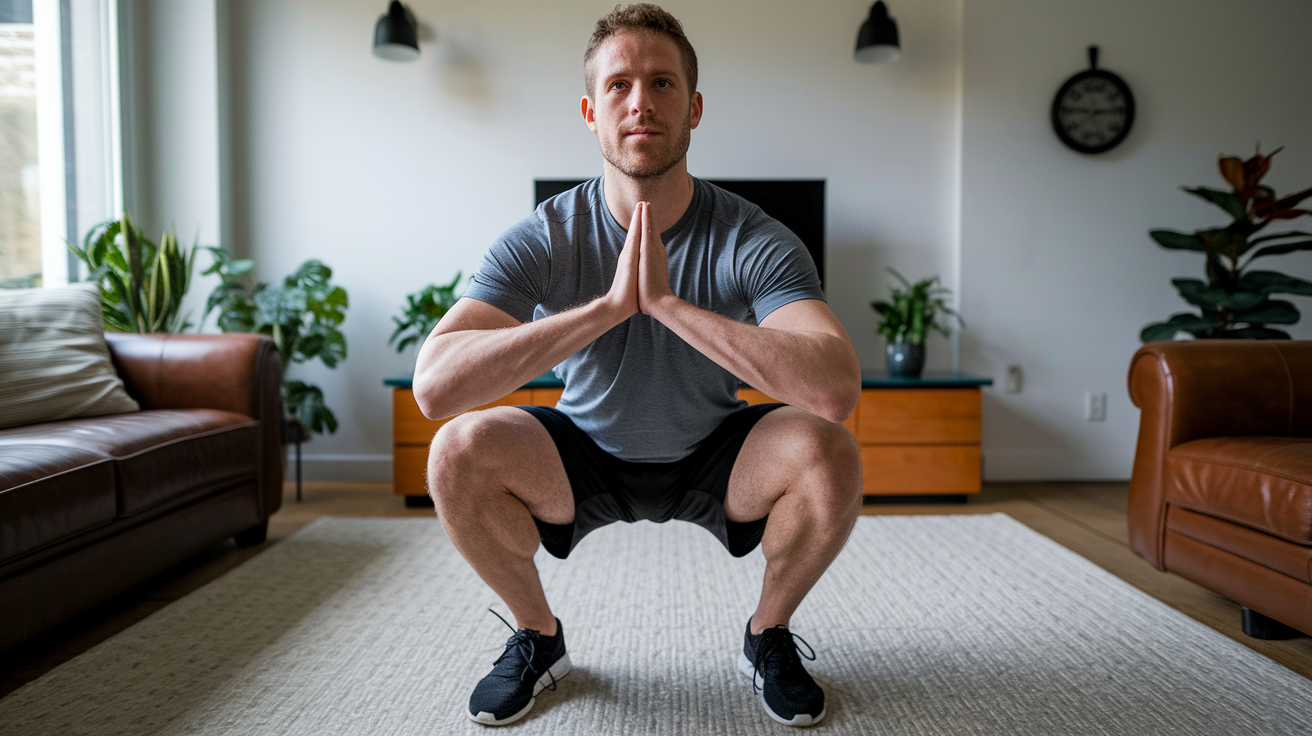
The bodyweight squat teaches you how to sit back, keep your torso upright, and drive through your heels. It’s the foundation for every squat variation you’ll do later. Start with a comfortable stance, usually hip to shoulder width, with toes turned slightly out.
- Stand with feet hip to shoulder-width apart, toes angled out 10 to 15 degrees.
- Engage your core and keep your chest lifted.
- Push your hips back as if sitting into a chair, lowering until your thighs are roughly parallel to the floor.
- Keep your knees tracking over your toes without caving inward.
- Press through your heels to stand, squeezing your glutes at the top.
- Breathe in on the way down, breathe out on the way up.
How to Do a Reverse Lunge
Reverse lunges are easier on your knees than forward lunges because you control the descent and don’t have to decelerate a forward step. They build single-leg strength and expose balance gaps between your left and right sides.
- Stand tall with feet hip-width apart.
- Step one foot back about two to three feet.
- Lower your back knee toward the floor until both knees form roughly 90-degree angles.
- Keep your torso upright and your front knee stacked over your ankle.
- Push through your front heel to return to standing.
- Repeat on the same leg for all reps, then switch sides.
How to Do a Glute Bridge
Glute bridges activate your glutes and hamstrings while teaching you how to extend your hips without arching your lower back. They’re a low-risk way to build posterior strength and improve pelvic stability.
- Lie on your back with knees bent and feet flat on the floor, heels under your knees.
- Place your arms at your sides, palms down.
- Engage your core and press through your heels to lift your hips toward the ceiling.
- Squeeze your glutes hard at the top, keeping your ribs down and core tight.
- Hold the top position for one to two seconds.
- Lower your hips back down, hovering one inch above the floor, then repeat.
How to Do a Hip Hinge
The hip hinge is the movement pattern behind deadlifts, swings, and good mornings. It trains your hamstrings and glutes while protecting your lower back. Most beginners feel this stretch along the back of their thighs.
- Stand with feet hip-width apart, knees slightly bent.
- Place your hands on your hips or cross your arms over your chest.
- Push your hips straight back, as if closing a car door with your backside.
- Keep your spine neutral. Don’t round or overarch your lower back.
- Lower until you feel a stretch in your hamstrings, usually when your torso reaches 45 degrees.
- Drive your hips forward to stand, squeezing your glutes at the top.
How to Do a Standing Calf Raise
Calf raises strengthen the muscles that stabilize your ankle and absorb impact when you walk, run, or jump. You can do them anywhere, using a wall or chair for light balance support.
- Stand with feet hip-width apart, hands resting lightly on a wall or chair for balance.
- Engage your core and keep your legs straight without locking your knees.
- Rise onto the balls of your feet as high as you can.
- Hold the top position for one to two seconds, squeezing your calves.
- Lower your heels back to the floor with control.
- Repeat for the prescribed number of reps, focusing on smooth tempo.
Comparison of Beginner Lower-Body Exercises
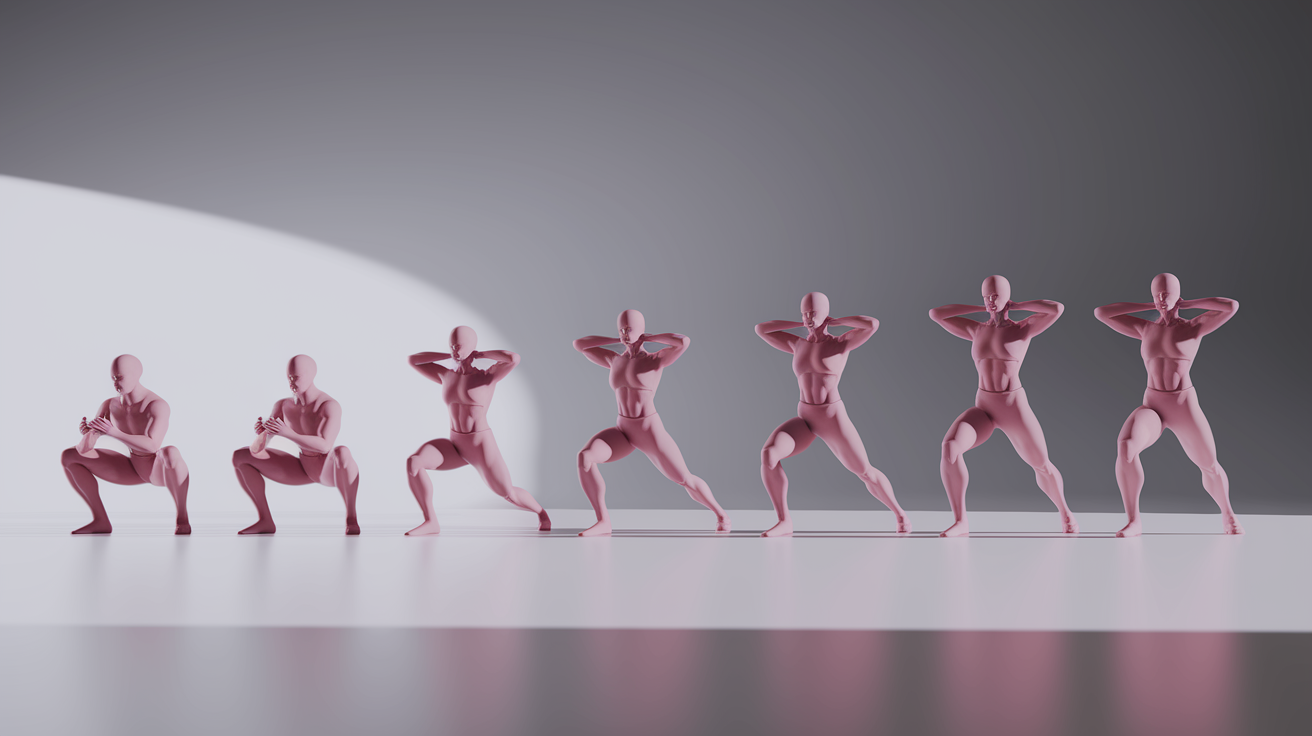
Different exercises challenge your muscles and balance in different ways. Some are easier to learn but offer less progression potential. Others demand more coordination but build strength faster once you get the hang of them.
| Exercise | Muscle Focus | Difficulty | Balance Requirement |
|---|---|---|---|
| Bodyweight squat | Quads, glutes, core | Easy | Low |
| Glute bridge | Glutes, hamstrings | Easy | Low |
| Standing calf raise | Calves | Easy | Low |
| Reverse lunge | Quads, glutes, stabilizers | Moderate | Medium |
| Lateral lunge | Glutes, adductors, abductors | Moderate | Medium |
| Single-leg Romanian deadlift | Hamstrings, glutes, core | Moderate | Medium |
How to Build a Beginner Lower-Body Routine
A beginner routine should hit all the major movement patterns without overwhelming your recovery. Two full lower-body sessions per week is a solid starting point, with 48 hours of rest between sessions. If you feel strong after four weeks, you can add a third lighter session focused on mobility and bodyweight circuits.
Five steps for building your routine:
- Pick one squat-pattern exercise (bodyweight squat or goblet squat).
- Pick one hinge-pattern exercise (glute bridge or bodyweight hip hinge).
- Pick one lunge-pattern exercise (reverse lunge or lateral lunge).
- Add one calf or core stability exercise (calf raises or plank).
- Perform 2 to 3 sets of 10 to 15 reps per exercise, resting 60 seconds between sets.
Sample beginner workout (20 to 30 minutes):
Five-minute warm-up: leg swings, hip circles, light cardio. Bodyweight squat: 3 sets × 12 reps. Glute bridge: 3 sets × 15 reps. Reverse lunge: 3 sets × 10 reps per leg. Standing calf raise: 3 sets × 15 reps. Plank hold: 3 sets × 30 seconds. Three to five minute cool-down: quad stretch, hamstring stretch, hip flexor stretch.
Final Words
Start with the basics: squats, lunges, hip hinges, and glute bridges. These bodyweight moves build a foundation without gear. We also covered common mistakes, key muscles, how to do each exercise, and how to turn them into a two to three times per week routine.
Pick a few exercises, focus on form, and give yourself rest days.
If balance or load feels hard, scale options are included. Stick with small, steady steps and you’ll see progress with these lower body strength exercises for beginners.
FAQ
Q: What are 5 exercises to build lower body strength?
A: The five exercises to build lower body strength are squats, lunges, glute bridges, Romanian deadlifts (hip hinge), and step-ups—simple moves that target quads, glutes, hamstrings, and balance.
Q: What is the 3-3-3 rule for workout?
A: The 3-3-3 rule for workout is a basic strength approach: do three sets of three reps with a challenging load, focus on controlled form, and gradually increase weight to build raw strength.
Q: How to build strength in legs for beginners?
A: Building strength in legs for beginners means starting with bodyweight basics—squats, lunges, hip hinges, glute bridges—training 2–3 times weekly, slowly adding reps or load, and prioritizing good form and recovery.
Q: Do leg exercises lower blood pressure?
A: Leg exercises can help lower blood pressure because working large muscle groups improves fitness and circulation; regular resistance or aerobic leg work may reduce resting blood pressure, but check with your clinician if needed.