
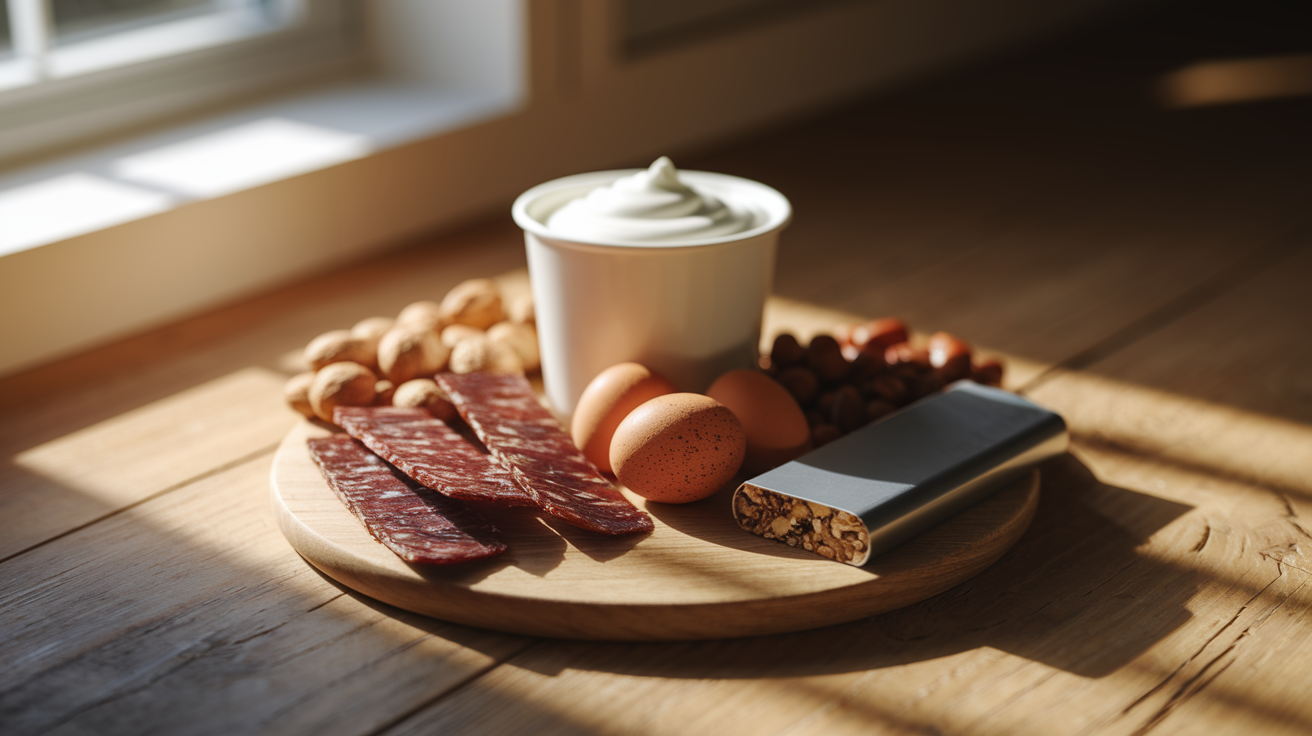
Most snacks leave you hungry an hour later.
Protein changes that.
In this post you’ll find snacks with 10–25 grams of protein that actually keep you full and steady, plus quick picks for on-the-go, vegetarian, low-carb, and batch-prep options.
Each choice includes real gram counts and simple swaps so you can pick something that fits your schedule and goals.
Read on for easy, portable, and satisfying protein snacks you can grab today.
Best High-Protein Snacks (Quick List With Gram Counts)
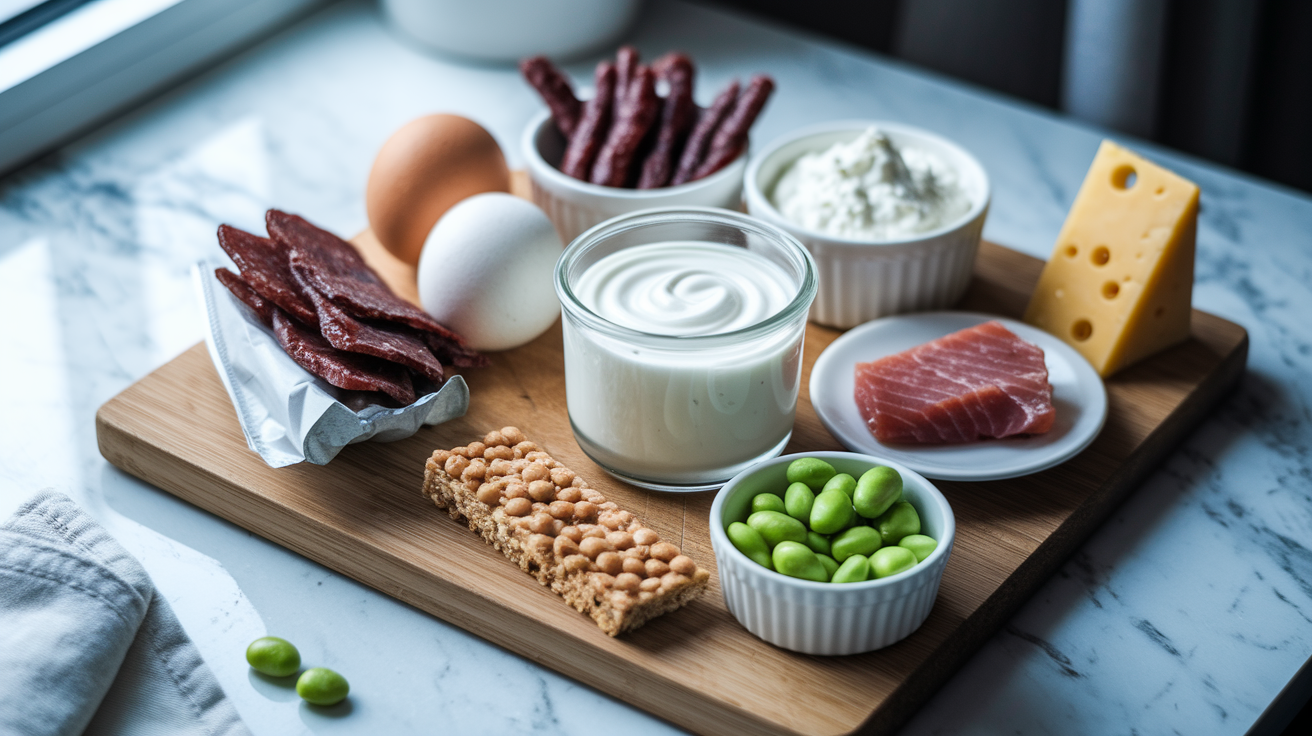
These snacks give you between 10 and 25 grams of protein per serving. Enough to keep you full and your energy steady until your next meal. Use this when you need a quick reference for what to grab or prep.
Greek yogurt (1 cup, plain nonfat) – 20 g protein, around 100 calories. High calcium, thick texture, works great with fruit or nuts.
Hard-boiled eggs (2 large) – 12 to 13 g protein, about 160 calories. You can make them ahead and they’ll last up to 7 days in the fridge. Easy to peel, easy to pack.
Beef or turkey jerky (1 oz) – 9 to 12 g protein, 70 to 100 calories. No fridge needed, but watch the sodium on some brands.
Cottage cheese (1 cup, low-fat) – 25 g protein, 200 to 220 calories. Good base for sweet or savory toppings, loaded with casein.
Canned tuna (3 oz, drained) – 20 to 22 g protein, 100 to 120 calories. Shelf stable, mixes well with Greek yogurt or mustard, won’t break the budget.
String cheese (1 stick) – 7 g protein, 80 to 90 calories. Individually wrapped, pairs well with fruit or whole grain crackers.
Edamame (1 cup, shelled and cooked) – 16 to 17 g protein, around 190 calories. Plant based, fiber rich, takes 8 to 10 minutes to microwave.
Protein bar (average bar) – 10 to 20 g protein, 180 to 250 calories. Portable. Choose bars with at least 10 g fiber and under 12 g added sugar if you want better satiety.
Roasted chickpeas (1/2 cup) – 7 to 10 g protein, 130 to 150 calories. Crunchy, batchable, stores well for 3 to 4 days in an airtight container.
Pick snacks based on what you need that day. If you want something filling before a workout, aim for 15 to 20 g protein. Managing hunger between meals on a low carb plan? Go with lower carb and higher fat options like cheese or nuts paired with eggs.
On-the-Go Protein Snacks
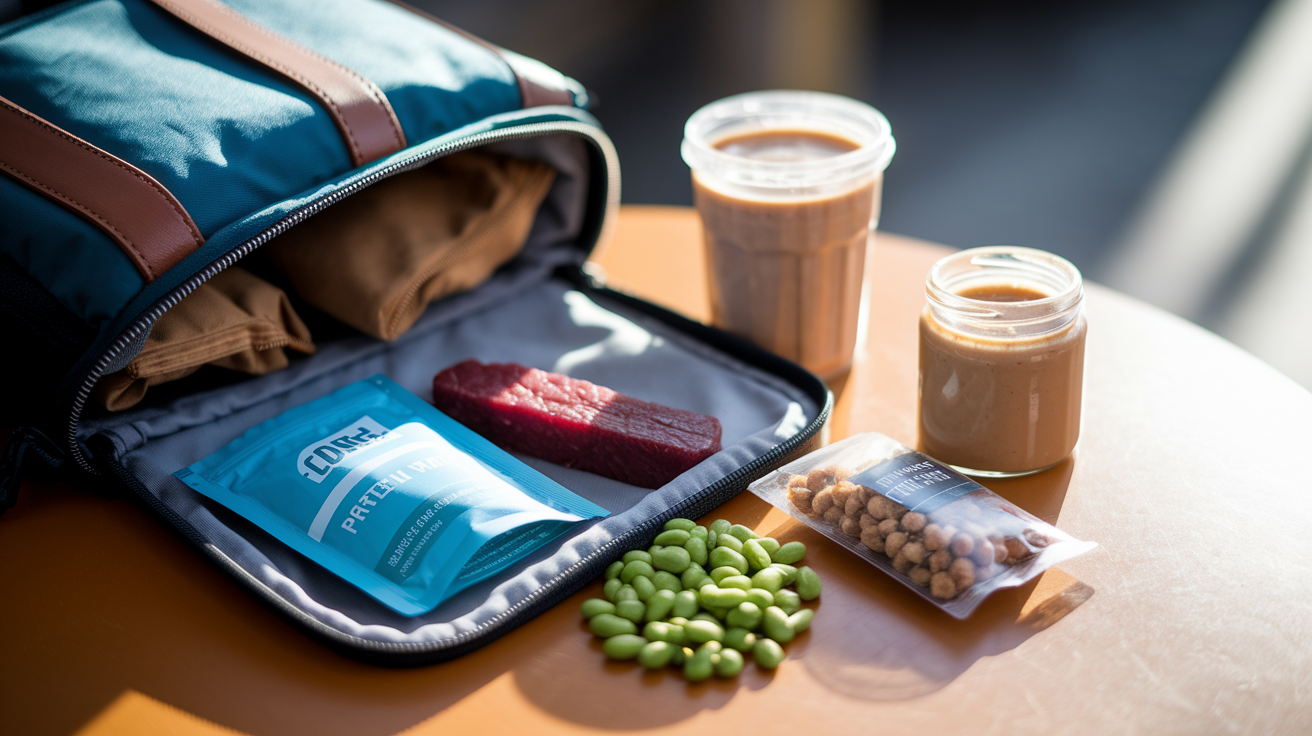
Portability matters when you’re commuting, traveling, or stuck in back to back meetings. A good on the go snack needs to stay safe without refrigeration for a few hours, fit in a bag without leaking, and deliver enough protein to keep you satisfied until your next meal.
Look for individually wrapped options, single serve containers, or snacks that don’t require utensils. Shelf stability is the deciding factor. Hard cheeses, dried or cured meats, nuts, seeds, and certain bars hold up better than yogurt or fresh veggies when you’re away from a fridge for more than two hours.
Beef stick or meat stick (1 oz) – 9 to 11 g protein. Shelf stable, no refrigeration needed for several hours, high sodium so pair with water.
Trail mix with roasted edamame and nuts (1.5 oz total) – 10 to 12 g protein. Portion into small containers or zip bags to avoid overeating. Adds fiber and healthy fats.
Protein shake or ready to drink bottle (8 to 11 oz) – 20 to 30 g protein. Keep it cool in an insulated bag with an ice pack if possible. Convenient post gym or mid commute.
Roasted chickpeas or broad beans (1/2 cup, pre-portioned) – 7 to 10 g protein. Crunchy, no mess, stores at room temp in a sealed container for a few days.
Nut butter packets (single serve, 2 tbsp) – 7 to 8 g protein. Pair with an apple or whole grain crackers for balanced macros. Stable at room temp and easy to toss in a bag.
Pack a small cooler bag or insulated pouch if you prefer yogurt cups or cheese sticks. A single ice pack extends safe storage by 3 to 4 hours and opens up more options without sacrificing food safety.
Homemade High-Protein Snacks
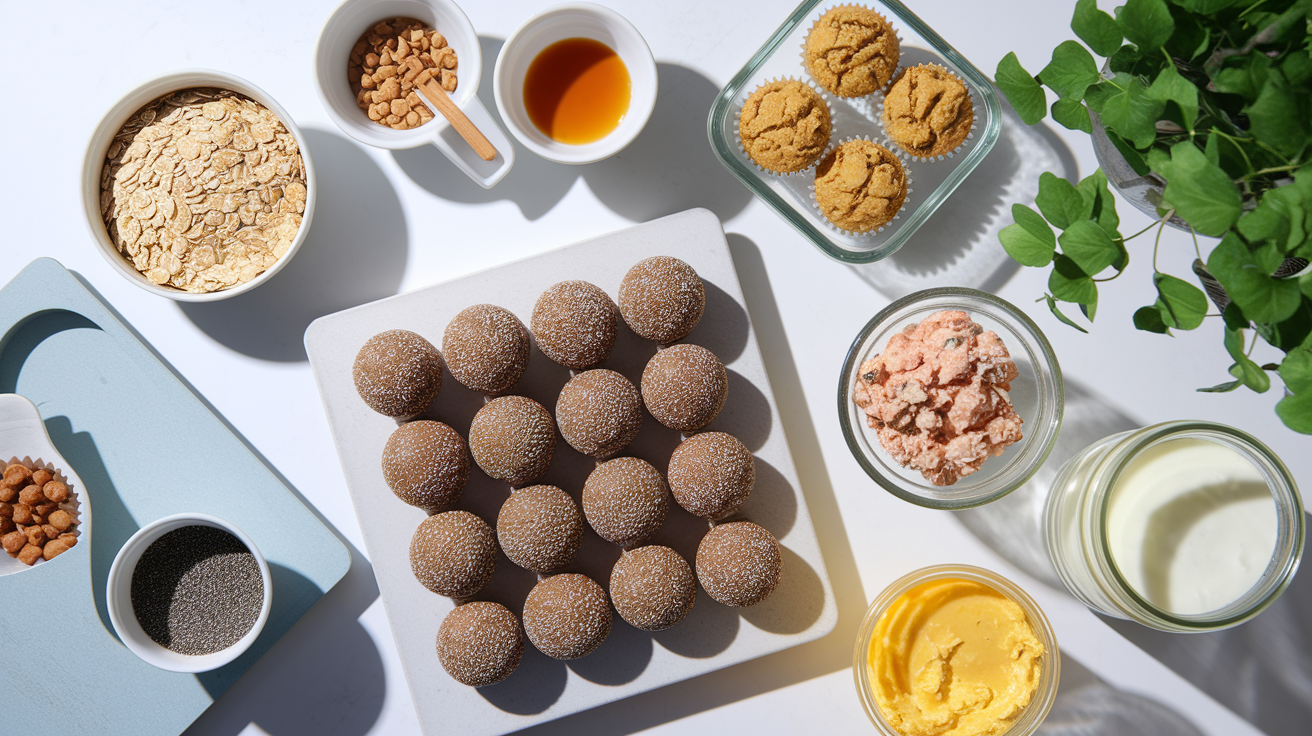
Making snacks at home lets you control the ingredients, adjust protein levels, and skip the added sugar or sodium common in packaged options. Homemade snacks also tend to cost less per serving and can be batched in under an hour for the week ahead.
Use simple bases like Greek yogurt, cottage cheese, eggs, canned tuna, or nut butters, then add flavor with spices, herbs, or a small amount of sweetener. Most of these recipes require no cooking or just one appliance.
Energy bites (no-bake) – Mix 1 cup rolled oats, 1/2 cup nut butter, 1/4 cup honey, 1/4 cup protein powder, and 2 tbsp chia seeds. Roll into 12 to 14 balls. Each ball has about 4 to 5 g protein. Eat 2 to 3 for a snack totaling 10 to 15 g. Store in the fridge for up to 5 days.
Tuna or salmon salad – Drain one 5 oz can of tuna (25 g protein total). Mix with 2 tbsp Greek yogurt or mayo, diced celery, and lemon juice. Divide into two servings for around 12 g protein each. Serve on cucumber rounds or whole grain crackers. Lasts 3 to 4 days refrigerated.
Egg muffins – Whisk 8 eggs with 1/4 cup milk and diced veggies (spinach, bell pepper, onion). Pour into a greased muffin tin and bake at 350°F for 18 to 20 minutes. Each muffin has about 6 g protein. Eat 2 for 12 g. Refrigerate up to 4 days or freeze for 2 months.
Cottage cheese “parfait” – Layer 1 cup cottage cheese (25 g protein) with 1/4 cup berries and 1 tbsp hemp seeds (3 g protein). Total: around 28 g protein. Assemble in a jar and refrigerate for grab and go ease.
Greek yogurt bark – Spread 2 cups Greek yogurt on a parchment lined sheet pan. Sprinkle with berries, nuts, or dark chocolate chips. Freeze for 2 to 3 hours, then break into pieces. Each piece (about 1/4 of the pan) has roughly 10 g protein. Store frozen for up to 1 month.
Batch prep on a Sunday or whenever you have an open hour. Homemade snacks give you the flexibility to adjust sweetness, salt, and macros without reading ingredient lists.
Vegetarian High-Protein Snacks
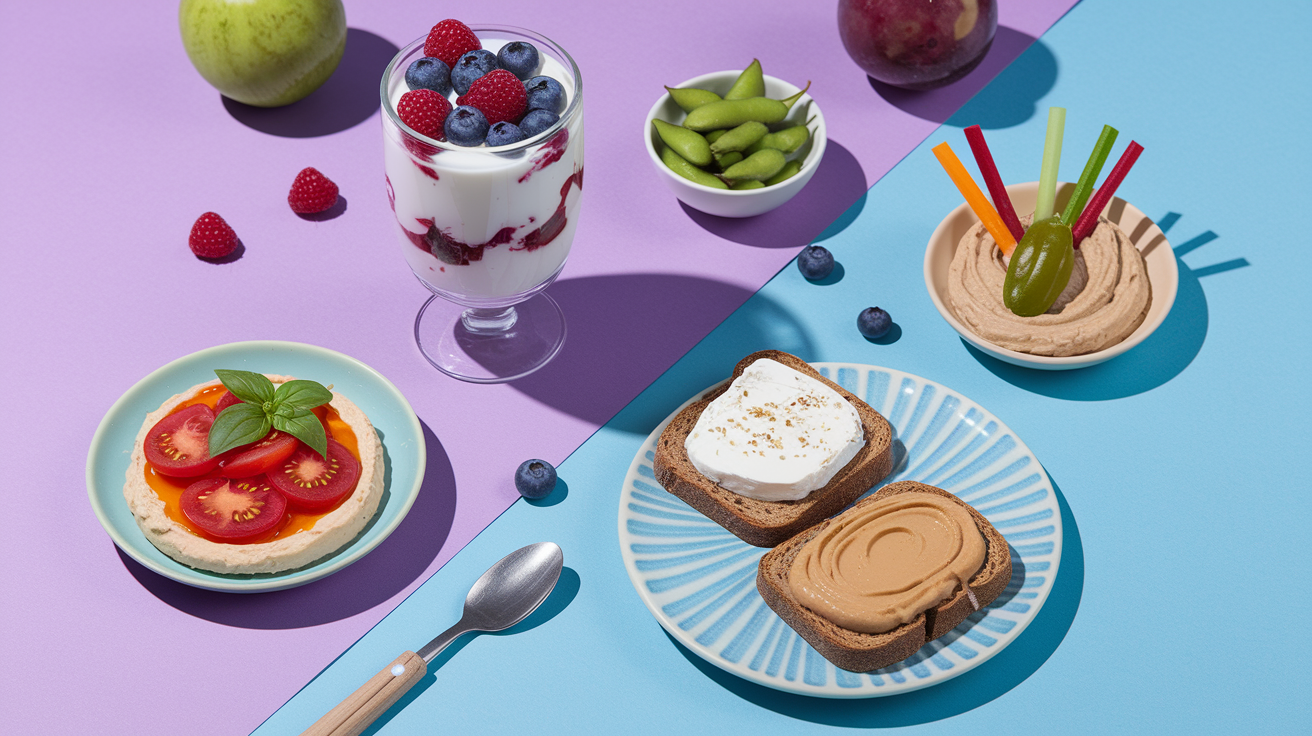
Vegetarian protein sources include dairy, eggs, legumes, tofu, tempeh, nuts, seeds, and certain whole grains. Many plant based proteins are also high in fiber, which adds to the fullness factor.
Greek yogurt parfait – 1 cup nonfat Greek yogurt (20 g protein) plus 2 tbsp granola plus 1/4 cup mixed berries. Quick assembly, no cooking, high calcium.
Edamame with sea salt – 1 cup shelled edamame (16 to 17 g protein). Steam in the microwave for 8 to 10 minutes, season with coarse salt or chili flakes. Plant based and fiber rich.
Cottage cheese with tomato and basil – 1 cup low fat cottage cheese (25 g protein) topped with sliced cherry tomatoes, fresh basil, and cracked black pepper. Savory, satisfying, ready in under 2 minutes.
Hummus with veggie sticks – 1/2 cup hummus (10 to 12 g protein) served with 1 cup carrot and celery sticks (around 1 g protein). For higher protein, choose lentil or chickpea based hummus with extra tahini.
Peanut butter on whole grain toast – 2 tbsp natural peanut butter (8 g protein) on 1 slice whole grain bread (4 to 5 g protein). Top with banana slices or a drizzle of honey. Simple, balanced, and quick.
If you’re combining plant proteins to ensure a complete amino acid profile, pair grains with legumes or seeds with nuts. For most snacks, this happens naturally. Hummus with whole grain crackers, or oatmeal with nut butter and seeds. You don’t need to track it meal by meal.
Low-Carb Protein Snacks
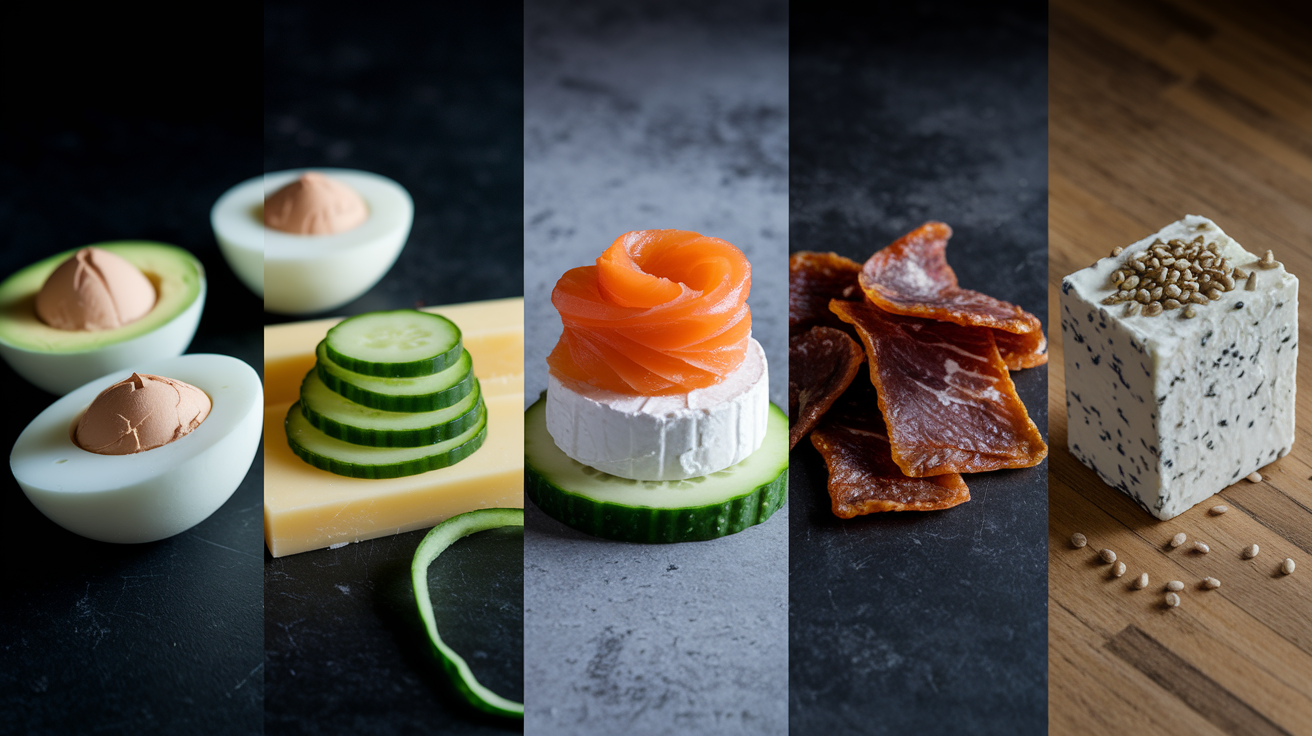
Low carb snacks keep carbohydrates under 10 grams per serving while delivering enough protein and fat to sustain energy. These snacks work well for keto or lower carb eating patterns and help manage blood sugar between meals.
Focus on whole food proteins and fats: cheese, eggs, meat, fish, nuts, and non starchy vegetables. Skip crackers, fruit, and sweetened yogurt unless they fit your carb budget for the day.
Hard-boiled eggs with avocado – 2 large eggs (12 g protein, around 1 g carbs) plus 1/4 avocado (about 1 g protein, 3 g carbs). Total: around 13 g protein, 4 g carbs. Portable and filling.
String cheese with cucumber slices – 2 mozzarella sticks (14 g protein, 2 g carbs) plus 1 cup sliced cucumber (1 g carbs). Total: 14 g protein, 3 g carbs. Crunchy, hydrating, and low calorie.
Smoked salmon on cucumber rounds – 2 oz smoked salmon (12 g protein, 0 g carbs) on 1/2 sliced cucumber with 1 tbsp cream cheese (1 g protein, 1 g carbs). Total: around 13 g protein, 1 g carbs.
Beef or turkey jerky – 1 oz jerky (10 to 12 g protein, 3 to 5 g carbs depending on brand). Check labels for added sugar. Pair with a handful of almonds for extra fat and satiety.
Cottage cheese with hemp seeds – 1 cup cottage cheese (25 g protein, 6 g carbs) plus 2 tbsp hemp seeds (6 g protein, 2 g carbs). Total: 31 g protein, 8 g carbs. High protein, moderate fat, very filling.
Read nutrition labels on packaged snacks. Some protein bars and flavored nuts add sugar or honey, which can push carbs over your target. Plain, unsweetened options are the safest bet.
Prep-Ahead Protein Snack Ideas
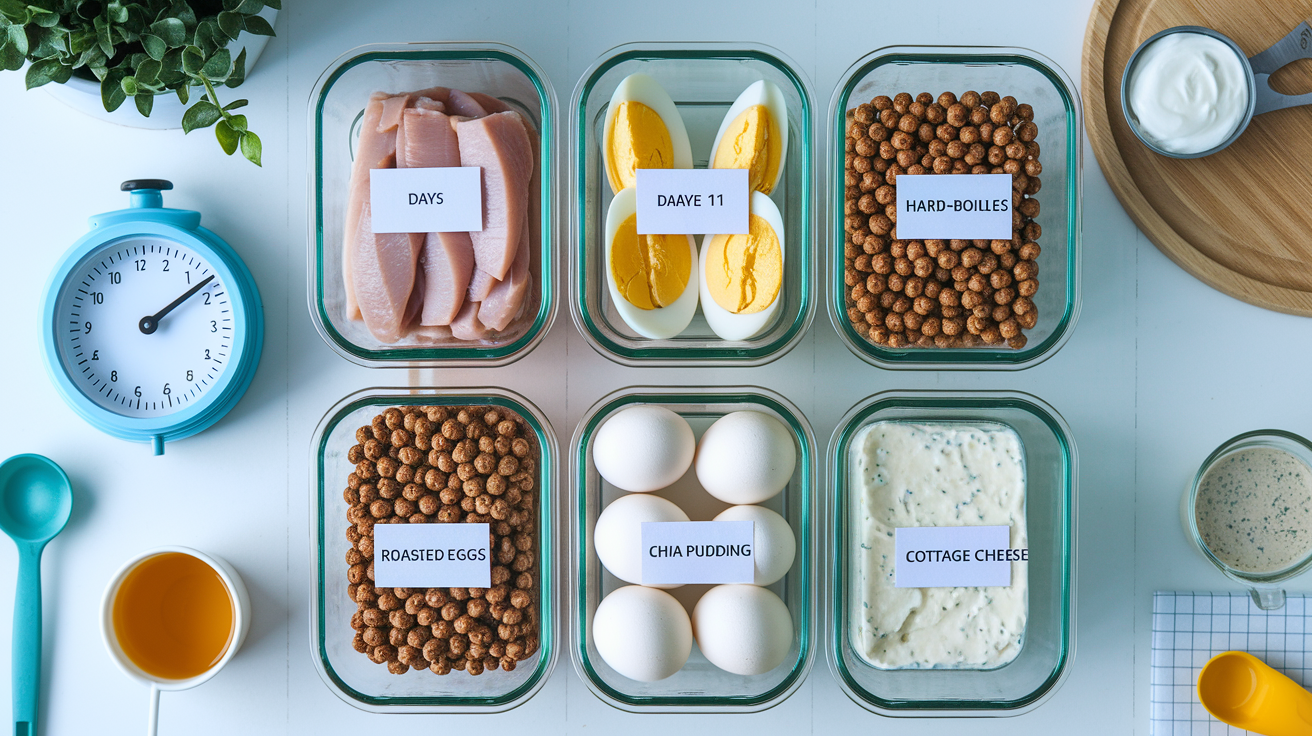
Prepping snacks in batches saves time during the week and removes the guesswork when you’re hungry. Most prep ahead snacks store well for 3 to 5 days in the fridge, and some freeze for up to 3 months.
Set aside an hour on your least busy day to cook, portion, and pack. Use clear containers or mason jars so you can see what’s ready to grab.
Hard-boiled eggs (batch of 12) – Boil 12 eggs, cool, peel if preferred, and store in the fridge for up to 7 days. Each egg has 6 g protein. Pack 2 per container for 12 g protein snacks. Add a pinch of salt or everything bagel seasoning in the container.
Baked chicken breast strips – Bake 1.5 lb chicken breast at 375°F for 25 to 30 minutes. Slice into strips and portion into 3 oz servings (21 to 25 g protein each). Store in airtight containers for 3 to 4 days, or freeze individually for up to 3 months.
Chia pudding with protein powder – Mix 1/4 cup chia seeds, 1 cup unsweetened almond milk, 1 scoop vanilla protein powder, and a pinch of cinnamon. Divide into 2 to 3 jars and refrigerate overnight. Each jar has around 15 to 20 g protein. Lasts 5 days in the fridge.
Roasted chickpeas (3-can batch) – Drain and rinse 3 cans of chickpeas, toss with 2 tbsp olive oil and spices, spread on a sheet pan, and roast at 400°F for 25 to 35 minutes. Yields about 9 half cup servings (7 to 10 g protein each). Store in an airtight container for 3 to 4 days.
Cottage cheese snack cups – Portion 1 cup servings of cottage cheese into small containers. Add toppings on prep day or keep toppings separate (berries, cucumber, tomato, seeds). Each cup has 25 g protein and stays fresh for 5 to 7 days.
Label containers with prep dates so you know what to eat first. Freeze anything you won’t finish within 4 days to avoid waste.
Final Words
Pick a few favorites from the quick list and keep them where you’ll actually grab them. Try an on-the-go option for busy days, a homemade snack when you have 10 minutes, and a prep-ahead batch for the week.
We also covered vegetarian swaps and low-carb choices so you can match snacks to your goals. If that feels like too much, pick one snack to repeat for a few days.
Start by trying one of these healthy snack ideas with protein this week, small changes add up, and you’ll notice more steady energy.
FAQ
Q: What are healthy snacks high in protein?
A: The healthy snacks high in protein include Greek yogurt, cottage cheese, hard‑boiled eggs, jerky, roasted chickpeas, nuts, and protein bars—each provides roughly 10–20 grams per serving depending on portion and brand.
Q: What are healthy snacks for insulin resistance?
A: Healthy snacks for insulin resistance focus on protein, fiber, and low refined carbs. Try Greek yogurt with berries, nuts with apple slices, hummus and raw veg, or boiled eggs to stabilize blood sugar.
Q: What are good snacks for high cholesterol?
A: Good snacks for high cholesterol include oatmeal or oat-based bars, nuts, avocado on whole-grain toast, hummus with veggies, and edamame—high in fiber and healthy fats that help lower LDL when eaten regularly.
Q: What is the best source of protein for diabetics?
A: The best source of protein for diabetics is lean, low‑carb, minimally processed protein like fish, poultry, eggs, Greek yogurt, tofu, or legumes—pair portions with fiber-rich foods to help manage blood sugar.