

What if your swing power isn’t about strength but about how well your body can turn?
Tight hips, a stiff thoracic spine, and locked shoulders steal your distance more than a weaker grip ever will.
This short routine focuses on those three areas with simple drills you can do in about 10 minutes using a foam roller and a stick.
Do it once before a round, twice for extra work, or as a daily mobility session to build range and make your swing feel easier.
Complete Golf Mobility Routine Overview

This routine hits the three movement areas that actually build swing power and keep your body healthy: hips, thoracic spine, and shoulders. Each section has exercises you can run through once, taking about 10 minutes total. You can do the sequence once before a round, twice if you’ve got 20 minutes, or use it as a standalone mobility session at home or in the office.
Hip mobility supports the rotation your pelvis needs during backswing and downswing. It takes load off your lower back. Thoracic spine mobility lets your shoulders turn fully without forcing your lumbar spine into overextension or side bend. Shoulder mobility creates space for a long backswing and a clean follow through, giving your hands more distance to travel and more room to apply force to the club.
You’ll need minimal equipment. A foam roller, a broomstick or golf club, and enough floor space to lie down. Each exercise includes a target rep count or hold time, and you move from one to the next without rest. If your schedule only allows a few exercises, prioritize the areas where you feel tightest or where your swing compensates most.
Complete Routine (one round):
- Cat/Cow — 5 reps each direction. Start on hands and knees, round your spine fully then arch gently.
- Child’s Pose Lat Prayer Stretch — 30 seconds per side. Walk both hands to the right, hold, return to center, then walk left.
- Side Lying Windmill — 10 reps per side. Lie on your side with knees bent, rotate your top arm across and back, keeping the hips stable.
- Kneeling Thoracic Extension — 10 reps. Elbows on a bench, press hips back until you feel a stretch through the mid back.
- Half Kneeling Hip Flexor Rock + Reach — 10 reps per side. Press hips forward, reach the opposite arm overhead, pause for two seconds.
- Seated Groin Stretch — 60 seconds. Sit with feet together and toes out, lean forward gently to increase the stretch.
Hip Mobility for Stronger Rotation

Your hips are the foundation of rotation in the golf swing. When hip internal rotation or extension is limited, your pelvis can’t turn fully during the backswing. Your lower back compensates by rotating past its safe range. That compensation shows up as early extension, loss of posture, or chronic tightness in the lumbar spine after a round.
Sitting for hours every day shortens the hip flexors and reduces the ball and socket joint’s ability to rotate and extend. The exercises below restore that range, letting your pelvis move freely so your spine can stay stable and your torso can separate cleanly from your lower body during the downswing.
Three hip mobility exercises for golf:
-
Dynamic Fire Hydrant — Start on hands and knees. Bring your right knee toward your chest, then lift it out to the side, then kick it back and up behind you in one smooth motion. Do 30 seconds per side. Keep your core tight so your lower back doesn’t sag.
-
Half Kneeling Hip Flexor Rock + Reach — Kneel on your left knee with your right foot forward. Place your left hand on your left hip, press your hips forward until you feel a stretch in the front of your left hip, then reach your right arm overhead and tilt slightly to the left. Pause for two seconds, then return. Do 10 reps per side.
-
Hamstring Stretch with Ankle Circles — Lie on your back and lift your right leg. Hold behind your thigh and gently pull the leg toward you until you feel a stretch in the hamstring. While holding the leg, circle your ankle clockwise then counterclockwise. Do 30 seconds per side.
Thoracic Spine Mobility for Better Swing Mechanics
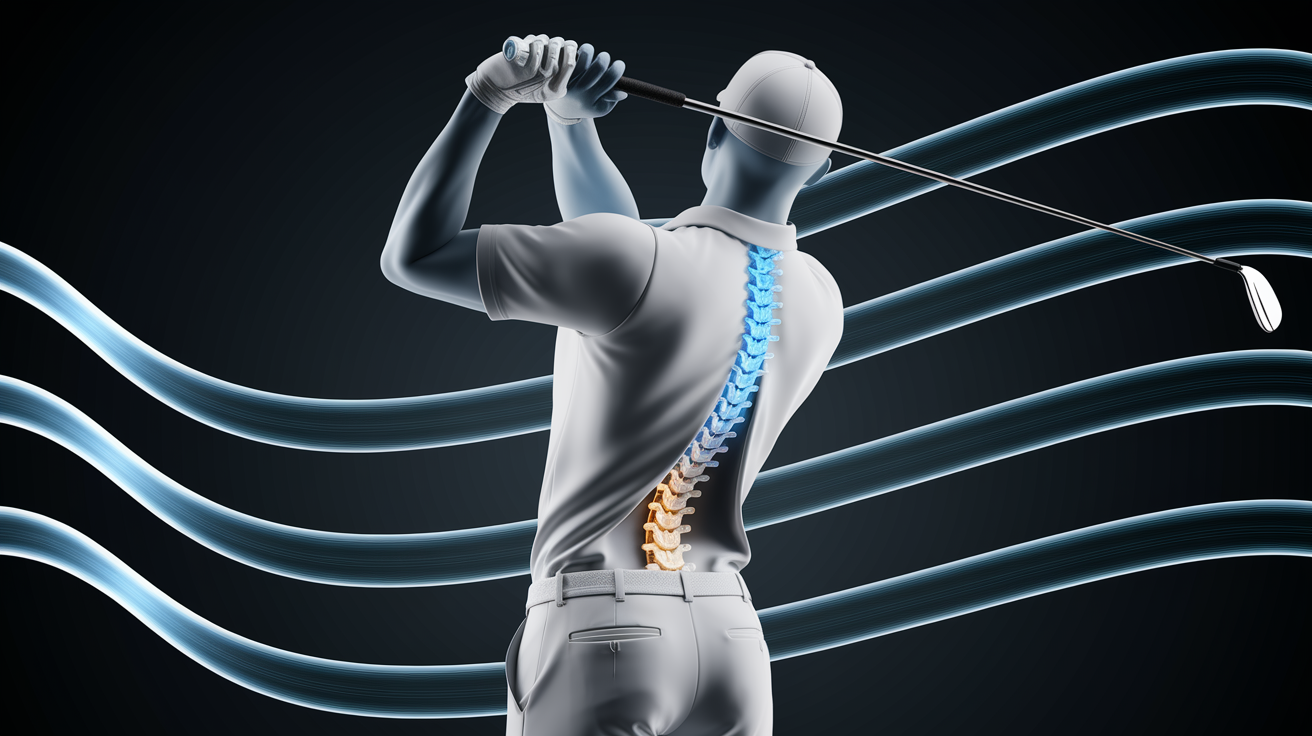
The thoracic spine (your twelve mid back vertebrae from T1 to T12) is designed to rotate. When it doesn’t, your golf swing tries to borrow rotation from your lumbar spine or your hips. That mismatch is one of the most common causes of overuse injuries in golfers. Poor thoracic rotation also limits how far your shoulders can turn, which shortens the distance your hands travel and reduces the time you have to build clubhead speed.
A mobile thoracic spine lets you rotate your torso independently from your pelvis, creating the separation that powers the downswing. It also helps you maintain your posture through impact instead of standing up early or tilting excessively to the side.
Start with Kneeling Thoracic Rotation. Get on your hands and knees, place your right hand on the side of your head, and rotate your right elbow up toward the ceiling as far as you can without letting your hips shift. Lower back down and repeat for 60 seconds, then switch sides. Focus on turning from the ribs, not the neck.
Next, use a foam roller for Thoracic Extension. Lie on your back with the roller positioned at the bottom of your mid back, just above your lower ribs. Support your head with your hands, keep your core tight, and gently extend backward over the roller. Move the roller up one or two inches and repeat. Work your way up until the roller is near your shoulder blades. Each position should feel like a controlled stretch, not a sag.
Finally, try Thoracic Reach Through + Rotation. Start on hands and knees, reach your right arm under your left armpit as far as it’ll go, then reverse the motion by placing your right hand behind your head and lifting your right elbow toward the ceiling. Rotate your chest to follow the elbow. Do 10 reps per side, keeping your hips square to the floor.
Shoulder Mobility for a Fuller Backswing

Shoulder mobility determines how high your lead arm can travel during the backswing and how smoothly you can rotate through the follow through. Limited shoulder flexion (the ability to raise your arm overhead) shortens your hand path and reduces the stretch in your lat, which is one of the main muscles that generates power on the downswing. Restricted external rotation often forces golfers into an over the top move because the shoulder can’t get into the right position at the top of the backswing.
Most shoulder tightness comes from sitting with rounded shoulders and spending hours in internal rotation. Typing, driving, or looking at a phone. The drills below reverse that pattern and give your shoulders the range they need to work efficiently.
Effective shoulder mobility drills:
- Dynamic Shoulder Stretch with Stick — Hold a broomstick or golf club with a wide grip in front of you. Keeping your arms fairly straight, lift the stick overhead and behind your head as far as your shoulders allow. Bring it back to the starting position and repeat for 60 seconds.
- Tricep Shoulder Stretch with Stick — Hold the stick vertically behind your back with your right hand. Bend your right elbow so the stick runs down your spine. Reach behind with your left hand, grab the stick lower, and gently pull down. Hold for 60 seconds, then switch sides.
- Down Dog with Chair — Place both hands on the seat of a sturdy chair. Step your feet back, hinge at the hips, and let your chest drop toward the floor with a slight bend in your knees. Shift your weight side to side and hold the position for 60 seconds. This stretches the shoulders, lats, and hamstrings all at once.
Golf Specific Warm Up and Daily Mobility Programs
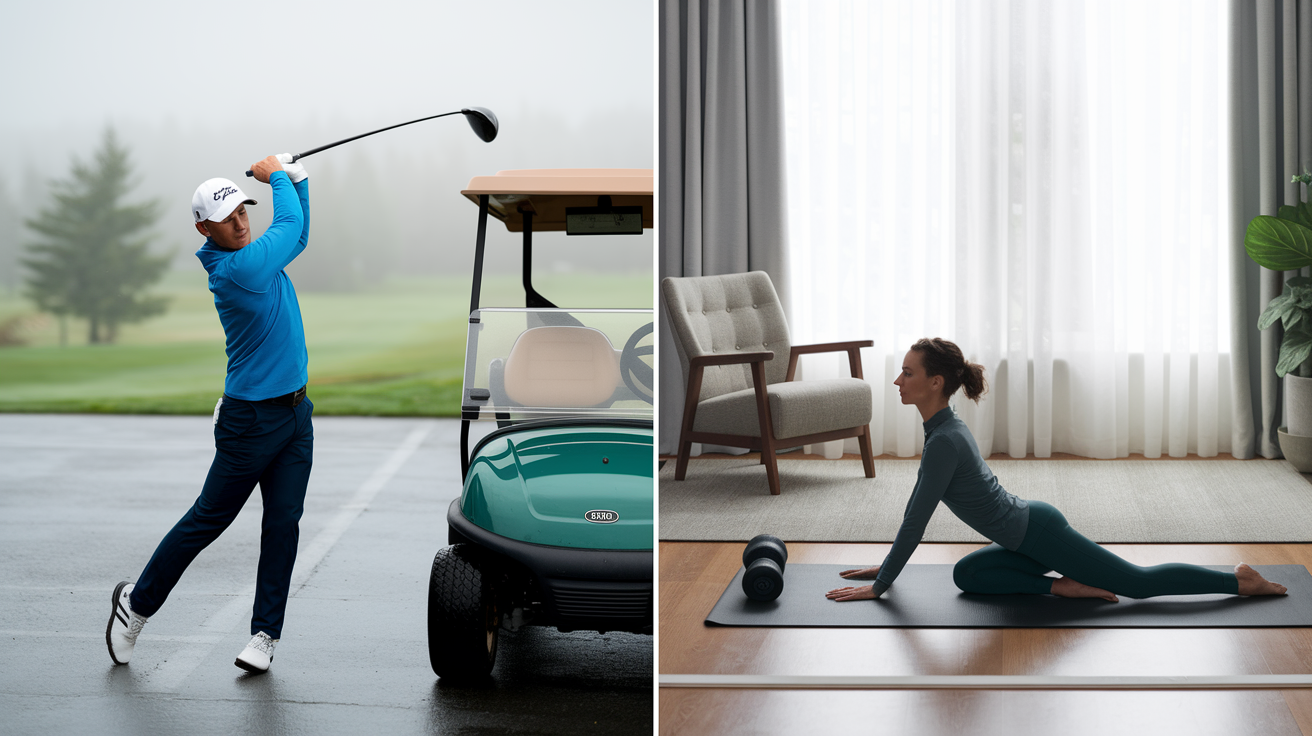
A short warm up before your round prepares your joints to move through a full swing and reduces the risk of early round stiffness or compensations. A separate daily mobility program builds long term capacity, so each week you start with more range than the week before. Both routines use the same movements. The difference is timing and intent.
The five minute pre round warm up focuses on dynamic movement to raise tissue temperature and wake up the central nervous system. You’re not trying to increase flexibility in five minutes. You’re reminding your body how to move. The ten minute daily program allows time for longer holds and more reps, which gradually improve your baseline range of motion. Many golfers do the daily routine in the morning or after work, then use the shorter warm up before playing or practicing.
| Program | Duration | Exercises Included |
|---|---|---|
| Pre Round Warm Up | 5 minutes | Cat/Cow (5 reps), Kneeling Thoracic Rotation (30 sec/side), Dynamic Fire Hydrant (20 sec/side), Dynamic Shoulder Stretch (30 sec) |
| Daily Mobility Routine | 10 minutes | Full routine from overview section: Cat/Cow, Child’s Pose Lat Stretch, Side Lying Windmill, Kneeling Thoracic Extension, Half Kneeling Hip Flexor Rock, Seated Groin Stretch |
Run the pre round warm up in the parking lot, on the range, or in the locker room before your first tee shot. The daily routine works well at home with a yoga mat and a bench or chair. Both programs can scale. If you have extra time, add a second round or hold stretches longer. If your week gets busy and you miss a few days, the pre round warm up still gives you enough movement prep to play without feeling locked up.
Final Words
Start by using the complete routine: hips, thoracic spine, shoulders. That sequence improves rotation, lowers back strain, and helps you swing with more speed and control.
Use the 5-minute pre-round warm-up when time is tight, or the 10-minute daily routine to build lasting mobility. Follow the hip, T-spine, and shoulder drills and stick to the reps and cues we gave.
Pick one habit this week, a quick warm-up before play or three short daily sets, and repeat it. Small consistent golf mobility exercises add up. You’ll notice better swings and less stiffness.
FAQ
Q: What is a complete golf mobility routine?
A: A complete golf mobility routine is a short sequence targeting hips, thoracic spine, and shoulders to improve rotation, posture, and power, with practical drills you can use before a round or in daily practice.
Q: Why does hip mobility matter for the golf swing?
A: Hip mobility matters because it increases turn, reduces lower-back strain, and prevents compensations that steal power, letting you rotate more freely and maintain a safer spine position during the swing.
Q: How does thoracic spine mobility affect swing mechanics?
A: Thoracic spine mobility affects swing mechanics by improving rotation, posture, and sequencing, which helps increase clubhead speed and prevents early extension that ruins contact and consistency.
Q: How does shoulder mobility influence the backswing and follow-through?
A: Shoulder mobility influences backswing and follow-through by allowing fuller external rotation, increasing backswing length, and reducing over-the-top moves, which improves swing path and contact quality.
Q: What are quick hip mobility exercises I can do with reps and cues?
A: Quick hip mobility exercises are 90/90 switches 8–12 reps per side (keep chest tall), lying hip CARs 6–8 slow reps per side (move from the hip), and kneeling lunge lifts 8–10 per side (drive hips forward).
Q: Which thoracic spine drills should I add, with reps and cues?
A: Thoracic drills include thread-the-needle 8–10 reps per side (rotate from mid-back, keep hips steady), seated towel twists 10–12 reps (sit tall, push chest toward ceiling), and foam-roll thoracic extensions 8–10 rolls.
Q: What short shoulder mobility drills work best, including reps?
A: Short shoulder drills are doorway pec stretch 30 seconds each side (open chest), banded pull-aparts 12–15 reps (scapula squeeze), and external rotation with a light dumbbell 10–12 reps per side (elbow tucked).
Q: How long should a pre-round warm-up and daily mobility routine be?
A: A pre-round warm-up should be about five minutes with dynamic hip swings, thoracic rotations, and one simple shoulder drill. A daily mobility routine should be roughly ten minutes covering those areas more fully.
Q: How often should golfers do mobility work to see benefits?
A: Golfers should do mobility work most days—about five to six times weekly if possible—for steady gains in rotation, reduced pain risk, and better swing consistency; short daily sessions beat long occasional ones.
Q: Can mobility work reduce lower-back strain during golf?
A: Mobility work can reduce lower-back strain by improving hip rotation and thoracic motion, which lowers compensations; consistent mobility plus mindful practice usually eases strain and improves comfort while swinging.