

Think you have to dive into hard workouts to make up for weeks off?
You don’t.
Gentle recovery exercises restore circulation, reduce stiffness, and rebuild confidence without leaving you sore or wiped out.
Like warming a car engine on a cold morning, small, steady movements prime your body to move well.
This post gives simple 5 to 15 minute routines—mobility, low impact cardio, and easy strength—to help you restart safely, feel capable the next day, and make consistency the goal, not perfection.
Gentle Reconditioning Basics for Restarting Exercise After Time Off

Gentle exercise after time away from movement restores circulation to muscles and joints, increases oxygen delivery through deeper breathing, and reduces stiffness that piles up during inactivity. It rebuilds confidence in your body’s ability to move safely without fear of injury or crushing fatigue.
Starting with low intensity, joint friendly movement signals to your nervous system that exercise is a supportive habit again. Not a threat.
A gentle first session looks like 5 to 15 minutes of slow, controlled movements that prioritize comfortable range of motion over speed or intensity. Think seated work, standing shifts that don’t require balance challenges, and simple patterns that let you focus on breathing and body awareness. The goal is to finish feeling capable and ready to repeat the session tomorrow. Not wiped out or sore the next day.
Before beginning any movement session, a few key preparation steps help your body perform safely and comfortably:
- Brief mobility preparation to wake up joints and increase synovial fluid in the hips, shoulders, and spine
- Light movement readiness that raises body temperature slightly without elevating heart rate significantly
- Comfortable breathing rhythm established through diaphragmatic breathing or slow exhales
- Short practice blocks of 3 to 5 minutes to test energy levels and adjust intensity as needed
You’ll likely feel some mild muscle awareness or light soreness 12 to 48 hours after your first few sessions. That’s normal tissue adaptation. If discomfort becomes sharp, interferes with daily tasks, or worsens instead of improving, that’s a signal to pause and reassess. Detailed safety warnings and red flag symptoms are covered fully in the Recovery Safety Rules section later in this article.
Low-Impact Mobility Routine to Restart Movement After Time Off
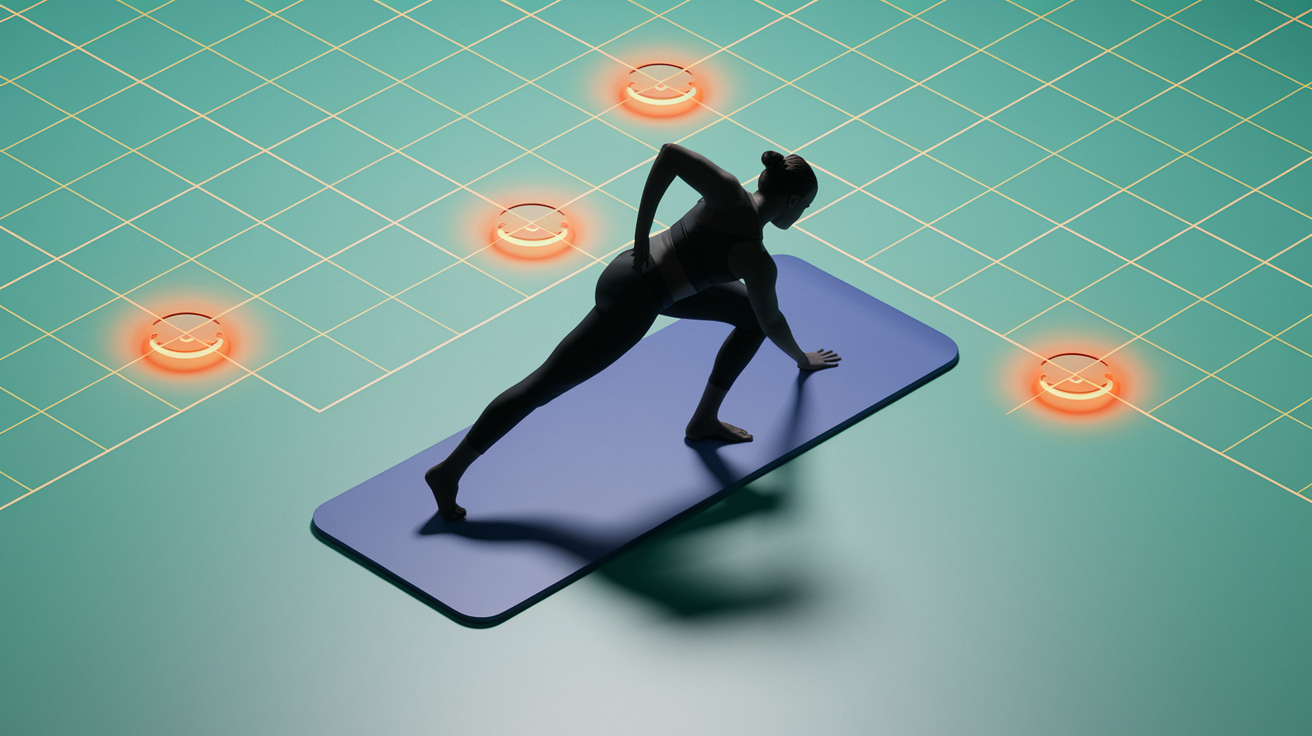
Mobility work moves joints through comfortable ranges of motion without loading them heavily, which increases circulation to connective tissue, lubricates joint surfaces, and reminds your brain how different parts of your body connect and coordinate. After time off, mobility routines restore postural awareness, reduce compensatory movement patterns, and prepare muscles and tendons for strength or cardio work later in your comeback plan.
Try these movements in sequence or pick 3 to 5 that feel most relevant to your tightest areas:
Side reaches. Stand or sit tall, extend one arm overhead and gently reach toward the opposite side, feeling a stretch along your ribcage and lat. Hold for 3 to 5 breaths per side.
Toe taps. Stand and lightly tap one foot forward, then back to start. Repeat 10 to 15 times per leg to activate hip flexors and improve coordination.
Step outs. From standing, step one foot to the side, shift your weight, then return to center. Repeat 8 to 12 times per side to open hips and work lateral balance.
Gentle trunk twists. Sit or stand with hands on hips, slowly rotate your torso left and right, keeping hips stable. Perform 10 to 15 rotations to each side.
Heel raises. Stand near a wall or counter for light support, lift both heels off the ground, then lower with control. Repeat 10 to 15 times to activate calves and ankles.
Light arm movements. Circle arms forward and backward, 10 circles each direction, to warm up shoulders and upper back.
Slow hip shifts. Stand with feet hip width, shift weight side to side or front to back, feeling how your pelvis moves over your feet. Repeat 8 to 10 shifts per direction.
Supported forward bends. Stand or sit, hinge gently at the hips and reach hands toward shins or thighs, keeping knees soft. Hold for 5 breaths, then return upright.
Perform each movement slowly and smoothly. Prioritize control and comfort over depth or speed. Aim for 5 to 10 minutes daily, either as a standalone session or before light cardio or strength work. If a movement feels stiff or uncomfortable, reduce the range or skip it for now and revisit it in a week.
Beginner-Friendly Low-Impact Cardio Options for Easing Back In

Low impact cardio increases heart rate and breathing without pounding joints or demanding explosive effort. It’s ideal after time off when ligaments, tendons, and cardiovascular fitness need gradual rebuilding. These activities improve circulation, deliver nutrients to recovering tissues, and support energy regulation without the strain of high intensity intervals or long runs.
Walking is the most accessible starting point. Begin with 10 to 15 minutes at a comfortable pace that lets you hold a conversation without gasping. Increase duration by 2 to 5 minutes each week. Run walk intervals add short bursts of jogging between walking segments. Start with 30 seconds of light jogging followed by 2 to 3 minutes of walking, repeated 3 to 5 times. Aqua walking in chest deep water reduces joint load to near zero while challenging balance and coordination. Relaxed cycling on flat terrain or a stationary bike offers steady cardio with minimal impact. Pool based reintroduction workouts let you move through resistance without gravity stress.
Start with 2 to 4 cardio sessions per week, each lasting 10 to 20 minutes. As your breathing becomes easier and legs feel less fatigued, add 3 to 5 minutes per session every 7 to 10 days. Listen to your body. If you finish a session feeling drained instead of energized, scale back duration or intensity for the next few workouts.
| Activity | Why It Works | Suggested Duration |
|---|---|---|
| Walking | Zero impact, easy to scale, accessible anywhere | 10–20 minutes |
| Run-Walk Intervals | Builds cardio capacity gradually without continuous stress | 12–18 minutes |
| Aqua Walking | Water resistance supports strength without joint load | 15–25 minutes |
| Relaxed Cycling | Smooth motion, low impact, adjustable resistance | 10–20 minutes |
Gentle Strength Activation for Beginners Returning After a Break

Gentle strength work reactivates muscles that stabilize joints, support posture, and protect vulnerable areas like the lower back and knees. After time off, muscles lose some coordination and endurance even if size stays relatively stable. Starting with bodyweight or very light resistance rebuilds neuromuscular patterns safely before progressing to heavier loads.
Try these six movements to reintroduce strength work:
Heel raises. Stand with feet hip width, rise onto the balls of your feet, hold for 1 second, then lower with control. Perform 10 to 12 repetitions to activate calves and improve ankle stability.
Mini squats or sit to stands. From standing or seated in a chair, lower your hips a few inches (or stand from the chair), then return. Keep knees tracking over toes. Repeat 8 to 10 times to wake up quads and glutes.
Wall push up progression. Stand arm’s length from a wall, place hands flat at shoulder height, bend elbows to bring chest toward the wall, then push back. Perform 8 to 12 reps to activate chest, shoulders, and triceps without floor pressure.
Glute bridges. Lie on your back with knees bent and feet flat. Lift hips toward the ceiling, squeeze glutes at the top, then lower. Repeat 10 to 12 times to strengthen glutes and protect the lower back.
Bird dog. Start on hands and knees. Extend one arm forward and the opposite leg back, hold for 3 to 5 seconds, then return. Alternate sides for 6 to 8 reps per side to improve core stability and coordination.
Dead bug. Lie on your back, lift knees over hips, and extend arms toward the ceiling. Lower one leg toward the floor while keeping your lower back pressed down, then return. Alternate legs for 8 to 10 reps per side to activate deep core muscles.
Perform each movement for 20 to 30 seconds or 6 to 10 controlled repetitions, whichever feels more manageable. Rest 30 to 60 seconds between exercises. Complete the full circuit once or twice, depending on energy and soreness levels.
If standing movements feel unstable, use a chair for support during heel raises and squats. Reduce range of motion on any exercise that feels uncomfortable. Partial reps still build strength and coordination. Progress by adding 1 to 2 reps per week or holding positions 1 to 2 seconds longer.
Warm-Up and Cool-Down Routines for Safe Recovery Exercise

Warming up increases blood flow to muscles, raises synovial fluid production in joints, and primes your nervous system for coordinated movement. This reduces injury risk and improves how exercises feel during the session. Five to 15 minutes is enough to prepare your body without using energy you need for the main workout.
Use these warm up movements before any cardio, strength, or mobility session:
Shoulder rolls. Roll shoulders backward in smooth circles for 10 repetitions, then forward for 10 more to loosen upper traps and improve shoulder joint mobility.
Ankle circles. Lift one foot off the ground and rotate the ankle slowly in both directions, 8 circles each way per foot, to prepare for walking or standing work.
Arm floats. Lift arms slowly from your sides to overhead, then lower with control. Repeat 8 to 10 times to warm up shoulders and upper back.
Gentle marching in place. Lift knees alternately at a comfortable pace for 30 to 60 seconds to raise heart rate slightly and activate hip flexors.
Diaphragmatic breathing. Place one hand on your belly, inhale slowly through your nose for 4 counts, exhale through your mouth for 6 counts. Repeat 5 times to calm your nervous system and establish a breathing rhythm.
Neck mobility. Slowly tilt your head side to side, forward and back, holding each position for 2 to 3 breaths to release neck tension.
Hip circles. Stand on one leg (use a wall for balance if needed), make small circles with the lifted knee, 8 circles per direction per leg, to lubricate the hip joint.
Cooling down after exercise with light stretching and slow breathing reduces muscle tightness, helps your heart rate return to baseline gradually, and supports recovery by flushing metabolic waste products from working muscles. Spend 5 to 10 minutes holding gentle stretches for major muscle groups (hamstrings, quads, chest, shoulders) for 20 to 30 seconds each, combined with deep, slow breathing to signal to your body that the session is complete.
Recovery Safety Rules and When to Seek Help After Restarting Exercise

Normal discomfort after exercise feels like dull muscle awareness or mild tightness that improves with light movement and typically peaks 12 to 48 hours after a session. This is called delayed onset muscle soreness (DOMS) and is a natural part of tissue adaptation.
Harmful pain feels sharp, localized to a joint or tendon, worsens with continued movement, or interferes with daily tasks like walking, sitting, or reaching. If you can’t tell the difference, err on the side of caution and rest or modify.
Stop your session immediately and seek professional assessment if you experience sharp joint pain that doesn’t ease within a few minutes, fever or chills during or after exercise, dizziness or lightheadedness that persists beyond a few breaths, unusual fatigue that leaves you unable to complete normal daily activities, chest pressure or difficulty breathing that feels different from normal exertion, or symptoms that worsen over the next 24 hours instead of improving.
If you’ve been ill recently and still feel lingering fatigue or congestion, wait until those symptoms fully resolve before reintroducing structured exercise. When in doubt, check with your healthcare provider before resuming any physical activity after illness, injury, or extended time off.
Sample Weekly Gentle Comeback Plan for Beginners

Structuring your comeback week with a mix of mobility, low impact cardio, gentle strength, and rest days creates a sustainable rhythm that supports recovery without overwhelming your body or schedule. Each session should feel manageable enough to repeat consistently. That builds momentum and confidence faster than sporadic intense efforts.
| Day | Activity | Duration | Notes |
|---|---|---|---|
| Monday | Mobility routine | 10 minutes | Focus on hips, shoulders, and spine; perform in the morning |
| Tuesday | Walking or aqua walking | 15 minutes | Comfortable pace; stop if breathing becomes labored |
| Wednesday | Gentle strength circuit | 12 minutes | Perform 6 exercises once through; rest as needed |
| Thursday | Mobility routine | 8 minutes | Target areas that felt tight yesterday; add breathing work |
| Friday | Walking or cycling | 15 minutes | Slightly longer than Tuesday if energy permits |
| Saturday | Gentle strength circuit | 15 minutes | Add a second round if first round felt easy |
| Sunday | Full rest or light stretching | 5–10 minutes | Optional; prioritize sleep and meal prep |
Progress by increasing session duration by 2 to 5 minutes per week, adding 1 to 2 new exercises to your strength circuit, or introducing a second cardio option (like run walk intervals) once your base walking sessions feel comfortable and recovery between workouts is smooth. Listen to your body. If soreness lingers beyond 48 hours or energy drops instead of building, hold your current plan for another week before advancing. Small, consistent increases over 4 to 6 weeks rebuild fitness more reliably than rushing into longer or harder sessions too soon.
Final Words
Start by easing back in: short, joint-friendly sessions that boost circulation, mobility, and confidence. Focus on gentle mobility, low-impact cardio, and light strength activation to reconnect with movement.
Use quick warm-ups and cool-downs, watch for red flags, and follow the sample weekly plan to build consistency. If soreness shows up, that’s usually normal — safety details are in the recovery section.
Try a few gentle recovery exercises for beginners after time off this week, 5 to 15 minutes to begin. Keep it steady, adjust as needed, and celebrate small wins.
FAQ
Q: What is the 3-3-3 rule for workout?
A: The 3-3-3 rule for workout is a simple re-entry template: three exercises per session, three sets each, done about three times weekly—easy to scale by changing reps, weight, or rest.
Q: How to start working out again after a long break?
A: To start working out again after a long break, begin with short (5–15 minute) gentle sessions focused on mobility, light cardio, and bodyweight strength, aiming for 2–4 days a week and steady progress.
Q: Can exercise cause high AST?
A: Exercise can cause high AST because intense or eccentric muscle work releases AST into the blood; rises are usually temporary—if levels stay high or you have worrying symptoms, see a healthcare provider.
Q: What is the 5 5 5 30 rule?
A: The 5 5 5 30 rule is a simple circuit template: pick five moves, do five rounds, perform about five reps (or a five-minute block) per move, and rest roughly 30 seconds—scale to your level.