
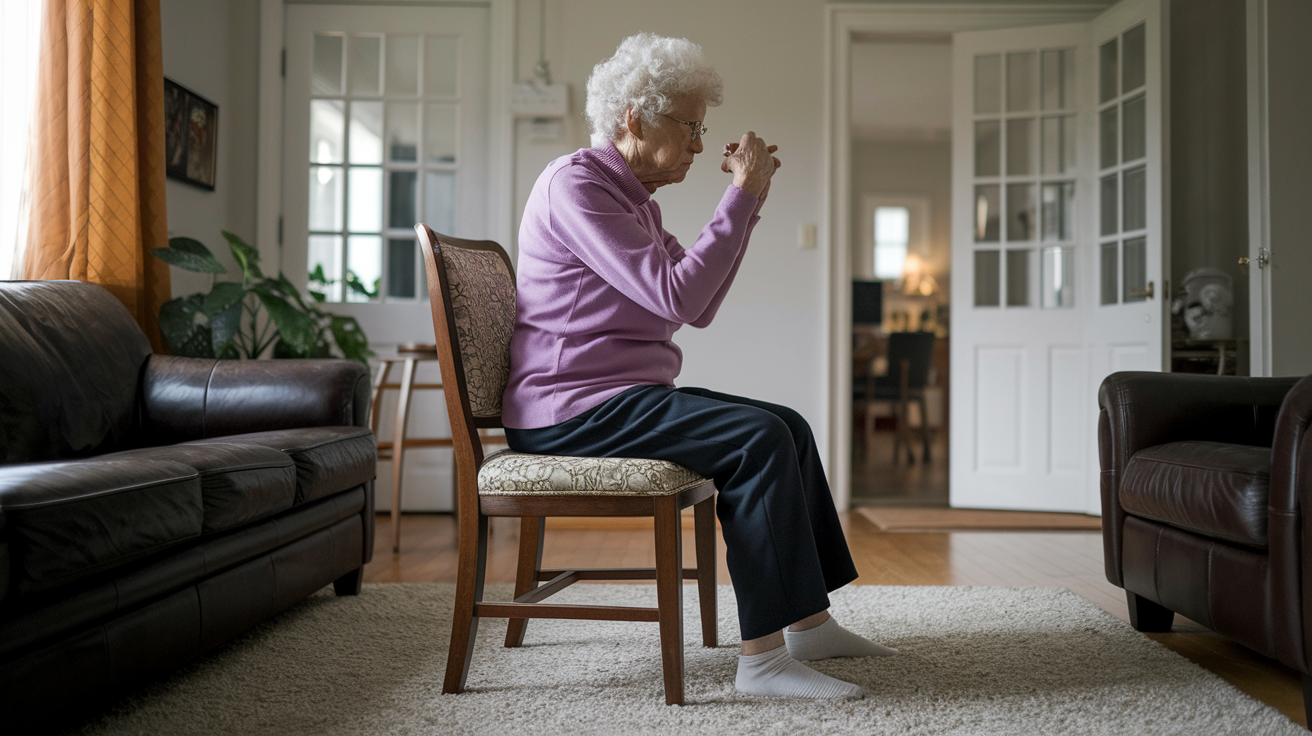
What if a short, gentle routine could help you keep moving and stay independent?
Falls affect about one in four older adults each year, and many come from weak legs, stiff joints, or poor balance.
This post lays out a safe, easy recovery plan: seated work, chair-supported standing, and short balance and strength moves you can do in 10 to 15 minutes most days to rebuild strength without overdoing it.
Start where you are. The goal is steady progress and usable mobility for everyday tasks like standing from a chair, stepping up a curb, or walking to the mailbox.
Essential Gentle Mobility Routine for Older Adults in Recovery
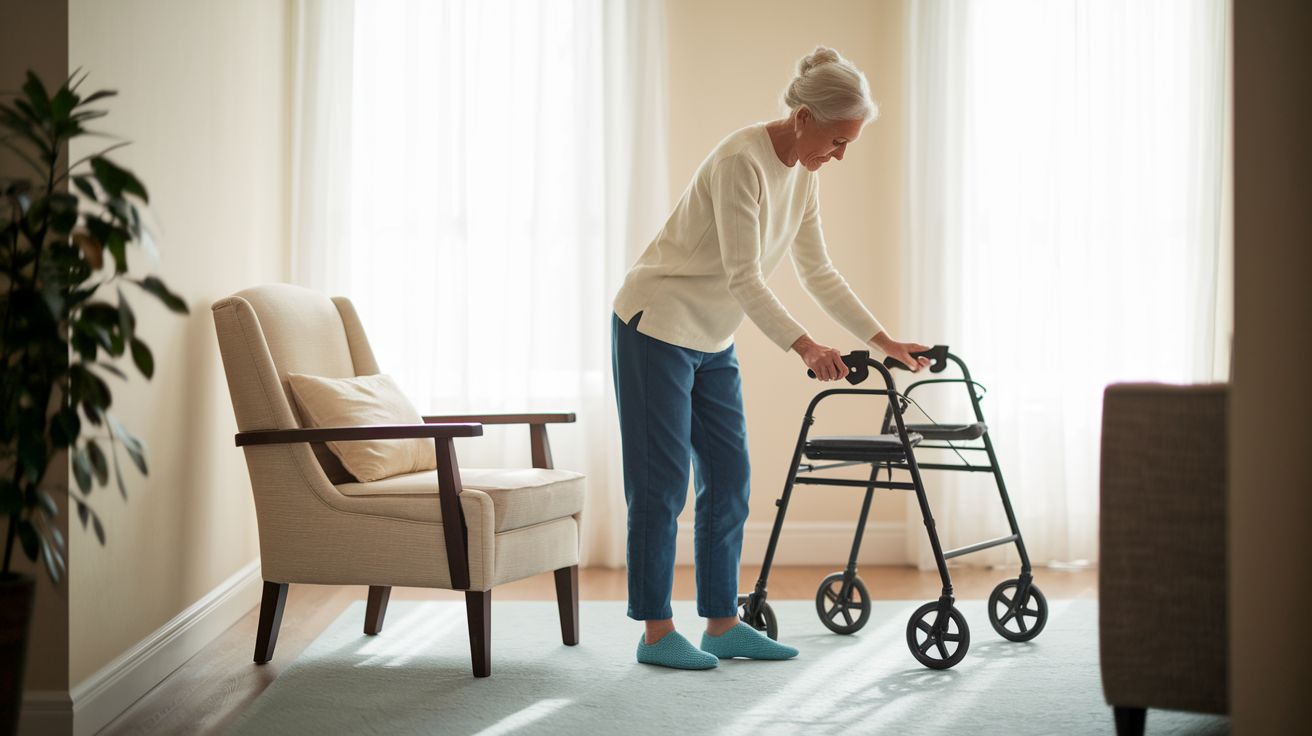
A gentle recovery exercise routine protects independence. It reduces fall risk, rebuilds strength after illness or surgery, and restores the ability to complete everyday tasks like climbing stairs, reaching overhead, or walking to the mailbox. The CDC reports about one in four older adults falls each year. Most of those falls stem from weak legs, poor balance, or stiff joints. Low-impact recovery exercises address those exact vulnerabilities without placing excessive strain on healing tissues or aggravating arthritis. Starting where you are (whether fully seated, using a walker, or standing with light support) builds the foundation for safe movement and long-term function.
Before your first session, confirm your exercise space is clear of loose rugs, electrical cords, and slippery surfaces. Wear non-slip shoes with firm soles, not socks or slippers. Position a sturdy chair against a wall so it won’t slide. Keep a countertop, walker, or rail within arm’s reach during standing work. If you use a cane or other prescribed gait aid, have it nearby. Keep a phone within reach and stop immediately if you experience chest pain, sudden shortness of breath, dizziness, fever above 100.4°F, or severe new pain. These are red flags that require medical attention.
A senior mobility maintenance program balances three components: flexibility work that lengthens tight muscles around hips, ankles, and shoulders; balance drills that teach your nervous system to catch small wobbles before they turn into falls; and strength exercises that rebuild the leg and core muscles needed to stand from a chair or recover from a stumble. Adaptive exercises allow you to start fully seated, progress to chair-supported standing, and eventually work with minimal support as confidence and capacity improve. Safe frequency means short, repeatable sessions (often 10 to 15 minutes) that you can do most days without triggering pain or exhaustion.
Sample Movements to Start
-
Ankle Pumps – Sit tall in a chair with both feet flat. Slowly point your toes forward like pressing a gas pedal, then pull them back toward your shin. This gentle rocking motion wakes up calf muscles and improves circulation, especially helpful after long periods in bed or sitting.
-
Seated Marches – While seated, lift one knee a few inches off the chair, hold briefly, then lower. Alternate legs in a slow marching rhythm. This movement activates hip flexors and quadriceps without requiring you to bear weight, making it ideal for early recovery or low-energy days.
Warm-Up Techniques to Prepare Aging Joints for Gentle Recovery Work
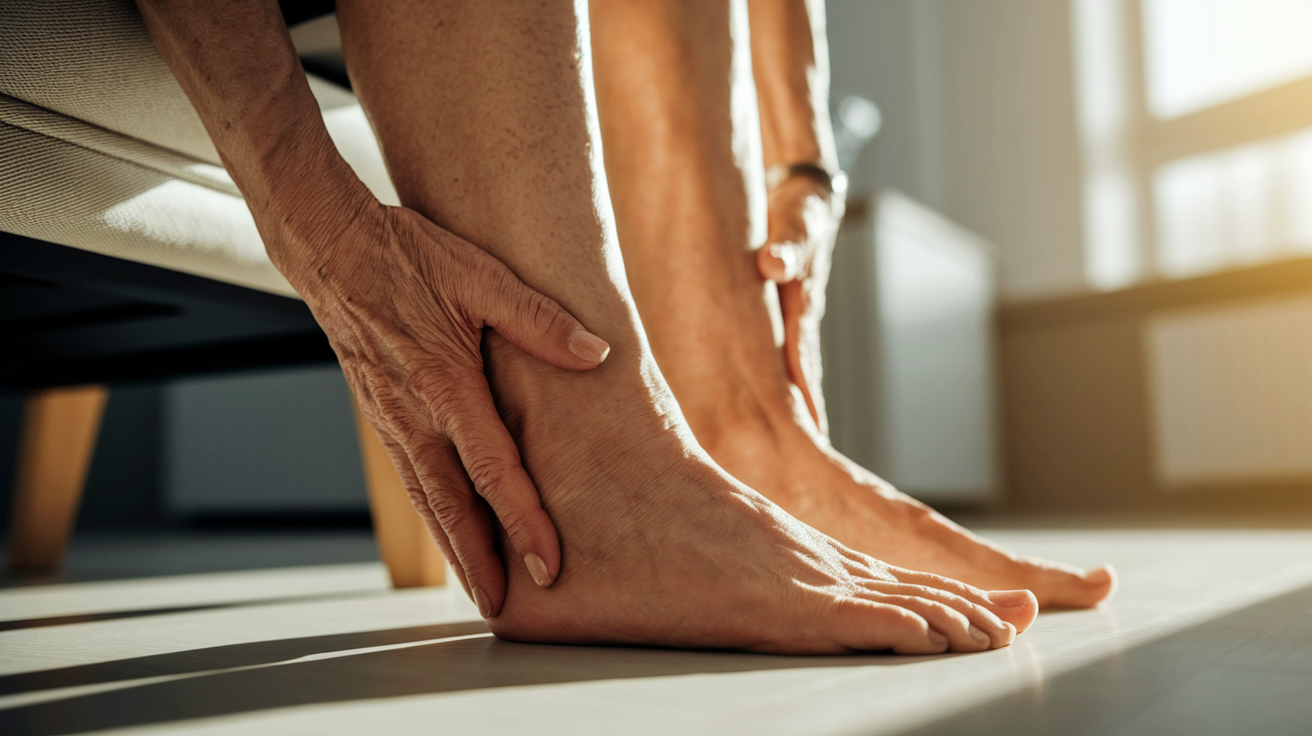
Warm-up and cool-down serve the same purpose as oil in an engine: they let joints glide smoothly and reduce the chance of a sudden tweak or strain. Five to ten minutes of light activity before strength or balance work increases blood flow to muscles, raises core temperature slightly, and signals your nervous system that movement is coming. For older adults recovering from illness or hospital stays, this phase also reassesses how your body feels that day. Some mornings bring more stiffness or fatigue, and a gentle warm-up reveals whether you should stick with seated work or progress to standing.
Safe stretching techniques emphasize controlled, pain-free motion through each joint’s available range. Ankle circles and toe taps prepare feet and lower legs, which carry your weight during standing and walking. Move slowly enough that you can stop at any point, and breathe naturally throughout. Holding your breath during a warm-up defeats the circulation benefit.
Four Warm-Up Movements
-
Toe Taps – Sit with heels on the floor. Lift your toes toward the ceiling, then lower. Repeat 15 to 20 times per foot. This wakes up the muscles along your shins and improves ankle control.
-
Gentle Trunk Side Bends – Sit tall, place one hand behind your head, and slowly reach the opposite hand down toward the floor beside your hip. Hold for a breath, return to center, and repeat on the other side. Five bends per side loosen the muscles between your ribs and hips.
-
Shoulder Rolls – Lift both shoulders toward your ears, roll them back and down in a smooth circle, then reverse the direction. Ten rolls forward and ten rolls backward ease tension across the upper back and prepare your shoulders for any reaching or pressing work.
-
Ankle Circles – Lift one foot slightly off the floor. Rotate your ankle slowly in a full circle, five times clockwise and five times counterclockwise, then switch feet. This lubricates the ankle joint and improves proprioception (the sense of where your foot is in space).
Chair-Based Gentle Mobility Exercises for Older Adults
Chair-based exercise removes the balance and strength demands of standing, allowing you to focus entirely on joint motion, muscle activation, and controlled breathing. Seated work isn’t a fallback option. It’s the appropriate starting point for anyone managing severe fatigue, dizziness, acute pain, or early post-operative restrictions. Flexibility and stretching delivered from a stable seated position reduce fall risk to near zero while still addressing ankle stiffness, knee range of motion, and hip tightness that interfere with dressing, bathing, and getting in and out of a car.
Form cues matter even when seated. Sit toward the front half of the chair so your hips and knees form right angles, feet flat and hip-width apart. Keep your spine long (imagine a string gently pulling the top of your head toward the ceiling) and avoid rounding your shoulders forward. If a movement causes sharp pain or if your joint feels like it’s jamming, reduce the range of motion or skip that exercise and mention it to your physical therapist or doctor. Seated marching and heel raises are foundational because they activate the muscles that stabilize your ankle and knee without requiring you to balance on one leg.
Safety adaptations include holding the sides of the chair for extra stability, placing a cushion behind your lower back if the chair is too deep, or resting between exercises if you feel short of breath. If you’re recovering from hip or knee surgery, confirm with your surgeon which ranges of motion are safe. Some procedures restrict crossing your legs or bending past 90 degrees for the first few weeks. Seated leg extensions and knee bends rebuild quadriceps strength, which directly improves your ability to stand from a toilet, climb a single step, or walk without your knees buckling.
| Exercise | Reps/Hold | Modification |
|---|---|---|
| Seated Trunk Side Bends | 8–12 per side | Place hand on seat for support; reduce range if lower back feels pinched |
| Seated Shoulder Blade Squeeze | 8–12 reps, hold 3 seconds | Rest arms on thighs if shoulders fatigue; focus on gentle squeeze, not force |
| Seated Hamstring Stretch | Hold 15–20 seconds per leg | Keep knee slightly bent if hamstring feels tight; hinge from hips, not lower back |
| Seated Ankle Dorsiflexion | 15–20 reps per foot | Point and flex slowly if calf cramps; pause and massage calf gently before continuing |
Standing Gentle Strength Training to Support Mobility Independence
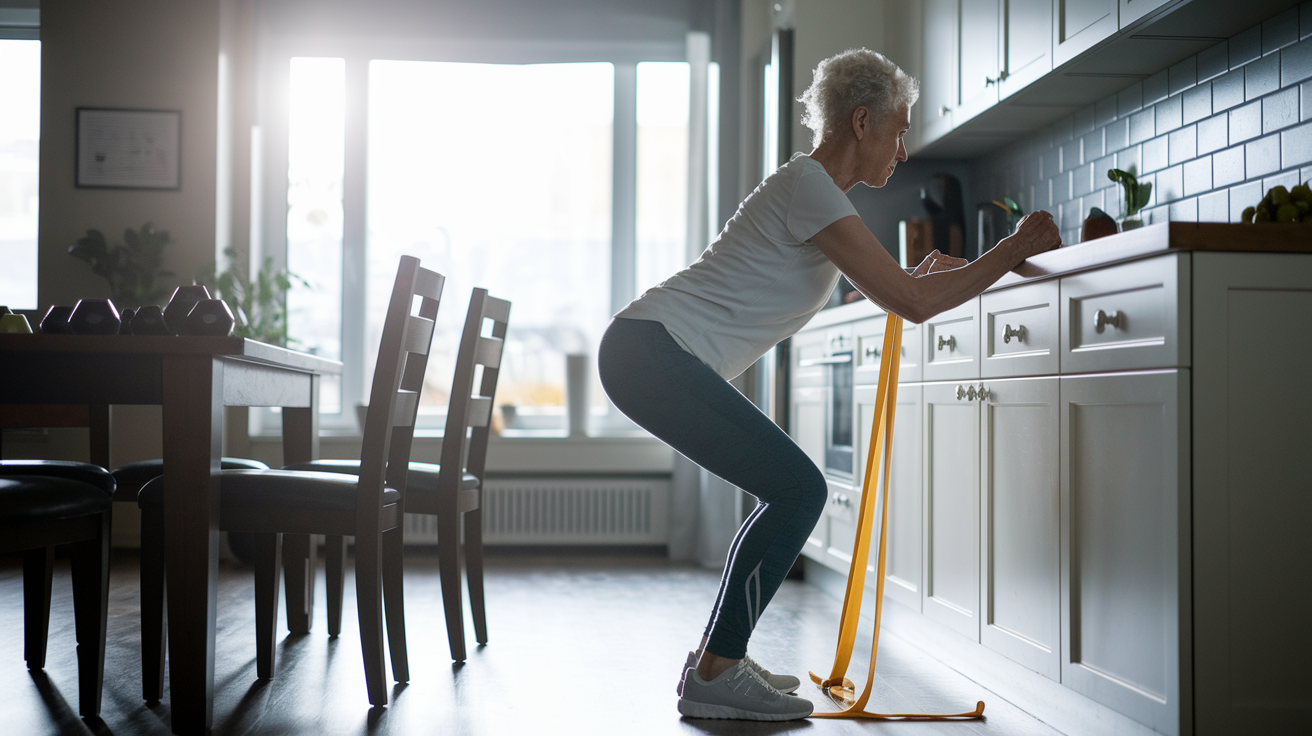
Gentle strength training rebuilds the leg, hip, and upper-body pushing power required for real-world tasks: standing from a low couch, carrying a light grocery bag, pushing open a heavy door, or recovering your balance when you trip on uneven pavement. Light weights exercises often use body weight, a resistance band, or 1- to 3-pound hand weights (amounts that feel manageable for 8 to 15 repetitions without causing sharp pain or breath-holding). Hip abduction and glute activation target the muscles on the outer hip and buttocks that prevent your knee from collapsing inward during single-leg stance, a common mechanism for falls.
Standing work introduces a balance challenge even when you hold a chair or countertop, so begin with both hands on support and progress to fingertip contact, then one-hand light touch, and finally hands hovering near the surface but not touching. Mini-squats teach your hips, knees, and ankles to work together in the same pattern you use to sit down and stand up. Wall push-ups strengthen chest, shoulder, and triceps muscles without the wrist or shoulder strain of floor push-ups, and they prepare your upper body to catch yourself if you stumble forward. Standing calf raises improve ankle strength and push-off power during walking, directly reducing the shuffle-step gait pattern that increases fall risk.
Safety Tips for Standing Strength Work
- Position your chair or support surface so it won’t slide. Place it against a wall or use a heavy kitchen counter.
- Wear shoes with non-slip soles; avoid exercising in socks, which can slide on tile or wood.
- Keep your core gently engaged by imagining you’re bracing for someone to tap your belly. Not sucking in hard, just a light tightening that supports your lower back.
- If dizziness occurs when standing, sit immediately, take a few deep breaths, and wait until the room stops spinning before trying again; report recurring dizziness to your doctor.
Balance and Fall-Prevention Exercises for Older Adults in Recovery
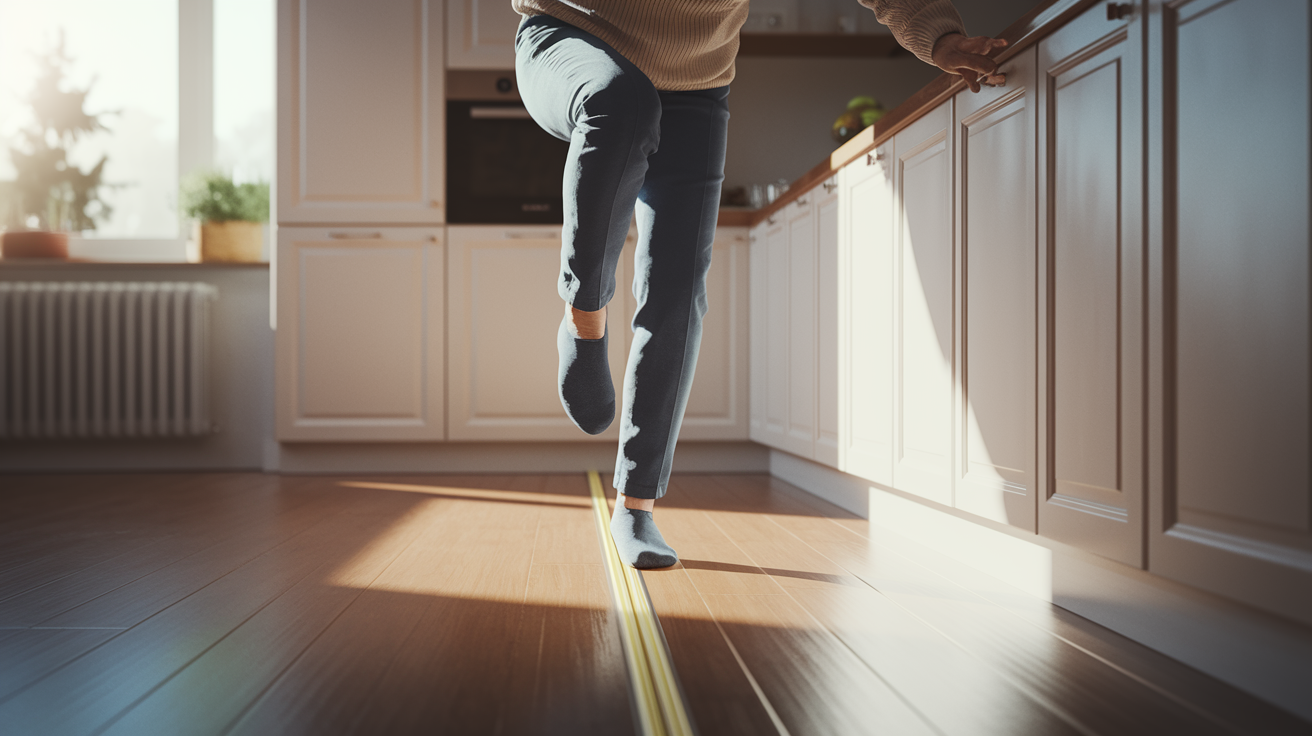
Balance exercises retrain the reflexes and muscle coordination that deteriorate during illness, bed rest, or simply from years of avoiding unstable surfaces. The CDC reports one in four older adults falls each year, and many of those falls result in hip fractures, head injuries, or a fear of falling that leads to further inactivity and muscle loss. Gentle balance progression exercises start with static holds (standing still while your nervous system learns to make tiny ankle and hip adjustments) and advance toward dynamic challenges like weight shifts, tandem stance (heel-to-toe positioning), and eventually single-leg balance or slow walking along a straight line.
Proprioception drills enhance the communication between your joints and your brain, helping you sense where your foot is landing before you commit your full weight. After surgery, prolonged sitting, or a period of using a walker, that sensory feedback fades, making every step feel uncertain. Short, frequent balance sessions (five to ten minutes once or twice daily) rebuild confidence faster than occasional long workouts, because your nervous system adapts best to repeated, low-fatigue practice.
Start every balance drill near a sturdy support. Tandem stance means placing one foot directly in front of the other, heel touching toes, as if standing on a tightrope. Hold this position for 10 seconds initially, working up to 30 seconds as your stability improves. Single-leg balance asks you to lift one foot a few inches off the floor, knee bent, while standing on the other leg; begin with a light fingertip touch on a countertop and progress to hands on hips. Heel-to-toe walking involves taking 10 to 20 slow steps in a straight line, placing your heel directly against the toes of the opposite foot with each step (imagine walking a balance beam at floor level).
Stepwise Balance Progressions for Safer Movement
Week one through two, practice static holds with full hand support and eyes open. Aim for three sets of 10-second holds per exercise, resting 30 to 60 seconds between sets. Week three through four, reduce support to fingertip contact and extend holds toward 20 seconds. If you feel stable, try closing your eyes for five seconds during one or two holds per session. Removing visual input forces your body to rely on joint position sense and inner-ear balance.
Week five through six, progress to hands hovering near support but not touching, or add a small head turn during the hold to challenge your vestibular system. Week seven through eight, incorporate dynamic elements like shifting your weight from one foot to the other in tandem stance, or lifting your standing-leg heel to balance on the ball of your foot for a few seconds. Reassess your confidence and fall history every two weeks; if you’ve had a near-fall or notice increased wobbling, return to the previous level and spend an extra week there before advancing.
Gentle Core and Posture Routine for Aging Adults
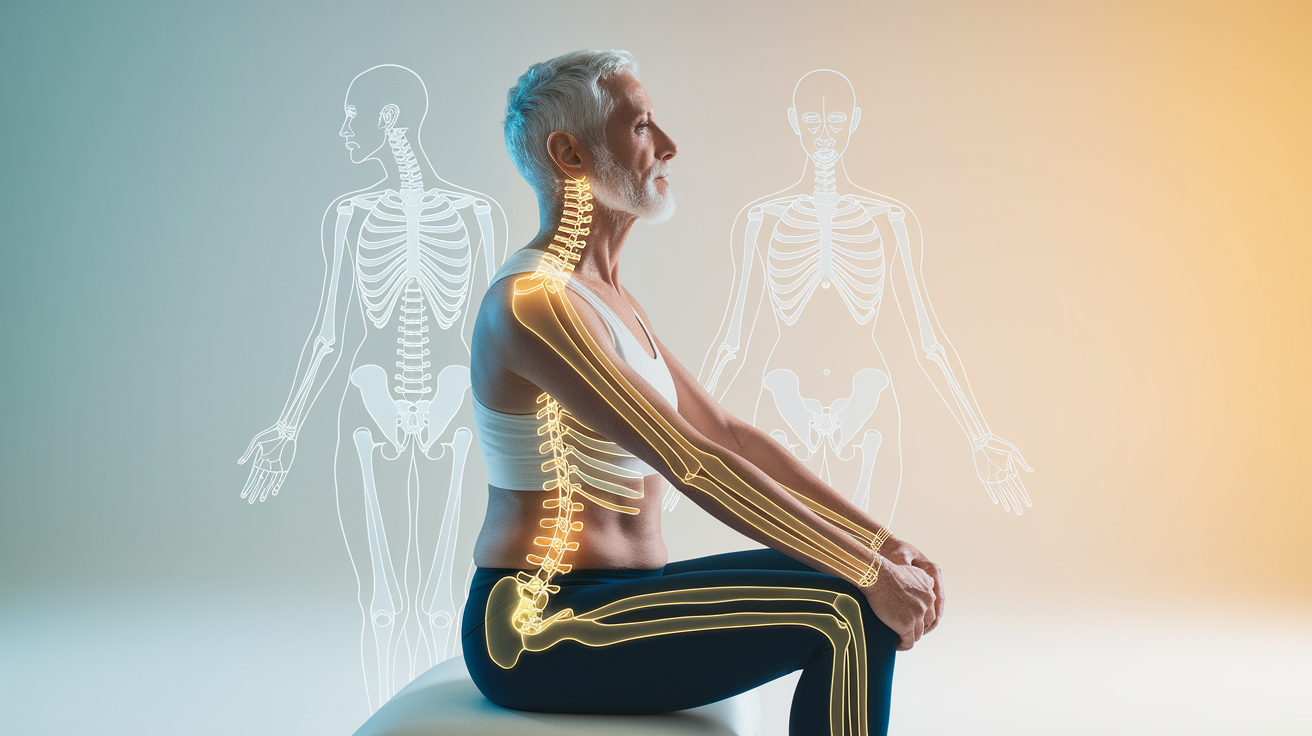
Core stability exercises support your spine during every movement (standing, reaching, bending, and walking) by coordinating the deep abdominal muscles, lower back, and pelvic floor. A stable core reduces chronic low-back pain, improves your ability to recover from a stumble, and makes daily tasks like lifting a grandchild, vacuuming, or gardening feel less exhausting. Posture improvement exercises address the forward head, rounded shoulders, and flexed-hip position that develops after years of sitting, driving, or compensating for pain, and they help you stand taller without constant conscious effort.
Gentle hip flexor stretches release the front of the hip, which becomes tight from prolonged sitting and pulls your pelvis into an anterior tilt, increasing lower-back arch and strain. Combining hip mobility with core activation creates a balanced system: flexible hips allow your pelvis to move freely, and strong core muscles control that movement so your spine stays protected. These exercises are low-impact and can be done seated, on hands and knees, or standing, making them accessible even on days when fatigue or joint pain limits other work.
Four Core-Focused Exercises
-
Pelvic Tilts (Seated or Supine) – Sit tall or lie on your back with knees bent. Gently tilt your pelvis forward to increase the arch in your lower back, then tilt it backward to flatten your back against the chair or floor. Hold each position for three seconds. Repeat 8 to 12 times. This teaches your pelvis to move independently from your ribcage and activates deep abdominal and glute muscles.
-
Seated Marches with Core Engagement – Sit upright, place your hands lightly on your belly, and gently tighten your abdominal muscles as if bracing for a sneeze. Maintain that tension while you lift one knee two to three inches off the seat, hold for three seconds, and lower. Alternate legs for 8 to 12 repetitions per side. Keeping your core engaged prevents your lower back from arching excessively as your hip flexor lifts your leg.
-
Bird-Dog Progression (Quadruped Holds) – Start on hands and knees on a padded surface, hands under shoulders and knees under hips. Tighten your abdominal muscles to keep your spine neutral (neither sagging nor arching). Hold this position for 5 to 10 seconds, breathing normally. Repeat 6 to 8 times. As stability improves, lift one arm straight forward or extend one leg straight back, holding 5 to 10 seconds before switching sides. This progression builds coordination between opposite limbs and strengthens the muscles that stabilize your spine during walking.
-
Standing Hip Flexor Stretch – Stand near a wall or countertop for light support. Step one foot back into a short lunge position, keeping your back knee straight and your front knee bent. Gently press your hips forward until you feel a stretch across the front of your back hip. Hold 15 to 20 seconds, then switch sides. Repeat twice per leg. This stretch counteracts the hip tightness that contributes to lower-back pain and shuffling gait.
Cool-Down and Relaxation Sequence for Older Adults

A seated cool-down and relaxation sequence after strength, balance, or mobility work helps your heart rate return to baseline gradually, prevents blood from pooling in your legs, and signals your nervous system that the workout is complete. Skipping this phase, especially for older adults or those recovering from illness, can lead to dizziness when you stand or increased stiffness later in the day. Three to five minutes of gentle stretching targets the muscles you just worked, encouraging them to lengthen rather than tighten as they cool.
Breathing and relaxation techniques reduce the stress-hormone response that accompanies any physical challenge, promote better sleep, and help you recognize the difference between productive muscle fatigue and warning-sign pain. Deep breathing (inhaling slowly through your nose for a count of four, holding briefly, then exhaling through your mouth for a count of six) activates your parasympathetic nervous system, the part responsible for rest and tissue repair. Pair slow breathing with simple stretches like a seated neck stretch (turning your head gently to one side and holding for 10 to 15 seconds) and an upper-back stretch (interlacing your fingers, pressing your palms away from your chest, and rounding your upper back slightly). These movements release tension across your shoulders and neck, areas that often tighten when you concentrate on balance or strength exercises, and they provide a calm, intentional end to your session that reinforces consistency and self-care.
Modifying Gentle Recovery Routines for Arthritis, Post-Surgery, or Limited Mobility
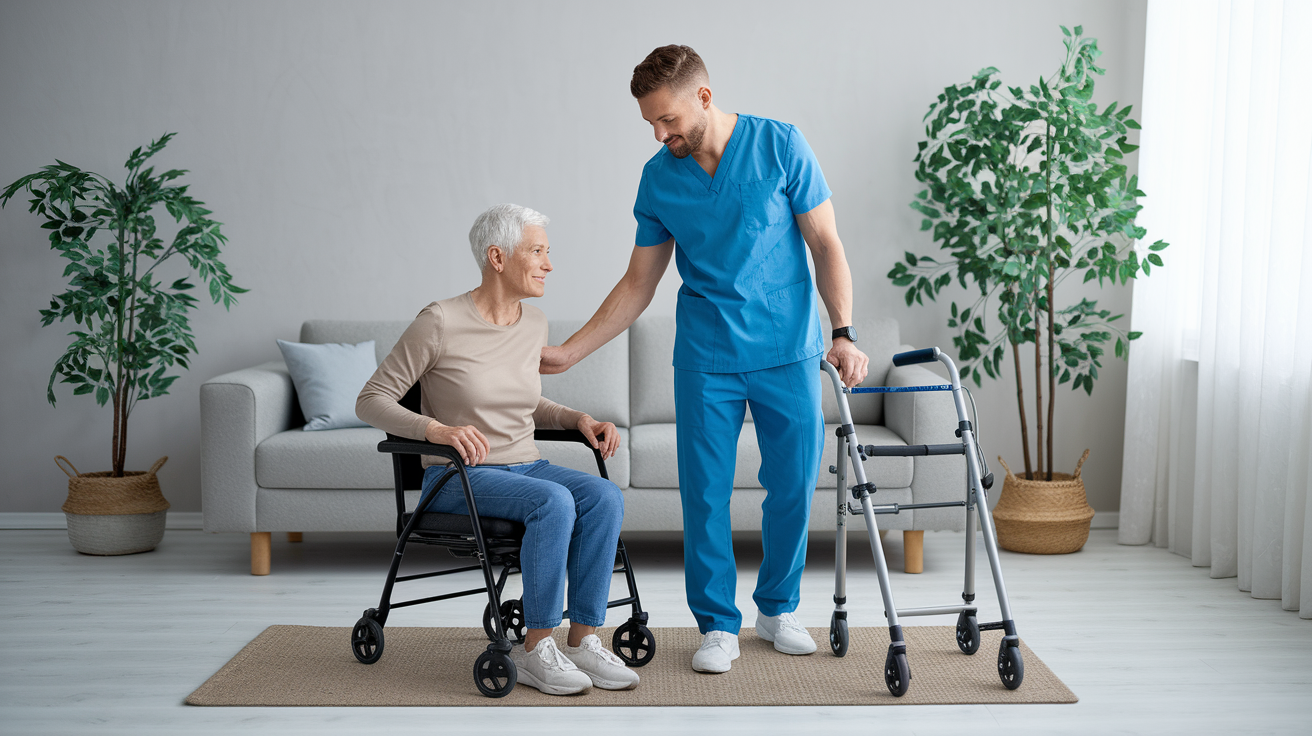
Modifying exercises for arthritis flare-ups means shortening your range of motion, reducing repetitions, or switching entirely to seated-only work until joint swelling and pain subside. Arthritis pain fluctuates day to day. Pushing through a flare often prolongs inflammation and discourages future sessions, while respecting current limits and returning to your full routine once symptoms calm builds long-term adherence. Knee osteoarthritis gentle workout plan examples include seated leg extensions with a smaller range (straightening the knee only halfway instead of fully), wall squats with a higher chair for support, and substituting impact-free ankle pumps or resistance-band work for standing calf raises when knees feel hot or stiff.
Post-surgery recovery exercises for hip replacement require strict adherence to your surgeon’s movement restrictions, which typically include avoiding hip flexion beyond 90 degrees, not crossing your legs, and not rotating your hip inward for the first six to twelve weeks. Gentle seated exercises like ankle pumps, seated marches with limited knee lift, and upper-body resistance-band rows are usually safe within days of surgery, but standing hip abduction, deep squats, and single-leg balance must wait until your surgeon or physical therapist clears you for weight-bearing and range progression. Adaptive exercises after any surgery (knee, hip, shoulder, or abdominal) focus on maintaining circulation, preventing muscle atrophy in unaffected areas, and practicing safe movement patterns that protect healing tissue.
Red Flags and When to Pause Recovery Exercises
Stop your session immediately and seek medical advice if you experience chest pain, pressure, or tightness; sudden severe shortness of breath that doesn’t resolve with rest; fainting, near-fainting, or room-spinning dizziness; new or worsening sharp pain, especially in a joint or surgical site; sudden swelling, redness, or warmth in a limb; fever above 100.4°F; or numbness, tingling, or weakness that spreads or persists. These symptoms may indicate infection, blood clot, cardiac distress, or surgical complications that require prompt evaluation, not self-management.
Less urgent signs (persistent dull aching, mild swelling that improves with rest, or fatigue that resolves by the next day) suggest you’re working at the edge of your current capacity and should scale back intensity, shorten your session, or take an extra rest day before resuming. When in doubt, contact your primary care provider or physical therapist; early check-ins prevent minor issues from becoming setbacks that halt your progress for weeks.
Safe Progression Plan to Improve Mobility in Older Adults
Progressive overload safely for older adults means adding small, measurable challenges every two to four weeks so your muscles, joints, and balance systems adapt without triggering pain or injury. Progression plan for gentle mobility improvement tracks three variables: repetitions (doing one to five more reps per set each week), resistance (adding a light band or 1-pound weight after two to four weeks of bodyweight work), and complexity (moving from seated to standing, two-hand support to one-hand, or static holds to dynamic movement). Sets and repetitions for low-intensity training typically start at one set of 8 to 12 repetitions for strength exercises and 10- to 15-second holds for balance drills, building toward two or three sets of 12 to 15 reps and 20- to 30-second holds as endurance improves.
Frequency recommendations suggest three to five sessions per week for combined strength and flexibility work, with short daily balance practice (five to ten minutes) woven into your routine while brushing your teeth, waiting for coffee to brew, or standing at the kitchen counter. Rest days matter as much as training days; muscles rebuild and strengthen during recovery, not during the workout itself. Older adults and those recovering from illness often need 48 hours between sessions targeting the same muscle group, so alternating upper-body and lower-body focus or mixing seated and standing work across the week prevents overuse while maintaining weekly volume.
Reassess your mobility within four to eight weeks using simple functional tests: count how many sit-to-stand repetitions you can complete in 30 seconds, measure how long you can hold a single-leg balance with eyes open, or time how many steps you can walk continuously before needing a rest. Compare these numbers to your baseline from week one. Expect measurable gains (two to five additional sit-to-stands, five to ten extra seconds of balance hold time, or 50 to 100 more steps) if you’ve been consistent with three or more sessions per week. If progress stalls despite adherence, or if you notice new pain or increased stiffness, schedule a check-in with your physical therapist or doctor to rule out underlying issues, adjust your program, or explore whether additional support like a walking aid or medication adjustment is needed.
Sample Weekly Gentle Recovery Mobility Plan for Seniors
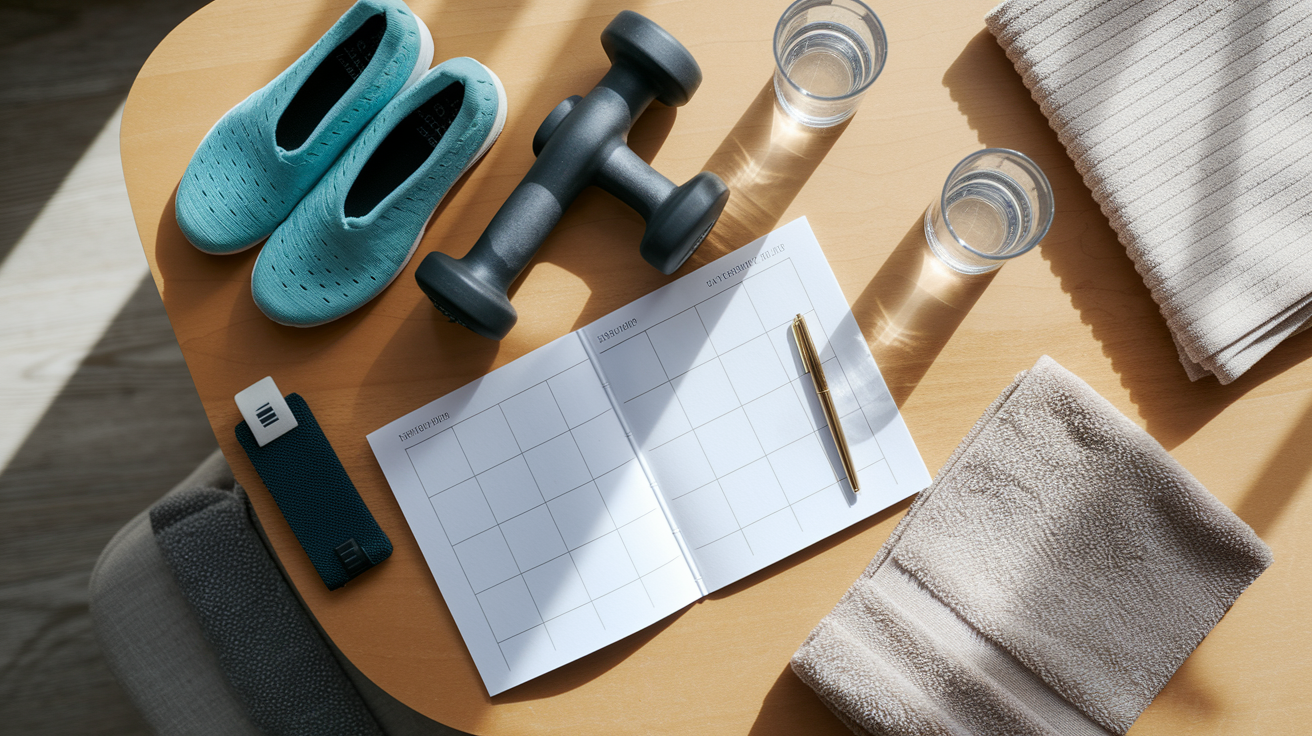
A sample weekly gentle exercise plan organizes your work into realistic time blocks that fit around medical appointments, household tasks, and energy fluctuations common during recovery. Home-based rehab routine can be as effective as clinic-based therapy when you follow a structured schedule, perform exercises with correct form, and progress at an appropriate pace. Walking programs to restore mobility after illness often start with short indoor laps (50 to 100 steps at a time) and gradually extend distance and duration as stamina rebuilds. A 10-minute mobility routine for morning can replace a longer afternoon session on days when pain or fatigue is higher, maintaining the habit without overtaxing your system.
| Plan Type | Duration | Key Exercises | Frequency |
|---|---|---|---|
| Seated-Only Routine | 15–20 minutes | Ankle pumps, seated marches, seated knee extensions, seated rows with resistance band, seated calf raises, trunk side bends, shoulder blade squeezes | Daily or 5–6 days/week; ideal for very low mobility, early post-op, or high-pain days |
| Mixed Standing Routine | 20–30 minutes | 5–10 min warm-up (ankle circles, shoulder rolls, light marching); sit-to-stand 2 sets x 8–12 reps; mini-squats 2 sets x 8–12; standing hip abduction 2 sets x 10 each side; wall push-ups 2 sets x 8–12; 5 min cool-down stretches | 3–5 days/week; appropriate once you can stand with light support and tolerate 20+ minutes of activity |
| Balance-Focused Routine | 10–15 minutes | Tandem stance 3 sets x 20–30 sec holds; single-leg balance 3 sets x 10–20 sec per side; weight shifts side-to-side 3 sets x 10 shifts; heel-to-toe walking 2 passes x 10–15 steps | Daily or twice daily in short bursts; can be performed separately from strength sessions or combined with standing routine |
Final Words
Start moving today with short, safe sessions: this post gave a starter plan with warm-ups, chair and standing moves, balance progressions, core work, cool-down, and simple progression steps.
Make safety your first priority, clear your space, set up steady support (chair or countertop), and pause for chest pain, dizziness, fever, or new severe pain. Warm up 5–10 minutes and adjust session length to how you feel.
Use this gentle recovery exercise routine for older adults to maintain mobility as a weekly habit. Small, steady steps build real confidence and function. You’ve got this.
FAQ
Q: What is the 3-3-3 rule for exercise?
A: The 3-3-3 rule for exercise is a simple guideline: pick 3 movements, do 3 sets of each, and repeat about 3 times a week to build mobility and strength safely.
Q: What is a gentle exercise routine for seniors?
A: A gentle exercise routine for seniors is a short warm-up plus 20–30 minutes of low-impact work combining seated or standing strength, balance holds, and stretching, done 3–5 times weekly or shorter daily sessions.
Q: What exercises improve mobility in seniors?
A: Exercises that improve mobility in seniors are joint-friendly moves like ankle pumps and toe taps, gentle marches, hip-opening steps, seated trunk bends, and light strength work that increases range and control.
Q: What should a 70 year old be doing every day at home?
A: A 70 year old should be moving daily with short warm-ups, a walk or seated strength work, brief balance practice, gentle stretching, staying hydrated, and pausing for rest when needed.