
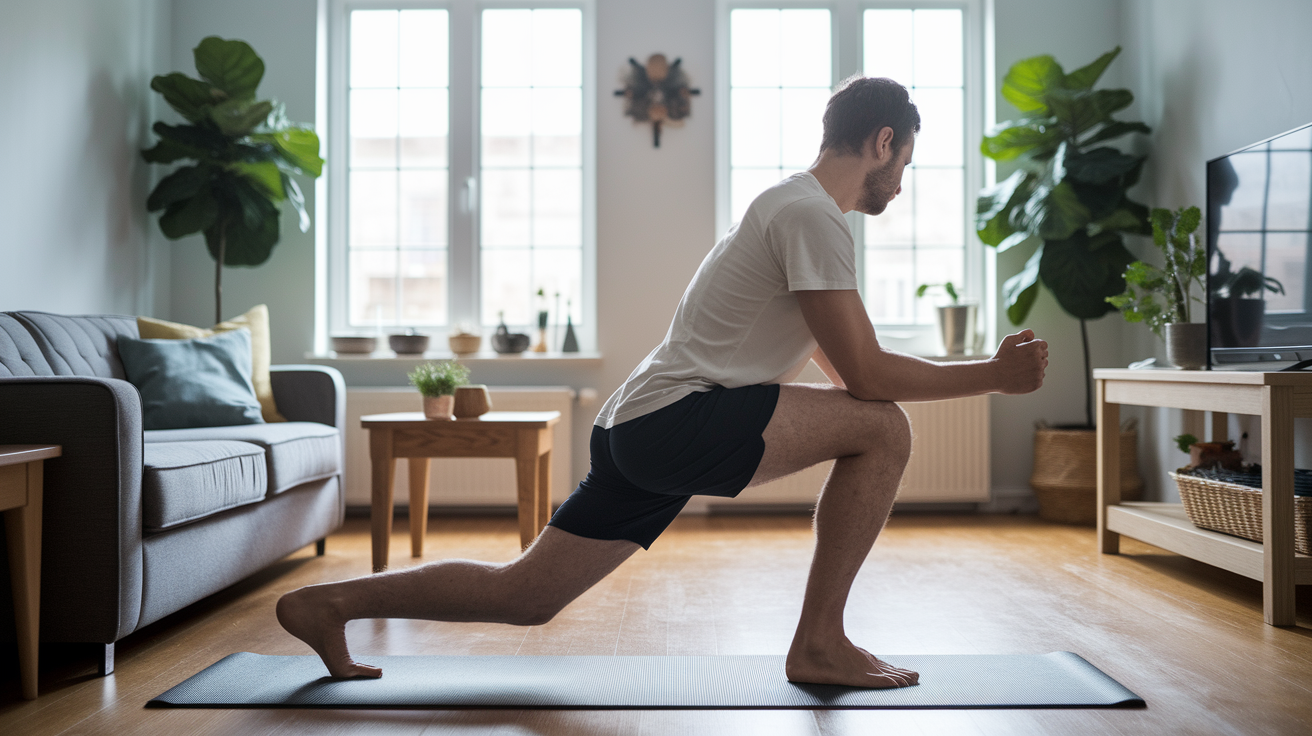
What if five minutes a day could stop that stiff, creaky feeling and make moving easier?
No magic, just a short full-body mobility stretch routine you can do anytime.
This sequence takes 5 to 10 minutes and uses controlled, active movement instead of long holds.
Do each move for 20 to 30 seconds, move slowly, and repeat the circuit once or twice.
The goal: better joint range across your neck, shoulders, spine, hips, and ankles so daily tasks and workouts feel smoother.
Quick Full-Body Stretch Routine (5–10 Minutes)

A simple full-body mobility stretch takes 5 to 10 minutes and improves how your joints move across the neck, shoulders, spine, hips, and ankles. Each movement uses controlled, active motion instead of just holding still, which warms up your connective tissue and gets your body ready for activity or helps release stiffness from sitting all day.
Do each stretch for 20 to 30 seconds. Move slowly and stay in control the whole time. Run through the entire sequence once or twice depending on how much time you’ve got and how your body’s feeling.
-
Neck Circles – 20 seconds each direction
Stand tall, drop your chin toward your chest, then slowly roll your head to the right shoulder, back, left shoulder, and return to center. Switch direction halfway through. -
Arm Circles – 30 seconds (15 forward, 15 back)
Extend your arms out to the sides at shoulder height and make controlled circles forward, then reverse and go backward. -
Torso Twists – 30 seconds
Stand with feet hip-width apart, hands on hips or lightly clasped in front of your chest. Rotate your upper body left and right, keeping your hips facing forward. -
Cat-Cow – 30 seconds
Start on hands and knees. Arch your back and lift your head on the inhale (cow), then round your spine and tuck your chin on the exhale (cat). -
Hip Circles – 20 seconds each direction
Stand on one leg, hands on hips. Lift the opposite knee and trace slow circles with that knee, opening the hip joint. Switch legs and reverse direction. -
Leg Swings Front-to-Back – 20 seconds each leg
Hold a wall or chair for balance. Swing one leg forward and back in a controlled arc, keeping your torso upright and core engaged. -
Leg Swings Side-to-Side – 20 seconds each leg
Face the wall, hands on the surface for support. Swing one leg across your body and then out to the side, keeping your hips square. -
Ankle Circles – 20 seconds each foot
Lift one foot off the floor and rotate the ankle clockwise, then counterclockwise. Switch feet. -
Child’s Pose Rock – 30 seconds
Kneel with big toes touching and knees wide. Sit back toward your heels, extend your arms forward, then gently rock forward and back to open up the spine and shoulders. -
Standing Forward Fold with Sway – 30 seconds
Hinge at the hips, knees soft, and let your arms hang toward the floor. Gently sway side to side or front to back, releasing the lower back and hamstrings.
These ten movements cover all your major joints. You can do them before a workout, after waking up, or whenever stiffness sets in during the day. The sequence takes about 5 minutes when you go through it once and closer to 10 if you repeat it twice.
Principles of Effective Mobility Stretching

Effective mobility stretching comes down to slow, deliberate movement paired with steady breathing. Inhale through your nose before you start a stretch, then exhale slowly as you move into the range. This breathing pattern keeps your nervous system calm and tells your body to release tension instead of fighting against it.
Movement control separates real mobility work from just moving around randomly. Each stretch should feel intentional, with a clear starting and ending position. Move into the stretch gradually, hold the deepest position for a few seconds if the movement calls for it, then return with the same control. Rushing through the range or bouncing at the end cuts down on results and ups the risk of straining cold muscles.
Timing also matters. Dynamic mobility stretches work best before training or physical activity because they warm up your joints and prep muscles for loaded movement. Static stretches (holding a position without moving) are better after a workout or at the end of the day when your body’s already warm and you’re trying to lengthen tissue and release built-up tension.
Common technique mistakes to avoid:
- Holding your breath while stretching, which amps up tension instead of releasing it
- Moving too fast or using momentum to force deeper range
- Locking joints at full extension instead of keeping a slight bend
- Skipping one side of your body or rushing through areas that feel tight
Mobility Stretches by Major Body Area
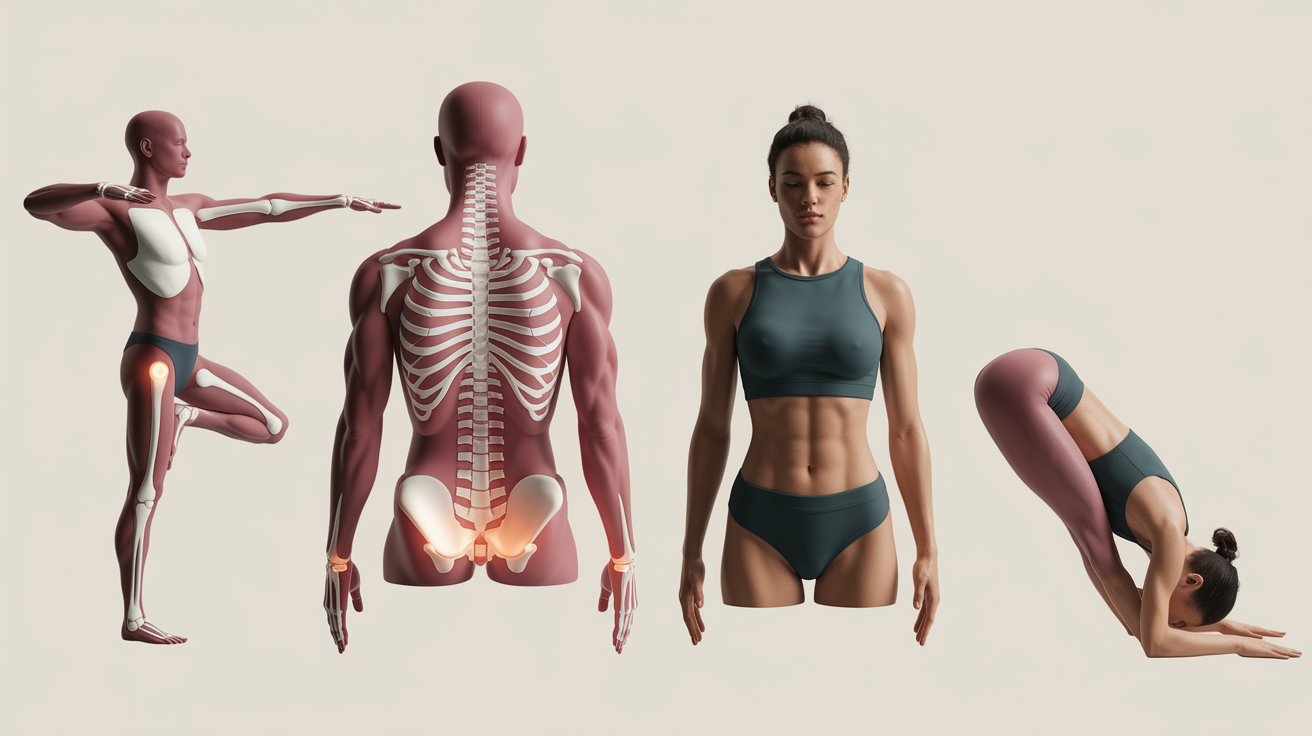
Upper Body
Your shoulders, chest, and upper back carry tension from sitting, driving, and all those forward-reaching activities. Mobility work here opens the chest and brings back shoulder range that often decreases with age or repetitive posture.
- Shoulder Rolls – Stand tall and slowly roll both shoulders backward in large circles for 10 reps, then reverse direction for 10 more. Focus on reaching the top of each circle and squeezing your shoulder blades together at the back.
- Thread the Needle – Start on hands and knees. Slide your right arm under your left armpit, lowering your right shoulder and the side of your head to the floor. Hold for 20 seconds, then repeat on the other side to open up the upper back and shoulder joint.
- Wall Angels – Stand with your back flat against a wall, feet a few inches forward. Raise both arms overhead in a “W” shape, then slowly slide them up and down the wall while keeping your elbows, wrists, and back of hands in contact with the surface.
Spine
Thoracic and lumbar mobility supports rotation, bending, and core stability. Most people lose rotational range in the mid-back from sitting in one position for hours at a time.
- Cat-Cow – From hands and knees, alternate between arching your spine (lifting head and tailbone) and rounding your spine (tucking chin and pelvis). Move slowly and match each position to one full breath.
- Seated Spinal Twist – Sit cross-legged on the floor. Place your right hand on your left knee and your left hand behind you on the floor. Rotate your torso to the left, hold for 20 seconds, then switch sides.
- Book Openers – Lie on your left side with knees bent at 90 degrees and arms extended in front of you, palms together. Slowly open the top arm to the right, following it with your eyes and letting your chest rotate toward the ceiling. Return and repeat 5 times per side.
Hips
Hip mobility affects squat depth, walking mechanics, and lower-back health. Tight hip flexors and limited external rotation are two of the most common restrictions.
- 90/90 Hip Stretch – Sit on the floor with your right leg bent in front of you at 90 degrees and your left leg bent behind you at 90 degrees. Sit tall and gently lean forward over the front leg, then rotate your torso toward the back leg. Hold each position for 20 seconds, then switch sides.
- Figure-4 (Ankle-to-Knee) – Lie on your back with knees bent and feet flat. Cross your right ankle over your left knee, then pull the left thigh toward your chest. Push the right knee gently away with your right elbow to deepen the stretch in the right glute and hip.
- Kneeling Hip Flexor Stretch – Kneel on your right knee with your left foot forward in a lunge position. Tuck your pelvis under, squeeze your right glute, and shift your hips forward until you feel a stretch down the front of the right hip. Hold for 20 seconds per side.
Lower Body
Lower-body mobility stretches target the quads, hamstrings, calves, and ankles. All of these influence walking, running, and squatting mechanics.
- Standing Quad Stretch – Stand on your left leg and pull your right heel toward your glute with your right hand. Keep knees together and pelvis neutral. Hold for 20 seconds, then switch legs.
- Downward Dog with Pedal – Start in a high plank, then lift your hips into an inverted “V” shape. Alternate bending one knee while pressing the opposite heel toward the floor, “pedaling” your feet to stretch calves and Achilles tendons for 30 seconds.
- Toe Touch Progression – Stand with feet hip-width apart and knees slightly bent. Hinge at the hips and reach your hands toward the floor, letting gravity pull you deeper with each exhale. Hold for 20 seconds, then slowly roll back up one vertebra at a time.
Modifications for Beginners and Limited Mobility
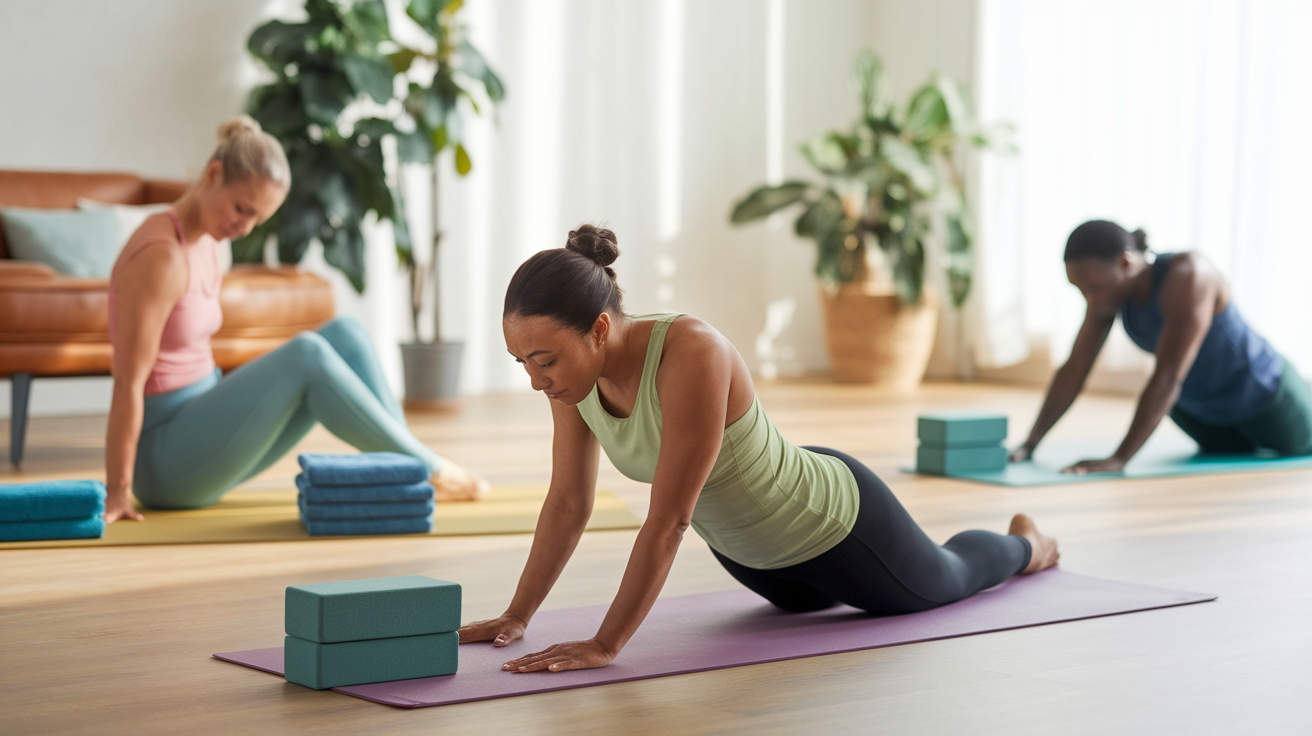
A lot of people start mobility work with tight hips, stiff shoulders, or lower-back discomfort that makes full-range stretches uncomfortable or just not accessible yet. Modifications let you work within a safe, productive range and build mobility over time instead of forcing positions your body isn’t ready for.
Using props and adjusting angles makes stretches more doable. Place a yoga block or folded towel under your hands in a forward fold if you can’t reach the floor. In pigeon pose, slide a cushion or block under the glute of the bent leg to take pressure off the hip. For seated stretches, sit on a folded blanket to tilt your pelvis forward and reduce hamstring tension.
Five common modifications for limited mobility:
- Bent-knee hamstring stretch – If straight-leg toe touches cause sharp pulling in your hamstrings or lower back, keep a soft bend in both knees and focus on hinging at the hips instead of forcing your hands to the floor.
- Wall-assisted hip circles – If balance is an issue during standing hip circles, place both hands on a wall and do smaller, controlled circles with one leg at a time.
- Elevated hands in downward dog – If wrist pain or tight shoulders make downward dog uncomfortable, place your hands on the seat of a chair or against a wall to reduce the angle and pressure.
- Supine figure-4 instead of seated – Do the figure-4 hip stretch lying on your back instead of sitting upright to take strain off the lower back and make it easier to control the stretch depth.
- Shorter hold times – If 20 to 30 seconds feels too long in any stretch, start with 10-second holds and gradually add time as your body adapts.
Safety Guidelines and When to Avoid Certain Stretches
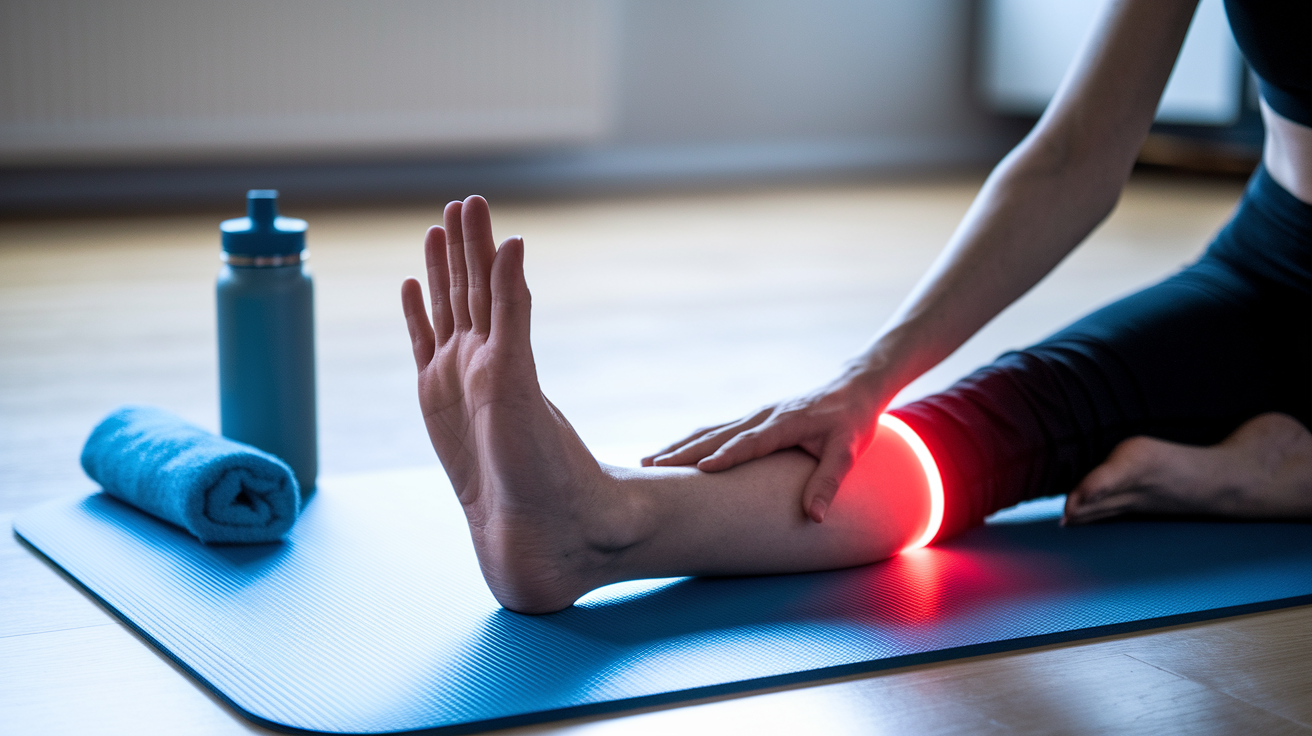
Mobility stretching shouldn’t produce sharp pain, tingling, or numbness. Mild discomfort or a pulling sensation is normal as tissue lengthens, but any sharp or shooting pain means you’ve moved past a safe range and need to back off right away.
If you’re recovering from acute injuries, avoid end-range stretches in the affected area until you get cleared by a healthcare provider. If you’ve got a recent muscle strain, ligament sprain, or joint inflammation, static and dynamic stretching can make the injury worse instead of helping it heal. Light movement within a pain-free range is usually safe, but forcing deeper stretches isn’t.
A proper warm-up reduces the risk of straining cold muscles. Do 3 to 5 minutes of light movement like walking, marching in place, or gentle joint circles before starting deeper mobility work, especially first thing in the morning or in a cold environment.
Stop stretching right away if you notice any of the following:
- Sharp, stabbing pain in a joint or along a muscle
- Tingling, numbness, or pins-and-needles sensations radiating into your arms or legs
- Dizziness, nausea, or feeling faint during or after a stretch
- Persistent soreness lasting more than 48 hours after a mobility session
Routine Variations for Different Goals

Warm-up routines use dynamic movement to prep your body for training, while cooldown routines use longer holds to release tension and support recovery. You can also customize mobility routines based on whether you’re trying to boost athletic performance, relieve desk-related stiffness, or just wake up your body in the morning.
| Routine Type | Duration | Stretch Style | Best For |
|---|---|---|---|
| Pre-Workout Warm-Up | 5–8 minutes | Dynamic movement (leg swings, arm circles, torso twists, cat-cow) | Preparing joints and muscles for strength training, running, or sports |
| Post-Workout Cooldown | 8–10 minutes | Static holds (forward fold, pigeon, figure-4, child’s pose, quad stretch) | Reducing muscle tension, supporting recovery, and preventing next-day stiffness |
| Morning Mobility Flow | 5–7 minutes | Blend of dynamic stretches and gentle holds (cat-cow, spinal twists, hip circles, ankle rolls) | Waking up stiff joints, improving circulation, and starting the day with better posture |
| Desk-Break Mobility | 3–5 minutes | Seated and standing stretches (neck circles, shoulder rolls, seated spinal twist, standing quad stretch) | Breaking up long sitting sessions, releasing hip flexor and upper-back tension |
Final Words
Jump right in: you’ve got a 5–10 minute, ready-to-do sequence, clear technique tips, region-specific moves, beginner modifications, safety cues, and routine options for different goals. Use the numbered routine to move through neck, shoulders, spine, hips, quads, hamstrings, calves, and ankles with slow, controlled motion.
Try one short session today. Start small, breathe, and pick a variation that fits your day. A consistent full body mobility stretch will help you move easier and build momentum. Simple, steady progress.
FAQ
Q: How long should a full-body mobility stretch routine take?
A: A full-body mobility stretch routine should take 5 to 10 minutes, using 10 movements at 20–30 seconds each with slow, controlled motion to improve joint range and warm up the body.
Q: How often should I do mobility stretches?
A: You should do mobility stretches most days, aiming for short daily sessions or at least 3–5 focused routines per week to maintain range, reduce stiffness, and support daily movement.
Q: What’s the difference between dynamic and static stretching and when should I use each?
A: Dynamic stretching uses controlled movement and is best before activity to warm joints, while static stretching uses still holds and works better after workouts to relax muscles and improve length.
Q: Which areas should a 5–10 minute routine include?
A: A 5–10 minute routine should include neck, shoulders, thoracic spine, hips, quads, hamstrings, calves, and ankles, using gentle rotations and controlled reaches rather than forced holds.
Q: How should I breathe during mobility stretches?
A: You should breathe slowly and steadily, exhaling as you move into each pattern to help muscles relax, increase joint lubrication, and make the movement feel easier and more effective.
Q: What are common mistakes to avoid during mobility stretching?
A: Common mistakes include rushing reps, holding your breath, forcing end-range, and skipping a light warm-up; focus on control, easy breathing, and gradual range to avoid strain.
Q: How can I modify stretches for tight hips, shoulders, or lower back?
A: To modify for tight areas, reduce range, use props like cushions or bands, do seated or wall-supported versions, and shorten holds so each movement feels comfortable and pain-free.
Q: When should I stop a stretch or see a professional?
A: You should stop a stretch if you feel sharp pain, numbness, or worsening symptoms; see a healthcare professional if pain follows an injury or doesn’t improve with gentle progressions.
Q: Can mobility stretches improve daily movement and reduce pain?
A: Mobility stretches can improve daily movement and ease mild stiffness by increasing joint range and lubrication with consistent practice, though persistent pain or major issues deserve professional advice.
Q: How should I progress mobility exercises safely over time?
A: To progress safely, increase range slowly, add a few seconds or extra reps, keep movements controlled, and test changes weekly—small steps beat pushing into pain.