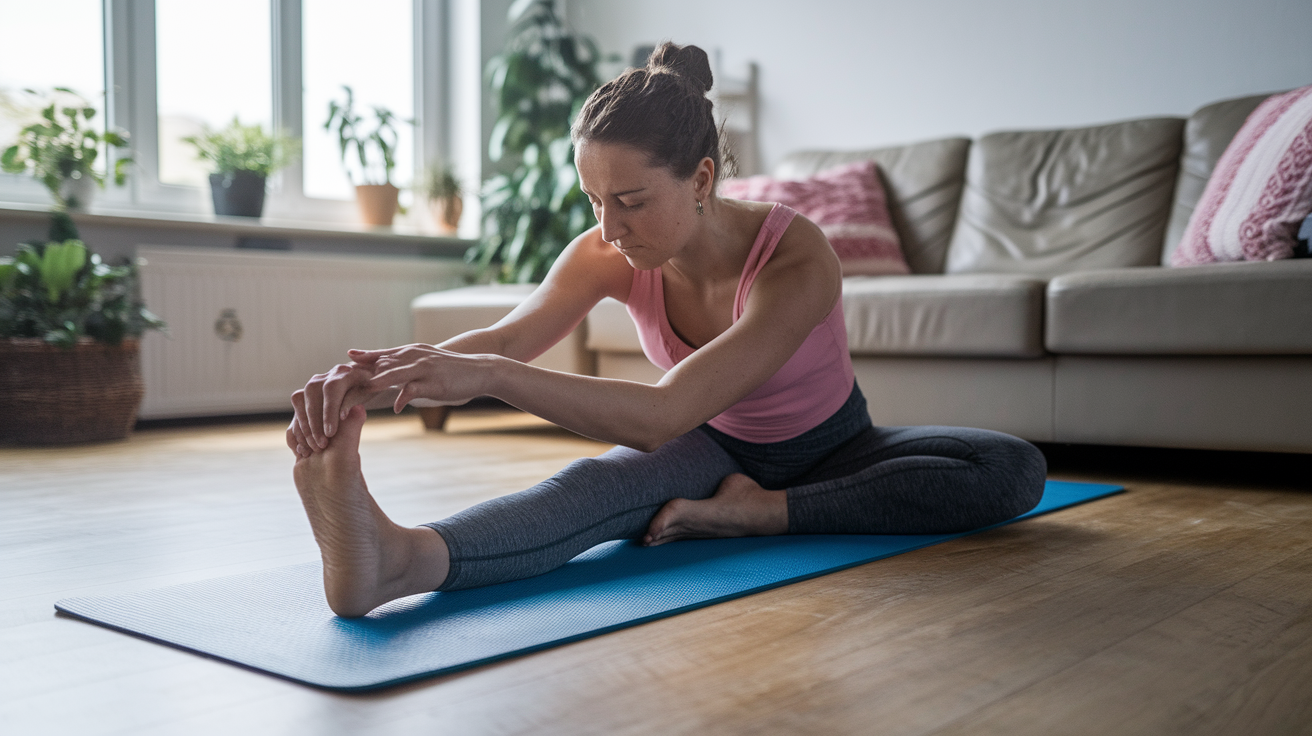
Think stretching is optional? Think again.
A few minutes of daily flexibility work can cut stiffness, improve posture, and make everyday moves easier.
You’ll get a 10–15 minute, full-body routine you can do at home with no equipment, plus clear safety tips, easy progressions, and gentle modifications for tight or returning bodies.
Start where you are and build up slowly, no forcing, just steady gains.
You can do it in the morning, before bed, or right after a walk.
Pick the timing that fits your day, and aim for small, steady progress.
At-Home Full-Body Flexibility Routine (10–15 Minutes)
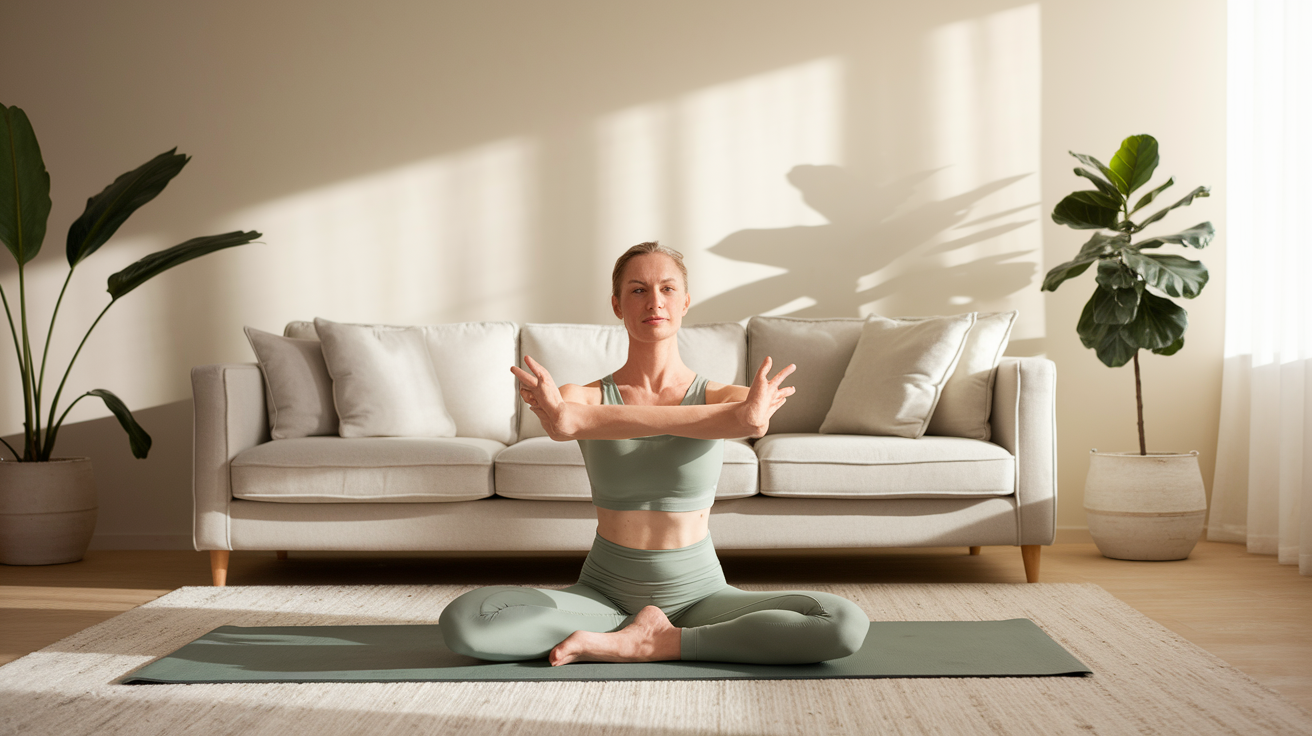
This routine covers every major muscle group. No equipment needed. You can do it in the morning, before bed, or right after a walk. Just grab a few feet of floor space.
-
Cat-Cow – Get on your hands and knees, then arch and round your spine. Move slow and breathe. Do this for 30 seconds.
-
Kneeling Hip Flexor Stretch – Step one foot forward into a lunge. Drop your back knee down. Shift your hips forward gently. Hold 20 to 30 seconds each side.
-
Standing Quad Stretch – Stand on one leg, pull your opposite foot toward your butt, keep your knees close. Hold 20 to 30 seconds per leg. Use a wall if balance is tricky.
-
Standing Forward Fold – Hinge at your hips and let everything hang. Bend your knees a little if your hamstrings are screaming. Hold 20 to 30 seconds.
-
Standing Calf Stretch – Step one foot back, press that heel down, lean forward. Hold 20 to 30 seconds per leg.
-
Seated Figure-Four – Sit in a chair or on the floor. Cross one ankle over the opposite knee. Lean forward from your hips. Hold 30 seconds per side.
-
Seated Spinal Twist – Sit cross-legged or in a chair. Put one hand behind you and gently twist your torso. Hold 20 to 30 seconds per side.
-
Child’s Pose – Kneel down, sit back on your heels, reach your arms forward along the floor. Hold 30 to 60 seconds.
-
Lying Knee-to-Chest – Lie on your back. Pull one knee toward your chest. Keep the other leg extended or bent, whatever feels better. Hold 20 to 30 seconds per side.
-
Neck Stretch – Sit or stand tall. Tilt your head gently to one side and let gravity do the work. Hold 15 to 30 seconds per side.
Move into each position slowly. Keep your breathing calm. If something feels sharp or like it’s pulling too hard, back off or skip it entirely.
Key Benefits of Improving Flexibility
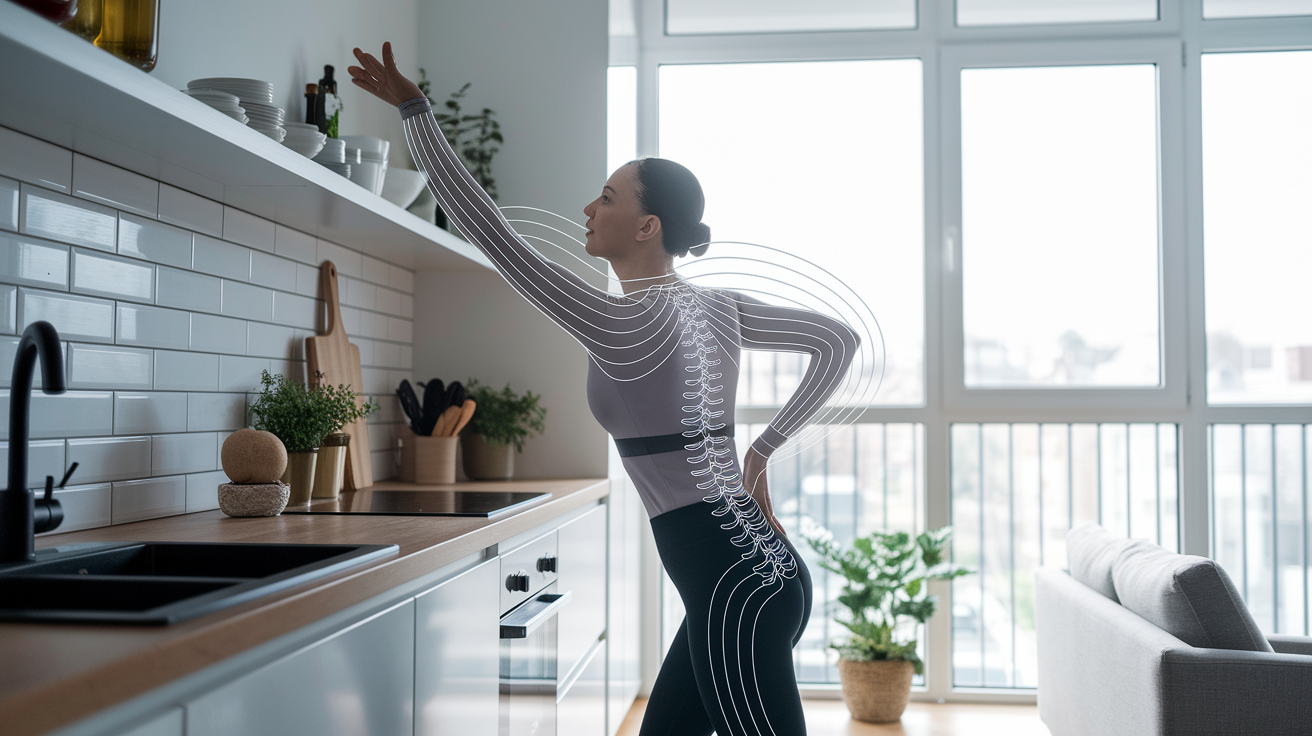
Better flexibility changes how your body handles daily movement. You’ll bend over, reach up, or get out of a chair with more control and less effort. It also helps loosen up muscles that get tight from sitting at a desk, standing all day, or doing the same tasks over and over.
When your muscles stay flexible, they’re less likely to strain during quick or awkward movements. That makes things like carrying groceries or playing with your kids safer. Flexibility also supports better posture because your shoulders, hips, and spine can settle into more natural positions instead of fighting tightness.
Stretching regularly boosts circulation to your muscles and joints, which helps you recover after workouts or long days on your feet. It can reduce those dull aches and stiff spots that show up after being still too long. Over time, movements that used to feel limited or uncomfortable start to open up.
Breakdown of Major Flexibility Techniques
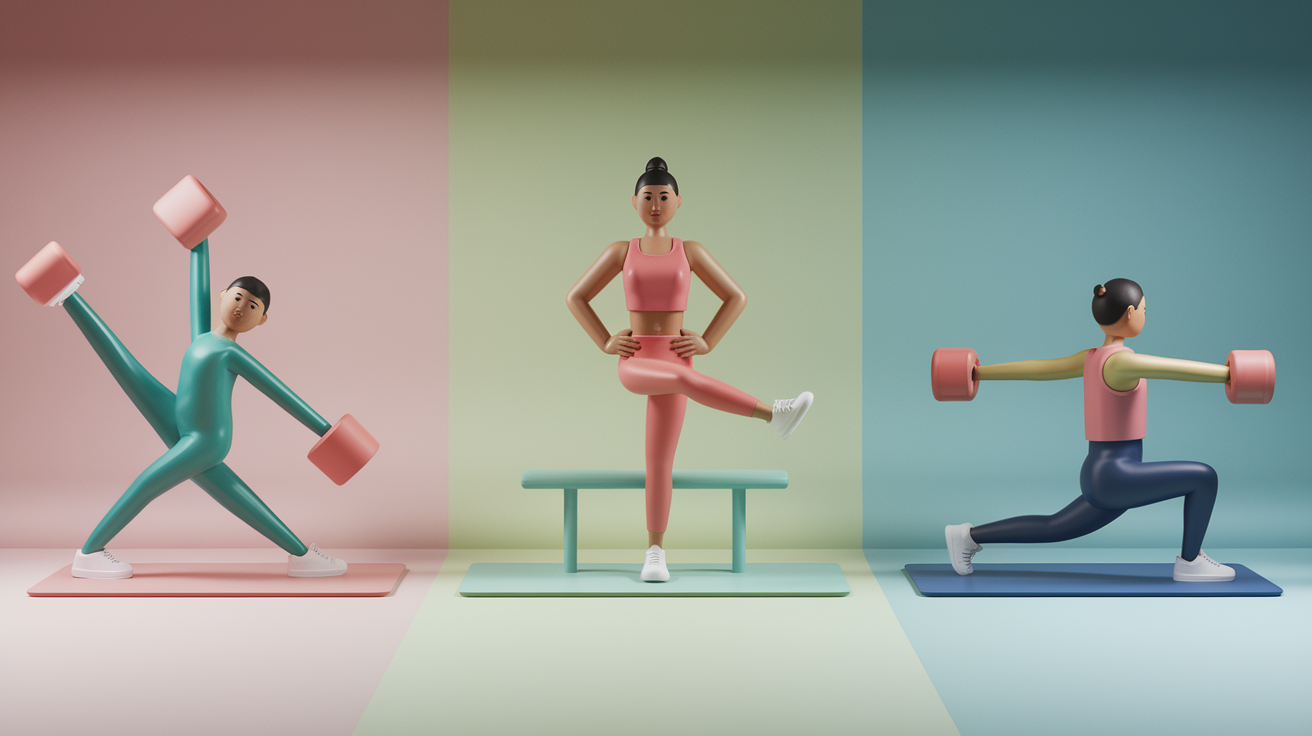
Not all stretching works the same way. Knowing the basic methods helps you pick what fits your schedule and what you’re trying to accomplish.
Static Stretching
Static stretching is holding a position without moving. You ease into a comfortable stretch and stay there for 15 to 30 seconds or longer. This is what most people think of when they hear “stretching.” It’s safest after a light warm-up or at the end of a workout when your muscles are already warm. Static stretches work well for cooling down, improving range of motion, and hitting specific tight spots like hamstrings or hip flexors.
Dynamic Stretching
Dynamic stretching involves controlled movements that take your muscles through their range of motion. Think leg swings, arm circles, or walking lunges. These are best before a workout because they wake up your muscles and prep your joints. Dynamic stretches feel more active and fluid. They’re useful when you don’t have time to sit and hold positions.
PNF Stretching
PNF (proprioceptive neuromuscular facilitation) combines stretching with short bursts of muscle contraction. You stretch a muscle, contract it against resistance for a few seconds, then relax and stretch deeper. It’s effective but more technical. Usually requires a partner or a solid surface to push against. Beginners should stick with static or dynamic methods until they’re comfortable with basic form.
Progression Strategies for Increasing Flexibility Safely
Flexibility improves slowly. Jumping into deep stretches or forcing your range too fast just increases strain. It doesn’t speed things up. Start with shorter holds and lighter intensity, then build over weeks.
Most people notice real improvement after four to eight weeks of consistent practice. That means showing up most days, even if it’s only five to ten minutes. Small gains add up. If a stretch feels comfortable at 20 seconds, try 30 seconds next week. If 30 seconds feels easy, go to 45 or 60 seconds. Let your body tell you when it’s ready.
Ways to progress without overdoing it:
- Add hold time gradually. Start at 15 to 20 seconds, work toward 30 to 60 seconds.
- Add a second set once single holds feel easy.
- Gently increase your range by leaning slightly deeper or adjusting limb position.
- Move from supported variations (using a wall or chair) to unsupported positions as your balance improves.
- Add one or two new stretches every few weeks to hit areas you’ve been ignoring.
- Track consistency instead of perfection. Five shorter sessions beat one long, forced session.
Beginner Modifications and Alternatives
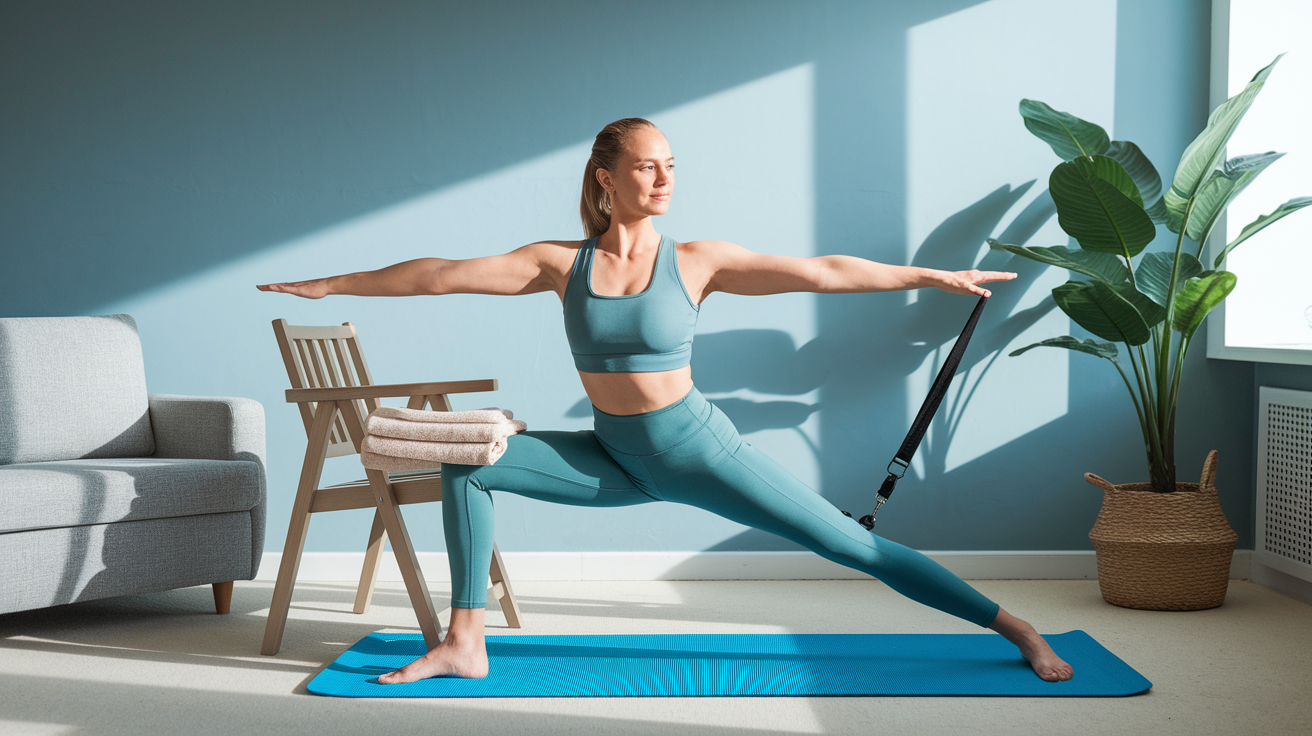
If you’re tight, coming back from inactivity, or dealing with limited mobility, modifications make stretching accessible. You don’t have to force your body into positions it’s not ready for. Start where you are and adjust.
Use what you already have. A folded towel under your knee cushions kneeling stretches. A wall gives you balance for standing stretches. A sturdy chair lets you sit instead of getting down on the floor. If a stretch asks you to reach your toes and you can’t, reach for your shins or thighs instead.
Modifications that work for most people:
- Bend your knees during forward folds to take pressure off your hamstrings.
- Shorten hold times to 10 to 15 seconds if 20 to 30 feels too long.
- Use a yoga strap, belt, or towel to help you reach during hamstring or calf stretches.
- Sit on a block or firm pillow during seated stretches to tilt your pelvis forward and reduce lower back rounding.
How to Schedule Flexibility Training at Home
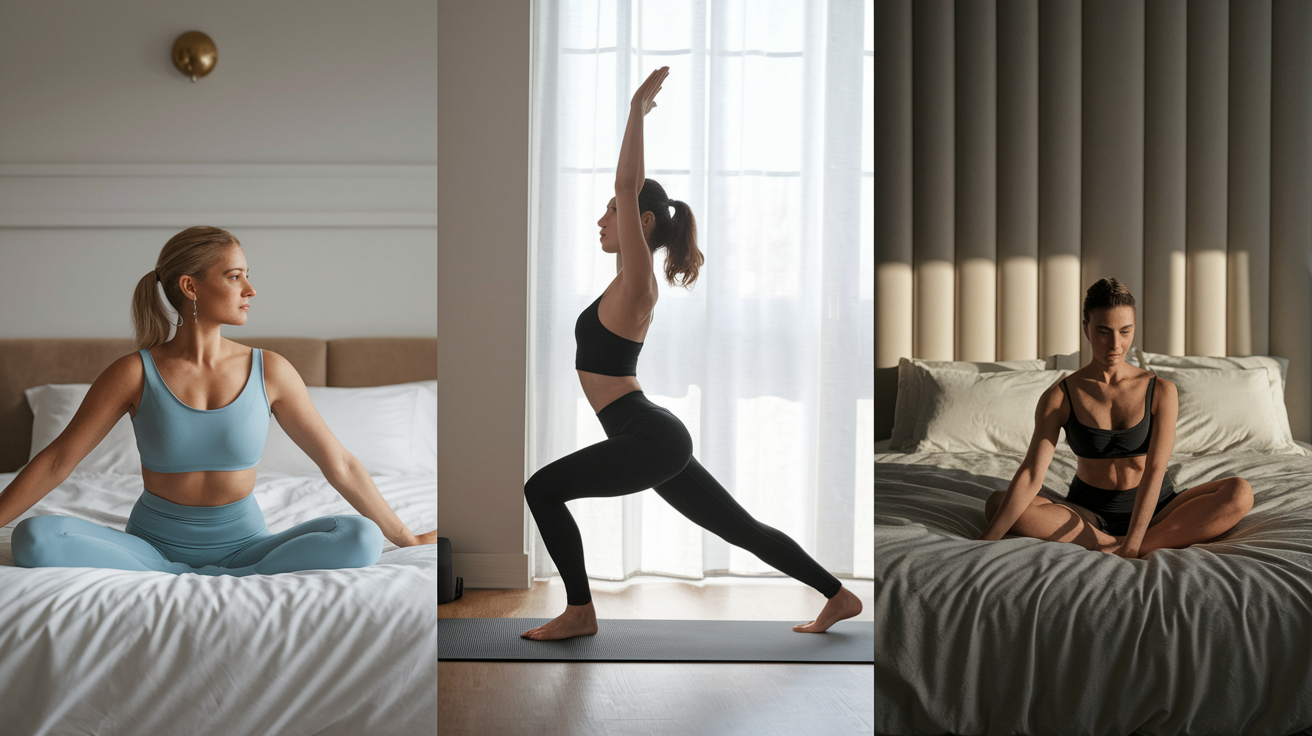
Stretching doesn’t need a full workout block. Short, frequent sessions work better than waiting for the perfect 30-minute window that never shows up. Aim for three to five days per week as a baseline. Daily stretching offers extra benefit if your schedule allows it, but consistency matters more than frequency.
Timing depends on your goal. Morning stretching helps you feel less stiff and more awake. Doesn’t need to be long. Five to ten minutes is enough. Evening stretching supports relaxation and can improve sleep quality by calming your nervous system. If you work out, tack on five to ten minutes of stretching after your session when muscles are warm.
Options that fit real life:
- 5 to 10 minutes every morning as part of your wake-up routine.
- 10 to 15 minutes in the evening before bed to wind down.
- 20 to 30 minutes three times per week on non-workout days or after light cardio.
- Split sessions. Upper body in the morning, lower body at night. Works if finding one block is hard.
Common Mistakes and How to Fix Them
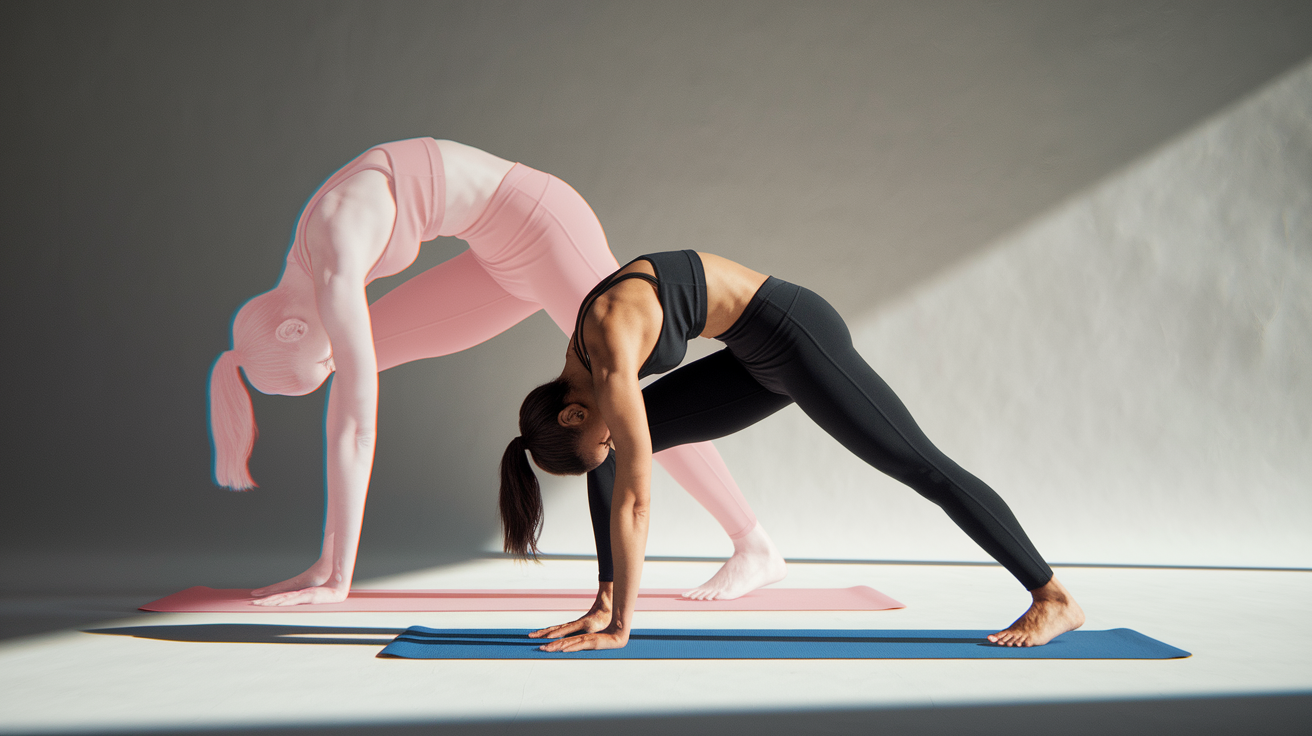
Most flexibility mistakes come from rushing, forcing, or misunderstanding what a stretch should feel like. Fixing them is usually about slowing down and paying attention.
-
Bouncing during stretches – Bouncing activates a reflex that tightens muscles instead of lengthening them. Hold still and let the stretch settle. If you want movement, use controlled dynamic stretches instead.
-
Holding your breath – Breathing keeps oxygen flowing and helps muscles relax. Inhale through your nose, exhale slowly. If you’re holding your breath, the stretch is probably too intense.
-
Pushing into sharp pain – A stretch should feel like a gentle pull, not a stabbing or burning sensation. Sharp pain means you’ve gone too far. Back off immediately and reduce your range or intensity.
-
Rounding your back during forward folds – Hinging from your lower back instead of your hips puts strain on your spine. Keep your chest lifted slightly. Bend your knees if you need to maintain a flatter back angle.
-
Skipping a warm-up before static stretching – Cold muscles don’t stretch well and they’re more prone to strain. Walk, march in place, or do arm circles for two to three minutes before holding stretches.
Final Words
Start the 10–15 minute full-body routine — eight simple, equipment-free steps you can do today. We covered the key benefits of being more flexible, the main stretching techniques (static, dynamic, PNF), and how to progress safely without pushing into pain.
You also got beginner-friendly modifications, easy scheduling ideas (3–5 days per week), and a quick checklist of common mistakes and fixes. Use cushions or wall support when stiffness gets in the way.
Keep it simple: short, consistent sessions win. Try adding a few flexibility exercises at home this week and notice the small, steady improvements.
FAQ
Q: What are 5 exercises for flexibility?
A: Five exercises for flexibility are hamstring forward fold, kneeling hip-flexor lunge, child’s pose (lower back and hips), shoulder cross-body stretch, and standing calf stretch—hold each 20–30 seconds for best results.
Q: What are signs of poor flexibility?
A: Signs of poor flexibility are limited joint range, tight or stiff muscles after simple movement, trouble reaching or bending, altered posture, and recurring discomfort during daily tasks or basic exercise.
Q: Does stretching help with blood flow?
A: Stretching helps with blood flow by gently increasing circulation to muscles and surrounding tissues, which can ease stiffness and support recovery when done after a light warm-up or activity.
Q: How to stretch tight leg tendons?
A: To stretch tight leg tendons, warm up briefly, perform gentle hamstring and calf stretches, hold 20–30 seconds, avoid bouncing, use a towel or wall for support, and progress slowly.