

Crunches won’t give you the stable midsection you actually need.
If you want a core that helps you stand tall, lift, and move without back pain, start with training that teaches stability, not just looks.
This post shows four beginner exercises: plank, dead bug, bird dog, and glute bridge that target the deep muscles around your spine, pelvis, and ribcage.
No equipment, low risk, and easy modifications let you build real stability you can use every day.
The 4 Best Beginner Core Exercises (Start Here)
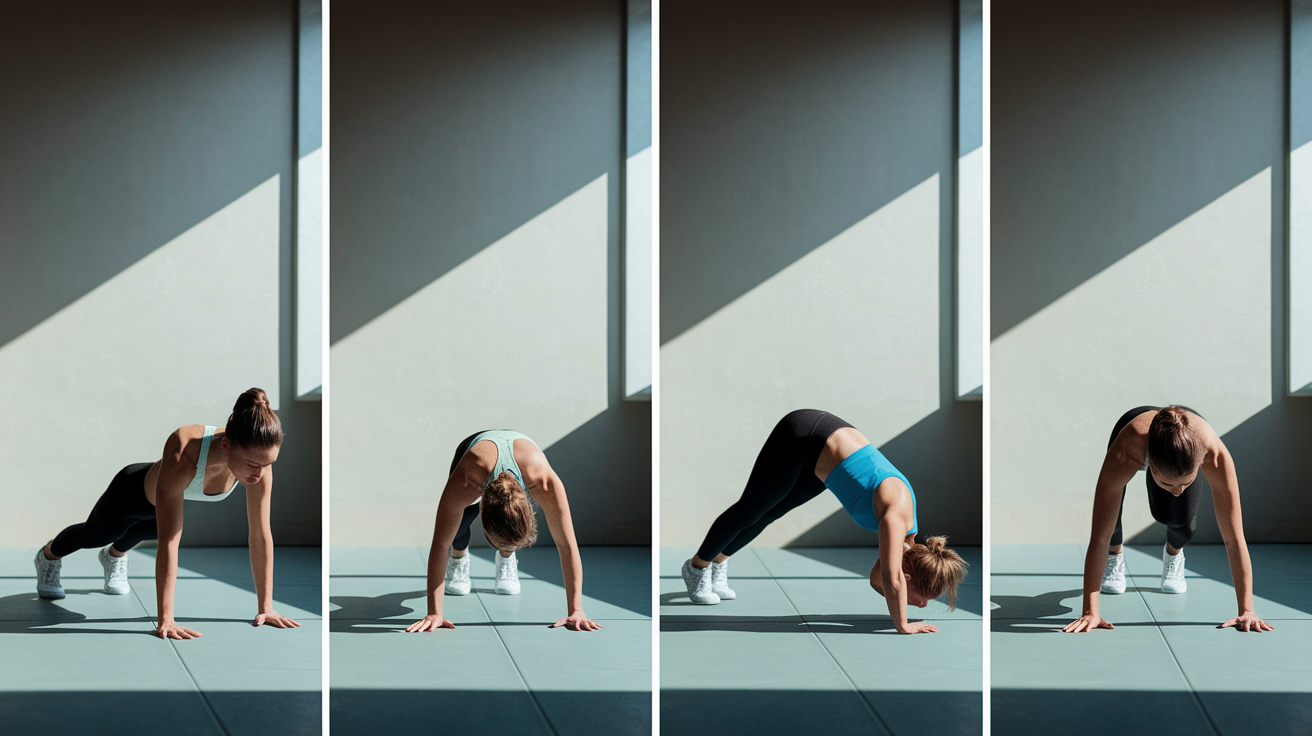
If you’re new to core training, start with movements that teach your midsection how to stay stable while everything else moves. These four exercises train the deep stabilizing muscles around your spine, pelvis, and ribcage. No equipment needed, and the coordination is simple.
-
Plank
Get into a push-up position with your forearms on the floor, elbows directly under your shoulders. Keep your body in a straight line from head to heels. Pull your belly button toward your spine and squeeze your glutes. Hold while breathing steadily. Start with 15 to 20 seconds. -
Dead Bug
Lie on your back with your arms reaching straight up and your knees bent at 90 degrees. Press your lower back into the floor. Slowly lower your right arm overhead while straightening your left leg, hovering a few inches above the ground. Return to start and repeat on the opposite side. That’s one rep. Move slowly. Keep your back pressed down the entire time. -
Bird Dog
Start on all fours with your hands under your shoulders and knees under your hips. Brace your core, then extend your right arm forward and your left leg back until both are parallel to the floor. Hold for a few seconds, return to starting position, and repeat on the opposite side. Focus on keeping your hips level. Avoid twisting through your torso. -
Glute Bridge
Lie on your back with your knees bent and feet flat on the floor, hip distance apart. Press through your heels and lift your hips by squeezing your glutes until your body forms a straight line from shoulders to knees. Hold at the top for two seconds, then lower back down with control. Keep your ribs down and don’t arch your lower back at the top.
These four movements cover the essentials. Front to back stability (plank, dead bug), rotational control (bird dog), and glute driven posterior support (glute bridge). They’re low risk, require no equipment, and teach your body to move from a stable center.
Key Form Cues for Safe and Effective Core Training

Good form makes the difference between a core exercise that builds stability and one that just makes you tired. The most important cue? Learning how to brace your midsection without holding your breath. Think about gently tightening your abs as if you’re about to cough, then breathe normally while maintaining that tension. Your ribcage should stay stacked over your pelvis, not flaring forward or collapsing backward.
Neutral spine is another foundational piece. That means maintaining the natural curves of your spine without forcing flatness or letting things arch excessively. In exercises like the plank or dead bug, you should feel like your core is doing the work to hold position. Not your hip flexors or lower back. If you start to feel strain in your hip flexors or a pinch in your lower back, that’s a sign your form has drifted.
Here are five form cues to keep in mind during every beginner core exercise:
- Breathe steadily. Never hold your breath. Exhale during the hardest part of the movement and inhale on the easier phase.
- Keep your ribs down. Don’t let your ribcage flare up toward the ceiling, especially in bridges and planks.
- Engage your glutes. Squeezing your glutes protects your lower back and keeps your pelvis stable.
- Press your lower back into the floor. In lying exercises like dead bug, eliminate the gap under your lower back by gently pressing it down.
- Move from your hips, not your spine. When extending a leg or arm, the movement should come from the hip or shoulder joint, not from twisting or shifting your torso.
Easy Modifications for Beginners Who Need Less Intensity
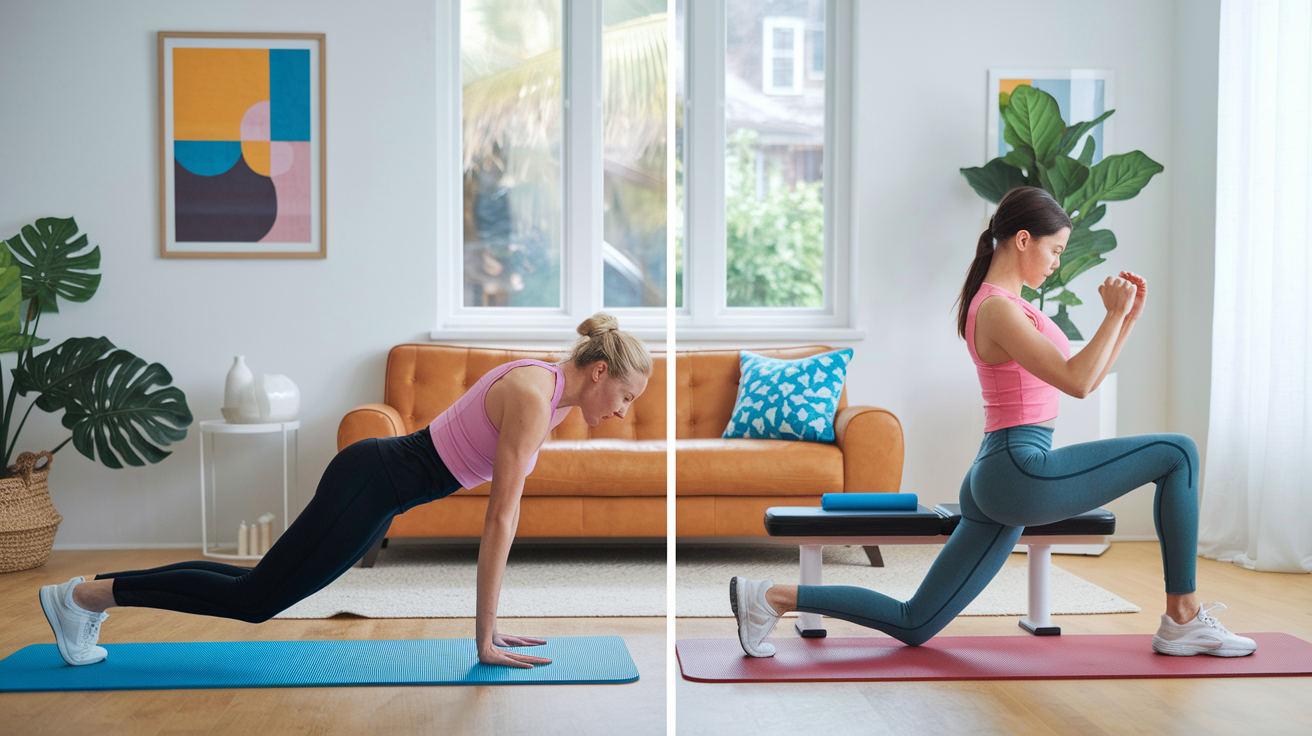
If the standard versions feel too hard right now, that’s completely normal. Scaling exercises down gives you a way to build strength without risking form breakdown or frustration.
For the plank, drop to your knees instead of holding a full push-up position. You’ll still get core engagement, but with less load on your shoulders and less demand on your abs. For the dead bug, keep both feet on the floor and only move your arms. Or move just one limb at a time instead of opposite arm and leg together.
Bird dogs can be modified by keeping your hands and knees on the ground and only extending one arm or one leg at a time, rather than both at once. Hold each position for a few seconds before switching. For glute bridges, reduce the range of motion by lifting your hips only halfway. Or place your feet on a low step to shorten the lever and make the lift easier. These modifications let you practice the movement patterns and build confidence before you’re ready for the full versions.
Common Mistakes Beginners Should Avoid
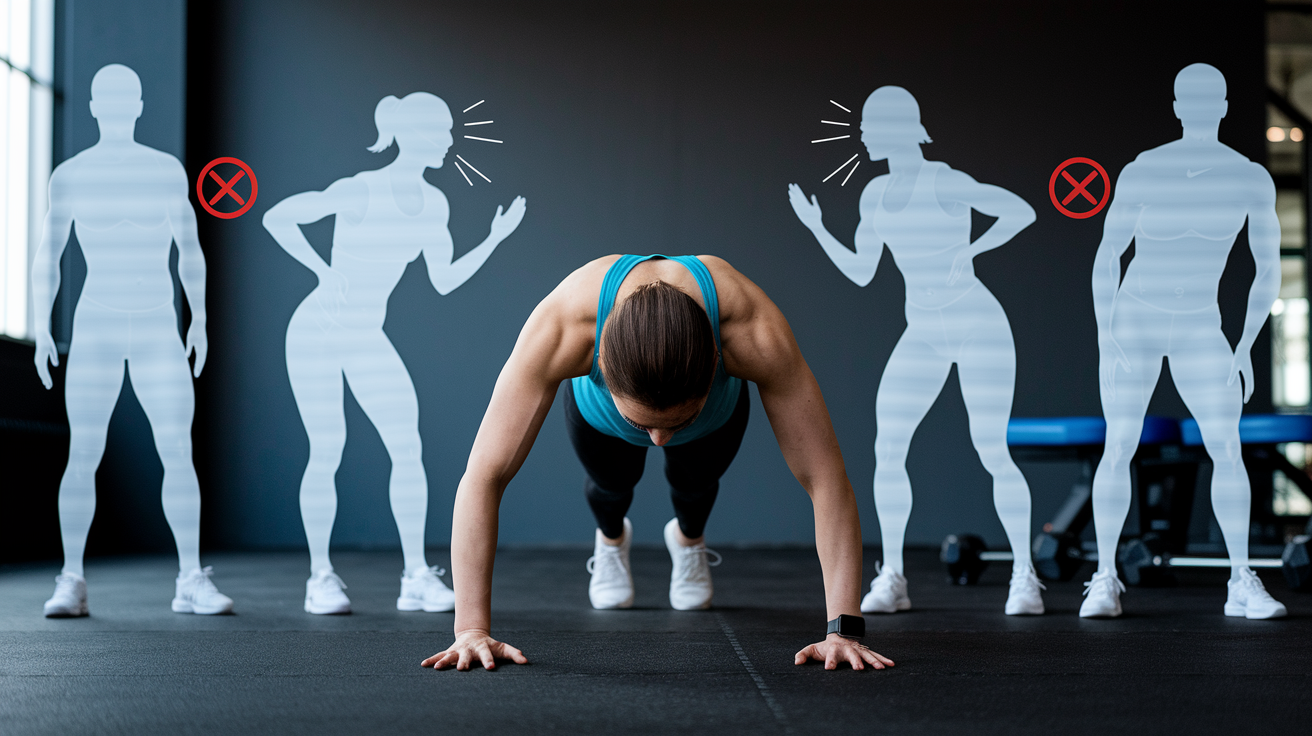
Most beginners make a handful of predictable mistakes that reduce results and increase injury risk. Once you know what to watch for, these errors are easy to fix.
Holding your breath is one of the most common issues. When you brace hard and forget to breathe, your blood pressure spikes and you fatigue faster. Another frequent mistake is letting your hips sag or pike during planks, which shifts the load away from your core and onto your lower back or shoulders. Rushing through reps is also a problem, especially in exercises like the dead bug or bird dog, where slow, controlled movement is the entire point.
Watch out for these six mistakes:
- Arching your lower back. Especially in planks and bridges. Keep your core engaged to prevent excessive curve.
- Holding your breath. Breathe steadily throughout every hold and rep.
- Relying on momentum. Slow, deliberate movement activates stabilizers better than fast, jerky reps.
- Letting your hips twist. In bird dog and dead bug, your pelvis should stay level and square to the floor.
- Overusing hip flexors. If you feel a burn in the front of your hips during dead bugs, reset and focus on engaging your lower abs instead.
- Skipping glute activation. In bridges, make sure you’re squeezing your glutes at the top, not just pushing with your hamstrings or arching your back.
Recommended Sets, Reps, and Timing for Beginners

When you’re starting out, less is often more. Your goal is to build a habit of good movement, not to exhaust yourself.
For isometric holds like the plank, aim for 15 to 20 seconds per set and work your way up to 30 seconds as you get stronger. For dynamic exercises like the dead bug and bird dog, start with 6 to 8 reps per side and gradually increase to 10 to 12 once the movement feels controlled and smooth.
A solid beginner structure is 2 rounds of each exercise with about 30 to 60 seconds of rest between sets. That keeps the session short, around 10 to 15 minutes, and gives your muscles time to recover between efforts. Progress by adding a third round after a few weeks, or by increasing hold times and rep counts before adding more sets. Listen to your body. If your form starts breaking down, end the set even if you haven’t hit your target number.
Progressions to Build Stronger Core Muscles Over Time
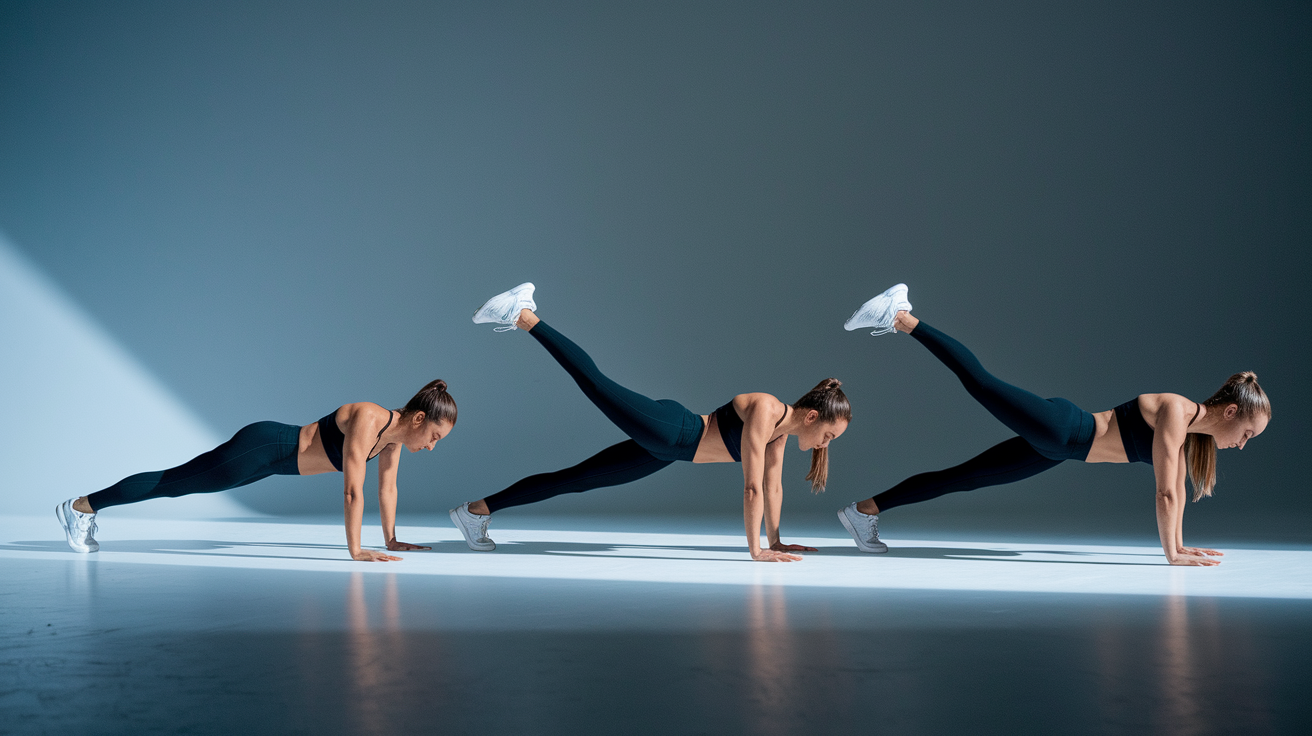
Once the basic versions feel manageable and you can complete your sets with solid form, it’s time to progress. Adding challenge keeps your muscles adapting and prevents plateaus.
Start by increasing the difficulty of your current exercises before jumping to entirely new movements:
- Plank with leg lift. From a standard plank, lift one foot a few inches off the ground and hold for 10 seconds, then switch sides.
- Dead bug with straight leg extension. Instead of keeping your knee bent, extend your leg fully as you lower it toward the floor.
- Bird dog with elbow to knee. After extending your arm and leg, pull your elbow and knee together under your torso, then extend again.
- Single leg glute bridge. Perform the bridge with one foot lifted off the ground, which increases demand on your glutes and core stabilizers.
- Side plank. Progress from the basic four by adding a lateral hold, resting on one forearm with your body in a straight line from head to feet.
Move to the next level when you can complete 3 sets of 12 reps (or 30 second holds) with good form and no lower back discomfort. If a new variation feels too hard, dial it back and spend another week or two on the previous step. Real progress happens when you can repeat a movement well, not when you force your way through it with poor technique.
Safety Tips for New Exercisers

Core training is low impact, but that doesn’t mean you can ignore how your body feels. Sharp pain, especially in your lower back or hips, is a signal to stop immediately and reassess your form. Muscle fatigue and a burning sensation in your abs or glutes are normal. Pain that feels like a pinch, a pull, or a sharp stab is not.
If you have a history of back issues or pelvic floor concerns, start with the easiest modifications and consider working with a physical therapist or trainer who can watch your form in real time. Don’t train your core every single day, especially when you’re new. Your muscles need recovery time to adapt. Two to three sessions per week is plenty for beginners. And remember, your core works during other exercises too, like squats and lunges, so you’re building stability even on days when you’re not doing dedicated core work.
A Simple Beginner Core Routine You Can Start Today
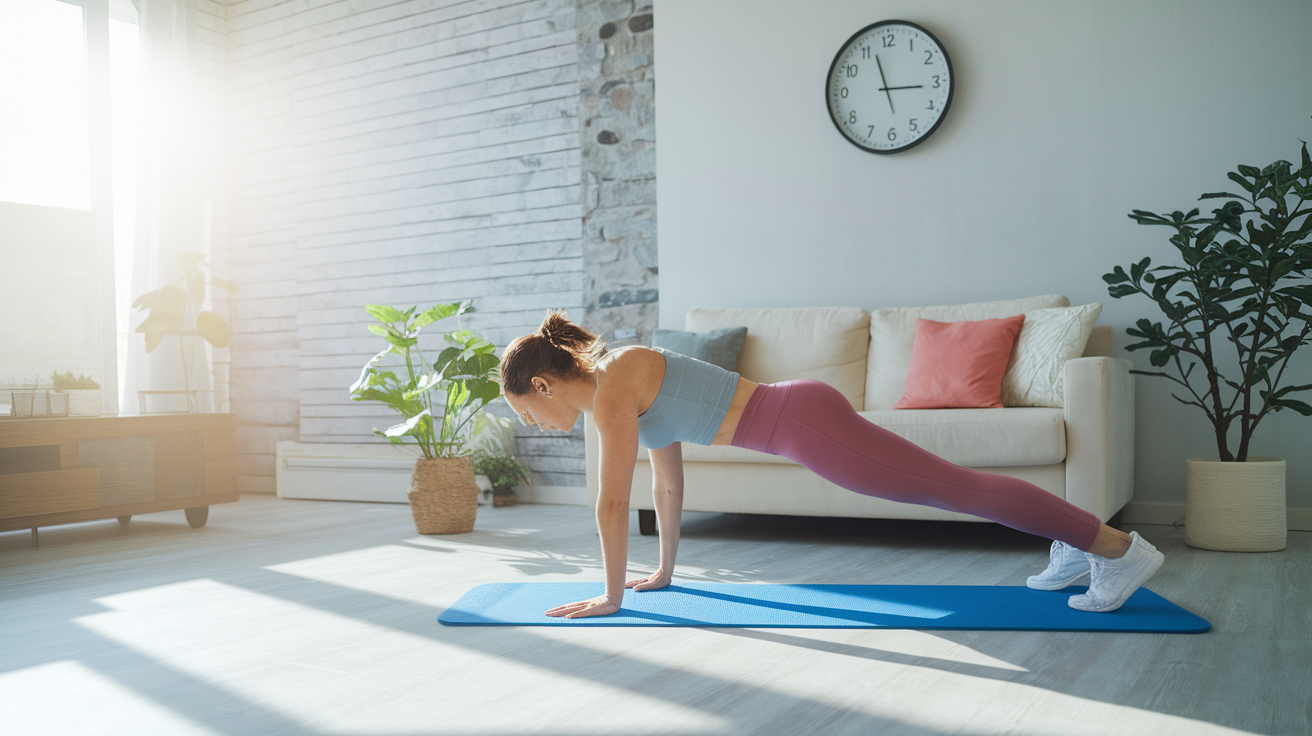
Here’s a short, structured routine that combines all four foundational exercises. You can do this at home with no equipment, two to three times per week.
-
Plank. Hold for 15 to 20 seconds. Rest 30 seconds. Repeat for 2 rounds.
-
Dead Bug. Perform 8 reps per side (16 total). Rest 30 seconds. Repeat for 2 rounds.
-
Bird Dog. Perform 8 reps per side, holding each extension for 3 seconds. Rest 30 seconds. Repeat for 2 rounds.
-
Glute Bridge. Perform 10 to 12 reps, holding at the top for 2 seconds each time. Rest 30 seconds. Repeat for 2 rounds.
This routine takes about 12 minutes. As you get stronger, add a third round, increase your plank hold to 30 seconds, and bump your reps up to 10 to 12 per side. Once you can complete 3 rounds with solid form, start layering in the progressions from the previous section.
Final Words
Start with the four moves: plank, bird dog, dead bug, and glute bridge. The post gives step-by-step cues to keep your spine neutral and hit the deep stabilizers safely.
You also have easy modifications, common mistakes to avoid, recommended sets and timing, progressions, and safety tips to keep workouts low-risk.
Use the short routine and progress slowly. These beginner core strength exercises are enough to build stable, less achy movement when done consistently. Small, steady steps win—keep going.
FAQ
Q: How do you build core strength for beginners?
A: Building core strength for beginners involves starting with simple moves like planks, dead bugs, bird dogs, and glute bridges, doing them 2–3 times weekly, focusing on form, and slowly increasing time or difficulty.
Q: What is the 3-3-3 rule for workout?
A: The 3-3-3 rule for workouts is a simple guideline: three sets of three, repeated across three sessions per week, giving beginners a low-volume, manageable way to build strength and consistency.
Q: What core exercises should a person with scoliosis avoid?
A: A person with scoliosis should avoid high-volume loaded spinal flexion and rotation—like heavy sit-ups, Russian twists, and uncontrolled single-sided loading—and instead use controlled, neutral-spine core exercises under professional advice.
Q: Does a strong core help IBS?
A: A strong core may help manage IBS symptoms by improving posture, breathing, and pelvic floor support, which can ease bloating or bowel habits; it’s not a cure, so consult a clinician for personalized care.