
Want to get stronger without wasting time or feeling lost?
This beginner workout plan for women is a simple, full-body program you can do three times a week.
It focuses on core moves like squats, rows, push ups, and glute bridges, so you build usable strength and steady progress.
You’ll get short warm ups, clear form cues, and easy modifications so every session feels doable.
In 4 to 8 weeks you’ll notice better energy, easier daily movement, and more confidence in your body.
This guide helps you start where you are and keep going.
Overview of the Beginner Workout Structure
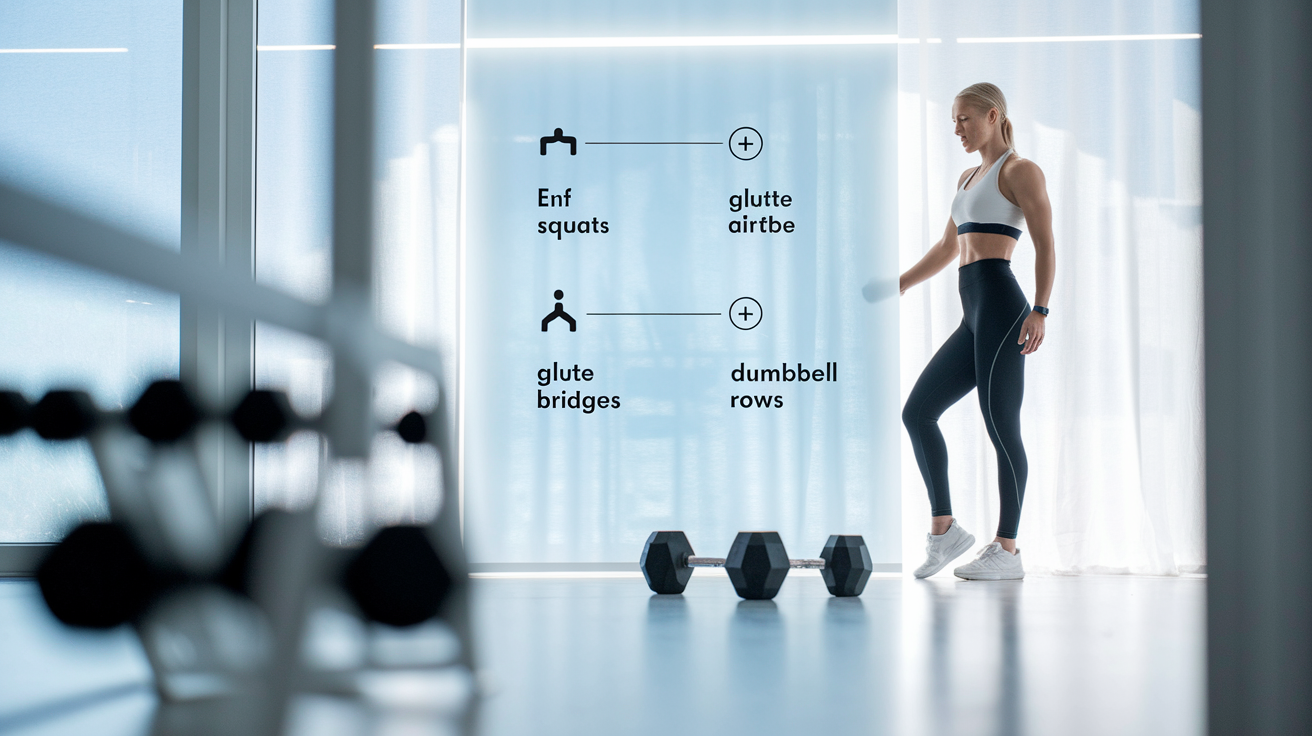
This program’s built for women who are either brand new to structured training or coming back after some time off. If you’ve never followed a workout plan before, feel good about starting fresh, or want to rebuild strength and mobility after a break, you’re in the right place.
Within 4 to 8 weeks, you’ll notice real improvements in how you move, how you feel, and how your body handles everyday stuff. Early changes? Better energy during the day, easier movement doing regular tasks, and strength gains that show up when you’re hauling groceries, climbing stairs, or keeping up with your kids. Full body sessions are the foundation here because they train every major muscle group in one workout. Progress comes faster, and everything stays balanced. You’re not splitting body parts across different days. You’re building functional strength that actually carries over into real life.
Full body training also makes your weekly schedule simpler. Instead of needing five or six sessions to hit everything, you’re getting complete work done in three strength days. That leaves room for recovery, optional cardio, and whatever else you’ve got going on.
5 benefits of following a structured beginner plan:
- Clear direction takes away the guesswork about what to do each session
- Balanced programming stops you from overtraining certain muscles while ignoring others
- Built in progression keeps workouts challenging without overwhelming you
- Consistent schedule builds the habit before intensity becomes a factor
- Less injury risk from proper warm ups, form cues, and realistic loading
Weekly Workout Schedule Blueprint
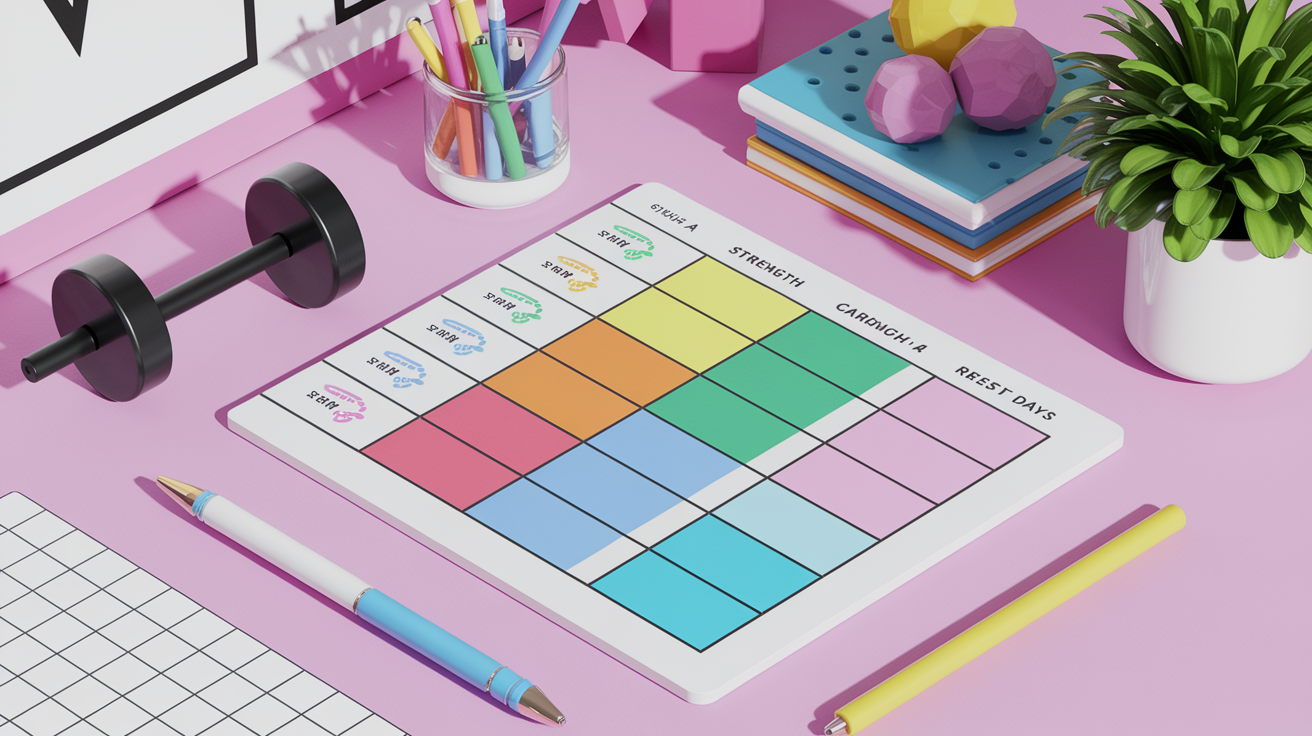
Here’s what a typical training week looks like. Three strength days anchor the schedule, with optional movement or cardio on two other days and two full rest days to let your body adapt.
| Day | Activity | Duration |
|---|---|---|
| Monday | Full Body Strength A | 35–45 minutes |
| Tuesday | Optional Light Cardio or Walking | 20–30 minutes |
| Wednesday | Full Body Strength B | 35–45 minutes |
| Thursday | Rest or Active Recovery | — |
| Friday | Full Body Strength C | 35–45 minutes |
| Saturday | Optional Movement Day (Yoga, Walking, Stretching) | 20–30 minutes |
| Sunday | Rest | — |
You can shift days around based on your schedule. If weekends are easier for strength training, flip the plan. The structure matters more than which specific days you pick. Just keep at least one rest day between strength sessions so your body can recover.
Warm Up and Cool Down Essentials
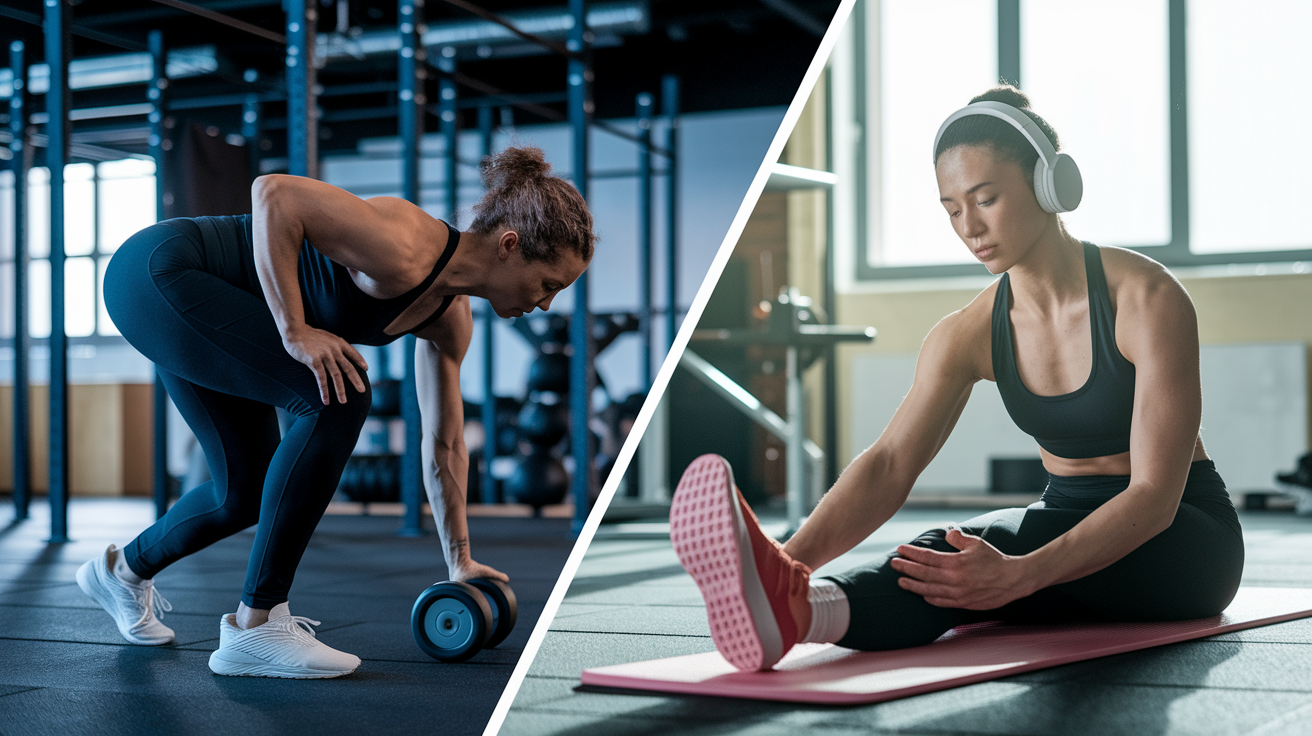
Every workout starts with a warm up and ends with a cool down. Warm ups get blood flowing to working muscles, raise body temperature, and prep your joints for loaded movement. Skipping this step makes you more stiff and raises injury risk, especially when you’re new.
Cool downs bring your heart rate back down gradually and give you a chance to work on tight areas before they turn into problems. Stretching after a workout, when muscles are warm, improves flexibility way better than stretching cold. Use these routines before and after every strength session.
Warm up routine (5–8 minutes):
- Marching in place or light jog: 2 minutes
- Arm circles forward and backward: 10 reps each direction
- Bodyweight squats: 10 reps
- Hip circles: 5 reps per side
- Inchworms: 5 reps
- High knees or butt kicks: 30 seconds
Cool down routine (5–7 minutes):
- Child’s pose: 60 seconds
- Hip flexor stretch: 30 seconds per side
- Seated hamstring stretch: 30 seconds per leg
- Chest opener (lying or standing): 30 seconds
Core Beginner Exercises and How to Perform Them
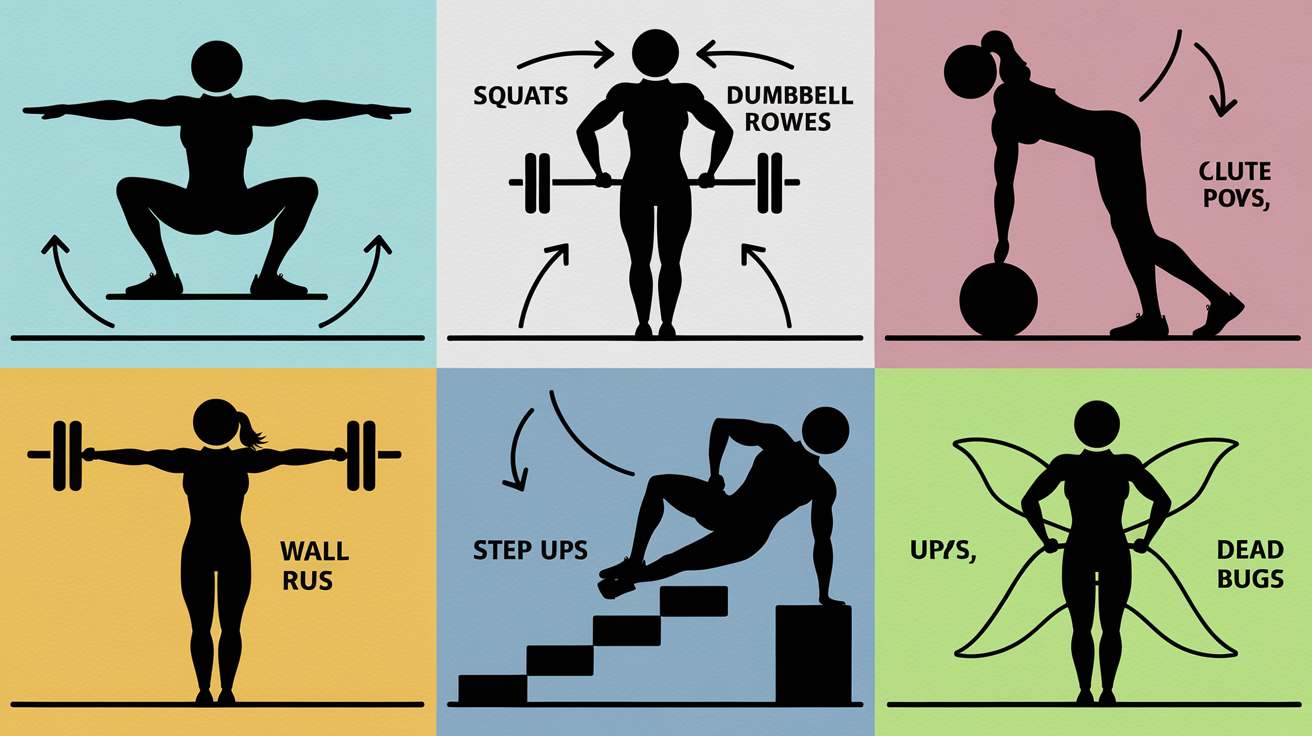
These six movements form the backbone of the program. Each one trains a fundamental pattern your body uses daily. Get good at these before adding complexity or heavier weight.
Squats
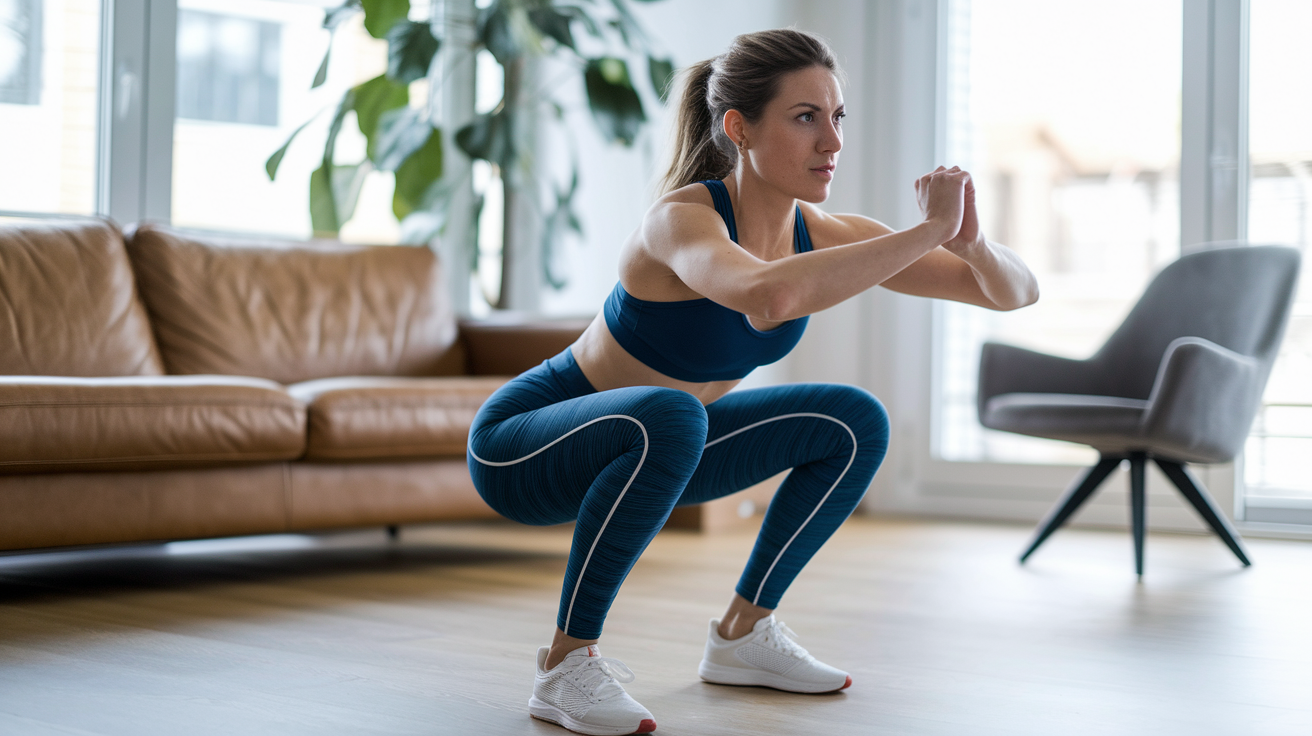
Stand with feet hip to shoulder width apart, toes slightly turned out. Lower your hips back and down like you’re sitting into a chair. Keep your chest up and knees tracking over your toes. Go as low as comfortable while keeping your lower back flat or slightly arched. Push through your entire foot to stand back up.
Common mistakes: knees caving inward, heels lifting off the floor, rounding the lower back at the bottom. If you feel knee pain, check your stance width and make sure you’re pushing through your heels.
Glute Bridges
Lie on your back with knees bent and feet flat on the floor, heels close to your glutes. Press through your heels and lift your hips toward the ceiling, squeezing your glutes at the top. Your body should form a straight line from shoulders to knees. Lower back down with control.
Keep your ribs stacked over your pelvis. Don’t arch your lower back to get higher. The lift comes from your glutes, not your spine. If you only feel this in your lower back, reset your position and focus on squeezing your glutes before you lift.
Dumbbell Rows
Hinge at the hips with a flat back, holding a dumbbell in one hand. Let the weight hang straight down. Pull the dumbbell toward your ribcage, keeping your elbow close to your body. Lower with control and repeat.
Your torso should stay still. Don’t twist or jerk the weight up. If you’re using momentum, the weight’s too heavy. Keep your shoulder blade pulled back and down throughout the movement.
Wall Push Ups
Stand facing a wall, hands placed slightly wider than shoulder width at chest height. Step your feet back so your body forms a slight angle. Lower your chest toward the wall by bending your elbows, keeping your body in a straight line from head to heels. Push back to the start.
Keep your core tight and don’t let your hips sag. The closer your feet are to the wall, the easier the movement. As you get stronger, step farther back or move to an incline surface like a bench.
Step Ups
Stand in front of a sturdy step, box, or stair. Place one foot fully on the step, heel down. Press through that heel to lift your body up, bringing your other foot to meet it. Step back down with control, leading with the same leg.
Keep your knee aligned over your toes. Don’t let it cave inward. Your chest should stay upright. If balance is an issue, use a lower step or hold onto a wall for support until you build stability.
Dead Bugs
Lie on your back with arms extended straight up toward the ceiling and knees bent at 90 degrees, shins parallel to the floor. Press your lower back into the floor. Slowly lower your right arm overhead while extending your left leg, hovering just above the ground. Return to start and repeat on the opposite side.
Your lower back should never arch off the floor. If it does, don’t lower your limbs as far. Move slowly and focus on keeping your core engaged the entire time.
Exercise Modifications for Different Fitness Levels
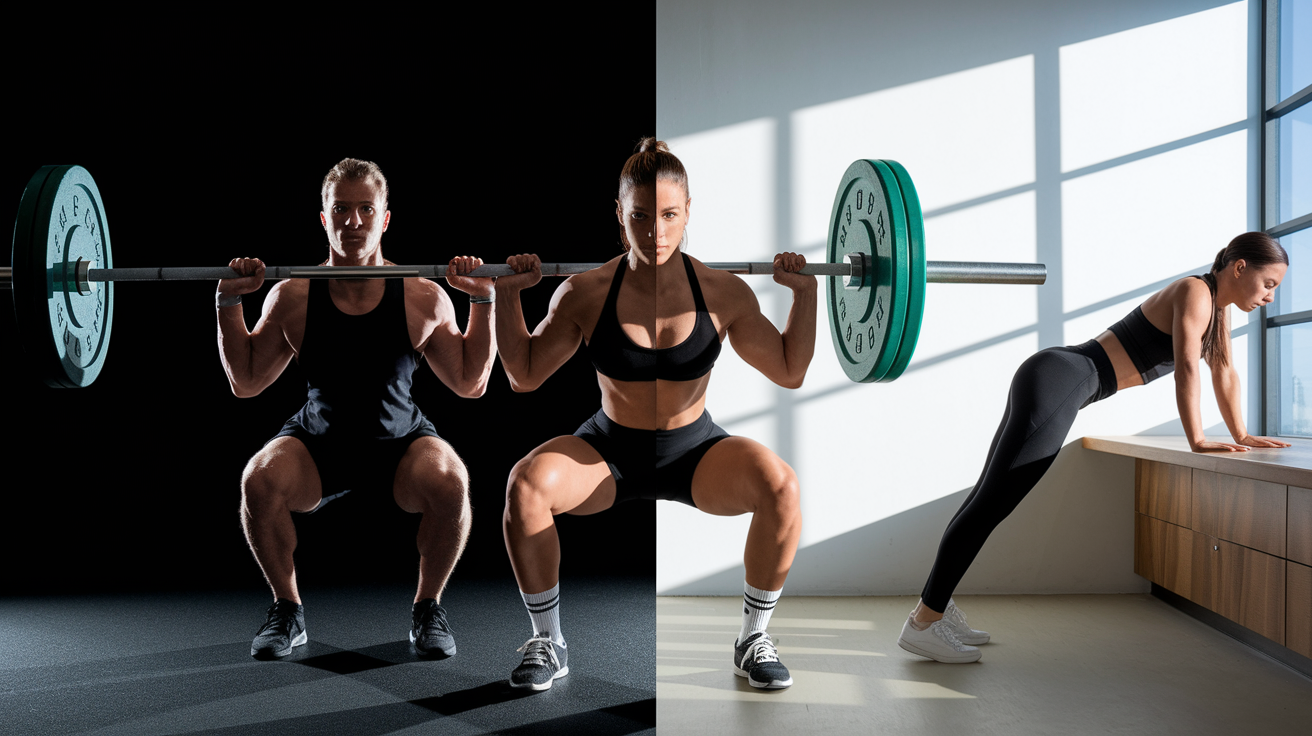
Not every movement will feel accessible right away. Joint stiffness, past injuries, or lack of strength can make standard versions uncomfortable. That’s normal, and it doesn’t mean you skip the exercise. You modify it.
If squats hurt your knees, try a box squat where you sit back onto a bench or chair at the bottom. This limits depth and gives you a target to aim for. If push ups feel too hard even against a wall, start with hands on a kitchen counter. Higher inclines make the movement easier. For rows, use a resistance band anchored to a door instead of a dumbbell if you don’t have weights yet. Step ups can be done on a single stair or even a curb until your strength improves. Dead bugs can be modified by keeping one foot on the floor while you move the opposite arm and leg.
6 common modifications:
- Box squats for limited knee or hip mobility
- Elevated push ups on a counter, table, or bench
- Banded rows instead of dumbbell rows
- Low step or stair for step ups
- Single leg dead bugs (one foot stays grounded)
- Glute bridges with feet elevated on a low step for easier hip activation
Safety Tips and How to Avoid Injury
Most beginner injuries come from doing too much too soon or using poor form under load. Your body adapts to training stress, but it needs time. Jumping into heavy weights or high volumes before your joints, tendons, and muscles are ready creates problems.
Always put form over weight. If you can’t complete a rep with good technique, the load’s too heavy or you’re too fatigued to continue safely. Rest, reset, or lower the weight. Pain is a signal to stop. Not discomfort or effort, but sharp or unusual pain. If something hurts in a way that doesn’t feel like normal muscle work, stop the movement and figure out what’s off with your setup.
Rest days are part of the program. Not optional. Your body builds strength during recovery, not during the workout itself. Skipping rest to “speed up results” does the opposite. It raises injury risk and slows progress.
How to Progress the Beginner Program
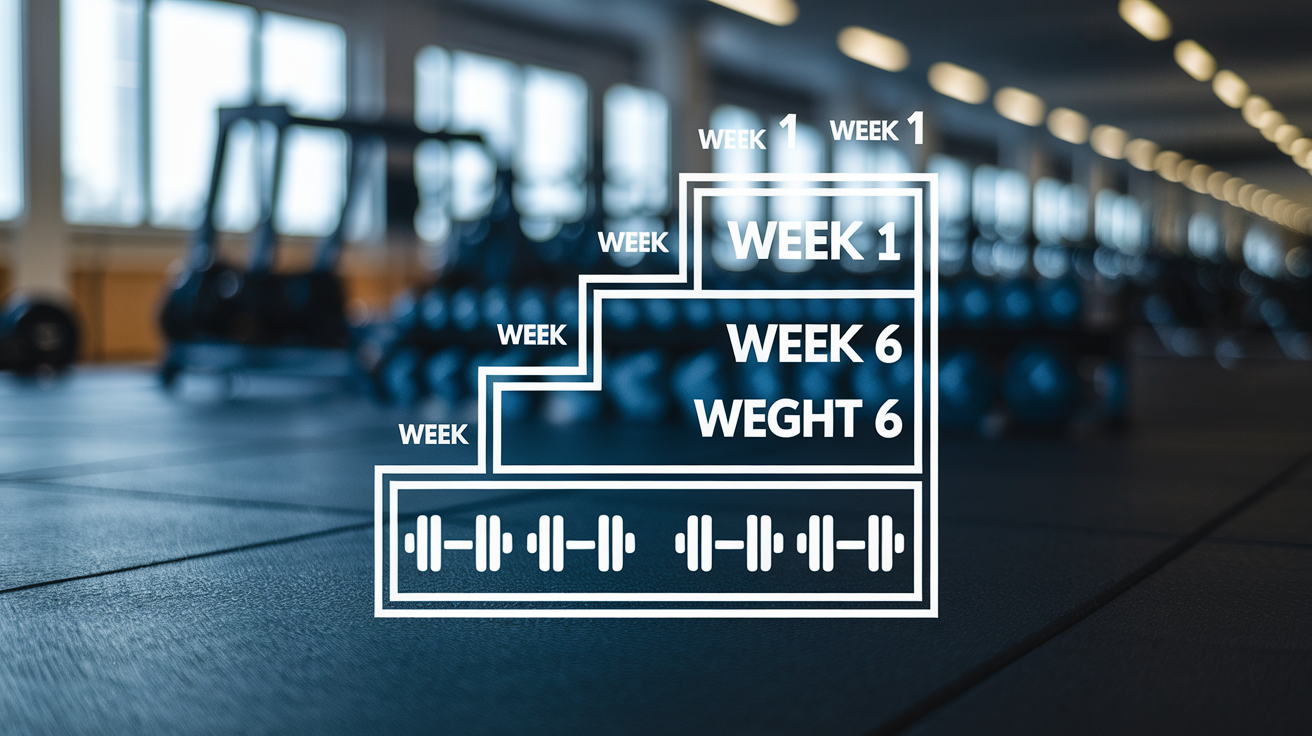
Progress happens when you gradually increase the challenge your body faces. For beginners, that usually means adding reps, sets, or a small amount of weight every week or two. You don’t need to change everything at once.
Start by increasing reps within the suggested range. If you’re doing 8 reps of squats in Week 1, aim for 10 reps in Week 2 using the same weight. Once you can complete 12 reps with solid form, add a small amount of weight (about 5 to 10 percent) and drop back to 8 reps. Repeat the cycle.
5 simple progression methods:
- Add 1 to 2 reps per set each week until you reach the top of the range
- Bump weight by 5 to 10 percent once you exceed the rep range comfortably
- Add a third set to exercises you’re currently doing for two sets
- Slow down the lowering portion of each rep to increase time under tension
- Shorten rest periods between sets by 10 to 15 seconds as conditioning improves
Minimal Equipment Recommendations
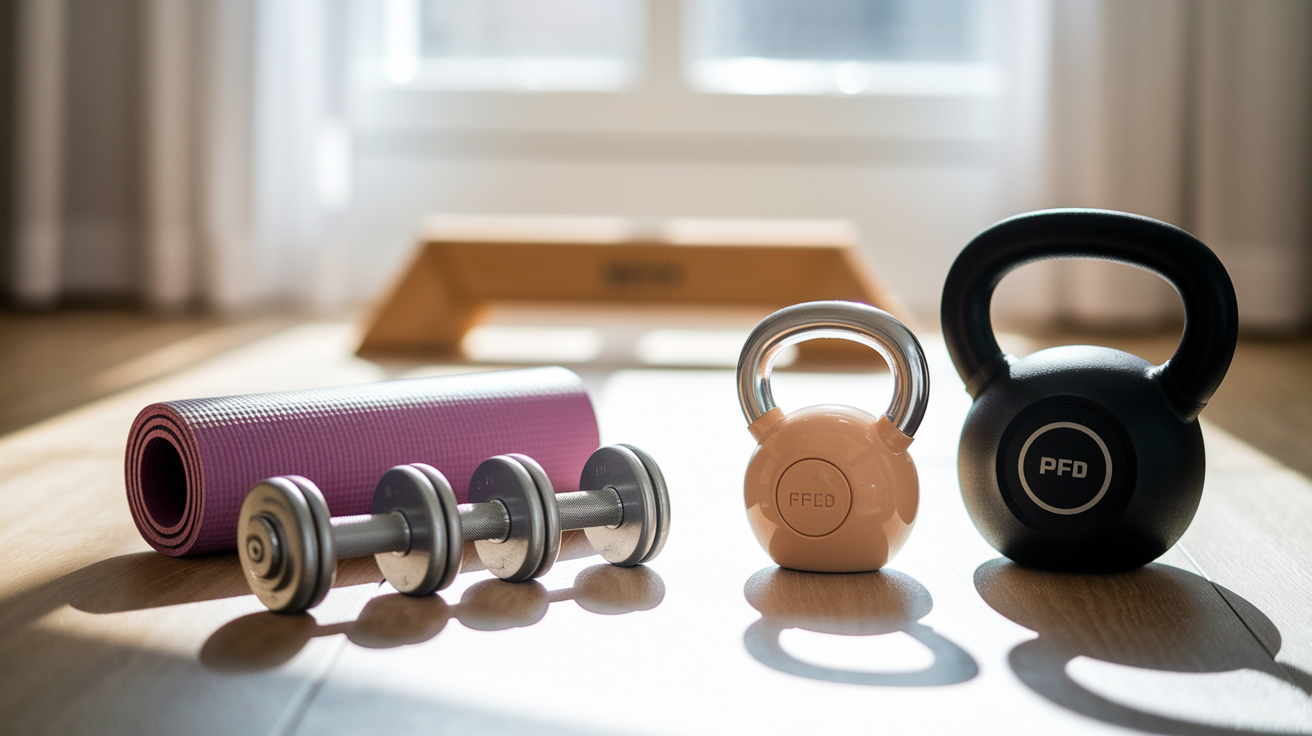
You can start this program with no equipment at all. Bodyweight squats, wall push ups, glute bridges, and dead bugs require nothing but space. That said, a few affordable pieces of gear make progression easier and open up more exercise options.
A pair of light dumbbells (5 to 12 kilograms or 10 to 25 pounds) covers most beginner needs. Resistance bands are portable, cheap, and useful for rows, presses, and mobility work. A yoga mat adds comfort for floor exercises. If you want one piece of equipment that does a lot, a single kettlebell in the 8 to 12 kilogram range works for squats, swings, and carries.
5 beginner friendly equipment options:
- One pair of adjustable or fixed weight dumbbells (5–12 kg / 10–25 lb)
- Resistance band set with handles or a single loop band
- Yoga or exercise mat for floor work and stretching
- Low step, box, or sturdy stool for step ups
- Kettlebell (8–12 kg / 18–26 lb) for loaded carries and goblet squats
Motivation and Habit Building Strategies
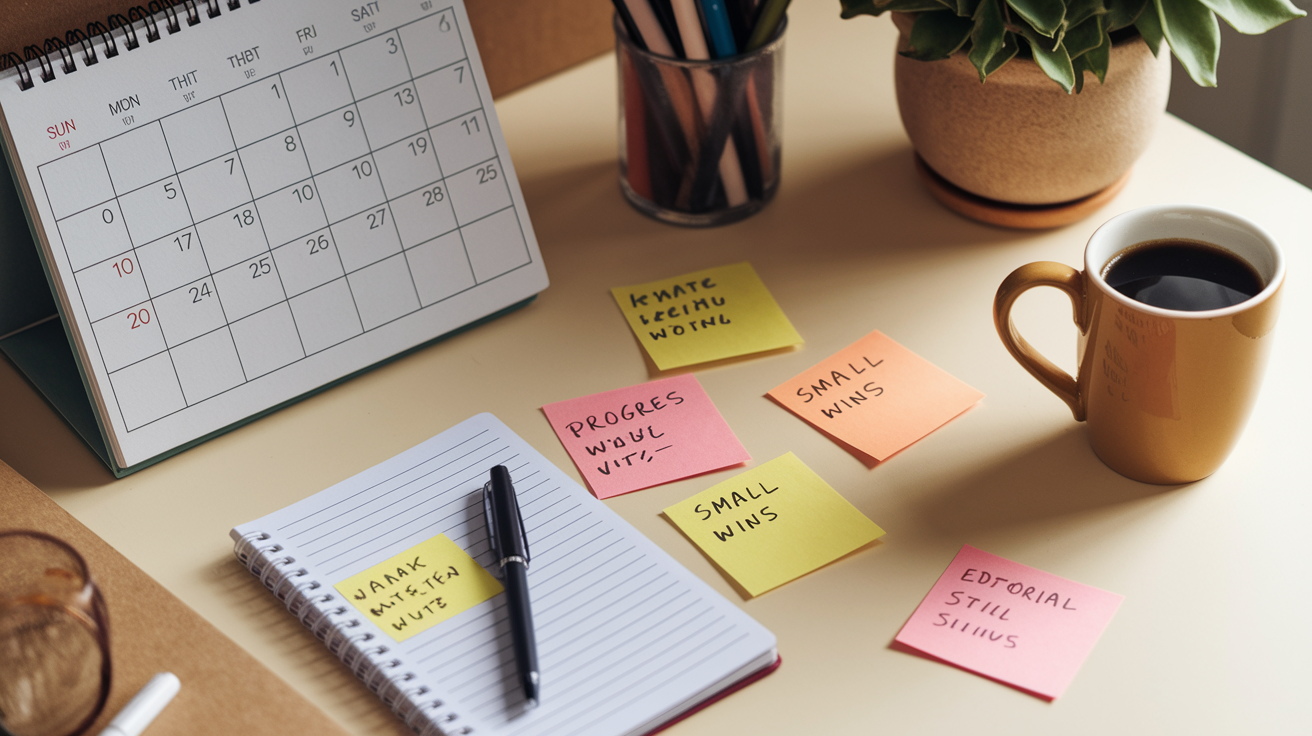
Motivation comes and goes. Some weeks you’ll feel ready to train, and other weeks it’ll feel like a chore. That’s normal. Relying on motivation alone doesn’t work long term. You need habits that carry you through the days when you’re not feeling it.
Building a habit starts with consistency, not intensity. Showing up for three workouts a week, even if they’re not perfect, beats skipping sessions because you’re waiting to feel motivated. Schedule your workouts like appointments. Put them on your calendar and treat them as non negotiable unless something urgent comes up.
Track your workouts in a notebook or app. Write down what you did (exercises, sets, reps, and how it felt). Seeing progress on paper reinforces the habit and gives you clear evidence that the work’s paying off. Small wins add up. Celebrate hitting a new rep count, finishing a full week, or simply feeling stronger during daily tasks.
Optional Nutrition Basics for Beginners
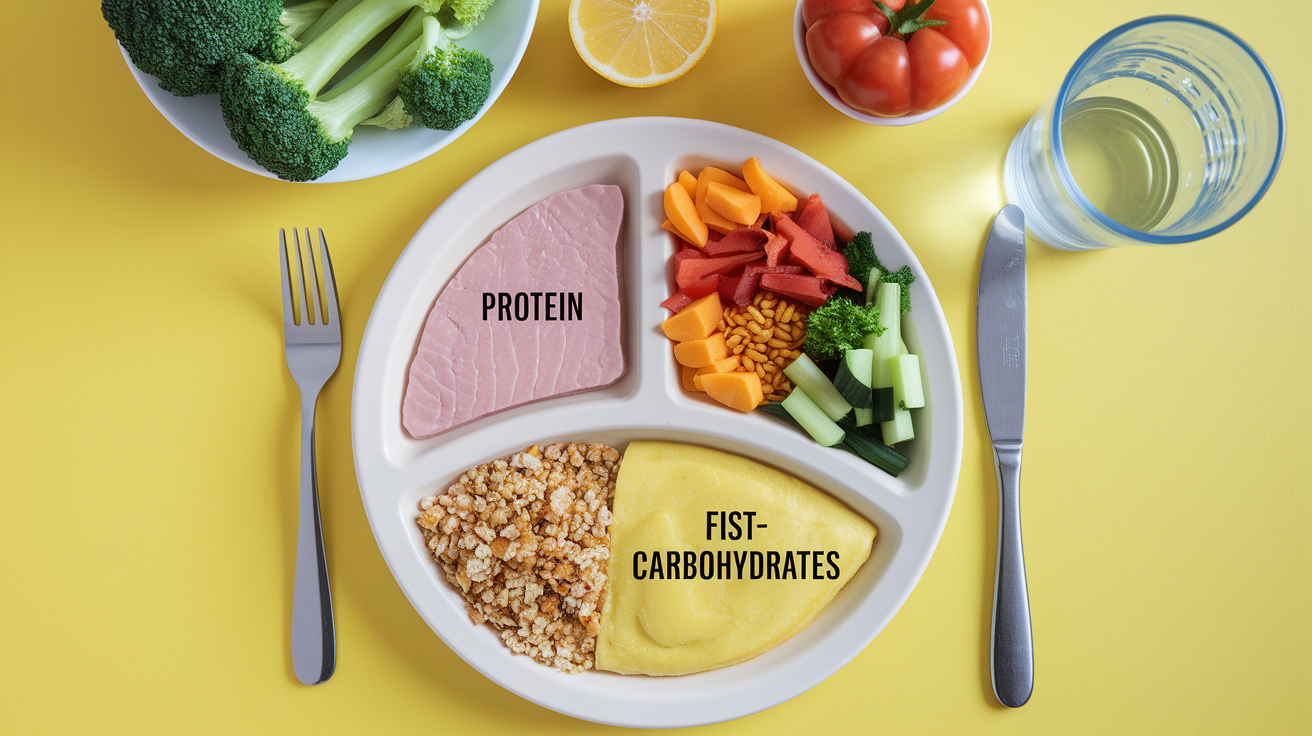
You don’t need a complicated meal plan to support beginner training. Eating balanced meals with enough protein, staying hydrated, and not under eating are the priorities. Extreme diets or calorie cuts while starting a new workout program usually backfire. You’ll feel tired, recover poorly, and lose motivation.
Aim for a palm sized serving of protein at each meal. That could be chicken, fish, eggs, tofu, Greek yogurt, or beans. Add a fist sized portion of carbs like rice, potatoes, or oats for energy, and include vegetables for fiber and nutrients. Drink water consistently throughout the day. 2 to 3 liters is a reasonable baseline, more if you’re active or it’s hot outside.
5 simple nutrition basics:
- Include a palm sized portion of protein with each meal
- Eat a fist sized serving of carbs to fuel workouts and recovery
- Stay hydrated with 8 to 12 cups of water daily
- Don’t skip meals or drastically cut calories while starting a new program
- Focus on whole foods most of the time, but don’t stress over perfection
Final Words
Start with the easy essentials: three full-body sessions a week, a quick warm-up, and a short cool-down. Keep weight light and focus on form.
This guide gave you a simple weekly blueprint, key exercises (squats, hinges, pushes, pulls, carries), safe modifications, progression tips, minimal gear suggestions, and basic nutrition and habit strategies to help you stick with it.
Use this beginner workout plan for women as a starting point, tweak it for your life, be consistent, and expect steady wins in strength, mobility, and energy.
FAQ
Q: How should a beginner start working out for women?
A: A beginner woman should start working out with simple full‑body sessions three days per week, focusing on basic strength, mobility, short warm-ups, and gradual progression—consistency matters more than intensity.
Q: What is the 3-3-3 rule for working out?
A: The 3-3-3 rule for working out typically means doing three sets of three reps for strength work—use challenging weight with strict form and allow full recovery between sessions.
Q: What’s the best exercise for type 2 diabetes?
A: The best exercise for type 2 diabetes is a mix of regular aerobic activity (like brisk walking) and resistance training, most days weekly; check with your healthcare provider before starting.
Q: What exercise is best for high blood pressure?
A: The best exercise for high blood pressure is regular moderate aerobic activity—brisk walking, cycling, or swimming—combined with light strength work; consult your clinician if you have concerns.