
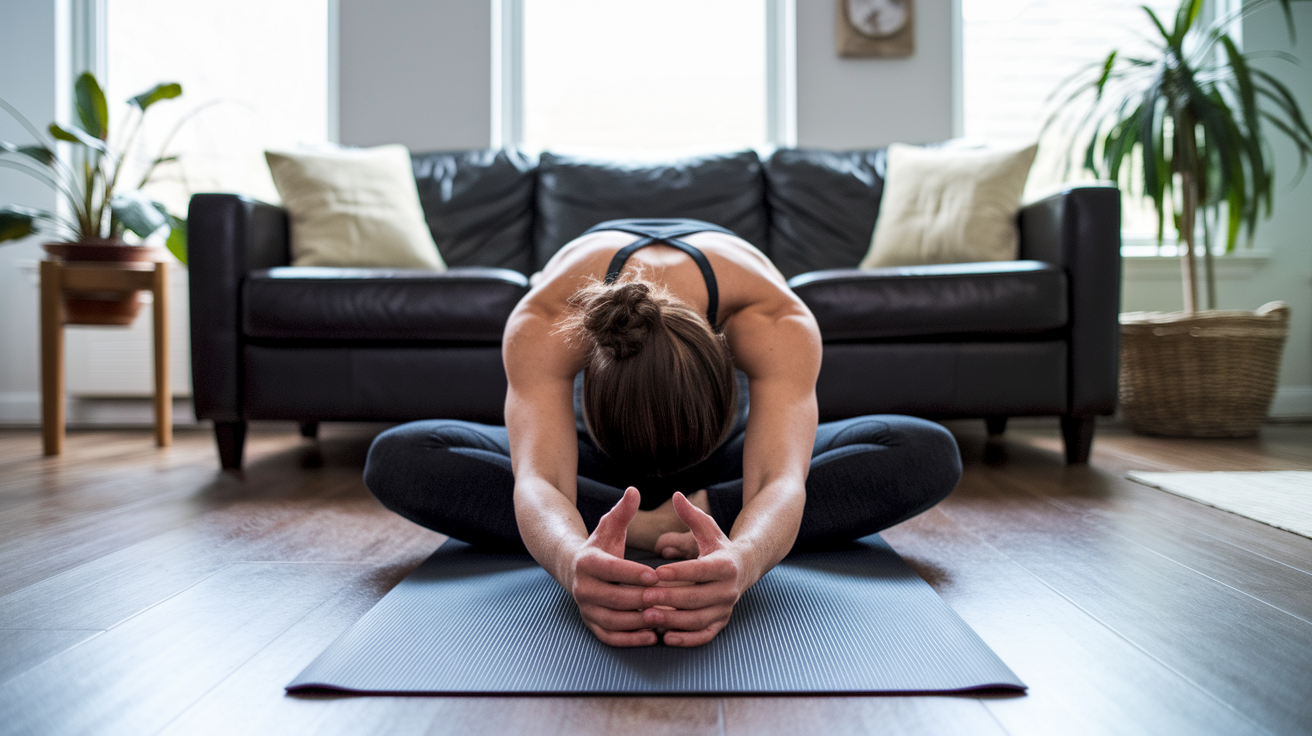
Think resting is the best fix for a stiff lower back? Think again.
Sitting still often lets tight muscles clamp down around your lumbar spine, which makes you feel locked and sore.
Gentle, pain-free stretches lengthen those muscles, bring blood flow back, and give your spine space to move without forcing anything.
This quick guide shows safe, easy moves, plus chair-friendly options and simple rules to follow, so you’ll start easing stiffness today and build a short routine that actually fits your week.
Quick, Safe Stretches for Immediate Lower Back Relief
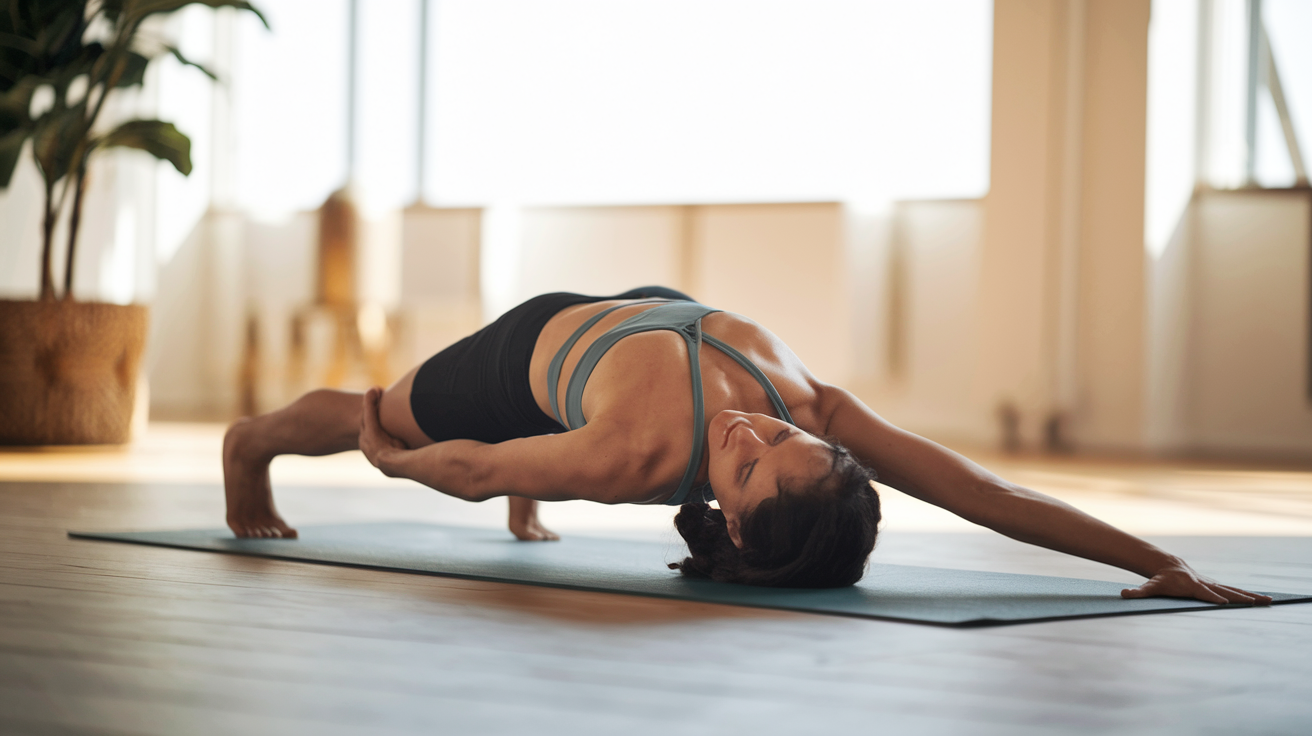
Lower back stiffness usually shows up after sitting too long, a long drive, or just waking up feeling locked. Your muscles tighten around the lumbar spine to protect it, but that “protection” ends up making you feel rigid and sore. Gentle stretching lengthens those tight muscles, gets blood moving, and gives your spine room to move without forcing anything.
These stretches work because they hit the lower back, hips, and everything connected around them. When one spot gets tight, the others try to pick up the slack. A few simple stretches can break that compensation cycle and help your body feel more balanced again.
Start with whatever feels pain-free. Breathe steady. If something feels sharp or makes the stiffness worse, ease off. You’re going for relief, not toughing it out.
1. Cat-Cow (Spinal Mobility)
Get on your hands and knees. Wrists under shoulders, knees under hips. Round your back toward the ceiling like a stretching cat, tuck your chin, let your tailbone drop. Hold five seconds and breathe. Then reverse it. Drop your belly, lift your chest and tailbone, arch gently into cow. Hold another five seconds. Go back and forth for a minute, keeping it smooth. This alternating movement stretches and mobilizes your spine while your core stays engaged.
2. Child’s Pose (Lower Back Lengthening)
From hands and knees, push your hips back toward your heels and reach your arms forward on the floor. Let your chest sink and rest your forehead down, or on a folded towel. Hold 20 to 30 seconds while you breathe. If your hips don’t reach your heels comfortably, stick a small pillow between them. This opens your hips and releases tension along your lower back without twisting or arching.
3. Knee-to-Chest (Tension Release)
Lie on your back, knees bent, feet flat. Pull one knee toward your chest with both hands. Keep the other foot planted. Press your lower back gently into the floor and hold 20 to 30 seconds. Lower that leg slowly, then switch sides. Want more? Pull both knees to your chest at once and hold 20 seconds. Run through the sequence two or three times per leg.
If any of these create sharp pain, tingling, or numbness, stop. You want a gentle pull, not a wrestling match. Stiffness takes time to release. Forcing it won’t help.
Safety Tips Before Starting Any Lower Back Stretching
Jumping into stretches when your back is cold and tight can backfire. A light warm-up gets blood flowing to the muscles and makes stretching safer. Walk around your place for two or three minutes, march in place, or do slow hip circles before you start.
Sharp pain is your body waving a red flag. Stretching should feel like a gentle pull or mild discomfort. Not stabbing, not burning. If a stretch makes the pain worse or creates new symptoms like tingling or weakness, stop. Breathing steadily through each stretch keeps your nervous system calm and helps muscles relax instead of tighten.
- Warm up with light movement for two to three minutes.
- Stop any stretch that creates sharp pain, shooting sensations, or numbness.
- Breathe slowly and evenly. Holding your breath tightens muscles instead of releasing them.
- Use a yoga mat, carpet, or soft surface to support your knees and back during floor stretches.
Simple Modifications for Different Pain or Stiffness Levels
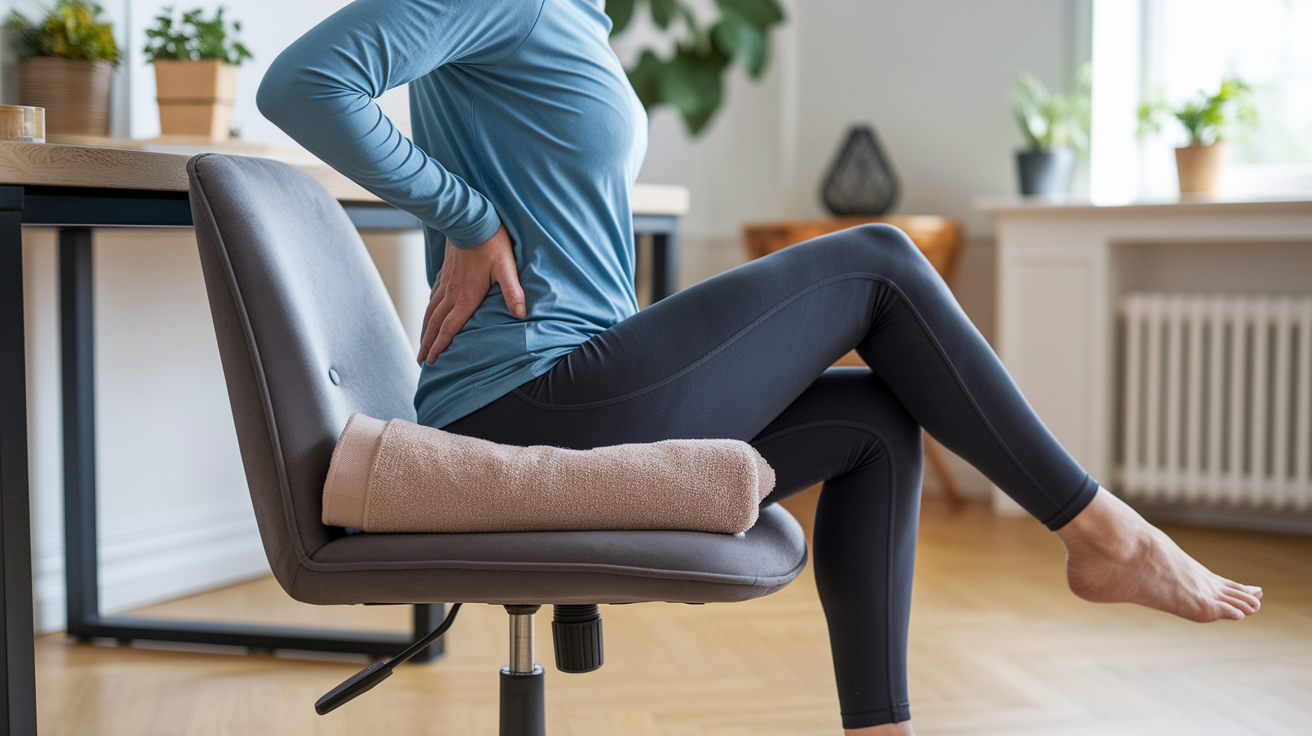
Not everyone can get down on the floor or move through a full range of motion, especially when stiffness is bad. You can still get the benefits by using chairs, cushions, and smaller movements. Meet your body where it is today, not where you think it should be.
If kneeling for cat-cow isn’t happening, try a seated version. Sit upright in a chair, feet flat. Round your back and drop your chin (cat), then sit tall and arch your lower back gently (cow). Move slowly between the two while breathing. For child’s pose, sit back in a chair and fold forward over your thighs with your arms resting on your knees or dangling toward the floor.
When knee-to-chest feels too intense, loop a towel or resistance band around your thigh to help the pull instead of gripping with your hands. You can also keep the non-working leg bent instead of extended, which takes strain off the lower back. Reducing your range of motion and shortening hold times to ten seconds still helps without overdoing it.
- Use a folded blanket or cushion under your knees, hips, or head for added comfort during floor stretches.
- Do seated versions if getting down to the floor isn’t realistic or safe.
- Shorten hold times to ten seconds and reduce repetitions to one or two per side when pain is moderate.
Short Daily Routine for Ongoing Lower Back Recovery
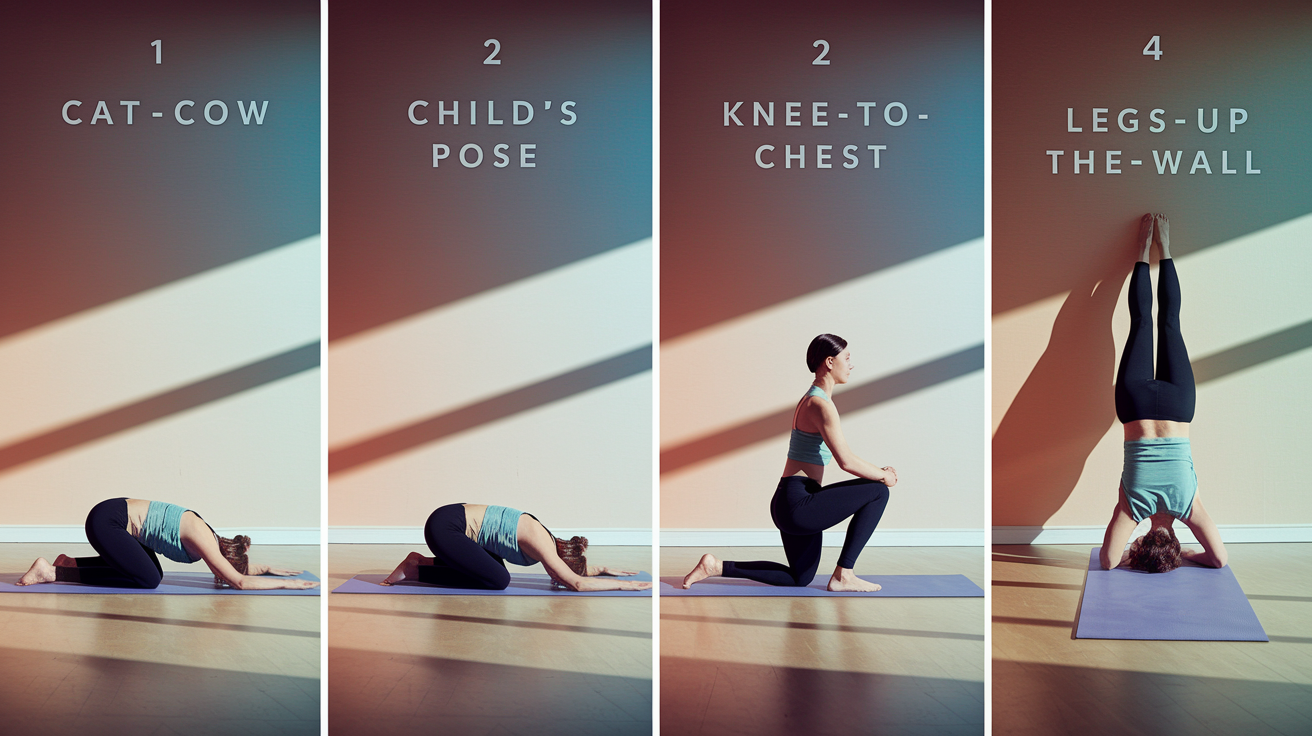
Consistency beats intensity when you’re working through lower back stiffness. A short, manageable routine done most days improves mobility and reduces tightness better than an occasional long session. Start with five to ten minutes in the morning or evening and build from there.
A simple sequence moves your body through different planes of motion without overloading any one area. Start with a mobility movement like cat-cow to warm up your spine, then move into a stretch that lengthens the lower back like child’s pose, follow with a single-leg movement like knee-to-chest, and finish with a gentle twist or relaxation pose to release whatever’s left.
- Cat-Cow (1 minute) – Warm up the spine with slow, controlled arching and rounding.
- Child’s Pose (30 seconds) – Lengthen the lower back and open the hips.
- Knee-to-Chest (20–30 seconds per leg, repeat twice) – Release tension in the lumbar muscles.
- Legs Up the Wall or Supine Twist (1–2 minutes) – Finish with a relaxing stretch that calms your nervous system and encourages full-body release.
When Lower Back Stiffness Requires Medical Evaluation

Most lower back stiffness gets better with gentle stretching, rest, and daily movement. But some symptoms signal something more serious. If your stiffness doesn’t improve after one to two weeks of consistent stretching, or if it gets worse instead of better, check in with a healthcare provider.
Certain red flags need immediate attention. Numbness, tingling, or weakness in your legs can mean nerve involvement. Pain that shoots below your knee, especially with numbness or a burning sensation, might point to sciatica or a pinched nerve. Loss of bladder or bowel control is a medical emergency. Fever combined with back pain can signal infection. If you experience any of these, get care right away instead of trying to stretch through them.
- Stiffness or pain lasting longer than one to two weeks without improvement.
- New numbness, tingling, or progressive weakness in one or both legs.
- Pain that radiates below the knee or comes with a burning sensation.
- Loss of bladder or bowel control, or back pain with fever.
Final Words
Right away, try the quick, safe moves: cat‑cow, child’s pose, and knee‑to‑chest to ease tightness and get your spine moving. Hold each 15–30 seconds, breathe slowly, and stop if anything hurts.
You also learned simple safety tips, easy modifications (chair or cushions), a short daily routine, and when to see a clinician.
Keep using these gentle recovery stretches for lower back stiffness most days, listen to your body, and you’ll notice steady relief and more comfort.
FAQ
Q: How to recover from lower back stiffness?
A: Recover from lower back stiffness by moving gently, doing short daily mobility and stretching (15–30 second holds), warming up, walking, prioritizing sleep, and seeing a clinician if pain, numbness, or weakness persist.
Q: How do you stretch your lower back for stiffness?
A: Stretch your lower back for stiffness with gentle moves like cat-cow, child’s pose, and knee-to-chest — hold each 15–30 seconds, breathe slowly, move pain-free, and stop if sharp pain occurs.
Q: How to loosen L4 and L5?
A: Loosen L4 and L5 by easing tension around those lumbar segments with pelvic tilts, knee-to-chest, gentle lumbar rotations, and short walks; keep movements slow, pain-free, and check a clinician for numbness or leg pain.
Q: How to decompress a tight lower back?
A: Decompress a tight lower back by using gravity and gentle traction: child’s pose, knees-to-chest, lying with a pillow under knees, or a brief gentle hang only if safe; breathe and stop with sharp pain.