
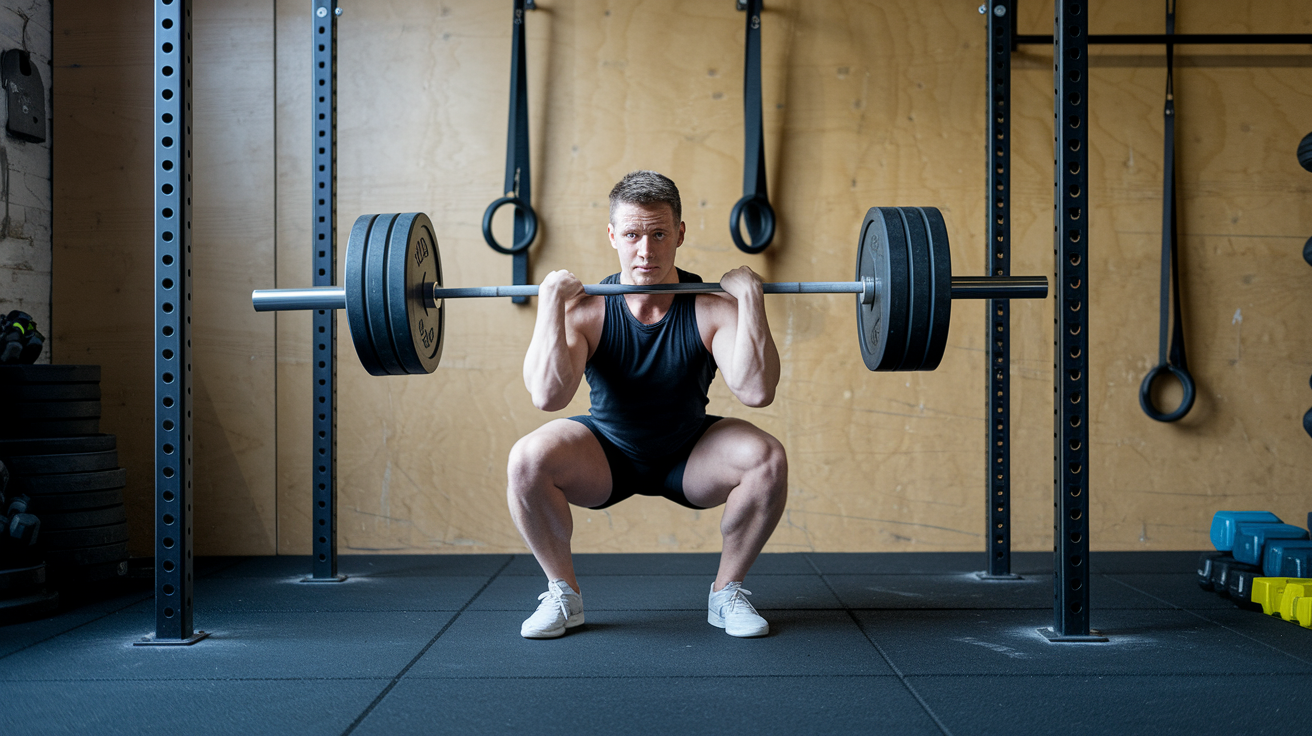
Ditch endless cardio—consistent strength work builds real muscle faster than random gym time.
Start with compound moves that train the whole body: squats, push-ups, rows, hinges, and core bracing.
Use bodyweight or light dumbbells to nail the movement, then add load when reps stay easy.
This post gives a simple warm-up, clear progressions for at-home and minimal-equipment training, and a practical 3-day full-body plan so you can get stronger and actually see muscle without guessing or burning out.
Foundational Movements for Beginner Strength Exercises
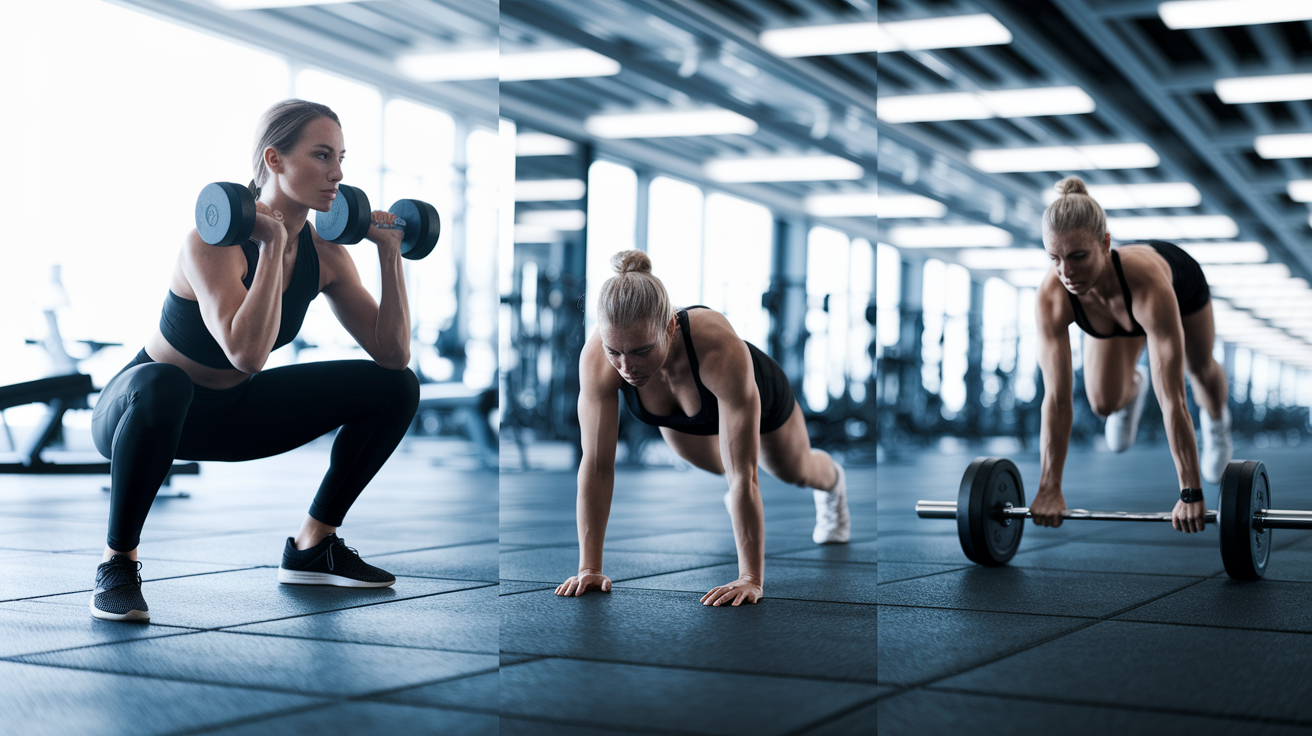
Compound movements give beginners the most bang for their buck because they work multiple muscle groups at once. Squats, push-ups, and rows teach your body to move as a coordinated unit instead of just flexing one muscle in isolation. You build usable strength faster, and your balance and posture improve as a side effect. Bodyweight versions and light dumbbells let you dial in the movement without frying your nervous system.
Starting with 2–4 sets of 8–15 reps works well for most people because it’s enough volume to trigger adaptation without being so much that your form falls apart. Rest 30–90 seconds between sets for bodyweight stuff or moderate weights. If you’re lifting something genuinely heavy, take 2–3 minutes. A 2-1-2 tempo (two seconds down, pause, two seconds up) keeps you in control and builds strength through the entire range, not just the easy half.
Each foundational movement targets a pattern your body uses every day. Squats and lunges load your legs and hips. Push-ups and overhead presses build upper body pushing strength. Rows develop your upper back. Hinges like the Romanian deadlift strengthen your posterior chain (glutes, hamstrings, lower back). Planks and glute bridges teach you how to brace and stabilize your hips, which protects your spine when you add load.
Essential beginner strength exercises to start with:
- Bodyweight squat (or goblet squat with a light dumbbell)
- Push-up (wall, incline, knee, or full version)
- Dumbbell row or resistance band row
- Romanian deadlift (dumbbells or light barbell)
- Overhead press (dumbbells)
- Glute bridge
- Plank (forearm or high)
- Reverse lunge
Warm-Up Routines Supporting Beginner Strength Exercises
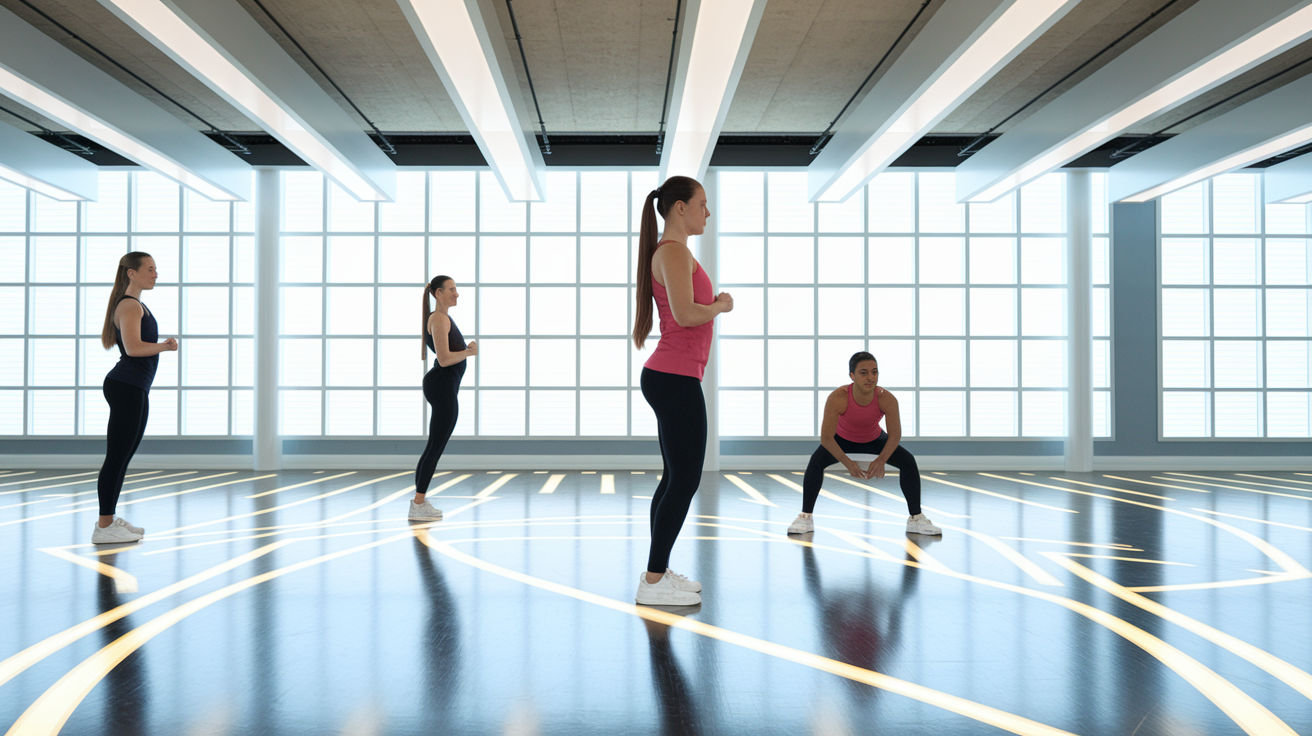
A proper warm-up increases blood flow to your working muscles, raises your core temperature slightly, and switches on the pathways between your brain and muscles. Spending 5–10 minutes on a warm-up reduces injury risk and improves how well your brain recruits muscle fibers. Better reps, faster strength gains. Think of it as flipping the “on” switch.
Mobility drills for your hips and shoulders directly improve squat depth, overhead reach, and hinge mechanics. Tight hips force your lower back to compensate during squats. Stiff shoulders make overhead pressing awkward or risky. Two to five minutes of dynamic stretches and joint circles prep those ranges without fatiguing the muscles you’re about to load.
Five beginner-friendly warm-up drills:
- Brisk walk or march in place (3–5 minutes)
- Arm circles forward and backward (10 each direction)
- Hip circles or leg swings (10 per side)
- Bodyweight squats, slow (8–10 reps)
- Cat-cow or spinal rocks (8–10 cycles)
Bodyweight Beginner Strength Exercises for At‑Home Training
Squat (Beginner Version)
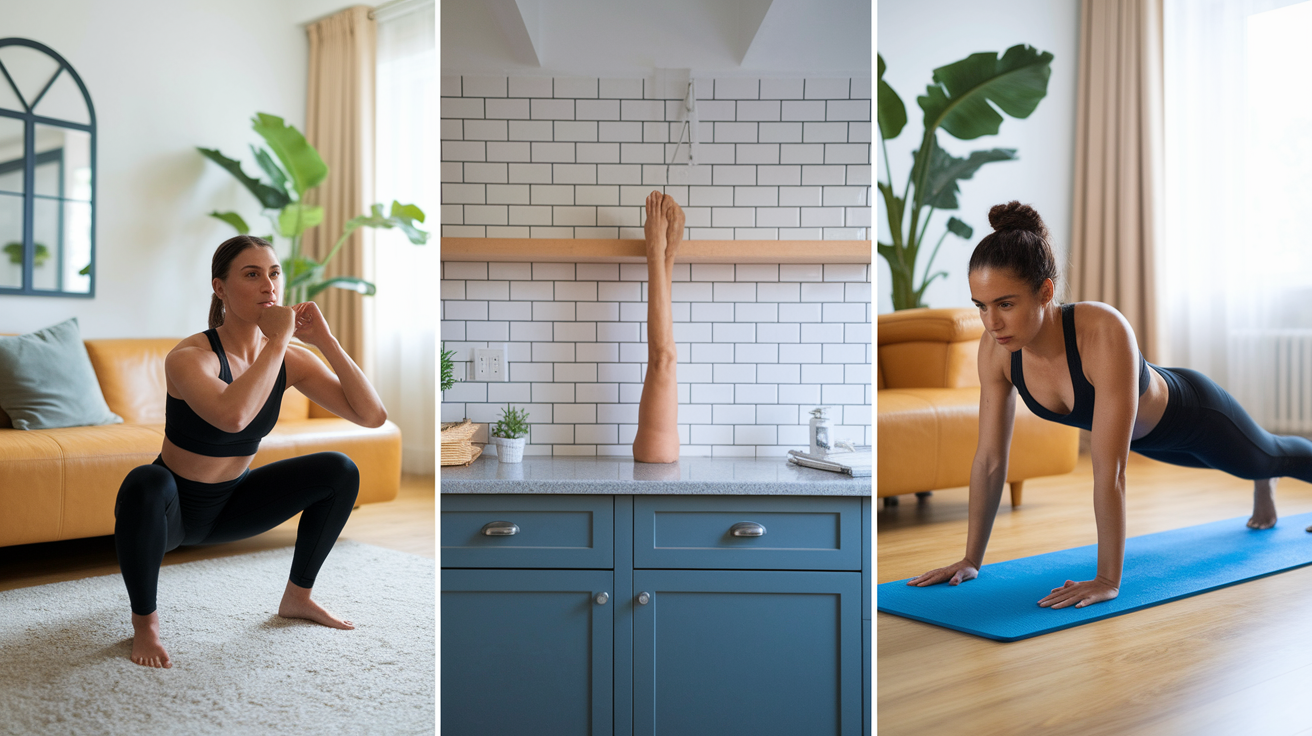
Stand with your feet hip to shoulder width apart, toes angled slightly out. Brace your core like you’re about to get punched in the stomach. Push your hips back first, then bend your knees to lower until your thighs are near parallel with the floor. Keep your chest lifted and eyes forward. Press through your whole foot to stand back up, squeezing your glutes at the top.
Common mistakes include letting your knees cave inward (push them out toward your pinky toes), heels lifting off the floor (shift your weight back slightly), and rounding your lower back (keep ribs stacked over hips). If you can’t reach parallel without losing form, regress to a box squat. Tap a chair or bench lightly, then stand. Once bodyweight squats feel easy for 15+ reps, grab a light dumbbell or water jug and hold it at chest height for a goblet squat.
Push-Up Progression
Start with wall push-ups if you’re brand new. Hands on a wall at shoulder height, feet a few steps back, lower your chest toward the wall and press back. Once you can do 15 clean reps, move to an elevated surface like a countertop or sturdy table. Next step is knee push-ups on the floor, then full push-ups from your toes. Keep your body in a straight line from head to heels. Elbows track back at roughly 45 degrees, not flaring straight out to the sides.
Breathe in as you lower, breathe out as you push up. A common mistake is letting your hips sag or your shoulder blades wing out. Fix that by squeezing your glutes and pulling your shoulder blades down your back before you start each rep.
Plank & Core Basics
Set up on your forearms and toes (or knees if you need to regress). Elbows under shoulders, body in one straight line. Pull your belly button toward your spine without holding your breath. Think “brace,” not “suck in.” Hold 20–40 seconds to start, rest, repeat for 2–3 sets. Common mistakes include letting your hips drop (squeeze glutes harder) or hiking your hips too high (tuck your tailbone slightly).
Planks teach you to resist movement, which protects your spine when you add weight to squats or deadlifts later.
| Exercise | Primary Benefit | Suggested Reps |
|---|---|---|
| Bodyweight Squat | Leg and hip strength, coordination | 10–15 |
| Push-Up (any variation) | Chest, shoulders, triceps, core stability | 8–12 |
| Glute Bridge | Hip extension, glute activation | 12–15 |
| Plank | Anterior core strength, spinal stability | 20–40 sec |
| Reverse Lunge | Single-leg strength, balance | 8–10 per leg |
Minimal Equipment Beginner Strength Exercises (Dumbbells, Bands, Kettlebells)
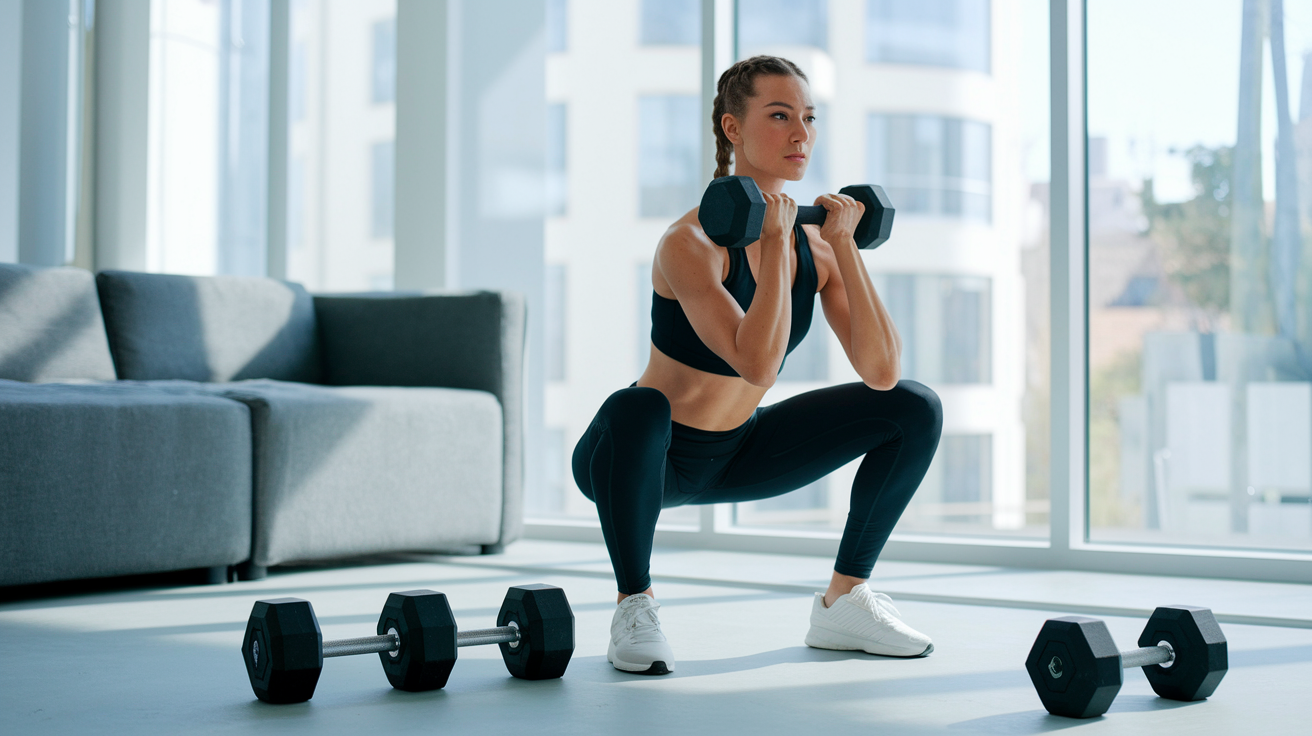
Adding light external resistance to bodyweight patterns speeds up strength gains without requiring a full gym setup. A pair of adjustable dumbbells (3–25 lb range), a set of resistance bands ($10–$30), or a single 15–25 lb kettlebell gives you enough variety to progress for months. Minimal equipment also means you can train anywhere. Living room, garage, hotel room.
Start with dumbbells in the 5–15 lb range for upper body presses and rows, and 10–25 lb for goblet squats and Romanian deadlifts. If a weight feels too easy for 12+ reps with perfect form, go up by 2.5–5 lb next session. If form breaks down before 8 reps, drop the weight. Bands work well for rows and face pulls when you don’t have dumbbells. Choose a band that makes 10–12 reps challenging but not impossible.
Dumbbell rows teach you to pull with your back, not just your arms. Brace one hand on a bench or chair, hinge forward at the hips, and pull the dumbbell toward your hip while keeping your shoulder blade pulled down and back. Romanian deadlifts with light dumbbells (10–20 lb to start) hinge at the hips with a slight knee bend, lowering the weights along your shins until you feel a stretch in your hamstrings, then drive your hips forward to stand. Overhead presses build shoulder strength. Press dumbbells from shoulder height straight up, keeping your ribs down and core braced so your lower back doesn’t arch.
Kettlebells add a grip challenge and work well for swings once you’ve mastered the hip hinge. Start with a light bell (15–20 lb) and practice the hinge motion before adding speed. Resistance bands are portable and joint-friendly. Anchor a band at chest height for rows, or loop it around your back for banded push-ups to add resistance at the top of the movement.
Four key minimal-equipment lifts with short cues:
- Goblet squat: Hold dumbbell at chest, elbows down, squat deep, stand and squeeze glutes.
- Dumbbell row: Hinge forward, pull to hip, squeeze shoulder blade back.
- Dumbbell RDL: Hinge at hips, slight knee bend, feel hamstring stretch, stand tall.
- Overhead press: Start at shoulders, press straight up, don’t arch lower back.
Beginner Strength Exercises for a Full-Body Routine Structure
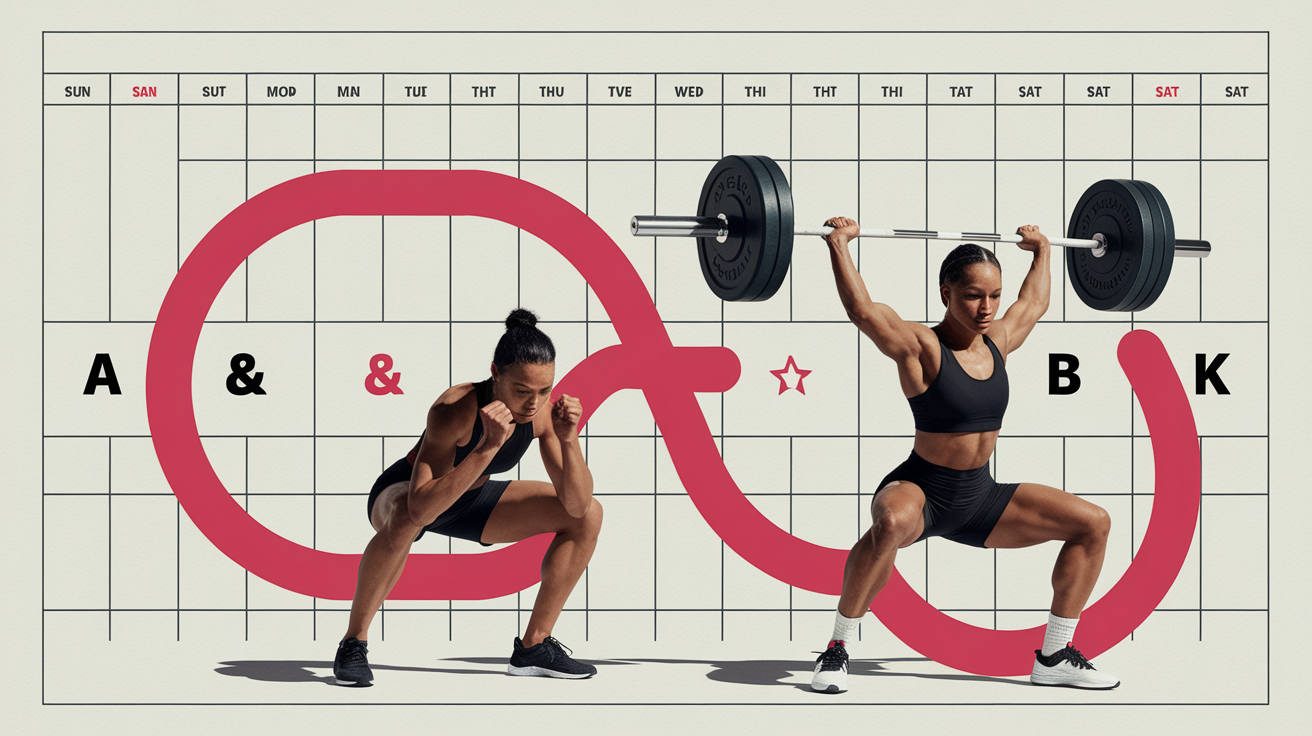
Full body routines let beginners hit every major muscle group two to three times per week. That frequency maximizes the strength-building signal your nervous system needs early on. Splitting workouts into body parts (like “chest day”) works for advanced lifters, but beginners adapt faster when they practice the big patterns multiple times per week with at least 48 hours of rest between sessions.
An A/B rotation means you alternate between two different workouts across the week. Workout A might include squat, push-up, and row. Workout B covers deadlift or hinge, overhead press, and a different row or pull variation. If you train Monday/Wednesday/Friday, Week 1 goes A/B/A and Week 2 goes B/A/B, so every lift gets hit roughly equally over two weeks.
Sample 3‑Day Template
A Monday/Wednesday/Friday schedule gives you two full rest days on the weekend and a day between each session. Warm up for 5–10 minutes, then perform each exercise for 2–4 sets of the prescribed reps. Rest 30–90 seconds between sets for most movements, up to 2 minutes if you’re working near your limit. Track your reps in a notebook or phone app so you know when to add weight or reps the following week.
| Day | Exercise Order | Sets/Reps |
|---|---|---|
| Monday (A) | Squat → Push-Up → Dumbbell Row → Glute Bridge → Plank | 3 x 10 / 3 x 8–12 / 3 x 10 per side / 2 x 12 / 3 x 30 sec |
| Wednesday (B) | Romanian Deadlift → Overhead Press → Band/Bodyweight Row → Reverse Lunge → Plank | 3 x 8 / 3 x 8–10 / 3 x 10 / 2 x 8 per leg / 3 x 30 sec |
| Friday (A) | Same as Monday | Same sets/reps |
| Weekend | Rest or light activity (walk, stretch) | — |
Progressive Overload in Beginner Strength Exercises
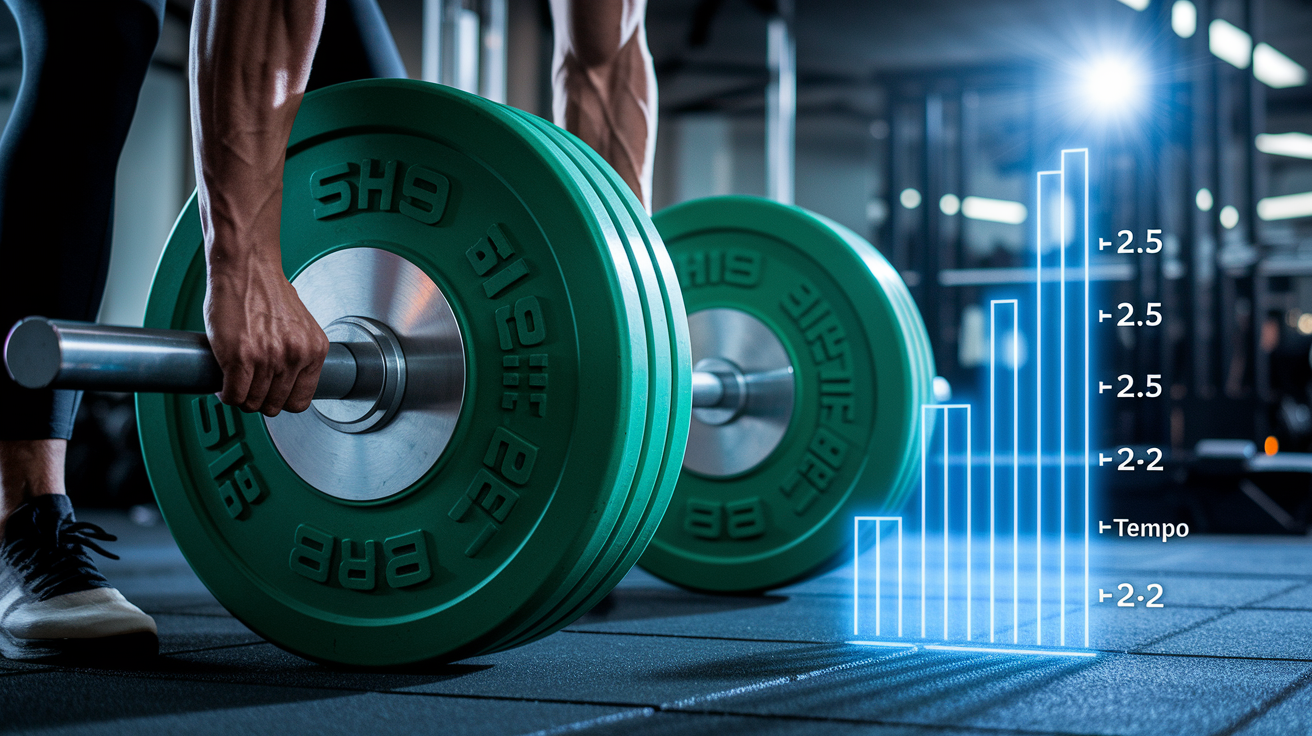
Progressive overload means doing slightly more work than last time. More weight, more reps, more sets, or better form at the same load. For beginners, the simplest version is adding 2.5–5 lb (or one extra rep per set) once you can complete all your target reps with clean technique for two sessions in a row. That small, steady increase compounds quickly. Adding 5 lb per week to a squat could theoretically mean 260 lb more over a year, though real progress isn’t perfectly linear.
You know it’s time to increase load when the last set of an exercise starts to feel noticeably easier and you’re hitting the top of your rep range (for example, 12 reps when the program calls for 8–12) without your form breaking down. If you’re supposed to do 3 sets of 10 and you get 10/10/12 two weeks in a row, bump the weight by 2.5–5 lb and expect your reps to drop back to 10/9/8 for a session or two. Keep the tempo controlled. Two seconds down, brief pause, two seconds up. You’re building strength through the full range, not bouncing or using momentum.
Tracking workouts in a simple notebook or app makes progression obvious. Write the date, exercise name, sets, reps, and weight. When you look back after a month, you’ll see whether you’ve added reps or load. If progress stalls for two to three weeks, check your recovery (sleep, food, stress) before adding more volume.
Safety Tips & Form Cues for Beginner Strength Exercises
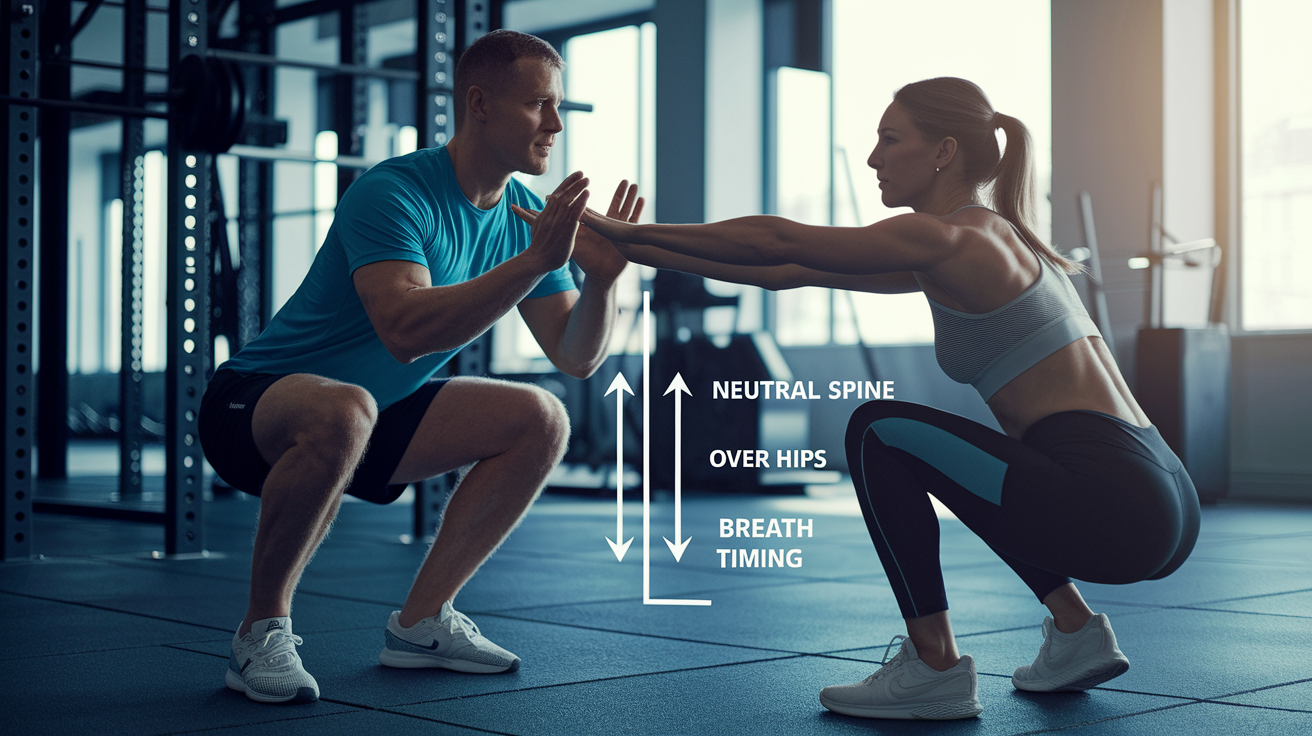
Good form protects your joints and ensures the right muscles do the work. Faster strength gains, far fewer tweaks or injuries. Neutral spine (ribs stacked over hips, natural lower back curve maintained) should be your default position for squats, hinges, rows, and presses. If your lower back rounds during a deadlift or your ribs flare forward during an overhead press, reduce the weight and slow the tempo until you can hold position.
Breathing matters more than most beginners realize. Inhale during the easier phase and exhale during the harder push or pull. For example, breathe in as you lower into a squat, breathe out as you stand. Holding your breath through an entire set spikes blood pressure and reduces oxygen to working muscles. Performance dies, and it feels awful.
Six common mistakes and how to fix them:
- Rushing reps: Slow down to a 2-1-2 tempo and use a mirror or video to check each rep. Before you add weight, prove you can move well for every single rep.
- Using too much weight: Drop to a load where you can complete all prescribed reps without form breakdown. Ego has no place in beginner training.
- Poor breathing or holding breath: Practice exhaling on exertion (the hard part) and inhaling on the way down. Breathe like you’re blowing out a candle at the top of a push-up.
- Knees caving inward on squats/lunges: Cue “knees out” or “push knees toward pinky toes.” Strengthen glutes with extra glute bridges if this keeps happening.
- Rounded lower back during hinge or deadlift: Reset your spine before every rep. Think “chest proud, shoulders back,” and hinge at the hips, not the waist.
- Skipping warm-up and mobility: Five minutes of movement prep isn’t optional. It’s the difference between injury-free progress and a tweak that costs you two weeks.
Recovery Essentials Supporting Beginner Strength Exercises

Muscles grow and strength improves during recovery, not during the workout itself. Sleep is the most powerful recovery tool you have. Aim for 7–9 hours per night, especially on training days and the night after. Poor sleep blunts protein synthesis, reduces coordination, and makes every set feel harder than it should. Hydration supports performance and recovery. Drink enough water that your urine stays pale yellow throughout the day.
Every four to eight weeks, plan a deload week where you reduce training volume by roughly 40–60 percent. That might mean dropping from 3 sets to 2 sets per exercise, using slightly lighter weights, or taking an extra rest day. Deloads let your nervous system catch up with the accumulated fatigue from weekly progression and reduce the risk of burnout or overuse injuries. If you notice persistent soreness, declining performance, or feeling run down, a deload week often fixes it faster than pushing through.
Beginner Strength Exercises FAQ

How many days per week should a beginner strength train?
Two to three full body sessions per week with at least one rest day between workouts. Three sessions (Monday/Wednesday/Friday) speed up adaptation, but two sessions still build strength if your schedule is tight.
When should I increase the weight?
When you can complete all prescribed sets and reps with good form for two consecutive sessions. Add 2.5–5 lb for upper body lifts and 5–10 lb for lower body lifts, or add one extra rep per set if smaller weight jumps aren’t available.
What equipment do I actually need to start?
Nothing for true bodyweight training. A pair of adjustable dumbbells (5–25 lb), a resistance band set, and a yoga mat cover most beginner needs for under $100 total.
How soon will I see results?
Coordination and neuromuscular improvements show up in 2–4 weeks (lifts feel smoother, reps get easier). Visible muscle tone and noticeable strength increases typically appear around 6–12 weeks with consistent training and adequate protein intake.
Are there any safety considerations for special conditions?
If you have a history of cardiovascular issues, joint problems, recent surgery, or you’re pregnant, get medical clearance before starting a new strength program. When in doubt, work with a qualified coach for your first few sessions.
Final Words
Start with the basics: two to three full-body sessions a week, a 5 to 10 minute warm-up, and the key movements, squat, hinge, push, pull, and plank.
Use bodyweight or light dumbbells, follow the set and rep ranges, and keep tempo for control. Progress by small weight or rep increases and track workouts.
Prioritize form, breathing, sleep, and planned deloads so you keep going without setbacks.
Stick with these beginner strength exercises, tweak them to fit your week, and you’ll build strength and confidence. One consistent session at a time.
FAQ
Q: How many days per week should I strength train as a beginner?
A: As a beginner, aim for 2–3 full‑body strength sessions per week, about 30–45 minutes each, with roughly 48 hours between sessions to let muscles recover and adapt.
Q: When should I increase weight or intensity?
A: You should increase weight when you can complete all sets and reps with good form and regularly have 1–2 extra reps; raise load about 2.5–5% or 2.5–5 lb.
Q: What minimal equipment do I need to start strength training at home?
A: The minimal equipment to start is a pair of dumbbells (adjustable 3–25 lb), a resistance band, and clear floor space—bodyweight moves work fine until you add weights.
Q: When will I see visible results from beginner strength training?
A: You’ll often notice strength and shape changes in about 6–12 weeks with consistent 2–3 weekly sessions, sensible nutrition, and regular sleep and recovery habits.
Q: Are beginner strength exercises safe if I have back or knee pain?
A: Beginner strength exercises can be safe with back or knee pain if cleared by your clinician, using regressions, focusing on form, moving slowly, and stopping if you feel sharp pain.