

Think you don’t have time for a cooldown? Many busy professionals skip it and end up sore, stiff, or wiped out the next day. A five-minute gentle post-workout recovery routine fixes that without stealing your morning or evening. It helps bring your heart rate down, ease tight hips and shoulders, and cut next-day soreness so you can move better through meetings and commutes. Keep it short and repeatable—this post gives a simple sequence you can do at home, at the office, or in a gym corner.
Quick and Gentle Cooldown Routine That Fits a Busy Professional’s Schedule
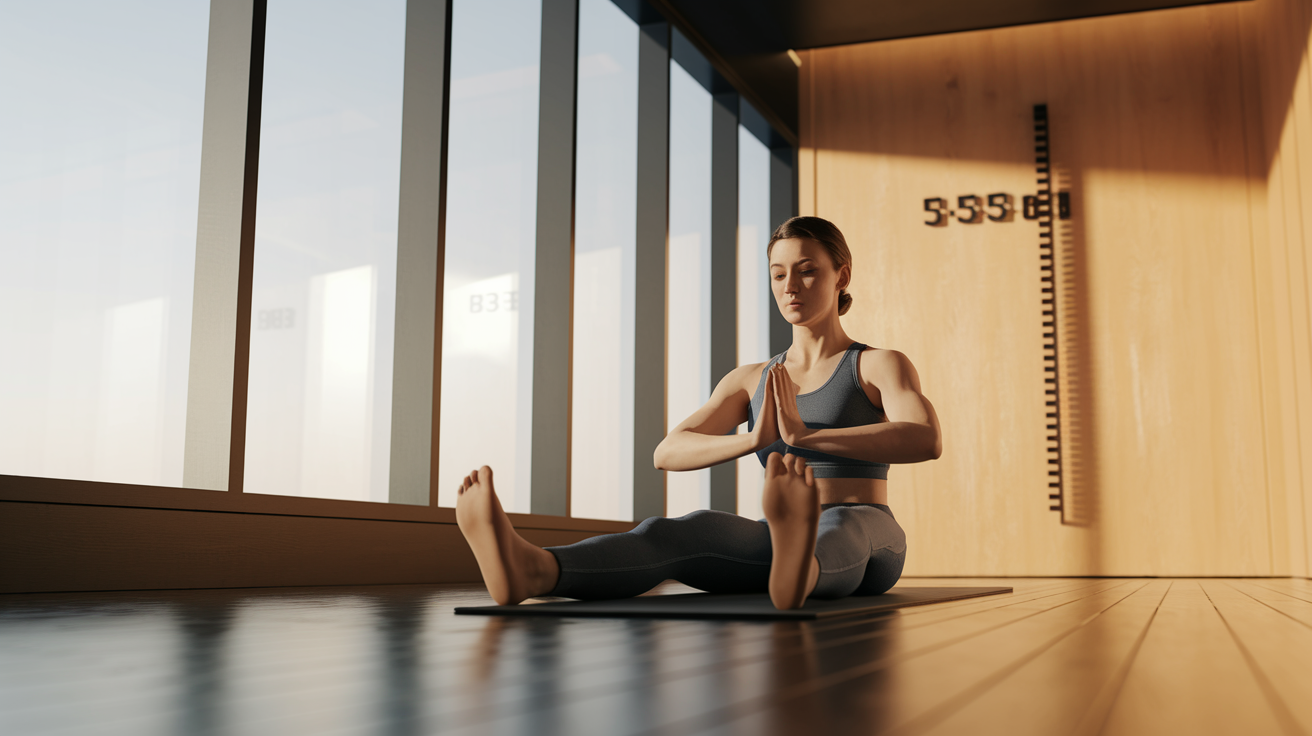
Most busy professionals deal with the same thing after workouts. They’re short on time, skip the cooldown, then wonder why they’re sore, stiff, or completely drained the next day. A gentle post-workout recovery routine fixes that without eating up another hour of your day. Research backs this up. One study in the Journal of Human Kinetics found that cooldowns increase circulation in exercised muscles and help clear out metabolic waste, which cuts down on soreness later. Cooldowns also prevent blood pooling and dizziness by bringing your heart rate down gradually instead of stopping cold. The standard recommendation is five to ten minutes. Short enough to squeeze between your last rep and your shower.
Busy professionals do best with a structured five-minute sequence because it gives you the core recovery benefits without any negotiation. You won’t skip it because “you don’t have time.” You won’t cut corners because the whole thing’s already stripped down. It works whether you’re cooling down in your garage, at the office gym, or in a corner of your living room before you jump into your next meeting.
Here’s a complete five-minute gentle cooldown you can repeat after any workout:
-
Walk or march in place for 60 to 90 seconds at a gradually slowing pace to bring your heart rate down smoothly.
-
Chest opener for 30 seconds. Stand or kneel, hold your arms in a goalpost position, and gently extend your hands back until you feel a stretch across your chest.
-
Neck stretch for 30 seconds total. Drop one ear toward your shoulder, hold for 10 to 15 seconds, then switch sides. You can use your hand to add a gentle assist.
-
Runner’s lunge for 30 seconds per side. Step one foot back into a long lunge with your front knee bent around 90 degrees. Feel the stretch in your hip flexor and quad.
-
Child’s pose for 30 to 60 seconds. Sit back on your heels, walk your hands forward on the floor, and relax your head and shoulders. Breathe slowly and let your body settle.
This routine fits perfectly after a morning workout before you shower and commute, or right after an evening session when you’re short on time. Keep it simple and repeatable. If you consistently invest these five minutes, you’ll recover faster, feel less sore, and maintain better mobility throughout your week.
Targeted Mobility Variations for Common Tight Areas
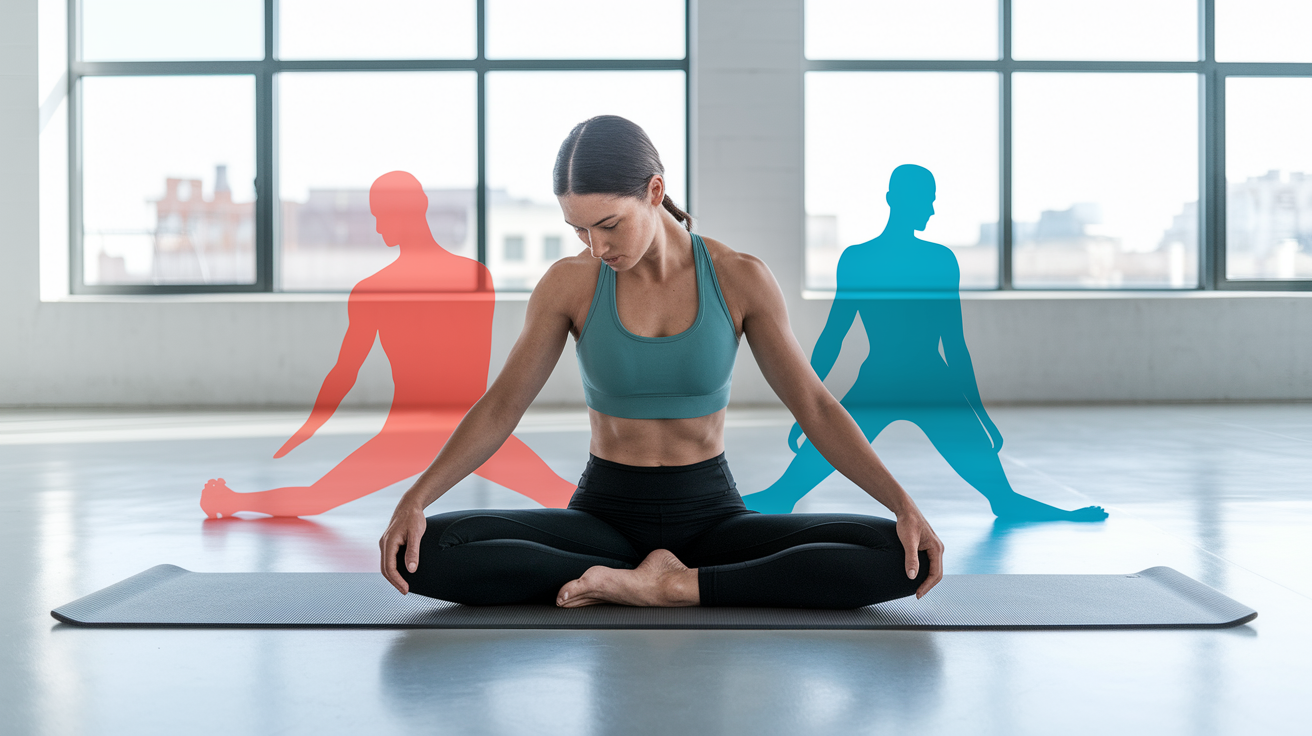
Busy professionals often develop tightness in predictable patterns based on their work setup and training habits. Desk workers tend to carry tension in their neck, shoulders, and hip flexors. People who run or cycle frequently deal with tight hamstrings, calves, and hip rotators. Targeted mobility variations let you refine your recovery by addressing the specific areas that limit your movement or create discomfort. These variations take the same five to thirty seconds per hold as the basic cooldown but focus on the joints and muscles that need the most attention.
The moves below are built for precision, not speed. You’re not trying to push through or force a deep stretch. You’re gently restoring range of motion and releasing tension in areas that tighten up from repetitive stress. Use these variations when you have an extra few minutes or when a particular area feels restricted.
Neck Stretch (10–20s per side)
Stand with your feet hip-width apart. Drop one ear toward your shoulder without twisting or lifting the opposite shoulder. You can place your hand gently on the side of your head to add a light assist, but don’t pull hard. Hold for 10 to 20 seconds, breathe slowly, and switch sides. This stretch relieves neck stiffness from hours of looking at screens or holding your head in one position during calls and meetings.
90-90 Hip Stretch (20–30s per side)
Sit on the floor with one leg bent in front of you at 90 degrees and the other bent behind you, also at 90 degrees. Your front shin should be roughly parallel to your body. Lean forward gently from your hips to increase the stretch in your front hip and glute. Hold for 20 to 30 seconds, then switch sides. This variation’s especially useful for relieving deep hip tightness and improving internal and external hip rotation after sitting for long periods or cycling.
Kneeling Hip Flexor Stretch (5 reps each side)
Start in a half-kneeling position with one knee on the floor and the other foot flat in front of you. Push your hips forward gently until you feel a stretch in the front of your back hip. Hold for three to five seconds, then relax. Repeat five times on each side. This dynamic approach helps loosen chronically tight hip flexors without requiring a long static hold, which is perfect when you’re transitioning between tasks or recovering from lower-body training.
Thread the Needle (20–30s per side)
Begin on your hands and knees in a tabletop position. Reach your right arm up toward the ceiling, then thread it underneath your left arm, lowering your right shoulder and head toward the floor. Hold for 20 to 30 seconds, feeling the stretch through your upper back and shoulder. Switch sides. This move targets thoracic spine rotation and shoulder mobility, which are often restricted in professionals who sit and type for hours.
Downward-Facing Dog (5–10 breaths)
From a tabletop position, lift your tailbone toward the ceiling and straighten your legs to form an inverted V shape. Your hands should be shoulder-width apart and your feet hip-width apart. Hold the position for five to ten slow breaths. You can gently pedal your feet to stretch your calves if they feel tight. Downward-Facing Dog lengthens the entire posterior chain (calves, hamstrings, glutes, and back) while also opening your shoulders and decompressing your spine.
For more detailed visual guidance on these and other cooldown exercises, see The Best Post-Workout Cooldown Exercises to Leave You Recovered and Refreshed.
Office-Friendly Post-Workout Recovery Routine You Can Do at Your Desk
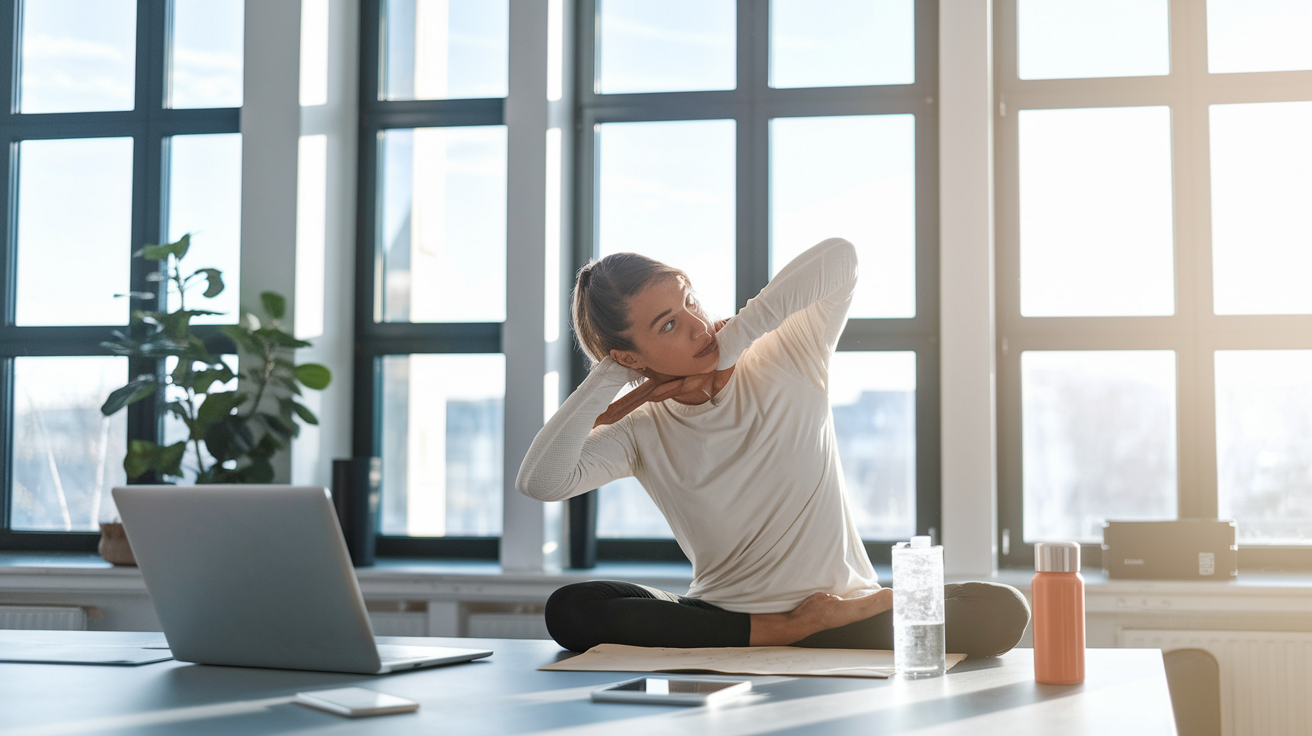
Office workers face a unique recovery challenge. You might squeeze in a workout before or during your workday, but you can’t always roll out a mat or spend ten minutes on the floor. You need recovery moves that work in your chair, next to your desk, or in a quiet corner of the office. A two to five minute desk-based micro-cooldown reduces stiffness, prevents soreness from settling in, and helps you transition back into work mode without feeling locked up or drained.
These desk-friendly stretches require no equipment and almost no space. You can do them after a morning workout before you sit down at your computer, or mid-afternoon after a lunchtime training session. The goal’s to keep your body moving and prevent the tightness that builds when you go straight from exercise to sitting for hours. Consistency matters more than length here. Two minutes done regularly beats ten minutes skipped.
Building a habit around these micro-sessions also signals to your body that recovery’s part of your routine, not an optional bonus. When you pair movement with your existing schedule (right after you get back to your desk, for example), you’re far more likely to stick with it over time.
Here are four simple desk-based stretches you can rotate through in any order:
-
Seated spinal twist: Sit tall in your chair, cross one leg over the other or keep both feet flat, then twist your torso toward the back of the chair and use the armrest or back to gently deepen the twist. Hold for 20 to 30 seconds on each side to release tension in your mid and lower back.
-
Seated chest opener: Sit forward in your chair, interlace your hands behind your lower back or on the backrest, and gently lift your chest while squeezing your shoulder blades together. Hold for 10 to 20 seconds to counteract the forward shoulder position from typing and phone use.
-
Seated neck stretch: While sitting, drop one ear toward your shoulder and place your hand lightly on the side of your head. Hold for 10 to 20 seconds, then switch sides to relieve neck stiffness.
-
Standing hip hinge or half-squat: Stand next to your desk, hinge forward at your hips with a flat back, or drop into a shallow squat and hold the bottom position for 30 to 60 seconds to mobilize your hamstrings, glutes, and hips after sitting.
Foam Rolling and Self-Massage Techniques for Gentle Post-Workout Relief
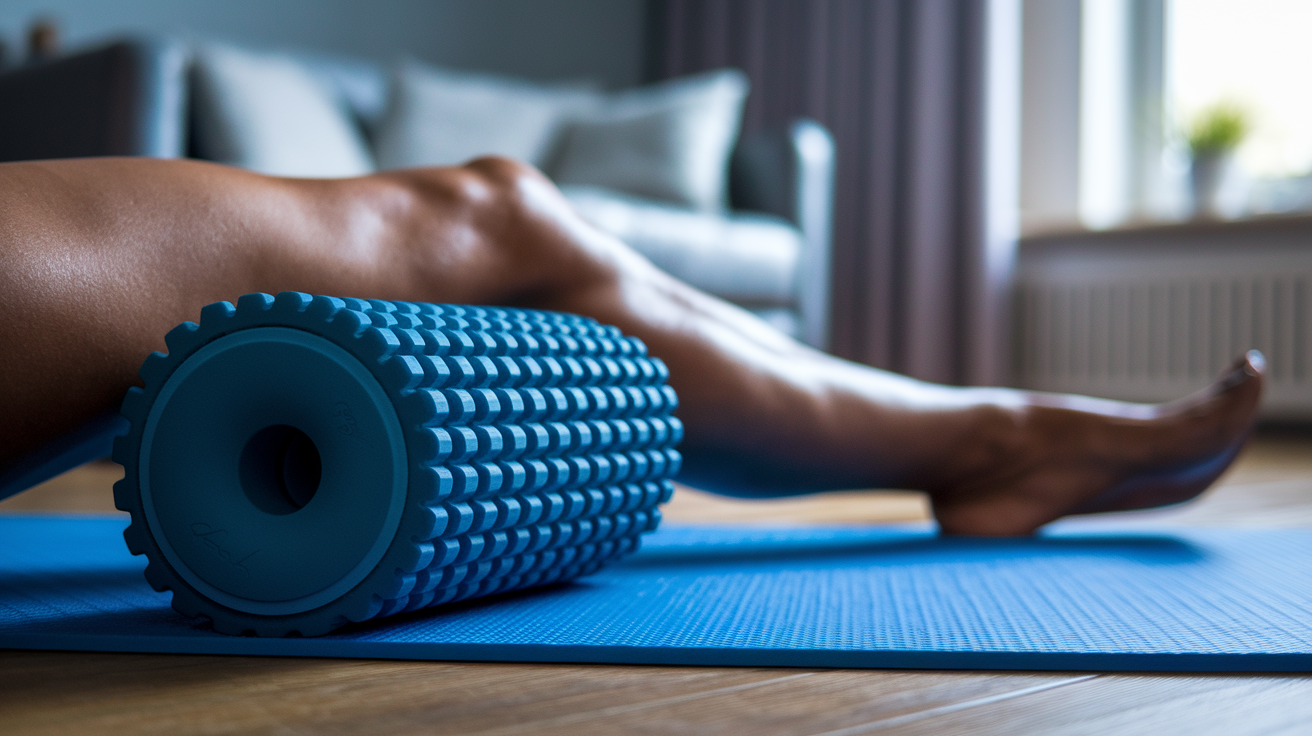
Foam rolling fits best before workouts to stimulate blood flow and prepare your muscles, but a brief post-workout session can help when you’re dealing with localized tightness or soreness. The key’s keeping it short (30 to 60 seconds per area) and avoiding the temptation to roll for ten minutes chasing the temporary “feel-good” response. Foam rolling post-workout should target the muscles that worked hardest during your session, not every inch of your body.
Focus on high-use areas like your quads, calves, IT band, and upper back. Use slow, controlled passes over the muscle, pausing on any tender spots for a few breaths without grinding or forcing deep pressure. If you don’t have a foam roller, a lacrosse ball or massage ball works well for smaller areas like your calves, feet, or the sides of your hips. These tools fit in a desk drawer or gym bag and take up almost no space, making them perfect for busy professionals who need portable recovery options.
When you’re extremely short on time, prioritize one or two areas instead of trying to roll everything. A minute spent on your quads after a leg workout or 30 seconds on your upper back after a pressing session delivers more benefit than skipping recovery altogether. Self-massage tools are supplements to your cooldown and stretching, not replacements.
| Area | Tool | Time |
|---|---|---|
| Quads | Foam roller | 30–60 seconds |
| Upper Back | Foam roller or massage ball | 30–60 seconds |
| IT Band | Foam roller | 30–60 seconds |
A 10–15 Minute Gentle Post-Workout Recovery Routine for Busy Professionals
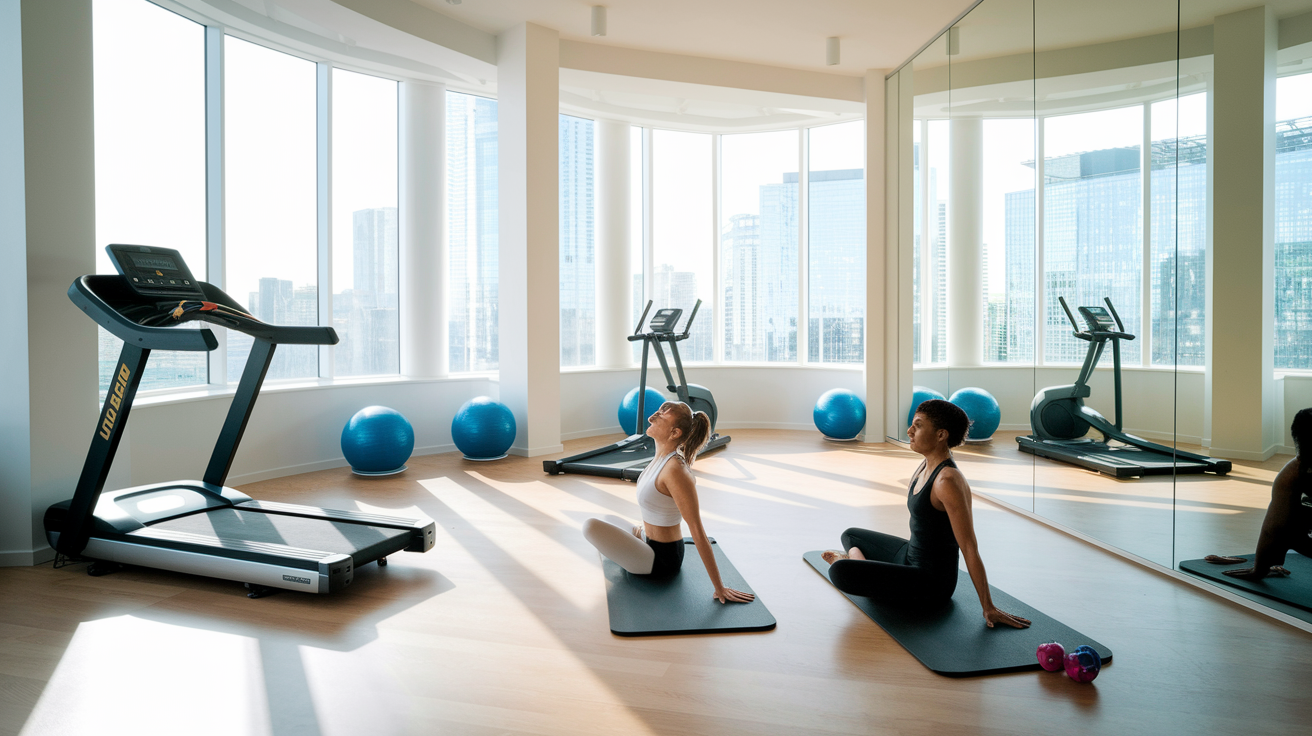
When you have a few extra minutes and want a more complete recovery session, a 10 to 15 minute routine gives you time to address multiple systems. Cardiovascular cooldown, dynamic mobility, static stretching, and breathwork. These longer sequences work well on days when your schedule’s less packed or when you’ve completed a harder training session that demands more thorough recovery. The structure remains simple and time-efficient, with each block serving a clear purpose.
Both routines below follow the same progression: bring your heart rate down gradually, restore movement quality through dynamic mobility, hold static stretches to release tension, and finish with calm breathing to support nervous system recovery. You can use these sequences at home, in a gym, or in any space with enough room to move through a few floor-based positions.
The 10-Minute Balanced Routine
This routine balances cardiovascular cooldown, mobility, stretching, and breathing in equal measure. It’s the most time-efficient way to cover all the recovery bases without sacrificing quality.
-
Spend three to four minutes on descending-intensity cardio. Walk on a treadmill at an easy pace, pedal lightly on a bike, or march in place while gradually slowing your pace and letting your heart rate drop smoothly.
-
Move into three minutes of dynamic mobility work. Perform cat-cow for 30 to 60 seconds, thread-the-needle for 30 seconds per side, and 90-90 hip stretches for 30 seconds per side to restore movement through your spine and hips.
-
Hold three minutes of static stretching. Choose two to three key muscles used in your workout and hold each stretch for 20 to 30 seconds per side. Examples include kneeling hip flexor stretch, seated hamstring stretch, or a standing quad stretch.
-
Finish with 30 to 60 seconds of slow diaphragmatic breathing. Inhale through your nose for four counts, exhale through your mouth for six counts, and let your body settle completely before moving on.
The 15-Minute Full Routine
This routine adds more time to each recovery block, which is useful after longer or more intense training sessions. It gives you space to work through more areas without rushing.
-
Start with five to eight minutes of descending cardio. Walk, cycle, or row at a very easy pace, gradually decreasing intensity every minute or two until your breathing’s calm and controlled.
-
Dedicate five minutes to dynamic mobility. Include movements like cat-cow, thoracic rotations, arm sweeps, and banded hip openers to move through multiple planes of motion and prepare your joints for static holds.
-
Spend two to three minutes on targeted static stretching. Hold each stretch for 20 to 30 seconds and focus on the muscles that feel tightest or that you worked hardest. Common choices include pigeon pose, runner’s lunge, chest opener, and spinal twist.
-
Close with one to two minutes of breathing and a mental check-in. Use slow, deep breaths to signal to your nervous system that the workout’s complete, and take a moment to notice how your body feels before transitioning to your next task.
Gentle Breathwork and Relaxation to Reduce Post-Workout Stress
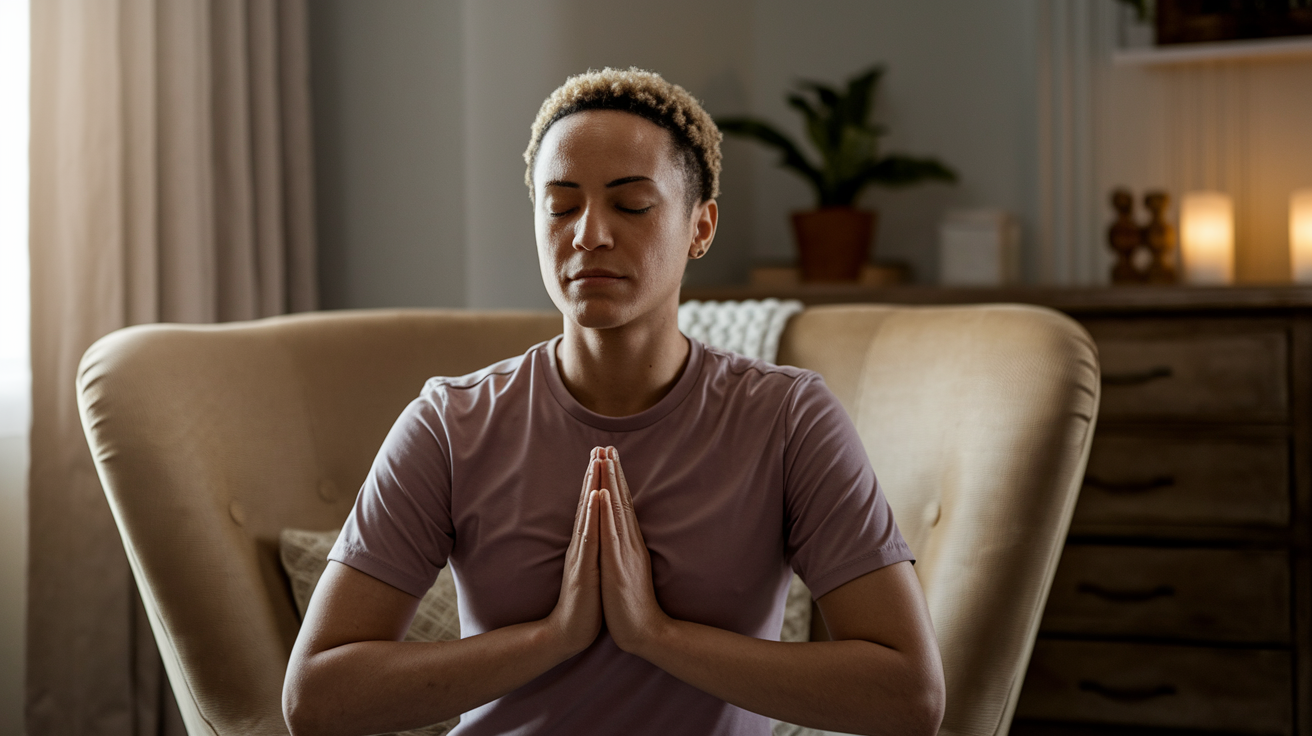
Breathwork plays a quiet but critical role in post-workout recovery. Your workout activates your sympathetic nervous system, the “fight-or-flight” response that drives performance. Gentle breathing after exercise helps activate the parasympathetic system, which supports muscle repair, reduces stress hormones, and brings your body into a state that’s ready to recover. One to two minutes of intentional breathing at the end of your cooldown’s enough to make a noticeable difference, especially if you’re returning to work or jumping into a busy schedule right after training.
Diaphragmatic breathing’s the simplest and most effective technique for this purpose. It requires no equipment, no space, and almost no time. You can do it seated, lying down, or standing. The pattern’s straightforward: breathe in slowly through your nose, letting your belly expand, then exhale slowly through your mouth, letting your belly fall. The exhale should be longer than the inhale to encourage relaxation. This breathing pattern also works as a nightly habit before bed to further support recovery and improve sleep quality.
Here’s a simple three-step breathing sequence to use after your cooldown or stretching:
-
Inhale through your nose for four slow counts, letting your diaphragm expand and your belly rise.
-
Exhale through your mouth for six slow counts, releasing all the air and letting your shoulders and chest relax completely.
-
Repeat this pattern for one to two minutes total, staying present with each breath and noticing any areas of tension soften as you continue.
Recovery Nutrition and Hydration Tips That Work With a Busy Schedule
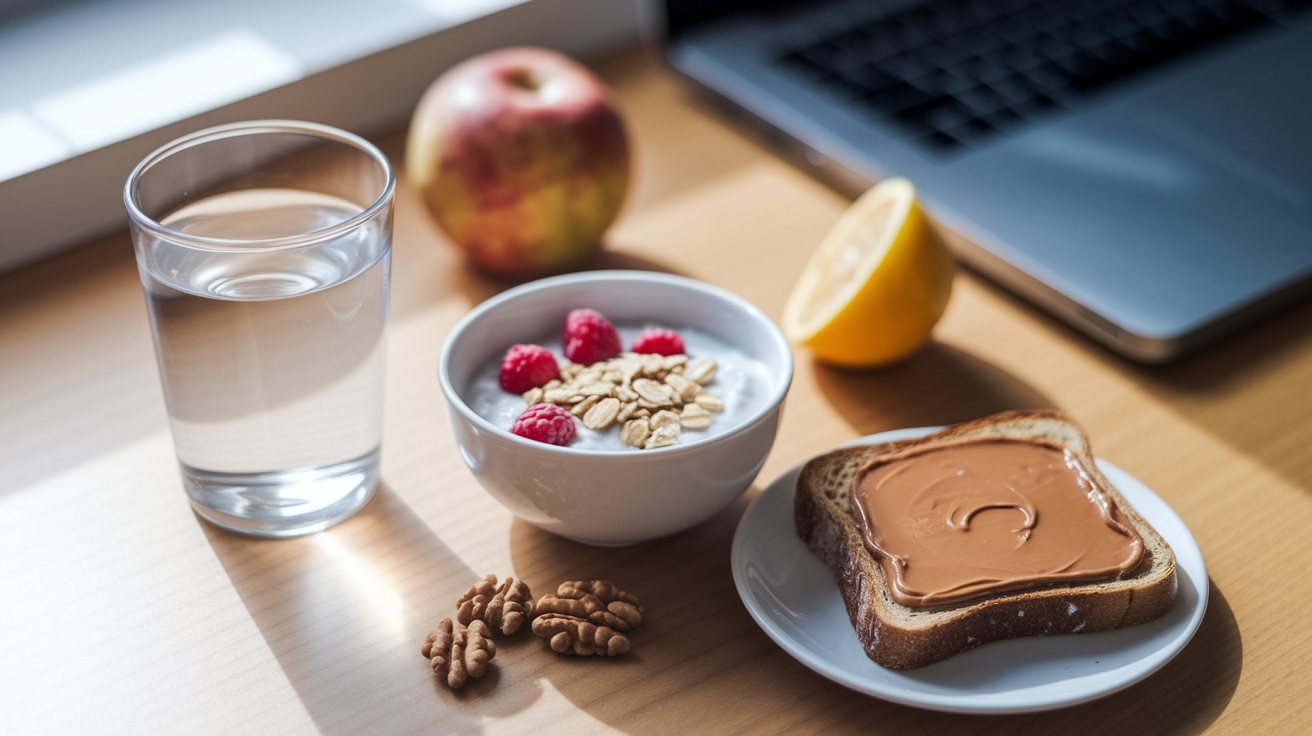
Nutrition timing matters for recovery, but it doesn’t have to be complicated. The goal’s simple: consume a combination of lean protein and complex carbohydrates as soon as possible after your workout, ideally within one hour. Protein supports muscle repair, and carbohydrates replenish the glycogen stores you used during exercise. Waiting too long to eat can slow recovery and leave you feeling depleted for the rest of the day. Busy professionals often skip this step because they don’t have a plan, so the easiest solution’s keeping a prepared snack ready to grab right after training.
The snacks below are practical, portable, and require minimal preparation. You can keep most of them at your desk, in your gym bag, or in your car. The portion sizes are small enough to eat quickly but substantial enough to support recovery without feeling heavy.
-
Small fruit smoothie with nut butter and spinach. Blend one banana, a handful of spinach, one tablespoon of almond or peanut butter, and a half cup of milk or a milk alternative.
-
Greek yogurt bowl with oats and berries. Mix a single-serve container of plain Greek yogurt with a quarter cup of oats and a handful of blueberries or strawberries.
-
Toast with nut butter and banana slices. Spread one tablespoon of nut butter on whole-grain toast and top with half a sliced banana.
-
Handful of nuts plus a piece of fruit. Pair an ounce of almonds or cashews with an apple or orange.
-
Cheese stick and hard-boiled egg. Simple, portable, and easy to prep in advance. Pair with a small piece of fruit if you need extra carbs.
Hydration’s equally important. Drink water steadily throughout the day and aim to consume 16 to 20 ounces within the first hour after your workout. If you’re commuting or transitioning directly back to work, keep a water bottle within reach and sip consistently rather than chugging all at once. Proper hydration supports nutrient delivery, reduces fatigue, and helps your muscles recover more efficiently. Pair your post-workout snack with water, and you’ve covered the nutrition basics without overcomplicating your schedule.
How to Build a Consistent, Gentle Recovery Habit as a Busy Professional

Building a consistent recovery habit starts with changing one small behavior at a time. Trying to overhaul your entire post-workout routine at once usually leads to skipping it when life gets busy. Instead, commit to one new habit per week or month. Start with staying an extra five minutes after your workout to stretch. Once that feels automatic, add a two-minute breathing practice before bed. Then introduce a prepared post-workout snack. Small, repeatable actions stack into sustainable routines far better than ambitious plans you can’t maintain.
Consistency beats length every time. A brief two to five minute micro-cooldown after every workout delivers better long-term results than a perfect 15-minute routine you only complete once or twice a week. Busy professionals benefit most from routines that fit naturally into existing transitions (post-commute, before showering, or right after closing your laptop for the day). When recovery becomes part of your schedule rather than an extra task, you’re far more likely to keep doing it.
Listening to your body’s part of consistency. If you notice chronic tightness in one area (tight hamstrings contributing to low-back discomfort, for example), prioritize stretches and mobility work for that region. Focus on the primary muscles you used in each workout. After a run, target your quads, hamstrings, calves, and hips. After an upper-body session, spend time on your chest, shoulders, and thoracic spine. Adjust your cooldown based on what your body’s telling you, not just what the plan says.
Here are four practical strategies to help you build and maintain a recovery habit:
-
Set a specific time and place for your cooldown. Anchor it to an existing habit like “right after I finish my workout” or “as soon as I walk in the door after my commute.”
-
Keep your recovery tools ready and visible. Store a yoga mat, foam roller, or resistance band where you can see them and access them without extra steps.
-
Track completion, not perfection. Mark off each day you complete any recovery work, even if it’s shorter or simpler than planned. Tracking builds momentum.
-
Check in with your body weekly. Notice what feels tight, sore, or restricted, and adjust your cooldown to address those areas first.
Final Words
You now have a fast 5–10 minute cooldown, targeted mobility options, desk-friendly moves, brief foam-rolling tips, a 10–15 minute flow, simple breathwork, and easy recovery snack ideas ready to use.
These moves help lower dizziness, improve circulation, and ease soreness so you can get back to your day. Pick the short routine when time’s tight and the longer one when you can.
Use this gentle post-workout recovery routine for busy professionals that fits your commute and keeps you consistent. Small steps add up.
FAQ
Q: What is a quick, gentle cooldown I can do after workouts when I’m short on time?
A: A quick, gentle cooldown you can do after workouts when short on time is a 5-minute sequence: 60–90s easy walk, 30–60s chest opener, 20s neck each side, 30–60s runner’s lunge, 60s child’s pose.
Q: How long should a post-workout cooldown be and why?
A: A post-workout cooldown should be 5–10 minutes because it lowers heart rate gradually, reduces dizziness and blood pooling, and helps circulation for lactic-acid clearance and less muscle soreness.
Q: What mobility variations help tight hips, neck, and shoulders?
A: Mobility variations that help tight hips, neck, and shoulders include the 90-90 hip stretch (20–30s per side), neck stretch (10–20s per side), thread-the-needle (20–30s), and downward-facing dog (5–10 breaths).
Q: Can I do a recovery routine at my desk?
A: You can do a recovery routine at your desk using 2–5 minute micro-cooldowns like a seated spinal twist (20–30s), seated chest opener (10–20s), seated neck stretch (10–20s per side), and a 30–60s hip hinge.
Q: How long and where should I foam roll after a workout?
A: You should foam roll briefly after a workout, 30–60 seconds per area, focusing on quads, calves, IT band and upper back; use a lacrosse ball for tight spots if you have just 1–3 minutes.
Q: What does a 10–15 minute gentle recovery routine look like?
A: A 10-minute routine: 3–4 minutes descending cardio, 3 minutes dynamic mobility, 3 minutes static holds, and 30–60 seconds breathing. The 15-minute option extends cardio and mobility (5–8 minutes cardio, 5 minutes mobility).
Q: How can breathwork help after a workout and what simple pattern should I use?
A: Breathwork helps by activating the parasympathetic system to lower stress and support recovery; try diaphragmatic breathing: inhale through the nose for 4 counts, exhale through the mouth for 6 counts, for 1–2 minutes.
Q: What should I eat or drink after a workout when I’m busy?
A: After a workout when busy, aim for protein plus complex carbs within an hour: smoothie with nut butter and spinach, Greek yogurt with oats and berries, toast with nut butter and banana, or nuts and fruit.
Q: How do I build a consistent recovery habit as a busy professional?
A: To build a consistent recovery habit as a busy professional, pick one small routine per week, use micro-cooldowns after commutes, schedule recovery on your calendar, and check body signals to adjust rest.