

You don’t need to be fast or already fit to run your first 5K.
Most people try to run nonstop on day one, then quit because it’s too hard.
This beginner plan fixes that with simple run/walk intervals, three easy runs per week, two short strength sessions, and clear recovery rules.
In six to eight weeks you’ll go from one-minute runs to 20–30 minutes of continuous running and race-day confidence.
Read on for the step-by-step schedule, warm-ups, and small tweaks if your week gets messy.
Beginner-Friendly 5K Plan Overview and Weekly Progression

A beginner 5K plan gets you from zero running experience to covering 3.1 miles in about six to eight weeks. You’ll start with short run/walk intervals, usually one minute running and one minute walking, then slowly stretch the running bits while cutting back on the walks. By the end, most people can run straight through for 20 to 30 minutes or finish the race with hardly any walking.
This gradual build protects your joints and muscles. Your cardiovascular system gets time to catch up.
You’ll run three days a week, strength train twice, and take two full rest days. Every run happens at a conversational pace. If you can’t speak in short sentences without gasping, you’re going too fast. Slow down. This easy pace is where beginners build the aerobic foundation that makes running stick.
The plan moves through three phases:
Early weeks get you comfortable with short run/walk intervals (like 1:1 or 2:1 ratios). You’re building confidence and basic endurance.
Middle weeks push you into longer continuous running segments, anywhere from 10 to 20 minutes without stopping.
Final weeks prepare you for race pace with full continuous runs up to 30 minutes, plus a taper week before the event.
Miss a day or two? Just pick up where you left off. Miss three to seven days? Resume the plan but drop your weekly volume by 25% for one week before continuing. Miss a full week or more? Repeat as many weeks as you missed and adjust your race date accordingly.
Most beginners notice running feels easier somewhere between weeks four and six.
Understanding Run/Walk Training and How It Builds Endurance for a Beginner 5K

Run/walk training works because your body adapts without getting overwhelmed. When you alternate short running bursts with walking recovery, you rack up training volume while keeping muscles, tendons, and ligaments safe. Walking breaks keep your heart rate manageable and let you cover more distance than you could by running alone. You avoid the discouragement that comes from trying to run continuously before you’re ready.
A typical progression looks something like this:
Week 1: 1 minute run, 1 minute walk
Week 2: 2 minutes run, 1 minute walk
Week 3: 3 minutes run, 1 minute walk
Week 4: 4 minutes run, 1 minute walk
Week 5: 5 minutes run, 1 minute walk
Week 6 onward: Cut walk breaks to 30 seconds (examples: 3 minutes run with 30 seconds walk, 4 minutes run with 30 seconds walk, 5 minutes run with 30 seconds walk)
Your pacing during these intervals should feel conversational. Use a rating of perceived exertion (RPE) scale where 1 is sitting still and 10 is an all-out sprint. Your easy runs should land between 4 and 6. The talk test is simpler: if you can speak a full sentence without gasping, you’re in the right zone.
Increase your weekly running volume by no more than 10%. Small, steady steps keep you healthy and moving forward.
Essential Running Technique and Warm‑Up/Cool‑Down Basics for Beginner 5K Plans
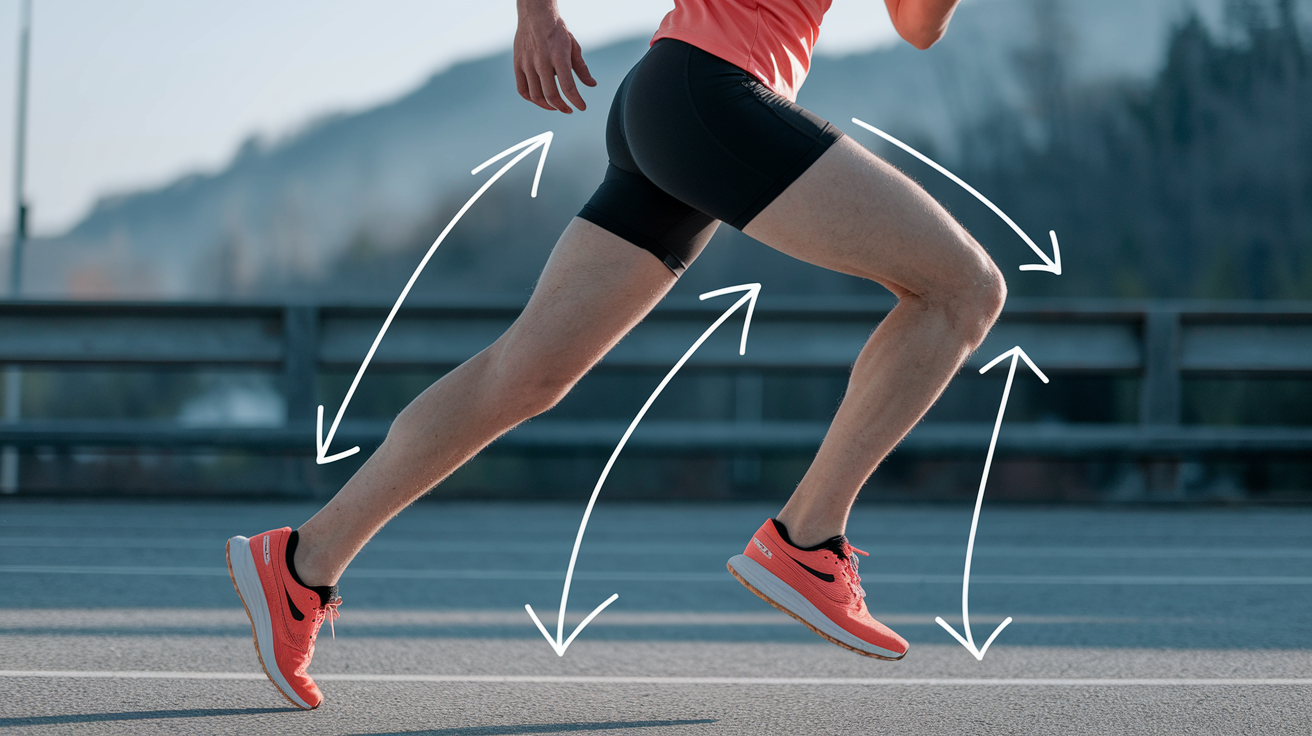
Good running form cuts wasted energy and lowers injury risk. Stand upright. Imagine a string gently pulling the top of your head toward the sky. Keep your shoulders relaxed, away from your ears. Aim for short, quick steps with a cadence around 170 to 180 steps per minute. Your feet should land underneath your body, not out in front. Arms swing naturally at your sides with a relaxed 90-degree bend. Breathing stays steady and rhythmic, matching your stride.
Before each run, warm up with 5 to 10 minutes of brisk walking. Then do these dynamic drills:
Leg swings: Hold a wall or post and swing one leg forward and back 10 times per side.
High knees: March in place, lifting knees to hip height for 20 to 30 seconds.
Butt kicks: Jog in place, kicking heels toward glutes for 20 to 30 seconds.
Walking lunges: Step forward into a lunge for 8 to 10 steps total.
After your run, cool down with 5 to 10 minutes of easy walking. Follow that with static stretches held for 30 seconds each. Hit your calves, hamstrings, quads, and glutes. Stretching while muscles are still warm helps maintain flexibility and signals your nervous system that the work is done.
Keeping your cadence closer to 170 to 180 steps per minute naturally shortens your stride and reduces impact forces. Especially helpful when you’re still building durability.
Strength, Cross‑Training, and Recovery Habits That Support a Beginner 5K Workout Plan

Strength training twice per week for 20 to 30 minutes protects your joints and improves running economy. Stronger glutes, hips, and core muscles stabilize your pelvis and keep your knees tracking properly. You cut down the risk of common overuse injuries. These sessions don’t need to be complicated. Bodyweight exercises done with control make a difference.
Do these five exercises each session:
Glute bridges: 2 to 3 sets of 10 to 15 reps
Single-leg Romanian deadlifts: 2 to 3 sets of 8 to 12 reps per leg
Bodyweight squats: 2 to 3 sets of 10 to 15 reps
Walking lunges: 2 to 3 sets of 10 to 12 total steps
Planks: 2 sets of 30 to 60 seconds
Cross-training on non-running days builds aerobic fitness without the impact stress of running. Cycling, swimming, and the elliptical work well for 20 to 45 minutes at moderate effort. If you’re feeling run-down or sore, swap a scheduled run for a cross-training session. Better to stay consistent with lower-impact work than to push through fatigue and risk injury.
Recovery habits matter as much as the workouts. Foam roll for 5 to 10 minutes after runs or on rest days. Focus on calves, quads, hamstrings, and IT bands. Aim for 7 to 9 hours of sleep each night. This is when your body repairs muscle tissue and adapts to training stress.
Hydration supports all of this. Drink about half your bodyweight in ounces per day, plus an extra 0.1 to 0.18 ounces per pound of bodyweight for each hour of exercise.
Week‑by‑Week Beginner 5K Training Schedule (Printable-Style Breakdown)
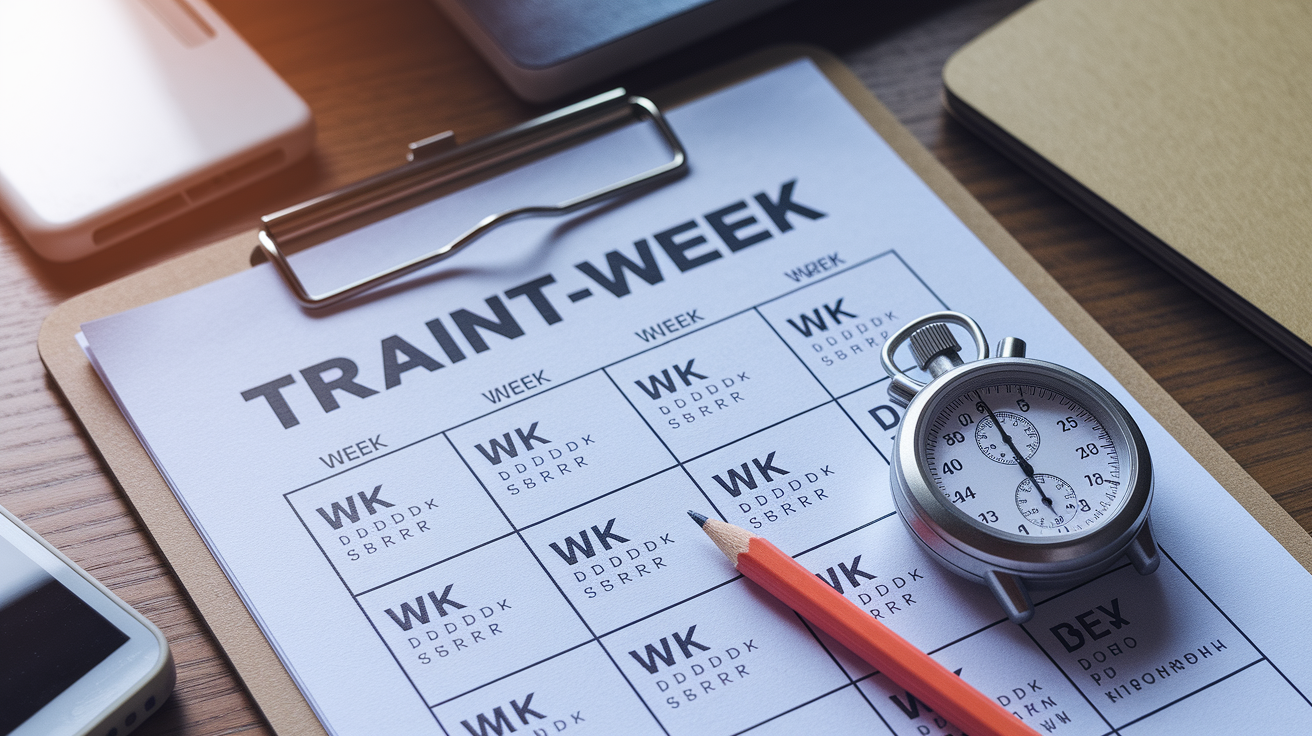
This eight-week schedule gives you three run days, one or two cross-training days, and two full rest days each week. You can shift days around to fit your schedule. Just keep at least one rest day between hard efforts. Each run session includes a 5-minute walking warm-up and 5-minute walking cool-down in addition to the intervals listed.
| Week | Session 1 | Session 2 | Session 3 | Notes |
|---|---|---|---|---|
| 1 | 8× (60 sec run / 90 sec walk) ~20–25 min total |
8× (60 sec run / 90 sec walk) ~20–25 min total |
25 min total run/walk as needed |
Conversational pace; walk anytime |
| 2 | 8× (90 sec run / 90 sec walk) ~24 min total |
8× (90 sec run / 90 sec walk) ~24 min total |
28 min total run/walk as needed |
If 90 sec feels hard, repeat Week 1 |
| 3 | 6× (2:00 run / 90 sec walk) ~24–28 min total |
6× (2:00 run / 90 sec walk) ~24–28 min total |
30 min total run/walk as needed |
Notice the slightly longer running blocks |
| 4 | 5× (3:00 run / 90 sec walk) ~26–30 min total |
5× (3:00 run / 90 sec walk) ~26–30 min total |
33–36 min total run/walk as needed |
Three-minute runs should still feel easy |
| 5 | 4× (5:00 run / 90 sec walk) ~30–35 min total |
4× (5:00 run / 90 sec walk) ~30–35 min total |
35–38 min total run/walk as needed |
Five minutes straight; walk breaks still allowed |
| 6 | 15–20 min continuous run | 15–20 min continuous run | 25–30 min continuous run | First week without structured walk breaks |
| 7 | 25–30 min continuous run | 25–30 min continuous run | 30–35 min continuous run | Build confidence for race distance |
| 8 | 20 min easy run | 15 min easy run | Race day: 3.1 miles | Taper week; rest two days before race |
Track your progress by noting how each session feels. Rate effort on a scale of 1 to 10 and write down any discomfort or fatigue. Over the weeks, the same intervals will feel easier as your body adapts. If a week feels too hard, repeat it before moving forward. Consistency beats perfection.
Injury Prevention, Shoe Selection, and Safe Progressions for a Beginner 5K Plan

Safe progression means increasing weekly running volume by no more than 10% and respecting the difference between soreness and pain. Soreness is a dull, general ache that peaks around 36 hours after a workout and fades within a few days. Pain is sharp, localized, and doesn’t improve with movement. If something feels off, take 48 to 72 hours of rest and pay attention to whether symptoms worsen or improve.
Common beginner injuries and how to prevent them:
Shin splints: Cut back mileage, check shoe cushioning, avoid hard surfaces, strengthen calves and tibialis muscles.
Runner’s knee (patellofemoral pain): Strengthen glutes and hips, avoid overstriding, make sure shoes aren’t worn out.
Plantar fasciitis: Replace shoes every 300 to 500 miles, stretch calves daily, avoid going barefoot on hard floors.
IT band syndrome: Foam roll outer thighs, add hip strengthening exercises, don’t increase mileage too quickly.
Achilles tendinitis: Warm up properly, stretch and strengthen calves, reduce hill running until strong.
Running shoes are your most important piece of gear. Visit a running specialty store if you can and get fitted based on your foot shape, arch type, and gait pattern. Expect to spend $80 to $160 on a good pair. Shoes lose cushioning and support after 300 to 500 miles. Track your mileage and replace them before they feel completely dead. Worn-out shoes increase impact forces and injury risk.
If you get sharp pain that doesn’t go away with rest, or if swelling and limping show up, stop running and talk to a physical therapist or sports medicine provider. Modifying workouts early prevents small issues from becoming long-term problems. Better to take two extra rest days than to push through pain and lose two months.
Race‑Day Strategy and Mindset Tips for Completing Your First 5K

The final week before your race is a taper week. Cut your running volume by 30 to 50% to let your body recover and store energy. Keep two short, easy runs of 15 to 20 minutes earlier in the week, with at least two full rest days before race morning. On race day, arrive 30 minutes early for smaller local events or 45 minutes early for larger races. Use the time to pick up your bib, find the start line, and walk through a simple warm-up: 5 to 10 minutes of easy walking followed by a few 20 to 30 second pick-ups at race pace.
Four tactics for race morning:
Start toward the back of the pack to avoid getting swept up in a pace that’s too fast for your fitness.
Break the race into three one-mile sections and focus on getting through each one comfortably.
Run the first mile slower than you think you should. Aim to feel controlled and conversational for at least the first 10 minutes.
Use a simple mantra when discomfort kicks in, like “I’ve done this in training” or “One foot in front of the other.”
Expect some runs to feel awful. That’s normal. Out of every 10 runs, about five will feel average, three will feel harder than expected, and two will feel great. Race day might land in any of those categories. Your goal is to finish, not to run a perfect race.
Start slower than you think you need to. Aim for a negative split, where the second half feels slightly faster or steadier than the first. If you need to walk during the race, take it. Run/walk is a legitimate strategy, not a failure.
Final Words
Hit the pavement with a clear, doable path: a run/walk progression that builds to 3.1 miles over 6–8 weeks, using three runs, two short strength sessions, and two rest days at a conversational pace.
Keep using quick warm-ups, cool downs, and two weekly strength sessions, plus cross-training and sleep. Follow the missed-day rules and keep weekly increases around 10% so you stay injury-free.
Pick the 5k workout plan beginner that fits your week, trust the process, and enjoy how much stronger you’ll feel each run.
FAQ
Q: How long should a beginner 5K training plan be?
A: A beginner 5K training plan should build you to 3.1 miles over 6–8 weeks, using gradual run intervals and shorter walk breaks to safely increase endurance and confidence.
Q: What does a typical weekly schedule look like for a beginner 5K plan?
A: A typical weekly schedule uses three run days, two strength sessions (20–30 minutes), and two rest days, with runs at conversational pace so you can talk comfortably while exercising.
Q: How does run/walk training progress during the plan?
A: Run/walk training progresses by lengthening run intervals: start 1:1, then 2:1, 3:1, 4:1, 5:1, then shift to 3:0.5, 4:0.5, 5:0.5, reducing walks toward continuous running.
Q: What pace should I use during training?
A: Training pace should be conversational (RPE 4–6/10); you should be able to speak in short sentences. Use the talk test rather than chasing speed for most workouts.
Q: How quickly should I increase weekly mileage?
A: You should increase weekly running volume by no more than about 10% to lower injury risk and keep progress steady and sustainable.
Q: What warm‑up and cool‑down should I do before and after runs?
A: Your warm‑up should be 5–10 minutes brisk walking plus dynamic drills like leg swings and high knees; cool‑down 5–10 minutes walking, then 30‑second static stretches.
Q: What strength and cross‑training should I include to support running?
A: You should include two weekly 20–30 minute strength sessions with glute bridges, single‑leg RDLs, squats, lunges, calf raises, and 30–60 second planks; cross‑train 20–45 minutes on bike, swim, or elliptical.
Q: What should I do if I miss workouts?
A: If you miss 1–3 days, continue as planned; if 3–7 days, reduce volume about 25%; if 7+ days, repeat recent weeks to rebuild safely and avoid overload.
Q: How do I choose running shoes and when should I replace them?
A: You should choose shoes that fit well, feel comfortable, and match your support needs; plan to replace them every 300–500 miles, with many models in the $80–160 range.
Q: How can I tell normal soreness from an injury?
A: Normal post‑run soreness is common and peaks around 36 hours; sharp or worsening pain needs rest 48–72 hours and professional evaluation if it doesn’t improve or limits walking.
Q: What race‑day strategy should I use for my first 5K?
A: Your race‑day strategy should include a taper (reduce volume 30–50% that week), arrive 30 minutes early, start toward the back, and aim to start slower and finish faster (negative split).
Q: When will running start to feel easier during the plan?
A: Running usually feels easier after about 4–6 weeks as your body adapts; expect easier breathing, longer continuous runs, and less post‑run fatigue with consistent training.