
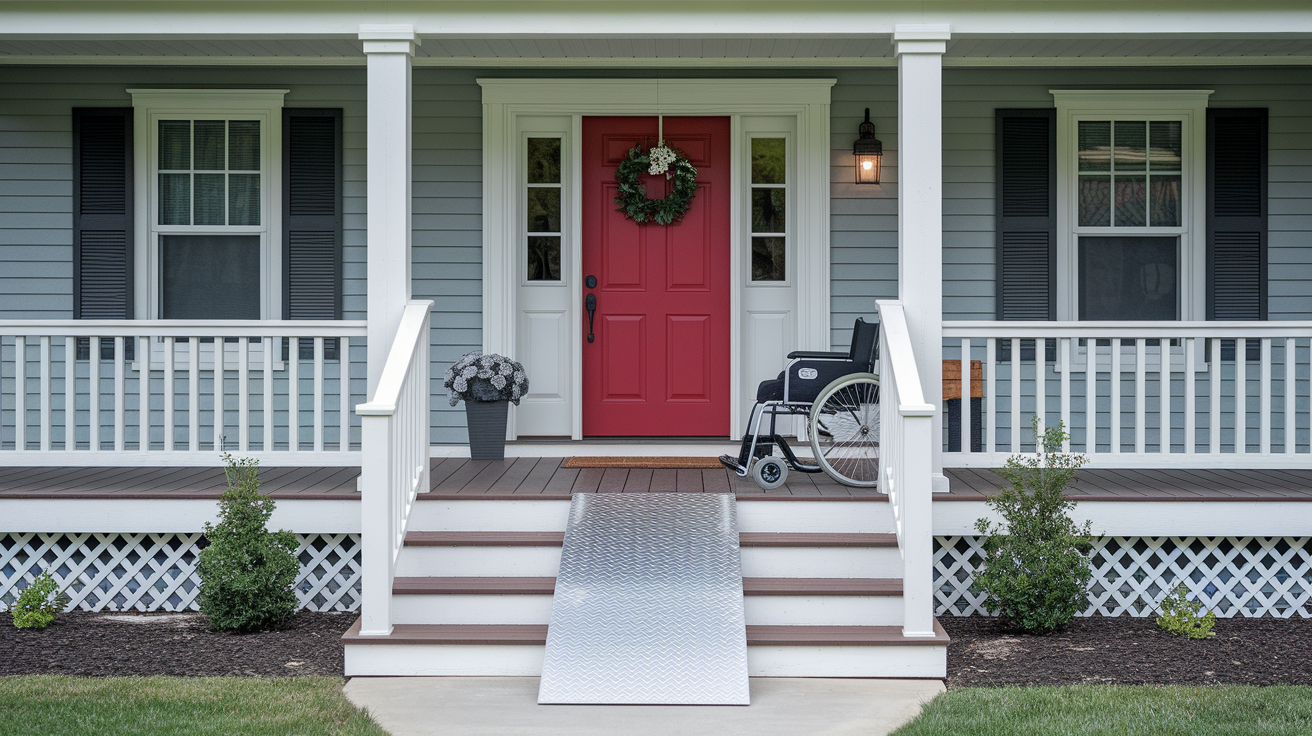
Ever bought a ramp that didn’t fit your door, vehicle, or strength needs?
Mobility ramps can make or break daily independence, so getting the right one matters.
This guide cuts through the noise.
You’ll learn the main ramp types—threshold, folding, telescoping, modular, and vehicle ramps—plus the specs to watch (slope, width, weight rating, materials) and smart places to buy them.
I’ll give clear, practical choices for homes, cars, and short-term needs so you can pick a safe ramp that actually works for your life.
Defining Mobility Ramps and Their Core Purpose
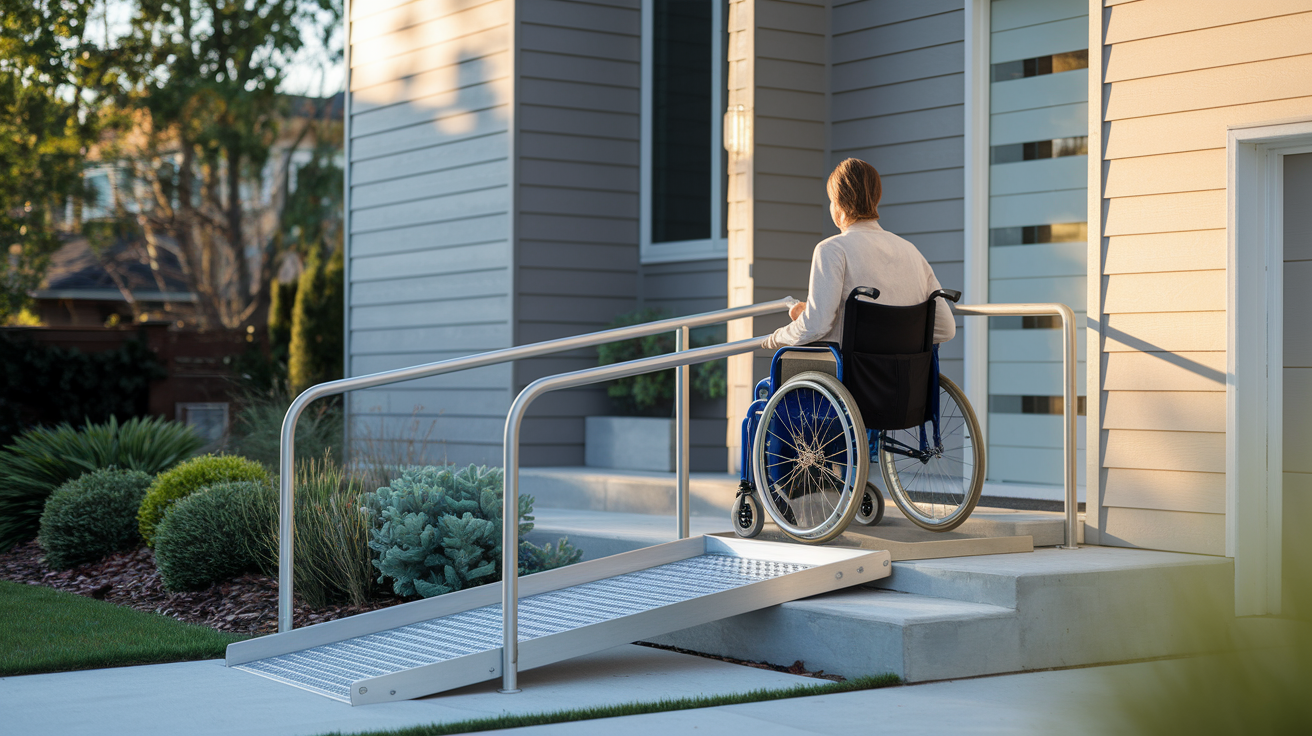
Mobility ramps are angled surfaces built to connect different height levels so people using wheelchairs, scooters, walkers, or other mobility aids can move around independently. They replace stairs or fill gaps at home entrances, porches, vehicle doors, storefronts, anywhere a step or curb blocks the way. Think of a ramp as turning an obstacle into a path that wheels can actually roll over without tipping, falling, or needing someone else’s help.
You’ll see ramps in all sizes. A small rubber wedge might cover a half-inch bump under a door. A long aluminum setup could stretch 30 feet across a front porch. Different sizes, same job: make a slope gentle enough that a mobility device can get up or down safely. Slope matters most. So does traction, width, and how much weight the thing can hold. Most mobility ramps stick to the 1:12 slope that ADA recommends, which means one foot of ramp for every inch you’re climbing. Got a 6-inch step at your front door? You’re looking at least 6 feet of ramp. An 18-inch porch? That’s 18 feet, probably with a landing somewhere in the middle.
Common situations where ramps show up:
- Home entry access – getting over door lips and single steps so wheelchair or walker users can get in and out on their own.
- Porch and multi-step applications – swapping out short staircases for ramps that run continuously from the ground to the door.
- Vehicle loading and transfers – portable or built-in ramps that let scooter or wheelchair users get into vans, SUVs, trucks.
- Commercial and public entrances – ADA-compliant ramps at shops, offices, public buildings to meet code.
- Temporary event access – portable setups for outdoor events, concerts, temp facilities so everyone can show up.
- Indoor threshold transitions – low-profile pieces that smooth over door saddles or where carpet meets tile inside homes.
How Mobility Ramps Function and the Mechanics Behind Safe Access

Slope is everything. A 1:12 ratio gives you 1 inch of rise for every 12 inches moving forward. That gentle angle lets someone in a wheelchair or scooter go up or down without fighting gravity or losing control. Steeper grades like 1:8 or 1:6 ask for way more arm strength and increase the chance of rolling backward, especially coming down. ADA caps public ramps at 1:12. Most makers of portable and modular residential ramps design to meet or beat that standard. Six-inch rise? Six-foot ramp minimum. Twelve inches? Twelve feet. You get it.
Different ramp types work differently depending on what you’re trading off between moving it around, how much weight it holds, and whether it’s staying put. Portable folding ramps use hinges and lightweight aluminum frames that fold down small for storage and carrying. Telescoping ramps slide into shorter lengths using nested tubes, locking with pins or clips. Modular ramps bolt together in sections, usually 4-foot or 8-foot aluminum chunks with decking and railings, so you can build custom shapes around corners and landings. Threshold ramps are usually one-piece rubber or composite with beveled edges and textured tops for grip. Permanent ramps use concrete footings, wood framing, or welded steel, bolted to the ground and the building.
| Component | Function |
|---|---|
| Inclined surface | Creates the slope bridging vertical rise; texture and coating give traction to stop slipping. |
| Handrails | Give stability and support going up or down; ADA requires them when rise tops 6 inches or run goes past 72 inches. |
| Edge protection (curbs) | Keeps wheels or canes from slipping off the sides; usually a 2-inch raised edge or continuous rail along the ramp. |
| Landings | Flat platforms at top, bottom, and where direction changes; need to be at least 60 inches long for safe turning and resting. |
Main Types of Mobility Ramps for Residential, Commercial, and Vehicle Use

Mobility ramps break into five main categories. Each one’s built for specific heights, how portable it needs to be, and whether it’s going to move around or stay anchored. Picking the right type comes down to whether the ramp lives in one spot forever, travels between places, or handles occasional use.
Threshold Ramps
Threshold ramps are short rubber, plastic, or composite wedges made to bridge small bumps, typically a quarter inch to 2 inches. They sit flat on the floor or ground against a door sill, carpet edge, or single step. Prices run $25 to $150 depending on height, width, material. Threshold ramps are portable, don’t need installation or anchoring, work indoors and out. Perfect for door saddles, sliding glass door tracks, minor level shifts inside homes or businesses.
Portable Folding Ramps
Portable folding ramps are aluminum panels that fold in half or into multiple sections for carrying and storing. Lengths usually go from 2 feet to 8 feet, with some multi-fold models stretching to 12 feet when you unfold them all the way. Weight capacities run 600 to 800 pounds for standard models. Heavy-duty versions hit 1,000 pounds or more. Prices span $150 to $1,200 depending on length, capacity, extras like side rails or handles. These ramps are popular for temporary home access, travel, vehicle loading because they set up fast and fold into something you can toss in a trunk or closet.
Telescoping Ramps
Telescoping ramps use nested aluminum tubes that slide out to the length you want and lock with pins or clips. They collapse to about half their extended length, easier to carry than a folding ramp of the same size. Typical lengths range from 3 to 8 feet when pulled out. Weight capacities and pricing sit close to folding ramps, $200 to $700. But the compact collapsed size makes telescoping designs extra convenient for people who travel a lot or have tight vehicle storage.
Modular Residential Ramps
Modular ramps are sectional systems built from prefab aluminum or steel pieces that bolt together on-site. Sections usually come in 4-foot or 8-foot lengths, with matching landings, handrails, support legs. Total assembled runs can go 10 to 50+ feet depending on the rise and how much space you’ve got. Weight capacities range from 800 to 3,000+ pounds depending on design and materials. Installed costs commonly fall between $800 and $3,000 for shorter runs, climbing to $5,000 or more for complicated setups with multiple landings and turns. Modular ramps are semi-permanent, anchored with concrete footings or mounting brackets, but you can take them apart and move them if you need to.
Vehicle and Van Ramps
Vehicle ramps include portable folding or telescoping models for van or SUV rear doors, plus built-in platforms and powered lifts that deploy from side or rear openings. Portable vehicle ramps typically handle 800 to 1,500 pounds and cost $100 to $2,000. Integrated vehicle lifts (popular for wheelchair-accessible vans) range from $5,000 to $30,000+ installed, depending on lift type, vehicle mods, automation. These let scooter and wheelchair users load and unload on their own or with minimal help.
Ideal use cases by ramp type:
- Threshold ramps: indoor door sills, carpet-to-tile transitions, single outdoor lips under 2 inches.
- Portable folding ramps: temporary home entry, travel to new places, short-term rentals.
- Telescoping ramps: vehicle access, travel with limited storage, quick setup at different-height thresholds.
- Modular residential ramps: permanent or long-term porch access, multi-step rises, spaces needing turns or landings.
- Vehicle/van ramps: wheelchair or scooter transport, accessible vehicle conversions, loading heavy mobility devices.
Mobility Ramp Materials and Their Performance Differences

Aluminum is the go-to ramp material for portable and modular systems. It doesn’t rust, weighs way less than steel, holds up outdoors without constant upkeep. A typical aluminum ramp section lasts 10 to 25 years with routine checks and occasional cleaning. Lightweight nature makes folding and telescoping designs practical for one person to handle. Aluminum also stays cooler in direct sun compared to steel or composite.
Steel ramps deliver higher load capacities and greater stiffness, which is why they show up in heavy-duty commercial or vehicle applications where you need 2,000+ pound ratings. Downside is weight and rust. Steel ramps need protective coatings (powder coat, galvanizing, paint) and regular inspection for corrosion, especially in wet or coastal areas. With proper care, steel ramps can last decades. Neglect accelerates rust and things fall apart. Wood is common for custom-built permanent ramps attached to porches or decks. It blends visually with home architecture and costs less per foot than metal in material terms, but you’ve got to seal it, stain it, replace boards as they rot or crack. Lifespan varies from 5 to 20 years depending on wood species, local climate, how much effort you put in. Rubber and composite materials own the threshold and low-profile ramp market. They give excellent traction, resist UV damage, handle freeze-thaw cycles without cracking. But they’re limited in height capacity. Most rubber threshold ramps top out at 2 inches of rise and don’t scale to longer runs.
| Material | Pros | Cons |
|---|---|---|
| Aluminum | Lightweight, doesn’t rust, long lifespan, easy to move and install | Higher upfront cost than wood; can dent under extreme impact |
| Steel | Very high load capacity, structural strength, good for heavy commercial use | Heavy, rusts without coating, needs regular maintenance |
| Wood | Customizable, blends with home exterior, lower material cost | Needs sealing and maintenance, shorter lifespan, vulnerable to rot and termites |
| Rubber/Composite | Excellent traction, weather-resistant, cheap for low-height applications | Limited to threshold and short runs, not good for long or high-rise ramps |
Key Specifications: Slope, Length, Width, and Weight Capacity

ADA guidelines set the baseline for safe ramp design: max slope of 1:12, minimum clear width of 36 inches, landings at least 60 inches long at the top, bottom, and any direction change. Handrails are required on both sides when the rise goes over 6 inches or the horizontal run goes past 72 inches. Edge protection (typically a 2-inch curb or continuous side rail) stops wheels from rolling off. These standards apply to public and commercial setups. Residential ramps often follow the same rules for safety and resale value, though local codes might allow steeper slopes for private use.
Weight capacity tiers help match ramps to users and devices. Threshold ramps commonly handle 250 to 500 pounds, enough for manual wheelchairs and most walkers. Portable aluminum ramps in the 600 to 800-pound range fit manual and lightweight power wheelchairs plus the user. Heavy-duty ramps rated to 1,000 pounds or more support heavier power chairs, scooters, tandem use (caregiver plus user). Always add a 20 to 30 percent margin above the combined weight of user and mobility device to account for movement stress.
Common rise-to-length examples using 1:12 slope:
- 3-inch rise needs a 3-foot ramp
- 6-inch rise needs a 6-foot ramp
- 12-inch rise needs a 12-foot ramp
- 18-inch rise needs an 18-foot ramp
- 24-inch rise needs a 24-foot ramp (with a landing at or before 30 feet of run per ADA)
| Ramp Type | Typical Capacity (lb) |
|---|---|
| Threshold (rubber/composite) | 250–500 |
| Portable folding aluminum | 600–800 (standard); 1,000+ (heavy-duty) |
| Modular residential system | 800–1,500 |
How to Choose the Right Mobility Ramp for Your Space and Mobility Needs

Picking a mobility ramp starts with understanding the obstacles and who’s using it. A ramp that works for a manual wheelchair user going short distances might not cut it for a 400-pound scooter or a caregiver pushing someone up a steep incline. Matching the ramp to the space, device, and how often it gets used prevents overspending on stuff you don’t need or underbuying and ending up with an unsafe slope.
Measuring Requirements
Measure the total vertical rise from the ground or lower surface to the threshold or landing. Use a level and tape measure to confirm the exact height, accounting for any settling or grade changes. Then calculate the minimum ramp length using the 1:12 rule. Multiply the rise in inches by 12 to get the required length in inches, then divide by 12 to convert to feet. A 9-inch rise needs at least 9 feet of ramp. Next, measure the available horizontal space. If the straight-line distance is shorter than the calculated ramp length, plan for a switchback, L-shape, or U-shape with landings at turns. Finally, measure doorway width and swing direction to make sure the ramp doesn’t block the door or create a pinch point.
Capacity and Device Matching
Add the weight of the mobility device and the user, then look for ramps rated at least 20 to 30 percent above that total. A 200-pound user in a 100-pound manual wheelchair needs a ramp rated to at least 360 pounds. Rounding up to a 600-pound-rated portable ramp gives a comfortable margin. Power wheelchairs and scooters often weigh 200 to 400+ pounds on their own, so combined weight with the user can easily hit 500 to 700 pounds. In those cases, go for ramps rated to 800 pounds or higher. Also verify that the ramp’s width fits the device’s wheelbase. Most wheelchairs fit comfortably on a 30-inch platform, but wider scooters might need 36 inches or more.
Indoor vs Outdoor Use
Indoor ramps see less weather but need to blend with flooring and not create new trip hazards. Threshold ramps with beveled edges and neutral colors work well indoors. Outdoor ramps face rain, snow, UV, temperature swings, so go for corrosion-resistant materials (aluminum or treated composite) and surfaces with aggressive traction patterns. If the ramp’s going to sit outdoors year-round, make sure there are drainage channels or perforated decking to prevent water pooling and ice formation.
Portability vs Permanence
If you need the ramp at multiple locations (travel, temporary visits, vehicle access), choose a folding or telescoping model that one person can carry and set up. If the ramp’s serving a single home entry indefinitely, a modular or permanent system offers better stability, handrails, weather resistance. Modular ramps can be taken apart and moved, but the process needs tools and time. Permanent ramps built from wood or concrete stay put and often require permits and pro installation.
Before you buy, use this checklist:
- Confirm the exact rise in inches and calculate required ramp length at 1:12 slope.
- Measure available space for the ramp, including clearances around doors and turns.
- Weigh the mobility device and user together, then add 20 to 30% to find the minimum load rating.
- Check whether local codes or ADA compliance (for commercial use) require specific widths, handrails, or landings.
- Decide if the ramp will be portable, semi-permanent (modular), or permanent (built-in).
- Compare surface traction options and verify that the material suits your climate and usage frequency.
Installation Essentials for Mobility Ramps
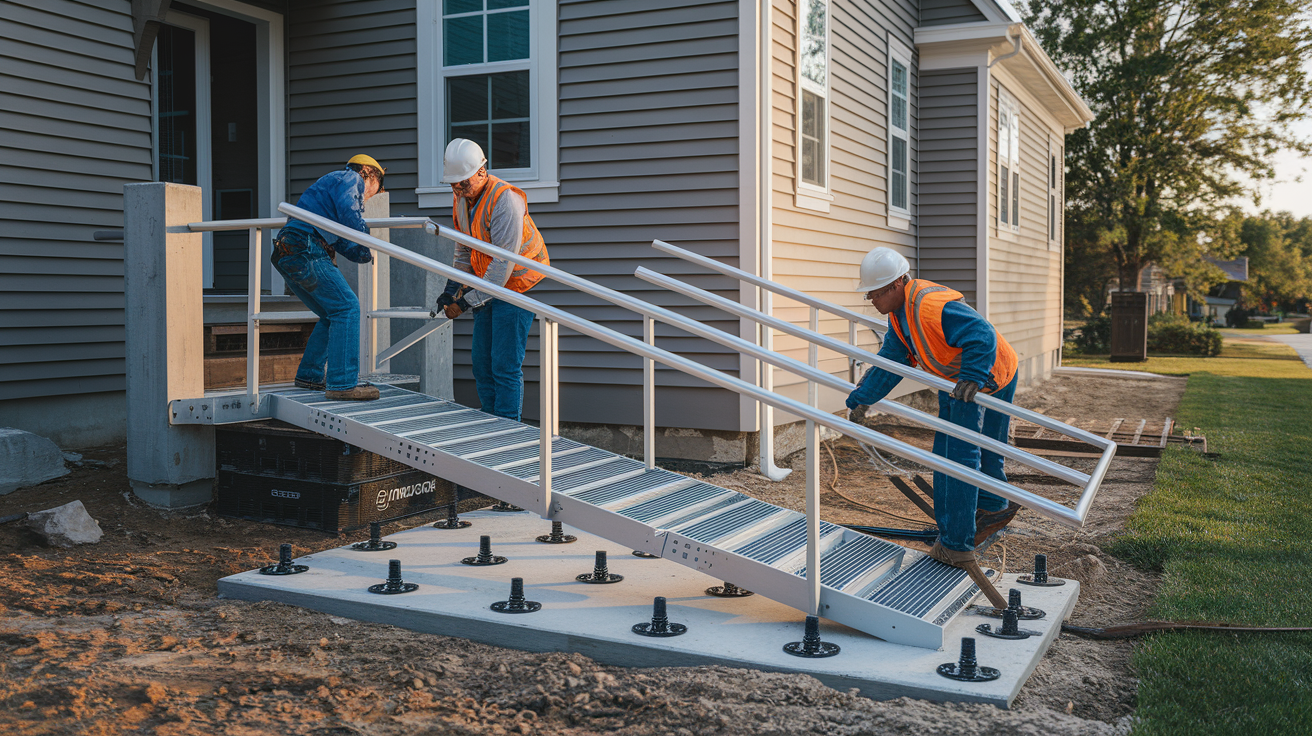
Threshold and short portable ramps typically don’t need installation. Just place them against the rise and make sure they sit flat and stable. For ramps longer than 4 feet or ones that’ll stay in place for a while, anchoring becomes important. Modular systems bolt to concrete pads or mounting plates embedded in footings. Permanent wood or steel ramps attach to the building’s foundation or framing with lag bolts and rely on concrete footings at support posts to prevent settling and frost heave.
Site prep for modular and permanent ramps includes leveling the ground, pouring concrete pads at each support location, making sure water drains away from the ramp structure. If the ramp’s going to cross a yard, think about how water runoff will behave during heavy rain. Perforated decking and gaps between planks help with drainage but can collect snow and ice in winter. Before breaking ground, check local building codes. Many places require permits for permanent ramps and inspections to verify compliance with ADA or local accessibility standards. Permit costs range from $50 to $500 depending on location and ramp complexity.
Installation timelines vary by ramp type. Portable ramps deploy immediately. Modular systems installed by a certified tech or contractor typically wrap within 24 to 48 hours, including footing prep and assembly. Custom-built permanent ramps take 3 to 14+ days depending on material, length, weather (concrete needs several days of curing before the ramp can bear weight).
Common installation mistakes to avoid:
- Skipping footings or anchors, leading to ramp movement or tipping under load.
- Placing the ramp on soft soil or gravel without a solid base, causing settling and slope changes over time.
- Mounting handrails too low or too high (ADA specifies 34 to 38 inches above the ramp surface).
- Forgetting edge protection, which lets wheels or feet slip off the sides during use.
Pricing Guide for Mobility Ramps

Ramp costs cover a wide range depending on type, length, materials, whether installation’s included. Threshold ramps sit at the budget-friendly end, $25 to $150 for a single piece that handles up to 2 inches of rise. Portable folding and telescoping aluminum ramps run $100 to $1,200. Shorter 2- to 4-foot models price around $150 to $400. Longer 6- to 12-foot heavy-duty versions reach $600 to $1,200. Telescoping ramps fall in the $200 to $700 range for similar lengths, trading slightly higher cost for compact storage.
Modular sectional systems start around $800 for a simple 8-foot run without handrails and climb to $3,000 or more for longer setups with railings, landings, pro installation. Add another $500 to $2,000 for contractor labor, depending on site complexity and local rates. Permanent ramps built from wood, concrete, or steel cost $1,500 to $15,000+ installed. A basic 12-foot wood ramp with handrails might land around $2,000 to $4,000. A 30-foot concrete ramp with multiple landings and custom railings can go past $10,000.
Vehicle lifts and integrated ramp systems sit at the upper end of the price spectrum. Portable folding van ramps cost $400 to $1,200, but powered platform lifts installed in accessible vans range from $2,000 to $15,000 or more, depending on lift type, vehicle mods, automation features.
| Ramp Type | Price Range |
|---|---|
| Threshold ramps (rubber/composite) | $25–$150 |
| Portable folding aluminum ramps (2–8 ft) | $150–$1,200 |
| Telescoping ramps (3–8 ft) | $200–$700 |
| Modular residential systems (installed) | $800–$3,000+ (simple runs); $3,000–$10,000+ (complex) |
| Permanent ramps (wood/concrete, installed) | $1,500–$15,000+ |
Some costs might be offset by insurance, grants, or assistance programs. Medicare and Medicaid rarely cover ramps directly, but some supplemental insurance plans or state Medicaid waivers include home modification benefits. Veterans can explore grants through the Department of Veterans Affairs, including the Specially Adapted Housing grant and the Home Improvements and Structural Alterations program. Local nonprofit organizations and community development agencies sometimes offer low-interest loans or matching funds for accessibility improvements. Always verify eligibility and documentation requirements before purchasing.
Maintenance, Safety, and Longevity of Mobility Ramps

Routine maintenance stretches ramp life and keeps surfaces safe. Inspect portable ramps before each use, checking hinges, pins, locking mechanisms for wear or damage. Modular and permanent ramps should get a full inspection at least once per year, with extra checks after heavy storms or freeze-thaw cycles. Look for loose bolts, cracked welds, bent railings, surface wear. Tighten fasteners as needed and replace any components showing structural damage.
Anti-slip surfaces lose grip over time as grit wears down or coatings fade. Reapply anti-slip tape, paint with textured additives, or add abrasive tread strips every 2 to 5 years depending on traffic and weather exposure. Clean ramps regularly to remove leaves, dirt, debris that can hide damage and create slip hazards. Use a stiff brush and water. Avoid pressure washers on wood ramps, high-pressure streams can damage sealant and speed up rot.
Portable aluminum ramps should be stored dry and folded when not in use for long stretches. Wipe down metal surfaces and lubricate hinges annually with a light oil or silicone spray to prevent binding. Wood ramps need the most upkeep: reseal or restain every 2 to 3 years, replace boards showing rot or insect damage, make sure drainage stays clear to prevent water pooling under the structure. Concrete ramps need minimal care but should be inspected for cracks and sealed to prevent freeze-thaw damage in cold climates.
Safety inspection steps to perform annually (or after any impact or severe weather):
- Walk the full length of the ramp, checking for flexing, wobbling, unusual sounds that point to loose connections.
- Test handrails by applying firm downward and outward pressure. Railings shouldn’t move or rotate.
- Verify that edge protection (curbs or side rails) stays intact and securely fastened along the entire run.
- Inspect anti-slip surfaces for wear, fading, missing sections. Replace or reapply traction treatments as needed.
- Confirm that landings stay level and drainage paths stay clear. Look for pooling water or ice buildup in winter.
Practical Applications: Matching Mobility Ramps to Real-World Scenarios
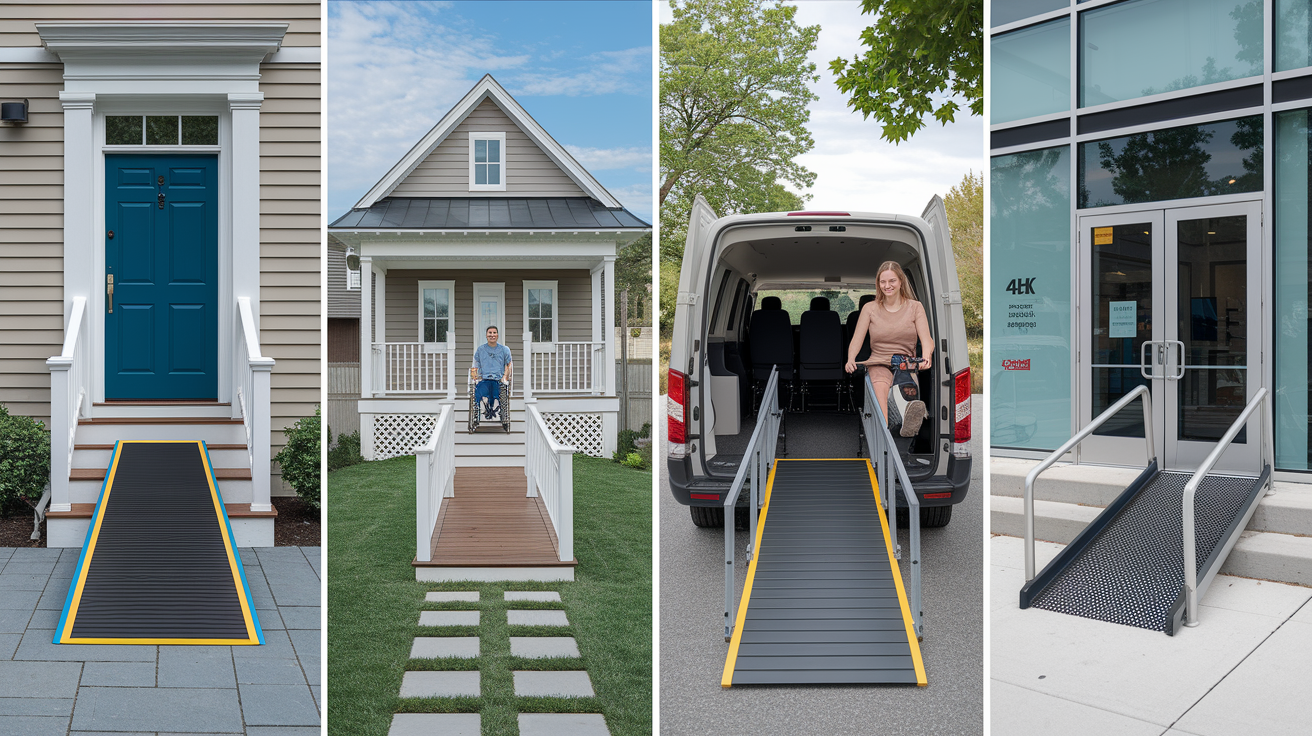
Choosing the right ramp gets clearer when you match the ramp type to a specific situation. Real constraints (doorway swing, available ground space, how often it gets used, budget) narrow the options fast.
Single-Step Threshold
A single step of 6 inches or less at a front or back door calls for a portable folding ramp or a threshold wedge. A 6-inch rise needs a minimum 6-foot ramp at 1:12 slope. A single-fold aluminum ramp in the 6-foot range costs $150 to $400, sets up in seconds, stores in a closet or garage when you don’t need it. For a permanent solution at this height, a small modular ramp section or a custom-built wood ramp works well, especially if the door opens outward and the ramp can sit to the side. Budget around $300 to $1,200 for a simple permanent or semi-permanent install with handrails.
Porch and Multiple Steps
A porch rise of 18 to 30 inches usually means three to five steps. At 1:12 slope, an 18-inch rise needs 18 feet of ramp. A 24-inch rise needs 24 feet. These runs often go past available straight-line space, so plan for an L-shaped or switchback setup with at least one 60-inch landing. Modular aluminum systems work great here: they show up in pre-cut sections with railings, landings, support legs. Certified installers can put the system together in one to two days. Expect to pay $4,000 to $9,000 installed for a 20- to 30-foot run with handrails and a turn. Wood ramps cost less in materials (often $2,000 to $5,000 for the same length) but need more upkeep and periodic board replacement.
Vehicle and Van Use
Loading a wheelchair or scooter into a van or SUV needs a portable ramp rated to the combined weight of the device and user. Most power wheelchairs weigh 200 to 400 pounds. Adding the user brings the total to 400 to 700 pounds. Choose a ramp rated to at least 800 pounds. Telescoping or folding ramps in the 5- to 8-foot range ($400 to $1,200) work well for rear or side door access. For frequent or daily use, consider a vehicle-mounted platform lift. These powered systems deploy automatically and cost $7,000 to $25,000 installed, but they cut out manual lifting and reduce caregiver strain.
Commercial Entry
A commercial storefront or office must meet ADA requirements: 1:12 slope, 36- to 48-inch clear width, handrails on both sides if the rise goes over 6 inches, 60-inch landings at the top, bottom, and any direction change, edge protection along the run. Modular aluminum ramps are the most common fix for retrofitting existing buildings. For a 12-inch rise, a 12-foot ramp with railings and landings costs roughly $3,000 to $6,000 installed. Permanent concrete ramps blend better visually and last decades with minimal upkeep, but initial installation runs $5,000 to $15,000+ depending on site conditions and local labor rates. Always verify local building codes and grab permits before construction starts.
Final Words
You can measure the rise, pick the right slope and material, and match capacity to your device so the ramp actually works for your daily life. This guide walked through how mobility ramps work, the main types (threshold, portable, modular, vehicle), key specs, buying steps, installation, costs, and maintenance.
Start with a simple checklist. Measure the rise, add a 20 to 30% capacity margin, check traction and landing space, and decide portable or permanent. With those steps, mobility ramps make access safer and help you stay independent and confident.
FAQ
Q: Will Medicare pay for a ramp for seniors?
A: Medicare generally doesn’t cover home ramps under Original Medicare (Parts A/B). Check Medicare Advantage extras, Medicaid waivers, VA benefits, or local grants and nonprofit programs for possible coverage and help.
Q: How to get a wheelchair ramp for free?
A: To get a free wheelchair ramp, apply to local Area Agency on Aging, Medicaid home-modification waivers, VA programs, and nonprofits like Rebuilding Together or Habitat for Humanity, plus community or faith-based grants.
Q: What can I use instead of a wheelchair ramp?
A: Instead of a traditional ramp, use a vertical platform lift, stairlift, portable threshold ramp, or transfer-assist device. Measure space and consult a pro. Some options need power, permits, or different maintenance.
Q: How long should a wheelchair ramp be for 2 steps?
A: Measure the total rise and follow a 1:12 slope (1 foot of ramp per inch of rise). Two standard 7-inch steps (14-inch rise) need about a 14-foot ramp; add handrails if over 6 inches.