
Stretching alone won’t fix tight joints.
Sound harsh? It’s true for a lot of people.
Mobility is about control, not just length.
These five mobility drills are short, practical, and made to change how you move.
Do them most mornings or before training and you’ll start to feel better control and more range in a week.
Each drill takes 30 to 60 seconds and the full sequence fits into 10 minutes.
This post shows exactly what to do, how to scale it, and where to focus first.
Practical Mobility Drills You Can Start Using Immediately

These five mobility drills work together as a quick starting point that targets hips, shoulders, spine, and ankles. Run through this sequence most mornings or before training, and you’ll notice better movement feedback and end range control within the first week.
Each drill takes between 30 seconds and one minute. The entire sequence fits into 10 minutes, including brief transitions. You’re training your joints to move through full ranges under control, not just stretching passively. Think of these as movement practice that doubles as strength work in positions most people avoid.
Start where you are. If a position feels impossible today, that’s normal. Spend more time on the side that feels tighter, and use these drills as both a test and a fix. Here’s what to do:
-
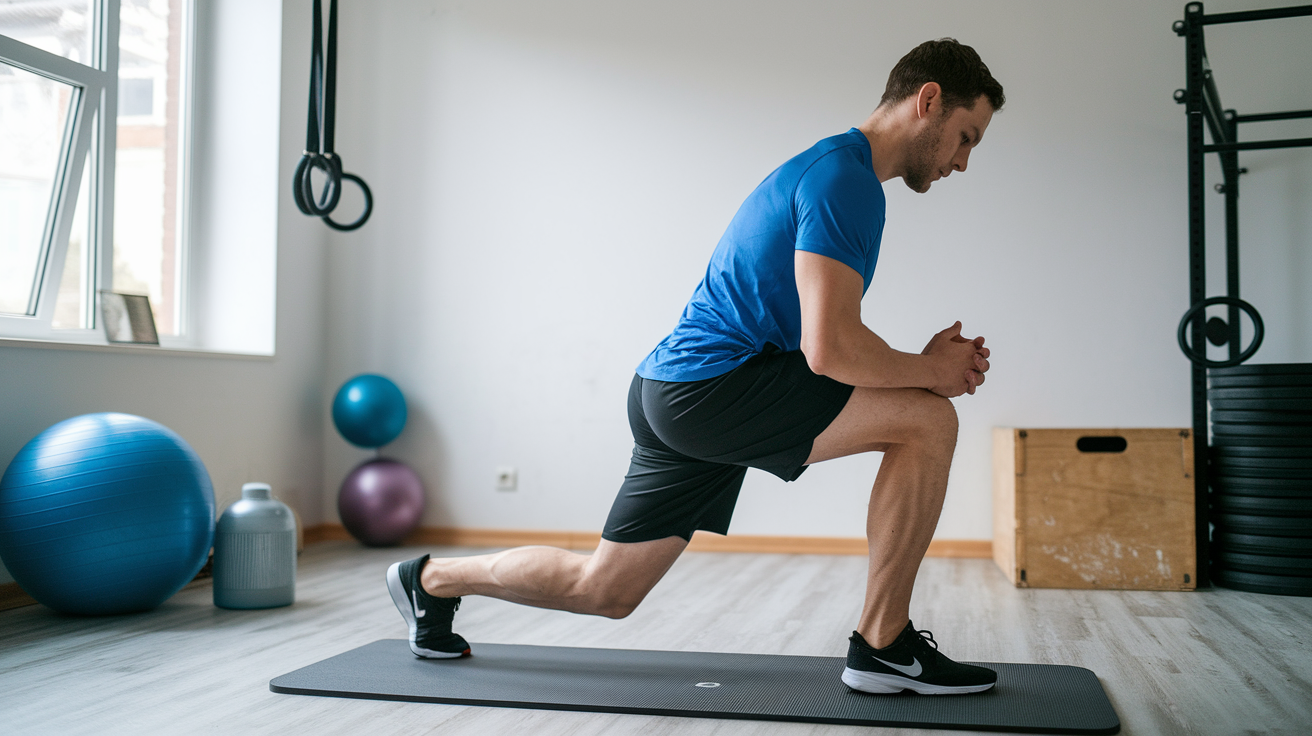
Deep lunge with rotation. Step into a deep lunge, drop your back knee, keep your front shin vertical, and try to touch your elbow to the floor inside your front foot. Hold for 30 to 45 seconds per side. This tests hip flexion, extension, and rotation all at once.
-
Standing hip CARs (Controlled Articular Rotations). Stand on one leg, lift the other knee to hip height, then slowly circle the entire leg through the biggest range you can control. Move through internal and external rotation. Do 10 to 20 controlled circles per hip. Use this before squats to reduce perceived tightness.
-
Tabletop bridge. Sit with hands behind you, fingers pointing toward your feet, knees bent, feet flat. Push your hips up until your torso is parallel to the floor. Squeeze your glutes and hold for 20 to 30 seconds. This opens your shoulders into extension while activating your posterior chain.
-
Goblet squat curls or heartbeats. Hold a light kettlebell at chest height, squat as deep as you can, then perform slow bicep curls or pulse the bell up and down (heartbeats) while staying in the bottom position. Aim for 30 to 60 seconds. This forces you to own your deepest squat position while improving ankle dorsiflexion and hip opening.
-
Active and passive hangs with rotation. Hang from a pull up bar. Start passive (just hang), then engage your lats to pull your shoulders down and back (active hang). Slowly rotate your torso side to side without bending your elbows. Hold each hang for 20 to 30 seconds. If you can’t hang that long yet, use a box or band for assistance.
Mobility Drill Fundamentals for Better Joint Control and Movement Quality
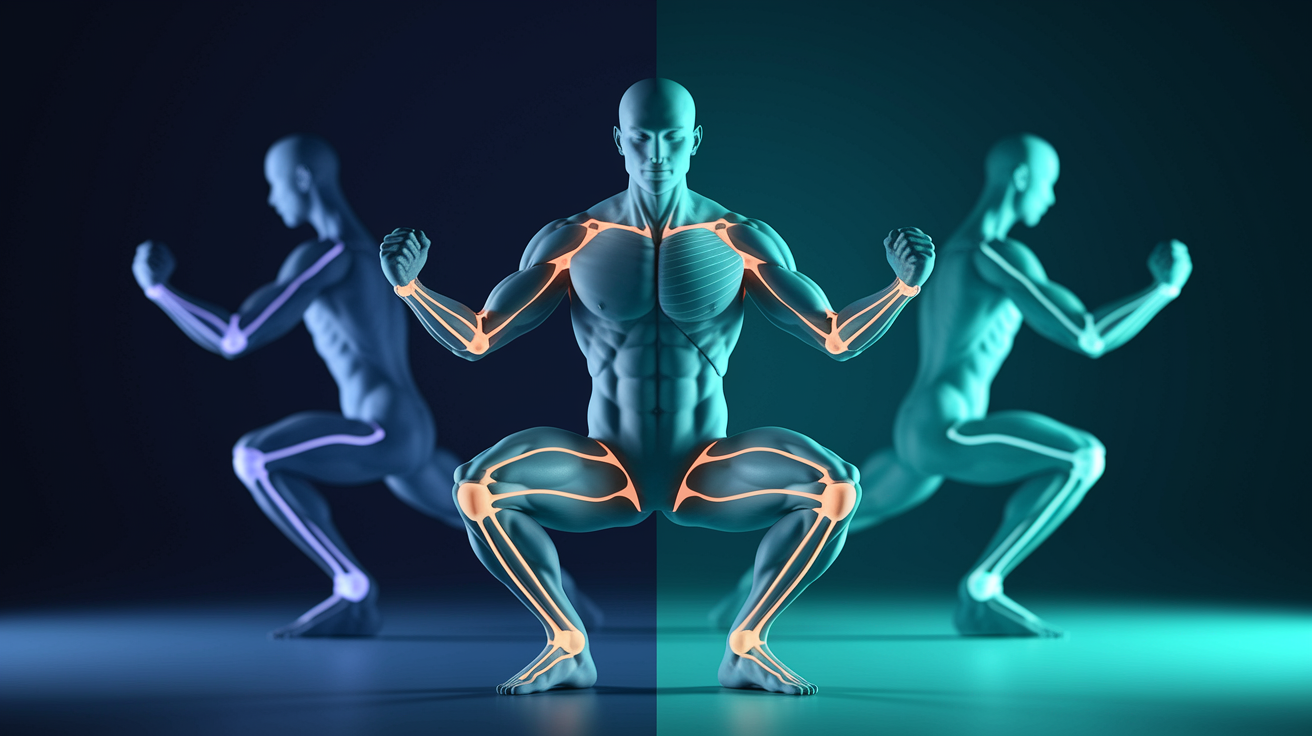
Mobility and flexibility sound similar, but they do different jobs. Flexibility measures how far a muscle can lengthen passively. Think touching your toes while sitting. Mobility measures how much range you can actively control and use under load. You might be flexible enough to fold in half, but if you can’t squat to depth with good posture, your mobility is the limiting factor.
Mobility drills train your nervous system to recognize, stabilize, and produce force in ranges you don’t normally use. When someone says “my hips are tight,” they usually mean “my hips are weak at the end of their range.” That tightness is often your body refusing to let you into a position it can’t control safely. Mobility work teaches control first, then strength, so your body stops guarding against those ranges.
A 5 minute dynamic warm up can reduce the sensation of stiffness better than 15 minutes on a foam roller, because you’re addressing the root issue. Joint control, not just tissue tension.
Most people benefit from 10 to 20 minutes of intentional mobility work most days. You can break that into a 5 minute warm up before training and another 5 to 10 minutes of targeted work on your tightest joints. Here’s how mobility and flexibility differ in practice:
Mobility requires muscle activation. You’re moving the joint through range while creating tension and stability. Flexibility is passive. Gravity, a strap, or a partner moves the joint for you. Mobility transfers to loaded movement. Improving your active hip range helps your squat, passive stretching often doesn’t. Mobility builds resilience in end ranges. You’re not just reaching a position, you’re strong enough to do something useful there.
Joint Specific Mobility Drills for Hips, Ankles, Shoulders, and the Spine
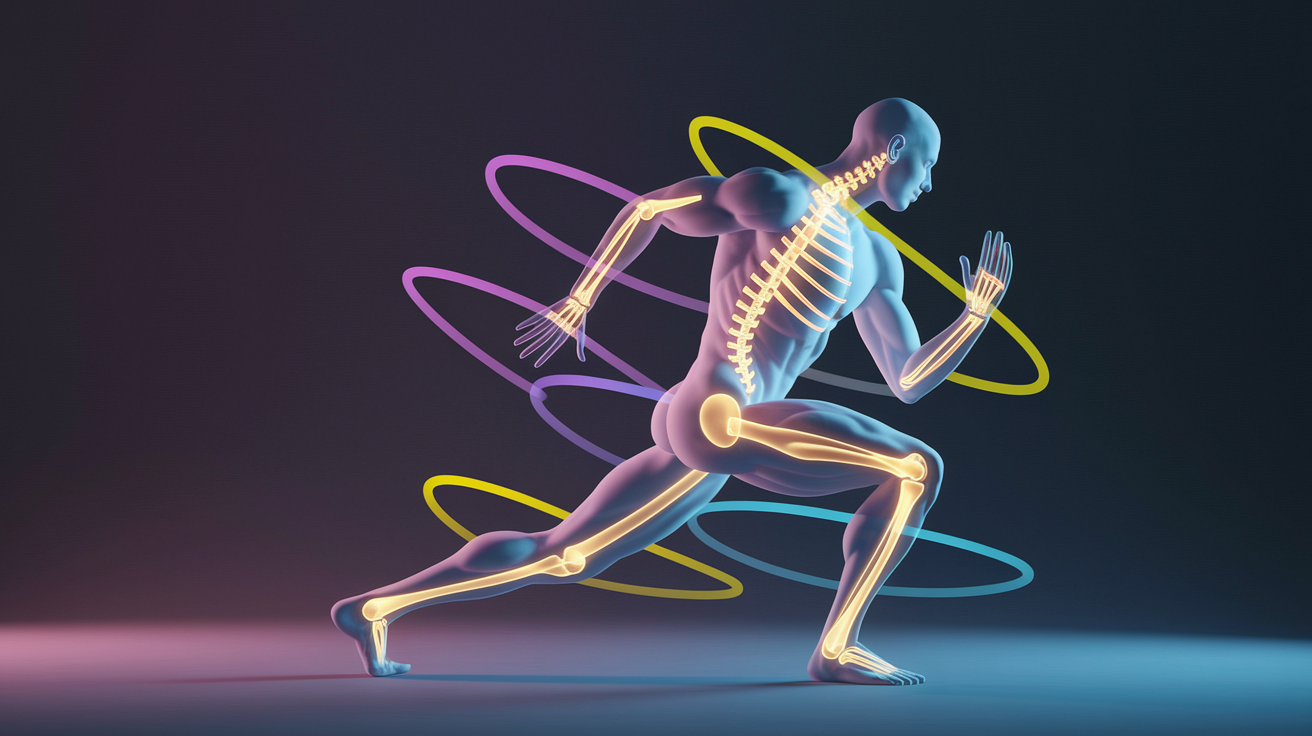
Hip Drills
The deep lunge with rotation is your baseline hip test, but you can modify stance width, tempo, and rotation angle to match your goals. If you’re working on squat depth, try the lunge with a narrower base and slower descent to increase demand on hip flexion. If you notice one hip rotates less smoothly than the other, add 2 to 3 extra rotations on that side at the bottom of the lunge.
For athletes who need lateral power, widen the lunge base and emphasize the rotational reach across the body to load the groin and external rotators differently. Tempo matters. Pause for two full breaths at the deepest point to teach your nervous system that this range is safe.
Ankle Drills
Ankle mobility determines whether your knees can travel forward in a squat without your heels lifting. Goblet squat curls address this, but you can also use ankle breakers (controlled inversion and eversion rolls with a landmine loaded barbell) to train the smaller stabilizers around the ankle joint.
Start with bodyweight. Stand near a wall, place one foot forward, and slowly drive your knee past your toes without lifting your heel. Hold the end position for 3 to 5 seconds, then return. Repeat for 8 to 10 reps per side. Progress by slowing the descent to a 3 second count, which increases time under tension in the range you’re trying to own. Tight calves or stiff peroneals will limit this movement, so expect asymmetry and work the tighter side more often.
Shoulder Drills
Active and passive hangs teach your shoulders to separate. Meaning your lats, traps, and rotator cuff can stabilize independently instead of compensating through your elbows or neck. Start with a passive hang if you can’t hold 20 seconds actively. Progress to dead hangs with slow, controlled shoulder shrugs (depress and elevate the shoulder blades) to build the strength that supports overhead pressing and pull ups.
Dead arm circles add another layer. Hinge at the hips, let one arm dangle, and make 10 slow, wide circles forward, then 10 in reverse per arm. Keep your torso still. This drills shoulder decompression and prepares the joint for loaded range without forcing it. Single arm hangs are the prerequisite for kipping pull ups. If you can’t stabilize one shoulder under your full bodyweight for 10 seconds, kipping will create instability instead of power.
Thoracic Spine Drills
Your mid back should rotate independently from your lower back, but most people lose thoracic rotation from sitting and hunching forward all day. Rolling crucifix restores this. Lie face down, arms in a wide Y, then roll your upper body to one side while reaching the opposite arm overhead and across your torso. Let gravity pull you deeper, and hold for 20 to 30 seconds per side.
Tabletop twists combine rotation with anti extension strength. Get into a reverse tabletop (hips lifted, hands behind you), squeeze your glutes to keep your hips up, then reach one arm across your body and rotate through your mid back. Alternate sides slowly, 8 to 10 reps per side. These drills reduce how much your lower back compensates during twisting movements like swings, throws, or even getting out of a car.
Structuring Mobility Drills Into Warm Ups, Workouts, and Cool Downs

A 19 minute mobility session breaks into three parts: 5 minutes of dynamic warm up, 9 minutes of focused mobility work, and 5 minutes of static cool down with breathing. The warm up wakes up your joints and raises your core temperature without fatiguing you. The middle circuit challenges end range control and builds strength in new positions. The cool down uses longer holds and deep breathing to signal your nervous system that the session is over and recovery can begin.
Your warm up should prioritize large, multi joint movements that prepare you for the work ahead. Use controlled tempos and don’t rush. Spend the first 2 to 3 minutes on global movements like inchworms (hinge, walk your hands out to plank, walk your feet up to your hands, repeat for 6 to 8 reps). Follow with can openers (standing hip rotation with overhead arm swings, 10 to 12 per side) and dead arm circles (10 forward, 10 reverse per arm). This sequence addresses hamstrings, shoulders, hips, and thoracic rotation in under 5 minutes and sets you up for deeper work.
The middle circuit is where you spend time in positions that challenge your current limits. Work through 1 minute intervals: standing hip CARs, goblet squat holds with curls or heartbeats, three way lunges (5 full sequences per leg), tabletop bridges, and active hangs with rotation. Rest 15 to 20 seconds between drills if needed, but try to keep moving. This portion builds both mobility and low level conditioning.
Your cool down shifts to longer static holds and breath work. Hold a quad stretch, hamstring stretch, and calf stretch for 30 to 60 seconds per side. Finish with 2 to 3 minutes of diaphragmatic breathing. Inhale slowly through your nose for a 4 count, pause for 2 seconds, exhale through your mouth for a 6 count. Use this sequence:
- Quad stretch (standing, pull heel to glute), 30 to 60 seconds per side
- Seated hamstring reach, 30 to 60 seconds per leg
- Staggered stance calf stretch, 30 to 60 seconds per side
- Diaphragmatic breathing, 2 to 3 minutes, slow and controlled
Mobility Drills for Specific Populations and Activities
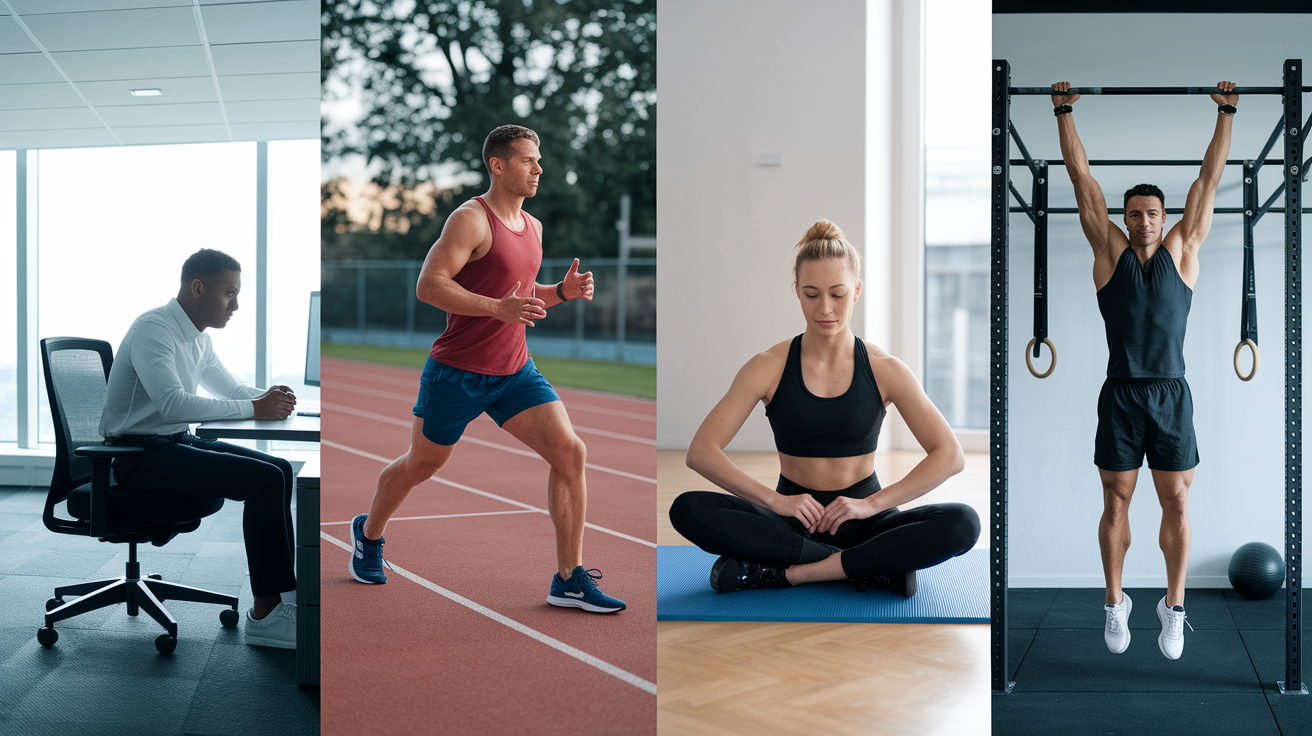
Desk workers lose hip extension, thoracic rotation, and ankle dorsiflexion faster than any other group because sitting locks those joints into one position for hours. Prioritize the deep lunge with rotation every morning to restore hip range, and use rolling crucifix or tabletop twists at lunch or after work to counteract the forward slump of typing and screen time.
Spend 5 to 10 minutes per day on a standing hip CAR sequence (10 to 15 circles per hip) and goblet squat holds (30 to 60 seconds, no load required). These drills directly reverse the adaptations that come from prolonged sitting and reduce the sensation of stiffness when you stand or walk after long periods at a desk.
Runners need mobile hips and ankles to absorb impact and generate stride length without overloading the knees or lower back. Use hip CARs as part of your pre run warm up (10 to 12 per leg), and add three way lunges (5 sequences per leg) two or three times per week to train multi planar hip control.
Tight calves and limited dorsiflexion are common in runners, so wall ankle stretches (8 to 10 reps per side with a 3 second hold at end range) and ankle breakers (if you have access to a landmine setup) should be weekly staples. Most running injuries trace back to compensation patterns caused by immobile hips or ankles, so treat mobility work as injury prevention, not optional accessory work.
Beginners should start with bodyweight only drills and aim for 5 to 10 minutes of daily practice. Focus on the five core drills from the first section, and don’t add load or complexity until you can move through each drill smoothly and without compensation.
CrossFit athletes and anyone learning dynamic movements like kipping pull ups must be able to hold a single arm hang for at least 10 seconds per side before attempting kipping. If you can’t stabilize one shoulder under full bodyweight, kipping will create joint instability instead of power. Use dead hangs, active hangs, and dead arm circles to build the prerequisite strength, then progress to single arm work once your two arm active hang is solid for 30+ seconds.
Troubleshooting Mobility Drills: Common Mistakes and Solutions

Most people treat mobility like a checkbox. Something to rush through before the “real” workout. That approach trains nothing. Mobility drills require the same focus and control as strength work because you’re teaching your nervous system to recognize and stabilize new ranges.
Two slow, deliberate reps with a 2 to 3 second pause at end range will improve your movement more than ten fast, sloppy reps. If you’re moving faster than you can control, you’re reinforcing compensation patterns instead of fixing them.
Breathing unlocks range. Inhale during the setup phase, then exhale slowly as you move deeper into the stretch or rotation. Holding your breath creates tension and limits how far your nervous system will let you go. For example, during a deep lunge with rotation, inhale at the top, then exhale as you drop your elbow toward the floor. Let the exhale soften the movement and give you another inch of depth. This isn’t about forcing range. It’s about giving your body permission to access what’s already there.
Here are five mistakes that limit progress and how to fix them:
Relying only on passive tools like foam rollers or lacrosse balls. These might reduce soreness temporarily, but they don’t teach your joints to move better under load. Add active drills that require control and strength in the ranges you’re trying to improve.
Rushing through reps to “get it done.” Mobility is a skill, not cardio. Slow down, pause at end range, and focus on what you feel. Quality always beats speed.
Ignoring ankle mobility. If your ankles don’t move well, your knees and hips will compensate in ways that increase injury risk. Test your dorsiflexion (knee over toe range) and work it consistently if it’s limited.
Skipping strength work in new ranges. Stretching into a position doesn’t mean you own it. Use exercises like goblet squat holds, box squats with a 2 to 3 second pause, or three way lunges to build tension and strength at the edges of your range.
Treating discomfort and pain as the same thing. Moderate discomfort (the “working” feeling in a stretch) is normal. Sharp, shooting, or joint based pain is a signal to stop and reassess your setup or range. Listen to the difference.
Final Words
Start with five core moves: deep lunge with rotation, hip CARs, tabletop bridge, goblet squat curls, and hangs. Do them as a short, plug-and-play routine you can run in 5–19 minutes.
We covered why mobility is active strength, which joints to target, and how to fit drills into warm-ups, workouts, and cool-downs. Simple progressions help hips, ankles, shoulders, and the thoracic spine.
Also shared troubleshooting tips and tweaks for desk workers, runners, beginners, and CrossFit athletes. Pick a 5–10 minute plan, stick with it most days, and these mobility drills will help you move easier and feel more capable.
FAQ
Q: What are mobility drills?
A: Mobility drills are active movement routines that train controlled joint range and usable strength, improving how you move. They help joints like hips, shoulders, ankles, and the thoracic spine move better under load.
Q: What are the best mobility exercises?
A: The best mobility exercises are deep lunge with rotation, standing hip CARs (10–20 per hip), tabletop bridge, goblet squat curls, and active or passive hangs with rotation, a quick starter sequence.
Q: What exercises help lower A1C?
A: Exercises that help lower A1C are regular aerobic activity, resistance training, and interval work because they improve glucose control. Aim for about 150 minutes moderate cardio weekly plus two strength sessions and check with your clinician.
Q: What is the 5 5 5 30 rule?
A: The 5 5 5 30 rule is a simple mobility template: five-minute warm-up, five exercises, five reps or sets, and about 30-second holds per drill, used as an easy-to-follow guideline.