
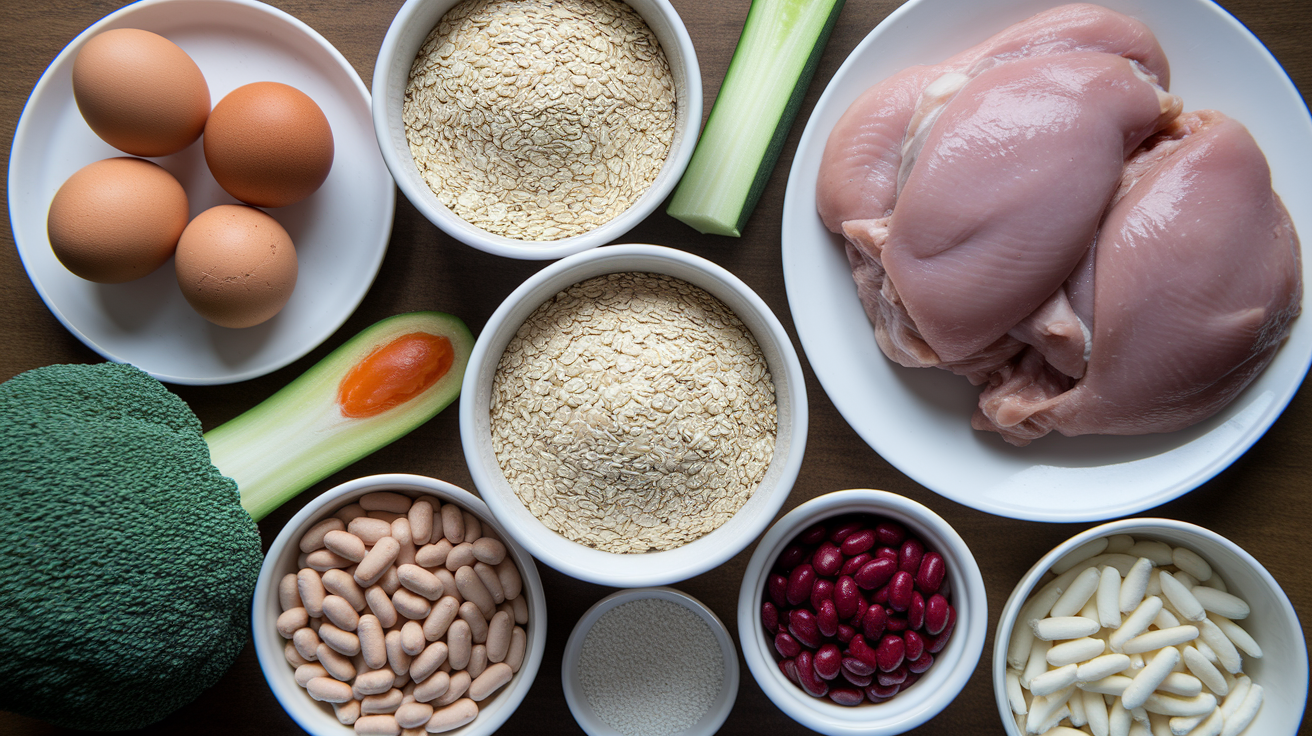
You don’t need expensive groceries to lose fat — you can do it on a tight weekly grocery budget.
This post gives a short, practical grocery list and simple shopping moves that keep protein high, hunger low, and your grocery bill down.
Think eggs, oats, rice, canned tuna, beans, frozen veg, and cheap chicken thighs—staples that fill you up and cost pennies per serving.
Read on for a one-week ultra-cheap plan, meal-prep ideas, and easy ways to save $10–$30 a week without feeling deprived.
Best Cheap Foods for Weight Loss (Fast Overview)
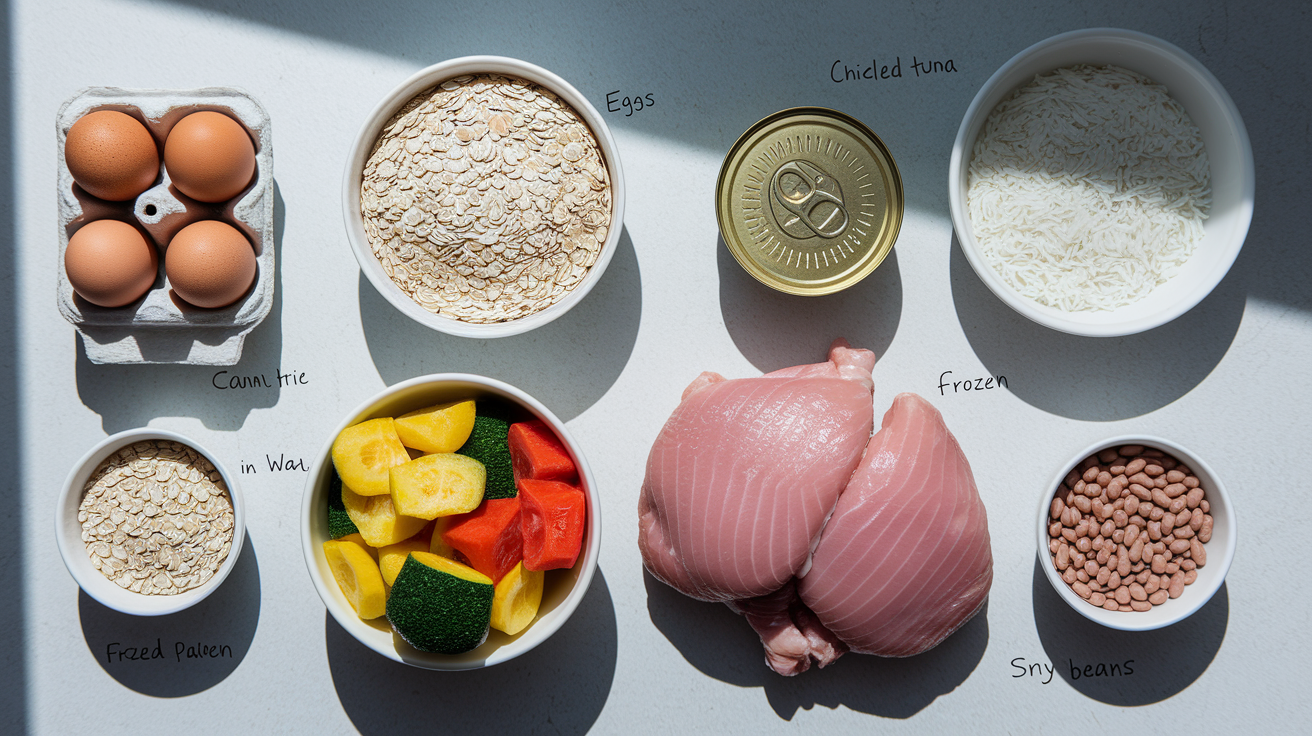
This is the fastest, most practical list of grocery staples that support fat loss without breaking your budget. Every item below delivers solid protein, fills you up, and keeps cost per serving low enough to work on a tight weekly food budget.
Eggs cost $0.15 to $0.30 each depending on pack size. You get 70 calories and 6 grams of protein. Cheap protein that preserves muscle during a deficit and keeps you full for hours.
Oats run about $0.05 to $0.10 per half cup dry serving. That’s 150 calories and 5 grams of protein. High fiber carb that slows digestion and controls hunger between meals.
White or brown rice costs $0.15 to $0.25 per half cup cooked. You’re looking at 110 calories, 2 grams protein. Inexpensive base that adds volume to meals without adding much cost.
Canned tuna in water goes for $0.75 to $1.50 per 5 oz can. That’s 100 to 120 calories and 20 to 25 grams protein. One of the highest protein per dollar foods available at any grocery store.
Frozen mixed vegetables cost $0.08 to $0.15 per cup. You get 50 to 80 calories, 2 to 4 grams protein. Low calorie volume food that adds fiber, vitamins, and fills up your plate.
Dry beans like pinto, black, or chickpeas run $0.10 to $0.20 per half cup cooked. That’s 110 to 120 calories and 7 to 8 grams protein. Plant protein that stretches meals and costs almost nothing per serving.
Chicken thighs whether bone in or boneless cost $0.25 to $0.50 per cooked 4 oz portion. You’re getting 200 to 250 calories and 30 to 35 grams protein. More affordable than breast meat and still delivers the protein your body needs to maintain muscle.
These seven foods form the backbone of a fat loss grocery list that works when money’s tight. Stock these consistently and you’ll hit your protein targets, control hunger, and stay under budget every week.
Cost-Saving Strategies for a Tight Budget
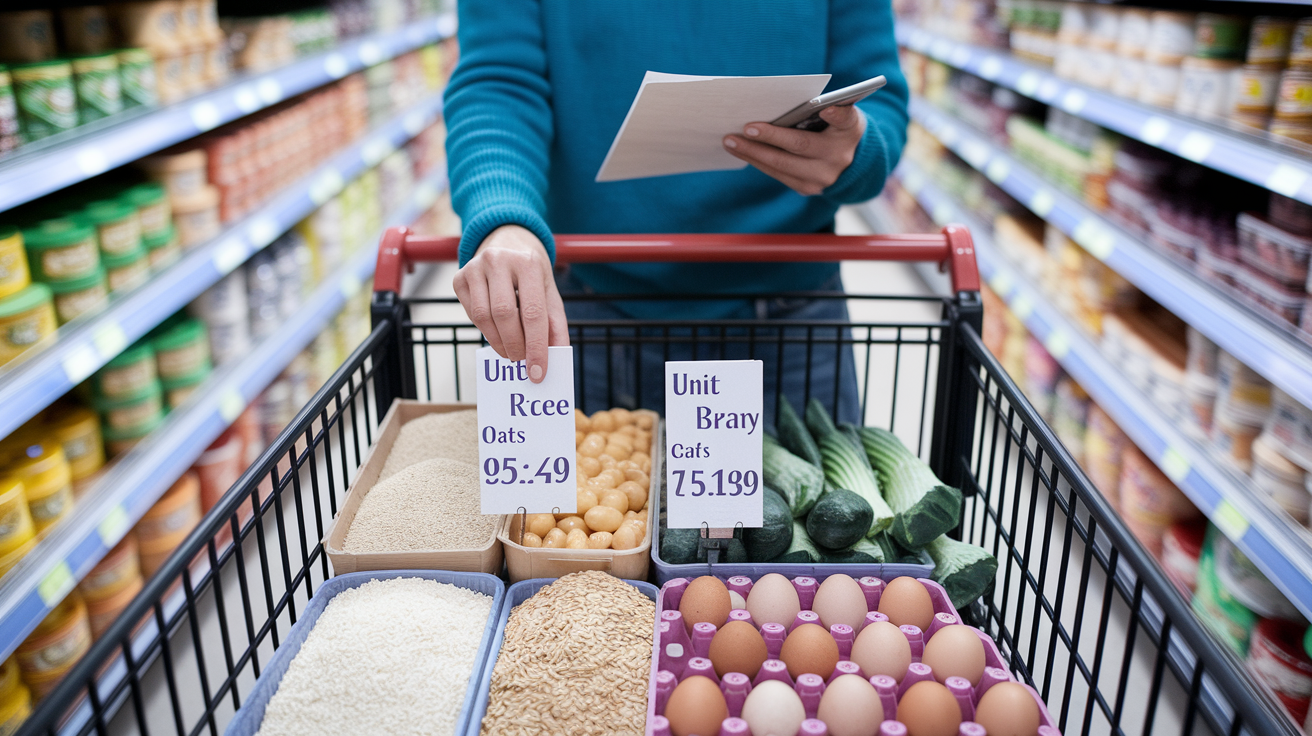
The way you shop matters as much as what you buy. Small changes in your grocery routine can save $10 to $30 per week without cutting out the foods that support fat loss.
Plan meals before you walk into the store. Write down what you’ll eat for the week and build a grocery list around those meals. That simple step stops impulse buys and reduces food waste. Shop your pantry and freezer first so you’re only buying what’s actually missing. Set a weekly dollar limit and track your cart total as you go.
Buy store brands whenever possible. The house brand oats, rice, canned beans, frozen vegetables, and eggs are nutritionally identical to name brands but cost 20% to 40% less. Purchase shelf stable items in bulk when they’re on sale. Rice, oats, dry beans, and canned tuna keep for months. Use frozen produce instead of fresh for items you won’t eat within a few days. Frozen broccoli, spinach, mixed vegetables, and berries are picked at peak ripeness, last longer, and cost less per serving.
Additional strategies that cut cost without sacrificing results:
Compare unit prices instead of package price to find the real bargain. Shop sales and stock up on protein staples when chicken thighs drop below $1.50 per pound or eggs fall under $2 per dozen. Cook larger batches and freeze portions so you’re not throwing away spoiled food mid week.
Limit eating out. Replace one restaurant meal per week with a home cooked option to save $8 to $15. Use cheaper cuts of meat like thighs instead of breasts or ground turkey instead of lean beef. They still deliver the protein you need.
These tactics don’t require coupons, membership clubs, or hours of planning. They’re simple adjustments that add up fast when you repeat them every week.
Simple Budget Meal Prep Ideas for Fat Loss
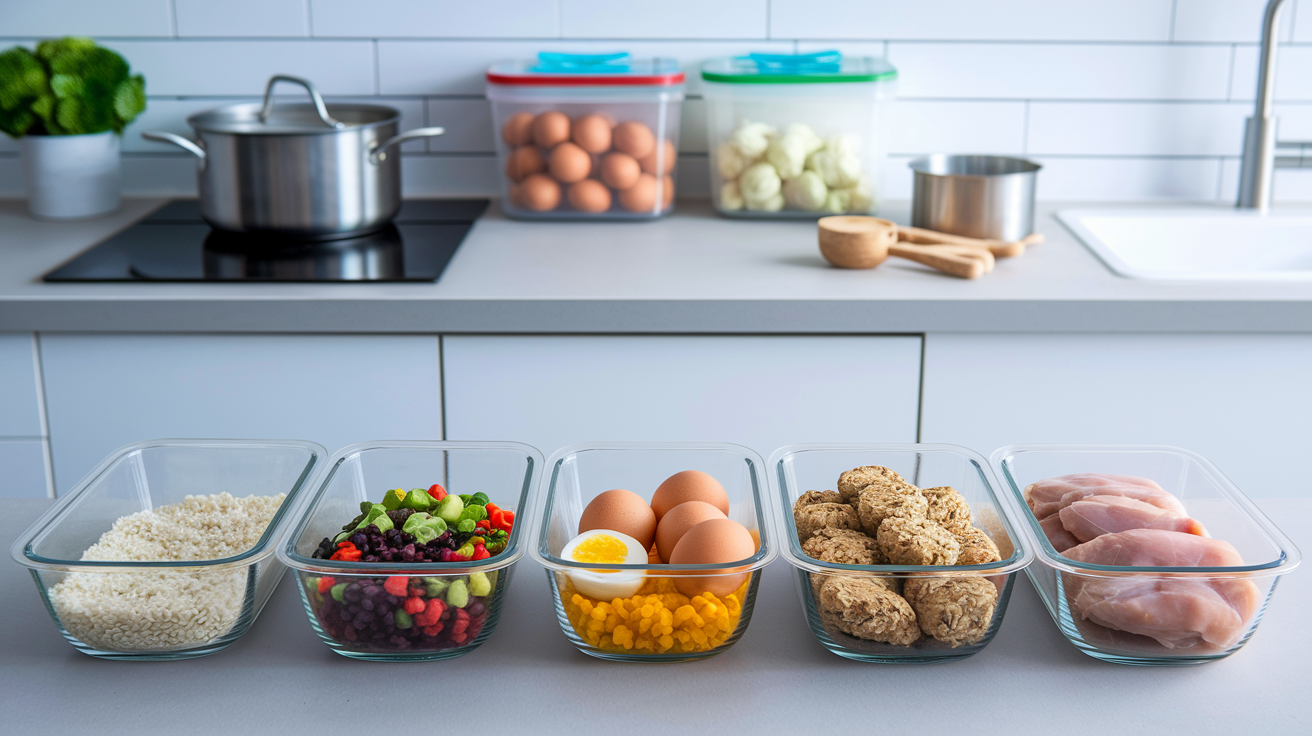
Meal prep turns cheap ingredients into ready to eat meals that control portions and eliminate the “nothing to eat” moments that lead to expensive takeout. When you batch cook staples on one day, you save time, reduce waste, and make fat loss easier to sustain all week.
Prepping meals in advance also locks in your calorie target. You know exactly what’s in each container, so there’s no guessing or second meal snacking. It takes one or two hours on a Sunday and gives you five to seven grab and go options that cost $2 to $4 per meal.
Here are four meal prep ideas built from the budget staples in Section 1.
Rice and bean bowls. Cook 3 cups of rice and 2 cups of dry beans. Divide into five containers with 1 cup cooked rice, ½ cup beans, 1 cup frozen mixed vegetables (steamed or microwaved), and one fried or hard boiled egg on top. Cost per meal runs about $1.80 to $2.50. Protein per meal is roughly 18 to 22 grams.
Tuna oat patties. Mix one 5 oz can of tuna (drained) with ½ cup cooked oats, one egg, and seasonings. Form into patties and pan fry or bake at 375°F for 12 to 15 minutes. Make a batch of 8 to 10 patties and freeze. Pair with steamed vegetables or a side of rice. Cost per patty is around $0.60 to $0.90. Protein per patty is about 10 to 12 grams.
Egg based breakfast boxes. Hard boil one dozen eggs. Simmer 9 to 10 minutes, then cool. Store in the fridge with pre portioned containers of oats and a banana or apple. Grab two eggs, ½ cup dry oats (microwave with water for 90 seconds), and one piece of fruit each morning. Cost per breakfast runs $1.00 to $1.50. Protein per breakfast is 18 to 20 grams.
Chicken thigh freezer meals. Buy 3 to 5 pounds of chicken thighs when they’re on sale. Season with basic spices and bake at 400°F for 35 to 40 minutes. Let cool, then portion into 4 to 6 oz servings and freeze in zip bags. Pull one out the night before and pair with rice and frozen vegetables. Cost per portion is $1.00 to $2.00. Protein per portion is 30 to 35 grams.
Each idea uses repeatable, low cost staples and stores well for three to five days in the fridge or up to three months in the freezer.
Category Breakdown: Proteins, Carbs, and Vegetables on a Budget
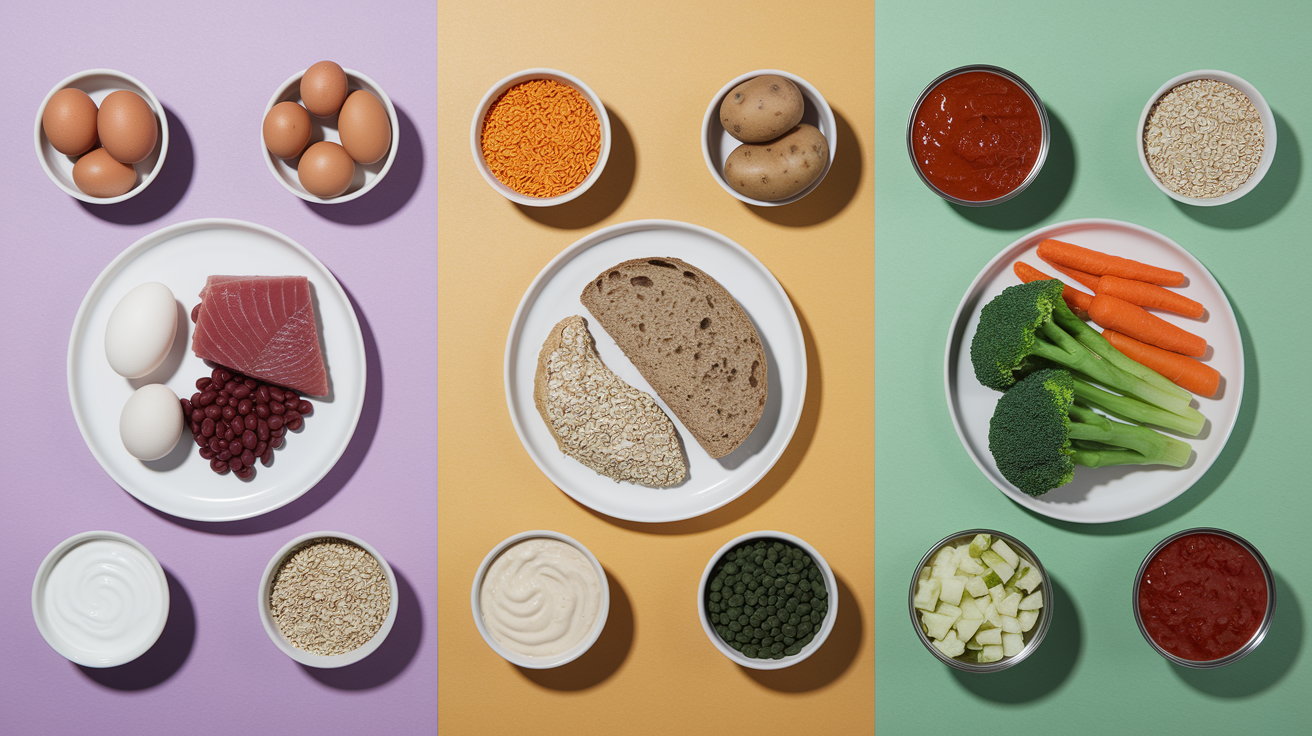
Proteins form the most important category for fat loss because they preserve muscle, increase satiety, and have a higher thermic effect than carbs or fats. On a tight budget, prioritize eggs, canned tuna, canned salmon, chicken thighs, Greek yogurt, cottage cheese, dry beans, lentils, and tofu.
Eggs and canned tuna deliver the most protein per dollar spent. A single can of tuna gives you 20 to 25 grams of protein for around $1. Two eggs cost $0.30 to $0.60 and provide 12 grams. Plant proteins like beans and lentils cost even less per serving but contain less protein per cup, so combine them with an egg or a small portion of animal protein to hit 25 to 40 grams per meal.
Aim for three main meals with 25 to 40 grams of protein each and one or two snacks with 10 to 20 grams to support fat loss and muscle retention.
Carbohydrates provide energy and volume without requiring expensive ingredients. The cheapest options are white rice, brown rice, oats, potatoes, sweet potatoes, whole wheat bread, and dry beans. A 5 pound bag of rice costs $3 to $6 and yields roughly 50 half cup servings at $0.06 to $0.12 each.
Oats are similarly inexpensive and high in fiber, which slows digestion and reduces hunger. Potatoes and sweet potatoes add variety, deliver 4 grams of protein per medium potato, and cost $0.40 to $0.80 per potato. Whole wheat bread offers convenience for quick sandwiches and costs $1.50 to $3 per loaf. Choose carbs that digest slowly and keep you full longer, especially when you’re in a calorie deficit.
Vegetables add fiber, vitamins, and low calorie bulk to every meal, which makes fat loss easier without feeling deprived. Frozen vegetables are the most budget friendly option because they don’t spoil, cost $1 to $2.50 per 12 to 16 oz bag, and retain nutrients just as well as fresh.
Stock frozen broccoli, mixed vegetables, green beans, and spinach. Fresh options that stay cheap year round include carrots, cabbage, onions, and canned tomatoes. A 1 pound bag of carrots costs $0.70 to $1.50 and lasts a week. Use vegetables to fill half your plate at lunch and dinner so you hit your calorie target without hunger. They cost pennies per serving and make every meal feel bigger.
One-Week Ultra-Cheap Grocery Plan (Example)
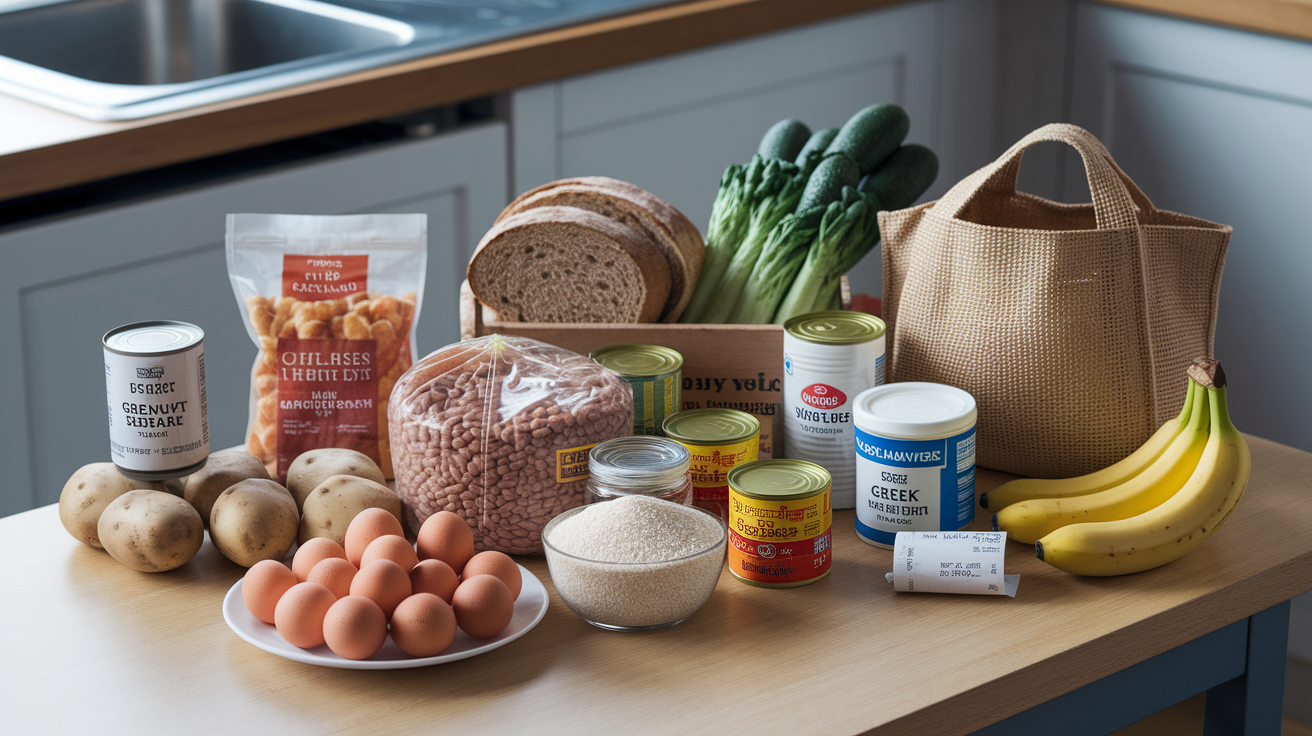
This is a realistic, single adult grocery plan designed to support fat loss on a strict budget. The total cost runs between $28 and $35 for the week, depending on your region and current sales. Every item on this list prioritizes protein, fiber, and volume while keeping waste low.
| Item | Quantity | Approx. Price | Purpose |
|---|---|---|---|
| Eggs | 1 dozen | $2.50 | Protein |
| White or brown rice | 3 lb | $2.50 | Carb |
| Dry pinto or black beans | 1 lb | $1.80 | Protein / Carb |
| Canned tuna (in water) | 4 cans | $4.00 | Protein |
| Frozen mixed vegetables | 2 bags (12–16 oz each) | $3.00 | Vegetable |
| Whole wheat bread | 1 loaf | $1.80 | Carb |
| Potatoes | 2 lb | $2.00 | Carb |
| Plain Greek yogurt | 32 oz tub | $3.00 | Protein |
| Peanut butter | 16 oz jar | $2.50 | Protein / Fat |
| Bananas | 5–7 bananas | $1.50 | Carb / Fruit |
This plan gives you enough protein, carbs, and vegetables to build 15 to 21 meals and snacks across the week. You’ll hit 100 to 140 grams of protein per day by combining eggs for breakfast, tuna or beans for lunch, and yogurt or peanut butter for snacks.
Add rice, potatoes, or bread to each meal for energy and portion control. Use frozen vegetables to fill your plate and keep calories in check without feeling like you’re dieting. If your budget allows an extra $5 to $10, add one pack of chicken thighs or a container of oats to increase variety and protein options.
Final Words
Start by grabbing the seven budget-friendly staples and the quick price, protein, and calorie notes so you can shop with a plan.
Use the cost-saving tips, simple meal-prep combos, and category breakdown to build balanced, low-cost meals that actually keep you full. The one-week sample shows how a full grocery run can stay under a tight total while feeding real meals.
Keep this budget-friendly grocery list for fat loss on a tight budget handy when you shop and prep this week, small, consistent choices add up.
FAQ
Q: What is the 5 4 3 2 1 grocery rule?
A: The 5 4 3 2 1 grocery rule is a simple shopping framework to keep choices balanced: pick 5 proteins, 4 vegetables, 3 fruits, 2 whole grains, and 1 small treat for variety and simplicity.
Q: What foods to eat to lose weight on a budget?
A: Foods to eat to lose weight on a budget include eggs, oats, rice, canned tuna, frozen vegetables, beans, and chicken thighs—affordable, protein‑forward options that keep you full with fewer calories.
Q: Can you live on $200 a month for food?
A: You can live on $200 a month for food in many places if you plan tightly: prioritize staples, buy in bulk, cook at home, and favor beans, rice, oats, eggs, and seasonal produce.
Q: How to feed a family of 4 for $100 a week?
A: You can feed a family of 4 for $100 a week by planning meals, buying bulk, using rice, beans, eggs, frozen vegetables, budget proteins (chicken thighs or canned tuna), and batch cooking for leftovers.