
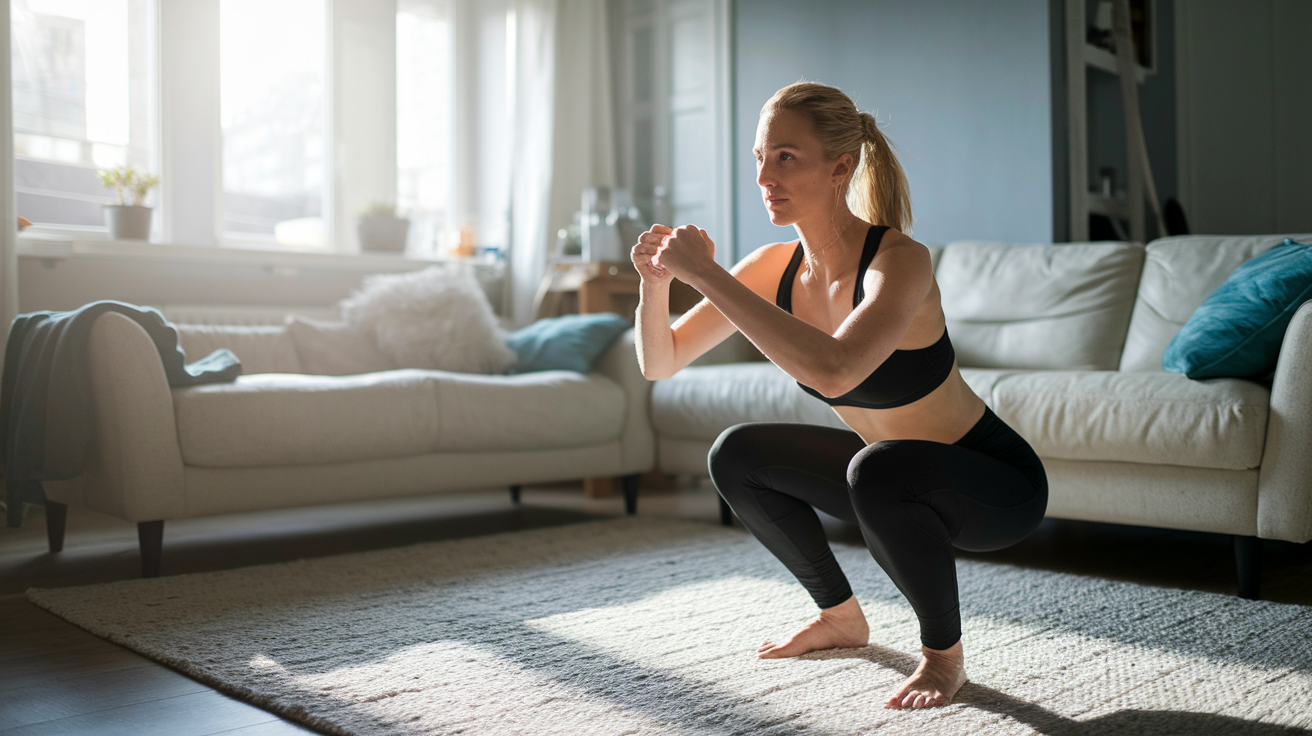
You don’t need an hour to feel awake and strong.
This 10-minute morning workout for beginners at home fits into any schedule and needs nothing but your body and a few square feet.
Each minute has a simple focus so you always know what’s next.
Do it to loosen tight joints, raise your energy, and build a small daily habit that actually sticks.
If you’re short on time or nervous about exercise, this routine is your gentle, low-impact way to start the day.
Full 10‑Minute Beginner Morning Workout (Immediate Routine)
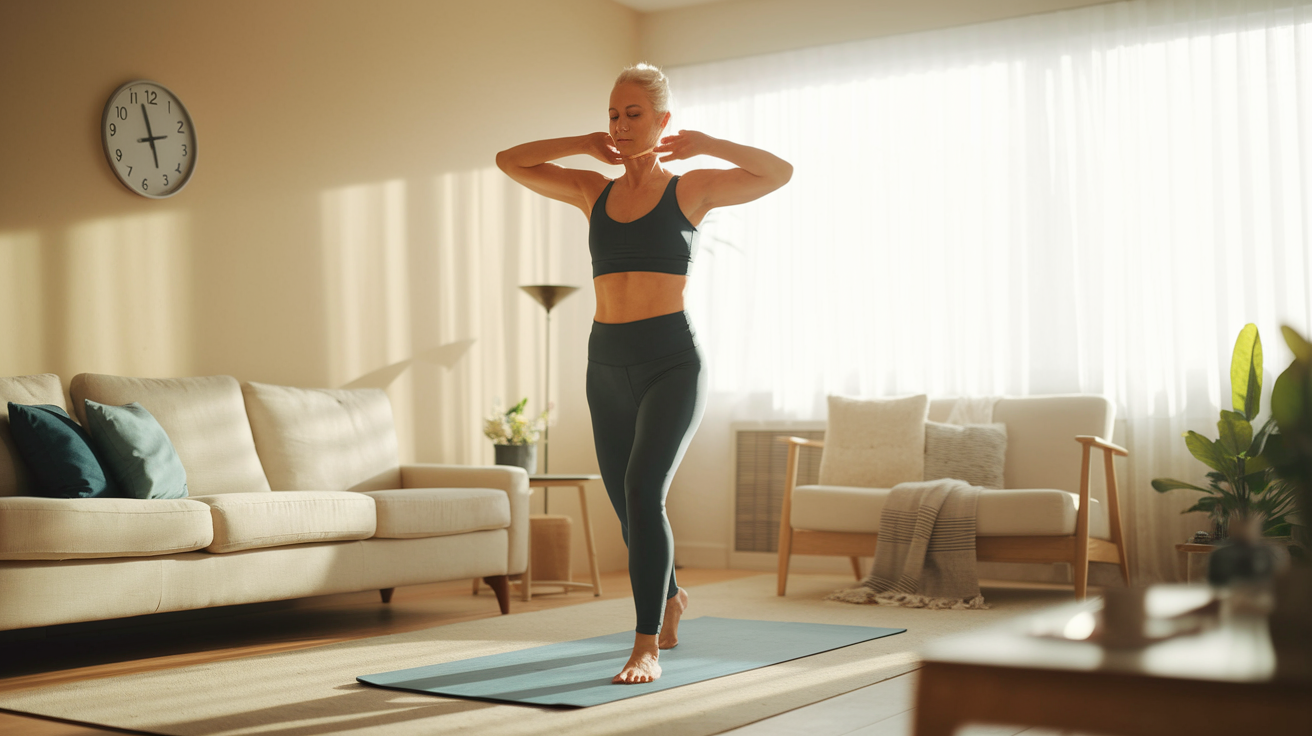
This routine fits into any morning schedule and requires nothing but your body and a few square feet of space. Each minute has a single focus, so you’ll always know what’s next.
-
Minute 1: Gentle marching in place. Lift your knees to a comfortable height, swing your arms naturally, and breathe steady to wake up your body.
-
Minute 2: Arm circles and shoulder rolls. Spend 30 seconds making slow circles forward and back with your arms, then 30 seconds rolling your shoulders up, back, and down to release tension.
-
Minute 3: Bodyweight squats. Stand with feet hip width apart, lower your hips like you’re sitting into a chair, then press back up using your legs. Move slowly.
-
Minute 4: Modified plank hold. Get on your hands and knees, step your knees back slightly, and hold a straight line from head to knees. Rest whenever you need to.
-
Minute 5: Standing knee raises. Alternate lifting one knee toward your chest, then the other, at a pace that feels sustainable. Keep your core gently engaged.
-
Minute 6: Wall push-ups. Stand arm’s length from a wall, place your palms flat, bend your elbows to bring your chest toward the wall, then press back.
-
Minute 7: Side leg raises. Stand tall, lift one leg out to the side without leaning, lower it, then repeat. Switch legs halfway through the minute.
-
Minute 8: Slow mountain climbers. From hands and knees, step one foot forward under your hip, then swap legs slowly and controlled. No jumping.
-
Minute 9: Standing side bends. Reach one arm overhead and gently lean to the opposite side, feeling a stretch along your ribs. Alternate sides every few reps.
-
Minute 10: Deep breathing and light marching. Walk in place slowly, breathe in for four counts, out for four counts, and let your heart rate come down.
That’s the full routine. If you need to pause between minutes, take five to ten seconds. The goal is to move consistently, not to finish perfectly.
Step-by-Step Exercise Instructions
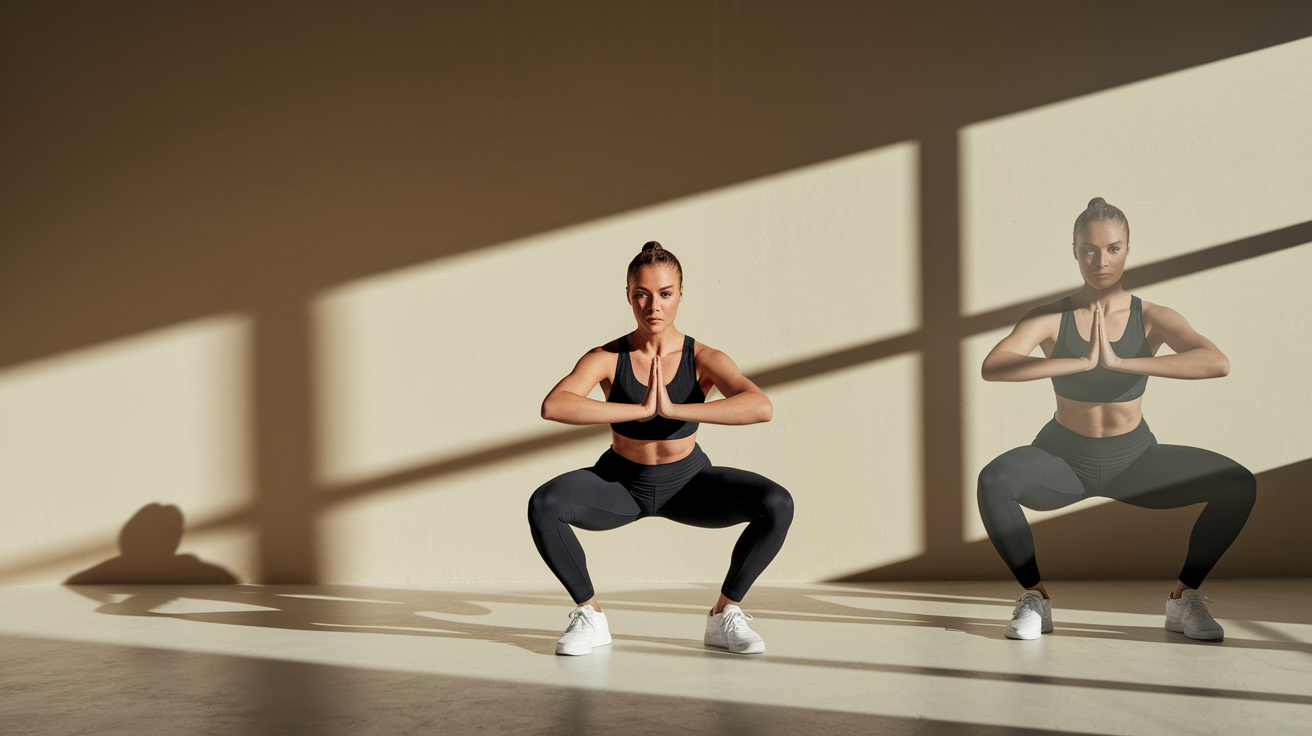
Bodyweight squats. Stand with your feet about hip width apart and your toes pointing forward or slightly out. Push your hips back like you’re about to sit in a chair, lowering until your thighs are roughly parallel to the floor or as far as feels comfortable. Keep your chest up and your weight in your heels. Press through your feet to stand back up, squeezing your glutes at the top.
Modified plank hold. Start on your hands and knees with your hands directly under your shoulders. Step your knees back a few inches so your body forms a straight line from your head to your knees. Pull your belly button toward your spine and keep your hips level. Hold this position without letting your lower back sag. Drop to your knees anytime you need a break.
Standing knee raises. Stand tall with your feet together or slightly apart. Lift one knee up toward your chest, then lower it back down and immediately lift the other knee. Keep your core tight and don’t lean back. Move at a pace that lets you stay balanced and breathe comfortably.
Wall push-ups. Face a wall and stand about arm’s length away. Place your palms flat on the wall at shoulder height and slightly wider than your shoulders. Bend your elbows to bring your chest toward the wall, keeping your body in a straight line. Push back to the starting position. Your elbows should point slightly down and back, not straight out to the sides.
Side leg raises. Stand next to a wall or chair for balance if needed. Shift your weight onto one leg and lift the other leg straight out to the side, keeping your toes pointing forward. Lower it back down with control. Don’t lean your torso to the opposite side. Switch legs halfway through the minute.
Slow mountain climbers. Start on your hands and knees. Step one foot forward so your knee is under your hip. Swap legs by stepping the front foot back and bringing the back foot forward. Move slowly and keep your hips level. If your wrists feel uncomfortable, make smaller steps or pause briefly between swaps.
Standing side bends. Stand with your feet hip width apart and one arm reaching overhead. Gently lean to the opposite side, feeling a stretch along the side of your torso. Keep your hips facing forward and don’t twist. Return to center and repeat on the other side. Breathe deeply as you stretch.
Beginner Modifications and Low‑Impact Options
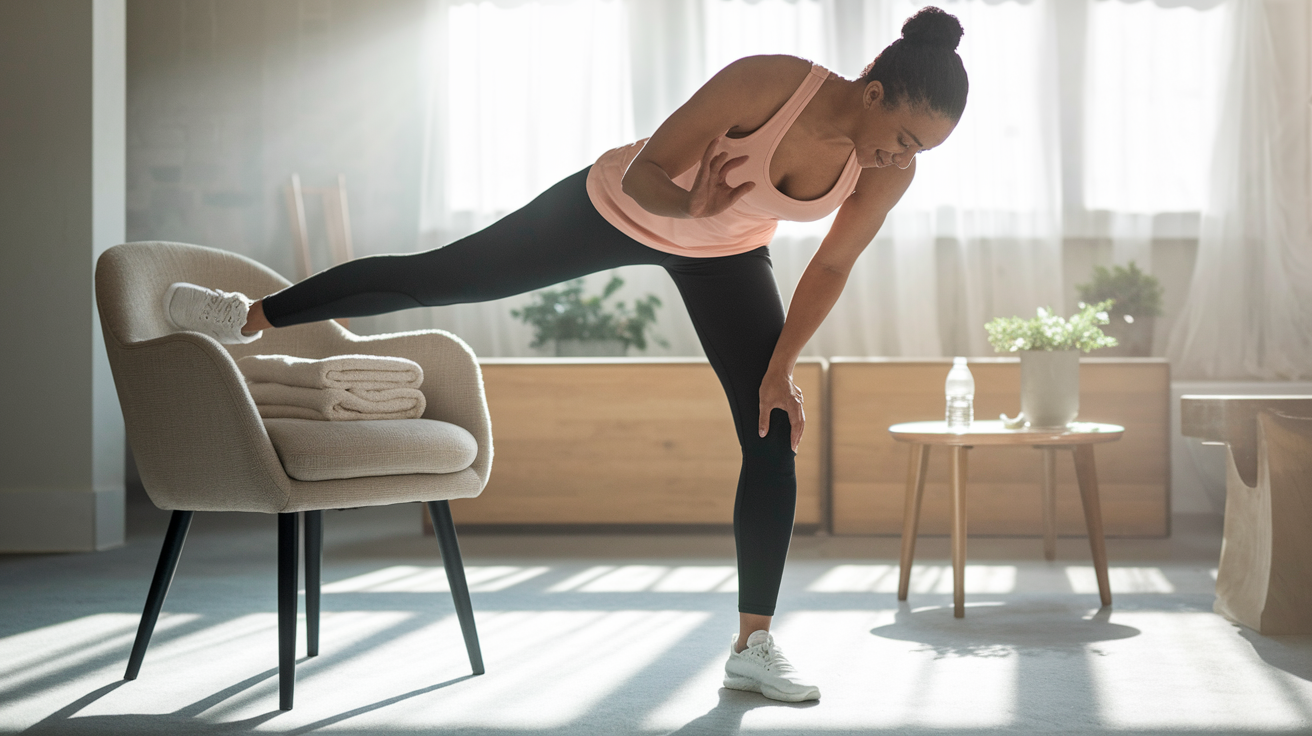
Not every move will feel right on every day, and that’s normal. These modifications keep you moving without adding stress or discomfort.
Reduce the range of motion. Lower only halfway into squats, step your knees back less in the plank, or lift your knees to mid thigh instead of chest height during knee raises.
Slow the tempo. Move at half speed during mountain climbers, squats, or any exercise that feels rushed. Slower reps build control and reduce impact.
Use a wall or chair for balance. Hold onto a sturdy surface during side leg raises, squats, or knee raises if balance feels shaky.
Shorten the hold time. If a plank or side bend feels too intense, hold for 10 or 15 seconds, rest briefly, then continue for the remainder of the minute.
Skip the knee lift entirely. If standing knee raises feel too hard on your hip flexors, march in place without lifting your knees high or alternate stepping side to side.
Rest as needed. Pause for five to ten seconds between exercises or in the middle of a minute if your breathing gets too heavy. Getting through the routine matters more than perfect form.
Quick Warm‑Up for Morning Workouts
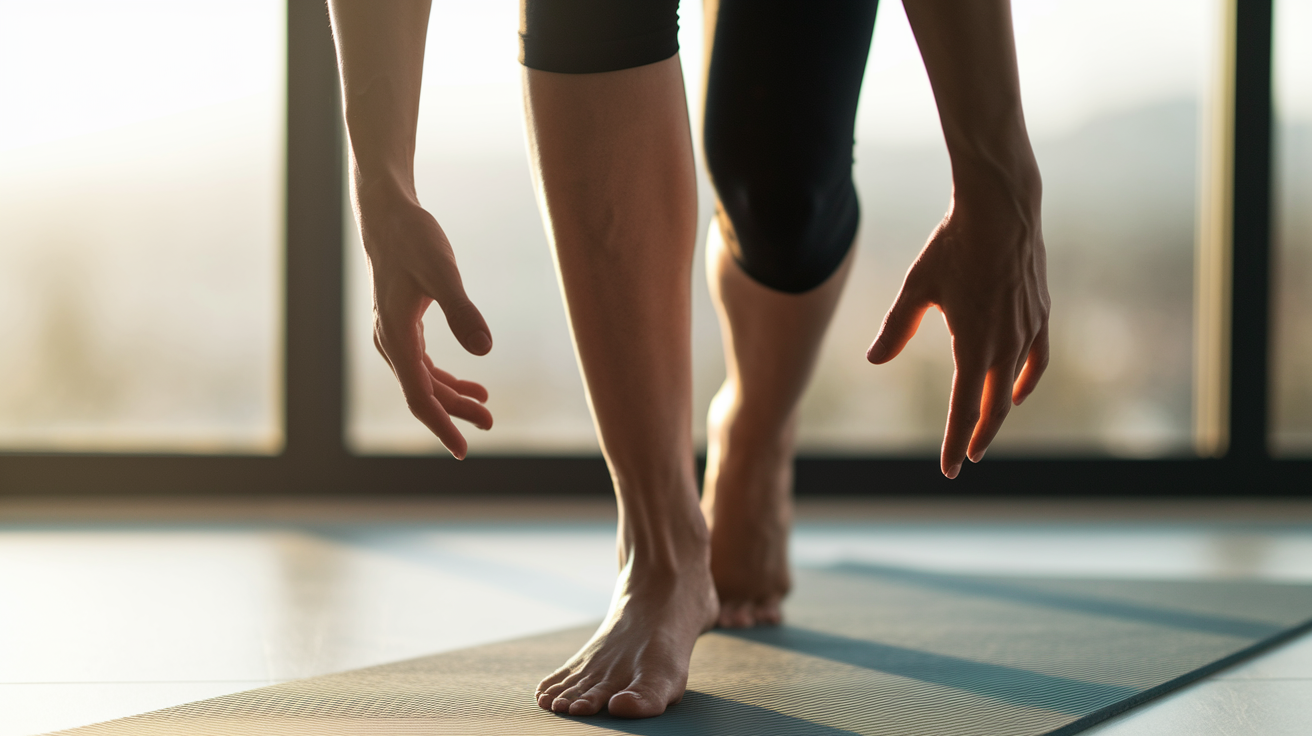
Spend two to three minutes on these moves before starting the main routine to prepare your joints and muscles.
Neck rolls. Gently drop your chin to your chest, then roll your head slowly to one side, back, and to the other side. Repeat twice in each direction.
Shoulder shrugs and rolls. Lift your shoulders up toward your ears, hold for a breath, then release. Roll them backward in slow circles five times, then forward five times.
Hip circles. Stand with your hands on your hips and make slow circles with your hips, five in each direction, to loosen your lower back and pelvis.
Ankle rolls. Lift one foot slightly off the ground and rotate your ankle in circles, five times clockwise and five times counterclockwise. Switch feet.
Gentle marching. Walk in place for 30 to 60 seconds, gradually lifting your knees a little higher to increase blood flow and wake up your legs.
Simple Cool‑Down and Stretching Routine
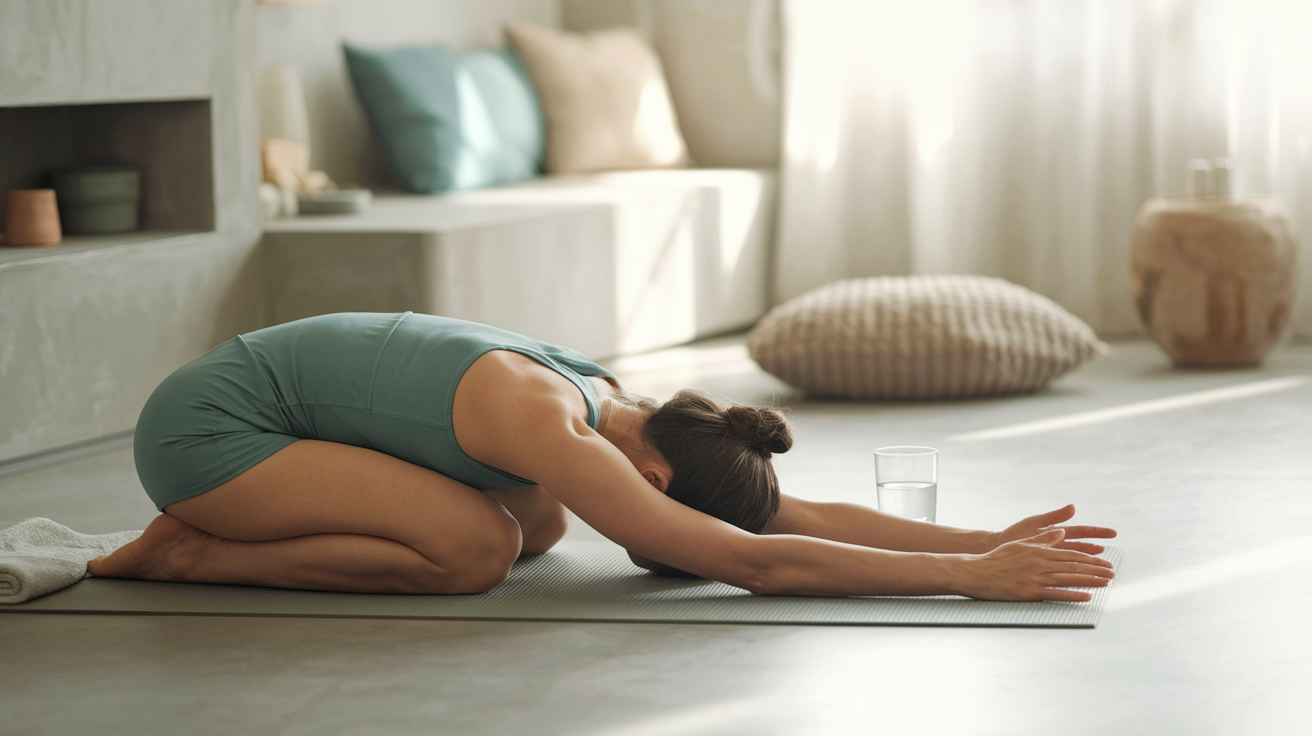
After the workout, spend two to three minutes bringing your heart rate down and lengthening the muscles you just used.
Standing hamstring stretch. Stand with your feet together, hinge forward at your hips, and reach toward your toes. Let your knees bend slightly. Hold for 20 to 30 seconds.
Quad stretch. Stand on one leg, bend the other knee, and gently pull your foot toward your glutes. Hold for 20 seconds, then switch legs.
Chest opener stretch. Clasp your hands behind your back, straighten your arms, and lift your chest. Hold for 20 to 30 seconds to release tension in your shoulders and chest.
Side stretch. Reach one arm overhead and lean gently to the opposite side. Hold for 15 seconds, then switch sides. Keep your hips facing forward.
Child’s pose. Kneel on the floor, sit your hips back toward your heels, and stretch your arms forward on the ground. Rest here for 30 seconds and breathe deeply.
Focus on slow, deep breaths during each stretch. Inhale through your nose for four counts, exhale through your mouth for four counts. This signals your body to shift into recovery mode.
Printable / Follow-Along Quick Guide
Use this table as a quick reference for the full routine. Print it, save it to your phone, or keep it open on your screen while you work out.
| Exercise | Duration | Key Cue |
|---|---|---|
| Gentle marching in place | 1 minute | Lift knees comfortably, breathe steady |
| Arm circles and shoulder rolls | 1 minute | 30 seconds circles, 30 seconds rolls |
| Bodyweight squats | 1 minute | Hips back, chest up, press through heels |
| Modified plank hold | 1 minute | Straight line from head to knees, belly tight |
| Standing knee raises | 1 minute | Alternate knees, stay balanced, core engaged |
| Wall push-ups | 1 minute | Chest to wall, press back, elbows slightly down |
| Side leg raises | 1 minute | Lift leg to side, don’t lean, switch halfway |
| Slow mountain climbers | 1 minute | Step feet forward and back, controlled pace |
| Standing side bends | 1 minute | Arm overhead, lean gently, breathe deep |
| Deep breathing and light marching | 1 minute | Slow march, four count inhale and exhale |
This guide covers the full workout, modifications, warm up, cool down, and a printable reference. Keep it simple, move consistently, and adjust as needed for how your body feels each morning.
Final Words
Get moving: this post gives a ready-to-go 10-minute routine you can do at home—warm-up, ten easy moves timed 45/15, clear form cues, and a short cool-down.
Lean on the beginner modifications and the printable guide when you need gentler options or a quick follow-along. If your week gets messy, do the warm-up and a couple of moves—still helpful.
Try this 10-minute morning workout for beginners at home most days to build momentum and feel more energetic. You’ve got this.
FAQ
Q: What is the full 10-minute beginner morning workout?
A: The full 10-minute beginner morning workout is a short, no-equipment routine of ten one-minute segments (often 45 seconds work, 15 seconds transition) using low-impact moves to wake your body gently.
Q: What exercises are included in the 10-minute routine?
A: The 10-minute routine includes marching in place, bodyweight squats, gentle cardio (low-impact), modified planks, lateral steps, glute bridges, arm circles, standing knee lifts, gentle lunges, and a light cooldown.
Q: How do I do proper squats as a beginner?
A: Proper beginner squats mean feet hip-width, chest lifted, weight in heels, sit hips back like sitting in a chair, knees track toes, and press through heels to stand with controlled motion.
Q: How do I do a modified plank correctly?
A: A correct modified plank is done on knees with hands under shoulders, neutral spine, belly gently braced, hips level, and steady breaths while holding without sagging or arching the low back.
Q: What low-impact modifications can make this routine gentler?
A: Low-impact modifications include reducing range of motion, slowing tempo, swapping jumps for marching, using a chair or wall for balance, keeping knees bent, and shorter work intervals like 30 seconds.
Q: Do I need a warm-up before the 10-minute morning workout?
A: Yes, you need a warm-up before the 10-minute workout; do 2–3 minutes of shoulder rolls, leg swings, gentle marching, and hip circles to raise blood flow and loosen joints.
Q: How long should the cool-down be and which stretches help recovery?
A: The cool-down should be 3–5 minutes and include hamstring stretch, quad stretch, chest opener, calf stretch, and gentle deep breathing to lower heart rate and aid recovery.
Q: How often should beginners do this 10-minute workout?
A: Beginners should do this 10-minute workout about three times a week to start, or daily as light movement; increase frequency gradually as strength and comfort grow.
Q: Can I do this morning workout at home with no equipment?
A: Yes, this morning workout can be done at home with no equipment; use a chair or wall for support and household items if you want a slight challenge.
Q: How can I progress the routine when it becomes easy?
A: You can progress the routine by adding a second round, increasing work intervals to 50 seconds, shortening rests, adding light weights, or choosing deeper motion for each exercise.