
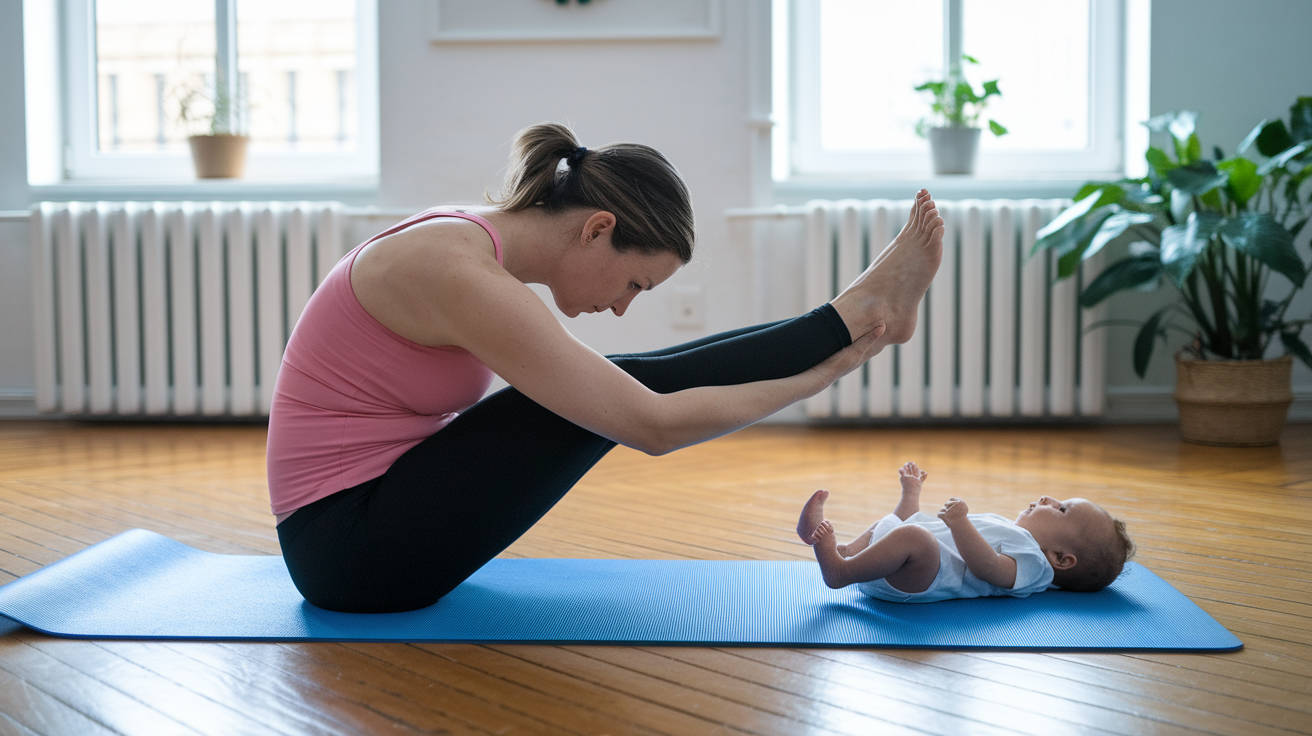
What if the crunches you’ve been doing are actually making your belly gap worse?
Diastasis recti affects about 60% of people after pregnancy and is more about weak connective tissue than a lack of effort.
You can safely narrow the separation by training the deep core—the transverse abdominis—and coordinating it with the pelvic floor and breath.
This guide gives gentle, step-by-step exercises, simple safety cues, and easy progressions so you rebuild real core support without pushing your belly outward.
Start where you are, stop if you see doming, and focus on control over speed.
Foundational Diastasis Recti Exercise Guide for Early Healing
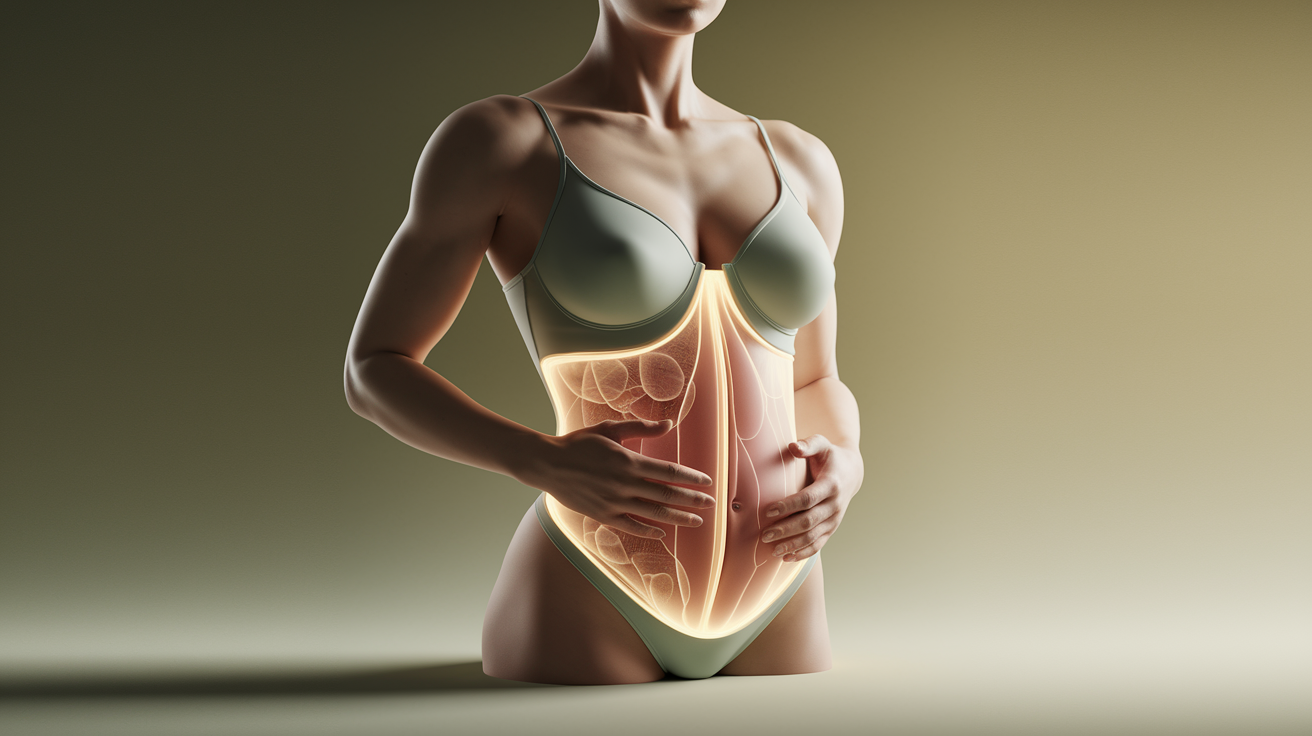
Diastasis recti happens when the rectus abdominis muscles separate along the linea alba, the connective tissue running down the center of your belly. About 60% of people deal with this postpartum. During pregnancy, that tissue stretches to make room for your growing baby. When it stays stretched or weak after delivery, your core can’t stabilize like it used to. Safe exercises focus on waking up the transverse abdominis (TVA), your deepest core muscle that works like a natural corset. Gentle, coordinated activation of the TVA, pelvic floor, and diaphragm helps the linea alba regain tension without cranking up the pressure that pushes muscles farther apart.
Safety beats speed. Stop any movement that makes your belly dome or cone outward along the midline. That’s a red flag the exercise is too hard right now. Stop immediately if you feel pain in your abdomen, back, hips, or pelvis. Same if you notice more pelvic pressure or worse urinary leakage. Modifications aren’t cheating. Start seated or on hands and knees if lying flat feels unstable, shorten your range, and ditch weights until your core feels coordinated.
Before you move, set up right. Lie on your back with knees bent and feet flat, or get on hands and knees with wrists under shoulders and knees under hips. Keep your ribcage stacked over your pelvis. Neutral spine, not arched or tucked. Relax your shoulders and neck. Breathe naturally and never hold your breath during a contraction.
Foundational activation steps to use before any movement:
- Inhale gently and let your ribcage expand in all directions.
- Exhale slowly while drawing your belly button toward your spine.
- Lift your pelvic floor at the same time, like stopping the flow of urine.
- Hold the gentle contraction for 2 to 3 seconds while breathing softly.
- Relax completely on your next inhale and reset before the next rep.
Beginner Diastasis Recti Exercises for Safe At-Home Strengthening

These five exercises rebuild foundational motor control without loading your abdomen too soon. They work the TVA and pelvic floor together, teach your nervous system to stabilize your core, and prep you for harder stuff later. Move slowly, focus on quality, and stop if you see doming or feel strain.
Pelvic tilts (hands and knees): Start on all fours with a neutral spine. Inhale to prepare. Exhale and gently tilt your pelvis under, rounding your lower back slightly while drawing your belly button up. Hold for 2 seconds, then inhale back to neutral. Do 10 slow tilts. If your separation is severe, skip the full “cow” arch and stay in neutral to rounded range only.
Heel slides (lying on back): Lie with knees bent, feet flat. Exhale and engage your core, then slowly slide one heel away until your leg is almost straight. Keep your lower back pressed gently toward the floor. Inhale and slide the heel back. Do 3 sets of 10 reps total, 5 per side. Keep the movement smooth. Your pelvis shouldn’t rock.
Toe taps from tabletop (lying on back): Lift both feet so your shins are parallel to the ceiling. Exhale, engage your core, and slowly lower one foot to tap the floor, then return. Alternate sides. Do 10 reps per side. If this feels too hard, keep the working leg bent and only lower it partway.
Kneeling leg and arm extension (bird-dog variation): On all fours, exhale and lift one arm straight forward to head height while tapping the opposite knee gently toward the floor. Return and switch. Do 10 reps per side. Move slowly and keep your torso steady. No twisting or sagging through your belly.
Seated knee lifts (chair modification): Sit upright on a sturdy chair with feet flat. Exhale and engage your core, then lift one bent knee toward hip height. Lower with control. Do 10 reps per side. This seated option works great if lying flat feels uncomfortable or you’re still in the early weeks postpartum.
Safety cues to follow every session:
- Never hold your breath. Keep breathing slow and steady.
- Watch for doming or a ridge down the center of your belly. Stop if you see it.
- Keep your neck and shoulders relaxed, especially during head lifts.
- Maintain neutral spine. Don’t let your lower back arch excessively.
- Start without weights and add load only once stability is solid.
- If pelvic pressure, pain, or leaking gets worse, scale back or consult a provider.
Intermediate Diastasis Recti Exercise Progressions for Closing the Gap
Move to intermediate exercises only when your linea alba feels resilient under gentle pressure. Often described as a “trampoline” feel instead of a soft, sinking gap. You’re ready when you can complete beginner movements without doming, pain, or pelvic symptoms, and when your gap measures closer to 2 cm or fewer than 3 finger widths. Progression isn’t about adding weight or reps right away. It’s about increasing the challenge to stability and coordination while keeping your core response clean.
Single-leg reach (lying on back): Start in tabletop position. Exhale, engage your core, and extend one leg on a high diagonal, about 45 degrees. Return to tabletop and switch. Do 10 reps per side. Keep your lower back stable. If your pelvis tilts or your belly domes, shorten the range or go back to toe taps for another week.
Weighted leg extension (lying on back): Begin without weights. Once you can perform single-leg reaches with perfect form, hold a 1 to 2 pound weight in each hand at your sides or overhead. Exhale, engage, and extend one leg. Return and switch. Do 10 reps per side. Add weight only when the movement feels controlled and stable. If you see any bulging, remove the weights immediately.
Double-leg extension (lying on back): From tabletop, exhale and extend both legs together on a high diagonal. Return to tabletop. Do 10 total reps. This is significantly harder than single-leg work. Your TVA and pelvic floor must coordinate perfectly to keep your spine stable. Only progress here when single-leg extensions feel easy.
C-curving pulses (seated): Sit upright on the floor or a mat with knees bent and feet flat. Exhale and hollow your belly, rounding your spine slightly back into a small “C” curve. Pulse gently back and in for 20 to 30 small reps, keeping your core engaged the whole time. This teaches sustained TVA activation without the load of lying flat.
Side-Plank Variation for Diastasis Recti
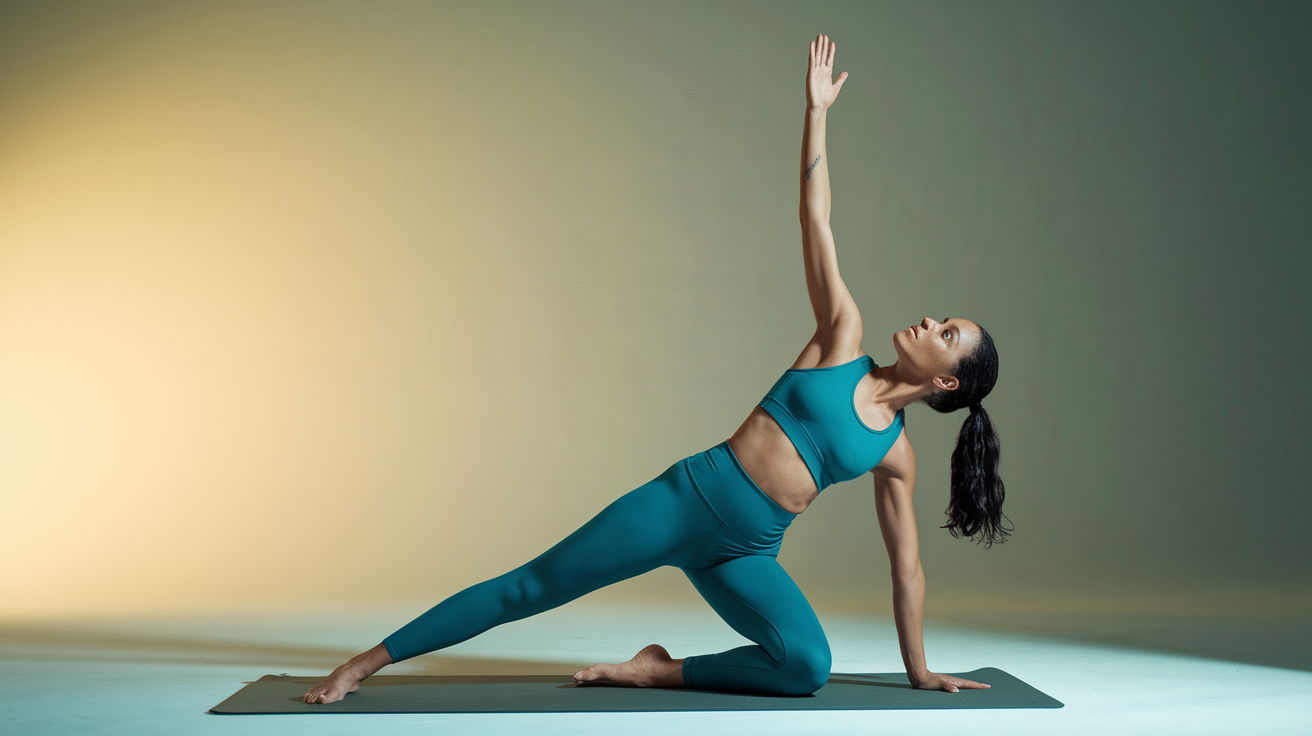
Side planks let you build core strength without front-loading your rectus abdominis. Lie on your side with your forearm on the floor, elbow under your shoulder, and knees bent. Exhale, engage your core, and push through your knees and forearm to lift your hips off the ground, forming a straight line from knees to head. Hold for 15 to 20 seconds, breathing steadily, then lower with control. Perform on both sides. Don’t hold longer than 20 seconds until your core feels very stable. Never let your hips sag or your belly push forward.
Diastasis Recti Exercise Movements to Avoid and Form Mistakes
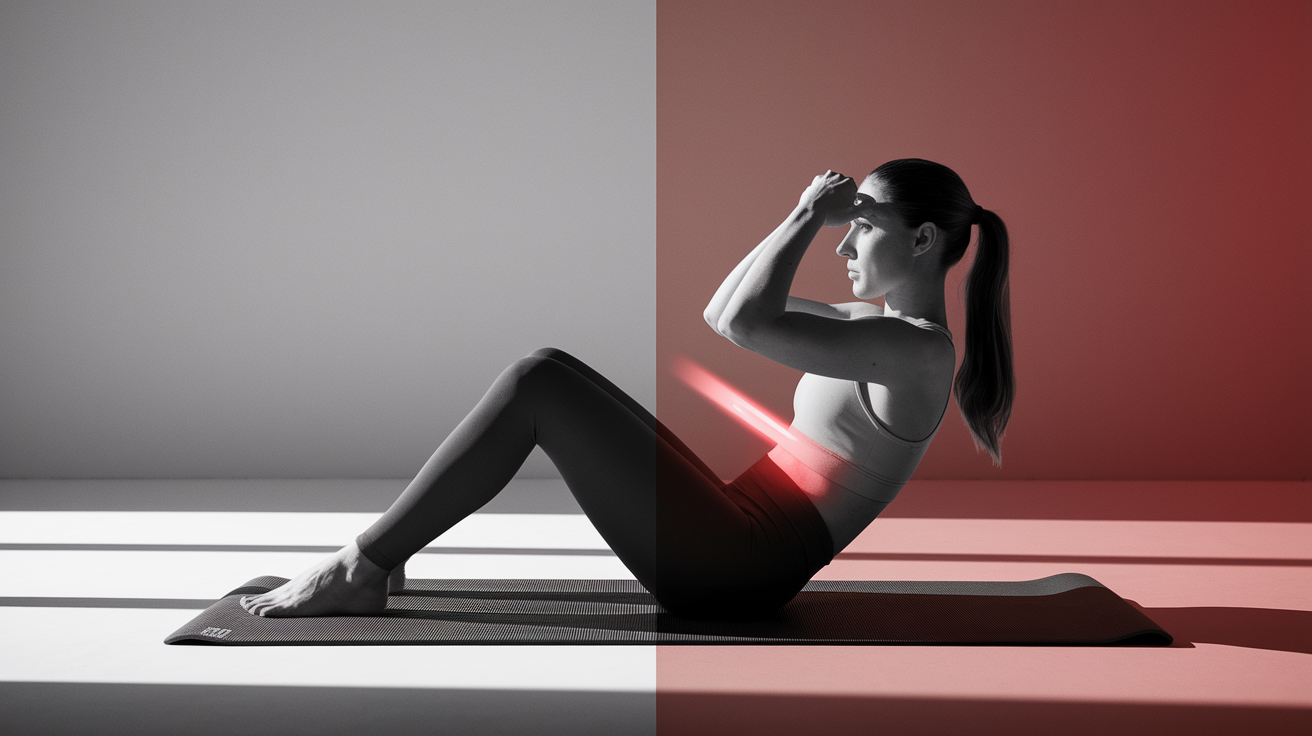
Traditional crunches, sit-ups, high planks, and elbow planks all create intense downward and outward pressure on your linea alba, pushing your rectus muscles farther apart instead of drawing them together. These moves load the front of your abdomen in flexion while increasing internal pressure. Exactly what a healing separation can’t handle. Even if you feel strong enough, skip them until your gap has closed to normal width and depth and your provider or pelvic-floor physical therapist clears you.
Breath-holding sabotages progress faster than almost anything else. When you hold your breath and bear down, you spike pressure inside your abdomen and push outward on your linea alba. Always exhale during the hardest part of the movement and keep breathing slowly throughout. If a movement makes you want to hold your breath, it’s too hard. Scale it back.
Common technique errors to avoid:
- Letting your belly dome or cone along the midline during any exercise.
- Arching your lower back excessively during leg lifts or planks.
- Moving too fast or using momentum instead of controlled muscle engagement.
- Adding weights or bilateral leg work before mastering single-leg variations.
- Performing full “cow” spinal extension during pelvic tilts if your separation is severe.
- Skipping the exhale and engage cue and just “doing the reps” without core activation.
Diastasis Recti Exercise Self-Testing and Progress Monitoring

Tracking your gap width, depth, and symptoms every few weeks helps you know when it’s safe to progress. Lie on your back with knees bent and feet flat. Place your fingers horizontally just above your belly button, fingertips pointing toward your feet. Lift your head about one inch off the floor (a small curl, not a full crunch) and feel for the edges of your rectus muscles. The gap is the soft tissue between them. Move your fingers above and below the belly button to check the entire length. A gap of 1 to 2 finger widths is usually normal. Three or more finger widths or a gap greater than about 2 centimeters often indicates diastasis recti. Depth matters too. If your fingers sink deeply with little resistance, the linea alba still needs strengthening even if the width is narrow.
| What to Measure | How to Measure | What It Means |
|---|---|---|
| Gap width | Count finger widths side to side at navel, above, and below | ≥3 fingers or >2 cm often indicates abnormal separation |
| Gap depth | Press gently. Note if fingers sink deeply or meet firm resistance | Deep, soft gap means low tissue tension. Firm “trampoline” feel indicates healing |
| Doming or bulging | Watch your belly during head lift or leg extension | Visible ridge or cone means exercise is too hard or form needs correction |
| Symptoms | Track pain, pelvic pressure, urinary leakage, back/hip discomfort | Worsening symptoms = regress exercise intensity or seek PT evaluation |
Measure every two to three weeks and note any changes. If your gap is narrowing, depth is firming up, and you have no doming or symptom increases, you’re ready to progress. If the gap stays the same or symptoms worsen, stay at your current level or scale back and consult a pelvic-floor physical therapist for guidance.
Breathing and Pelvic-Floor Integration for Effective Diastasis Recti Exercises

Breathing isn’t just background noise. It’s the engine that powers every safe core contraction. Umbrella breathing means your ribcage expands in all directions on the inhale (front, sides, and back), not just your chest puffing forward or your belly pushing out. On the exhale, start by gently lifting your pelvic floor (like stopping the flow of urine), then let the air empty from low belly to mid-belly to chest while drawing your abdominal wall up and in toward your spine. This sequence activates your TVA and pelvic floor together, creating the coordinated tension that supports your linea alba.
Practice 10 concentrated breath cycles while standing or sitting before you start any exercise. Inhale for 3 to 4 seconds, feeling your ribcage open 360 degrees. Exhale for 4 to 5 seconds, lifting your pelvic floor first and then drawing your belly button toward your spine. Keep your shoulders and neck relaxed. Once this pattern feels natural, pair it with movement. Exhale and engage on the effort (lifting a leg, extending an arm, holding a plank), inhale and relax on the return.
Five breathing cues to use every session:
- Inhale through your nose (or mouth if easier) and expand your ribcage in all directions.
- Start your exhale by gently lifting your pelvic floor upward and forward.
- Continue exhaling while drawing your belly button toward your spine.
- Keep the engagement gentle. No hard bracing or pushing outward.
- Never hold your breath at the top of a movement. Keep air moving slowly and steadily.
Coordinating Pelvic Floor + TVA
Your pelvic floor and TVA work as a team. When you exhale and lift your pelvic floor, your TVA contracts reflexively to support that lift. When you inhale and relax your pelvic floor, your TVA releases. Pair this rhythm with every rep. Exhale to engage pelvic floor and TVA as you perform the hardest part of the movement (lowering a leg, lifting your hips, holding a plank). Inhale to relax and reset as you return to the starting position. This coordination reduces internal pressure, protects your linea alba, and builds the deep stability that allows your gap to close safely over time.
Diastasis Recti Exercise Progression Timelines and Recovery Expectations

Most people notice some improvement in core coordination and symptom reduction after about two weeks of consistent, targeted practice. That doesn’t mean your gap will be fully closed. It means your TVA is starting to activate more reliably, your pelvic floor is coordinating better, and movements that felt shaky now feel more stable. Typical healing often takes around eight weeks, but timelines vary widely depending on gap severity, how soon you start exercises postpartum, consistency, and individual tissue response.
Begin gentle core training around six to eight weeks postpartum, or whenever your healthcare provider clears you. Start with the foundational activation steps and beginner exercises, focusing on breath, form, and symptom tracking. Progress to intermediate exercises only when you can complete beginner movements without doming, pain, or pelvic pressure. If your gap is severe (greater than 3 finger widths or deeper than 2 cm), expect a slower timeline and consider working with a pelvic-floor physical therapist from the start.
Track your functional stability, not just gap measurements. Can you lift your toddler without bracing hard or feeling unstable? Can you sneeze or cough without leaking? Can you hold a plank on your knees without doming? These real-life wins often show up before your finger width measurement changes.
Staged progression milestones across 4 to 12 weeks:
- Weeks 1 to 2: Master foundational breathing and activation. Perform beginner exercises with perfect form. No doming or symptom worsening.
- Weeks 3 to 4: Increase reps or sets of beginner exercises. Begin single-leg progressions (toe taps to single-leg reach). Gap starts to feel firmer.
- Weeks 5 to 8: Add intermediate exercises (weighted leg extensions, side plank on knees, C-curving). Gap narrows or depth improves. Functional tasks feel easier.
- Weeks 9 to 12+: Progress to bilateral leg work and longer plank holds if cleared. Gap closes toward normal (1 to 2 fingers, firm depth). Return to modified strength training with provider guidance.
When to Seek Specialist Support for Diastasis Recti Exercise Programs

See a pelvic-floor physical therapist or your OB/GYN if your belly domes or cones visibly during exercises, even beginner ones. Doming means your linea alba can’t handle the load yet, and continuing without modification can make the separation worse. Also get help if you develop new or worsening abdominal pain, increased pelvic or vaginal pressure, worsening urinary incontinence, or if your gap stays wider than 2 cm or deeper than 3 finger widths after several weeks of consistent exercise.
Pelvic-floor PTs can measure your gap more accurately using calipers or ultrasound, assess the quality of your tissue tension, and design a personalized progression that matches your stage of healing. They’ll teach you real-time feedback on activation, correct form mistakes you can’t see on your own, and help you return to higher intensity exercise or sport safely. If you’re unsure whether a movement is safe, or if you’re not seeing progress after four to six weeks of home exercise, professional guidance saves time and reduces the risk of setback.
Lifestyle Habits That Support Your Diastasis Recti Exercise Routine

Posture and daily movement patterns matter as much as your dedicated exercise time. Maintain a neutral spine throughout the day. Ribcage stacked over pelvis, not ribs flared forward or pelvis tucked under. When you stand, sit, or walk with good alignment, your TVA can engage more easily and your linea alba experiences less chronic stretch. Notice if you habitually lean back with your ribs thrust forward while holding your baby. That position loads your lower back and pushes your belly outward, working against your healing.
Use an exhale and gentle core engagement before you lift anything heavy. Diaper bag, car seat, toddler. Inhale to prepare, exhale and engage your pelvic floor and TVA, then lift with your legs and keep the object close to your body. Don’t brace hard where you hold your breath and push your belly out. That spikes internal pressure and strains your linea alba. If a lift feels too heavy or unstable, ask for help or break the load into smaller pieces.
Functional movement retraining helps you protect your core all day long. Getting out of bed, picking up toys, bending to load the dishwasher. Every movement is a chance to practice exhale and engage instead of bracing and straining. Over time, this becomes automatic and supports your exercise progress.
Five daily habit corrections to support healing:
- Stand and sit with ribcage stacked over pelvis, shoulders relaxed, not ribs flared forward.
- Exhale and engage your core before lifting your baby, groceries, or laundry basket.
- Roll to your side and push up with your arms when getting out of bed, instead of crunching straight up.
- Skip breath-holding and hard abdominal bracing during daily tasks. Use gentle engagement instead.
- Check your posture during feeding, carrying, and computer work. Reset to neutral if you’re slumping or arching.
Sample Weekly Diastasis Recti Exercise Schedule for Busy Parents

Short, consistent sessions of 10 to 20 minutes work better than trying to fit in hour-long workouts you’ll skip. You can do these exercises seated at the edge of your bed while the baby naps, on the floor during tummy time, or standing in the kitchen while dinner simmers. Many people see noticeable improvement after two weeks of practicing targeted exercises four to five days per week, even if each session is brief.
This sample week assumes you’re cleared for exercise (six to eight weeks postpartum or later) and have no severe symptoms. Adjust the intensity and rest days based on how your body responds. If you’re tired, sore, or notice any doming or pelvic pressure, take an extra rest day or scale back to easier variations.
| Day | Focus | Exercises |
|---|---|---|
| Monday | Foundational activation + beginner strength | 10 umbrella breaths, 10 pelvic tilts, 10 heel slides per side, 10 toe taps per side |
| Tuesday | Pelvic floor integration + stability | 10 umbrella breaths, 10 bird-dog knee taps per side, 10 seated knee lifts per side |
| Wednesday | Rest or gentle walk | Focus on posture and breathing during daily activities |
| Thursday | Intermediate progression (if ready) | 10 single-leg reaches per side, 10 weighted leg extensions per side (1 to 2 lb), 20 C-curving pulses |
| Friday | Beginner + side plank | 10 pelvic tilts, 10 heel slides per side, side plank on knees 15 sec per side (2 sets) |
| Saturday | Active recovery | Gentle walk, stretching, or 10 umbrella breaths only |
| Sunday | Rest or light movement | Focus on posture, lifting mechanics, and breathing during family activities |
Final Words
in the action we covered what diastasis recti is, why gentle TVA activation matters, safe beginner moves, sensible progressions, breath and pelvic-floor work, and when to get specialist help.
Keep safety first: avoid doming, stop if you feel pelvic pressure or pain, use seated or reduced-range options, and track small wins instead of chasing perfect form.
Use short, consistent diastasis recti exercises most days, even 10 minutes. Small, steady steps add up — you’re making progress.
FAQ
Q: Can diastasis recti be fixed by exercise?
A: Diastasis recti can often improve with targeted, progressive exercises that focus on gentle transverse abdominis (deep core) activation, pelvic floor integration, and avoiding doming; consistency and correct form matter.
Q: What are the top 3 exercises for diastasis recti?
A: The top three exercises for diastasis recti are gentle transverse abdominis activation (deep core hold), pelvic tilts, and heel slides or supported marches—done slowly with no bulging and about 8–12 controlled reps.
Q: Can you fix diastasis recti 20 years later?
A: You can often improve diastasis recti even decades later with consistent, targeted rehab; expect slower change, need for gradual progression, and check with a specialist if the gap is large or painful.
Q: What not to do if diastasis recti?
A: Avoid exercises and habits that push the abdomen out or create doming—crunches, heavy planks, breath-holding, rapid double-leg lowers, and heavy loading without steady core support.