
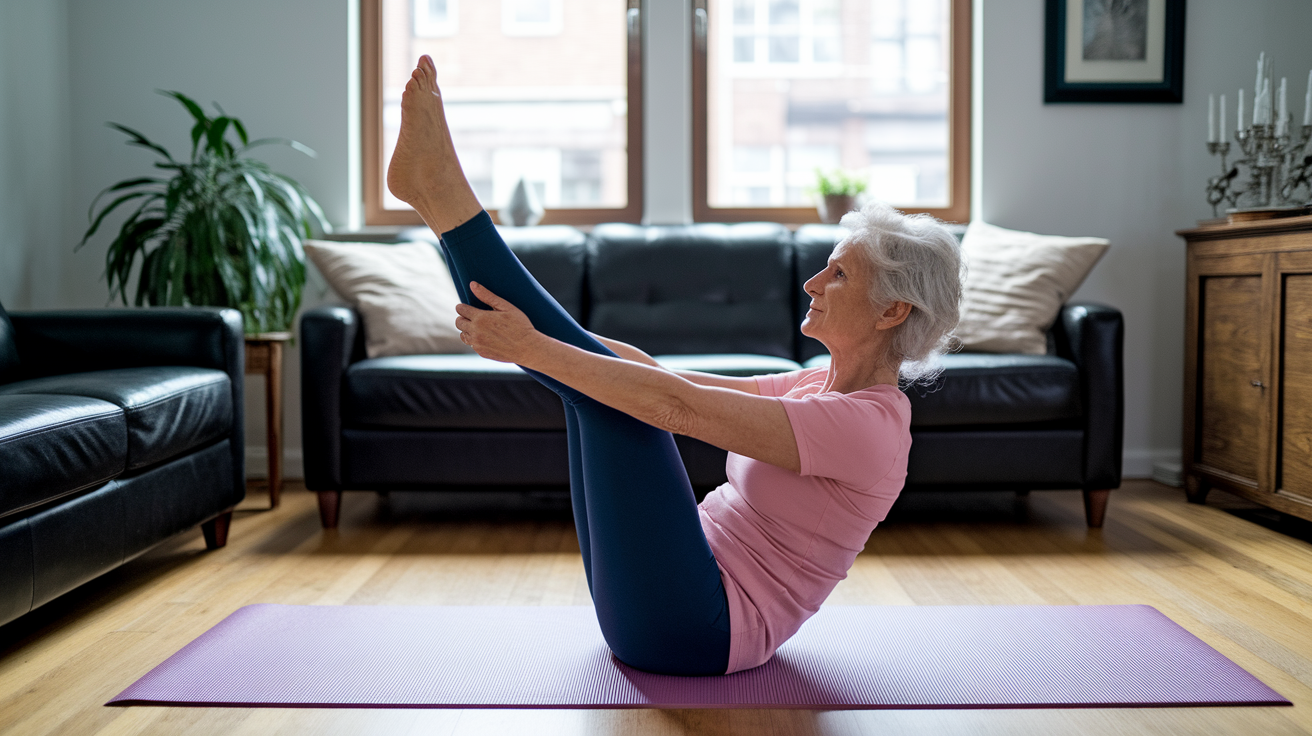
What if most knee pain isn’t about the knee at all?
Weak quads, hamstrings, and glutes often force the joint to take too much load, so everyday movement wears it down.
This post shows five simple, foundational exercises you can start today to build stability, spread force across the whole leg, and reduce daily discomfort—plus safe progressions when you’re ready.
No fancy equipment, just a little time and steady practice.
If your knees flare up, you’ll find pain-sensitive options and clear cues so you can get stronger without making things worse.
Essential Knee Strengthening Exercises for Immediate Use
25% of adults over age 55 report knee pain at least once every year. Knee osteoarthritis affects roughly 80% of older adults. U.S. treatment costs for knee conditions reach $185.5 billion annually. Those numbers tell you something important: most of us will deal with knee discomfort at some point, and waiting until it’s chronic isn’t smart.
Strengthening the muscles around your knee reduces the load your joint surfaces absorb. When your quads, hamstrings, and glutes are weak, every step, squat, or stair climb puts more pressure directly onto cartilage and ligaments. That wears things down faster. Makes daily tasks harder. When those nine muscles that influence knee mechanics are strong and balanced, they spread force across a wider system. You’re not asking your knee to do all the work alone.
Here are five foundational exercises you can start today. Master these before moving to more dynamic or loaded work.
Five foundational knee strengthening exercises:
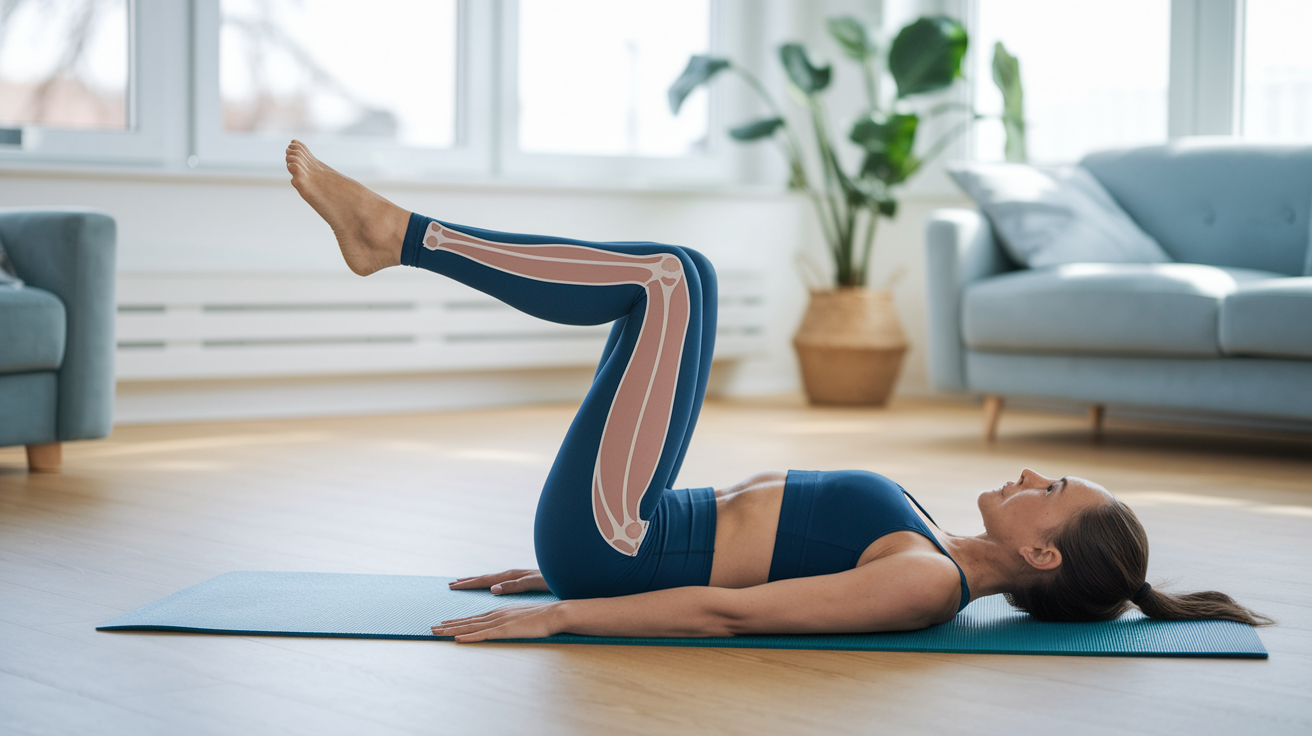
- Quad Set to Straight Leg Raise – Lie on your back with one knee bent and the other leg straight. Squeeze the thigh of the straight leg, lock the knee fully, then lift that leg 6 to 10 inches off the ground. Hold briefly and lower with control.
- Squat – Stand with feet hip-width apart. Sit your hips back as if reaching for a chair, lowering until your hips are just above knee level. Squeeze your glutes and push through your heels to stand back up.
- Wall Squat – Press your back flat against a wall and slide your hips down into a squat position. Hold that position and simultaneously reach the opposite arm down toward the floor while keeping your back straight against the wall.
- Bridge – Lie on your back with both knees bent and feet flat. Push your hips up toward the ceiling, pause at the top, then lower slowly back to the floor.
- Single-Leg Balance with Reach – Stand on one leg with a slight bend in the knee. Hold your balance and reach forward, to the side, or down with your opposite hand to challenge stability. Keep the movement controlled and don’t let your knee collapse inward.
Muscle Groups That Power Knee Strength and Stability
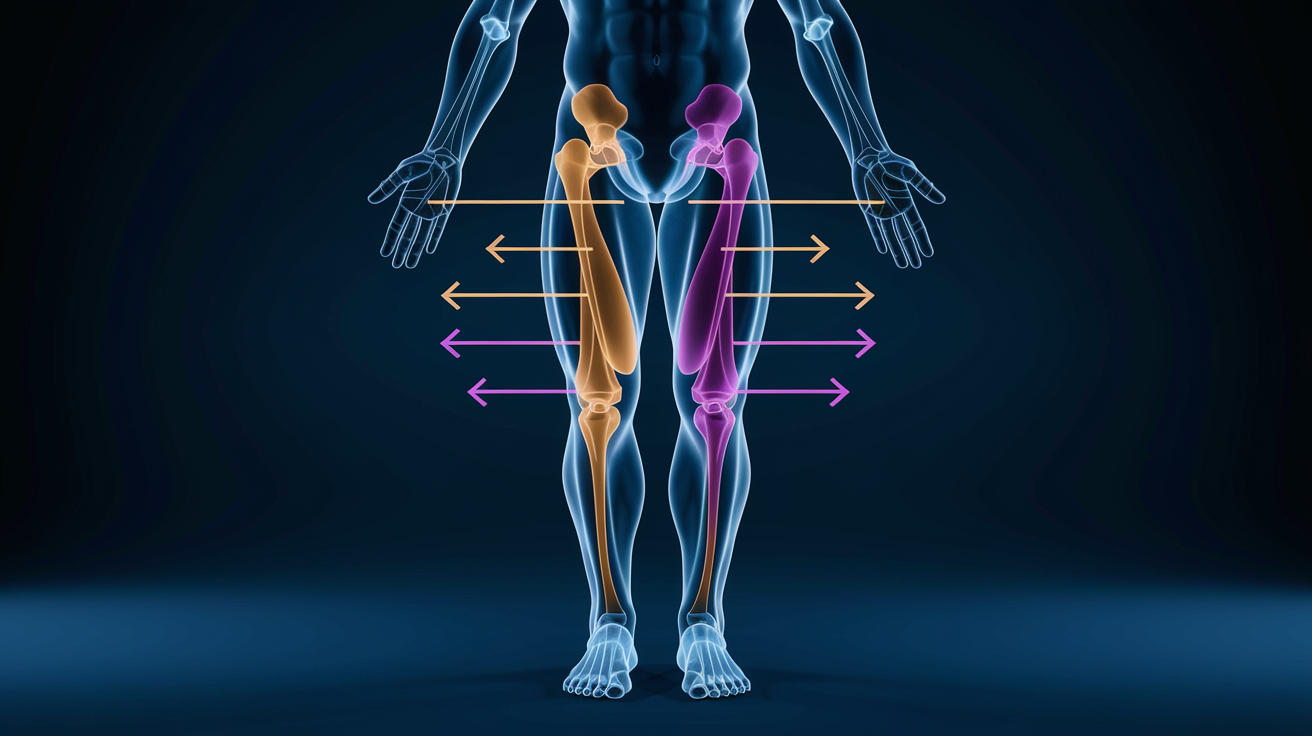
Your quadriceps and hamstrings are the primary stabilizers in the sagittal plane. That’s the plane you move through when you walk forward, squat, or climb stairs. The quads are made up of four muscles that extend your knee and control how you lower into a squat or step. The hamstrings include three muscles that flex your knee and work with the quads to keep your leg from buckling under load. Together, these seven muscles manage most of the front-to-back forces your knee faces every day.
Your glutes and deep external rotators handle stability in the frontal and transverse planes. That means they control side-to-side motion and rotation at the hip, which directly affects what happens at your knee. If your hip drops when you stand on one leg or your knee caves inward during a squat, that’s usually a hip strength issue. Not a knee problem. Strong glutes keep your femur aligned and reduce the twisting and sideways shear forces that irritate knee joints.
Functional movement places triplanar load on your knee. Walking, running, squatting, jumping. Your body doesn’t move in just one direction at a time. Every step involves a little forward motion, a little rotation, and some stabilization against side forces. If any muscle group in this system is weak, the knee compensates. It absorbs stress it wasn’t built to handle long term.
Summary of muscle roles:
- Quads: extend the knee, control descent, absorb impact in forward motion
- Hamstrings: flex the knee, stabilize the joint, work with quads to manage sagittal-plane forces
- Glutes: stabilize the hip, prevent inward knee collapse, control rotation and side-to-side forces
Beginner-Friendly Knee Strengthening Routine
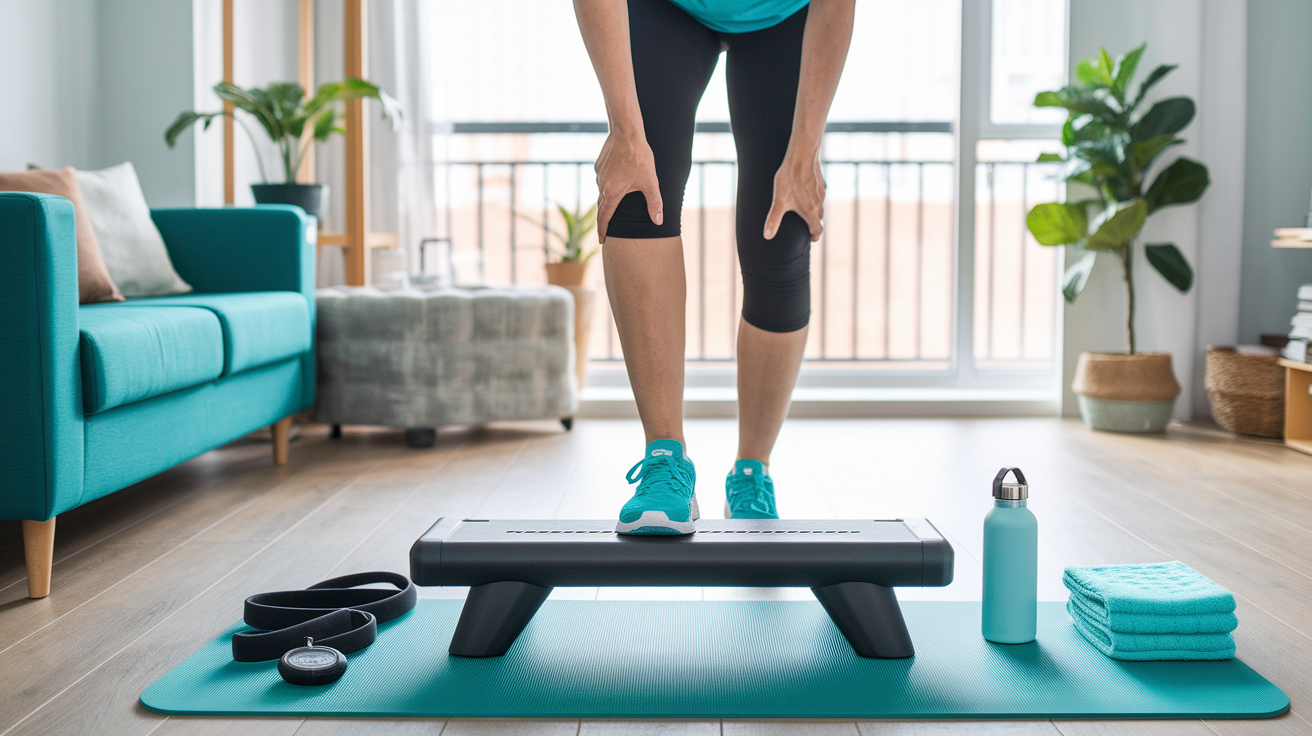
If you’re starting from scratch or getting back to movement after a setback, the goal is simple: build a base before you add complexity. Foundational exercises teach your nervous system how to activate muscles in the right order and keep your knee tracking properly under load. Skip this step and jump into heavy or dynamic work? You’re increasing the chance of compensations that lead to pain or re-injury.
A beginner routine should include a warm-up, four to five main exercises, controlled rest periods, and a cool-down. Stretches work best when held for at least 30 seconds after 6 to 10 minutes of light movement that raises your core temperature and gets blood flowing to the muscles you’re about to load.
Step-by-step beginner routine:
- Warm-up – 6 to 10 minutes of easy walking, cycling, or marching in place. Add a few leg swings front-to-back and side-to-side.
- Main exercises – Perform Straight Leg Raise, Step-Ups, Wall Sits, and Calf Raises in order. Focus on controlled movement and full range within comfort.
- Sets and reps – Complete 2 to 3 sets of each exercise. Use the rep ranges in the table below.
- Rest – Take 30 to 60 seconds between sets. Longer if you’re still building endurance.
- Cool-down – 5 to 10 minutes of static stretching for quads, hamstrings, calves, and hip flexors. Hold each stretch for 30 seconds minimum.
| Exercise | Sets/Reps | Key Form Cue |
|---|---|---|
| Straight Leg Raise | 2–3 sets of 10–15 reps per leg | Lock the knee fully and lift with control; don’t jerk the leg upward |
| Step-Ups | 2–3 sets of 10–15 reps per leg | Press through the heel of the elevated foot; keep your entire foot on the step |
| Wall Sits | 2–3 sets, hold 20–30 seconds | Keep knees aligned over toes; don’t let knees cave inward |
| Calf Raises | 2–3 sets of 15–20 reps | Rise onto the balls of your feet slowly; squeeze at the top before lowering |
Intermediate to Advanced Knee Strength Progressions

Once you can perform foundational exercises with solid form and minimal discomfort, the next step is adding load, increasing range, or moving to single-leg variations. Single-leg work is especially useful because it mirrors real-world demands. Most of the time you walk, climb stairs, or change direction, one leg is doing most of the work. Training one leg at a time also exposes and corrects side-to-side strength imbalances that bilateral exercises can hide.
Progression should be gradual. Based on maintaining quality movement. A good rule is to increase load by 5 to 10% or add 2 to 5 reps every one to two weeks. If your form starts to break down, knee caving in, back arching, or compensating with momentum, you’ve added too much too soon. Drop back a step and build consistency before trying again.
Four exercises to progress your knee strength:
- Single-Leg Bridge – Lie on your back with one foot flat and the other leg extended straight or bent with the foot off the floor. Push through the grounded heel and lift your hips. This isolates each glute and hamstring and challenges pelvic stability.
- Stationary Lunge – Step one foot forward into a split stance and lower your back knee toward the floor. Keep your torso upright and don’t let your front knee drift forward past your toes. This builds single-leg strength and control in a longer range of motion.
- Eccentric Squat – Lower into a squat over a slow 3 to 5 second count, then stand back up at normal speed. Eccentric loading builds strength in the lengthening phase, which is where most injuries happen and where many people are weakest.
- Single-Leg Romanian Deadlift (RDL) – Stand on one leg with a slight bend in the knee. Hinge forward at the hips, keeping your back flat, and reach your opposite hand toward the floor. This trains hip hinge mechanics, glute and hamstring strength, and balance all at once.
Use a controlled tempo on all of these: take about 2 seconds to lower, pause for 1 second at the bottom or end range, then take 1 to 2 seconds to return to the start. Controlled movement keeps tension on the muscles and reduces joint stress. As you get stronger, progress weekly by adding a rep or two per set, or by holding a light dumbbell or wearing a weighted vest.
Pain-Sensitive and Condition-Specific Knee Exercises

If you’re dealing with osteoarthritis, post-surgical rehab, or a history of meniscus or ligament injury, the same strengthening principles apply. But the exercise selection and progression need to match where you are right now. Pain isn’t always a stop sign, but sharp, increasing, or unstable pain is. Low-level discomfort that fades quickly after a set is usually manageable. Pain that lingers for hours or gets worse over the next day means you need to modify.
For osteoarthritis, the goal is to load the joint enough to build strength without flaring inflammation. That usually means partial-range squats, step-ups onto a low step, seated or supine leg raises, and exercises done in water if impact is an issue. Deep squats and long-range lunges can increase joint compression in sensitive knees, so starting with a box squat or a shallower range and progressing slowly works better. Aim for around 150 minutes of moderate activity per week, spread across several days, as tolerated.
Post-surgical rehab follows a phased plan. In the first zero to two weeks, the focus is usually on pain control, gentle range-of-motion work, and quad activation through isometric holds or straight-leg raises. Weeks two to six introduce partial weight-bearing and simple closed-chain exercises like mini-squats and low step-ups. After six weeks, most protocols allow progressive strengthening, single-leg work, and loaded squats or lunges, but always under the guidance of your surgeon or physical therapist.
Four safe exercise substitutions for sensitive knees:
- Replace deep squats with chair-assisted squats – sit back to a chair or box to control depth and reduce load at end range.
- Swap full lunges for short-step stationary lunges – limit forward knee travel and work in a smaller, pain-free range.
- Try aquatic variations – water reduces impact by up to 90% and lets you move through full range with less joint stress.
- Use seated leg raises instead of standing exercises when standing balance or weight-bearing causes discomfort.
Warm-Up and Mobility Prep Before Knee Strength Work
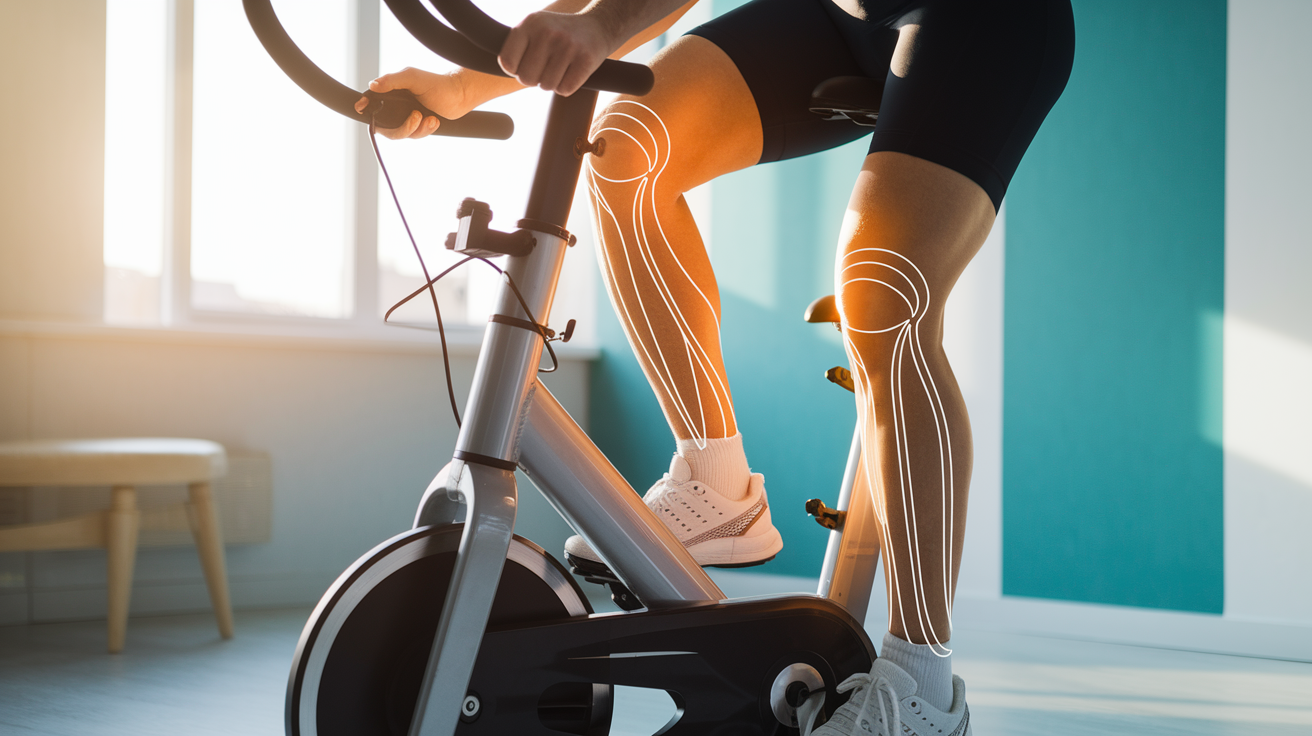
Warming up before you load your knees reduces stiffness, increases synovial fluid in the joint, and primes the nervous system to recruit muscles in the right sequence. Cold, stiff tissues are more likely to compensate or move inefficiently, which can lead to irritation or injury over time. Six to ten minutes of mild aerobic work is enough to raise your core temperature and get blood flowing to the muscles you’re about to use.
Four warm-up drills to prepare your knees:
- Light cycling – 5 to 8 minutes on a stationary bike at low resistance warms the knee joint through a full range without impact.
- Walking – 6 to 10 minutes of easy-paced walking, indoors or outside, is simple and works for most people.
- Leg swings – hold a wall or chair for balance and swing one leg forward and back, then side to side, for 10 to 15 reps per direction per leg.
- High knees – march in place, lifting your knees toward your chest in a controlled rhythm for 30 to 60 seconds.
Strengthening exercises are more effective after mobility prep because your joints move through a fuller, smoother range and your muscles activate more completely. Stretching before a workout is less useful than stretching after. Save static holds for your cool-down when muscles are warm and pliable.
Knee Stretching and Cool-Down Protocol for Better Recovery
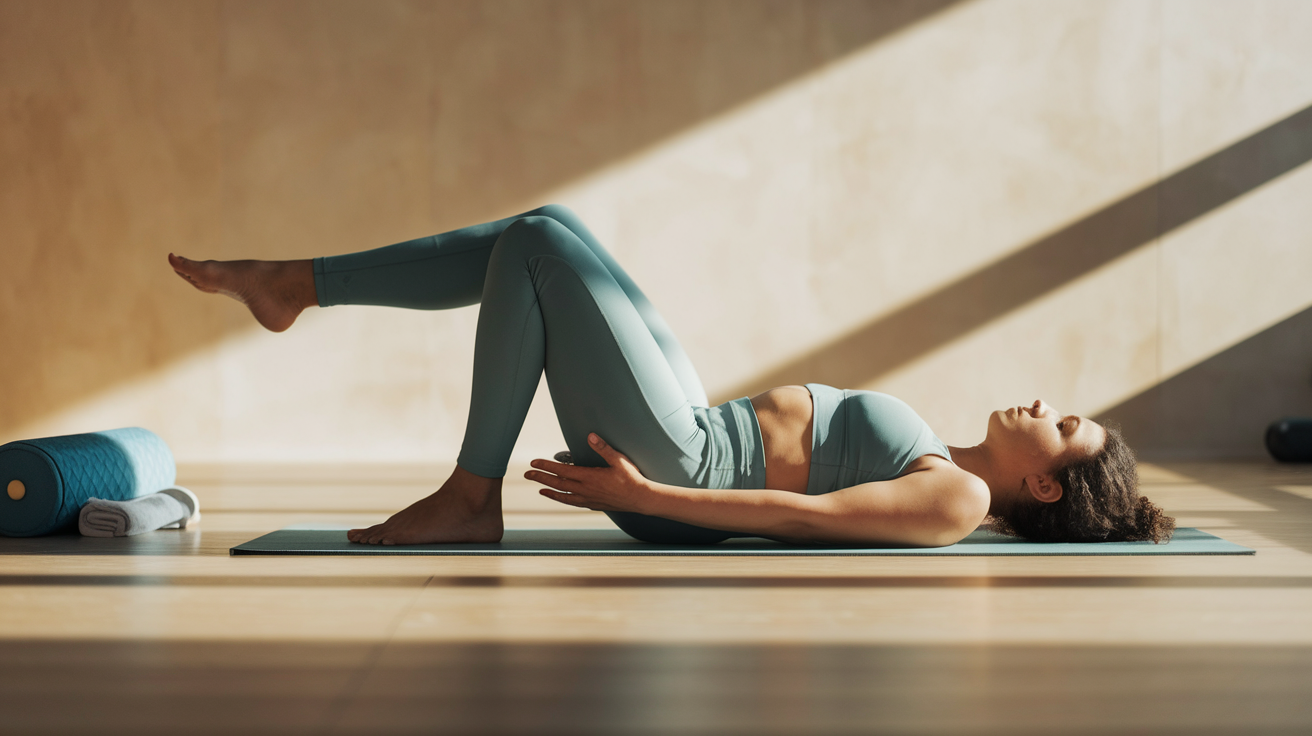
After your strength work, spend 5 to 10 minutes stretching the muscles that support your knee. This helps reduce post-exercise stiffness and keeps your range of motion balanced. Stretches should be held for at least 30 seconds with steady, comfortable tension. No bouncing or forcing past the point of mild discomfort.
Focus on the muscles that cross or influence the knee joint: calves, quads, hamstrings, and hip flexors. Tight calves can alter ankle mechanics and shift load onto the knee. Tight quads or hip flexors can pull the pelvis forward and change how your femur tracks during movement. Hamstring tightness limits hip hinge ability and often leads to compensations in the lower back or knee.
Three key stretches to include in your cool-down:
- Calf stretch (gastrocnemius and soleus) – stand in a staggered stance facing a wall, front foot forward and back leg straight with heel down. Lean forward at the ankle to feel the stretch in the upper calf. Bend the back knee slightly to shift the stretch lower toward the Achilles.
- Quad stretch – stand on one leg and pull the opposite ankle toward your buttock, keeping your knee pointed down and your leg aligned with your body. Hold a chair or wall for balance if needed.
- Hamstring stretch – lie on your back, hands behind one knee, and gently pull that leg toward your chest while keeping the opposite leg flat on the floor. You should feel the stretch along the back of the thigh.
Hold each stretch for 30 to 60 seconds per side, breathe normally, and ease into the stretch rather than forcing it. Stretching when muscles are warm improves flexibility gains and reduces the risk of straining a cold muscle.
Knee Exercise Safety, Pain Monitoring, and When to Seek Professional Help
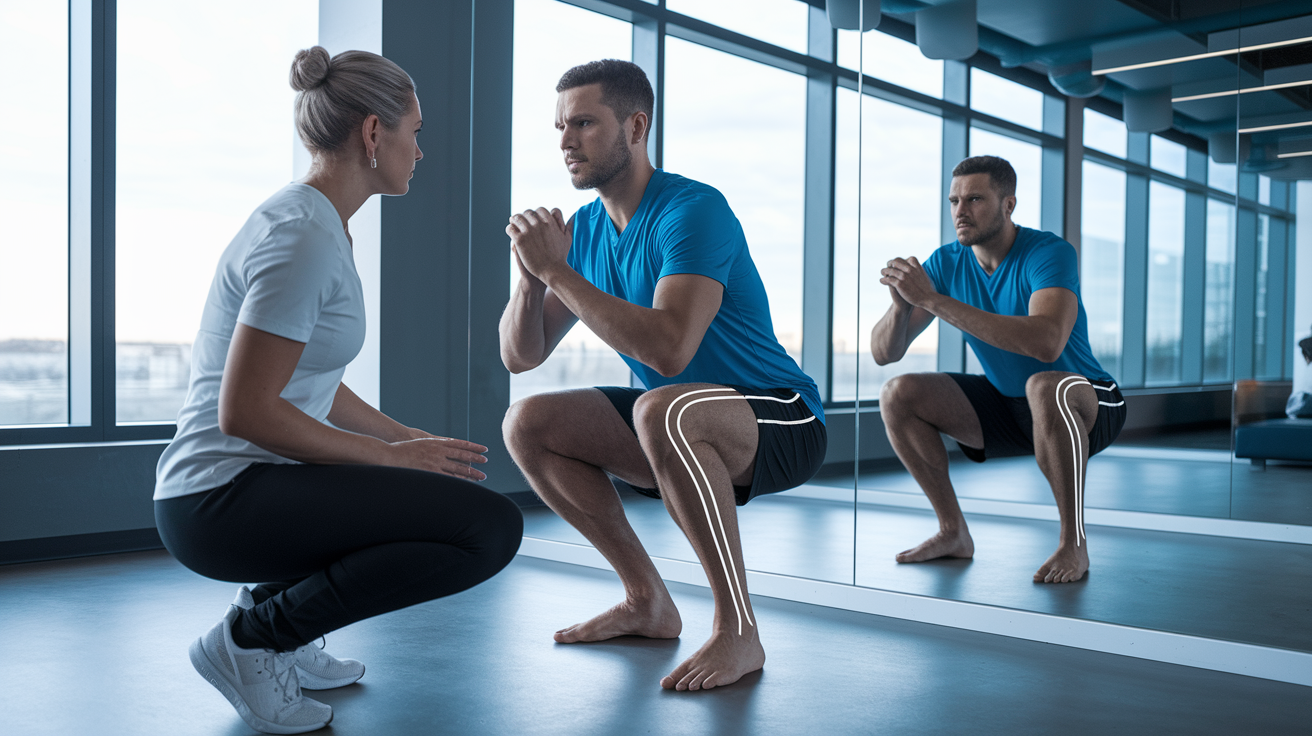
Not all knee discomfort means you need to stop. Low-level soreness during a set or mild muscle fatigue afterward is normal, especially when you’re introducing new exercises or increasing intensity. What you’re watching for is sharp pain, sudden instability, new or worsening swelling, or discomfort that doesn’t settle within 48 hours. Those are signs that something isn’t moving correctly or that tissue is being irritated rather than strengthened.
Progression should feel challenging but controlled. If you’re compensating, shifting weight to one side, leaning forward excessively, or letting your knee cave inward, you’ve either added too much load or you’re fatigued. Take a longer rest, reduce the resistance, or scale back the exercise complexity. Good form always comes before adding reps or weight.
If pain persists despite modifying exercises, or if you notice clicking, locking, giving way, or neurologic symptoms like numbness or tingling, it’s time to get a formal evaluation from a physical therapist or physician. Early intervention usually means simpler, faster fixes. Ignoring red flags and pushing through often turns a manageable issue into something that needs months of rehab or medical intervention.
Four safety cues to follow during knee exercises:
- Keep your knee aligned over your second toe – don’t let it collapse inward or bow outward during squats, lunges, or single-leg work.
- Control the descent – lower slowly and with intention. Don’t drop into the bottom of a squat or let gravity do the work.
- Maintain full foot contact – especially during step-ups and lunges, make sure your entire foot is planted and your weight is centered over your midfoot and heel.
- Don’t jerk or bounce – use smooth, controlled movement through the full range. Momentum hides weaknesses and increases injury risk.
Sample 4-Week Knee Strengthening Program
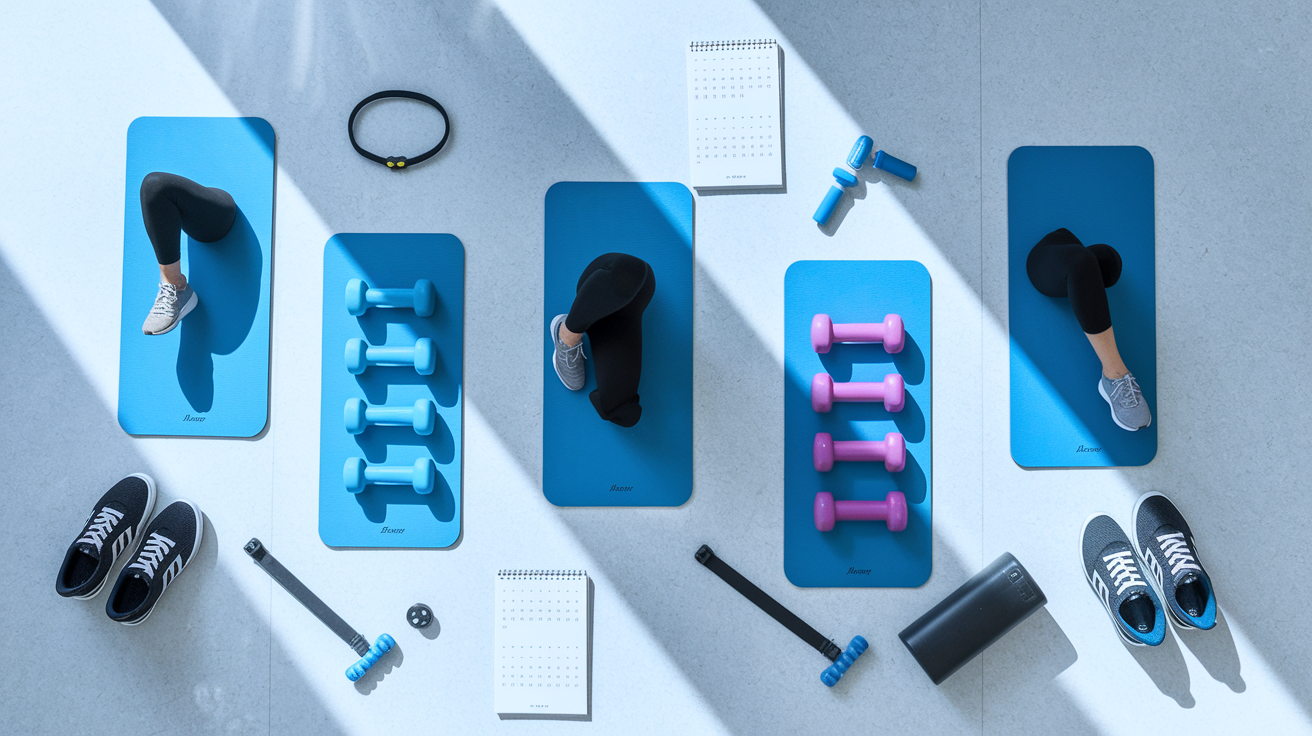
A structured program gives you clear weekly goals and removes the guesswork about what to do next. For most people, 2 to 4 sessions per week is enough to build strength without overloading the joint or cutting into recovery time. Strength-focused work typically uses 8 to 12 reps per set, endurance or rehab work uses 12 to 20 reps, and isometric holds like wall sits should be held for 20 to 60 seconds.
This 4-week plan starts with foundational exercises in Week 1 and adds light unilateral progressions by Week 4. Each week builds on the last, but only if you’re maintaining good form and recovering well between sessions. If a week feels too hard, repeat it before moving forward.
| Week | Focus | Exercises | Sets/Reps |
|---|---|---|---|
| Week 1 | Foundational bilateral strength and stability | Straight Leg Raise, Squat, Wall Sit, Calf Raise | 2 sets of 10–12 reps; wall sit 20–30 seconds |
| Week 2 | Increase volume and add bridge work | Straight Leg Raise, Squat, Bridge, Step-Ups, Calf Raise | 3 sets of 10–12 reps; step-ups 8–10 per leg |
| Week 3 | Introduce single-leg balance and longer holds | Single-Leg Balance with Reach, Squat, Bridge, Step-Ups, Wall Sit | 3 sets of 12 reps; wall sit 30–45 seconds; balance 20–30 seconds per leg |
| Week 4 | Light unilateral work and controlled eccentric loading | Single-Leg Bridge, Stationary Lunge, Eccentric Squat, Step-Ups, Calf Raise | 3 sets of 8–12 reps; single-leg bridge 8–10 per side; lunge 8–10 per leg |
Final Words
Start with the five foundational moves — quad set to straight leg raise, squats, wall squats, bridge, and single-leg balance — and focus on control through the full range of motion. These hit quads, hamstrings, and glutes so your knee joints handle less stress.
Follow the beginner routine, add progressions slowly, and keep warm-ups and cool-downs non-negotiable. Watch pain and use pain-sensitive options when needed.
These knee strengthening exercises are simple, repeatable, and safe. You’ve got this—one steady session at a time.
FAQ
Q: How do you strengthen a weak knee?
A: You strengthen a weak knee by building the muscles around it: start with quad sets and straight-leg raises, then progress to wall squats, bridges, step-ups, and balance drills, 2–4 times weekly while monitoring pain.
Q: What is the #1 mistake for bad knees?
A: The number one mistake for bad knees is loading the joint before you’ve built strength and control—skipping progressive strength work, using poor form, or jumping into high-impact activity increases pain and delays progress.
Q: How to naturally strengthen your knees?
A: You naturally strengthen your knees with low-impact, progressive strength exercises (straight-leg raises, squats, step-ups), consistent practice, regular walking, adequate protein and sleep, and avoiding sudden increases in activity.
Q: Does walking build knee muscle?
A: Walking builds knee-related muscle endurance—mainly quads and calves—but it’s low load; add targeted strength moves like squats, leg raises, and step-ups to increase true muscle strength and joint support.