
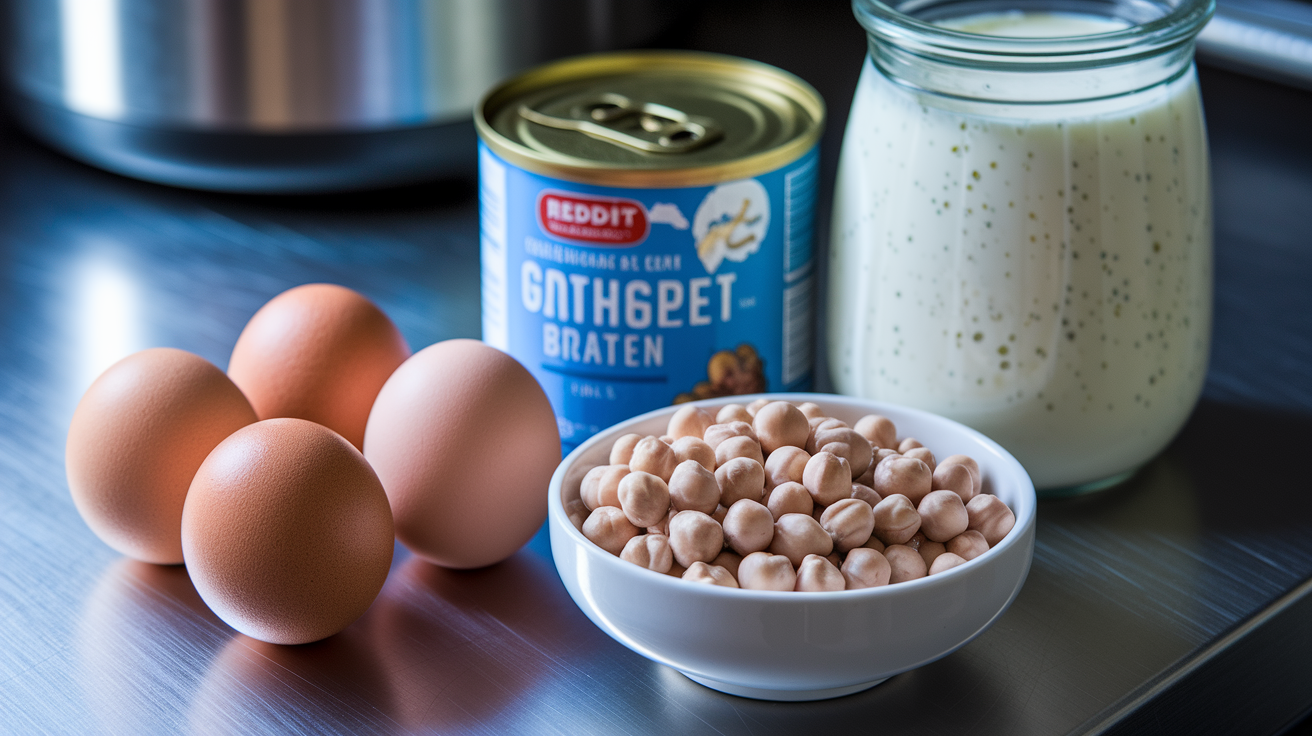
Think high-protein snacks have to be expensive?
They don’t.
You can get 6 to 24 grams of protein per serving for under two bucks.
Eggs, canned tuna, cottage cheese, Greek yogurt, and peanut butter are pantry basics that cost pennies per gram.
This post shows fast, budget-friendly snacks, how to compare price per gram, and simple prep tips so you save money every day without skimping on protein.
If your week blows up, there are grab-and-go options and batch recipes to make life easier.
Fast, Affordable High-Protein Snack Options That Deliver the Best Value
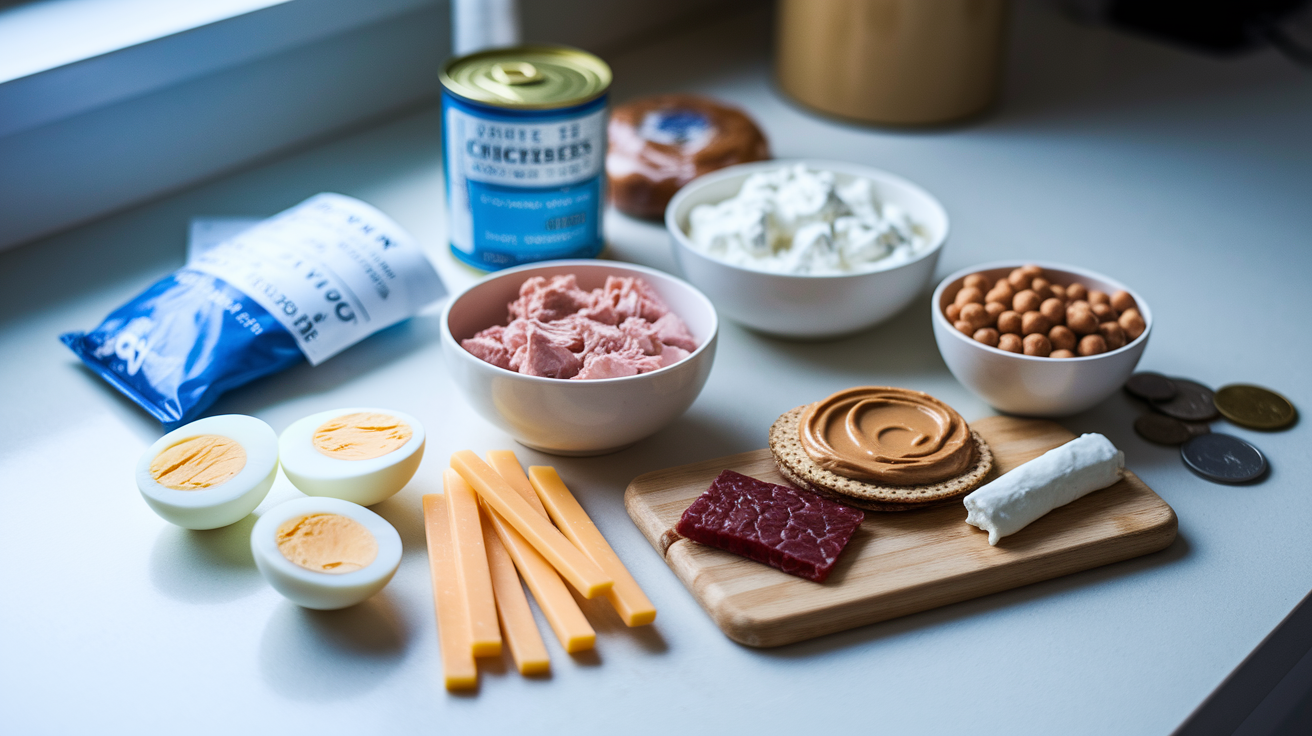
The best cheap high-protein snacks give you 6 to 24 grams of protein per serving for under two bucks. Eggs, canned tuna, and cottage cheese deliver the lowest cost per gram. Most of these are pantry staples or fridge basics you can buy in bulk at any grocery store.
• Eggs – 6.3 g protein per large hard-boiled egg, about $0.15 to $0.25 per egg, cost per gram around $0.03 to $0.04. Grab a dozen and boil them in batches.
• Canned tuna – 20.3 g protein per small can (about 3 oz), usually $0.80 to $1.50 per can, cost per gram around $0.04 to $0.07. Sits on your shelf forever and you can eat it straight from the can or toss it with crackers.
• Cottage cheese – 24 g protein per cup, large tubs run $2.50 to $4.00 for 16 oz (2 cups), cost per gram around $0.05 to $0.08. Generic brands drop the price even more.
• Roasted chickpeas – 7.5 g protein per 1/4 cup dry (before roasting), one 15 oz can costs $0.70 to $1.20 and makes multiple servings, cost per gram around $0.07 to $0.10.
• Greek yogurt – 15 to 20 g protein per cup, large tubs (32 oz) range from $3.50 to $5.00, cost per gram around $0.08 to $0.12. Plain store brands beat single-serve cups every time.
• Peanut butter – 24 g protein per 3.5 tablespoons, standard jars (16 oz) cost $2.50 to $4.00, cost per gram around $0.10 to $0.15. Pair it with celery, whole-grain crackers, or throw it in DIY energy balls.
• Cheese sticks – 2.5 g protein per stick, bulk packs (12 to 24 count) run $3.00 to $6.00, cost per gram around $0.10 to $0.20. Already wrapped for easy grab and go.
• Beef or turkey jerky – 9 to 22 g protein per serving depending on the product, single packs cost $1.50 to $3.50, cost per gram around $0.10 to $0.20. Buy bigger bags and portion into small zip-top bags to cut the cost.
Cost Comparison of Low-Cost High-Protein Snacks
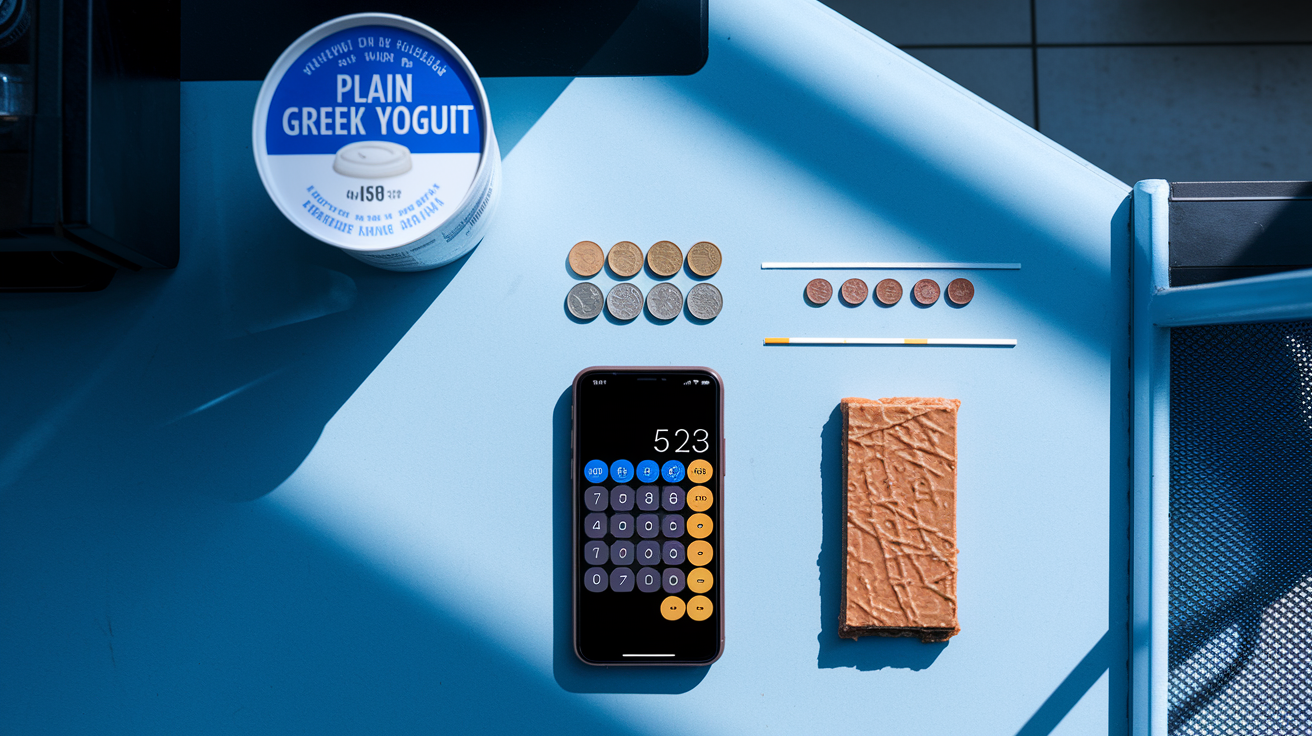
Figure out cost per gram of protein by dividing the item price by total grams of protein inside. A carton of Greek yogurt at $4.00 with 80 total grams costs $0.05 per gram. A single protein bar at $2.00 with 15 grams costs $0.13 per gram. Yogurt wins.
Plant proteins cost less because crops like lentils, chickpeas, and peas need less land, water, and processing than animal sources. You see that savings at the store.
| Snack | Protein per Serving | Approximate Price per Serving | Cost per Gram of Protein |
|---|---|---|---|
| Large egg | 6.3 g | $0.15–$0.25 | $0.03–$0.04 |
| Canned tuna (3 oz) | 20.3 g | $0.80–$1.50 | $0.04–$0.07 |
| Greek yogurt (1 cup) | 20 g | $1.00–$1.25 | $0.05–$0.06 |
| Chickpeas (1/4 cup dry) | 7.5 g | $0.20–$0.30 | $0.03–$0.04 |
Pull up your phone calculator at the store and run the numbers on any two similar items. The one with the lower cost per gram keeps more money in your pocket.
Cheap Store-Bought High-Protein Snacks That Travel Well
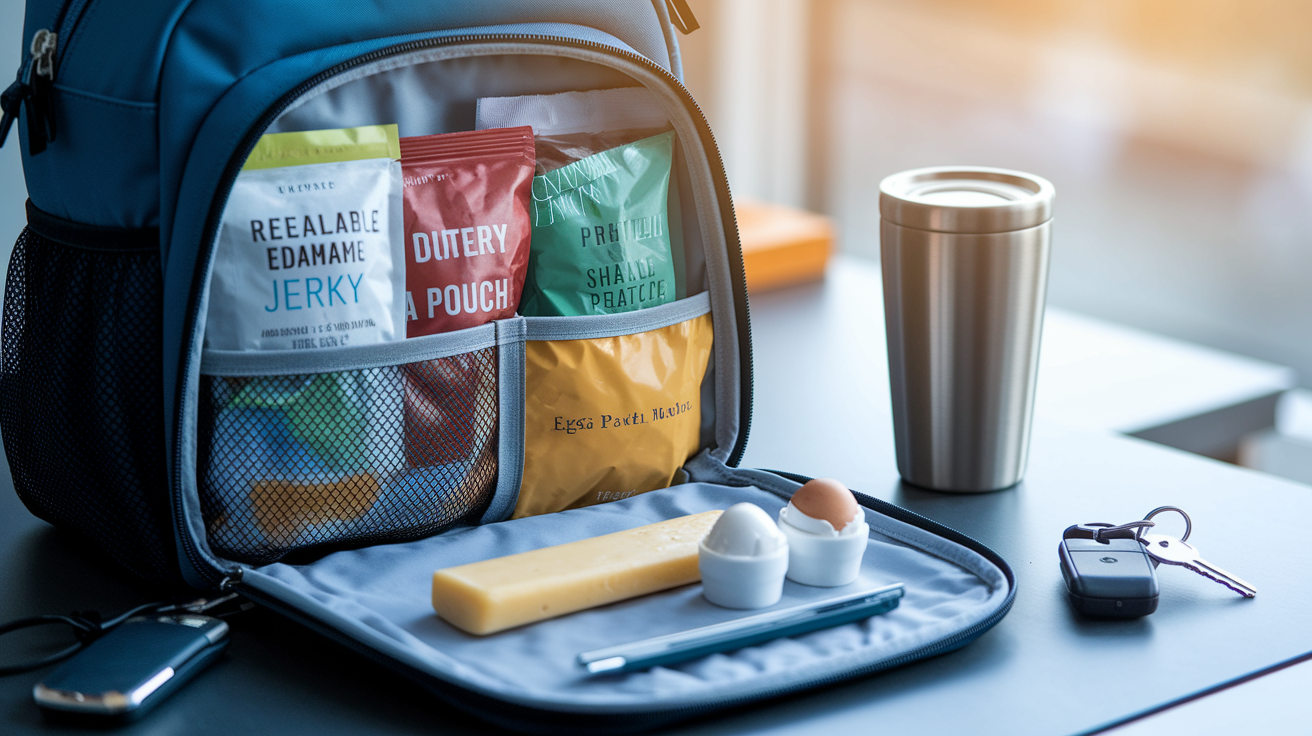
Shelf-stable and fridge-stable snacks survive backpacks, car cup holders, and desk drawers without refrigeration or special packaging. Look for individually wrapped or resealable stuff that stays fresh for days or weeks after opening.
Sealed cheese sticks last weeks in the fridge and travel fine in a lunch bag with a small ice pack. Jerky and canned fish sit in your pantry for months and deliver protein without any prep. Pre-made protein shakes bought in multi-packs cost less per serving than mixing powders one shake at a time, and the bottles are ready to go.
Retailers like Walmart and Aldi stock store versions of nearly every high-protein snack category, usually priced 20 to 40 percent below name brands. Dollar stores carry single-serve tuna pouches, small packs of peanuts, and sometimes string cheese, though per-unit cost can be higher than bulk buying at a grocery chain.
• Beef or turkey jerky – 9 to 22 g protein per serving depending on cut and brand. Buy larger resealable bags and portion into snack-size bags.
• Cheese sticks (mozzarella or cheddar) – 2.5 g protein per stick. Bulk packs of 12 to 24 sticks run $3 to $6.
• Canned tuna or salmon – 20 g protein per small can. Store versions cost under $1 each on sale.
• Pre-made protein shakes – 15 to 30 g protein per bottle. Buy multi-packs at warehouse clubs for the best per-serving price.
• Roasted edamame (dry-roasted snack packs) – 13 g protein per serving. Available in single-serve pouches or resealable bags.
• Hard-boiled eggs (pre-peeled packs) – 6.3 g protein per egg. Some grocers sell packs of two or six, refrigerated and ready to eat.
Budget-Friendly Homemade High-Protein Snack Recipes
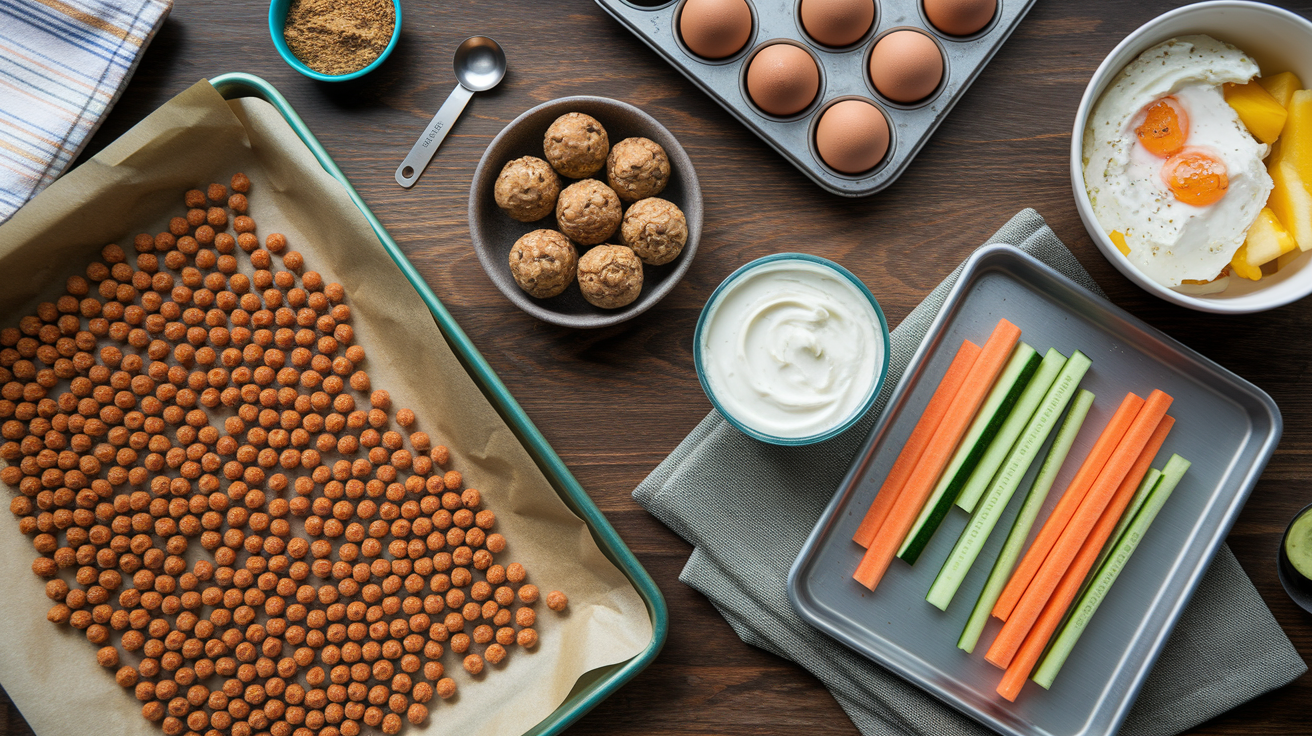
Homemade snacks cost a fraction of pre-packaged ones and let you control sugar, salt, and ingredient quality. Most recipes use pantry staples and take under 30 minutes from start to storage container.
Roasted chickpeas turn a 70-cent can into a crunchy, portable snack with 7 to 15 grams of protein depending on portion size. Energy balls combine oats, peanut butter, and honey into bite-sized snacks that store in the fridge for a week and cost under 30 cents per ball. Greek yogurt dips replace sour cream or ranch and deliver 10 grams of protein per half-cup serving when you use plain Greek yogurt as the base.
No-bake recipes skip the oven entirely, saving time and keeping the kitchen cool. Baked recipes use standard oven temps and mostly hands-off time while the food cooks.
Spicy Roasted Chickpeas
Drain and rinse one 15 oz can of chickpeas, spread them on a towel and pat completely dry. Toss the chickpeas with one tablespoon of olive oil, half a teaspoon of paprika, quarter teaspoon of garlic powder, quarter teaspoon of chili powder, and a pinch of salt. Spread on a baking sheet in a single layer and roast at 425°F for 20 to 30 minutes, shaking the pan halfway. They’re done when golden and crunchy. One batch gives you about 12 to 15 grams of protein total, split into three or four servings.
No-Bake Peanut Butter Protein Balls
Combine one cup of rolled oats, half a cup of peanut butter, one-third cup of honey or maple syrup, and two scoops of protein powder in a mixing bowl. Add one tablespoon of chia or flax seeds if you have them. Stir until everything sticks together, then roll the mixture into 12 to 15 bite-sized balls. Refrigerate for at least 30 minutes before eating. Each ball has about 5 to 7 grams of protein depending on the protein powder you use.
• Greek yogurt veggie dip – Mix one cup of plain Greek yogurt (20 g protein) with dried dill, lemon juice, garlic powder, salt, and pepper. Use as a dip for carrots, celery, or cucumber slices.
• Baked egg bites – Whisk eggs with diced vegetables and a tablespoon of shredded cheese, pour into a greased muffin tin, and bake at 350°F for 15 to 20 minutes. Each bite has about 4 to 5 grams of protein.
• Cottage cheese fruit bowl – Top half a cup of cottage cheese (12 g protein) with berries, a sprinkle of cinnamon, and a handful of chopped nuts.
• Tuna salad lettuce wraps – Mix one small can of tuna (20 g protein) with a teaspoon of mustard and a squeeze of lemon, then scoop into large lettuce leaves.
High-Protein Vegetarian and Vegan Snacks on a Tight Budget
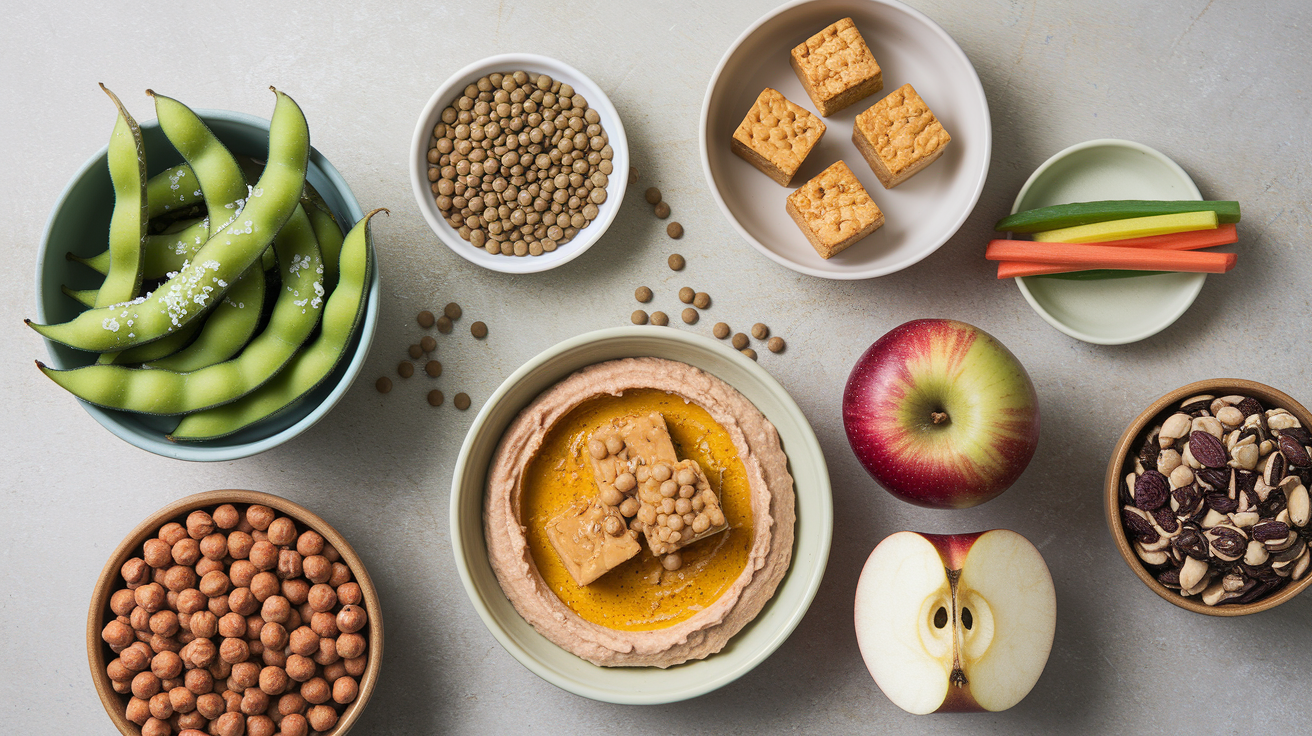
Plant proteins deliver high protein counts without the higher price tags of meat and dairy. Dry lentils, canned beans, and frozen edamame cost less per serving than chicken breast or deli turkey and often pack in fiber that keeps you full longer.
Edamame runs about $2 for a 12 oz bag of frozen pods, which gives you three to four servings at 13 grams of protein per cup. Lentils cost under $2 per pound dry and cook into three cups of cooked lentils with 18 grams of protein per cup. Tofu runs $1.50 to $3.00 per block and gives you 9 grams of protein per 3 oz serving, making it one of the cheapest complete proteins available.
• Frozen edamame – 13 g protein per cup. Microwave in the pod for three minutes, sprinkle with sea salt, and eat warm.
• Cooked lentils – 18 g protein per cup. Cook a batch with garlic and cumin, portion into containers and reheat as needed.
• Baked tofu cubes – 9 g protein per 3 oz. Cube firm tofu, toss with soy sauce and garlic powder, bake at 400°F for 25 minutes.
• Roasted chickpeas – 7 to 15 g protein depending on portion. Season with curry powder, cinnamon, or ranch seasoning mix.
• Hummus with veggie sticks – 2 to 4 g protein per quarter-cup of hummus. Make your own by blending canned chickpeas, tahini, lemon juice, and garlic.
• Peanut butter on apple slices – 7 g protein per 2 tablespoons of peanut butter. Any nut or seed butter works.
• Trail mix (nuts, seeds, dried fruit) – 5 to 6 g protein per quarter-cup. Buy raw nuts and seeds in bulk and mix your own to skip added sugar and oils.
High-Protein Snack Prep and Storage Tips for Saving Money
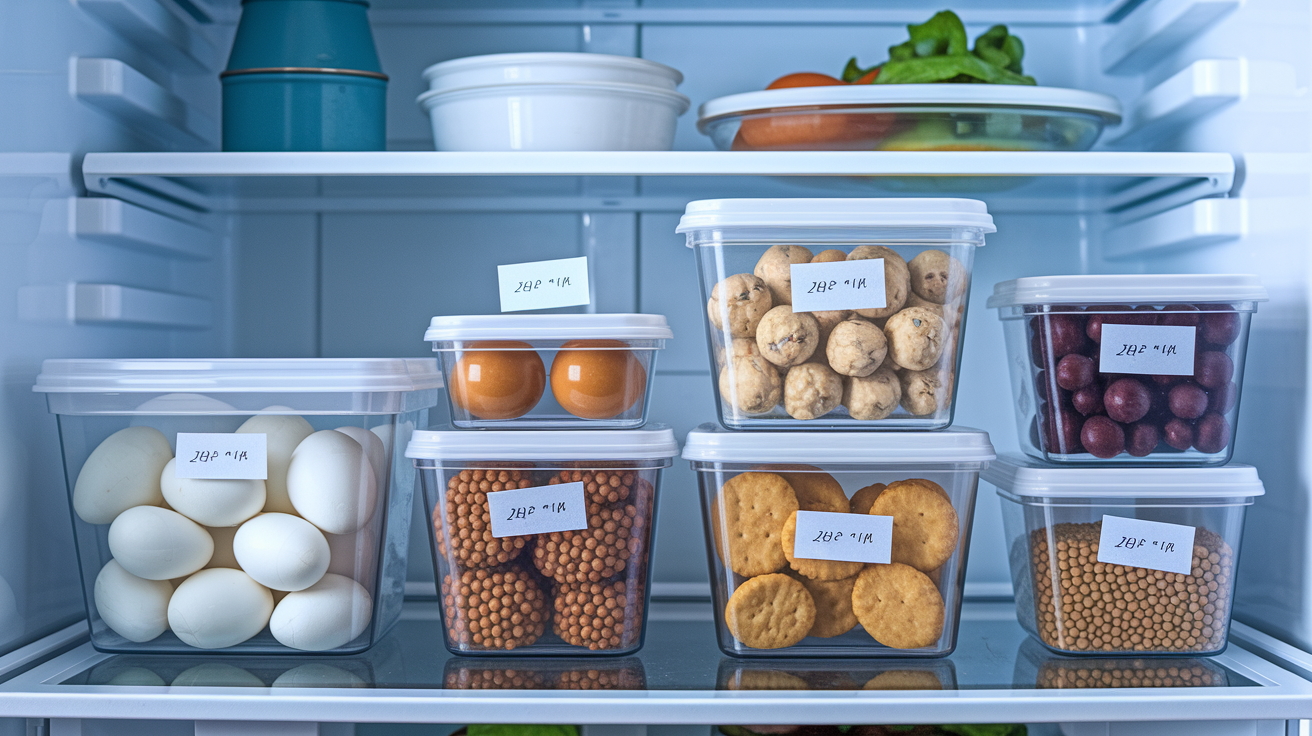
Prepping snacks once or twice a week cuts down on last-minute spending and reduces food waste. Batch-cook eggs, roast a few cans of chickpeas, portion Greek yogurt into small containers, and roll energy balls on Sunday so every weekday snack is ready to grab.
Store homemade snacks in airtight containers or zip-top bags to keep them fresh. Roasted chickpeas stay crisp for three to five days in a sealed container at room temperature. Hard-boiled eggs last a week in the fridge. Pre-portioned nut butter and crackers in small containers prevent over-snacking and make it easy to toss a snack into your bag.
• Use muffin tins for single-serve portions – Bake egg bites or portion overnight oats into muffin cups, freeze, and reheat one at a time.
• Label and date everything – Write the prep date on containers so you know when to use or toss.
• Freeze extras – Energy balls, baked egg bites, and cooked lentils freeze well for up to three months.
• Keep shelf-stable backups – Stock canned tuna, jerky, and nut butter so you always have a high-protein option even when the fridge is empty.
• Portion large containers immediately – When you buy a big tub of Greek yogurt or cottage cheese, divide it into single-serve containers right away for portion control and grab-and-go ease.
Buying Strategies for Cheap High-Protein Snacks on Any Budget
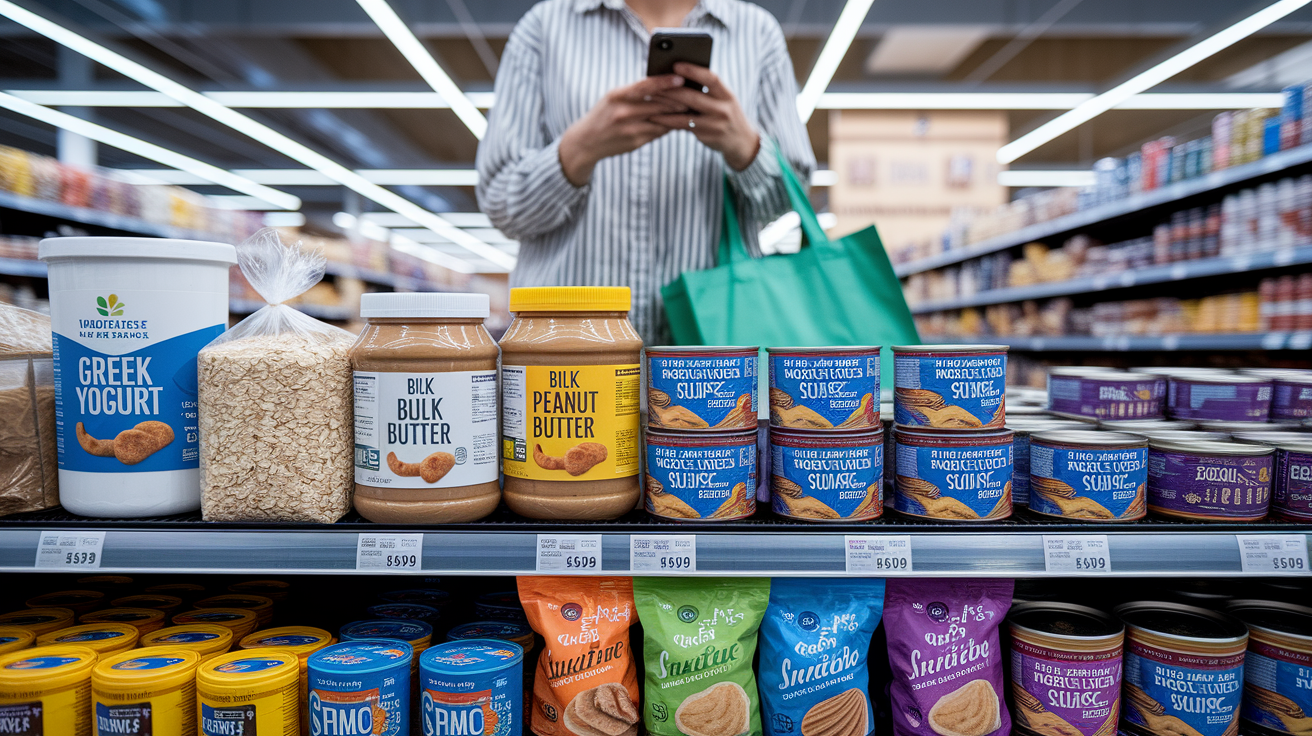
Buying in bulk brings down per-serving cost on nearly every high-protein snack. A large tub of Greek yogurt costs half as much per ounce as individual cups, and a five-pound bag of oats lasts months while costing less than boxed granola bars.
Read nutrition labels to compare protein per serving and total servings per package. A snack that looks cheap but gives you only 3 grams of protein per serving costs more per gram than a slightly pricier option with 10 grams. Go for items with a protein-to-calorie ratio above 0.1 (at least 10 grams of protein per 100 calories) to get solid nutrition without excess calories.
Generic and store versions of Greek yogurt, cottage cheese, canned tuna, cheese sticks, and peanut butter deliver the same protein as name brands for 20 to 50 percent less. Check unit pricing on shelf tags to compare cost per ounce across brands and package sizes.
• Stock up during sales – When chicken breast, eggs, or canned fish go on sale, buy extra and freeze or store for later.
• Use warehouse clubs for staples – Bulk packs of cheese sticks, jerky, protein shakes, and nut butter offer the lowest per-unit prices if you have storage space.
• Choose plain over flavored – Plain Greek yogurt, cottage cheese, and oats cost less than flavored versions and let you add your own fruit or honey.
• Compare price per gram of protein – Use your phone calculator at the store to divide item price by total protein grams and choose the winner.
• Skip single-serve packaging – Buy large bags of nuts, jerky, or roasted chickpeas and portion into reusable containers at home.
• Check discount grocery chains – Aldi, Lidl, and regional discount grocers often carry high-protein staples at prices 10 to 30 percent below mainstream chains.
Final Words
You’ve got a short list of the best fast, affordable high-protein snacks, plus quick cost-per-gram math to spot real value.
We covered portable store-bought picks like jerky, canned tuna, and cheese sticks, DIY recipes such as spicy roasted chickpeas and no-bake peanut butter protein balls, and plant-based options like edamame and lentils.
You also learned simple prep and storage hacks to keep snacks fresh, and shopping moves—buy bulk, choose store brands, check protein per serving.
Use these tips to build a reliable stash of cheap high protein snacks that fits your week. Small changes add up, and you’ve got this.
FAQ
Q: What is the cheapest high-protein snack?
A: The cheapest high-protein snack is often eggs or cooked chickpeas. Eggs give about 6 g each and cooked chickpeas offer ~7.5 g per 1/4 cup dry, both very budget-friendly.
Q: How to get 100g of protein a day cheaply?
A: To get 100g of protein cheaply, combine eggs, cottage cheese, canned tuna, Greek yogurt, peanut butter, and edamame. Example: 3 eggs, 1 cup cottage cheese, 1 tuna can, 1 cup yogurt, 2 tbsp peanut butter, ½ cup edamame ≈100g.
Q: What’s the best snack for diabetics?
A: The best snack for diabetics balances protein, fiber, and low added sugar. Try plain Greek yogurt with berries, apple with nut butter, a hard-boiled egg, or hummus with raw veggies; monitor portions.
Q: What are good snacks for hypertension?
A: Good snacks for hypertension are low-sodium, potassium-rich, and protein-forward. Choose unsalted nuts, plain Greek yogurt, fresh fruit with nut butter, edamame, or rinsed low-sodium canned tuna; check labels and consult your clinician.