

Want to lose weight fast? Here’s the hard truth: chasing rapid drops usually backfires.
Research supports a steady one to two pounds per week as the safest, most sustainable pace.
In this post you’ll learn how to set realistic weight loss goals with science-backed milestones, using your starting point, simple math, and weekly habits that fit real life.
No extreme diets, just clear month-to-month targets, protein-forward choices, and behavior-focused check-ins that keep progress real.
Core Principles for Setting Realistic Weight Loss Goals That You Can Sustain

The most important number to remember when you’re setting a weight loss goal? 1–2 pounds per week. That pace is backed by decades of research and reflects how your body can safely reduce fat mass without sacrificing muscle, energy, or metabolic health. Faster rates might look impressive on paper. But they often come with muscle loss, nutrient gaps, and rebound weight gain once the extreme phase ends. One to two pounds per week is realistic because it requires a calorie deficit your body can handle without triggering excessive hunger or fatigue.
That weekly target translates to about 4–8 pounds per month, or roughly 5–10% of your starting body weight over six months. For example, if you weigh 200 pounds, a realistic six-month goal would be 10–20 pounds. If you aim for 1 pound per week, you’ll need about 20 weeks to lose 20 pounds. If you push closer to 1.5 pounds per week, you can reach that same 20 pounds in 13–14 weeks. The math is simple. But the real skill is choosing a pace you can stick with through busy weeks, stressful days, and imperfect schedules.
Sustainable weight loss happens when your daily habits match the timeline. That means a moderate calorie deficit (usually 500–1,000 calories below your maintenance level), consistent movement, adequate protein, and recovery practices that keep your metabolism steady. When you focus on losing fat instead of just dropping scale weight, you protect the lean tissue that drives your energy and strength.
Here are the fundamentals of realistic goal setting to keep your plan grounded in what actually works:
- Aim for 1–2 pounds (0.45–0.9 kg) per week as a safe, evidence backed rate
- Create a calorie deficit of roughly 500–1,000 calories per day (3,500 calories equals about 1 pound of fat)
- Prioritize fat loss over total weight loss to preserve muscle and metabolic rate
- Use timeline logic by dividing your total goal by your weekly rate (e.g., 20 pounds ÷ 1 pound/week = 20 weeks)
- Keep a health first mindset by tracking energy, strength, and well being alongside the scale
How to Use Your Starting Point to Create Personal Weight Loss Goals

Before you pick a target number, you need to know where you’re starting. Your current weight is only part of the picture. Two people who weigh the same can carry very different amounts of fat and muscle. Which means they’ll need different strategies and timelines. Body composition matters more than the number on the scale, and understanding your starting metrics helps you set goals that reflect your actual physiology instead of generic advice.
Start by calculating your BMI (body mass index). The formula is simple: weight in kilograms divided by height in meters squared. If you prefer pounds and inches, multiply your weight in pounds by 703, then divide by your height in inches squared. BMI categories give you a rough sense of where you land: below 18.5 is underweight, 18.5–24.9 is normal, 25–29.9 is overweight, and 30 or higher falls into the obese range. BMI doesn’t tell you how much of your weight is fat versus muscle, but it’s a useful starting reference point that most health guidelines are built around.
Next, estimate your basal metabolic rate (BMR) and total daily energy expenditure (TDEE). Your BMR is the number of calories your body burns at rest just to keep your organs running. Your TDEE is your BMR multiplied by an activity factor based on how much you move each day. If you’re mostly sedentary, multiply BMR by about 1.2. If you’re lightly active (light exercise or walking a few days per week), use 1.375. Moderate activity (exercise most days) is around 1.55. Very active lifestyles (intense training or physical work) can go up to 1.725 or higher. Once you know your TDEE, you can subtract 500–1,000 calories to create the deficit that drives weight loss.
| Metric | Why It Matters | How to Calculate |
|---|---|---|
| Weight | Baseline for tracking total change and setting percentage based targets | Use a digital scale under consistent conditions (same time of day, same clothing) |
| BMI | Rough indicator of weight category, used in health guidelines | BMI = weight (kg) / height (m)² or (weight in lbs × 703) / height (inches)² |
| BMR | Determines baseline calorie burn at rest, foundation for deficit planning | Use an online BMR calculator with age, sex, weight, and height |
| TDEE | Estimates total daily calorie burn including activity, sets your maintenance level | TDEE = BMR × activity factor (1.2 sedentary, 1.375 light, 1.55 moderate, 1.725 very active) |
Individual factors like age, medications, and health conditions will change what’s realistic for you. Thyroid disorders slow metabolic rate. PCOS can make fat loss more stubborn. Some antidepressants and insulin therapies promote weight gain or make deficits harder to maintain. Chronic stress and poor sleep disrupt hunger hormones and increase fat storage signals. If any of these apply to you, expect a slower pace or consider medical guidance before setting aggressive targets.
Structuring SMART Weight Loss Goals for Clarity and Success

A goal like “I want to lose weight” is too vague to act on. You need a framework that turns the intention into a plan you can measure, adjust, and finish. That’s where SMART goals come in. SMART stands for Specific, Measurable, Achievable, Relevant, and Time bound. Each element forces you to think through what success looks like and how you’ll know when you’ve reached it.
Specific
A specific goal names exactly what you’re aiming for. Instead of “lose weight,” say “lose 12 pounds of body fat.” Instead of “exercise more,” say “strength train twice per week and walk 30 minutes on four other days.” The clearer the target, the easier it is to know what to do each week. “I’ll lose 12 pounds by reducing my daily calorie intake to 1,800 and hitting my protein target of 100 grams per day.”
Measurable
Measurable means you can track progress with real numbers. Weight, waist circumference, progress photos, and body fat percentage all count. A measurable goal might be “weigh myself every Monday morning and measure my waist on the first of each month.” You’ll know if you’re on track because the data will tell you, not because of how you feel on any given day.
Achievable
Achievable keeps the goal within the bounds of what’s realistic given your starting point, lifestyle, and timeline. If you have 12 pounds to lose, a 12 week plan at 1 pound per week is achievable. A 4 week plan for the same 12 pounds is not, unless you’re willing to use extreme deficits that risk muscle loss and burnout. Achievable also means your daily actions fit your real schedule. “I can meal prep on Sundays and resistance train during my lunch break twice a week.”
Relevant
Relevant means the goal matters to your life and health, not just a number you picked because it sounds good. If lowering your visceral fat will improve your blood pressure and energy, that’s relevant. If you’re chasing a weight you haven’t seen since high school just because of nostalgia, it might not be. Ask yourself why the goal matters and make sure the answer connects to how you want to feel and function. “Losing 12 pounds will bring my BMI into the normal range and reduce my risk for type 2 diabetes.”
Time Bound
Time bound gives you a deadline that creates urgency without pressure. A time bound goal might be “lose 12 pounds in 12 weeks, with progress check ins every 4 weeks.” The timeline keeps you accountable and lets you adjust if something isn’t working. It also prevents open ended plans that drift without resolution. Set a finish date, mark it on your calendar, and plan your weekly actions backward from that point.
Turning Long Term Weight Loss Plans into Monthly and Weekly Milestones

A 20 pound goal can feel overwhelming when you look at the whole number. Breaking it into smaller milestones makes the process feel manageable and gives you regular proof that the plan is working. Instead of focusing only on the final target, aim for 4–8 pounds per month and celebrate when you hit each checkpoint. Monthly milestones also let you adjust your approach if progress stalls or life gets busier than expected.
Plan for about 1 pound per week, which translates to roughly 4 pounds per month if you stay consistent. If you’re aiming for 1.5–2 pounds per week, you might hit 6–8 pounds per month during the early weeks when water weight and initial fat loss happen quickly. After the first month or two, expect the pace to settle closer to 1 pound per week. Each month, check your measurements, compare progress photos, and review your calorie and exercise logs to confirm you’re still on track.
Weekly milestones focus on behavior instead of outcomes. Your weekly goal might be “eat 100 grams of protein every day,” “complete two strength sessions and 150 minutes of walking,” or “stay within my calorie target six out of seven days.” These actions are what produce the weight loss, so when you hit your weekly behavior targets, you’re winning even if the scale hasn’t moved yet. Weekly check ins also catch small drifts before they become bigger problems.
Start building habits with small, stackable changes that fit into the routine you already have. Here are six micro habits that add up over time:
- Add a 10 minute walk after lunch or dinner to increase daily energy burn without formal workouts
- Include one palm sized serving of protein with every meal to support muscle and keep hunger steady
- Swap one high calorie snack (chips, pastries) for a lower calorie option like fruit, veggies, or Greek yogurt
- Use a smaller plate at dinner to naturally reduce portion sizes without feeling deprived
- Drink a glass of water before each meal to improve hydration and slightly reduce calorie intake
- Go to bed 15–30 minutes earlier to improve sleep quality and reduce late night snacking
Calculating a Realistic Calorie Deficit for Steady Weight Loss

The math behind weight loss is straightforward: one pound of body fat stores roughly 3,500 calories of energy. To lose one pound, you need to create a cumulative deficit of 3,500 calories through a combination of eating less and moving more. If you cut 500 calories per day below your maintenance level, you’ll lose about 1 pound per week. If you create a 1,000 calorie daily deficit, you’ll lose closer to 2 pounds per week. The challenge is choosing a deficit you can sustain without excessive hunger, low energy, or muscle loss.
A sustainable deficit for most people falls somewhere between 500 and 700 calories per day. That size deficit is large enough to produce visible progress but small enough that you can still eat satisfying meals, train effectively, and maintain energy for work and daily life. If your maintenance calories are around 2,200 per day, eating 1,500–1,700 calories will put you in that sweet spot. You’ll lose weight at a steady pace without feeling like you’re constantly battling hunger or fatigue.
Adjust your deficit based on how your body responds and what your lifestyle allows. If you’re very active or have higher muscle mass, you might tolerate a 1,000 calorie deficit without issue. If you’re older, smaller, or less active, a 500 calorie deficit might feel more realistic. If adherence becomes a problem and you’re constantly overshooting your calorie target, consider raising your intake slightly and extending your timeline. A smaller deficit you can stick with beats a larger one that leads to weekend binges and guilt cycles.
| Daily Deficit | Expected Weekly Loss | Notes |
|---|---|---|
| 250 calories | 0.5 lb (0.23 kg) | Very gradual pace, good for maintenance phase adjustments or final pounds |
| 500 calories | 1 lb (0.45 kg) | Standard recommendation for steady, sustainable fat loss |
| 700 calories | 1.4 lb (0.64 kg) | Moderate aggressive pace, requires consistent tracking and higher adherence |
| 1,000 calories | 2 lb (0.9 kg) | Upper limit for safe loss, may increase hunger and reduce training performance |
Using Exercise and Daily Movement to Support Realistic Fat Loss Targets

Exercise alone won’t create the calorie deficit needed for significant weight loss. But it plays a meaningful supporting role. Strength training preserves muscle mass during a deficit, which keeps your metabolism higher and improves how your body looks as you lose fat. Cardiovascular exercise burns extra calories and supports heart health, recovery, and mental well being. Daily movement outside of formal workouts (walking, taking stairs, standing instead of sitting) adds up over weeks and months in ways that make your deficit easier to maintain.
Aim for at least two to three strength training sessions per week that challenge your major muscle groups. You don’t need to lift heavy or train for an hour. Two 30 minute sessions hitting squats, presses, rows, and core work will preserve muscle and give you something to track beyond the scale. As you lose weight, focus on maintaining or even improving your strength. If your lifts stay steady or go up, you’re keeping muscle while losing fat. Which is exactly what you want.
Cardio recommendations suggest 150 minutes of moderate intensity exercise per week, or 75 minutes of vigorous exercise if you prefer higher intensity work. Moderate might be brisk walking, light cycling, or steady swimming. Vigorous could be jogging, interval training, or uphill hiking. You can mix both approaches throughout the week. The key is consistency, not perfection. If you miss a session, add an extra walk or extend your next workout slightly instead of trying to make up everything at once.
Here are five practical exercise and movement goals that fit into most schedules:
- Complete two full body strength sessions per week, each lasting 30–45 minutes
- Walk 7,000–9,000 steps per day, tracked with a phone or wearable device
- Add one higher intensity cardio session (20–30 minutes) if your schedule and fitness level allow
- Take movement breaks every 60–90 minutes during work or long sitting periods
- Use weekends for longer, enjoyable activity like hiking, sports, or active errands instead of formal workouts
Tracking Weight Loss Progress Using Multiple Reliable Indicators
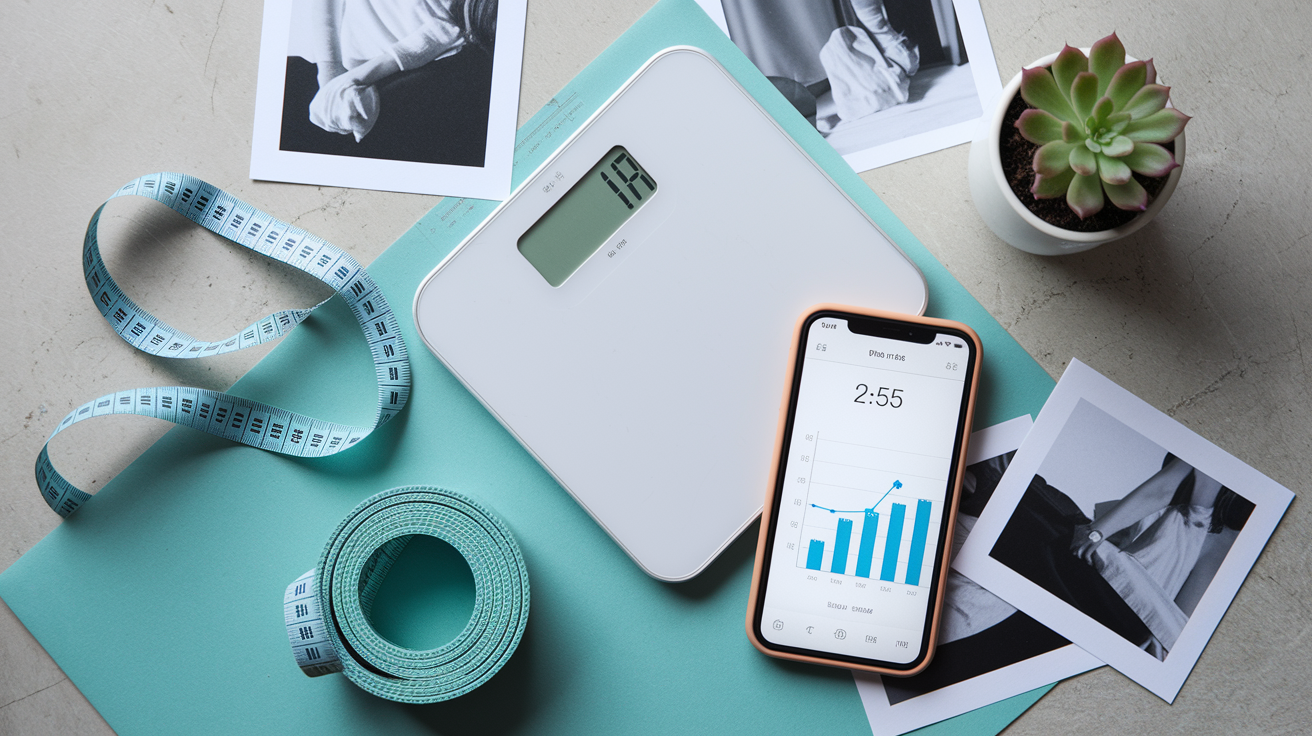
The scale is useful, but it’s not the only way to measure progress. Weight fluctuates daily due to water retention, digestion, hormones, and sodium intake. If you weigh yourself every day and see a two pound jump, it doesn’t mean you gained two pounds of fat overnight. It means your body is holding onto water or you ate more food volume than usual. Weighing once per week under consistent conditions (same day, same time, same clothing) gives you a more accurate trend without the daily noise.
Body measurements provide a second layer of feedback that the scale can’t give you. Measure your waist, hips, chest, and thighs once per month using a flexible tape measure. Write down the numbers and compare them over time. You might lose inches around your waist even during weeks when the scale doesn’t budge, especially if you’re building muscle through strength training. Shrinking measurements mean you’re losing fat and improving body composition, which is the real goal.
Progress photos are one of the most underrated tracking tools. Take front, side, and back photos in the same lighting and clothing every four weeks. You’ll notice changes in your shape, posture, and how your clothes fit that you won’t see in the mirror every day. Photos give you visual proof of progress when motivation dips or the scale stalls. Keep them in a private folder and review them side by side during your monthly check ins.
Non scale metrics matter just as much as the numbers. Track how you feel during workouts. Are you getting stronger, recovering faster, or moving with more energy? Notice improvements in daily life, like climbing stairs without getting winded, sleeping better, or feeling less afternoon fatigue. These wins confirm that your body is adapting and improving even when the scale takes a break.
Here are five tools and methods for tracking your progress effectively:
- Use a calorie and macro tracking app like MyFitnessPal, Cronometer, or Lose It to log food intake and monitor your daily deficit
- Wear a fitness tracker or smartwatch to monitor steps, activity, and estimated calorie burn throughout the day
- Keep a simple weight log in a notebook or spreadsheet, recording your weekly weigh in and monthly measurements
- Invest in a basic smart scale ($20–80) that syncs data to your phone for automatic tracking and trend graphs
- Schedule periodic DEXA scans ($50–300) if you want precise body fat and lean mass measurements to track composition changes over time
Overcoming Weight Loss Plateaus and Adjusting Goals When Needed

Plateaus are a normal part of weight loss, not a sign that you’re doing something wrong. Most people hit a stall around six to twelve weeks into a fat loss phase. As you lose weight, your body requires fewer calories to maintain its new size, so the deficit that worked at the start becomes smaller over time. Your metabolism also adapts slightly to conserve energy, a process called metabolic adaptation. The result is slower progress even when you’re doing everything right.
When progress stalls for two to three weeks, it’s time to reassess. Start by double checking your calorie intake. Are you tracking accurately, or have portion sizes crept up? Are you counting cooking oils, condiments, and weekend meals? Small underestimations add up quickly and can erase a deficit without you noticing. Tighten up your tracking for a week and see if that restarts progress. If your intake is solid, consider adding 10–15 minutes of daily walking or one extra strength session to increase your energy expenditure without drastically cutting food.
Prioritize protein and strength training during a plateau. Protein supports muscle retention and keeps hunger lower, which makes it easier to stay consistent. Aim for at least 1.2–1.6 grams per kilogram of body weight per day. If you’ve been skipping strength work, add it back in. Even if the scale doesn’t move right away, you’ll improve body composition and set yourself up for better long term results. Sometimes the best response to a plateau is patience and a shift in focus from the scale to performance and measurements.
Here are five strategies to navigate a weight loss plateau without giving up:
- Recalculate your maintenance calories based on your current weight and adjust your deficit accordingly
- Increase daily movement by adding 1,000–2,000 extra steps or a short post meal walk
- Reassess portion sizes and tighten food tracking to catch any calorie creep
- Add or increase strength training frequency to preserve muscle and boost metabolism
- Take a one to two week diet break at maintenance calories to reset hunger hormones and mentally recharge before resuming the deficit
Personal Factors That Modify Realistic Weight Loss Expectations

Not everyone loses fat at the same pace, even when following identical plans. Age is one of the biggest factors. Metabolic rate naturally declines with age due to muscle loss and hormonal shifts, so someone in their 50s will typically lose weight more slowly than someone in their 20s, even at the same calorie deficit. That doesn’t mean older adults can’t lose fat. It just means timelines need to reflect the slower pace.
Biological sex also affects how quickly fat comes off and where it comes off first. Men tend to lose weight faster than women because they carry more muscle mass and have higher baseline metabolic rates. Women often experience more fluctuation due to the menstrual cycle, which affects water retention and hunger. Postpartum women face additional challenges from hormonal changes, lack of sleep, and the demands of caring for a newborn. Realistic goals for postpartum weight loss should account for recovery time and the need to prioritize rest and nutrition over aggressive deficits.
Hormonal conditions like PCOS, hypothyroidism, and insulin resistance slow fat loss and make it harder to create a deficit without feeling constantly hungry or fatigued. Medications (especially insulin, some antidepressants, antipsychotics, and corticosteroids) can promote weight gain or blunt fat loss efforts. If you’re managing any of these conditions, work with a healthcare provider to adjust your plan and set expectations that match your physiology. You might need a smaller deficit, a longer timeline, or additional medical support to see progress.
Building Long Term Habits to Maintain Weight Loss After Reaching Your Goal

Losing the weight is only half the challenge. Keeping it off requires a shift from short term discipline to long term habit. The behaviors that got you to your goal need to become part of your routine, not something you stop doing once you hit your target weight. That means continuing to track your intake loosely, staying active most days, prioritizing protein and whole foods, and monitoring your weight or measurements every few weeks to catch small regains before they grow.
Motivation fades, so your environment and systems matter more than willpower. Stock your kitchen with foods that support your goals and make it harder to access the things that derail you. Prep meals in advance so healthy options are as convenient as takeout. Set up weekly check ins with a friend, coach, or accountability partner who will notice if you start skipping workouts or drifting from your plan. Environmental design and social support remove friction and keep consistency easier.
Non food rewards help reinforce progress without tying achievement to eating. When you hit a milestone, celebrate with a massage, new workout gear, a day trip, or something else that feels meaningful. These rewards build positive associations with the process and remind you that the work is about more than just the number on the scale. Over time, the habits themselves become the reward because you feel better, move better, and live with more energy.
Here are six long term habits that support weight maintenance after reaching your goal:
- Continue meal prepping one or two days per week to keep healthy options ready and reduce decision fatigue
- Maintain a daily step target (7,000–10,000 steps) as a baseline movement habit that doesn’t require formal workouts
- Stick to a consistent sleep schedule with 7–9 hours per night to regulate hunger hormones and recovery
- Use stress management tools like meditation, yoga, journaling, or breathing exercises to avoid emotional eating
- Set up an accountability system with a coach, friend, or online group for regular progress check ins and support
- Schedule monthly or quarterly progress reviews to reassess weight, measurements, and habits and adjust as needed
Final Words
Start with a safe pace—aim for about 1–2 lb per week—and pick one clear, health-first target.
Use your current metrics (weight, BMI, BMR/TDEE) to make SMART goals, then break those into monthly and weekly steps. Choose a steady calorie deficit, add strength and daily movement, and track weight, measurements, photos, and non-scale wins.
Expect slow patches, tweak your plan, and lean on small habit changes to keep progress.
This guide shows how to set realistic weight loss goals without extremes, one steady step at a time.
FAQ
Q: How did David Goggins lose 100lbs in 3 months?
A: David Goggins reportedly lost about 100 pounds quickly by combining severe calorie restriction with very high-volume cardio, daily running, and extreme discipline—an approach that’s aggressive, risky, and not recommended for most people.
Q: How do I set realistic weight loss goals?
A: To set realistic weight loss goals, aim for 1–2 lb (0.45–0.9 kg) per week, target 5–10% body weight over months, use SMART goals, and match plans to your lifestyle and health needs.
Q: Will losing weight lower TSH levels?
A: Losing weight can sometimes improve thyroid tests, but weight loss doesn’t reliably lower TSH unless underlying thyroid disease is treated; check labs with your clinician before changing meds.
Q: How much weight to lose to lower A1C?
A: Losing 5–10% of body weight often lowers A1C and improves blood sugar control; even small losses (3–5%) help. Talk to your care team to set a safe, personal target.