

You don’t need to lift heavy on day one to get real strength.
This four-week beginner progression focuses on teaching safe moves, adding a little weight each week, and building the habit of showing up.
You’ll train four short sessions a week, 30 to 45 minutes, so you can fit it into a busy life.
Follow the plan and you’ll learn squat, press, hinge, and pull patterns, reduce injury risk, and actually feel stronger by week four.
No gimmicks, just steady steps that add up to real results.
Week 1: Beginner Foundations (Full Workout Plan)

Week 1 is where you learn the movements and build the habit of showing up. You’re not chasing heavy weights yet. You’re teaching your body how to squat, press, hinge, and pull with control. Every rep is practice. Every session counts if you finish it with decent form and no sharp pain.
You’ll train four days this week, with at least one rest day between sessions. Monday, Tuesday, Thursday, and Saturday work well for most people, but shift them if you need to. Rest days matter. That’s when your muscles repair.
Each session takes 30 to 45 minutes including warm-up and cool-down. You’ll do 2 to 3 sets per exercise, 8 to 12 reps per set, with 60 to 90 seconds rest between sets. Keep the weights light enough that you can complete every rep with good form. If you’re unsure, go lighter than you think.
| Day | Exercise | Sets | Reps | Rest |
|---|---|---|---|---|
| Monday | Bodyweight Squat | 3 | 10 | 60s |
| Knee Push-Up | 3 | 8 | 60s | |
| Dumbbell Row (each arm) | 2 | 10 | 60s | |
| Glute Bridge | 2 | 12 | 60s | |
| Plank Hold | 2 | 30s | 60s | |
| Tuesday | Goblet Squat (light dumbbell) | 3 | 10 | 90s |
| Standing Dumbbell Press | 3 | 8 | 90s | |
| Reverse Lunge (each leg) | 2 | 8 | 60s | |
| Dumbbell Biceps Curl | 2 | 10 | 60s | |
| Thursday | Bodyweight Squat | 3 | 12 | 60s |
| Incline Push-Up (on bench) | 3 | 10 | 60s | |
| Bent-Over Dumbbell Row (both arms) | 3 | 10 | 90s | |
| Russian Twist (light dumbbell) | 2 | 10/side | 60s | |
| Saturday | Goblet Squat | 3 | 12 | 90s |
| Dumbbell Floor Press | 3 | 10 | 90s | |
| Glute Bridge | 3 | 15 | 60s | |
| Plank Hold | 2 | 45s | 60s |
What you’re actually doing this week:
You’re building a library of safe, controlled movements your body will use for months. Showing up four times matters more than lifting heavy or feeling exhausted. Rest days give your muscles time to adapt, so don’t skip them or replace them with hard cardio. Every rep should look similar to the last. If your form breaks down, stop the set.
You might feel sore by Wednesday. That’s normal. If soreness lasts more than a few days or you feel sharp pain, scale back.
Pros & Cons of a 4‑Week Beginner Strength Program
A structured four-week plan gives you a clear path. You know what to do each day, and you can see whether you’re improving. For someone just starting, that matters.
But it’s not perfect for everyone. Some people need more time to recover between sessions. Others adapt faster.
What you gain:
You build a routine without needing to train daily. The movements transfer to everyday tasks like lifting groceries or standing from a chair. You improve joint stability and muscular endurance within the first few weeks. You create measurable progress that keeps you motivated. You reduce injury risk by learning technique before adding load. You need minimal equipment and can work out in small spaces or at home.
What to watch for:
Muscle soreness in the first week can feel uncomfortable. Progress may feel slow if you’re used to high-intensity cardio or sports. You need patience to master form before increasing weight. Some exercises may need tweaks if your mobility is limited.
Week 2: Load Familiarization and Technique Building

Week 2 is when you start adding small amounts of weight or reps. If you completed Week 1 with solid form, you’re ready. The goal is to increase the challenge just enough that your muscles work a little harder, but not so much that your technique breaks down.
Add 1 to 2 reps per set if you’re using the same weight, or increase your dumbbell load by 2.5 to 5 pounds if you hit all your target reps last week. If an exercise felt too easy, adjust now. If it felt hard, repeat the same load and go for cleaner reps.
| Day | Exercise | Sets | Reps | Rest |
|---|---|---|---|---|
| Monday | Goblet Squat | 3 | 12 | 90s |
| Knee or Incline Push-Up | 3 | 10 | 60s | |
| Dumbbell Row (each arm) | 3 | 12 | 60s | |
| Glute Bridge | 3 | 15 | 60s | |
| Plank Hold | 2 | 45s | 60s | |
| Tuesday | Dumbbell Deadlift (light) | 3 | 10 | 90s |
| Standing Dumbbell Press | 3 | 10 | 90s | |
| Reverse Lunge (each leg) | 3 | 10 | 60s | |
| Dumbbell Biceps Curl | 2 | 12 | 60s | |
| Thursday | Goblet Squat | 3 | 12 | 90s |
| Dumbbell Floor Press | 3 | 12 | 90s | |
| Bent-Over Dumbbell Row | 3 | 12 | 90s | |
| Russian Twist | 2 | 12/side | 60s | |
| Saturday | Dumbbell Deadlift | 3 | 12 | 90s |
| Standing Dumbbell Press | 3 | 10 | 90s | |
| Glute Bridge (add light dumbbell on hips) | 3 | 15 | 60s | |
| Side Plank (each side) | 2 | 30s | 60s |
Technique cues for this week:
Keep your chest up and core braced during squats and deadlifts. Imagine someone could punch you in the stomach and you’d stay tight. Press through your heels on squats and glute bridges. Your toes should stay light. Pull your shoulder blades back and down on rows and presses. Don’t let your shoulders creep up toward your ears. Move slowly on the way down. Lower the weight in 2 to 3 seconds, then push or pull with control.
Week 3: Strength Development Phase
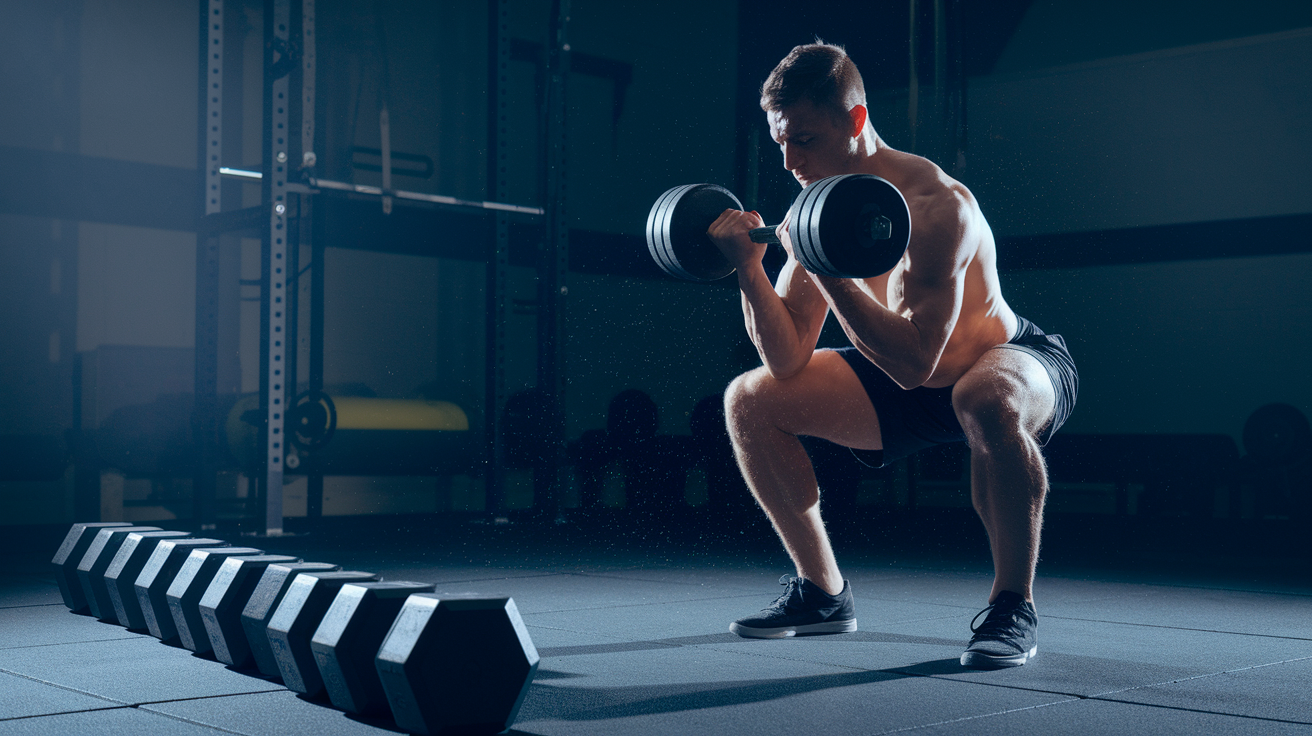
Week 3 adds another set to most exercises and introduces slightly heavier loads. You’ve practiced the movements for two weeks. Your body is ready for more volume. This is where you start to feel stronger, not just more familiar with the exercises.
Add one set to your main lifts. Keep the reps in the same range, but use a weight that makes the last two reps challenging. If you can do 12 reps easily, the weight is too light. If you can’t finish 10 reps with good form, it’s too heavy.
| Day | Exercise | Sets | Reps | Rest |
|---|---|---|---|---|
| Monday | Goblet Squat | 4 | 10 | 90s |
| Incline or Standard Push-Up | 4 | 10 | 60s | |
| Dumbbell Row (each arm) | 4 | 12 | 60s | |
| Glute Bridge (weighted) | 3 | 15 | 60s | |
| Plank Hold | 3 | 45s | 60s | |
| Tuesday | Dumbbell Deadlift | 4 | 10 | 90s |
| Standing Dumbbell Press | 4 | 10 | 90s | |
| Reverse Lunge (each leg) | 3 | 10 | 60s | |
| Dumbbell Biceps Curl | 3 | 12 | 60s | |
| Thursday | Goblet Squat | 4 | 12 | 90s |
| Dumbbell Floor Press | 4 | 12 | 90s | |
| Bent-Over Dumbbell Row | 4 | 12 | 90s | |
| Russian Twist | 3 | 12/side | 60s | |
| Saturday | Dumbbell Deadlift | 4 | 12 | 90s |
| Standing Dumbbell Press | 4 | 10 | 90s | |
| Glute Bridge (weighted) | 3 | 15 | 60s | |
| Side Plank (each side) | 2 | 40s | 60s |
How to monitor recovery and adjust loads:
Track your sleep. If you’re getting less than seven hours most nights, your body won’t recover well enough to handle the added volume. Check your soreness each morning. Mild stiffness is normal. Deep, lasting soreness that limits movement means you need an extra rest day.
Watch your performance. If your reps drop by more than two from one session to the next, you’re either under-recovered or the weight jumped too fast. Pay attention to your mood and energy. Feeling unusually irritable or drained can signal you’re overdoing it.
Adjust immediately if something feels off. Drop one set, reduce the weight by five pounds, or take an unplanned rest day. You’ll make better progress staying healthy than pushing through fatigue.
Week 4: Consolidation and Performance Week

Week 4 is when you test what you’ve built. The volume stays similar to Week 3, but you’ll increase intensity slightly by using the higher end of your rep ranges or adding a small amount of weight. This is also the week to clean up any technique issues before you move on.
Think of this week as a final rehearsal. You’re not trying to set records, but you are showing up with confidence and control. If an exercise still feels awkward, spend extra time on warm-up sets to dial in the movement.
| Day | Exercise | Sets | Reps | Rest |
|---|---|---|---|---|
| Monday | Goblet Squat | 4 | 12 | 90s |
| Standard Push-Up | 4 | 10 | 60s | |
| Dumbbell Row (each arm) | 4 | 12 | 60s | |
| Glute Bridge (weighted) | 4 | 15 | 60s | |
| Plank Hold | 3 | 60s | 60s | |
| Tuesday | Dumbbell Deadlift | 4 | 12 | 90s |
| Standing Dumbbell Press | 4 | 12 | 90s | |
| Reverse Lunge (each leg) | 3 | 12 | 60s | |
| Dumbbell Biceps Curl | 3 | 12 | 60s | |
| Thursday | Goblet Squat | 4 | 12 | 90s |
| Dumbbell Floor Press | 4 | 12 | 90s | |
| Bent-Over Dumbbell Row | 4 | 12 | 90s | |
| Russian Twist | 3 | 15/side | 60s | |
| Saturday | Dumbbell Deadlift | 4 | 12 | 90s |
| Standing Dumbbell Press | 4 | 12 | 90s | |
| Glute Bridge (weighted) | 4 | 15 | 60s | |
| Side Plank (each side) | 3 | 45s | 60s |
Preparing for what comes next:
Write down the weights you used for each exercise this week. That’s your new baseline. Note which movements felt smooth and which ones still need work. You’ll focus on the weaker patterns in your next phase.
Decide whether you’ll repeat the four weeks with heavier loads or move to a new program. Repeating is smart if any exercise still feels shaky. Plan one full rest week or a lighter deload week after finishing Week 4 if you feel unusually tired or sore.
Consider adding a fifth training day or splitting your routine into upper and lower body sessions if you want more volume going forward.
Warm‑Up Essentials for Beginner Strength Training

A good warm-up gets your heart rate up, loosens stiff joints, and primes your nervous system for the work ahead. Five to ten minutes is enough. You don’t need to break a sweat, but you should feel ready to move with control.
Arm circles (10 forward, 10 backward). Leg swings front to back (10 each leg). Leg swings side to side (10 each leg). Hip circles (10 each direction). Bodyweight squats (10 reps, slow and controlled). Walking lunges (6 each leg). Inchworms (5 reps). Cat-cow stretches (8 reps).
Do these in order, moving from your upper body down to your legs. Take your time. If something feels tight, add an extra set of that movement.
Once you finish the dynamic sequence, do one or two light sets of your first exercise with no weight or very light weight. For example, if your first exercise is a goblet squat with a 15-pound dumbbell, do 8 reps with no weight, then 5 reps with a 10-pound dumbbell. Then start your working sets.
Cool‑Down and Recovery Guidelines

Your cool-down helps your heart rate return to normal and gives your muscles a chance to relax. Spend three to five minutes walking slowly or pedaling lightly on a stationary bike. Then move into static stretches, holding each for 20 to 30 seconds without bouncing.
Focus on the muscles you just worked. If you trained legs, stretch your quads, hamstrings, glutes, and calves. If you trained upper body, stretch your chest, shoulders, and triceps. Don’t skip your core. A child’s pose or gentle spinal twist feels good after planks and carries.
Walk slowly for 3 to 5 minutes. Stretch quads (hold one foot behind you, standing). Stretch hamstrings (sit and reach toward your toes). Stretch glutes (figure-four stretch lying on your back). Stretch chest (doorway pec stretch). Stretch shoulders (cross-body arm pull). Child’s pose or spinal twist for core and lower back.
Hydrate after every session. Aim for 16 to 20 ounces of water within the first hour. If you’re sore the next day, light movement like walking or gentle stretching helps more than sitting still. Sleep is your most important recovery tool. Aim for seven to nine hours most nights.
How to Progress After the 4‑Week Program

Finishing four weeks is a win. You’ve built a habit, learned the movements, and proven you can show up consistently. Now you need to decide what comes next. You have options, and the right choice depends on how you feel and what your goals are.
If the program felt challenging and you’re still refining your technique, repeat the four weeks with slightly heavier weights. Start Week 1 at the loads you used in Week 3 or 4 of your first cycle. You’ll move through the progression faster and finish stronger.
If the program felt manageable and you want more, it’s time to increase volume, frequency, or complexity.
Your options:
Add one or two more sets to your main lifts. For example, if you did 4 sets of goblet squats in Week 4, start your next cycle with 5 sets. Or add a fifth training day, split your routine into upper body and lower body sessions so you can train each muscle group twice per week.
Introduce exercises you haven’t tried yet, like single-leg deadlifts, overhead presses from a seated position, or tempo variations (3 seconds down, 1 second pause, 1 second up).
Keep your rep ranges the same but increase your working weights by 5 to 10 percent. Record your weights, reps, and how each session felt. Every four weeks, test one or two lifts at a slightly heavier weight to measure progress. If your goblet squat went from 15 pounds to 25 pounds, that’s real strength.
Final Words
Kick off with Week 1’s full-body sessions to learn movement patterns, build consistency, and protect your form.
Then add Week 2’s load familiarization, Week 3’s safe volume increase, and Week 4’s consolidation and performance check.
Use the warm-up, cool-down, and recovery tips, and pick one clear path forward. This 4-week beginner strength progression plan gives a simple, realistic roadmap to get stronger and feel more capable. Keep going—small, steady steps add up.
FAQ
Q: How often should beginners do strength training in this 4-week plan?
A: This 4-week plan uses four training days (Mon, Tue, Thu, Sat) to balance skill practice and recovery, giving you frequent movement without overloading joints or sleep-based recovery.
Q: What are the recommended sets, reps, and rest for beginners?
A: Beginners should aim for 2–3 sets of 8–12 reps per exercise, resting 60–90 seconds between sets, and prioritize basic compound moves with controlled tempo over heavy weight early on.
Q: How should beginners progress load week to week?
A: Beginners should progress by increasing load 2–5% or adding 1–2 reps per set once technique feels solid; small, consistent increases protect joints and build steady strength.
Q: What is the goal of Week 1 in the program?
A: Week 1’s goal is to teach movement patterns, build consistency, prioritize recovery, and focus on form so you can safely add load in later weeks.
Q: How should a beginner warm up before sessions?
A: Beginner warm-ups should be 5–10 minutes of dynamic movements—leg swings, arm circles, hip hinges, light rows—to raise heart rate and prime joints for safer lifting.
Q: What cool-down and recovery steps should I follow after workouts?
A: Cool-downs should include 5–10 minutes of easy movement and light stretching, plus hydration, good sleep, gentle walking, and optional foam rolling to aid recovery over 24–48 hours.
Q: How do I know if I should increase volume in Week 3?
A: You should increase volume in Week 3 if you feel recovered, your sleep and energy are good, and technique is solid; add one to two extra sets per exercise and watch soreness.
Q: What technique cues should beginners follow?
A: Key technique cues are: keep the ribcage stacked over hips, hinge at the hips, push the floor away with your feet, and let knees track over toes for safer lifts.
Q: What are common challenges beginners face in a 4-week program?
A: Common challenges are initial muscle soreness, finding consistent time, choosing appropriate loads, and correcting early form habits that can slow progress if ignored.
Q: What should I do after finishing the 4-week beginner program?
A: After the 4-week program, pick a next phase: increase volume, boost training frequency, try an upper/lower split, cycle intensity, and track lifts and habits to guide changes.
Q: How should rest days be scheduled during the week?
A: Rest days should sit between training blocks—use midweek and post-session days for active recovery like walking, mobility work, and prioritizing sleep to support adaptation.
Q: What if I miss a workout or have a busy week?
A: If you miss a workout, get back on schedule with a shorter session, safely combine movements, or swap days; aim for consistency over perfection to keep momentum.