

Think strength training is too risky for seniors?
Not true.
Done right, it’s one of the safest ways to improve balance, protect joints, and keep everyday tasks easier.
This guide lays out simple, chair-friendly and wall-supported moves you can start twice a week.
No fancy gear, no hard rules.
Just clear cues, seated options, and small progressions that respect pain, mobility, and busy schedules.
Read on for a short routine and easy modifications so you can build strength and confidence safely.
Understanding the Need for Beginner Strength Exercises for Seniors

Seniors deal with some pretty predictable physical changes. Muscle mass drops off with age. Balance isn’t what it used to be. Things that never required a second thought—getting up from a low chair, taking the stairs, bringing in groceries—start feeling harder or genuinely tough. This isn’t about losing independence. It’s about knowing the body needs specific work to stay strong.
The answer’s straightforward. Seniors can rebuild strength safely through low-impact, beginner-friendly exercises using bodyweight and everyday items like chairs and walls for support. These movements focus on proper form, balance, and body awareness instead of heavy weights or complicated routines. Most beginners kick things off with 2 or 3 short sessions each week, plus daily light activity like walking or swimming. The goal? Steady, doable progress.
A beginner strength routine brings real, functional improvements within weeks. Here’s what seniors typically see:
- Easier transfers and daily movements—standing from chairs, getting in and out of cars, reaching overhead shelves
- Better balance and coordination—lower fall risk and more confidence moving through the house or outdoors
- Increased muscle tone and joint support—less strain on knees, hips, and lower back during normal activity
- Improved posture and spinal stability—reduced upper back rounding and less chronic stiffness
- Greater energy and stamina—daily tasks feel less draining, recovery from minor exertion improves
- Stronger bones—weight-bearing exercises help maintain bone density and reduce fracture risk
The work doesn’t require a gym membership or pricey equipment. A sturdy chair, clear wall space, and a commitment to showing up twice a week is enough to start rebuilding strength and confidence.
Why Seniors Lose Strength and Mobility Over Time

Age-related muscle loss, called sarcopenia, usually starts around midlife and picks up speed after 60. Without regular resistance training, adults lose roughly 3 to 8 percent of muscle mass per decade after 30. The rate increases after 60. This decline cuts strength, slows movement, and makes everyday tasks harder. Joint mobility drops as cartilage and connective tissue lose flexibility. Balance systems (vision, inner ear, proprioception) become less responsive, bumping up fall risk.
Lifestyle stuff amplifies the biological decline. Many seniors spend most of the day sitting because of retirement routines, chronic pain, or fear of injury. Long stretches of inactivity cause muscles to weaken faster and joints to stiffen. Pain from arthritis or old injuries often discourages movement, creating a cycle where avoiding activity leads to more weakness and discomfort.
The reasons seniors lose strength include:
- Sarcopenia—progressive loss of muscle tissue with age
- Reduced joint mobility—stiffness in hips, knees, shoulders, and spine
- Sedentary behavior—long sitting periods without weight-bearing activity
- Fear of injury or falling—avoidance of movement that could rebuild strength
Safe Warm-Up Routines Before Senior Strength Exercises

A proper warm-up gets muscles, joints, and the nervous system ready for safe movement. Seniors should spend 5 to 10 minutes on light, controlled motions that gradually raise heart rate and loosen stiff areas. The goal’s reaching mild warmth and improved range of motion without fatigue. Jumping into strength exercises cold bumps up injury risk and tanks movement quality.
Start with simple, rhythmic movements that feel natural. Marching in place for 2 to 3 minutes raises body temperature. Arm circles, ankle pumps, and gentle leg swings mobilize the joints most involved in strength exercises. Move slowly and breathe normally. If any movement causes sharp pain, dial back the range or skip it.
Here’s a complete beginner warm-up routine:
- Marching in place—2 to 3 minutes; lift knees to a comfortable height, swing arms gently
- Arm circles—30 to 60 seconds; small forward circles, then reverse; keep shoulders relaxed
- Shoulder rolls—10 to 15 reps forward, then backward; slow and controlled
- Ankle circles—10 circles each direction per foot; seated or standing with light support
- Hip circles—8 to 10 circles each direction; hands on hips or holding a chair for balance
- Gentle leg swings—10 swings per leg; forward-back or side-to-side; hold wall or chair back
- Wrist and finger flexion—20 to 30 seconds; open and close hands, rotate wrists gently
- Neck tilts—5 gentle tilts per side; ear toward shoulder, no force
Foundational Beginner Strength Exercises Seniors Can Start Today
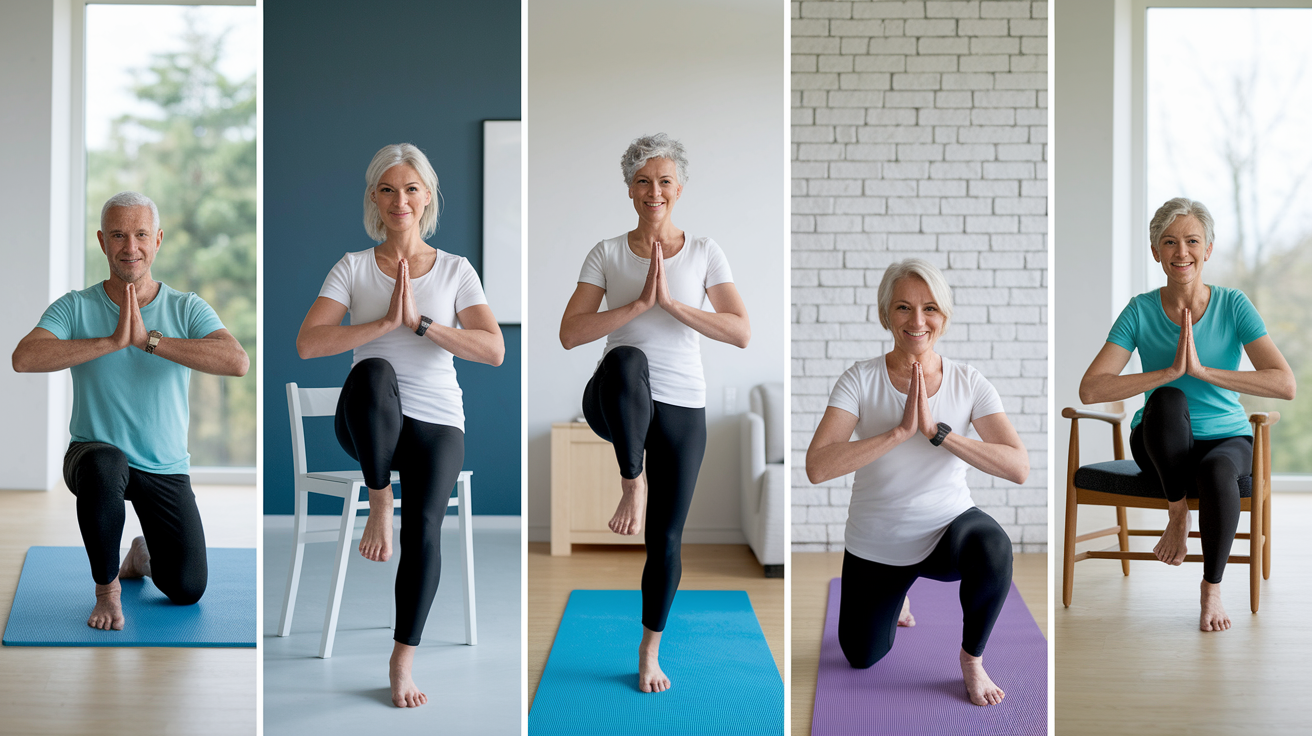
These five exercises form a complete beginner routine. Each uses minimal equipment and household support. Focus on slow, controlled movement and proper breathing. Start with one set of 8 reps if needed, then build toward 2 to 3 sets of 8 to 12 reps over several weeks.
Spinal Mobility (Cat-Cow, Cobra, Child’s Pose)
Start on hands and knees on a mat or soft carpet. Alternate between arching the spine gently (cow) and rounding it (cat). Move slowly through 8 to 12 reps, breathing in as you arch and out as you round. Follow with cobra (lying face-down, press chest up gently with hands) and child’s pose (sit back on heels, stretch arms forward). These movements restore spinal flexibility and cut down lower back stiffness.
Sit-to-Stands / Bodyweight Squats
Sit in a sturdy chair with feet shoulder-width apart. Stand up fully without using your hands if possible, then lower back down with control until you lightly tap the chair. Do 8 to 12 reps for 2 to 3 sets. If balance is a concern, place the chair against a wall and keep one hand on the armrest. This exercise strengthens quads, glutes, and core, muscles you need for daily transfers.
Wall Push-Ups
Stand about an arm’s length from a wall. Place hands flat on the wall at shoulder height and width. Step back slightly so your body forms a gentle angle. Bend elbows to lower your chest toward the wall, then press back to start. Shoot for 8 to 12 reps, 2 to 3 sets. Keep your core tight and don’t let hips sag. Wall push-ups build upper body strength without floor work.
Bird-Dog
Start on hands and knees. Lift one arm straight forward while keeping your torso stable. Hold for 2 to 3 seconds, then lower and repeat with the other arm. Do 8 to 12 reps on each side, 2 to 3 times. Once comfortable, progress to lifting opposite arm and leg together. Bird-dog improves core stability and balance without standing.
Split Squat
Stand in a lunge position with one foot forward, one back. Hold a chair or counter for balance. Lower your back knee toward the floor in a controlled motion, then press through the front heel to stand. Do 8 to 12 reps per side. If this feels too advanced, stick with sit-to-stands or regular bodyweight squats until you build more leg strength.
Modification options for all exercises:
- Use a higher chair or bench to reduce squat depth
- Do seated versions of upper body moves
- Drop reps to 5 or 6 if 8 is too many
- Hold a sturdy surface for all balance-dependent moves
- Shorten range of motion if full movement causes discomfort
Seated and Chair-Supported Strength Exercises for Elderly Beginners

Seated exercises let seniors with limited balance or mobility build strength safely. These movements target the same muscle groups as standing exercises but remove fall risk. Seated options work great for very deconditioned beginners, those recovering from illness or surgery, or anyone who feels unsteady on their feet.
Chair-supported exercises also improve posture and upper body strength. Seated resistance-band rows strengthen the upper back and fight forward rounding. Seated leg extensions build quadriceps strength, which supports standing and stair climbing. Biceps curls and overhead presses can be done seated with light dumbbells or household items like water bottles.
Start with one set of 8 to 10 reps for each exercise. Rest 30 to 60 seconds between exercises. Use a sturdy chair with armrests if needed for extra support. Stop right away if you feel sharp pain or dizziness.
| Exercise | Main Benefit |
|---|---|
| Seated Leg Extension | Strengthens quadriceps; improves knee stability and sit-to-stand ability |
| Seated Resistance Band Row | Builds upper-back strength; improves posture and shoulder alignment |
| Seated Biceps Curl | Increases arm strength for carrying and lifting daily items |
| Seated Overhead Press | Strengthens shoulders and upper back; helps with reaching overhead tasks |
Light Dumbbell and Resistance Band Exercises for Older Adults
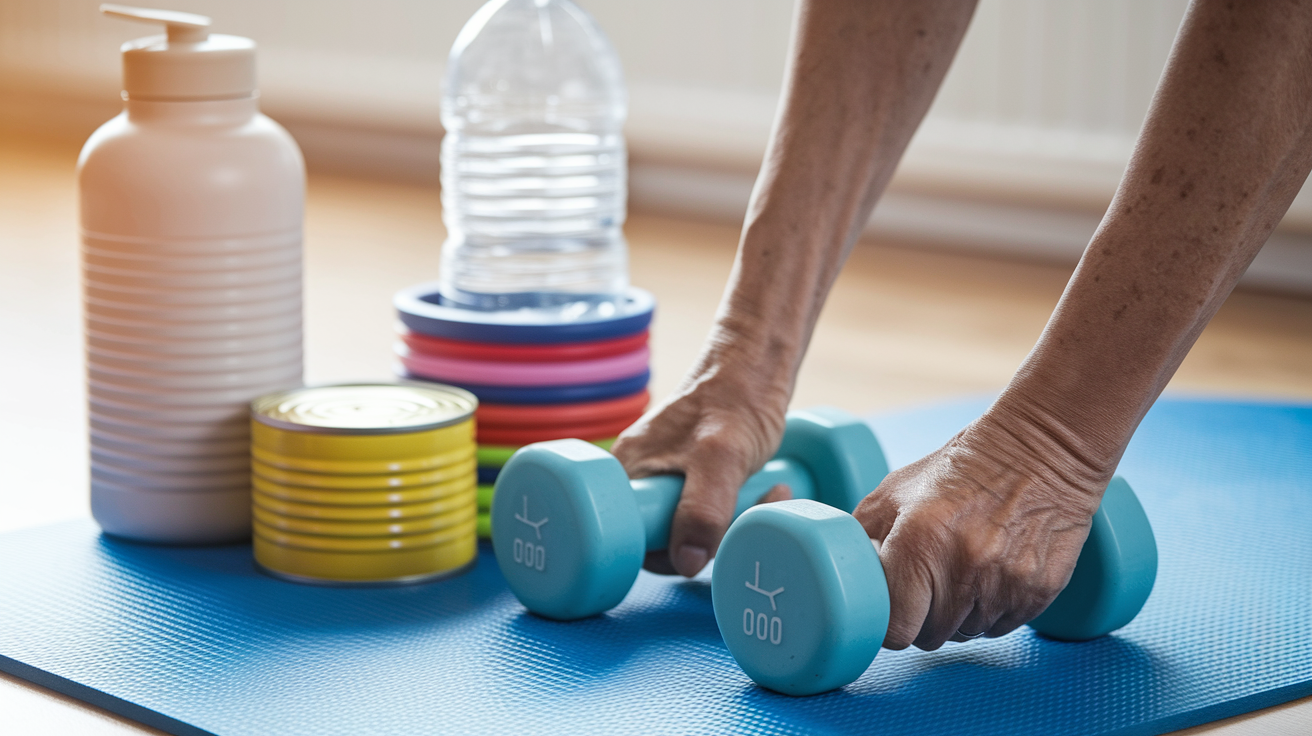
Adding light resistance builds strength faster than bodyweight alone, but equipment doesn’t need to be expensive or heavy. Start with dumbbells between 1 and 5 pounds, or use household items. A full 1-liter water bottle weighs about 2 pounds. Canned goods range from 0.5 to 1 pound each. These work perfectly for building initial upper body strength.
Resistance bands offer adjustable tension and take up almost no space. Light bands provide roughly 5 to 10 pounds of resistance, medium bands 10 to 20 pounds, and heavy bands 20 to 40 pounds, though exact tension varies by brand. Start with a light band and progress only when 12 reps feel easy for two sessions in a row. Bands cost between $10 and $30 for a set with multiple resistance levels.
Do these exercises slowly and with control. Exhale during the effort phase and inhale during the release. Rest 30 to 90 seconds between sets.
Beginner-friendly resistance exercises:
- Biceps curls—seated or standing; 1 to 3 sets of 8 to 12 reps
- Overhead press—seated with light dumbbells; 1 to 2 sets of 8 to 10 reps
- Triceps extensions—standing or seated; extend arm overhead, bend elbow back, straighten; 1 to 2 sets of 8 to 12 reps
- Resistance band rows—sit with band looped around feet, pull elbows back; 1 to 3 sets of 8 to 12 reps
- Band chest press—wrap band behind back, press forward; 1 to 2 sets of 8 to 12 reps
- Band leg press—loop band around one foot, press leg forward from seated position; 1 to 3 sets of 10 to 12 reps per leg
- Lateral raises—standing with light weights, lift arms to shoulder height; 1 to 2 sets of 8 to 10 reps
Improving Balance and Fall Prevention Through Strength Training

Balance and strength connect. Strong hips, ankles, and core muscles stabilize the body during movement. Strengthening these areas cuts fall risk and builds confidence in daily activities. Balance-focused exercises also train proprioception, the body’s ability to sense its position in space.
Heel raises strengthen the calves and improve ankle stability. Stand near a sturdy chair or counter for support. Rise onto the balls of your feet, hold for 1 to 2 seconds, then lower slowly. Do 10 to 15 reps for 2 to 3 sets. Once comfortable, try single-leg heel raises, holding the chair with one hand. Split stance holds and single-leg stands challenge balance directly. Start with 10 to 15 seconds and build toward 30 seconds as stability improves.
Balance and fall-prevention drills:
- Single-leg stand—hold a chair, lift one foot slightly off the ground; 10 to 30 seconds per side, 3 reps
- Tandem stance—place one foot directly in front of the other; hold 10 to 30 seconds
- Heel-to-toe walk—walk slowly in a straight line, placing heel directly in front of toes; 10 to 20 steps
- Heel raises—rise onto toes near support; 10 to 15 reps, 2 to 3 sets
- Standing hip abduction—hold chair, lift one leg to the side; 8 to 12 reps per side, 2 to 3 sets
How Seniors Should Progress Their Beginner Strength Routine
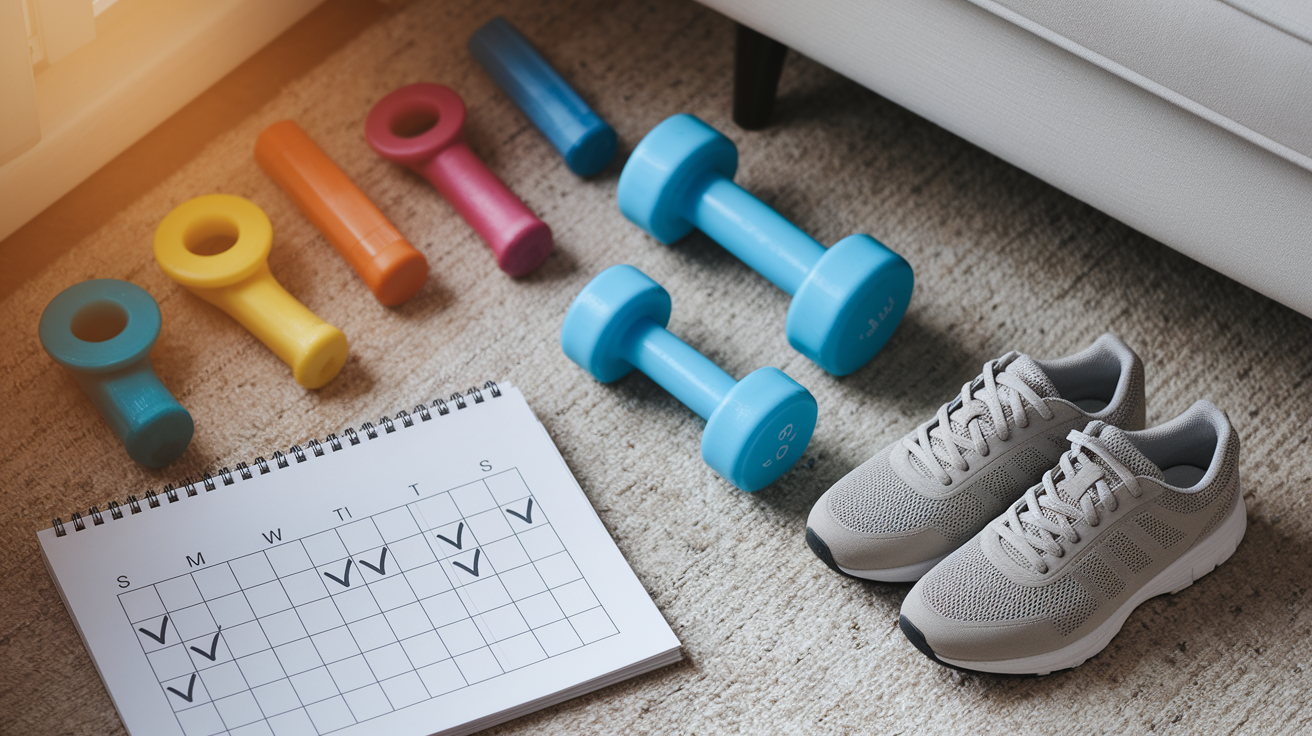
Progression should always put form and control before adding difficulty. The first goal? Complete 2 to 3 sets of 8 to 12 reps with smooth, stable movement. Once that feels manageable for two sessions in a row, you’re ready to progress. Bump up reps first, shooting for 12 to 15. Then add a set. Only after those steps should you consider increasing resistance.
When adding weight or band tension, increase by roughly 5 to 10 percent. If you’re curling a 3-pound weight comfortably, move to 5 pounds. If 5 pounds feels too heavy, stay at 3 and add reps or sets instead. Recovery matters as much as progression. Schedule 48 hours between sessions that work the same muscle groups. Most seniors do well with 2 to 3 strength sessions each week.
Six-step progression plan:
- Week 1 to 2—Start with 1 set of 8 reps per exercise; focus entirely on learning proper form
- Week 3 to 4—Bump up to 2 sets of 8 to 10 reps; add a third weekly session if recovery feels easy
- Week 5 to 6—Progress to 2 to 3 sets of 10 to 12 reps; confirm movement quality stays high
- Week 7 to 8—Increase resistance slightly (add 1 to 2 pounds or move to next band tension) once 12 reps feel easy twice
- Week 9 to 10—Continue gradual load increases; keep reps in the 8 to 12 range
- Week 11 to 12—Reassess strength and function; celebrate improvements in daily tasks like standing, climbing stairs, or carrying items
Preventing Setbacks and Staying Consistent With Senior Strength Training

Consistency beats intensity every time. Missing a week doesn’t erase progress, but skipping three or four weeks does. The goal’s making strength training a regular part of the weekly routine, like grocery shopping or a doctor’s appointment. Start small and protect the habit. Two 20-minute sessions each week will deliver results if you stick with them.
Recovery supports consistency. Give yourself 48 hours between sessions targeting the same muscles. Get 7 to 9 hours of sleep most nights. Drink water before, during, and after exercise. If soreness lasts more than two days or worsens with movement, dial back volume or take an extra rest day. Gentle mobility work (walking, stretching, or light yoga) on rest days keeps joints moving without adding training stress.
Five strategies for staying consistent:
- Schedule sessions on the same days each week—treat them like appointments you can’t skip
- Track sessions in a notebook or calendar—seeing progress on paper builds momentum
- Start with shorter sessions—15 to 20 minutes is enough if it keeps you showing up
- Pair exercise with an existing habit—do your routine after morning coffee or before lunch
- Reduce volume if life gets busy—one set per exercise beats skipping the session entirely
When Seniors Should Seek Additional Help or Professional Guidance

Some seniors benefit from professional guidance before starting or progressing a strength routine. If you’re new to exercise, have a history of falls, or experience pain with movement, working with a physical therapist or senior fitness trainer cuts risk. They can assess your movement patterns, spot limitations, and design a program that fits your current ability level.
Medical clearance’s recommended for anyone with recent heart issues, uncontrolled high blood pressure, severe osteoporosis, recent surgery, or chronic conditions that limit movement. A doctor can confirm whether strength training is safe and suggest modifications if needed. Stop exercising right away and seek care if you experience chest pain, severe dizziness, fainting, sudden shortness of breath, or new neurologic symptoms like numbness or weakness.
Four red-flag signs that warrant professional help:
- Sharp or worsening joint pain during or after exercise—may signal improper form or underlying joint damage
- Frequent loss of balance or near-falls—points to the need for targeted balance training and possible medical evaluation
- Persistent dizziness, chest pressure, or irregular heartbeat—requires immediate medical attention
- Uncertainty about exercise technique or appropriate difficulty level—a trainer or therapist can provide personalized guidance and prevent injury
Final Words
Start with easy, practical steps: a 5-10 minute warm-up, then two to three weekly sessions focused on form and balance.
We covered five core moves, spinal mobility, sit-to-stands, wall push-ups, bird-dog, and split squats, plus seated options, light dumbbells or bands, balance drills, and simple progress rules. Rest 48 hours between sessions and seek guidance for pain or dizziness.
Make beginner strength exercises for seniors part of small weekly habits. Consistency beats perfection. You’ll likely feel steadier, stronger, and more independent as you keep going.
FAQ
Q: How often should seniors do beginner strength exercises?
A: Seniors should do beginner strength exercises 2–3 times per week, paired with daily light activity like walking or gentle mobility, to rebuild strength while allowing 48 hours for recovery between sessions.
Q: What beginner strength exercises can seniors start with at home?
A: Beginner seniors can start with low-impact, bodyweight or chair-supported moves like sit-to-stands, wall push-ups, bird-dog, split squats, and spinal mobility drills to improve strength, balance, and daily function.
Q: What’s a safe warm-up routine before strength training for seniors?
A: A safe warm-up for seniors is 5–10 minutes of marching in place, arm circles, ankle pumps, leg swings, and gentle spinal mobility to raise temperature without causing fatigue.
Q: What seated or chair-supported exercises are good for very deconditioned seniors?
A: Seated options for seniors include seated leg extensions, resistance-band rows, seated biceps curls, and seated overhead presses, which build strength while keeping balance and posture supported.
Q: What light equipment should older adults use and how do I choose resistance?
A: Older adults can use 1–5 lb dumbbells, water bottles, or light resistance bands; choose a band that lets you complete 8–12 controlled reps with mild challenge but without straining.
Q: How should seniors progress their beginner strength routine safely?
A: Seniors should progress by adding reps or sets first, then increase resistance only after hitting target reps for two sessions; follow a 2–3 times weekly schedule and rest 48 hours between workouts.
Q: Which exercises help improve balance and prevent falls for seniors?
A: Balance and fall-prevention for seniors includes heel raises, split-stance holds, single-leg stands, tandem walks, and hip/core strengthening to boost stability and lower fall risk.
Q: How should seniors manage recovery and soreness after workouts?
A: Seniors should manage recovery with 48 hours rest between strength sessions, good hydration, adequate sleep, gentle mobility work, and reduced volume if soreness limits daily activities.
Q: What form and safety tips should seniors follow during exercises?
A: Seniors should use chair or wall support as needed, move slowly with controlled breathing, keep posture stacked (ribcage over hips), and stop or modify any exercise that causes sharp pain or dizziness.
Q: When should seniors seek medical clearance or professional help?
A: Seniors should seek medical clearance or a physical therapist if they have chest pain, dizziness, recent surgery, uncontrolled conditions, or uncertainty about safe technique before starting strength training.